
Dog Symptom Checker: Free Illness Triage Assessment (24-Hour Vet Support)


Canine Bible is reader-supported. We receive affiliate commissions via some of our links. Learn more.
Whether your dog is vomiting, limping, coughing, shaking, refusing food, or simply acting unlike themselves, understanding what a symptom may mean can be difficult. That’s why we created this Dog Symptom Checker—to help you assess your dog’s symptoms based on severity, duration, progression, possible exposures, and health history. In this guide, you’ll also find symptom urgency charts, emergency warning signs, practical monitoring tips, and answers to common questions so you can decide when to watch closely, call your veterinarian, or seek urgent care.
Remember to contact your veterinarian if your dog’s symptoms are severe, worsening, recurring, or causing you concern, as this checker cannot replace a veterinary examination. If you can't reach your vet, you can chat live with a registered online veterinary professional via our online vet chat or video chat support (24 hours a day, 7 days a week). Or use Chewy's online vet services (6 a.m. - midnight ET).
What Do My Dog’s Symptoms Mean?
A symptom shows that something has changed, but it rarely identifies the exact cause by itself. Vomiting, shaking, coughing, limping, panting, appetite loss, and lethargy can occur with many unrelated problems, so the key question is how urgently your dog needs veterinary attention.
Look at your dog’s overall condition, not just one symptom. Check whether they can breathe comfortably, respond normally, stand, move, eat, drink, urinate, and pass stool. Gum color, abdominal swelling, pain, restlessness, and possible exposure to toxins or swallowed objects can also raise concern.


Compare what you see with your dog’s usual appetite, energy, posture, breathing, bathroom habits, and personality. A sudden or worsening change from normal may be important, even when the symptom seems mild. Record when it began, and take photos or short videos of unusual breathing, coughing, shaking, movement, or behavior to show your veterinarian.
Dog Symptom Urgency Chart
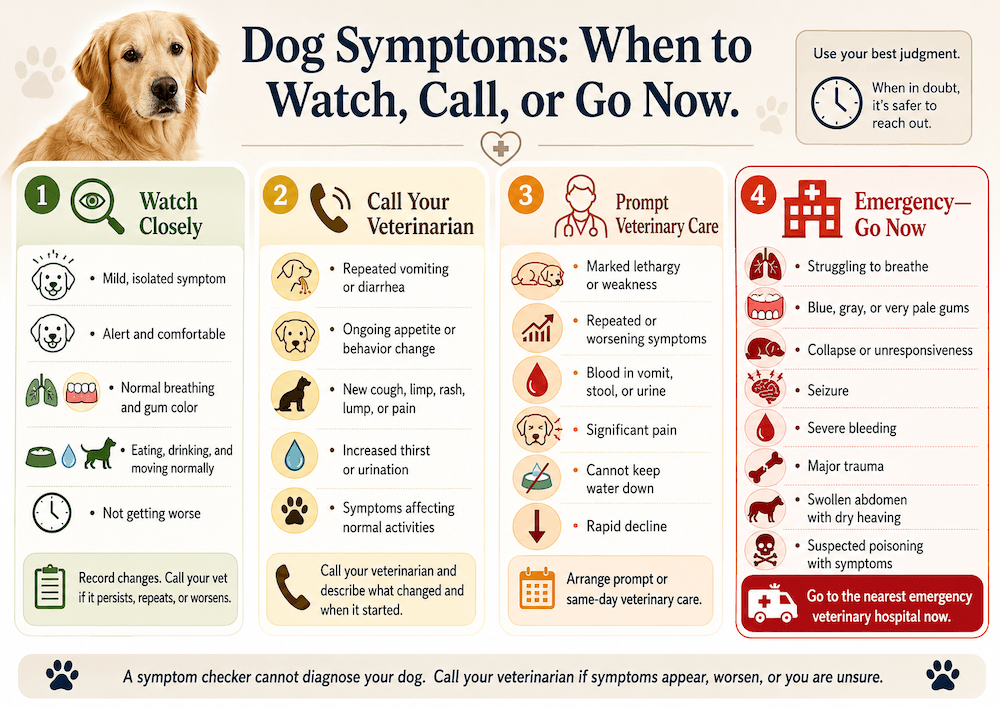
This chart provides a general starting point for deciding how quickly to seek veterinary help.
| Urgency Level | General Pattern | Recommended Response |
|---|---|---|
| Monitor Closely | A mild, isolated symptom is present, but your dog remains alert, comfortable, and near normal. | Record changes and contact your vet if the symptom persists, repeats, or worsens. |
| Contact Your Vet | A new or recurring symptom is present without an obvious emergency warning sign. | Call your regular veterinarian for individualized advice and appointment timing. |
| Prompt Care | Symptoms are repeated, worsening, painful, or interfering with eating, drinking, movement, or normal behavior. | Arrange prompt or same-day veterinary assessment. |
| Emergency Care | Breathing, circulation, consciousness, neurologic function, or another vital function may be threatened. | Go to the nearest emergency veterinary hospital immediately. |
These categories cannot account for everything a veterinarian may find during an examination. When you are uncertain, calling a veterinary clinic is safer than waiting for the symptom to become more obvious.
Dog Symptoms by Body System
Use the body-system pattern to identify additional signs that may raise the urgency level.


| Category | Common Signs | Urgent Signs |
|---|---|---|
| Digestive | Vomiting, diarrhea, appetite loss, or drooling. | Blood, repeated vomiting, swelling, or severe pain. |
| Breathing | Coughing, panting, noisy or fast breathing. | Labored breathing, blue gums, or collapse. |
| Neurologic | Shaking, imbalance, confusion, or weakness. | Seizure, paralysis, or unresponsiveness. |
| Urinary | Frequent urination, straining, or accidents. | Unable to urinate, blood, or severe pain. |
| Skin & Allergy | Itching, rash, hives, or swelling. | Facial swelling, breathing trouble, or collapse. |
| Mobility & Pain | Limping, stiffness, trembling, or reluctance to move. | Major trauma, severe pain, or inability to stand. |
| Eyes | Redness, squinting, discharge, or cloudiness. | Trauma, severe pain, or sudden vision loss. |
| Behavior | Hiding, restlessness, irritability, or withdrawal. | Collapse, disorientation, or extreme distress. |
Seek urgent care for breathing trouble, collapse, seizures, severe pain, or sudden abdominal swelling.
Symptom Duration and Progression Chart
How a symptom changes over time may be more informative than its first appearance.
| Pattern | Why It Matters | Suggested Response |
|---|---|---|
| Brief & Resolved | A short-lived symptom may be less urgent when your dog returns completely to normal. | Continue close observation and record any recurrence. |
| Repeated | Recurring symptoms may indicate that the underlying problem has not resolved. | Contact your veterinarian for guidance. |
| Worsening | Increasing frequency, severity, pain, or functional changes raise concern. | Arrange timely or prompt veterinary care. |
| Sudden & Severe | Abrupt, intense symptoms can indicate an emergency even without a known cause. | Seek emergency veterinary care. |
| Multiple Symptoms | Several signs together may indicate broader illness or a more serious problem. | Use the highest applicable urgency level. |
| After an Exposure | Toxins, medications, trauma, or swallowed objects may cause delayed or hidden injury. | Contact a veterinarian or animal poison expert promptly. |
Do not wait for a dramatic decline when a symptom is steadily worsening or follows a potentially dangerous exposure.
Guidelines and Safety for Checking Dog Symptoms
The checker first evaluates signs involving breathing, circulation, consciousness, major neurologic changes, serious trauma, and severe pain. Veterinary triage gives immediate priority to life-threatening airway, breathing, and circulation problems before a full history or diagnostic workup is completed.
Stop using the checker and seek emergency veterinary care if your dog has:
- Struggling, labored, or open-mouth breathing
- Blue, gray, white, or very pale gums
- Collapse, unresponsiveness, or repeated fainting
- A seizure or repeated seizure activity
- Severe or uncontrolled bleeding
- Major trauma or sudden inability to stand
- Extreme pain or distress
- A rapidly swollen or painful abdomen
- Repeated unproductive attempts to vomit
- Severe facial swelling with breathing or circulation changes
- Heatstroke signs or rapid deterioration
- An inability to urinate
A swollen abdomen combined with restlessness, drooling, pain, weakness, or repeated retching can occur with gastric dilatation-volvulus, commonly called bloat, which is a life-threatening emergency.
Do not wait for symptoms after a suspected toxin, human medication, incorrect dose, or unknown-substance exposure. Keep the packaging, record the estimated amount and timing, and contact a veterinarian or qualified animal poison-control service. Do not induce vomiting or give medication unless specifically instructed.
Factors That Can Affect Your Dog’s Results
These factors can materially change how urgently a symptom should be assessed.
| Factor | Why It Matters | What to Check |
|---|---|---|
| Severity | Problems affecting breathing, awareness, movement, or comfort require faster care. | Can your dog breathe, stand, rest, drink, and respond normally? |
| Symptom Combination | Several signs together may indicate a more serious problem. | Include every symptom, not only the most obvious one. |
| Medication Use | Side effects, missed doses, or extra doses may cause symptoms. | Check medication names, doses, timing, and recent changes. |
| Exposure History | Toxins, trauma, heat, bites, or swallowed objects may require prompt care. | Check for missing products, damaged packaging, or recent exposures. |
Common Mistakes to Avoid
Avoid these errors when entering symptoms or responding to the result.
| Mistake | Why It Matters | Better Approach |
|---|---|---|
| Entering One Symptom | Important combinations may be missed. | Include every sign you notice. |
| Guessing an Answer | Incorrect details may change the result. | Select “unsure” or contact your vet. |
| Ignoring Breathing Changes | Breathing problems can worsen quickly. | Treat abnormal or labored breathing as urgent. |
| Giving Human Medication | Some products are unsafe for dogs. | Give medication only with veterinary guidance. |
| Inducing Vomiting | Vomiting may cause additional harm. | Wait for case-specific professional instructions. |
Special Considerations for Certain Dogs
Puppies and senior dogs may need veterinary attention sooner than healthy adults. Puppies can become dehydrated or weak quickly, especially with repeated vomiting, diarrhea, appetite loss, bloody stool, lethargy, or collapse. In senior dogs, new changes in appetite, thirst, urination, weight, mobility, breathing, sleep, or behavior should not be dismissed as normal aging, particularly when chronic conditions or multiple medications are involved.
Brachycephalic dogs, including Bulldogs, French Bulldogs, Pugs, and Boston Terriers, are more vulnerable to breathing and heat-related emergencies. Increased breathing effort, blue gums, severe weakness, collapse, or overheating requires immediate care. Dogs with chronic illnesses, such as heart disease, diabetes, kidney or liver disease, seizure disorders, cancer, or immune-mediated conditions, may also need earlier assessment, and any emergency plan provided by their veterinarian should take priority over an online result.
Pregnant or nursing dogs have additional risks that a general symptom checker cannot fully evaluate. Abnormal labor, unusual discharge, fever, severe weakness, tremors, seizures, or collapse requires prompt veterinary guidance. Do not give medications, supplements, or home remedies unless directed by a veterinarian who knows the dog’s reproductive status.
How the Dog Symptom Checker Assesses Urgency
The checker does not use one mathematical formula. Instead, it evaluates the pattern of answers in a safety-first order.
The checker considers the following factors:
- Immediate emergency signs
- Possible poisoning, medication error, trauma, or swallowed object
- Breathing, responsiveness, gum color, and ability to stand
- Symptom severity and progression
- Multiple symptoms occurring together
- Age, breed, pregnancy, and chronic disease
- Current medication and recent treatment
- The safest appropriate urgency category
Example Assessment
Consider an adult dog that vomited once but remains alert, comfortable, and interested in water. The dog is breathing normally, has no abdominal swelling or known exposure, and the vomiting has not repeated.
The checker may suggest close monitoring, with instructions to contact a veterinarian if vomiting returns or the dog develops weakness, pain, blood, abdominal enlargement, or difficulty keeping water down.
The same main symptom should produce a more urgent result in a puppy, a dog with chronic disease, or a dog with repeated vomiting, severe lethargy, pain, swelling, or possible toxin or foreign-object exposure.
Frequently Asked Questions
The Bottom Line
The Dog Symptom Checker is designed to estimate how urgently your dog may need veterinary attention based on the symptoms present, their severity and progression, possible exposures, and basic health information. Use the result as a practical starting point rather than an exact diagnosis, treatment recommendation, or guarantee that a symptom is safe to monitor. An online checker cannot fully account for physical examination findings, diagnostic test results, pain, hydration, circulation, medication interactions, or every underlying medical condition. Puppies, seniors, pregnant dogs, brachycephalic breeds, dogs with chronic disease, and any dog with severe or rapidly worsening symptoms may require earlier veterinary guidance.
For digestive signs such as vomiting, diarrhea, or appetite loss, review our guide to upset stomach symptoms and when to worry. A swollen or hard abdomen, repeated retching, restlessness, or sudden weakness may require immediate care; learn more in our guide to bloat in dogs. For unusual warmth, lethargy, trembling, or appetite changes, see how to recognize possible fever in dogs.
Dog owners dealing with seizure-like shaking or abnormal movements may also find our dog seizure first-aid guide helpful. For limping, stiffness, trembling, unusual posture, or behavior changes, review the common signs of pain in dogs. When ongoing illness affects comfort, appetite, mobility, or daily routines, the Dog Quality of Life Calculator can help you record changes for a conversation with your veterinarian.