Bloat in Dogs (GDV): Symptoms, Types, Causes, Signs & Prevention

Canine Bible is reader-supported. We receive affiliate commissions via some of our links. Learn more.
Bloat, also known as gastric dilatation-volvulus (GDV), is one of the most serious and life-threatening conditions in dogs, especially in large and deep-chested breeds. It occurs when the stomach fills with gas and can twist, cutting off blood flow and leading to rapid deterioration. Early signs—such as a swollen abdomen, restlessness, drooling, or unsuccessful attempts to vomit—are often mistaken for minor digestive upset, but they require immediate veterinary attention. Left untreated, bloat can become fatal within hours. The good news is that with quick action and preventive strategies like proper feeding habits, avoiding vigorous exercise after meals, and in some cases preventive surgery, the risk can be reduced. This guide covers everything you need to know about bloat in dogs—from causes and warning signs to emergency treatment, prevention, and long-term care—so you can act fast and protect your dog’s life.
What Is Bloat in Dogs?
Bloat, in simple terms, is the rapid buildup of gas in a dog’s stomach, which can expand and, in severe cases, twist on itself—a condition known as gastric dilatation-volvulus (GDV). This twisting cuts off blood flow and prevents gas from escaping, making it a life-threatening emergency. Bloat most commonly affects large, deep-chested breeds, but it can occur in any dog. As pressure builds, it can impact vital organs and lead to shock if not treated immediately.
Types
Bloat can occur in two main forms, each with different levels of severity:
| Type | Description |
|---|---|
| Simple Bloat (Gastric Dilatation) | The stomach fills with gas, food, or fluid but does not twist. Still serious and requires prompt attention. |
| GDV (Gastric Dilatation-Volvulus) | The stomach expands and then twists, cutting off blood flow. This is a life-threatening emergency. |
| Food-Related Bloat | Occurs after rapid eating, overeating, or drinking large amounts of water in a short time. |
| Exercise-Related Bloat | Triggered by vigorous activity shortly before or after meals, increasing the risk of stomach twisting. |
| Chronic/Intermittent Bloat | Repeated mild episodes of gas buildup that may signal an increased risk for future GDV. |
| High-Risk Breed Bloat | Large, deep-chested breeds (like Great Danes or German Shepherds) are more prone due to anatomy. |
Predisposed Dog Breeds
Bloat is most common in large, deep-chested breeds, though any dog can be affected. Body structure and genetics can increase the risk.


| Size / Group | Breeds | Notes on Risk Factors |
|---|---|---|
| Giant Breeds | Great Dane, Saint Bernard, Irish Wolfhound, Mastiff, Newfoundland | Highest risk due to deep, narrow chests and large stomach capacity → more prone to stomach twisting (GDV). |
| Large Breeds | German Shepherd, Labrador Retriever, Golden Retriever, Rottweiler, Weimaraner, Doberman Pinscher | Deep chest conformation and feeding habits increase risk, especially with rapid eating or exercise around meals. |
| Medium Breeds | Standard Poodle, Boxer, English Springer Spaniel, American Bulldog | Moderate risk—often linked to body shape and lifestyle factors like activity timing and feeding routine. |
| Small Breeds | Dachshund, Cocker Spaniel, Bichon Frise | Lower overall risk, but can still develop bloat with overeating, stress, or underlying digestive issues. |
| Working & Active Dogs | Border Collie, Australian Shepherd, Belgian Malinois, Siberian Husky | Risk increases with vigorous exercise before or after meals and high energy levels. |
| Other Risk Factors | All breeds | Fast eating, large meals, stress, age, and family history can significantly increase the risk of bloat or GDV. |
Causes
Symptoms
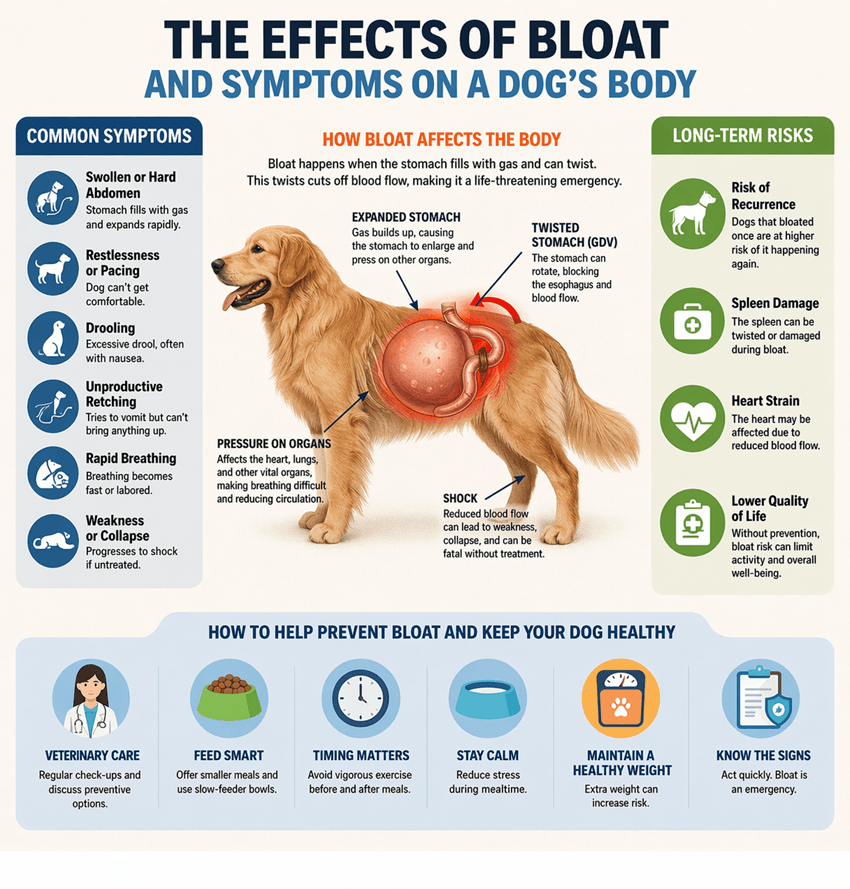
Bloat in dogs is a sudden, life-threatening condition that affects the stomach and can rapidly progress to shock. Early signs appear quickly and should never be ignored.
Common symptoms include a swollen or hard abdomen, restlessness, pacing, drooling, unproductive retching (trying to vomit without success), rapid breathing, and weakness. As the condition worsens, dogs may collapse. Immediate veterinary care is critical to save your dog’s life.
Stages of Bloat
- Early stage: Restlessness, pacing, mild abdominal swelling.
- Moderate stage: Unproductive retching, visible distension, discomfort and anxiety.
- Critical stage: Severe bloating, shock, possible stomach twist (GDV), life-threatening emergency.
Top Ways to Prevent Bloat in Dogs
Because bloat is a sudden and life-threatening emergency, prevention is critical. While it can’t always be avoided, simple steps—like feeding smaller meals, slowing down eating, managing exercise around mealtimes, and reducing stress—can significantly lower the risk and help protect your dog’s life.


| Prevention Strategy | Why It Helps | How to Do It |
|---|---|---|
| Feed Smaller, More Frequent Meals | Large meals can cause the stomach to expand quickly and increase bloat risk. | Split food into 2–3 smaller meals a day instead of one large meal. |
| Slow Down Fast Eating | Rapid eating makes dogs swallow extra air, which may contribute to stomach distension. | Use a slow feeder bowl, puzzle feeder, or spread food out to encourage slower eating. |
| Avoid Vigorous Exercise Around Meals | Running or rough play before or after eating may raise the risk of stomach twisting. | Keep activity calm for at least 1 hour before and 1–2 hours after meals. |
| Limit Large Amounts of Water at Once | Drinking too much water too quickly may increase stomach expansion in some dogs. | Offer water regularly throughout the day and avoid letting dogs gulp huge amounts right after meals or exercise. |
| Reduce Stress at Mealtime | Anxiety and excitement can lead to fast eating and air swallowing. | Feed in a quiet area, keep routines predictable, and separate dogs that compete over food. |
| Know Breed and Family Risk | Deep-chested breeds and dogs with a family history of bloat are more prone to GDV. | Monitor high-risk dogs closely and discuss prevention with your veterinarian. |
| Discuss Preventive Gastropexy | Surgically attaching the stomach can greatly reduce the risk of life-threatening twisting. | Ask your vet whether prophylactic gastropexy is appropriate, especially for high-risk breeds. |
Actionable Resources
If you want to reduce your dog’s risk of bloat, here are some practical resources and tools to explore with your veterinarian:
How Bloat Is Diagnosed in Dogs
Diagnosing bloat (GDV) is an emergency process that requires immediate veterinary assessment. Key steps include:
- Physical Examination: A vet checks for a swollen abdomen, pain, rapid heart rate, and signs of shock.
- Imaging:
- X-rays – the most important tool to confirm gas buildup and detect stomach twisting (GDV).
- Emergency Assessment: Blood tests and monitoring may be used to evaluate organ function and stability before treatment.
Early diagnosis is critical—bloat can become fatal within hours, so immediate veterinary care is essential.
Treatment & Care
Bloat is a medical emergency that requires urgent treatment. Initial care focuses on stabilizing the dog with fluids, oxygen, and relieving pressure in the stomach. In cases of GDV (twisting), emergency surgery is needed to reposition the stomach and prevent recurrence. After recovery, preventive measures—such as feeding smaller meals, managing exercise timing, and in some cases preventive surgery (gastropexy)—can significantly reduce future risk.
Always consult your veterinarian before starting any new treatment or supplement for bloat. You can get personalized joint-care advice from an online registered vet anytime, anywhere through Dutch. You can also chat with an online vet to ask questions about managing your dog’s bloat symptoms, treatment options, and lifestyle adjustments tailored to their condition.
Conventional Medical Treatments
| Treatments | Benefits / Role |
|---|---|
| Emergency Stabilization | IV fluids, oxygen, and shock treatment help stabilize the dog before further procedures. |
| Stomach Decompression | Relieves gas buildup and pressure in the stomach using a tube or needle. |
| Pain Medications | Vet-administered pain relief helps reduce severe discomfort during emergency care. |
| Emergency Surgery | Required for GDV to untwist the stomach, assess damaged tissue, and restore blood flow. |
| Gastropexy | Surgically attaches the stomach to the body wall to reduce the risk of future twisting. |
Supplement Support
| Dietary Factor / Approach | Benefits / Role |
|---|---|
| High-Quality, Easily Digestible Diet | Supports smoother digestion and may reduce gas buildup in the stomach. |
| Meal Portion Control | Smaller portions help prevent rapid stomach expansion and reduce bloat risk. |
| Slow-Feeding Solutions | Reduces air swallowing caused by fast eating, a known contributor to bloat. |
| Moistened Dry Food (When Appropriate) | May help slow eating and improve digestion, though sudden expansion foods should be avoided. |
| Probiotics | Support gut health and balanced digestion, which may help reduce excessive gas formation. |
| Avoid Highly Fermentable Foods | Some ingredients can increase gas production and contribute to stomach distension. |
| Consistent Feeding Routine | Predictable meal timing helps regulate digestion and reduces stress-related eating behaviors. |
| Controlled Water Intake | Prevents excessive gulping that may contribute to stomach expansion. |
| Avoid Feeding Immediately Before/After Exercise | Reduces the risk of stomach movement and potential twisting during digestion. |
Alternative & Integrative Therapies
| Therapy / Approach | Benefits / Role |
|---|---|
| Stress Reduction Techniques | Lower stress levels may reduce rapid eating and air swallowing, both linked to bloat risk. |
| Behavioral Training | Helps prevent fast eating and anxious behaviors around food or competition. |
| Feeding Environment Management | Calm, separate feeding spaces reduce anxiety and gulping in multi-dog households. |
| Elevated Feeding (Case-Dependent) | May help some dogs eat more comfortably, but should only be used under veterinary guidance. |
| Digestive Support (Herbal/Probiotic) | Supports gut balance and may help reduce excessive gas formation in some dogs. |
| Routine & Lifestyle Management | Consistent feeding, exercise timing, and daily routines reduce risk-triggering behaviors. |
| Preventive Gastropexy (Proactive Approach) | While surgical, it is often discussed alongside preventive strategies for high-risk dogs. |
Surgical Options
| Surgical Option | Benefits / Role |
|---|---|
| Emergency GDV Surgery | Untwists the stomach, restores blood flow, and allows the vet to assess and remove damaged tissue if necessary. |
| Gastropexy (Stomach Anchoring) | Secures the stomach to the abdominal wall to prevent future twisting; often performed during emergency surgery. |
| Preventive (Prophylactic) Gastropexy | Performed in high-risk breeds before any bloat episode to significantly reduce the risk of life-threatening GDV. |
| Partial Gastrectomy (if needed) | Removal of damaged or dead stomach tissue in severe cases to prevent complications and improve survival. |
Emotional & Lifestyle Impact
Bloat doesn’t just affect a dog physically—it can be a frightening and traumatic experience for both the dog and the owner. Because it develops suddenly and progresses rapidly, dogs may show intense distress, restlessness, and discomfort, which can be alarming to witness.
For owners, the experience can be overwhelming, often involving emergency decisions, urgent vet visits, and significant financial and emotional stress. After recovery, routines may need to change—such as adjusting feeding habits, monitoring activity around mealtimes, and staying alert to early warning signs. With awareness and preventive care, however, owners can reduce anxiety and feel more confident in protecting their dog’s health moving forward.
Typical Annual Cost of Treating Bloat in Dogs
| Category | Estimated Cost Range | Notes |
|---|---|---|
| Emergency Exam & Diagnosis | $150 – $500 | Includes physical exam, X-rays, and initial assessment. |
| Stabilization & IV Fluids | $300 – $1,000 | Critical for treating shock and preparing for surgery. |
| Stomach Decompression | $200 – $800 | Gas relief via tube or needle; may be repeated. |
| Emergency GDV Surgery | $1,500 – $5,000+ | Includes anesthesia, surgery, and stomach repositioning. |
| Gastropexy (Prevent Recurrence) | $500 – $2,000 | Often done during surgery to prevent future twisting. |
| Post-Operative Care & Hospitalization | $500 – $2,500 | Monitoring, medications, and recovery support over several days. |
| Insurance & Emergency Coverage | $300 – $1,000/year | Can significantly offset high emergency and surgical costs. |
| Total Typical Cost | Without Surgery: $500 – $2,000 | With Surgery (GDV): $2,500 – $8,000+ | |
Bloat treatment can be costly and often involves emergency care and surgery. Pet insurance can help ease the financial burden and ensure your dog gets immediate, life-saving treatment without delay. If you want to compare plans and find providers that offer strong coverage for emergencies like bloat, check out our full guide to the Best Pet Insurance for Dogs and Best Pet Wellness Plans.
Other Health Issues Related to Bloat in Dogs
Bloat is a severe condition that can quickly affect multiple organs and lead to serious complications, especially if not treated immediately. Related health issues may include:
- Shock
- Reduced blood flow to vital organs
- Heart rhythm abnormalities (arrhythmias)
- Spleen damage or torsion
- Breathing difficulties
- Tissue damage due to lack of oxygen
- Internal bleeding (in severe cases)
- Risk of recurrence after recovery
- Post-surgical complications
- Weakness and delayed recovery
- Digestive sensitivity after treatment
- Reduced overall stamina
Frequently Asked Questions
The Bottom Line
Bloat is a fast-moving, life-threatening condition that requires immediate action. While it can be unpredictable, understanding the risk factors, recognizing early warning signs, and taking preventive steps can make a critical difference. With proper care, feeding management, and quick response in emergencies, you can significantly improve your dog’s chances of survival and long-term health.