How to Express Dog Anal Glands: 8 At-Home Steps (With Pics)

Canine Bible is reader-supported. We receive affiliate commissions via some of our links. Learn more.
You can express a dog’s anal glands by applying gentle pressure in the correct position, but it should only be done when there is a clear need, and you know the proper technique. For many dogs, routine manual expression is not necessary, and doing it incorrectly can cause pain, irritation, or injury. That is why this is not just a matter of squeezing and hoping for the best. Some dogs need veterinary care rather than at-home care, especially if there is swelling, bleeding, infection, or repeated scooting. There is also a big difference between external expression and internal expression, and one carries more risk than most owners realize. You also need to know the warning signs that suggest impacted or infected glands rather than simple fullness. In this guide, you’ll learn when to express dog anal glands, how to do it safely, and when to stop and call your vet.
Why Expressing Dog Anal Matters
How to Express Dog Anal Glands
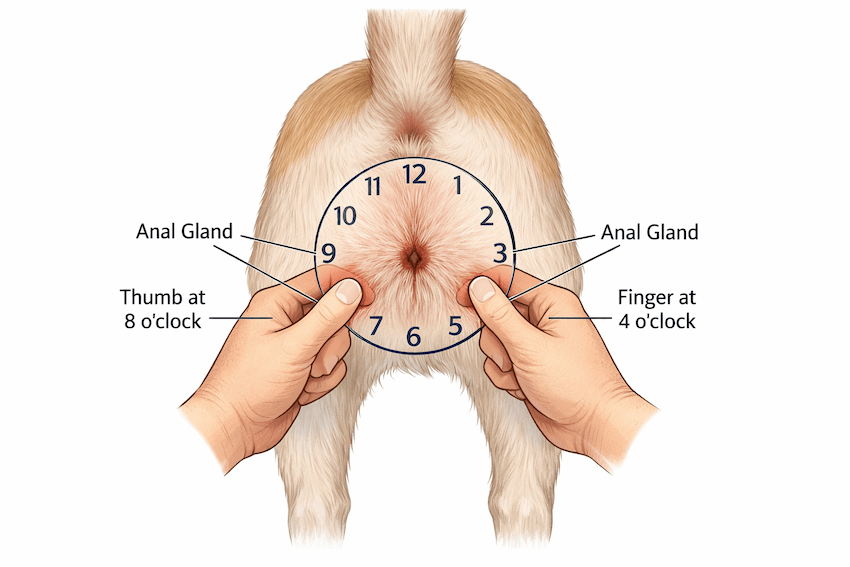
Expressing a dog’s anal glands means gently emptying the two scent sacs that sit just inside the anus at roughly the 4 o’clock and 8 o’clock positions. The goal is to relieve discomfort when the glands are truly full, while avoiding extra irritation or missing a more serious problem such as impaction, infection, or an abscess. Most dogs empty these sacs naturally when they defecate, so this is not a routine task for every dog, and at-home expression is best reserved for dogs whose veterinarian has said it is appropriate.
Before you start, know the red flags. If your dog has blood, pus, marked swelling, severe pain, straining, fever, or a ruptured-looking sore near the anus, skip home expression and call your vet instead, because infected or abscessed sacs may need flushing, medication, pain control, or sedation.
How to Express Dog Anal Glands Safely at Home
Step 1: Confirm that anal gland expression is actually needed
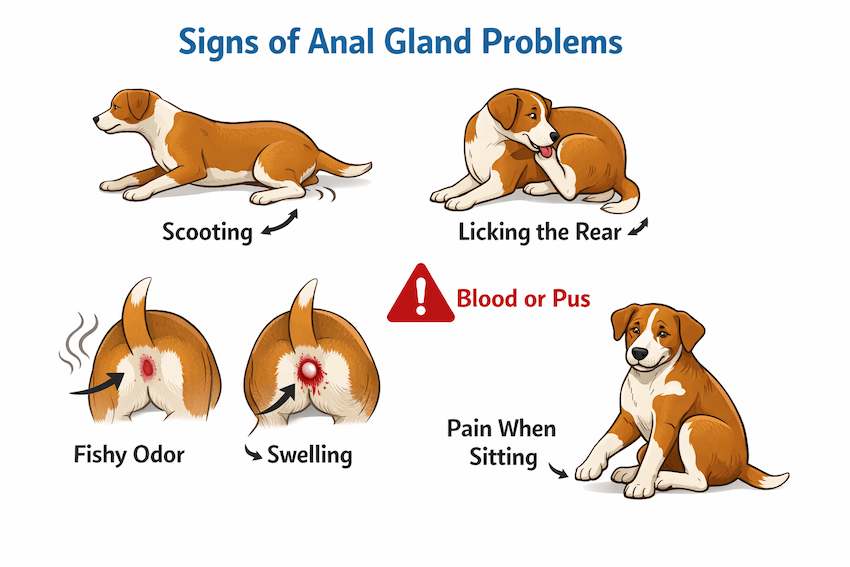
Look for common signs such as scooting, frequent licking of the rear, a sudden fishy odor, or discomfort when sitting. Keep in mind those signs are not specific to anal glands alone; parasites, skin irritation, and other rectal problems can look similar, which is why repeated or severe symptoms deserve a veterinary exam.


Step 2: Gather supplies and set up a washable area
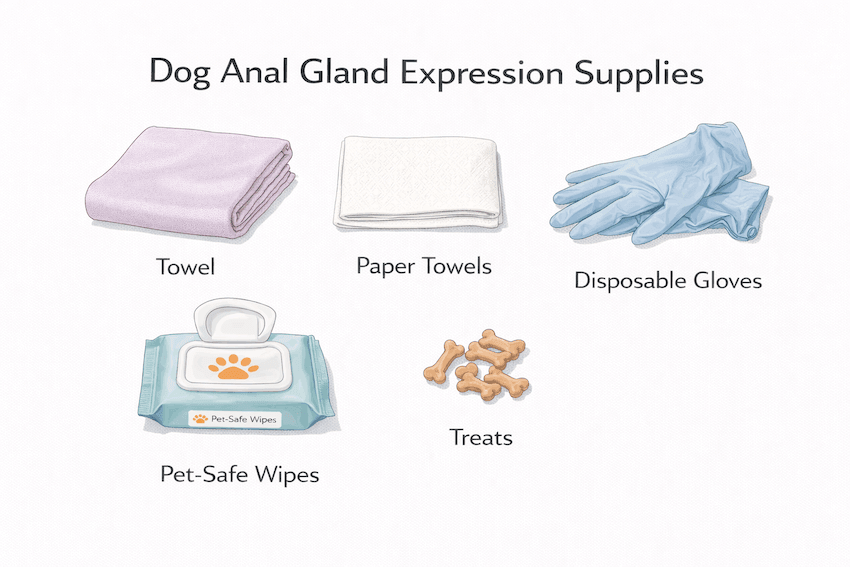
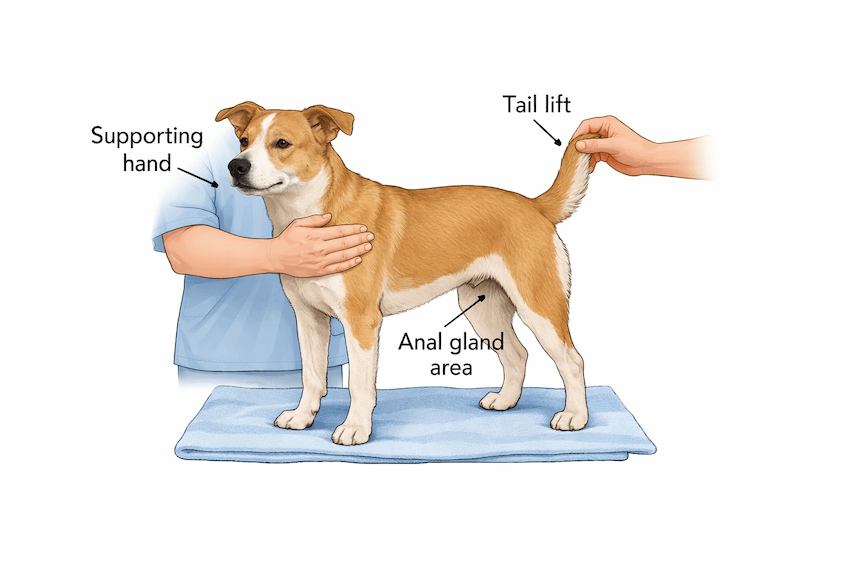
Use disposable gloves, paper towels, a towel for the floor or table, pet-safe wipes or a damp washcloth, and treats. Small dogs are often easier to position on a stable table with a towel underneath, while larger dogs are usually managed on the floor. Having a second person hold the dog steady is strongly recommended.
Step 3: Position your dog calmly and safely
Have your helper keep your dog standing and still. Lift the tail gently if needed, but stop if your dog becomes frightened, tries to bite, or seems painful. A tense dog is harder to examine accurately, and pain during handling can signal inflammation, infection, or obstruction rather than simple fullness.
Step 4: Locate the anal glands correctly
With a paper towel in your dominant hand, place your thumb and forefinger about an inch from the anus, slightly below center, at the 4 o’clock and 8 o’clock positions. These are the typical locations of the sacs for external expression. Do not insert a finger into the rectum unless your veterinarian has specifically trained you to do that technique.


Step 5: Apply gentle inward and slightly upward pressure
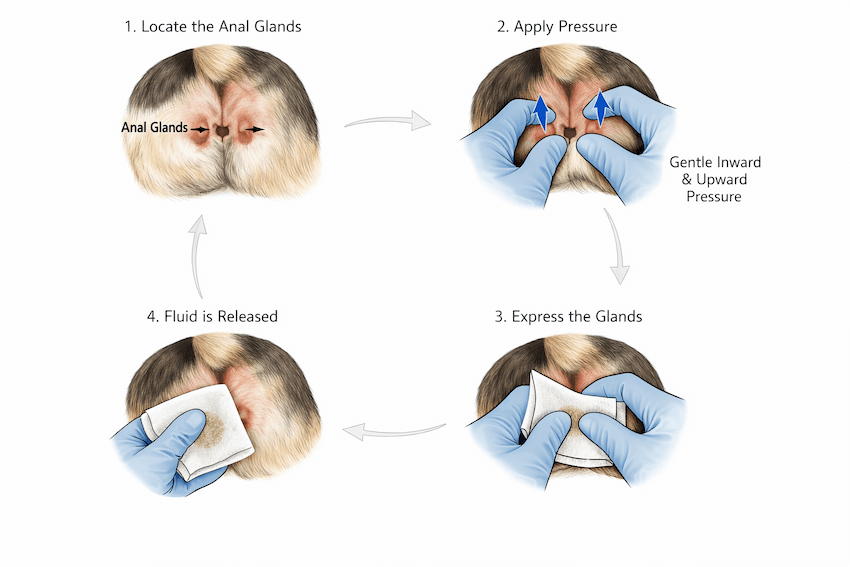
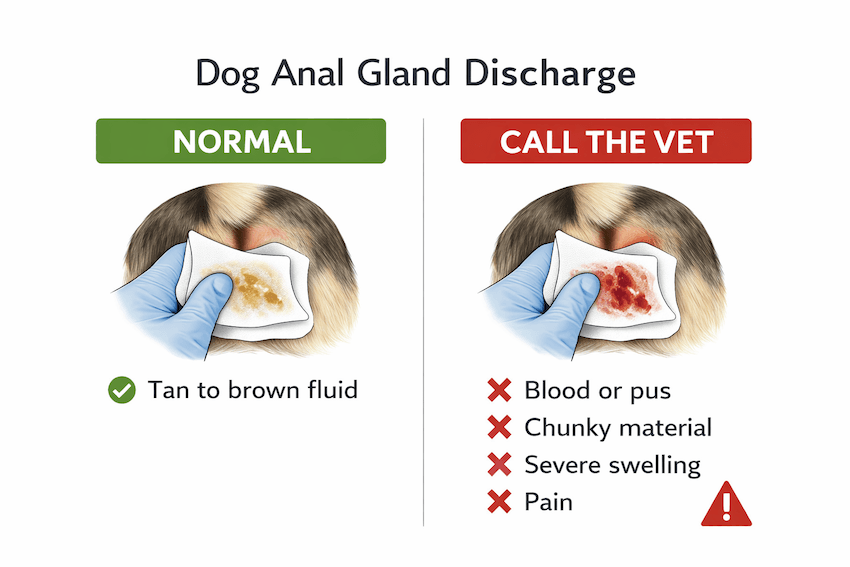
Pinch gently but firmly with the thumb and forefinger while keeping the paper towel over the area. The goal is not to squeeze hard, but to encourage the material outward. Normal expressed material is often tan to brown and may be thin or pasty. If nothing comes out with gentle pressure, do not keep forcing it.
Step 6: Stop immediately if you see abnormal discharge or pain
If the fluid is bloody, greenish-yellow, chunky, or extremely difficult to express, or if your dog cries, snaps, or clamps down from pain, stop and call your veterinarian. Thick impacted material, infection, and abscesses often need professional treatment rather than more squeezing at home.
Step 7: Clean the area and reward your dog
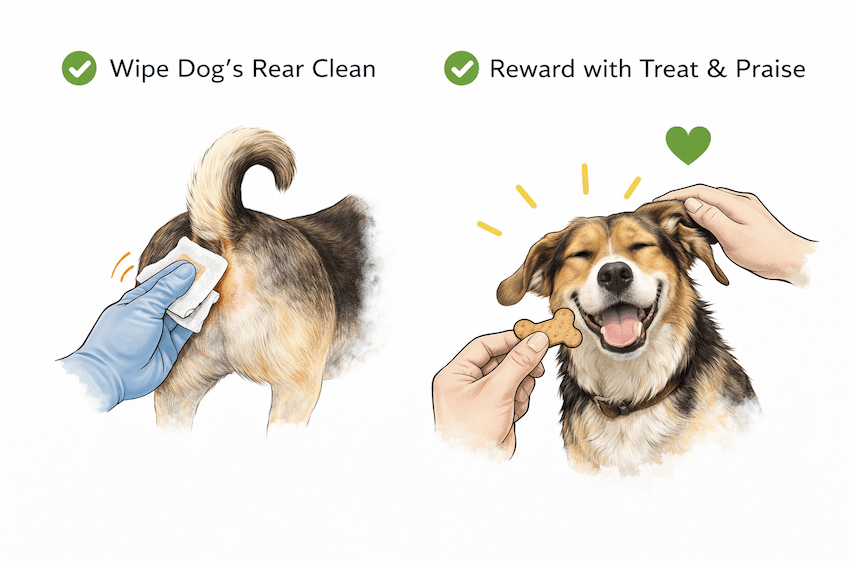
Wipe the area thoroughly with a damp washcloth or pet-safe wipe, dispose of gloves and paper towels, wash the surface, and wash your hands. Then reward your dog with praise or a treat so the experience ends calmly.
Step 8: Do not make this a routine habit unless your vet advises it
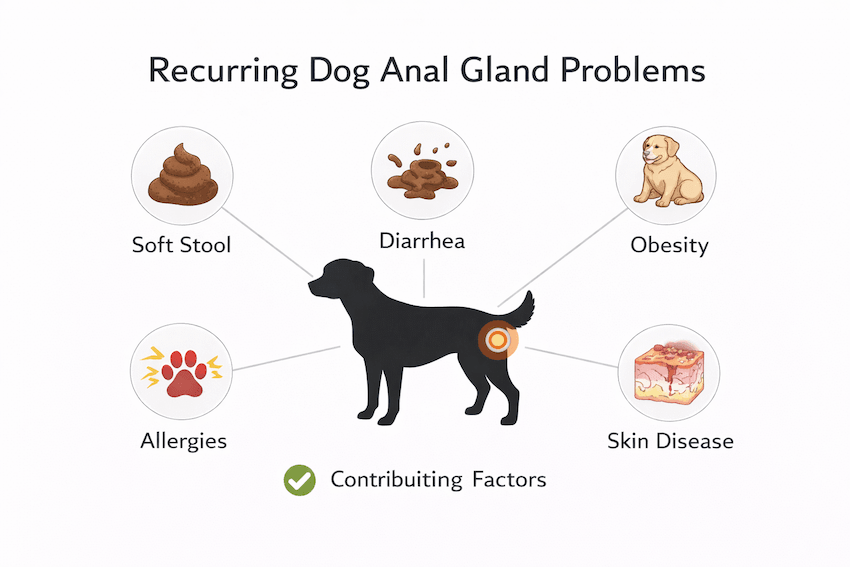
Many dogs do not need regular expression, and repeated unnecessary manipulation can irritate the sacs and surrounding tissue. Recurrent cases often require addressing the underlying trigger, such as soft stool, obesity, allergies, dermatitis, or chronic gastrointestinal upset.
Evidence on How to Express Dog Anal Glands and When to Avoid It
Veterinary references agree that most dogs empty their anal sacs naturally during bowel movements, and manual expression is mainly used when there is impaction or inflammation rather than as a universal routine grooming. VCA notes that impacted sacs become swollen and painful, while infection can progress to pus and abscess formation.
A 2021 cross-sectional study on canine and feline anal sac disease reported an estimated incidence of 15.7% in dogs and found that diarrhea, skin disease, obesity, and smaller body size were commonly associated factors. The same study also found that manual expression and treatment of underlying causes were the main approaches used by veterinarians, which matters because recurring gland issues usually need more than repeated emptying alone.[1]
A retrospective study of canine anal sacculitis found that local treatment often involved flushing plus medication placed directly into the sac, with repeated treatments sometimes required. Clinically, that supports the idea that painful, inflamed, or recurrent cases are often not simple “squeeze and done” situations.[2]
PetMD and AKC both emphasize that owners should not attempt home expression without veterinary instruction, especially if the gland is obstructed or the dog is painful, because poor technique can cause more harm than good. That matters most when deciding whether to proceed at home or stop and book an exam.
Extra Tips for How to Express Dog Anal Glands
| Tip | Why It Helps | How to Apply It |
|---|---|---|
| Use a helper | Steady restraint makes the process safer and more accurate. | Ask one person to support the dog calmly throughout. |
| Shield with paper towel | It catches discharge and limits sudden spray or mess. | Keep the towel over the anus while pressing gently. |
| Check stool quality | Soft stool often contributes to poor natural emptying. | Track bowel consistency and discuss chronic softness with your vet. |
| Keep pressure gentle | Forceful squeezing can irritate delicate tissue and ducts. | Use light inward pressure, then stop if nothing happens. |
| Watch body language | Pain can signal infection, inflammation, or obstruction. | Stop immediately if your dog cries, twists, or snaps. |
| Address root causes | Recurrence often reflects allergies, obesity, or GI issues. | Treat the trigger instead of repeating expression too often. |
Dogs with recurring anal gland issues often benefit more from improving stool quality and treating underlying skin or gastrointestinal disease than from frequent squeezing alone. Risk factors commonly reported include soft stool, obesity, allergies, dermatitis, and smaller body size.
Common Mistakes When You Express Dog Anal Glands
| Mistake | Why It’s a Problem |
|---|---|
| Squeezing too hard | Excess force can worsen pain, inflammation, and tissue injury. |
| Ignoring red flags | Blood, pus, or swelling may indicate infection or abscess. |
| Using internal technique | Rectal expression carries more risk without direct veterinary training. |
| Doing it routinely | Unneeded repetition may irritate sacs that function normally. |
| Missing other causes | Scooting may come from parasites, grooming irritation, or allergies. |
| Continuing despite pain | Pain often means the problem is not simple fullness. |
Repeated manipulation can contribute to irritation, and scooting is not always an anal-gland problem. AKC specifically notes that parasites, grooming irritation, and dietary issues can mimic or worsen the same behavior pattern.
Aftercare After You Express Dog Anal Glands
After expression, clean the area well, wash your hands, and monitor your dog over the next 24 to 48 hours. A good result usually means the scooting, licking, odor, or sitting discomfort improves fairly quickly.
Keep watching for signs that suggest the problem was not simply fullness: continued scooting, swelling, redness, straining to defecate, discharge, lethargy, or reduced appetite. Those signs can indicate impaction, inflammation, infection, or another rear-end problem that requires veterinary care.
For long-term maintenance, focus on the causes that make normal emptying less likely. Firmer stools, healthy body weight, and treatment for allergies or chronic skin and GI issues can reduce recurrence in some dogs. If your dog needs repeated expression, ask your veterinarian whether there is an underlying disease that should be treated rather than simply repeating the procedure.
Frequently Asked Questions
The Bottom Line
Expressing a dog’s anal glands can help relieve discomfort, but it should be done carefully and only when there is a real need. The most important part is knowing the difference between simple fullness and signs of infection, impaction, or pain that require veterinary care. A gentle technique, proper positioning, and stopping when something seems off all matter more than trying to force the process. For many dogs, the better long-term solution is not frequent manual expression, but addressing stool quality, weight, skin issues, or other underlying triggers. When done correctly, anal gland expression can improve comfort and reduce scooting, licking, and that strong fishy odor. But when symptoms keep coming back or the discharge looks abnormal, it is always safer to let a vet take over. In the end, the goal is not just to empty the glands, but to keep your dog comfortable, healthy, and out of pain.