Claritin Dog Dosage Calculator: How Much to Give & Charts

Canine Bible is reader-supported. We receive affiliate commissions via some of our links. Learn more.
Whether your dog is sneezing from seasonal allergies, scratching due to itchy skin, or reacting to insect bites, Claritin (loratadine) is another trusted over-the-counter antihistamine that can help provide relief when given at the right dosage. However, not all Claritin products are safe for dogs—avoid Claritin-D, as it contains pseudoephedrine, which is toxic to pets. That’s why we created this Dog Claritin Dosage Calculator—to help you quickly and safely determine the correct amount of Claritin for your dog’s weight. In this guide, you’ll also find dosage charts, safety guidelines (including which dogs should not take Claritin), and answers to common questions to ensure your pup gets allergy relief safely and effectively.
Claritin (Loratadine) Dosage Calculator for Dogs
How Much Claritin Can I Give My Dog?
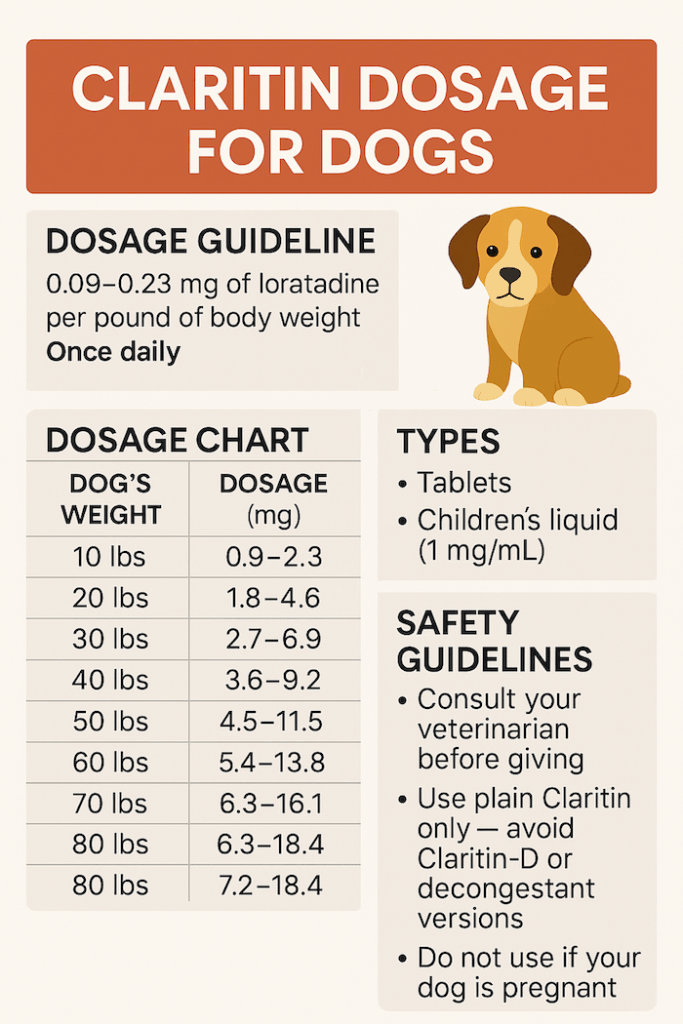
The standard Claritin (loratadine) dosage for dogs is 0.2 to 0.5 mg per kilogram of body weight (about 0.09 to 0.23 mg per pound), given once daily. Most veterinarians use this guideline when recommending over-the-counter dog antihistamines like Claritin for dogs dealing with allergies, itching, or skin irritations. Children’s Liquid Claritin is commonly 5 mg per 5 mL (1 mg/mL) and is handy for dogs under 10 pounds because you can measure small, precise amounts rather than split adult tablets. If your dog won’t take liquids—or you prefer simpler dosing—standard 10 mg Claritin tablets work well for many dogs when the dose is calculated correctly. Avoid Claritin-D (contains pseudoephedrine), as it is not safe for dogs.
Below are quick Claritin product suggestions by type and strength:
| Product Type | Common Strengths | Best For |
|---|---|---|
| Adult Claritin tablets | 10 mg | Medium to large dogs (25+ lbs) |
| Children’s Liquid Claritin | 5 mg per 5 mL (1 mg/mL) | Small dogs under 10 lbs |
| Smaller-dose or scored tablets | 5 mg | Small to medium dogs (10–20 lbs) |
Claritin Table Dosage Chart for Dogs (By Weight)
| Dog Weight (lbs) | Dosage (mg) | 5 mg Tablets | 10 mg Tablets |
|---|---|---|---|
| 5 | 0.4–1.2 mg | ¼ tab | — |
| 10 | 0.9–2.3 mg | ¼ tab–½ tab | ¼ tab |
| 15 | 1.3–3.5 mg | ¼ tab–¾ tab | ¼ tab |
| 20 | 1.8–4.6 mg | ¼ tab–1 tab | ¼ tab–½ tab |
| 25 | 2.2–5.8 mg | ½ tab–1 ¼ tab | ¼ tab–½ tab |
| 30 | 2.7–6.9 mg | ½ tab–1 ½ tab | ¼ tab–¾ tab |
| 35 | 3.1–8.1 mg | ½ tab–1 ½ tab | ¼ tab–¾ tab |
| 40 | 3.6–9.2 mg | ¾ tab–1 ¾ tab | ¼ tab–1 tab |
| 45 | 4.0–10.4 mg | ¾ tab–2 ¼ tab | ½ tab–1 ¼ tab |
| 50 | 4.5–11.5 mg | 1 tab–2 ¼ tab | ½ tab–1 ¼ tab |
| 60 | 5.4–13.8 mg | 1 ¼ tab–2 ¾ tab | ½ tab–1 ½ tab |
| 70 | 6.3–16.1 mg | 1 ¼ tab–3 ¼ tab | ¾ tab–1 ¾ tab |
| 80 | 7.2–18.4 mg | 1 ½ tab–3 ¾ tab | ¾ tab–1 ¾ tab |
| 90 | 8.1–20.7 mg | 1 ½ tab–4 ¼ tab | ¾ tab–2 tab |
| 100 | 9.0–23.0 mg | 1 ¾ tab–4 ½ tab | 1 tab–2 ¼ tab |
| 110 | 9.9–25.3 mg | 2 tab–5 tab | 1 tab–2 ½ tab |
| 120 | 10.8–27.6 mg | 2 ¼ tab–5 ½ tab | 1 tab–2 ¾ tab |
| 130 | 11.7–29.9 mg | 2 ¼ tab–6 tab | 1 ¼ tab–3 tab |
| 140 | 12.6–32.2 mg | 2 ½ tab–6 ½ tab | 1 ¼ tab–3 ¼ tab |
| 150 | 13.5–34.5 mg | 2 ¾ tab–7 tab | 1 ¼ tab–3 ½ tab |
Claritin Liquid Dosage Chart for Dogs
Dosing chart for dogs taking liquid Claritin.


| Dog Weight (lbs) | Liquid (1 mg per 1 mL) | Teaspoons (tsp) |
|---|---|---|
| 5 | 0.4–1.2 mL | 0.09–0.23 tsp |
| 10 | 0.9–2.3 mL | 0.18–0.46 tsp |
| 15 | 1.3–3.5 mL | 0.27–0.69 tsp |
| 20 | 1.8–4.6 mL | 0.36–0.92 tsp |
| 25 | 2.2–5.8 mL | 0.45–1.15 tsp |
| 30 | 2.7–6.9 mL | 0.54–1.38 tsp |
| 35 | 3.1–8.1 mL | 0.63–1.61 tsp |
| 40 | 3.6–9.2 mL | 0.72–1.84 tsp |
| 45 | 4.0–10.3 mL | 0.81–2.07 tsp |
| 50 | 4.5–11.5 mL | 0.9–2.3 tsp |
| 60 | 5.4–13.8 mL | 1.08–2.76 tsp |
| 70 | 6.3–16.1 mL | 1.26–3.22 tsp |
| 80 | 7.2–18.4 mL | 1.44–3.68 tsp |
| 90 | 8.1–20.7 mL | 1.62–4.14 tsp |
| 100 | 9–23.0 mL | 1.8–4.6 tsp |
| 110 | 9.9–25.3 mL | 1.98–5.06 tsp |
| 120 | 10.8–27.6 mL | 2.16–5.52 tsp |
| 130 | 11.7–29.9 mL | 2.34–5.98 tsp |
| 140 | 12.6–32.2 mL | 2.52–6.44 tsp |
| 150 | 13.5–34.5 mL | 2.7–6.9 tsp |
Types of Claritin to Avoid Giving Your Dog
⚠️ While loratadine is the active ingredient in most Claritin products, not every “Claritin” item is safe for dogs. Some versions include decongestants (like pseudoephedrine or phenylephrine) or additives that can be toxic or cause dangerous side effects.
🛑 If you’re outside the U.S., always double-check the product name and ingredients before giving it to your pet. Only use products where loratadine is the only active ingredient, and avoid any “D,” “Plus,” or “Duo” versions.
Claritin Forms to Avoid
When using Claritin (loratadine) for dogs, avoid the following:
- Extended-release (ER/12-hour/24-hour) formulations: Dogs metabolize these differently, which can result in uneven or unsafe absorption.
- Claritin-D / Claritin “Plus” / “Duo” combinations: Contain pseudoephedrine or phenylephrine, which are toxic and potentially life-threatening to dogs.
- Liqui-gels / gel capsules: Difficult to split for smaller dogs and may release the full dose too quickly. Opt for scored tablets or liquid forms instead.
- Adult liquid Claritin with additives: Some syrups or generics may contain alcohol, xylitol, or artificial sweeteners—all unsafe for dogs. Always choose Children’s Claritin 1 mg/mL and confirm it’s alcohol-free and xylitol-free.
- Extra-strength tablets (e.g., 20 mg): Can easily cause overdose, especially in small dogs. Standard 5 mg or 10 mg tablets are safer and easier to measure.
Use plain loratadine only (no “D” or decongestants). For accurate and safe dosing, stick with Children’s Claritin liquid (1 mg/mL) for small dogs or scored 5–10 mg tablets for medium to large dogs. Always verify inactive ingredients and confirm dosing with your veterinarian before administering.
Safety Dosage Guidelines
Make sure to follow these important safety tips before giving Claritin (loratadine) to your dog.


1. Use only plain Claritin with loratadine as the active ingredient
- Avoid any products labeled Claritin-D, Claritin Plus, or anything containing pseudoephedrine or phenylephrine — these can be toxic and potentially fatal to dogs.
- Steer clear of formulations that contain:
- Decongestants such as pseudoephedrine or phenylephrine (dangerous and potentially deadly)
- Xylitol or alcohol in liquid form (both are highly toxic to dogs)
- Other active antihistamines like cetirizine or fexofenadine, which may cause unsafe drug interactions
2. Follow the proper dosage
Measure doses carefully, especially when using Children’s Liquid Claritin (1 mg/mL). Always start on the lower end of the dosage range (0.09 mg/lb) for small or sensitive breeds, and only increase under veterinary guidance.
3. Avoid if your dog has:
- Liver or kidney disease (these organs process loratadine)
- Urinary retention or prostate issues
- Heart disease or high blood pressure
- Seizure disorders
- Pregnancy or nursing period (unless prescribed by a vet)
4. Check with your veterinarian first if:
- Your dog is under 12 weeks old
- Your dog is pregnant or nursing
- Your dog is on other antihistamines, sedatives, or prescription medications
5. Watch for side effects
These may include mild drowsiness, dry mouth, or digestive upset. Rare but serious reactions can involve hyperactivity, rapid heartbeat, vomiting, diarrhea, or seizures.
What to Do If A Dog Reacts Badly to Claritin
Dogs showing worsening symptoms, such as blood in their vomit or stool, difficulty breathing, weakness, or collapse, should be taken to the veterinarian immediately.
1. Contact a veterinarian immediately: Even if your dog seems fine, contact your veterinarian or an emergency pet poison hotline right away. This includes services like the ASPCA Animal Poison Control Center or Pet Poison Helpline at 1-855-764-7661. If you can't reach your vet, you can chat live with a registered online veterinary professional via our online vet chat or video chat support (24 hours a day, 7 days a week). You can also schedule an at-home veterinary appointment with The Vets, a mobile veterinary service that provides at-home vet care nationwide for just about everything.
2. Gather important information: When speaking to a vet, provide the quantity consumed (estimate if unsure), the time of ingestion, and the dog’s weight and breed (to assess potential risk).
3. Follow veterinary instructions: The vet may suggest monitoring at home or emergency treatment at the clinic.
- Keep your dog calm and prevent them from eating anything else.
- Be prepared to transport your dog to the vet quickly if advised.
- Bring any remaining Claritin or packaging to help the vet assess the situation.
🧬 MDR1 Sensitivity and Claritin
Some dogs carry a genetic mutation in the MDR1 (Multi-Drug Resistance 1) gene, which affects how their body processes certain medications. This mutation is prevalent in herding breeds like Collies, Australian Shepherds, and Shelties.
While Claritin (diphenhydramine) is generally considered safe for most dogs, those with the MDR1 mutation may be more sensitive to its effects or to other medications that might be used alongside it—such as sedatives, anti-nausea drugs, or decontamination treatments in emergency scenarios. Knowing your dog’s MDR1 status is crucial if:
- You ever need to use Claritin alongside other medications.
- Your dog is receiving long-term allergy management.
- You want to avoid adverse drug reactions during emergency treatment.
The EasyDNA MDR1 test is a reliable way to determine if your dog has this mutation. It allows your vet to tailor medication choices safely, including when Claritin is considered.
Pro tip: If your dog is a herding breed or mixed with one, consider testing before using any medications, even over-the-counter ones like Claritin.
Calculate Claritin Dosage For Dogs Manually
Use these formulas to manually calculate your dog’s Claritin (loratadine) dosage.
Tablet
Use this method if you’re giving your dog standard Claritin tablets (typically 5 mg or 10 mg per tablet):
- Standard dose: 0.09–0.23 mg per pound of body weight (once daily)
- Tablet strength: Most adult Claritin tablets contain 10 mg of loratadine
- Formula:
Dog’s weight (in pounds) × 0.09–0.23 = total mg per day
Then divide by tablet strength to find the number of tablets.
Example: 50 lb dog → 50 × 0.09–0.23 = 4.5–11.5 mg → give about ½ to 1 Claritin 10 mg tablet once daily
Liquid
Use this method if you’re using Children’s Liquid Claritin (commonly 1 mg per 1 mL):
- Standard dose: 0.09–0.23 mg per pound of body weight (once daily)
- Liquid concentration: 1 mg per 1 mL
- Formula:
Dog’s weight (in pounds) × 0.09–0.23 = total mg → equals mL to give
✏️ Example: 25 lb dog → 25 × 0.09–0.23 = 2.25–5.75 mg → give 2.25–5.75 mL once daily
Frequently Asked Questions
The Bottom Line & Alternatives
Claritin (loratadine) can be a safe and effective allergy relief option for dogs when used correctly. Always use plain Claritin—never versions with decongestants—and follow the proper dosage of 0.09–0.23 mg per pound once daily. While it typically starts working within a few hours and lasts up to 24 hours, every dog responds differently. For long-term use or persistent symptoms, consult your veterinarian to ensure Claritin is the right choice and to rule out underlying causes of allergies or itching.
If Claritin isn’t providing enough relief or you’re looking for gentler, longer-term alternatives, you might want to explore CBD oil for dogs—which some pet owners use to naturally manage both allergies and anxiety. You can also check out our guide to the best allergy medicine for dogs for prescription and non-prescription options beyond Claritin. Concerned that your dog’s symptoms may be caused by an underlying allergy? Getting a dog allergy test can help identify food or environmental triggers so you can treat the root cause—not just the symptoms. For dogs dealing with stress, travel anxiety, or loud noises like fireworks, Claritin may not always be the ideal long-term solution. In that case, explore our calming strategies and products in how to calm dogs with anxiety.
With the charts, calculators, and tips in this guide, you now have everything you need to safely and confidently dose Claritin—and understand when it might be time to try something more targeted.