Kennel Cough in Dogs: Symptoms, Types, Causes, Signs & Prevention

Canine Bible is reader-supported. We receive affiliate commissions via some of our links. Learn more.
Kennel cough is one of the most common respiratory infections in dogs, especially in places where dogs gather, such as boarding facilities, shelters, and parks. Many owners initially mistake it for a minor throat irritation due to the characteristic dry, hacking cough. While often mild, kennel cough can become more serious in puppies, seniors, or dogs with weakened immune systems. The good news is that most cases resolve with proper care, rest, and supportive treatment. This guide covers everything you need to know about kennel cough in dogs—from causes and symptoms to diagnosis, treatment, prevention, and daily management—so you can help your dog recover quickly and stay protected.
What Is Kennel Cough in Dogs?
Kennel cough, in simple terms, is a contagious respiratory infection that affects a dog’s upper airways, leading to inflammation of the trachea (windpipe) and bronchi. It’s most commonly caused by a combination of viruses and bacteria—especially Bordetella bronchiseptica. As the airways become irritated and inflamed, dogs develop a persistent, dry, hacking cough, often described as sounding like something is stuck in their throat. While many cases are mild, the infection can worsen or lead to complications if left untreated, particularly in young, senior, or immunocompromised dogs.
Types
Kennel cough can have different forms depending on the cause and severity:
| Type | Description |
|---|---|
| Bacterial (Bordetella) | The most common form, caused by Bordetella bronchiseptica, leading to a dry, hacking cough. |
| Viral | Triggered by viruses such as canine parainfluenza or adenovirus, often causing milder but highly contagious symptoms. |
| Mixed Infection | A combination of bacterial and viral pathogens, often resulting in more severe or prolonged illness. |
| Mild Kennel Cough | Dogs remain active with a persistent cough but otherwise feel well; usually resolves on its own. |
| Severe Kennel Cough | Includes lethargy, fever, loss of appetite, and risk of complications like pneumonia. |
| Chronic or Complicated | Occurs in puppies, senior dogs, or those with weak immune systems; symptoms last longer and may require intensive treatment. |
Predisposed Dog Breeds for Kennel Cough
Kennel cough can affect dogs of any age or breed, but some are more at risk due to lifestyle and environment. Dogs that frequently interact with others—such as those in kennels, shelters, dog parks, or daycare—are especially vulnerable due to the highly contagious nature of the infection.


| Group | Examples | Notes on Risk Factors |
|---|---|---|
| Social / High-Exposure Dogs | Dogs in kennels, daycare, shelters, dog parks | Frequent contact with other dogs increases exposure to airborne bacteria and viruses. |
| Puppies | Dogs under 6–12 months | Immature immune systems make them more vulnerable to infection and complications. |
| Senior Dogs | Dogs over 7–8 years | Weakened immunity increases the risk of severe symptoms or pneumonia. |
| Unvaccinated Dogs | Dogs without Bordetella or respiratory vaccines | Lack of protection makes infection more likely and symptoms potentially more severe. |
| Short-Nosed (Brachycephalic) | Bulldog, Pug, French Bulldog, Shih Tzu | Narrow airways can worsen coughing and breathing difficulties. |
| Dogs with Health Conditions | Dogs with heart disease, lung disease, or weakened immunity | Underlying conditions increase the risk of complications and slower recovery. |
Causes
Symptoms
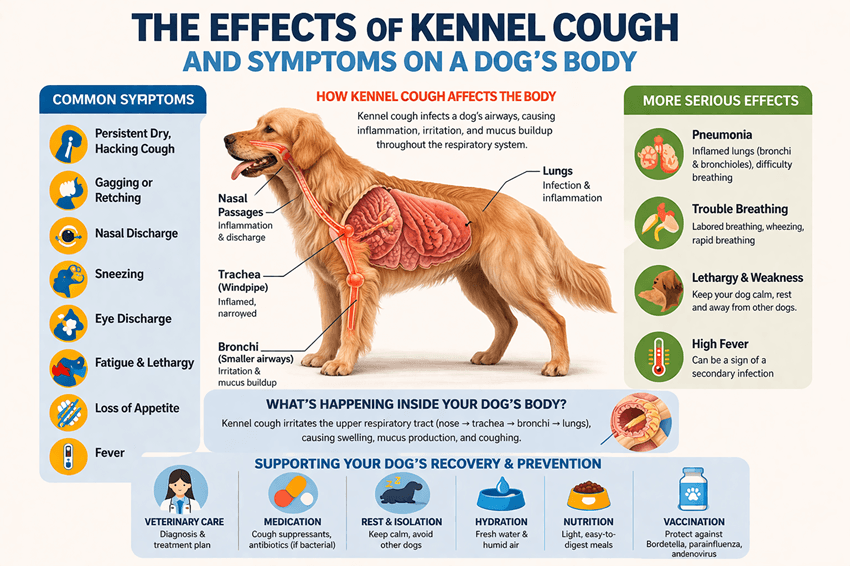
Kennel cough in dogs is a common respiratory infection that affects the airways and can range from mild to more serious, especially in vulnerable dogs. Early signs are often noticeable—such as a persistent dry, hacking cough—but may be mistaken for minor throat irritation.
This guide highlights the most common symptoms and how kennel cough affects your dog’s respiratory system, helping you recognize signs early and take steps to support a smooth recovery.
Stages of Kennel Cough in Dogs
- Early stage: Mild, occasional dry cough; dog otherwise active.
- Moderate stage: Frequent coughing, gagging, nasal discharge, reduced energy.
- Advanced stage: Persistent cough, lethargy, fever, and possible complications like pneumonia.
Top Ways to Prevent Kennel Cough in Dogs
Because kennel cough is highly contagious, prevention plays a key role in protecting your dog. With proper vaccination, good hygiene, and minimizing exposure in high-risk environments, you can significantly reduce the chances of infection and keep your dog healthy and safe.


Actionable Resources
If you want to prevent or manage kennel cough in your dog, here are some practical steps and resources to explore with your veterinarian:
How Kennel Cough Is Diagnosed in Dogs
Diagnosing kennel cough typically involves a veterinary evaluation to confirm the infection and rule out more serious respiratory conditions. Key steps include:
- Physical Examination: A vet listens to your dog’s lungs and may gently press the throat to trigger the characteristic cough.
- Imaging: Chest X-rays may be recommended if pneumonia or complications are suspected.
- Laboratory Tests: In more severe or unclear cases, swabs or blood tests may be used to identify specific bacteria or viruses.
- Medical History: Recent exposure to other dogs (boarding, daycare, parks) helps support the diagnosis.
Early diagnosis is important to prevent the infection from worsening and to ensure your dog receives appropriate care and recovers quickly.
Treatment & Care
According to current veterinary guidance, treatment for kennel cough in dogs focuses on relieving symptoms and supporting recovery. Most mild cases improve with rest, while more severe cases may require medications such as cough suppressants, antibiotics (if bacterial infection is suspected), or anti-inflammatories.
Always consult your veterinarian before starting any new treatment or supplement for kennel cough. You can get personalized joint-care advice from an online registered vet anytime, anywhere through Dutch. You can also chat with an online vet to ask questions about managing your dog’s kennel coughs symptoms, treatment options, and lifestyle adjustments tailored to their condition.
Conventional Medical Treatments
| Treatments | Benefits / Role |
|---|---|
| Rest and Isolation | Helps reduce airway irritation, supports recovery, and prevents spreading the infection to other dogs. |
| Cough Suppressants | May be prescribed by a vet to reduce frequent dry coughing and improve comfort in mild to moderate cases. |
| Antibiotics | Used when a bacterial infection such as Bordetella is suspected or when symptoms are more severe or prolonged. |
| Anti-Inflammatory Medications | Can help reduce throat irritation, fever, or inflammation when recommended by a veterinarian. |
| Supportive Care | Includes hydration, humidified air, soft food, and monitoring for worsening signs such as lethargy or breathing difficulty. |
Supplement Support
| Supplement / Nutrient | Benefits / Role |
|---|---|
| Vitamin C | Supports the immune system and may help dogs fight off respiratory infections more effectively. |
| Vitamin E | Provides antioxidant protection and helps reduce oxidative stress during illness. |
| Omega-3 Fatty Acids (Fish Oil) | May help reduce airway inflammation and support overall immune health. |
| Zinc | Essential for immune function and may support faster recovery from infections. |
| Probiotics | Support gut health and immunity, especially useful if antibiotics are prescribed. |
| Honey (in small, vet-approved amounts) | May help soothe throat irritation and reduce coughing in mild cases. |
| Bone Broth | Encourages hydration and provides easy-to-digest nutrients during recovery. |
| Herbal Support (e.g., Echinacea, Licorice Root) | May support immune response and help soothe respiratory irritation (use only with veterinary guidance). |
Alternative & Integrative Therapies
| Therapy | Benefits / Role |
|---|---|
| Humidified Air / Steam Therapy | Helps soothe irritated airways, loosen mucus, and reduce coughing (e.g., using a humidifier or steam from a bathroom). |
| Honey (Vet-Approved Use) | May help coat and soothe the throat, reducing irritation and mild coughing. |
| Herbal Remedies | Herbs like licorice root or marshmallow root may help soothe the respiratory tract (only with veterinary guidance). |
| Immune Support Therapies | Natural supplements or holistic approaches aimed at strengthening the immune system during recovery. |
| Rest & Stress Reduction | Minimizing activity and stress supports the immune response and prevents worsening of symptoms. |
| Aromatherapy (Pet-Safe Only) | Very mild, vet-approved essential oils may support relaxation; avoid strong scents that can irritate airways. |
| Environmental Management | Reducing exposure to smoke, dust, and cold air helps prevent further irritation of the respiratory tract. |
Surgical Options
| Advanced Care Option | Benefits / Role |
|---|---|
| Oxygen Therapy | Provides breathing support in severe cases with respiratory distress or complications like pneumonia. |
| Intravenous (IV) Fluids | Maintains hydration and supports recovery in dogs that are lethargic or not eating/drinking well. |
| Nebulization Therapy | Delivers moisture and medication directly to the airways to help loosen mucus and ease breathing. |
| Hospitalization | Required for severe infections, especially in puppies or senior dogs, to allow close monitoring and intensive care. |
| Advanced Imaging (X-rays) | Used to check for complications like pneumonia or other underlying respiratory conditions. |
Emotional & Lifestyle Impact
Kennel cough can affect more than just a dog’s respiratory system—it can temporarily change their daily behavior and energy levels. Dogs with kennel cough may become less active, tired, or reluctant to play due to frequent coughing and discomfort. They may also need to be isolated from other dogs to prevent spreading the infection, which can limit social interaction.
For owners, this period can be stressful, especially when managing persistent coughing and keeping an energetic dog calm and rested. Daily routines may need to shift toward shorter walks, limited activity, and quiet rest time. With proper care, patience, and a calm environment, most dogs recover fully and return to their normal, happy selves.
Typical Annual Cost of Treating Kennel Cough
| Category | Estimated Cost Range | Notes |
|---|---|---|
| Vet Visit & Diagnosis | $50 – $150 | Basic exam; additional tests if symptoms are severe or unclear. |
| Medications | $30 – $150 | Cough suppressants, antibiotics (if needed), anti-inflammatories. |
| Supportive Care | $20 – $100 | Humidifiers, supplements, hydration support, soft food. |
| Follow-Up Visits | $50 – $150 | Needed if symptoms persist or worsen. |
| Emergency / Severe Case Care | $300 – $1,000+ | Includes hospitalization, IV fluids, oxygen therapy, or imaging. |
| Vaccination (Prevention) | $20 – $60 | Bordetella vaccine helps reduce risk, especially for social dogs. |
| Typical Total Cost | Mild Cases: $50 – $200 | Moderate Cases: $150 – $400 | Severe Cases: $500 – $1,000+ | |
Kennel cough care can sometimes involve vet visits, medications, and follow-up care—especially in more severe cases. Pet insurance can help reduce the financial burden and ensure your dog gets prompt treatment without compromise. If you want to compare coverage options for illnesses like respiratory infections, check out our guides to the Best Pet Insurance for Dogs and Best Pet Wellness Plans.
Other Health Issues Related to Kennel Cough in Dogs
While many cases are mild, kennel cough can lead to additional complications or be confused with other respiratory conditions, especially if symptoms persist:
- Pneumonia
- Chronic bronchitis
- Tracheal collapse
- Secondary bacterial infections
- Weakened immune response
- Loss of appetite
- Lethargy and fatigue
- Fever
- Dehydration
- Nasal discharge and sinus infections
- Difficulty breathing (in severe cases)
If symptoms worsen or don’t improve within a couple of weeks, veterinary care is essential to rule out more serious conditions.
Frequently Asked Questions
The Bottom Line
Kennel cough is a common and highly contagious respiratory infection in dogs, but in most cases, it’s mild and manageable. With early recognition, proper care, and temporary isolation, most dogs recover fully without complications. By ensuring rest, following your veterinarian’s guidance, and keeping up with vaccinations, you can help your dog heal quickly and reduce the risk of future infections. The goal is not just a fast recovery, but keeping your dog healthy, comfortable, and protected in the long run.