How to Bathe a Dog: 8 Easy Steps for a Calm & Stress-Free Bath

Canine Bible is reader-supported. We receive affiliate commissions via some of our links. Learn more.
To bathe a dog, brush the coat first, use lukewarm water, apply dog-safe shampoo, rinse thoroughly, and dry the dog well. The goal is to clean the skin and coat without causing stress, irritation, or leftover shampoo residue. Most dogs only need baths occasionally, but the right routine depends on coat type, lifestyle, skin health, and odor. Bathing may seem simple, but small mistakes can make a dog anxious or leave the skin dry and itchy. Some dogs need extra care because of allergies, sensitive skin, thick coats, or fear of water. There are also times when bathing at home is not the safest choice. This guide explains how to bathe your dog properly, what to avoid, and when to call a groomer or veterinarian.
Dog Bathing Supplies You Need
| Supply | Why You Need It | Owner Tip |
|---|---|---|
| Dog shampoo | Cleans your dog without using harsh human products. | Choose fragrance-free shampoo for sensitive skin. |
| Brush or comb | Removes loose hair before water tightens mats. | Brush gently before the bath begins. |
| Non-slip mat | Helps prevent slipping, stress, and panic. | Place it before your dog enters. |
| Towels | Absorb water and help keep your dog warm. | Keep two or three towels nearby. |
| Cup or sprayer | Helps wet and rinse the coat evenly. | Use gentle flow near sensitive areas. |
| Treats | Reward calm behavior during bath-time handling. | Use tiny treats throughout the bath. |
| Clean cloth | Cleans the face without spraying water. | Wipe around eyes and muzzle gently. |
What to Know Before Bathing a Dog
Most healthy dogs can be bathed at home if they are comfortable being handled and their skin looks normal. Bathing is usually reasonable when your dog is muddy, dusty, smelly, or dirty after outdoor activity.
Before starting, make sure the coat has no painful mats, wounds, raw areas, or signs of skin irritation. Your dog should also be able to stand safely without slipping, and you should have dog-safe shampoo, towels, and a calm setup ready.
Skip the bath and call your veterinarian if your dog has open sores, inflamed skin, severe itching, pain when touched, unusual odor, recurring skin infections, panic, biting, collapse, or breathing trouble. Harsh soaps, rough scrubbing, and poor rinsing can disrupt the skin barrier and make irritation worse.


How Often Should You Bathe a Dog?
Many healthy dogs do well with baths every 4 to 12 weeks, but how often you wash your dog depends on coat type, activity level, odor, allergies, skin disease, and veterinarian instructions.
| Dog Type | Typical Bath Need | What to Watch |
|---|---|---|
| Short coat | Often needs baths less frequently. | Watch for odor, dirt, or dandruff. |
| Long coat | May need more brushing than bathing. | Check for mats before wetting. |
| Double coat | Needs careful rinsing and drying. | Moisture can hide near the skin. |
| Active outdoor dog | May need baths after mud or odor. | Rinse paws after dirty outings. |
| Allergy-prone dog | May need a veterinarian bathing plan. | Track itching, redness, and odor. |
| Medicated bath dog | Follow your veterinarian’s exact schedule. | Do not shorten contact time. |
How to Bathe a Dog Step-by-Step
Follow these steps to safely bathe your dog.
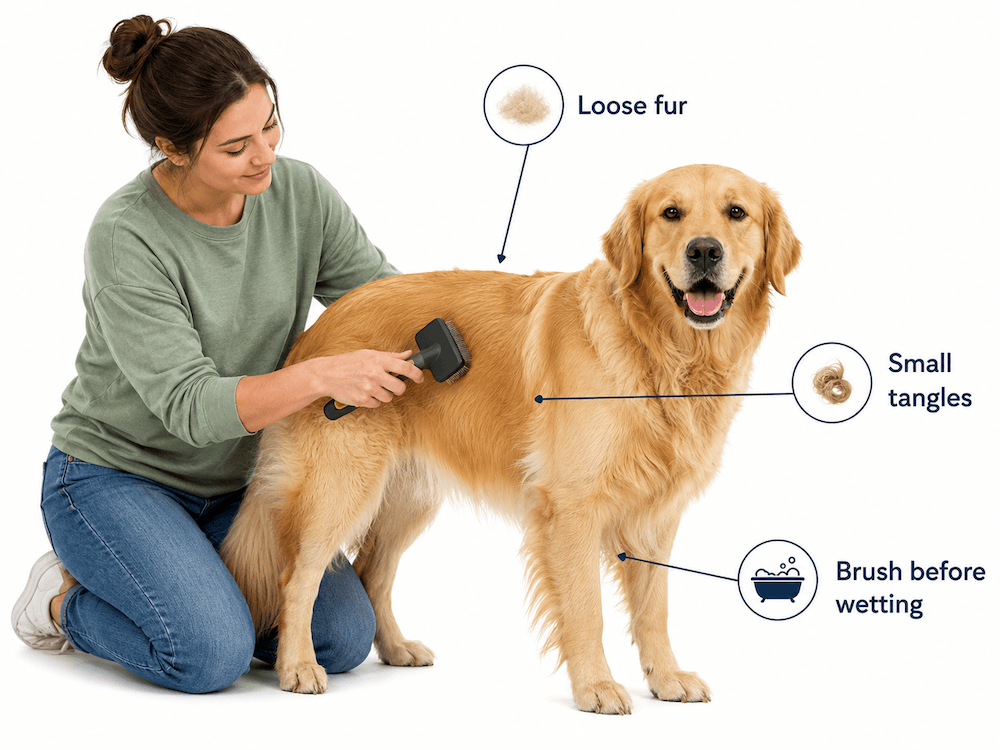
Step 1: Brush Your Dog Before the Bath
Brush the coat before adding water, especially if your dog has medium, long, curly, or double-coated fur. Mats can tighten when wet and may trap water and shampoo against the skin.
Step 2: Set Up a Safe Bathing Area
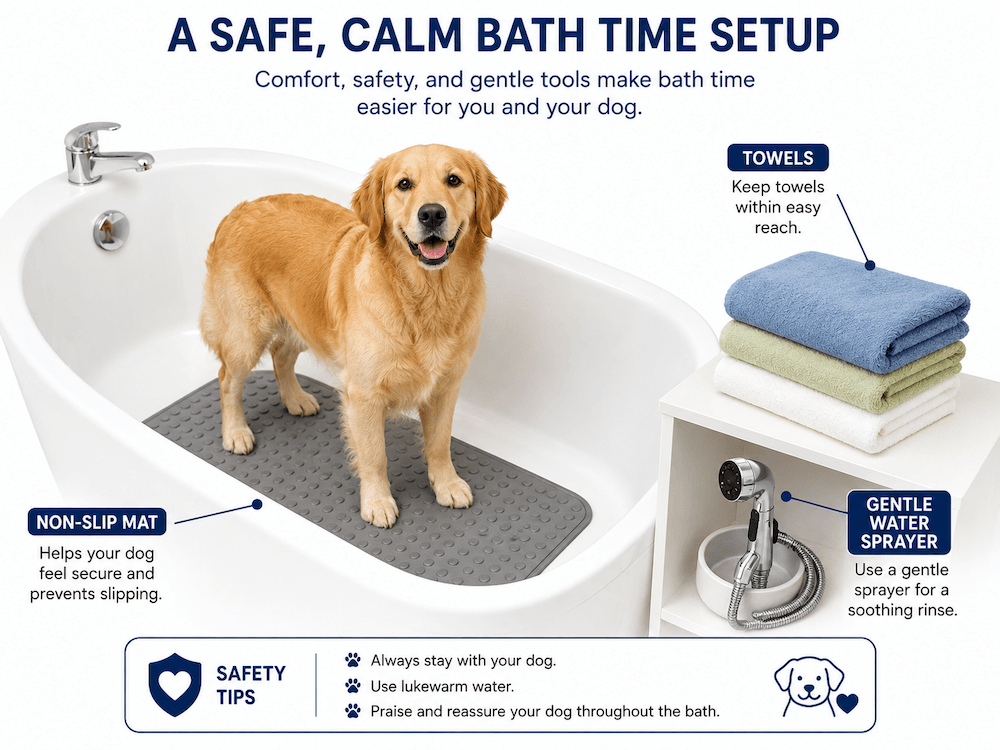
Place a non-slip mat in the tub, shower, sink, or washing station. Keep the room comfortably warm and put towels within reach so your dog is not left wet or unattended.


Step 3: Wet the Coat With Lukewarm Water
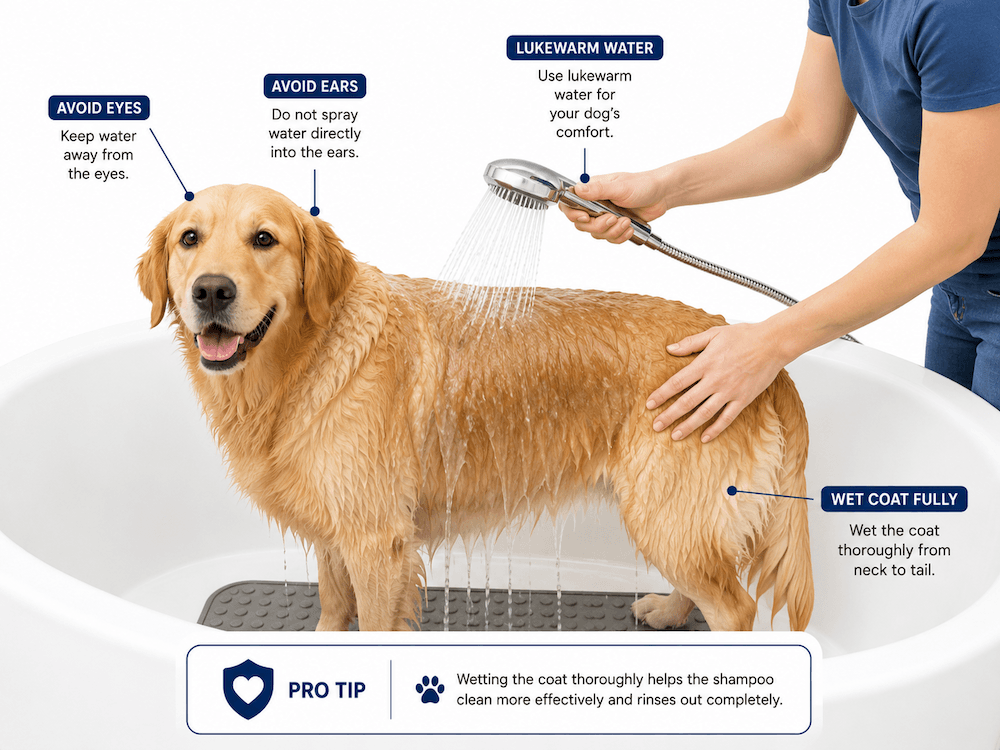
Use lukewarm water, not hot water. Start around the neck and body, then work down the back, chest, belly, legs, paws, and tail while avoiding the eyes, ears, and nose.
Step 4: Apply Dog-Safe Shampoo
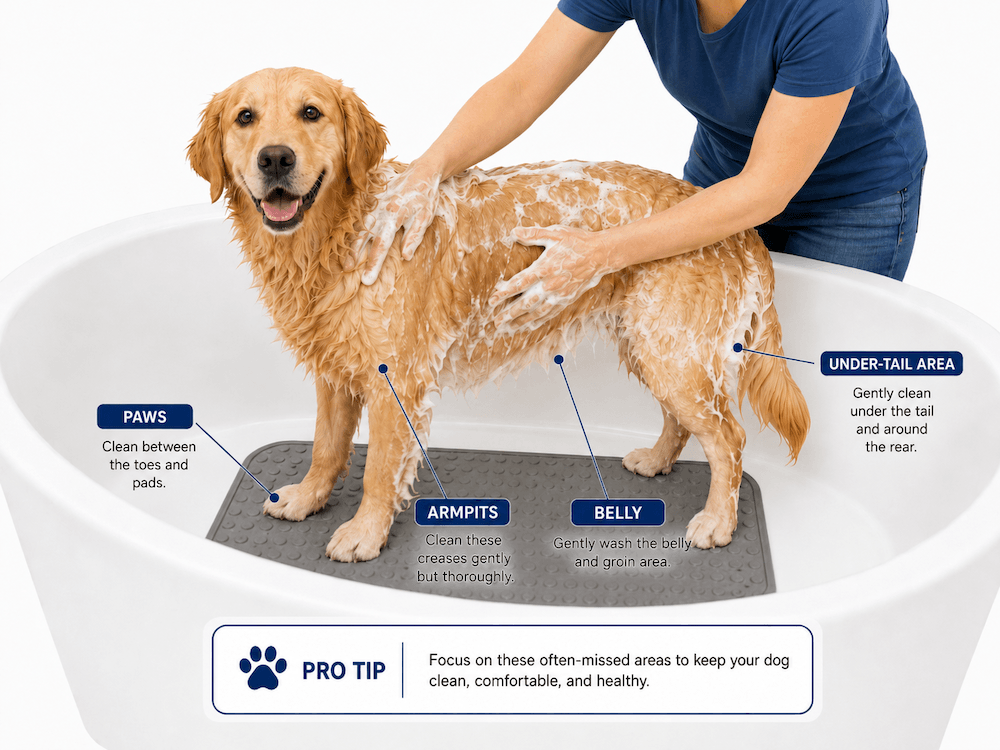
Use shampoo made for dogs, not human shampoo. Massage it gently through the coat with your fingertips, working in the direction of hair growth and paying attention to dirty areas like paws, belly, armpits, and under the tail.
Step 5: Follow Contact Time for Medicated Shampoo
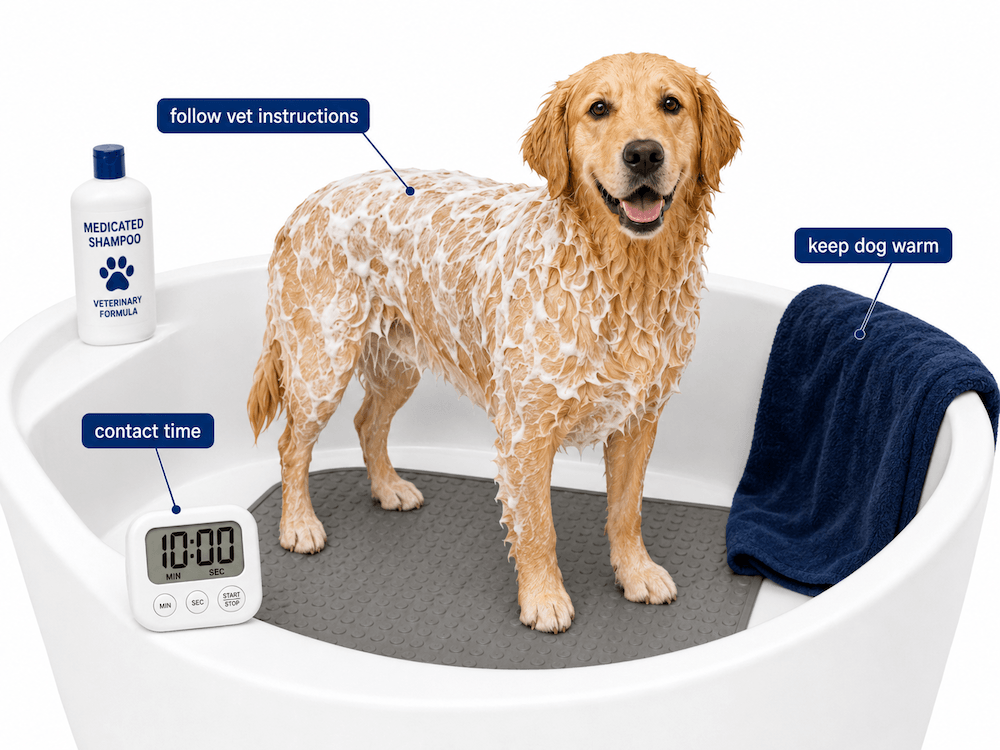
For regular shampoo, rinse after lathering unless the product says otherwise. For medicated shampoo, follow your veterinarian’s instructions because many medicated baths require several minutes of skin contact before rinsing. VCA notes that medicated shampoo may need a prescribed contact time, often around 10 minutes, before a thorough rinse.
Step 6: Rinse Until the Coat Feels Clean
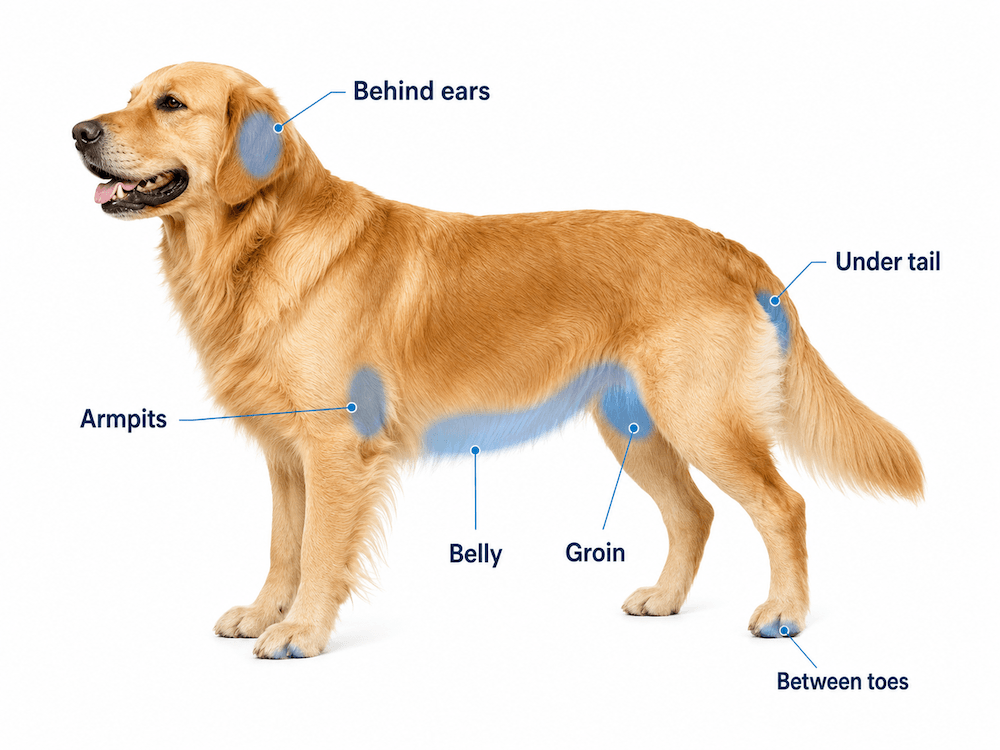
Rinse longer than you think you need to. Run your fingers through the coat and keep rinsing if you feel slipperiness or see bubbles, especially under the belly, armpits, groin, tail, toes, and behind the ears.
Step 7: Dry Your Dog Thoroughly
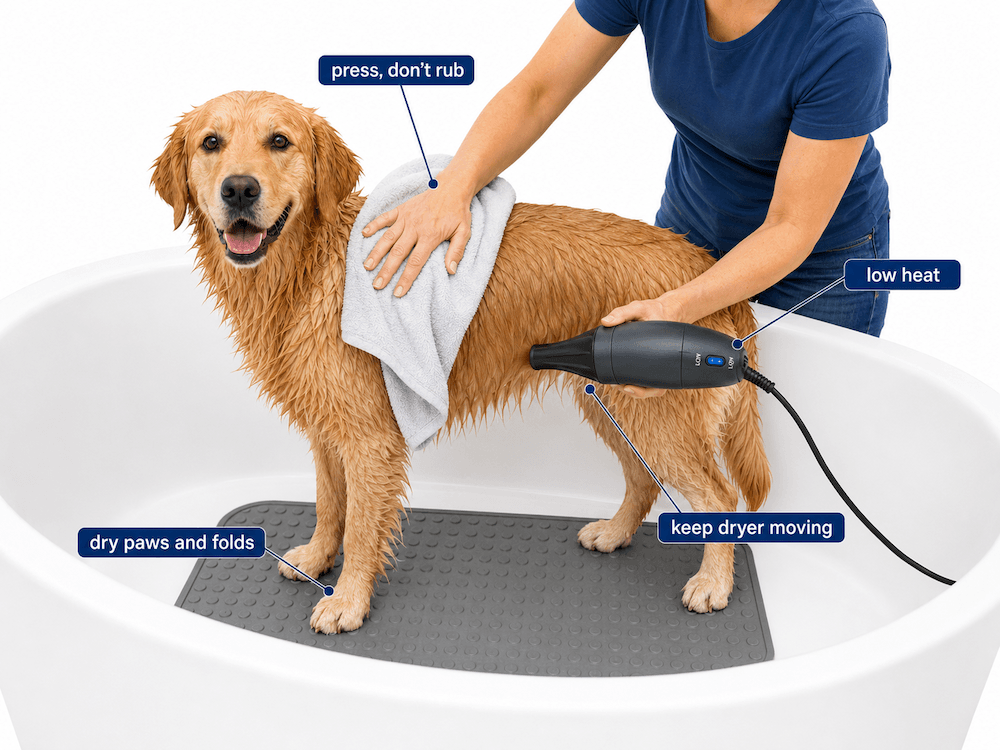
Press towels against the coat instead of rough rubbing. Use a dog dryer only on a cool or low setting, keep it moving, and make sure skin folds, paws, and thick coats dry fully.
Step 8: Reward Calm Behavior
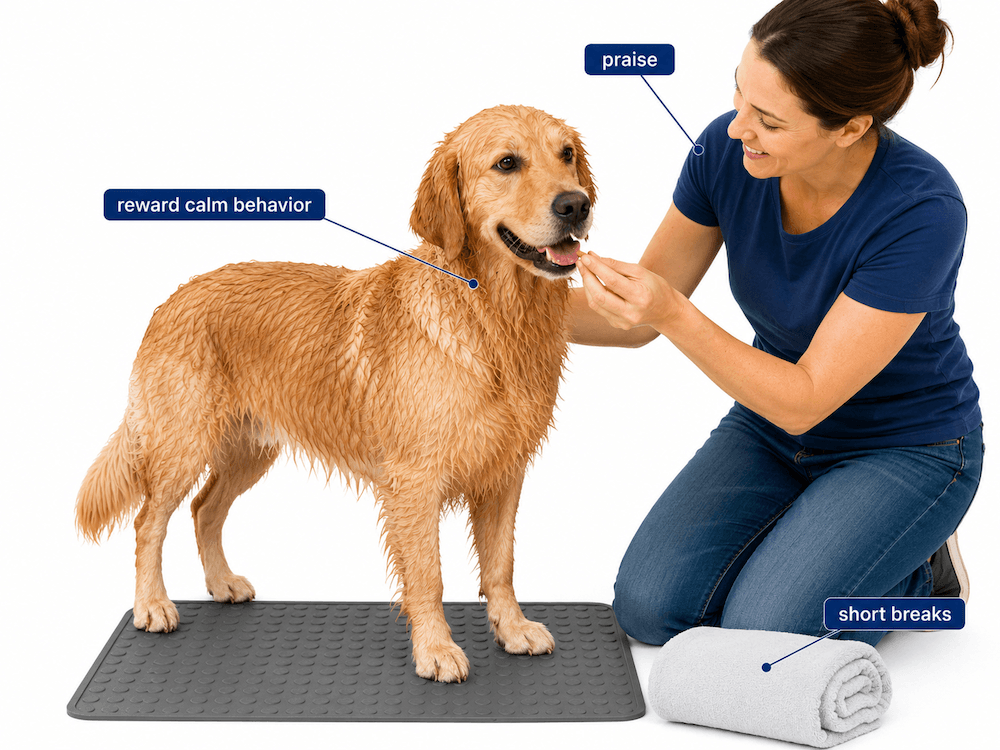
Offer treats, praise, and short breaks during and after the bath. This helps your dog associate bathing with calm handling instead of fear, restraint, or rushing.
Helpful Tips for Bathing a Dog Safely
Small changes can make bath time safer, calmer, and more effective. These tips are especially useful for puppies, senior dogs, anxious dogs, and dogs with thick coats.
| Bathing Tip | Why It Helps | How to Apply It |
|---|---|---|
| Use tiny treats | Rewards calm behavior during stressful handling. | Reward standing, turning, and staying still. |
| Start with paws | Paws help nervous dogs adjust gradually. | Wet one paw before wetting the body. |
| Keep sessions short | Short baths reduce panic and resistance. | Pause if your dog becomes overwhelmed. |
| Use gentle pressure | Rough scrubbing can irritate the skin. | Massage shampoo with fingertips, not nails. |
| Dry hidden spots | Moisture can collect in folds and toes. | Check paws, armpits, groin, and folds. |
| Check product age | Old shampoo may lose quality or contaminate. | Replace old, watery, or odd-smelling shampoo. |
| Clean dilution bottles | Dirty bottles may harbor unwanted bacteria. | Wash and dry bottles after each use. |
Mistakes to Avoid When Bathing a Dog
Most bath problems come from rushing, using the wrong products, skipping brushing, or not rinsing and drying thoroughly. These mistakes are common, but they are easy to prevent with a slower routine.
| Mistake | Why It’s a Problem | Better Choice |
|---|---|---|
| Using human shampoo | It may be too harsh for canine skin. | Use shampoo made specifically for dogs. |
| Skipping brushing | Wet mats tighten and trap moisture. | Brush before bathing, not after wetting. |
| Using hot water | Hot water can irritate or burn skin. | Use lukewarm water and test first. |
| Rushing the rinse | Residue can trigger itching and irritation. | Rinse until the coat feels clean. |
| Spraying the face | Water can enter eyes, ears, or nose. | Use a damp cloth for the face. |
| Leaving damp folds | Moisture can encourage odor and irritation. | Dry folds, toes, and armpits carefully. |
| Bathing sore skin | Wrong products may worsen inflammation. | Ask your veterinarian before bathing. |
What to Do After Bathing Your Dog
After bathing your dog, keep them warm until they are fully dry, especially in cooler rooms or after evening baths. Use a towel to remove extra moisture, then check under the belly, between the toes, under the tail, behind the ears, and inside any skin folds for dampness. These areas can stay wet longer and may become irritated if moisture is trapped.
A successful bath should leave your dog’s coat clean, the skin calm, and your dog relaxed and comfortable. Your dog should not be intensely itchy, greasy, red, sore, flaky, or strongly odorous afterward. If those signs appear or get worse after bathing, the shampoo, bathing frequency, or an underlying skin issue may need attention.
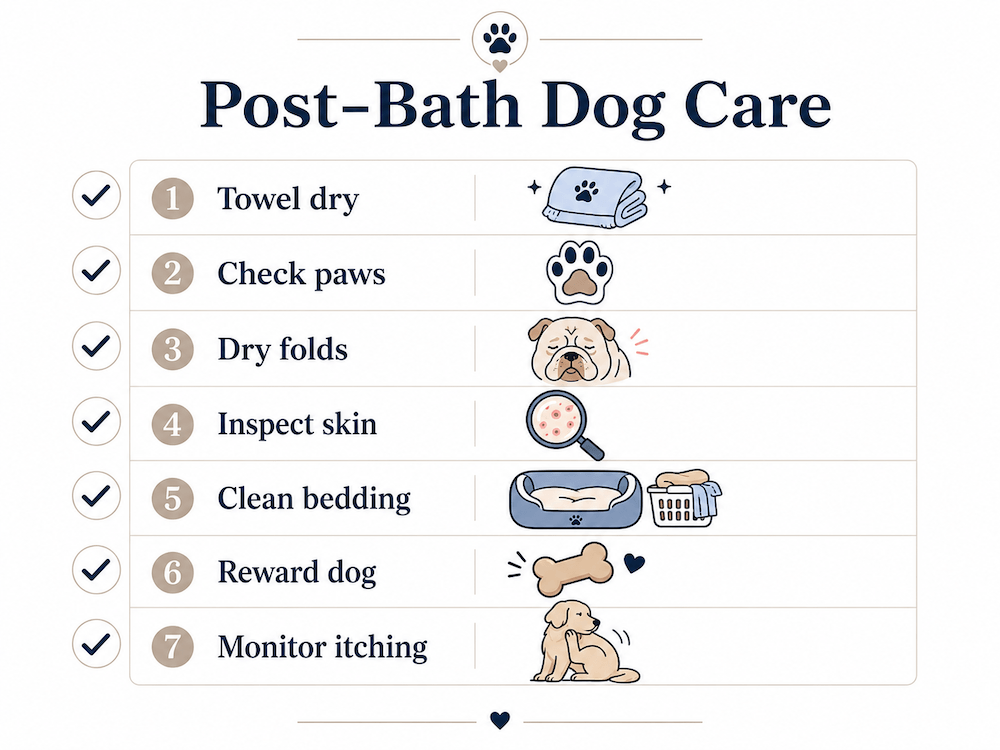
To maintain results, brush your dog regularly, dry them well after baths or wet walks, and use only dog-safe grooming products. Avoid bathing too often unless your veterinarian recommends it, because overbathing can dry out the skin or worsen irritation. If your dog gets dirty between baths, spot-clean small areas with a damp cloth or pet-safe wipe instead of giving a full bath every time.
When to Call a Veterinarian After Bathing a Dog
Call your veterinarian after bathing if your dog develops redness that does not settle, hives, facial swelling, worsening itchiness, vomiting after licking product, or new bumps, sores, or discharge. These signs may mean your dog is reacting to the shampoo or that an existing skin problem has been irritated.
Seek urgent help if your dog has shaking, panic, breathing trouble, collapse, limping, pain, or severe skin tenderness after the bath. These symptoms can point to a more serious reaction, injury, or distress that needs immediate attention.
A veterinarian can check for a shampoo reaction, skin infection, allergy flare, ear problems, parasite irritation, or the need for a different bathing product. They can also recommend a safer bathing routine based on your dog’s skin, coat, age, and health history.
What Research Says About Bathing and Grooming Dogs
Veterinary dermatology sources agree that bathing can help skin health when done correctly, but the wrong product or technique can irritate. Virginia Tech explains that pet skin has a protective barrier and that harsh soaps, rough scrubbing, poor rinsing, and trapped moisture can lead to problems such as dryness, irritation, yeast overgrowth, or infection.[1]
Medicated bathing is different from routine bathing. VCA explains that medicated shampoo should be applied to a clean, wet coat, worked into affected areas, left on for the prescribed contact time, rinsed thoroughly, and followed by complete drying.[2]
MSD Veterinary Manual emphasizes that topical treatment is an important part of managing bacterial and yeast overgrowth, seborrhea, and allergic dermatitis in animals. It also states that medicated shampoos are not ordinary grooming shampoos and that good grooming practices can support topical treatment success.[3]
Bathing can also be stressful. A 2022 study in Revista Brasileira de Zootecnia evaluated 55 grooming services and found behavioral and physiological changes mainly when dogs arrived at the pet shop and during drying. For owners, this supports slower handling, safe footing, quiet tools, and positive reinforcement during bath time.[4]
Frequently Asked Questions
The Bottom Line
Bathing a dog is easiest when you prepare first, move slowly, and use the right products. A safe bath starts with brushing, lukewarm water, dog-safe shampoo, thorough rinsing, and complete drying. Pay close attention to sensitive areas like the ears, eyes, paws, skin folds, belly, and under the tail. Most healthy dogs only need occasional baths, but coat type, lifestyle, odor, and skin health can change the schedule. Avoid harsh shampoos, hot water, rough scrubbing, and leaving moisture trapped against the skin. If your dog becomes itchy, red, painful, unusually smelly, or distressed after bathing, contact your veterinarian. With a calm routine and positive rewards, bath time can become a cleaner, safer, and less stressful part of your dog’s care.