How to Get Rid of Dog Dandruff: Causes, Treatments & Prevention Tips

Canine Bible is reader-supported. We receive affiliate commissions via some of our links. Learn more.
You can get rid of dog dandruff by treating the cause, not just brushing away the flakes. Regular brushing, proper bathing, dog-safe moisturizing products, parasite control, and a balanced diet can help mild dandruff improve. But flakes that keep coming back may point to allergies, mites, skin infection, dry air, poor nutrition, or another health issue. Some dogs only get dandruff in winter, while others also have itching, odor, redness, hair loss, or greasy skin. Bathing too often or using the wrong shampoo can make dryness and irritation worse. The best fix depends on your dog’s coat, skin, symptoms, and overall health. This guide explains what causes dog dandruff, what you can safely try at home, and when to call your veterinarian.
Dog Dandruff Treatment Precautions
| Precaution | Why It Matters for Your Dog |
|---|---|
| Check the skin first | Redness, sores, odor, swelling, or hair loss may mean your dog needs veterinary care before home treatment. |
| Avoid human shampoo | Human dandruff shampoo can irritate dog skin unless your veterinarian specifically recommends it. |
| Do not overbathe | Bathing too often can strip natural oils and make dryness, flakes, and itching worse. |
| Use gentle pressure | Hard scrubbing or aggressive brushing can inflame already irritated skin and cause discomfort. |
| Rinse thoroughly | Leftover shampoo residue can trigger more dryness, itching, and skin irritation after the bath. |
| Be careful with oils | Heavy oils or home remedies can trap debris, worsen greasiness, or irritate sensitive skin. |
| Do not ignore parasites | Fleas, mites, and other parasites can look like simple dandruff but need proper treatment. |
| Call the vet for warning signs | Dandruff with itching, odor, sores, greasy skin, or recurring flakes may need diagnosis and medication. |
What Dog Dandruff Means for Your Dog
Dog dandruff is visible flaking from the skin. It may look like white powder, larger flakes, greasy scales, or crusty buildup along the back, neck, face, belly, armpits, feet, or skin folds.
Some dandruff is mild and temporary, especially during dry weather. But flakes that keep returning should be treated as a clue that your dog’s skin barrier, grooming routine, parasite protection, diet, or overall health needs attention.
| Dandruff Clue | What It May Mean | Best Owner Action |
|---|---|---|
| Light dry flakes | Dry air, mild dryness, or infrequent brushing may be involved. | Brush gently and use dog-safe moisturizing care. |
| Greasy flakes | Oil imbalance, seborrhea, yeast, or infection may be involved. | Book a vet visit if it persists or smells. |
| Itchy skin | Allergies, fleas, mites, or infection may be causing irritation. | Check parasites and contact your veterinarian. |
| Bad odor | Yeast or bacterial overgrowth may be present. | Avoid guessing and ask about medicated treatment. |
| Hair loss | Inflammation, mites, allergies, or hormonal disease may be possible. | Schedule a veterinary skin exam. |
| Seasonal flakes | Winter dryness or seasonal allergies may be contributing. | Improve humidity, grooming, and skin monitoring. |
| Recurring flakes | The underlying cause may not be controlled yet. | Track symptoms and seek a diagnosis. |
Common Causes of Dog Dandruff
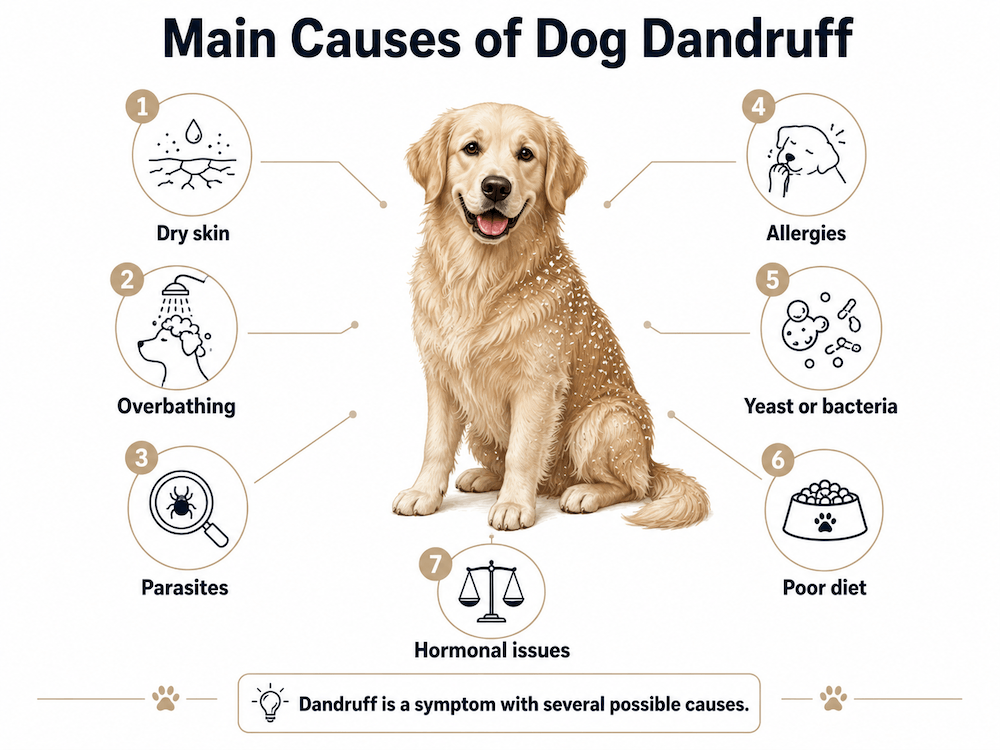
Dandruff can come from simple dryness, but it can also be part of a larger skin problem. Possible contributors to seborrhea and flaking in dogs include allergies, parasites, bacterial infections, yeast infections, hormonal imbalances, diet issues, environmental changes, and reduced self-grooming ability.
The most common owner mistake is assuming every flaky dog just needs more baths. In reality, washing a dog too often, harsh products, untreated fleas, mites, allergies, and secondary infection can all keep the cycle going.


When It Is Safe to Treat Dog Dandruff at Home
Home care is reasonable when your dog has mild flakes, normal energy, no open sores, no strong odor, and little to no itching. Start with gentle grooming, a dog-safe bath routine, clean bedding, and parasite prevention.
Do not try to “scrub it out” if the skin is red, painful, swollen, scabby, greasy, smelly, or losing hair. Those signs may need testing for parasites, yeast, bacteria, allergies, or internal disease.
Safe home-care signs:
Remember to ALWAYS consult your vet before treating dog dandruff, especially before changing shampoos, diet, supplements, or medications. If you can’t reach your vet, you can chat live with a registered online veterinary professional via our online vet chat or video chat support (24 hours a day, 7 days a week). Or use Chewy’s online vet services (6 a.m. – midnight ET).
What You Need Before Treating Dog Dandruff
Keep the setup simple. You do not need a cabinet full of products to start safely.


| Supply | Why You Need It | Owner Tip |
|---|---|---|
| Coat-matched brush | Removes loose flakes and spreads natural oils. | Choose the brush based on your dog’s coat type. |
| Dog-safe shampoo | Cleans the skin without harsh human ingredients. | Use a gentle or vet-recommended formula. |
| Lukewarm water | Helps clean without worsening dryness or itching. | Avoid hot water on flaky or irritated skin. |
| Absorbent towels | Dry the coat without rough rubbing. | Press gently instead of scrubbing the skin. |
| Dog-safe conditioner | Adds moisture when your dog’s skin needs support. | Use only if appropriate or vet-approved. |
| Parasite prevention | Helps control fleas and mites that can cause flakes. | Use vet-approved flea and tick protection. |
| Clean bedding | Reduces flakes, allergens, and possible irritants. | Wash bedding during dandruff flare-ups. |
| Symptom log | Helps track whether dandruff is improving. | Use notes or phone photos each week. |
Mild Dog Dandruff vs. Dandruff That Needs a Vet
Mild dandruff usually improves when you correct grooming, bathing, dry air, and parasite prevention. Concerning dandruff comes with discomfort, visible skin damage, odor, or repeated flare-ups.
| Pattern | Likely Risk Level | What to Do Next |
|---|---|---|
| Few dry flakes | Usually mild if your dog seems comfortable. | Try brushing and gentle bath care. |
| Winter-only flakes | Often linked to dry air or bathing habits. | Improve moisture and monitor closely. |
| Heavy itching | Parasites, allergies, or infection may be involved. | Call your veterinarian for guidance. |
| Greasy odor | Yeast or bacterial overgrowth is possible. | Ask about cytology or medicated shampoo. |
| Hair loss | Skin disease or hormonal illness may be possible. | Schedule a veterinary exam. |
| Open sores | The skin may be infected or painful. | Do not bathe; seek veterinary care. |
| Recurring flakes | The root cause may still be active. | Track symptoms and request testing. |
How to Get Rid of Dog Dandruff at Home: 7 Practical Steps
Follow these steps to check your dog’s skin, improve brushing and bathing, support coat health, and know when dandruff may need veterinary care.
Step 1: Check the Skin Before You Brush or Bathe
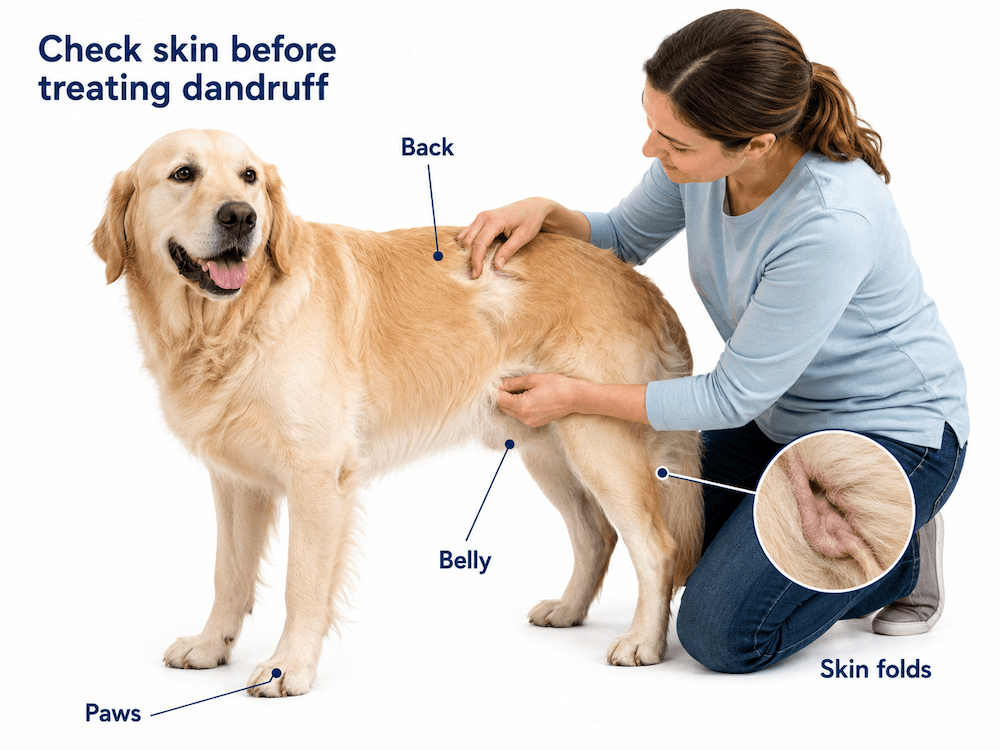
Part your dog’s coat in several areas and check the skin closely, including the back, neck, belly, armpits, groin, paws, tail base, ears, and any skin folds. Look for white flakes, greasy yellowish scale, redness, scabs, crusts, hair thinning, fleas or flea dirt, odor, or pain when touched.
If the skin looks inflamed, infected, or painful, stop home treatment and call your veterinarian.
Step 2: Brush Gently to Remove Loose Flakes
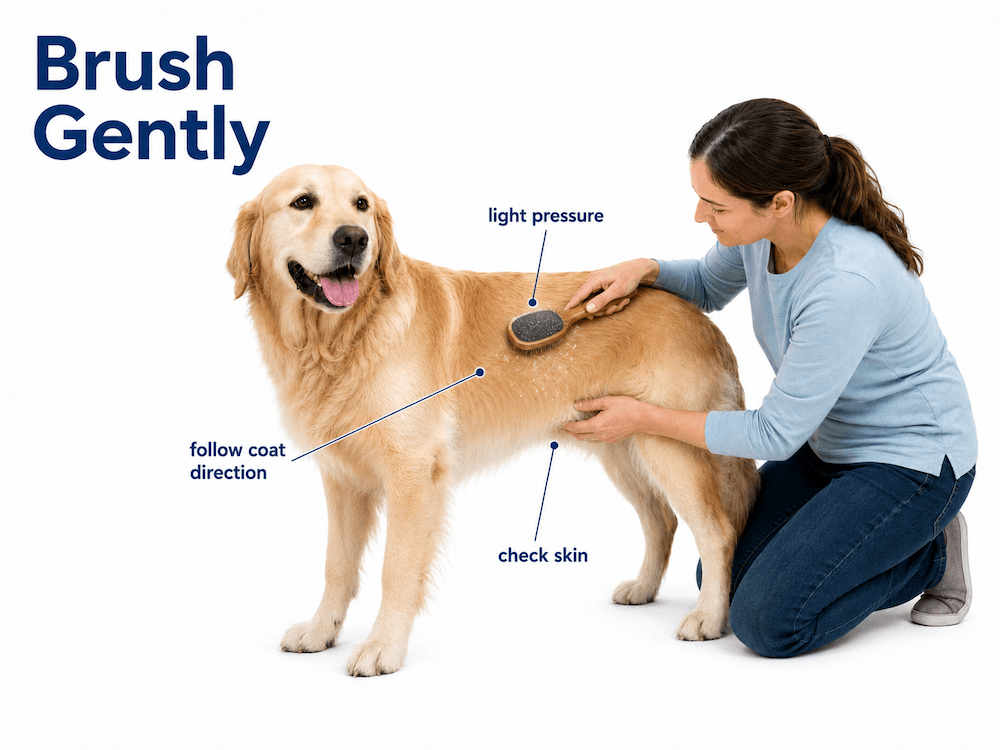
Brush before bathing unless the skin is painful or very irritated. Gentle brushing removes loose flakes, spreads natural oils, reduces shed hair, and helps you find hidden skin changes. Do not scrape the skin. If flakes are stuck to greasy, red, or sore areas, leave them alone and ask your vet what to use.
Step 3: Bathe With Lukewarm Water and Dog-Safe Shampoo
Bathe your dog using lukewarm water, not hot water. Hot water can make dry or itchy skin feel worse. Wet the coat thoroughly, then apply a gentle dog shampoo. If your veterinarian prescribed a medicated shampoo, follow the exact contact time and frequency.
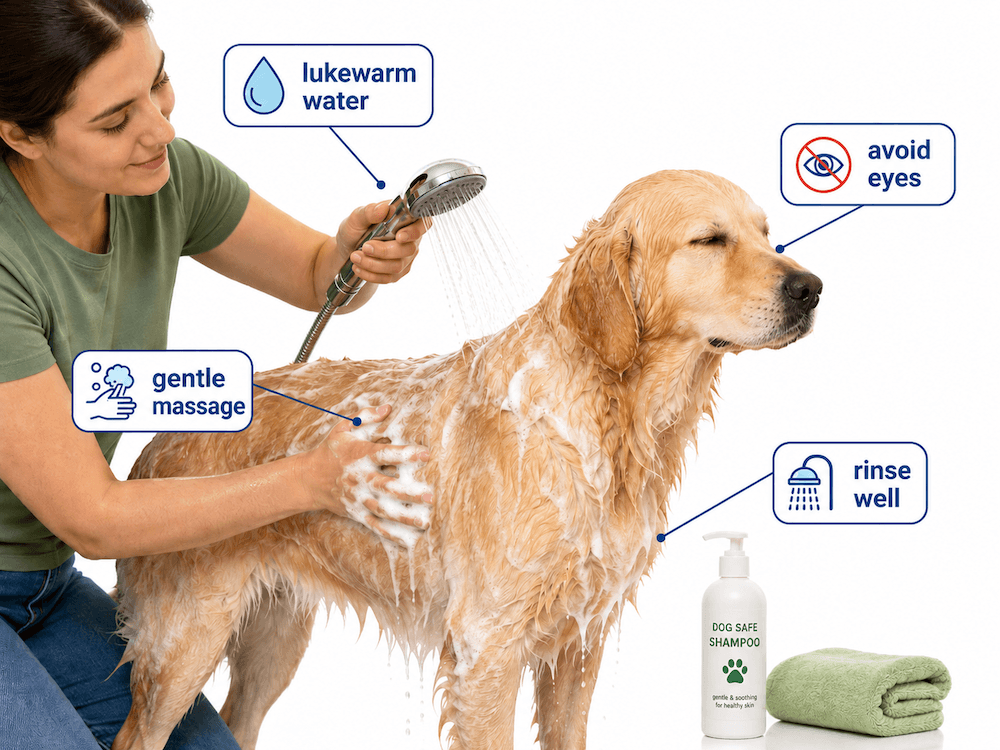
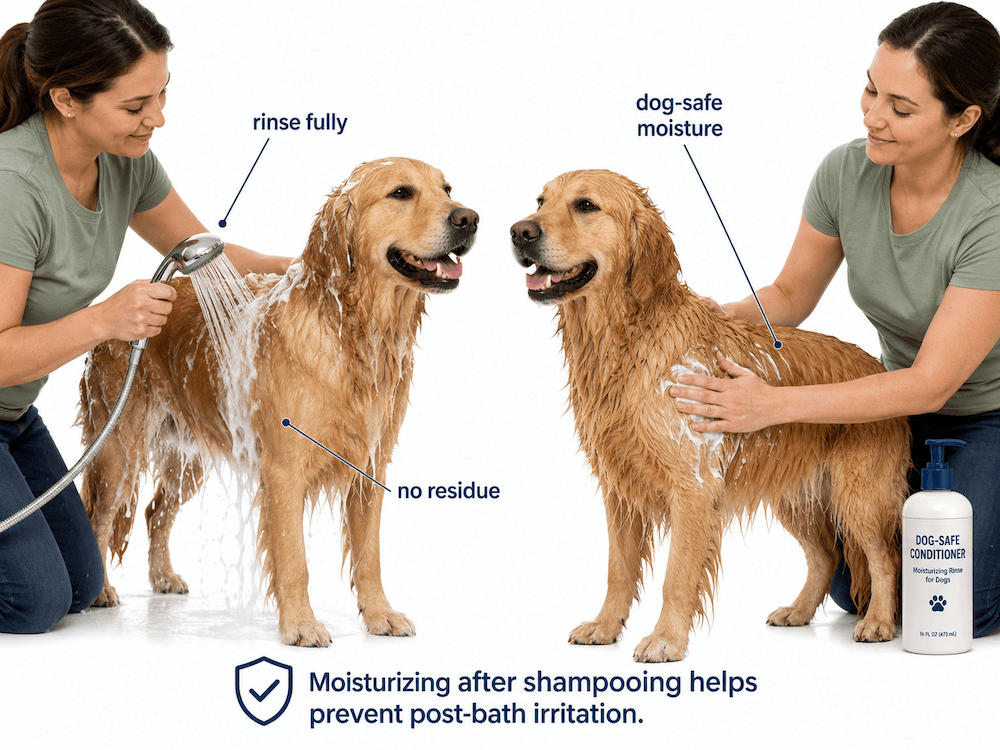
Step 4: Rinse Thoroughly and Add Moisture Safely
Leftover shampoo can irritate the skin and make flaking worse. Rinse the coat until the water runs clear and the fur no longer feels slippery. A dog-safe conditioner, moisturizing rinse, or leave-in product may help some dogs after shampooing.
Use only products labeled for dogs or recommended by your veterinarian. Avoid essential oils, human lotions, coconut oil experiments, or heavy greasy products unless your vet approves them.
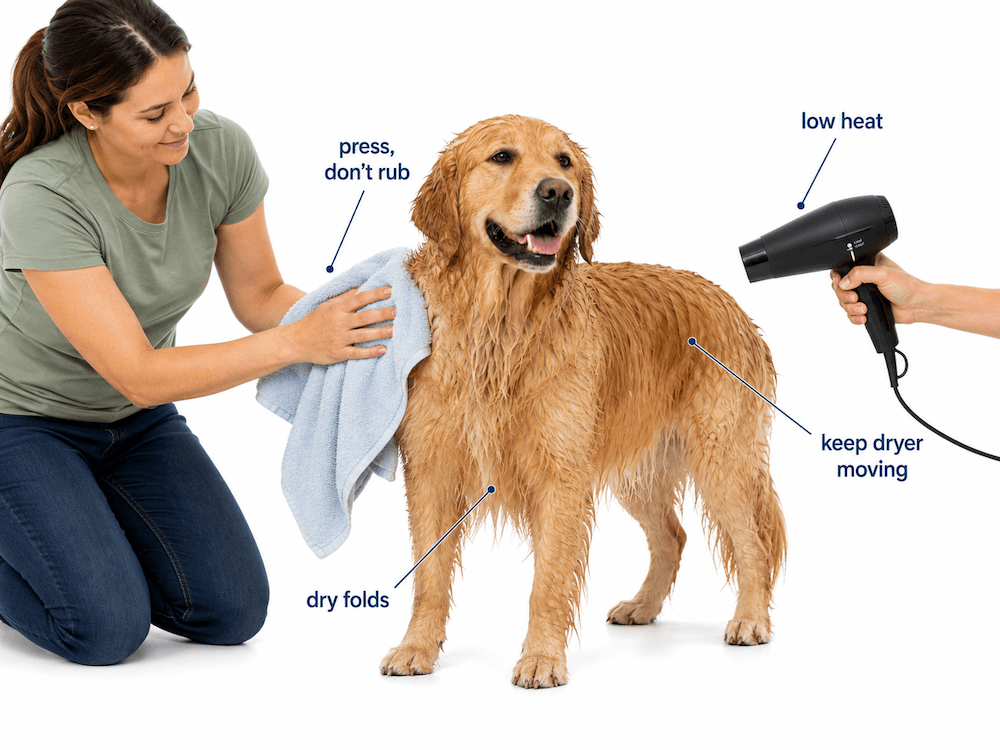
Step 5: Dry the Coat Completely
Towel dry by pressing rather than rubbing hard. For thick coats or skin folds, trapped moisture can worsen irritation. Use a low-heat dog dryer only if your dog tolerates it. Keep the dryer moving, avoid hot settings, and dry folds, paws, armpits, and under the collar area carefully.
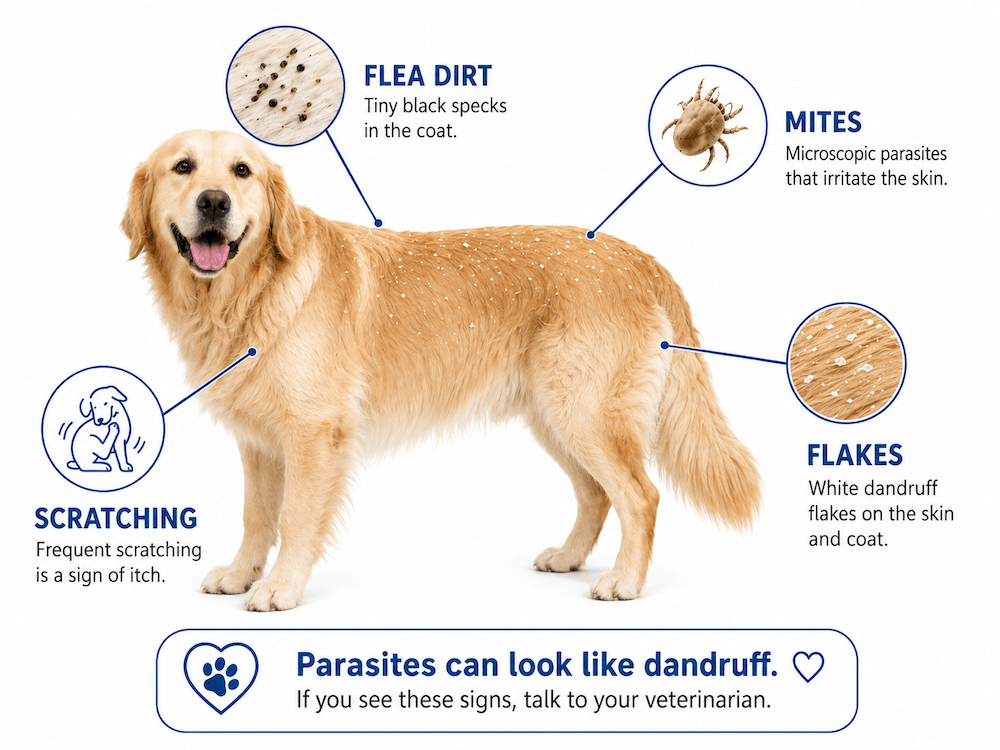
Step 6: Control Fleas, Mites, and Other Parasites
Parasites can cause dandruff, itching, irritation, and hair loss. Fleas are common, but mites can also create heavy scaling. One condition called walking dandruff is caused by Cheyletiella mites. Scaling along the back is common, and itching can be intense or absent; pets can carry mites without obvious signs, and environmental treatment may be needed because the mites can spread easily.
Use veterinarian-approved parasite prevention based on your dog’s age, size, health, and location. Treating dandruff without parasite control can lead to repeat flare-ups.
Step 7: Support the Skin From the Inside
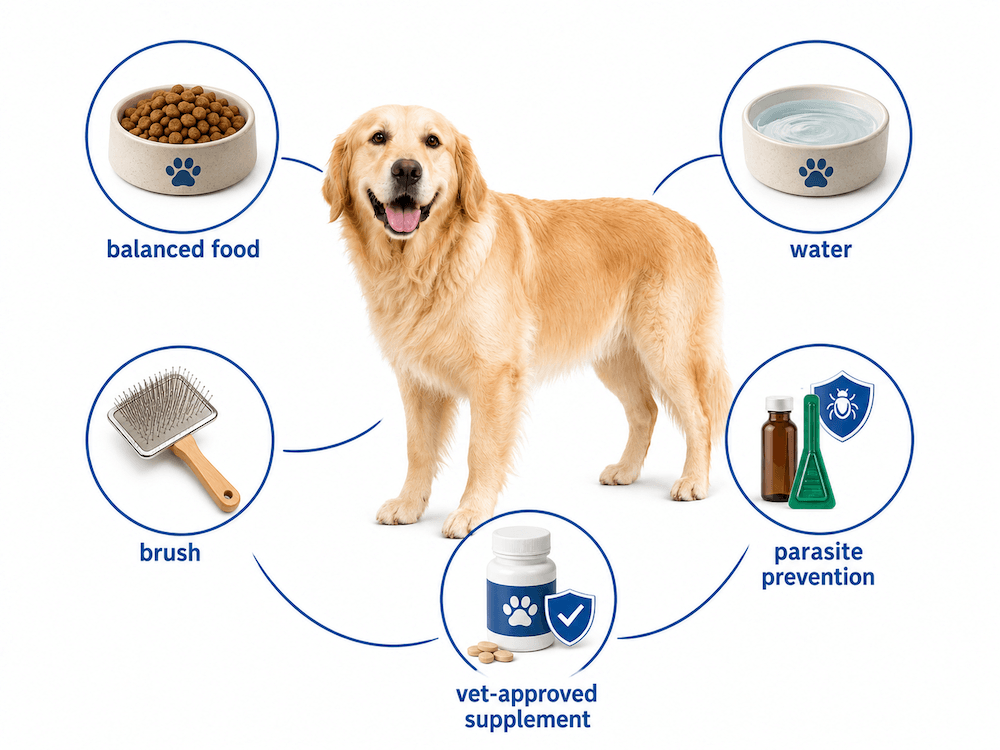
Skin health depends on nutrition, hydration, and overall health. Feed a complete and balanced dog food appropriate for your dog’s age, size, and medical needs. Do not add random supplements without veterinary guidance, especially if your dog has pancreatitis risk, food allergies, medication use, or a sensitive stomach.
Helpful Tips for Getting Rid of Dog Dandruff
Small routine changes often make the biggest difference. The goal is to reduce flakes without stripping the skin, irritating sore areas, or hiding a medical problem.
| Tip | Why It Helps | How to Apply It |
|---|---|---|
| Brush weekly | It removes loose flakes and spreads natural oils. | Use gentle pressure and check the skin. |
| Use lukewarm water | Hot water can worsen dryness and itching. | Test water on your wrist first. |
| Rinse longer | Leftover shampoo can irritate flaky skin. | Rinse until the coat feels clean. |
| Clean bedding | Bedding can hold flakes, allergens, and parasites. | Wash bedding during flare-ups. |
| Track symptoms | Photos help show whether care is working. | Take weekly skin and coat pictures. |
| Prevent parasites | Fleas and mites can trigger flaking and itch. | Use vet-approved prevention consistently. |
| Ask before supplements | Some dogs need medical or diet-specific guidance. | Discuss fish oil or diet changes first. |
Mistakes That Can Make Dog Dandruff Worse
Dandruff often worsens when owners try to fix it too aggressively. More shampoo, stronger products, or harder scrubbing are not always better.
| Mistake | Why It Can Backfire | Better Choice |
|---|---|---|
| Bathing too often | It can strip oils and worsen dryness. | Use a vet-guided bathing schedule. |
| Using human shampoo | It can disrupt your dog’s skin barrier. | Choose dog-safe shampoo instead. |
| Scrubbing hard | It can inflame already irritated skin. | Massage gently with light pressure. |
| Skipping parasites | Fleas or mites may keep flakes returning. | Use consistent parasite prevention. |
| Masking odor | Odor may signal yeast or bacteria. | Ask your vet about skin testing. |
| Trying oils | Heavy oils can trap debris and irritate skin. | Use dog-safe moisturizers only. |
| Delaying care | Infections can worsen without treatment. | Call your vet for red flags. |
How to Prevent Dog Dandruff
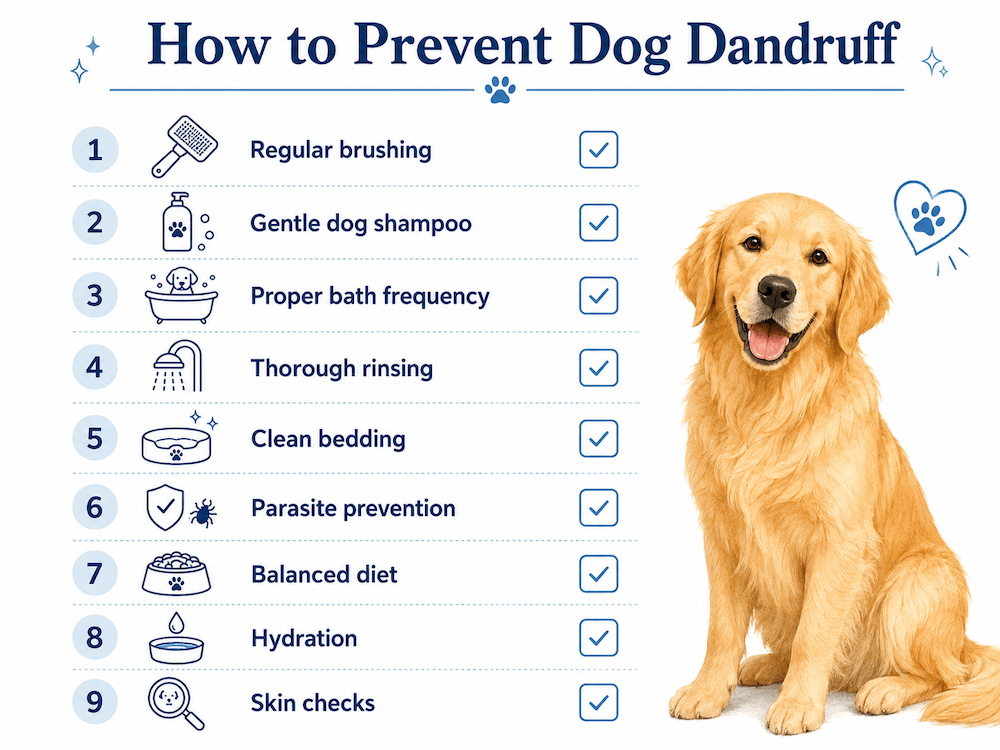
Preventing dog dandruff starts with keeping your dog’s skin barrier healthy. That means using the right grooming routine, avoiding harsh products, controlling parasites, supporting good nutrition, and watching for early skin changes before flakes become a bigger problem.
Most dogs do best with a simple, consistent routine rather than frequent product changes. Brush your dog regularly based on coat type, bathe only as needed with dog-safe shampoo, rinse thoroughly, and keep bedding clean. If your dog gets seasonal dandruff, indoor humidity, coat care, and earlier vet guidance can help reduce repeat flare-ups.
What Veterinary Research Says About Dog Dandruff
Veterinary references describe seborrhea as a problem involving abnormal skin renewal, increased scale formation, and sometimes greasiness, inflammation, or secondary infection. This matters because a flaky coat is not always just cosmetic; it may reflect a skin process that needs cause-based treatment.[1]
VCA’s overview of seborrhea in dogs explains that secondary seborrhea is more common than inherited primary seborrhea and can be linked to allergies, parasites, yeast, bacteria, hormonal disease, diet abnormalities, and environmental changes. That supports a practical approach: look for the trigger before relying on shampoo alone.
MSD Veterinary Manual describes Cheyletiella, or walking dandruff, as a contagious mite problem that can cause scaling along the back, with itching that may be intense or sometimes absent. This is why dandruff that appears suddenly, spreads between pets, or comes with household itching should not be treated as ordinary dry skin.[2]
A PubMed-indexed retrospective study of English Springer Spaniels with primary seborrhea found that signs often began young, started as dry scaling, and in many cases became greasy and inflamed; some dogs also had recurrent bacterial pyoderma. The study also reported better responses in dry cases to topical emollient-humectant agents or omega-3/omega-6 fatty acid supplementation, but no dog was cured, showing why some dandruff disorders require long-term management rather than a quick fix.[3]
Frequently Asked Questions
The Bottom Line
Getting rid of dog dandruff starts with understanding why the flakes are happening, not just washing them away. Mild dandruff often improves with regular brushing, gentle dog-safe bathing, thorough rinsing, clean bedding, parasite prevention, and good nutrition. However, dandruff that comes with itching, odor, redness, greasy skin, sores, or hair loss may point to allergies, parasites, infection, or another health problem. Avoid human dandruff shampoo, harsh scrubbing, overbathing, and unapproved home remedies, because they can make irritation worse. Track your dog’s skin for a few weeks and look for steady improvement in flakes, comfort, and coat condition. If dandruff keeps coming back or your dog seems uncomfortable, your veterinarian can identify the cause and recommend the safest treatment. With the right routine and timely care, most dogs can have healthier skin and a cleaner, more comfortable coat.