How Often Should You Wash Your Dog? Vet-Approved Guide


Canine Bible is reader-supported. We receive affiliate commissions via some of our links. Learn more.
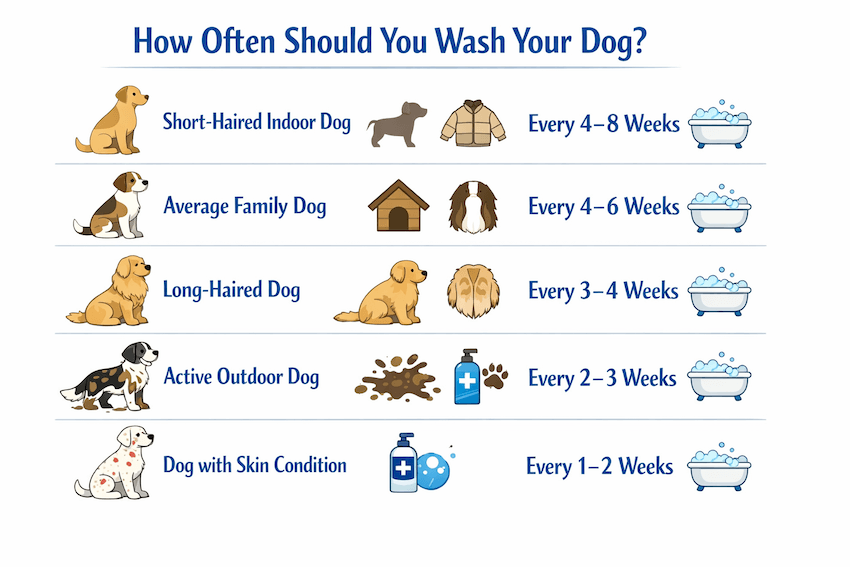
Most dogs should be washed about once every 4 to 8 weeks, but the right schedule depends on their coat type, skin health, and lifestyle. Some dogs need baths more often, while others can go much longer without one. That’s where many owners get it wrong. Bathing too often can dry out your dog’s skin and strip away natural oils. Wait too long, and dirt, odor, allergens, and skin problems can start to build up. A muddy Labrador, a curly-coated Poodle, and a short-haired indoor Chihuahua do not all need the same routine. In this guide, we’ll break down how often to bathe your dog based on breed, coat, activity level, and the signs that it’s time for a bath.
Why Understanding How Often to Wash Your Dog Matters
| Why It Matters | Key Impact |
|---|---|
| Skin and coat health | Prevents dryness, irritation, and buildup |
| Odor and hygiene | Keeps your dog clean without overbathing |
| Breed and coat type | Different dogs need different bathing schedules |
| Comfort and behavior | Avoids itching, stress, or discomfort |
| Preventive care | Removes dirt, allergens, and parasites |
| Owner convenience | Helps maintain an easy, consistent routine |
| Long-term health | Supports healthier skin and coat over time |
How Often Should You Wash Your Dog Based on Coat, Skin, and Lifestyle?
A practical starting point is once a month for many healthy dogs, which aligns with Merck’s routine-care guidance. From there, you adjust up or down based on your dog’s coat maintenance needs, odor level, exposure to dirt, and any existing veterinary skin plan.
Here is a simple bathing schedule most owners can use:


| Dog Type | General Bath Frequency |
|---|---|
| Healthy short-haired indoor dog | Every 6–8 weeks |
| Average healthy family dog | Every 4–6 weeks |
| Long-haired or heavier-coated dog | Every 4–6 weeks, plus regular brushing |
| Very active outdoor dog | Every 2–4 weeks as needed |
| Dog with odor, mud, or heavy debris | Bathe when dirty rather than waiting |
| Dog on medicated skin therapy | Follow your veterinarian’s exact schedule |
Dogs with allergic skin disease often follow a completely different plan. In canine atopic dermatitis, medicated bathing may be recommended twice weekly during flare management, then once weekly with a nonirritating shampoo for maintenance once the condition is controlled.
The same is true for some infections and seborrhea. Merck notes that dogs with superficial pyoderma may need medicated baths 2 to 3 times per week early in treatment, and dogs with primary seborrhea may also require frequent bathing before shifting to weekly maintenance.
Signs That Tell You It’s Time to Wash Your Dog
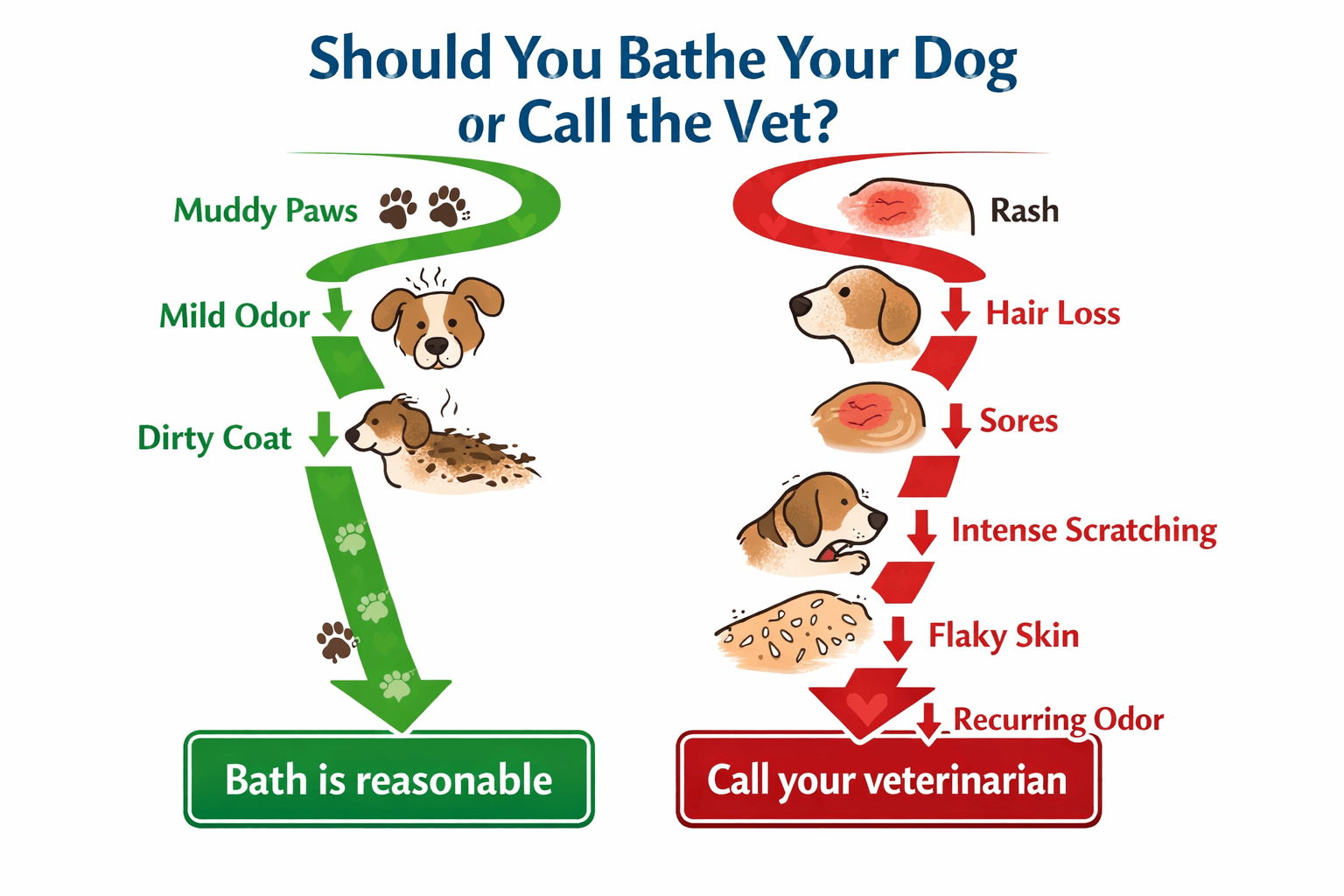
Even if you prefer a schedule, your dog’s condition matters more than the calendar. A bath is usually warranted when the coat smells strongly, feels greasy, looks visibly dirty, retains allergens or debris after outdoor activity, or begins to mat due to dirt and loose hair. Brushing is also important between baths because mats can irritate the skin and lead to infection.


You should pause and call your veterinarian instead of just bathing if your dog has red skin, sores, rash, heavy flaking, ear issues, hair loss, intense itching, or a sudden bad odor that keeps returning. Those signs can point to an allergy, infection, seborrhea, parasites, or another skin disorder that needs treatment, not just more shampoo.
What Research Says About How Often You Should Wash Your Dog
Routine care guidance from the Merck Veterinary Manual recommends bathing dogs with pet shampoo about once a month, depending on the season, dirtiness, and odor. That matters because it supports a moderate baseline rather than very frequent routine washing for healthy dogs.
The American Kennel Club’s grooming guidance adds an important point about coat health: dogs need regular but not frequent baths, and washing too often can remove natural oils, leaving the coat dry and harsh. Clinically, that helps explain why many healthy dogs do better with spaced baths rather than weekly washing by default.
A 2021 peer-reviewed review on canine atopic dermatitis reported that medicated shampoo baths may be used twice weekly during acute flares, followed by once-weekly bathing with a nonirritating shampoo for maintenance after remission. That matters because skin disease completely changes the bathing schedule, and the owner’s routines should follow treatment goals rather than standard grooming advice.[1]
The 2023 AAHA allergic skin disease guidelines also emphasize that allergic patients often require long-term management and follow-up, which supports individualized bathing plans when itching, allergy, or recurrent skin inflammation is involved.[2]
Additional Tips for How Often Should You Wash Your Dog
| Tip | Why It Helps | How to Apply It |
|---|---|---|
| Brush Before Bathing | It removes debris and reduces painful mat tightening. | Brush tangles out fully before water hits the coat. |
| Use Dog Shampoo | It is made for canine skin and coat needs. | Choose a mild dog-specific shampoo unless your vet says otherwise. |
| Watch the Coat | Coat texture often changes before severe skin irritation. | Shorten baths if the coat feels dry or harsh. |
| Adjust for Lifestyle | Outdoor exposure changes how quickly dogs get dirty. | Base bathing on mud, swimming, odor, and allergens. |
| Follow Skin Plans | Medical skin issues need treatment timing, not guesswork. | Use your veterinarian’s bathing schedule exactly as prescribed. |
| Rinse Thoroughly | Leftover shampoo can worsen itching and dryness. | Keep rinsing until the coat feels completely residue-free. |
Common Mistakes When Washing Your Dog
| Mistake | Why It’s a Problem | How to Avoid It |
|---|---|---|
| Bathing Too Often | It can strip oils and dry the coat. | Start monthly, then adjust only as needed. |
| Waiting Too Long | Dirt, odor, allergens, and mats can build up. | Use coat condition, smell, and debris as cues. |
| Ignoring Itching Signs | Skin disease may worsen without proper treatment. | See your vet if itching or rash keeps returning. |
| Using Human Shampoo | It may irritate canine skin or worsen dryness. | Use a dog shampoo or medicated veterinary product. |
| Skipping Brushing | Mats trap moisture, dirt, and skin irritation. | Brush routinely between baths and before washing. |
| Guessing With Medicated Baths | Treatment schedules vary by allergy or infection type. | Follow the exact veterinary bathing frequency prescribed. |
How to Maintain the Right Bath Schedule
After a bath, your main job is to watch the skin and coat over the next several days. Success usually looks like a clean coat, normal skin, reduced odor, less debris, and no new dryness, redness, or itching. If the coat suddenly feels brittle, the skin looks flaky, or your dog scratches more after bathing, the schedule may be too frequent, or the shampoo may not be a good fit.
To maintain results, keep up with brushing between baths, shorten the interval only when dirt, odor, or allergen exposure justifies it, and avoid treating chronic itch with grooming alone. If your dog has ongoing skin symptoms, persistent odor, hair loss, greasy scale, or recurrent infections, it’s time to involve your veterinarian or follow the bathing protocol they prescribed.
Frequently Asked Questions
The Bottom Line
How often you should wash your dog really comes down to balance. Most dogs do well with a bath every 4 to 8 weeks, but coat type, lifestyle, and skin health can change that schedule. The key is to pay attention to your dog, not just the calendar. A clean coat, normal skin, and a fresh smell usually mean your routine is working. If your dog has ongoing itching, dryness, redness, or odor, it may be time to adjust the bathing routine or call your vet. With the right schedule, bathing helps keep your dog comfortable, healthy, and easier to care for. The best routine is the one that keeps your dog clean without overdoing it.