How to Train a Puppy to Sit 101: Complete Step-By-Step Guide

Canine Bible is reader-supported. We receive affiliate commissions via some of our links. Learn more.
You can train a puppy to sit by using a treat to guide their nose upward until their bottom naturally lowers, then marking and rewarding the moment they sit. Keep sessions short, positive, and consistent so your puppy learns that “sit” means good things happen. This simple cue is often one of the first skills puppies learn, but timing, reward placement, and patience matter more than force. Some puppies sit quickly, while others jump, back up, bark, or lose focus before they understand the lesson. Age, energy level, distractions, and treat value can all affect how fast training clicks. It is also important to avoid common mistakes, like pushing a puppy’s hips down or repeating the cue too many times. The steps below will show you how to teach sit clearly, troubleshoot problems, and build the cue into everyday life.
Why Teaching Sit Is One of the First Puppy Training Steps
| Training Benefit | Why It Matters Early |
|---|---|
| Builds attention | Sit helps your puppy learn to pause, focus on you, and wait for the next cue. |
| Teaches calm behavior | A simple sit gives your puppy something calm to do when they feel excited, curious, or overstimulated. |
| Creates safer habits | Sit can help your puppy wait near doors, food bowls, streets, visitors, and other busy situations. |
| Reduces jumping | Teaching sit early gives your puppy a polite alternative to jumping up for attention. |
| Supports daily routines | Sit can be used before meals, leash clipping, greetings, grooming, and other everyday moments. |
| Uses positive rewards | Treats, praise, and clear timing help your puppy understand the behavior without fear or force. |
| Prepares for harder cues | Once your puppy understands sit, it becomes easier to teach stay, wait, down, and leash manners. |
Why Puppies Learn Sit Best With Rewards and Clear Timing
Puppies learn through patterns. When a behavior leads to something they enjoy, such as a small treat, praise, play, or access to something they want, they are more likely to repeat that behavior. Sit training works well because the movement is natural for most puppies, and the reward helps them understand which action earned the good result.
The most important part is timing. If you reward too late, your puppy may think they were rewarded for standing, jumping, licking your hand, or walking away. A marker word like “yes” or a clicker can help by telling your puppy, “That exact moment was correct,” before you deliver the treat.
A puppy does not need to understand the word “sit” at first. In the beginning, you are teaching the body movement and the reward pattern. Once your puppy is offering the sit reliably, the verbal cue becomes much easier to attach.
What to Check Before Teaching Your Puppy to Sit
Most healthy puppies can practice sit at home, but training should still feel comfortable and low-pressure. A puppy who is sore, fearful, overstimulated, or exhausted may not learn well, even if the technique is correct. Check your puppy’s body language and comfort before assuming they are being stubborn.


Supplies and Setup for Puppy Sit Training
A simple setup helps your puppy focus and makes the lesson easier to repeat. The goal is to remove distractions, choose rewards your puppy actually wants, and prepare your timing before you ask for the behavior.
| Setup Item | Why It Helps | How to Use It |
|---|---|---|
| Small treats | Tiny rewards keep training fast and prevent overfeeding. | Use pea-sized pieces your puppy can swallow quickly. |
| Quiet room | Low distraction helps your puppy notice your hand and voice. | Start away from toys, pets, visitors, and open doors. |
| Non-slip floor | Good footing makes sitting physically easier and safer. | Practice on a rug, mat, carpet, or textured surface. |
| Marker word | A marker tells your puppy exactly what earned the reward. | Say “yes” the instant your puppy sits. |
| Training pouch | Easy access helps you reward before the moment passes. | Keep treats hidden until you are ready to practice. |
| Short timer | Brief sessions prevent frustration and mental fatigue. | Stop after a few good repetitions, not after failure. |
How to Train a Puppy to Sit: Step-by-Step
Teaching sit works best when each step is small, calm, and predictable. Do not rush to the verbal cue before your puppy understands the movement. Start with the body action, reward the right moment, then gradually make your hand signal and word easier to recognize.
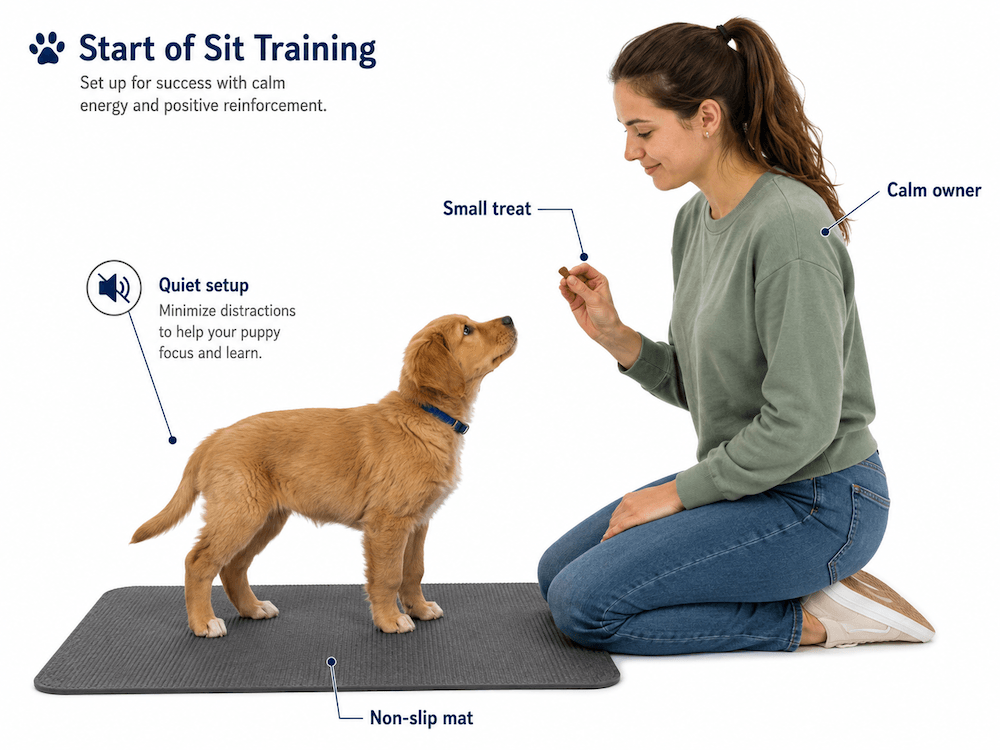
Step 1: Start in a Quiet Spot With Your Puppy Standing
Begin when your puppy is awake, relaxed, and able to focus for a short moment. Stand or kneel in front of them with one treat in your hand, and keep your body calm so you do not accidentally excite them. If your puppy is bouncing, sniffing around, or grabbing at your hand, wait for a calmer second before starting.
Step 2: Hold the Treat Close to Your Puppy’s Nose
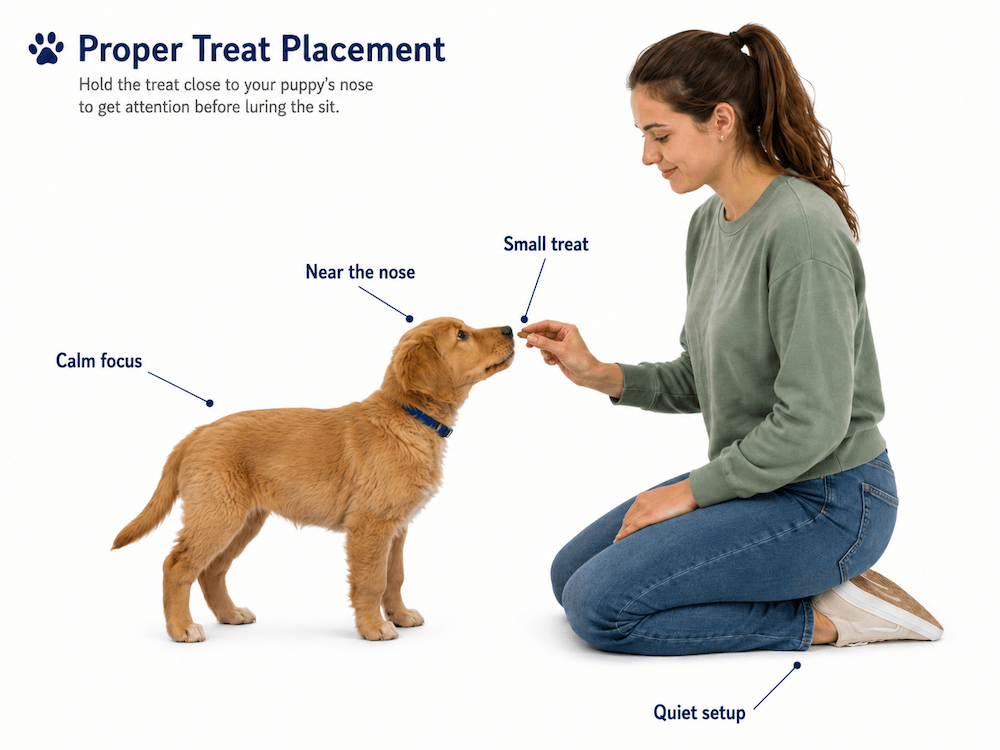
Place the treat near your puppy’s nose without letting them snatch it. Your puppy should be interested enough to follow the treat, but not so frantic that they jump or bite at your fingers. Keep your hand steady and low at first, because a treat that starts too high can encourage jumping instead of sitting.


Step 3: Move the Treat Slowly Upward and Slightly Back
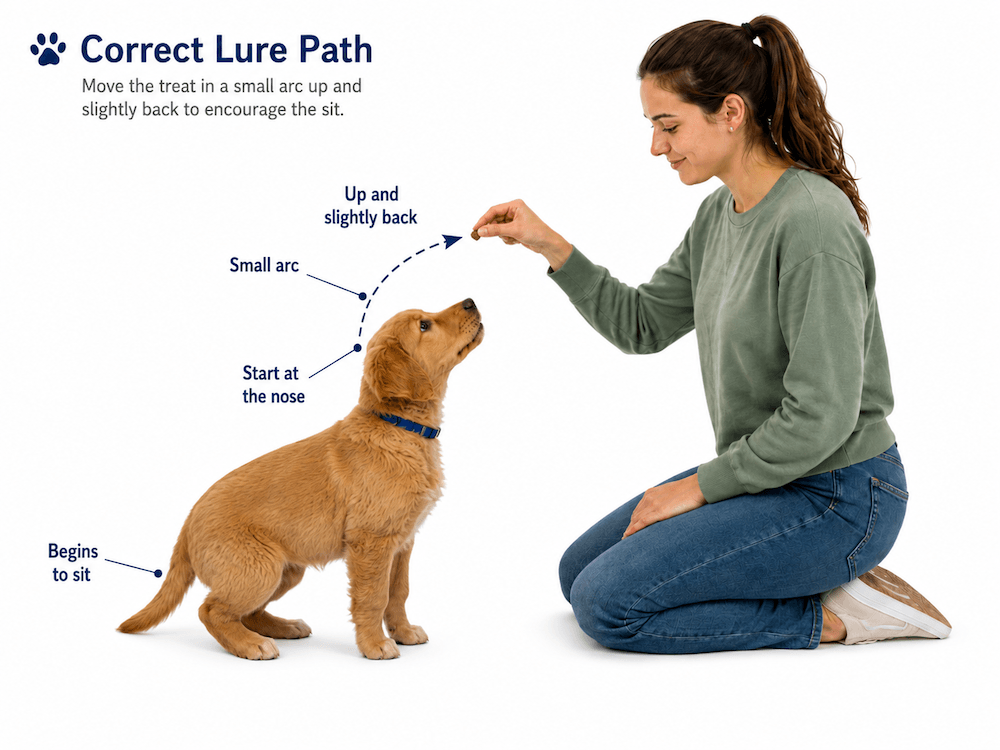
Move the treat from your puppy’s nose upward and slightly toward the top of their head. As the nose follows the treat, many puppies naturally lower their back end into a sit. Keep the motion small; if the treat moves too far back, your puppy may walk backward, jump, or twist instead of sitting.
Step 4: Mark and Reward the Moment Your Puppy Sits
The instant your puppy’s bottom touches the floor, say “yes” or click, then give the treat. This timing is what teaches your puppy that sitting caused the reward. If your puppy pops back up right away, that is fine at first; you are rewarding the sit moment, not asking for a long stay yet.
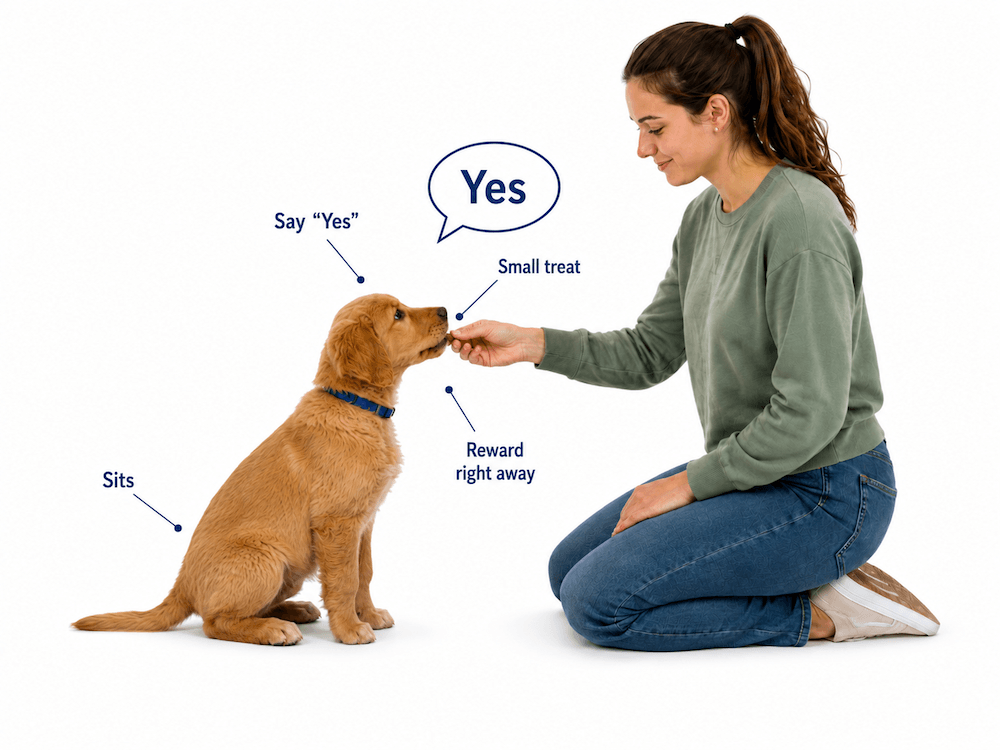
Step 5: Repeat Until Your Puppy Follows the Hand Easily
Practice several short repetitions, but stop before your puppy gets bored or mouthy. After a few successful tries, your puppy should start lowering into a sit with less exaggerated hand movement. Keep the session upbeat and end while your puppy is still interested, because good endings make the next session easier.
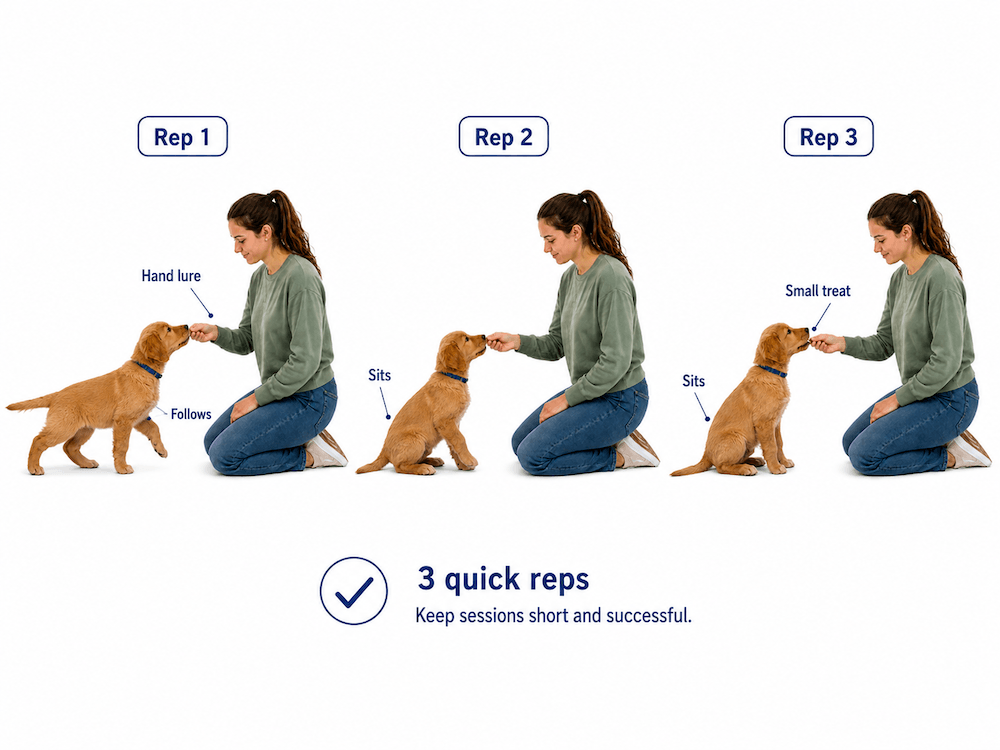
Step 6: Fade the Treat Lure and Add the Word “Sit”
Once your puppy is following your empty hand into position, say “sit” one time, then give the hand signal. Reward after the puppy sits, but keep the treat in your other hand or pouch so your puppy does not only respond when food is visible. Over time, the word and hand signal become the cue, and the treat becomes a reward rather than a bribe.
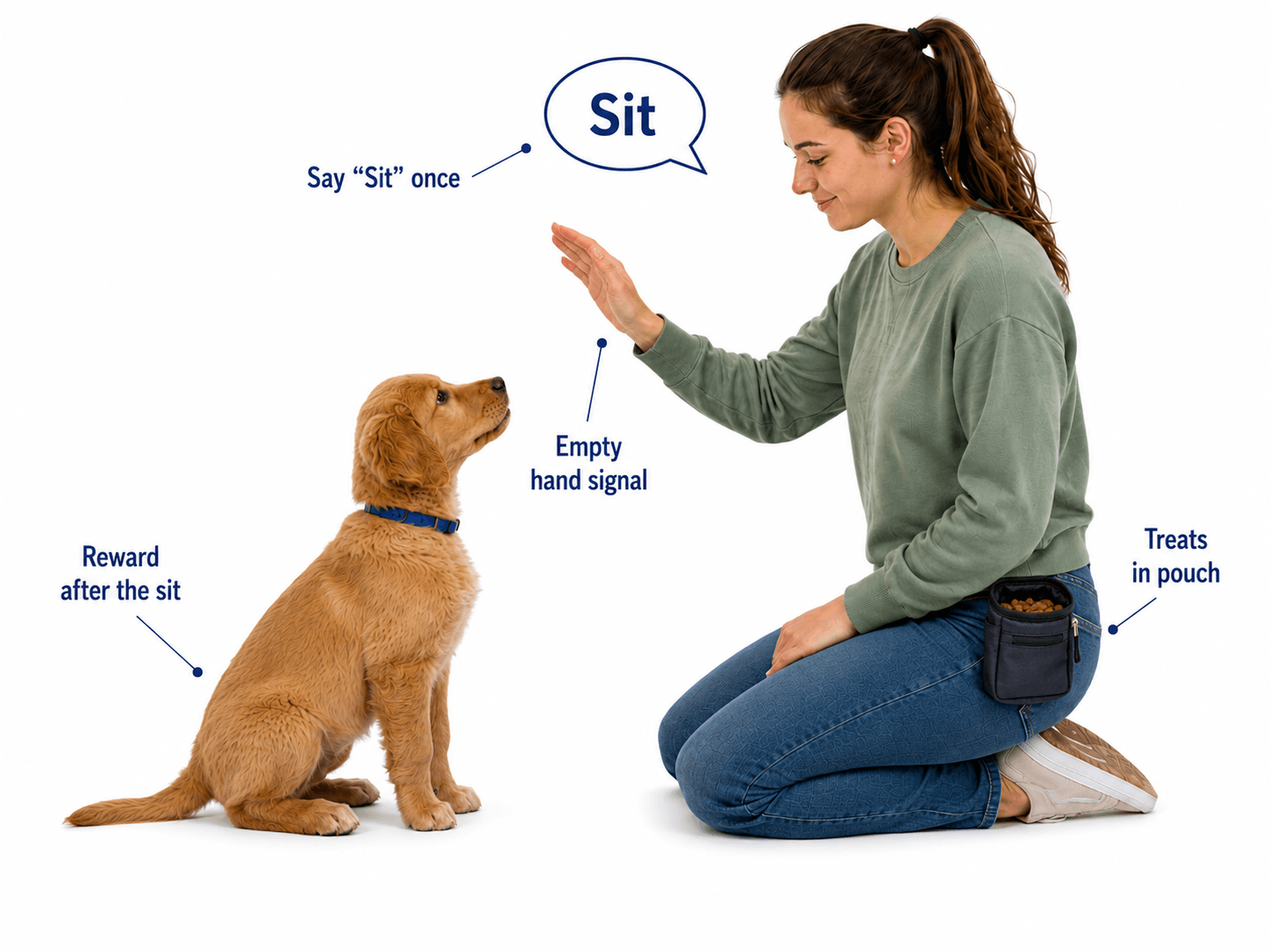
How to Practice Sitting in Everyday Puppy Situations
Once your puppy understands the basic cue, practice in real life with low-pressure moments. Ask for sit before placing the food bowl down, clipping on the leash, opening a door, tossing a toy, or greeting a calm family member. These moments teach your puppy that sitting is useful, not just a trick performed during formal training.
Keep expectations fair when distractions increase. A puppy who sits in the kitchen may not immediately sit outside, near guests, or around other dogs. Change only one challenge at a time: either a new room, a longer pause, a lower-value reward, or more distraction, but not all at once.
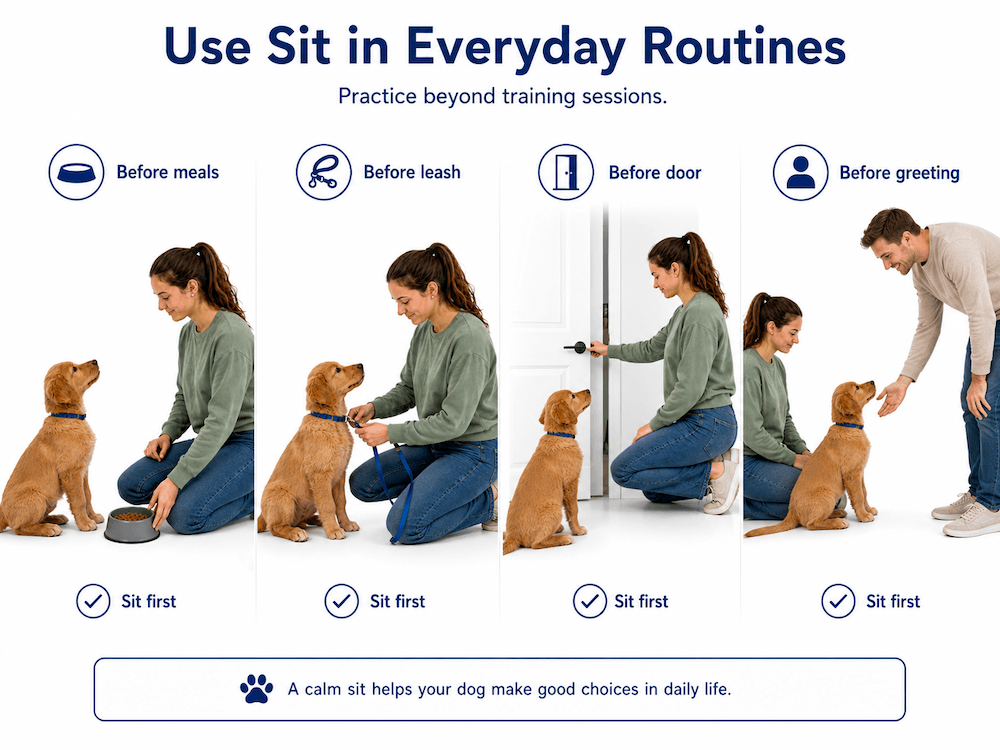
Helpful Tips for Teaching a Puppy to Sit Faster
Small refinements can make sit training clearer without making sessions longer or more intense. This focuses on practical improvements that help puppies learn while keeping the experience calm and positive.
| Training Tip | Why It Helps | How to Apply It |
|---|---|---|
| Use tiny treats | Small rewards keep the session quick and focused. | Break soft treats into pea-sized pieces. |
| Reward low | Low delivery helps your puppy stay seated. | Give the treat near your puppy’s mouth. |
| Say the cue once | Repeating words can teach your puppy to wait. | Say “sit,” pause, then help with your hand. |
| Train before meals | A little hunger can make treats more motivating. | Practice briefly before breakfast or dinner. |
| Change locations slowly | New places can feel like a new lesson. | Move from one quiet room to another first. |
| End on success | A good finish builds confidence for next time. | Stop after an easy sit and reward warmly. |
Mistakes That Make Puppy Sit Training Harder
Puppies usually struggle because the lesson is unclear, too long, too exciting, or physically uncomfortable. The mistakes below can slow learning or make your puppy avoid training, even when the owner’s intention is good.
| Mistake | Why It Causes Problems | Better Approach |
|---|---|---|
| Pushing hips down | Physical pressure can cause stress or resistance. | Use a treat lure and reward natural movement. |
| Repeating “sit” | Your puppy may learn the cue has no urgency. | Say it once, then help with a hand signal. |
| Training too long | Overlong sessions can create boredom and frustration. | Practice briefly and stop after a good repetition. |
| Rewarding too late | Your puppy may connect the reward to another action. | Mark the instant the sit happens. |
| Starting outside | Busy environments make learning harder at first. | Teach indoors before adding outdoor distractions. |
| Removing treats too soon | Your puppy may not understand the cue yet. | Fade the lure before fading rewards. |
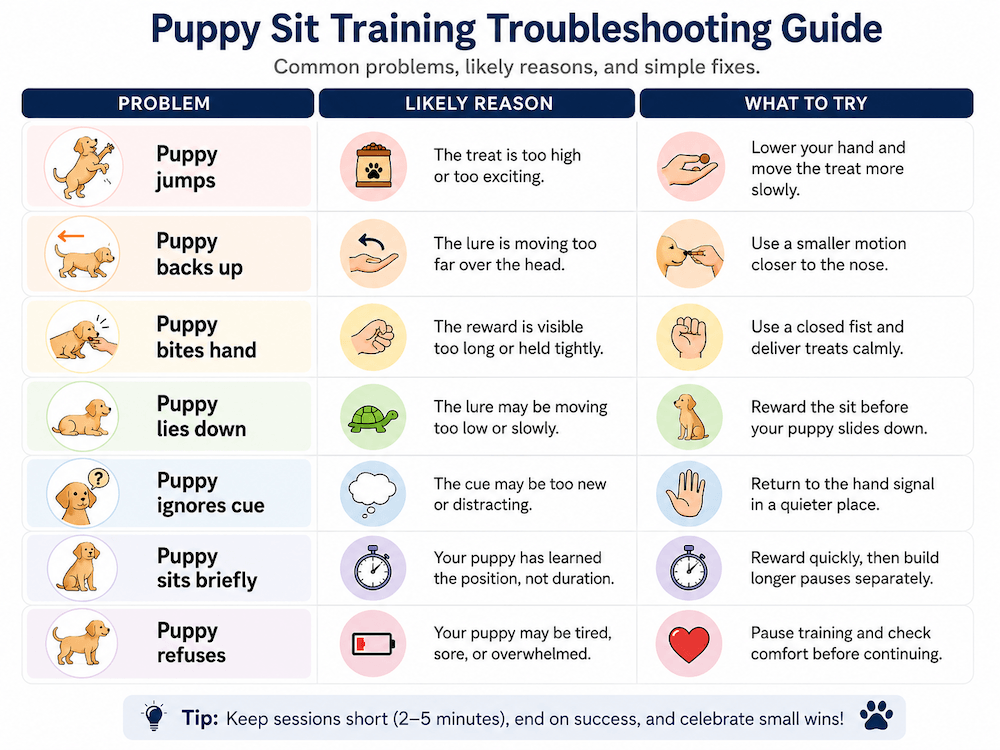
Puppy Sit Problems and How to Fix Them
Many sit-training problems come from reward placement, timing, distractions, or asking too much too soon. This table helps owners identify the most likely cause and choose a simple adjustment before the puppy becomes frustrated.
When to Contact a Vet, Trainer, or Behaviorist About Sit Training
Sit is a simple cue, so most puppies can learn it at home. Professional help is useful when the problem looks painful, unusually fearful, aggressive, or stuck despite calm practice.
| Concern | Who Can Help | Why It Matters |
|---|---|---|
| Pain signs | Veterinarian | Refusing to sit may reflect soreness or injury. |
| Limping | Veterinarian | Uneven movement should be checked before training continues. |
| Fearful behavior | Certified trainer | Gentle coaching can rebuild confidence around training. |
| Growling or snapping | Veterinary behaviorist | Defensive behavior needs a safety-focused plan. |
| No progress | Certified trainer | A trainer can adjust timing, rewards, and setup. |
| Severe distraction | Trainer or behaviorist | Some puppies need help with arousal and focus. |
A veterinarian is the first stop if your puppy seems physically uncomfortable. A trainer is the right support when your puppy is healthy but the learning plan needs adjustment. A veterinary behaviorist is especially helpful when fear, aggression, panic, or intense body handling sensitivity is part of the problem.
How to Maintain Progress After Your Puppy Learns Sit
After your puppy learns sit, keep the cue useful by practicing it in small, everyday moments. Ask for sit before predictable rewards, but avoid turning every interaction into a drill. Puppies still need freedom, play, sleep, sniffing, and gentle social learning alongside obedience practice.
Success looks like a puppy who responds to one cue, sits with a relaxed body, and can do it in more than one room. Early progress may be uneven, especially during teething, growth spurts, fear periods, or exciting changes in the home. If your puppy starts ignoring the cue, return to an easier setting and reward generously for a few sessions.
This timeline helps owners understand how sit training often progresses from early learning to real-life reliability. Puppies vary, so use the stages as a guide rather than a strict schedule.
| Progress Stage | What It Looks Like | Owner Goal |
|---|---|---|
| First sessions | Your puppy follows a treat into position. | Reward the sit moment clearly and quickly. |
| Early understanding | Your puppy sits with a smaller hand motion. | Fade the visible treat from your cue hand. |
| Cue connection | Your puppy responds after hearing “sit.” | Say the cue once before the hand signal. |
| Room practice | Your puppy sits in different quiet spaces. | Practice briefly in one new place at a time. |
| Daily use | Your puppy sits before meals, doors, and greetings. | Reward calm sitting during real-life routines. |
| Maintenance | Your puppy responds without needing food every time. | Use praise, life rewards, and occasional treats. |
What Research Says About Reward-Based Puppy Training
The Merck Veterinary Manual advises dog owners to choose trainers who use positive reinforcement for good behavior rather than punishment, and it specifically notes that food can be one of the best motivators for dogs. For puppy sit training, this supports using treats, praise, and clear reward timing instead of pushing the puppy into position.
The 2015 AAHA Canine and Feline Behavior Management Guidelines emphasize low-fear, low-stress handling and cooperative relationships between veterinary teams, owners, and animals. That matters for basic cues like sit because early training should build confidence, communication, and trust rather than conflict.[1]
A PLOS ONE study comparing training methods in companion dogs found that dogs exposed to aversive-based methods showed more stress-related behaviors and higher welfare concerns than dogs trained with reward-based methods. This supports avoiding force, intimidation, or harsh corrections when teaching a simple foundation cue like sit.[2]
A Frontiers in Veterinary Science study comparing electronic-collar training with positive reinforcement included “sit” as one of the measured responses and found positive-reinforcement-focused training was more effective in several response measures while posing fewer welfare concerns. For dog owners, the practical takeaway is clear: humane, reward-based methods are appropriate even for basic obedience work.[3]
Frequently Asked Questions
The Bottom Line
Training a puppy to sit is one of the simplest ways to build communication, focus, and early manners. Start by using a treat to guide your puppy into position, then reward the moment their bottom touches the floor. Keep each session short, calm, and positive so your puppy stays interested and confident. As your puppy improves, fade the visible treat, add the verbal cue, and practice in different rooms and daily routines. Avoid pushing your puppy’s hips down or repeating the cue too many times, because these habits can create confusion or resistance. If your puppy seems painful, fearful, or unable to sit comfortably, pause training and contact your veterinarian or a qualified trainer. With patience and consistency, “sit” can become a reliable foundation cue your puppy uses throughout life.