How to Help a Dog Lose Weight: 7 Safe Steps (Quick & Naturally)

Canine Bible is reader-supported. We receive affiliate commissions via some of our links. Learn more.
To help a dog lose weight, feed the right number of calories, increase safe daily activity, and work with your veterinarian to set a realistic goal. Weight loss should be gradual, measured, and based on your dog’s age, breed, health, and current body condition. The best plan is not simply “less food,” but a smarter routine your dog can follow consistently. Some dogs gain weight from too many treats, oversized portions, low activity, medical conditions, or all of these together. Rapid weight loss can be risky, especially for puppies, seniors, and dogs with health problems. Owners also need to know how to measure progress, handle begging, choose low-calorie rewards, and avoid common diet mistakes. This guide explains how to help your dog slim down safely while keeping them satisfied, active, and healthy.
Why Safe Dog Weight Loss Starts With a Plan
| Plan Area | Why It Matters for Safe Weight Loss |
|---|---|
| Starting point | A safe plan begins with your dog’s current weight, body condition, age, breed, activity level, and health history. |
| Vet guidance | Your veterinarian can help rule out medical issues and set a realistic weight-loss goal for your dog. |
| Measured meals | Portion control helps your dog lose weight without guessing, overfeeding, or cutting food too sharply. |
| Treat tracking | Treats, chews, and table scraps need to be counted because small extras can slow progress quickly. |
| Gradual activity | Exercise should increase slowly so your dog can burn calories without joint strain, overheating, or exhaustion. |
| Steady progress | Slow, consistent weight loss is safer and easier to maintain than sudden food cuts or intense exercise changes. |
| Health monitoring | Regular check-ins help you adjust the plan if your dog seems too hungry, loses weight too fast, or does not improve. |
What to Know Before Helping Your Dog Lose Weight
A dog weight-loss plan should start with information, not punishment. Many dogs become overweight through small daily habits: generous portions, frequent treats, table scraps, missed walks, age-related slowing, neutering-related appetite changes, or reduced activity after pain or injury. Some dogs also gain weight because of health problems or medication effects, so a basic veterinary check is especially important if the weight gain is sudden, severe, or hard to explain.
The safest plan protects your dog from two common problems: losing weight too quickly and losing the wrong kind of weight. A dog should lose excess fat while keeping muscle, hydration, energy, and normal behavior. That is why portion control, protein adequacy, gradual exercise, and regular monitoring matter more than simply feeding “less.”
Before you begin, write down what your dog eats in a normal day, including meals, treats, chews, training rewards, scraps, supplements, and flavored medications. Also note activity level, mobility, appetite, stool quality, thirst, and any behavior changes. This gives you a clear starting point and helps your veterinarian adjust the plan if progress is too fast, too slow, or not happening.


How to Tell If Your Dog Is Overweight
How heavy your dog should be varies widely by breed, frame, muscle, coat, and life stage. A body condition check looks at your dog’s shape and fat cover, especially around the ribs, waist, belly tuck, spine, hips, and base of the tail. You should be able to feel the ribs with light pressure, see a waist from above, and notice a tucked abdomen from the side in many healthy adult dogs.
This table helps you compare common at-home observations without turning them into a diagnosis. Use it as a screening tool, then ask your veterinary team to confirm your dog’s body condition and muscle condition.
| Check Area | Healthy Pattern | Possible Overweight Pattern |
|---|---|---|
| Ribs | Ribs are easy to feel with light pressure. | Ribs are hard to feel under thick fat cover. |
| Waist | A waist is visible behind the ribs from above. | The body looks straight or rounded from above. |
| Belly tuck | The belly rises slightly behind the rib cage. | The belly hangs low or looks rounded. |
| Tail base | The area feels smooth without heavy padding. | Fat deposits are noticeable around the tail base. |
| Movement | Your dog moves comfortably for normal activity. | Your dog tires quickly or avoids movement. |
| Collar fit | The collar fit stays consistent over time. | The collar becomes tight without growth or coat changes. |
When a Dog Should See the Veterinarian Before Losing Weight
Some dogs can start with simple food measurement and gentle activity, but others need a veterinary plan first. This is especially true when weight gain is sudden, your dog has pain or mobility problems, or your dog has medical signs that could affect appetite, metabolism, hydration, or exercise tolerance. A vet visit can also help prevent accidental underfeeding, especially if your dog needs a therapeutic diet or has a chronic condition.
Supplies and Setup for a Dog Weight-Loss Plan
A good setup makes weight loss easier because it removes guesswork. You do not need expensive equipment, but you do need consistent measuring tools and a clear record of what your dog actually eats. Everyone in the home should follow the same plan so one person’s “small treat” does not undo another person’s measured meals.


| Setup Item | Why It Helps | How to Use It |
|---|---|---|
| Kitchen scale | It measures food more accurately than cups. | Weigh each meal in grams when possible. |
| Measuring cup | It helps if weighing is not practical. | Use a level cup, not a heaping scoop. |
| Food log | It reveals hidden calories and patterns. | Record meals, treats, chews, and scraps daily. |
| Weight record | It shows progress beyond daily appearance changes. | Track weight at the same interval and scale. |
| Treat container | It prevents accidental extra rewards. | Set aside the daily treat allowance each morning. |
| Activity plan | It keeps movement gradual and consistent. | Schedule short sessions your dog can repeat comfortably. |
How to Help a Dog Lose Weight: A Safe Step-by-Step Plan
The best plan is simple enough to follow every day and flexible enough to adjust as your dog changes. These steps move from baseline information to food control, treat control, exercise, and progress checks. Avoid changing everything aggressively on the first day because sudden restriction or intense activity can make dogs uncomfortable and harder to manage.
Step 1: Record Your Dog’s Starting Point
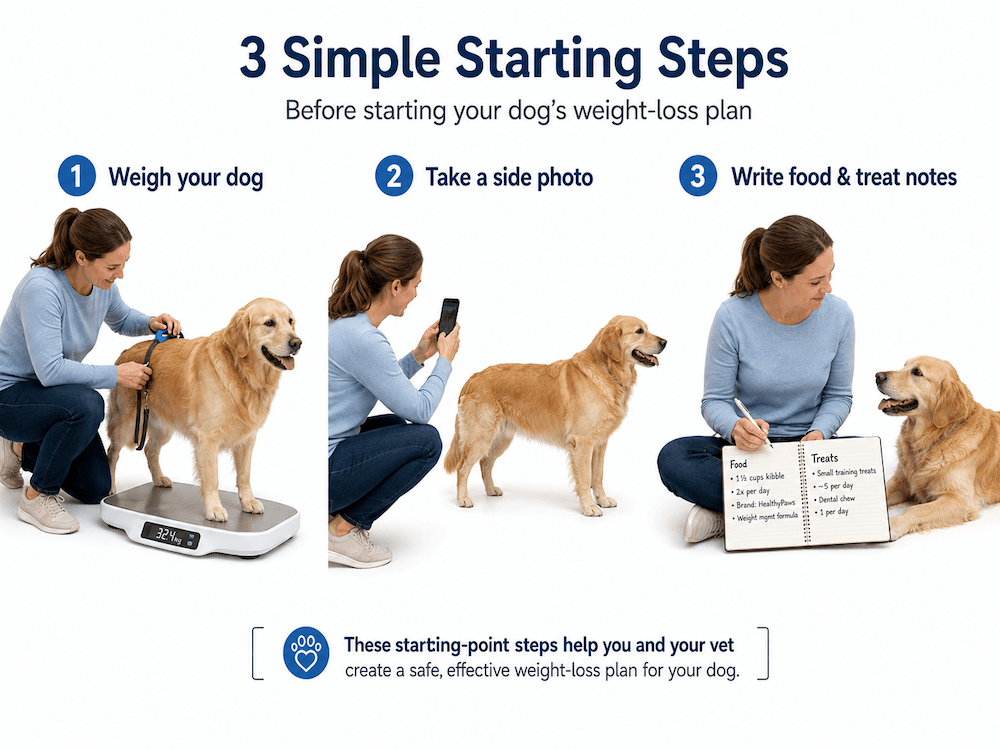
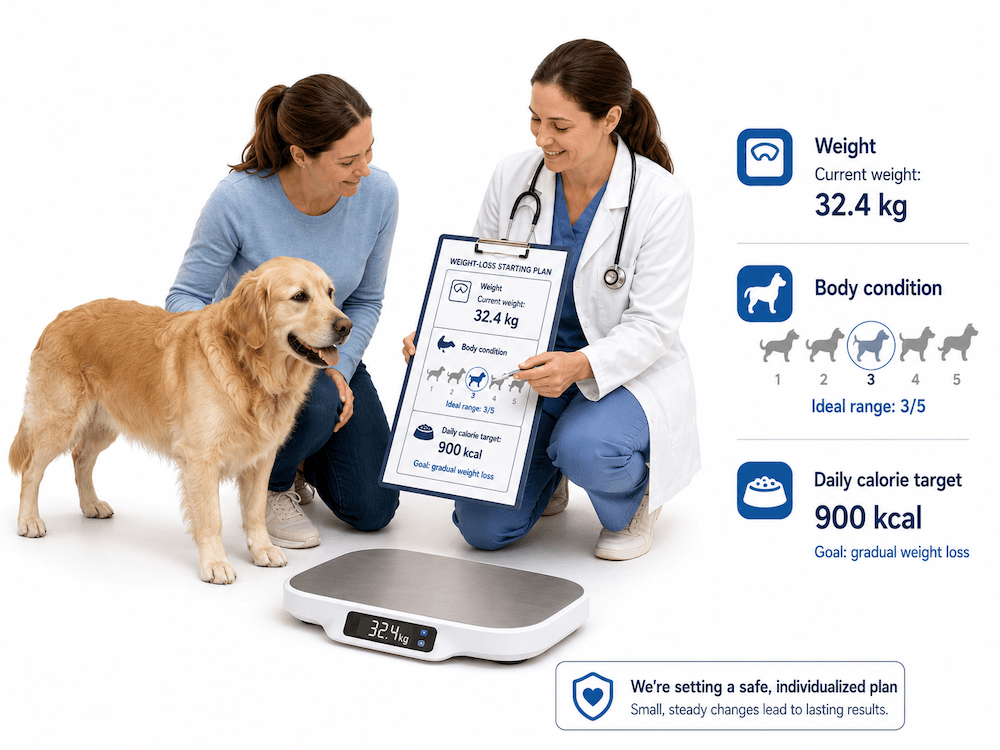
Start with your dog’s current weight, body condition, photos, and normal daily routine. Take one photo from the side and one from above in good lighting, then repeat the same angles every few weeks. Write down the current food brand, exact amount offered, feeding schedule, treats, chews, scraps, activity, and any symptoms.
Step 2: Set a Target Weight and Calorie Budget
Ask your veterinarian to help estimate your dog’s ideal weight and daily calorie target. This target should consider body condition, muscle condition, breed type, age, neuter status, activity, and health history. A large-breed senior with arthritis, for example, needs a different plan than a young small dog who is simply getting too many treats.
Step 3: Measure Meals Accurately
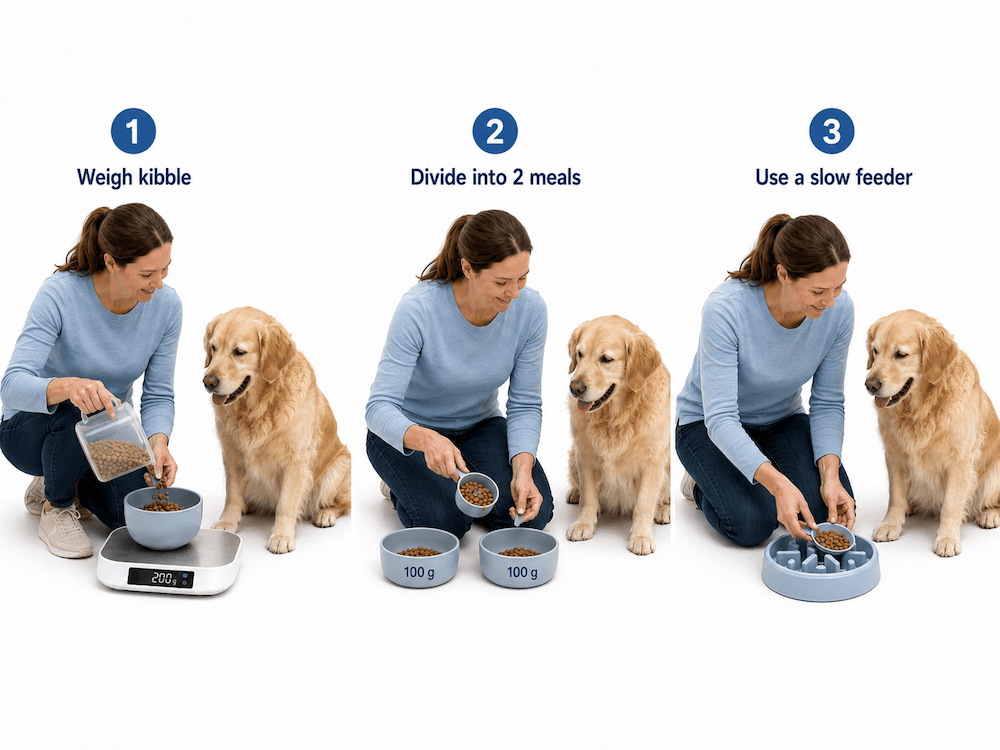
Once you know the daily food amount, divide it into scheduled meals. Many dogs do well with two meals per day, while some feel more satisfied with three smaller meals if the total daily calories stay the same. Use a kitchen scale when possible because “one cup” can vary widely depending on kibble size, scoop shape, and how full the cup is.
Step 4: Put Treats on a Budget
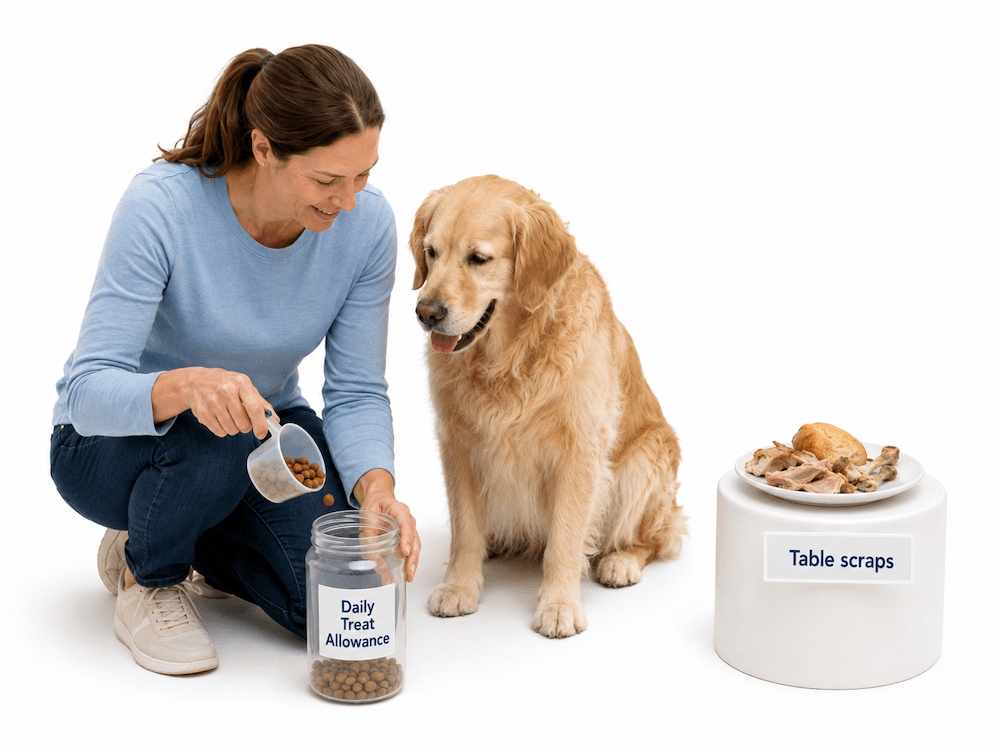
Treats can stay in the plan, but they need limits. Training rewards, dental chews, table scraps, lick mats, peanut butter, cheese, and “just a bite” foods can add up quickly. Set aside a daily treat allowance so everyone in the household knows when the budget is used.
Step 5: Choose Food That Keeps Your Dog Nourished
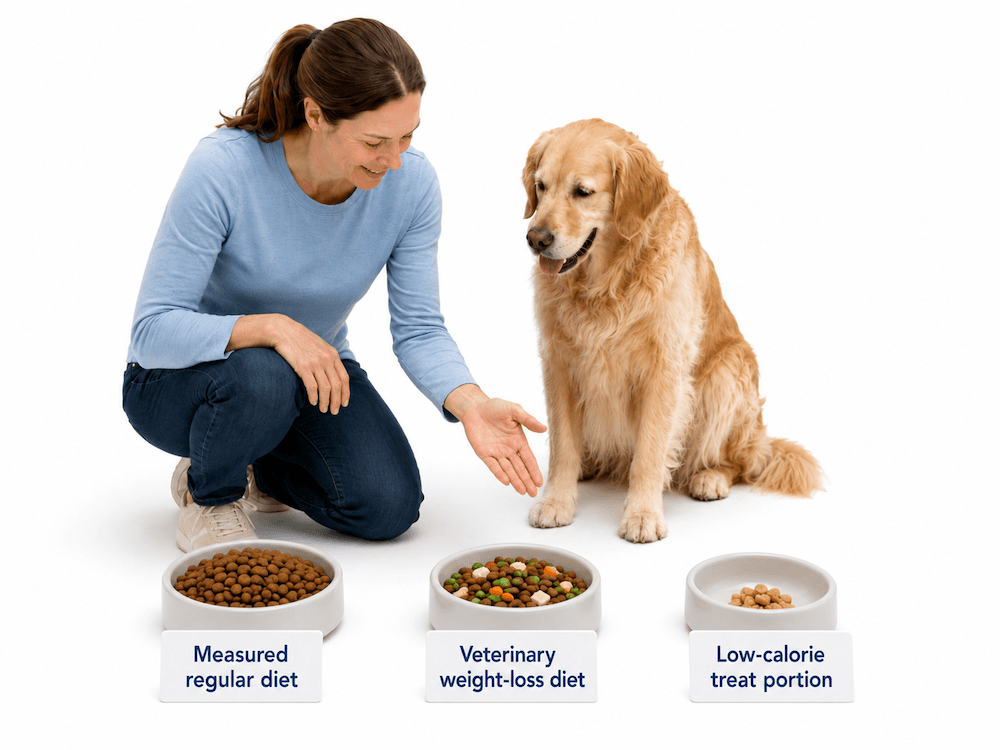
Some dogs can lose weight by eating a carefully measured amount of their regular complete diet. Others need a veterinary weight-loss diet because reducing a regular maintenance food too much can reduce important nutrients along with calories. This is especially important for dogs that need to lose a significant amount of weight or seem very hungry on smaller portions.
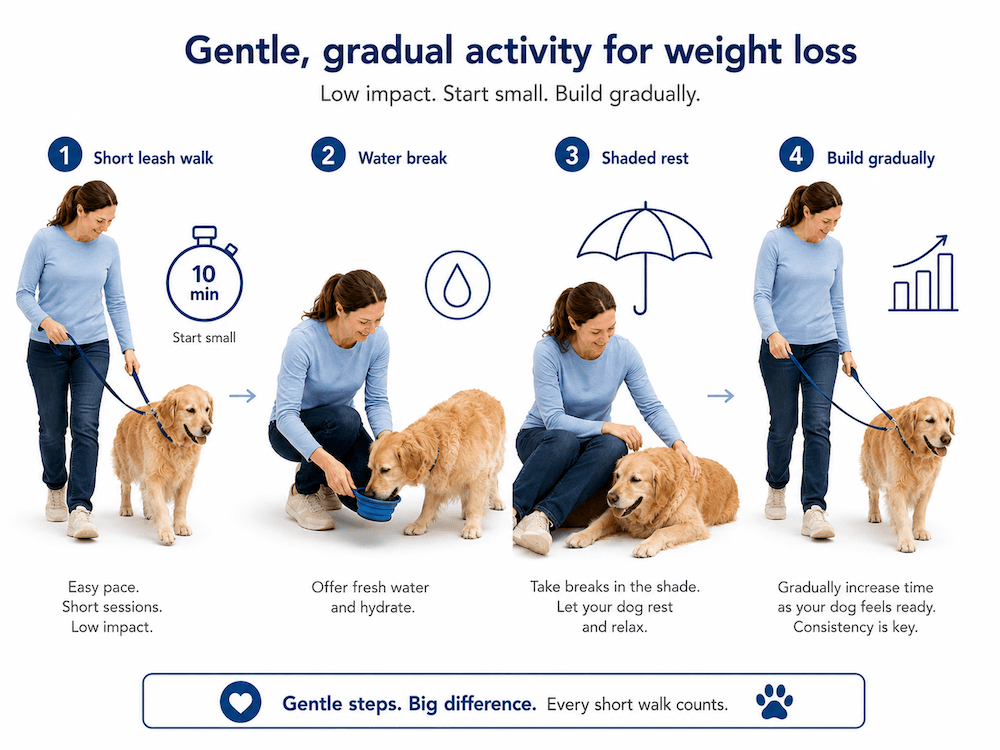
Step 6: Increase Activity Gradually
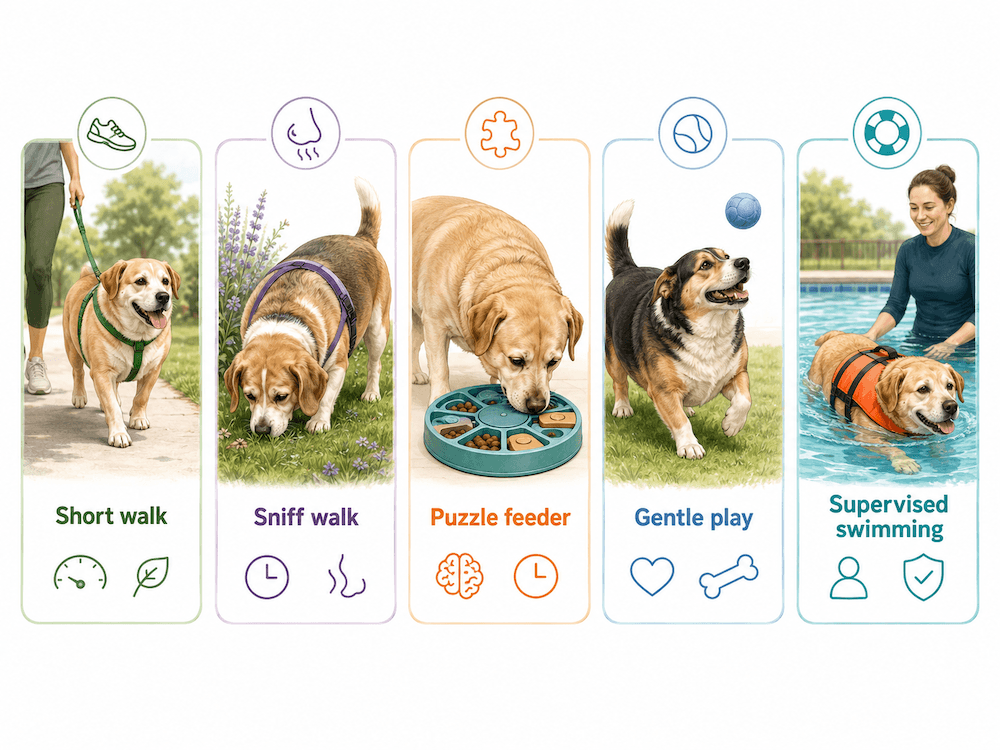
Exercise helps weight loss, but food control usually does the heavier lifting. Start with movement your dog can repeat comfortably: short walks, gentle play, controlled sniff walks, swimming if safe and available, or low-impact indoor games. The right amount depends on your dog’s current fitness, age, joints, breathing, weather, and enthusiasm.
Step 7: Recheck Progress and Adjust Carefully
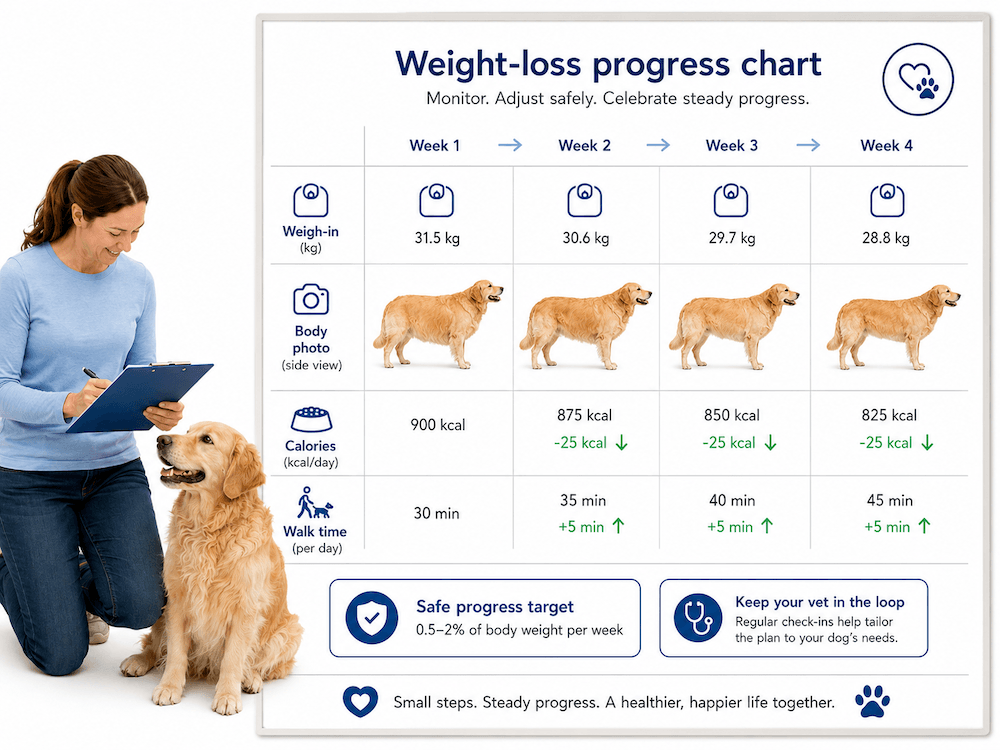
Weigh your dog on a regular schedule and compare body condition over time. Many plans need small adjustments because dogs respond differently to the same calorie target. If your dog is losing too quickly, seems weak, acts unusually hungry, or develops digestive changes, pause and ask for veterinary guidance.
Progress is not always perfectly linear. A dog may lose steadily for several weeks, then plateau because activity, metabolism, treat intake, or body composition has changed. Adjust the plan based on measured results, not frustration.
Safe Exercise Ideas for Overweight Dogs
Exercise should support weight loss without creating pain, overheating, or discouragement. For many overweight dogs, several short, comfortable sessions are safer than one long, intense workout. Choose activities that match your dog’s body, health, and current confidence.
Helpful Tips for Helping a Dog Lose Weight Safely
Weight loss is easier when your dog still feels included, rewarded, and satisfied. These tips refine the main plan by making daily routines more consistent and less frustrating for both the dog and the owner.
| Weight-Loss Tip | Why It Helps | How to Apply It |
|---|---|---|
| Use meal rewards | It reduces extra calories from training treats. | Save part of breakfast for rewards. |
| Slow the meal | It helps meals last longer. | Use a puzzle bowl or scatter feeding. |
| Add routine | Predictable meals reduce begging and confusion. | Feed at consistent times daily. |
| Reward without food | Attention can replace some edible rewards. | Use praise, play, brushing, or sniff time. |
| Share the plan | Household consistency prevents hidden calories. | Post the feeding plan near the food. |
| Track small wins | Progress feels easier when changes are visible. | Record weight, waist, energy, and stamina. |
Mistakes That Can Slow Down Dog Weight Loss
Most weight-loss problems come from inconsistent intake, unrealistic expectations, or plans that are too hard to maintain. A mistake does not mean the owner failed; it means the plan needs clearer structure. Fixing one small habit can sometimes restart progress.
| Mistake | Why It Backfires | Better Choice |
|---|---|---|
| Guessing portions | Small overfeeds can block progress. | Weigh meals or use level measures. |
| Ignoring treats | Extras can exceed the calorie deficit. | Count every reward and chew. |
| Crash dieting | Severe restriction can risk poor nutrition. | Use a planned calorie target. |
| Overexercising | Too much activity can worsen pain. | Increase movement in small steps. |
| Free-feeding | Unmeasured grazing hides true intake. | Use scheduled measured meals. |
| Quitting early | Visible change often takes weeks. | Track trends, not daily appearance. |
What to Monitor After Starting a Dog Weight-Loss Plan
After the plan begins, watch both numbers and behavior. Weight matters, but so do energy, appetite, stool, mobility, breathing, coat quality, and attitude. A successful plan should make your dog gradually leaner without making them weak, distressed, or constantly uncomfortable.
| What to Track | Good Sign | Needs Attention |
|---|---|---|
| Body weight | Weight trends down gradually over time. | Weight drops suddenly or does not change. |
| Body shape | Ribs and waist become easier to assess. | Muscle loss or bony areas appear. |
| Energy | Your dog seems comfortable and engaged. | Your dog seems weak, dull, or restless. |
| Mobility | Walking and rising become easier. | Limping, stiffness, or soreness increases. |
| Appetite | Your dog settles after meals. | Begging becomes frantic or constant. |
| Digestion | Stool stays normal and predictable. | Vomiting, diarrhea, or constipation develops. |
How to Keep Your Dog From Regaining Weight
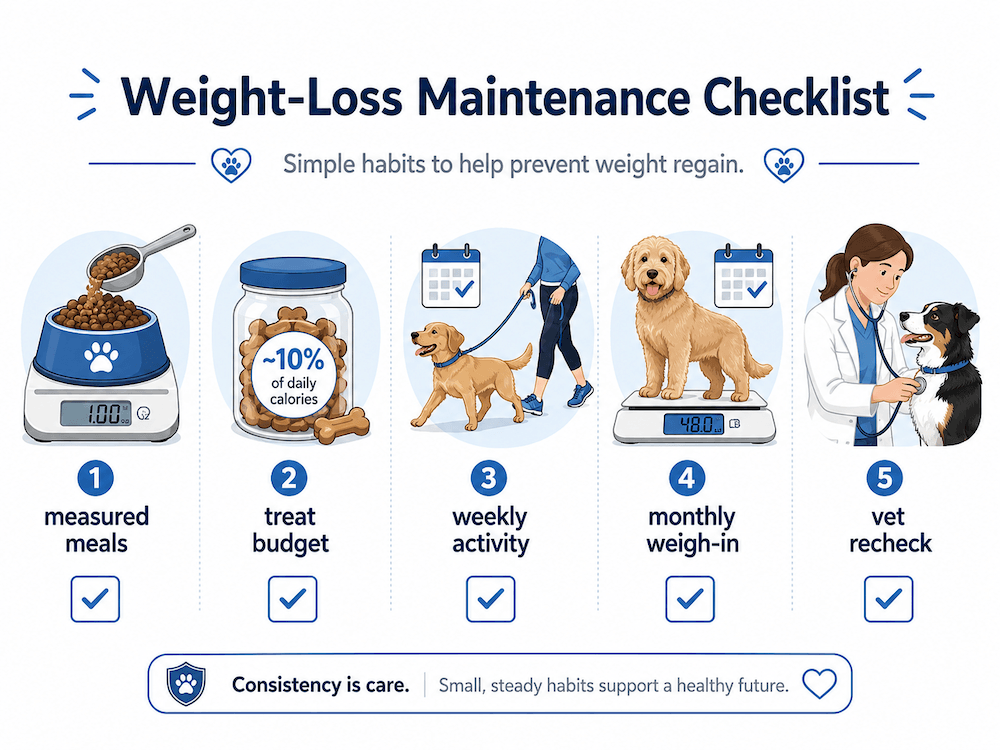
Weight maintenance begins before your dog reaches the final goal. As your dog gets lighter, calorie needs may change, activity may improve, and old feeding habits may try to return. Keep measuring meals, tracking treats, and weighing your dog periodically even after progress looks obvious.
Do not celebrate success by returning to the previous routine that caused weight gain. Instead, make the new routine feel normal: measured meals, planned rewards, regular movement, and quick adjustments when weight starts creeping up. Maintenance is usually easier when the whole household agrees that love does not have to mean extra food.
What Research Says About Helping Dogs Lose Weight
The 2021 AAHA Nutrition and Weight Management Guidelines describe nutritional assessment as a systematic process that includes body condition score and muscle condition score, ideally as part of routine veterinary exams. The same guidelines emphasize individualized nutrition recommendations designed to reach and maintain an appropriate body weight while meeting nutritional needs.[1]
The Merck Veterinary Manual explains that obesity in dogs is linked to excess energy intake over energy expenditure, with risk factors such as low activity, age, neutering, some endocrine disorders, and certain medications. It also notes that weight-loss programs often combine calorie restriction with exercise, that treats should remain limited within the overall calorie plan, and that a reasonable target is gradual weight loss with regular monitoring.
A clinical study on canine weight-loss food found that dogs lost body weight and fat mass while retaining lean body mass during the weight-loss phase. This supports the practical point that weight-loss diets should aim for fat reduction while protecting muscle, not just a smaller number on the scale.[2]
Research on weight-loss program failure found that owner compliance was strongly associated with whether dogs achieved a satisfactory weight-loss rate. For dog owners, that means the plan must be realistic, measurable, and easy for the whole household to follow consistently.[3]
Frequently Asked Questions
The Bottom Line
Helping a dog lose weight is safest when it is gradual, measured, and guided by your dog’s individual needs. The best results come from combining accurate food portions, controlled treats, safe daily movement, and regular progress checks. Instead of simply feeding less, focus on creating a routine your dog can follow without hunger, stress, or overexertion. Watch your dog’s energy, mobility, appetite, stool, and body shape as the plan continues. If weight gain is sudden, your dog has health changes, or progress stalls despite consistency, ask your veterinarian for help. With patience and a realistic plan, weight loss can improve your dog’s comfort, stamina, mobility, and long-term well-being.