How to Train a Dog Not to Jump on People: 7 Trainer-Approved Steps

Canine Bible is reader-supported. We receive affiliate commissions via some of our links. Learn more.
To train a dog not to jump on people, stop rewarding the jump and teach a calmer greeting instead. Reward four paws on the floor, a sit, or another polite behavior before your dog gets attention. Jumping is usually excitement, habit, or an attempt to reach a person’s face—not stubbornness or dominance. The challenge is that every guest, family member, and doorway can accidentally teach the opposite lesson. Puppies, large dogs, nervous dogs, and overly excited greeters may also need slightly different setups. This guide explains how to prevent jumping, reward calm greetings, handle visitors, and avoid common mistakes that keep the behavior going. With consistency, your dog can learn that polite greetings are the fastest way to get the attention they want.
Why Some Dogs Jump On People
| Reason | What It Means |
|---|---|
| Excited greetings | Many dogs jump because people arriving home or visiting creates a burst of energy they have not learned to control. |
| Learned attention | If jumping has led to talking, touching, laughing, or eye contact, the dog may repeat it because it works. |
| Face access | Dogs often jump to get closer to a person’s hands, face, or voice during social greetings. |
| Inconsistent rules | When some people allow jumping and others do not, the dog gets mixed messages about how to greet politely. |
| Visitor energy | Fast movement, high voices, bending over, or excited guests can make jumping more likely. |
| Low impulse control | Dogs that have not practiced calm sits, waiting, or four-paws-on-floor greetings may default to jumping. |
| Stress or uncertainty | Some dogs jump when they are unsure, overwhelmed, or trying to create space during intense interactions. |
What to Rule Out Before Training a Dog Not to Jump
Before you start, look at the whole greeting picture. Jumping during a happy homecoming is different from jumping paired with stiff posture, hard staring, frantic barking, or grabbing clothes. The training plan still uses calm management and rewards, but the safety setup may need to change.
If your dog is large, knocks people over, jumps on children, scratches elderly guests, or gets mouthy when excited, do not “test” the behavior with visitors. Use a leash, gate, crate, pen, or closed door while you practice. A safer setup prevents injuries and keeps your dog from rehearsing the habit.
| What You See | What It May Mean | Best First Step |
|---|---|---|
| Loose body | Your dog is likely excited and seeking attention. | Practice calm greetings with treats ready. |
| Mouthing clothes | Excitement may be spilling into rough play. | Use a leash and redirect to a toy. |
| Knocking people | The behavior is a safety risk. | Use barriers before visitors enter. |
| Barking and lunging | Frustration or fear may be involved. | Add distance and seek qualified help. |
| Stiff posture | Your dog may be uncomfortable, not friendly. | Pause greetings and avoid pressure. |
| Sudden change | Pain, stress, or illness may affect behavior. | Call your veterinarian for guidance. |
What You Need Before Practicing Polite Greetings
You do not need complicated equipment to teach polite greetings. You need a reward your dog likes, a way to prevent repeated jumping, and a clear plan for what your dog should do instead. The setup matters because a dog cannot learn a new greeting if every arrival turns into a fast, chaotic event.


A good training session should feel slightly boring at first. Calm repetition is the point. When the dog can succeed with easy people, easy doorways, and low excitement, you can gradually make the greeting more realistic.
How to Train a Dog Not to Jump on People: 7-Step Plan
The basic formula is simple: prevent the jump, reward calm behavior, and remove attention if jumping happens. Your dog needs repeated practice where polite greetings work better than jumping. Keep sessions short, predictable, and consistent across every person your dog greets.
Step 1: Choose the Greeting Behavior You Want
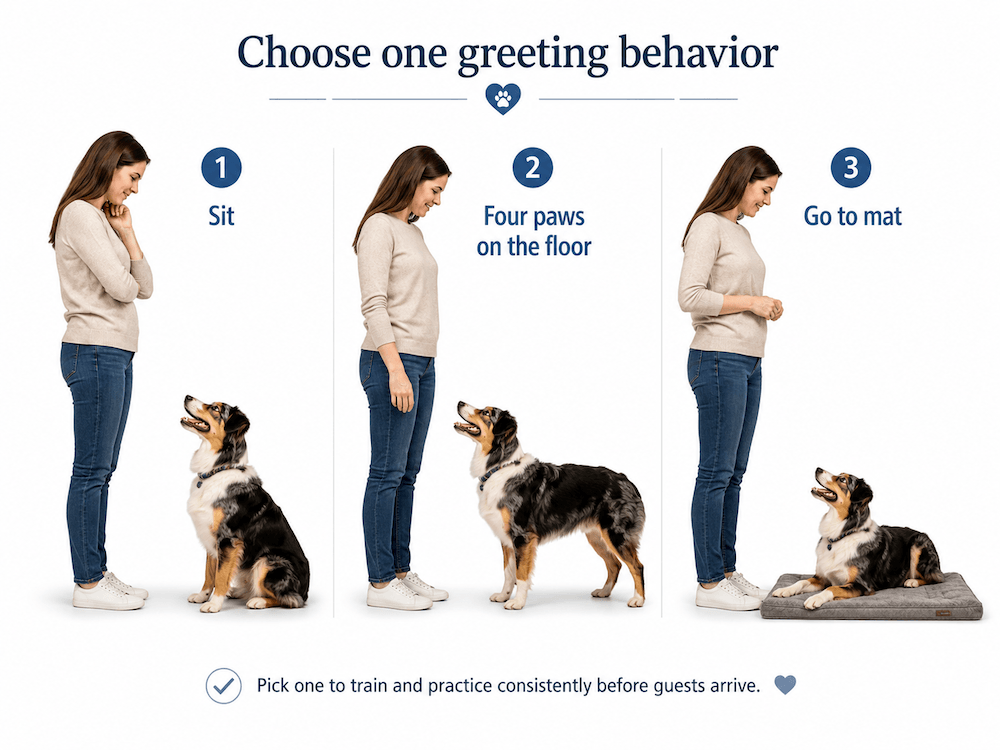
Pick one behavior your dog can do when people arrive, such as sitting, keeping four paws on the floor, going to a mat, or holding a toy. Choose the rule before you practice so your dog is not guessing between different expectations.
Step 2: Set Up the Environment Before the Greeting Happens
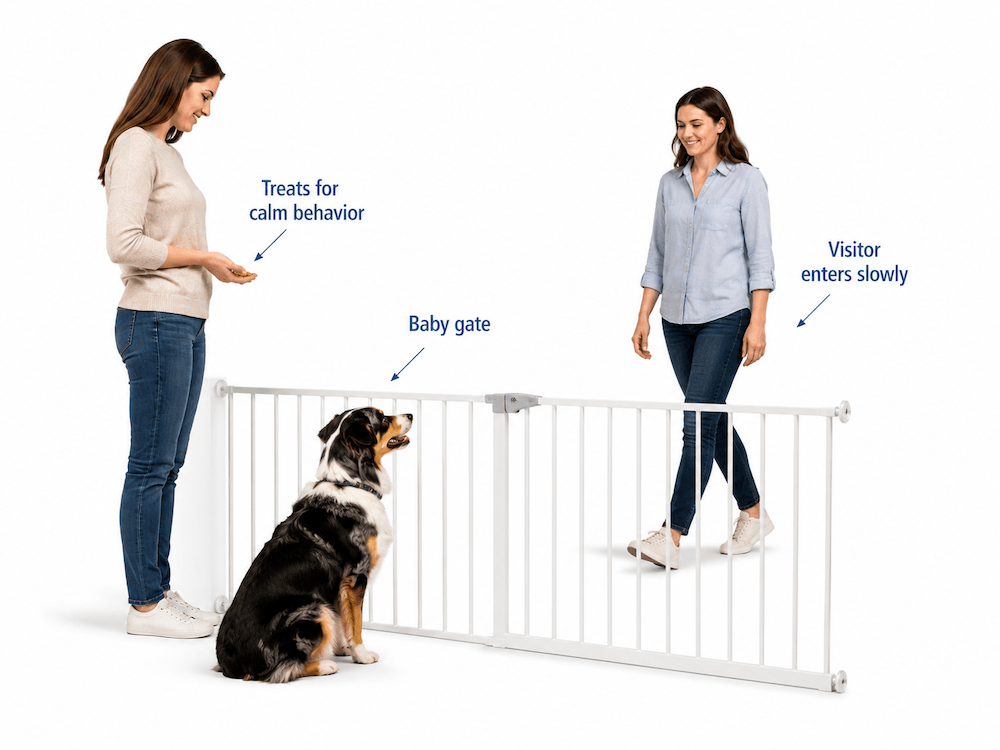
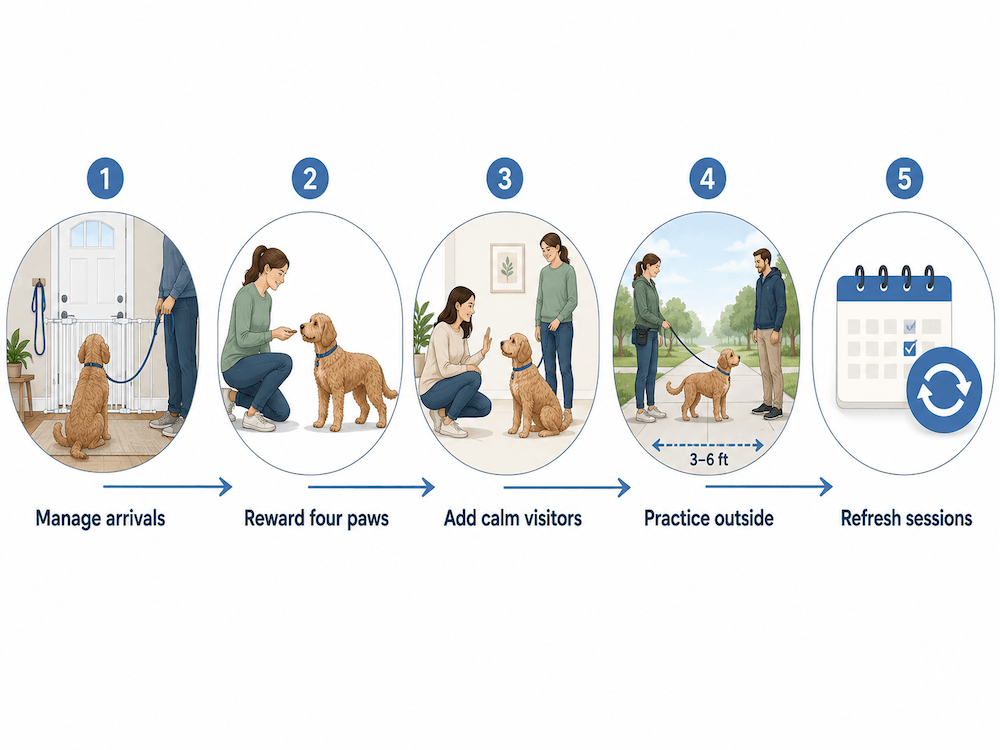
Most dogs jump in the first few seconds, so prepare before the door opens or the person comes close. Use a leash, baby gate, pen, mat, or extra distance to prevent your dog from practicing the jump while they learn.


Step 3: Reward Before Your Dog Jumps
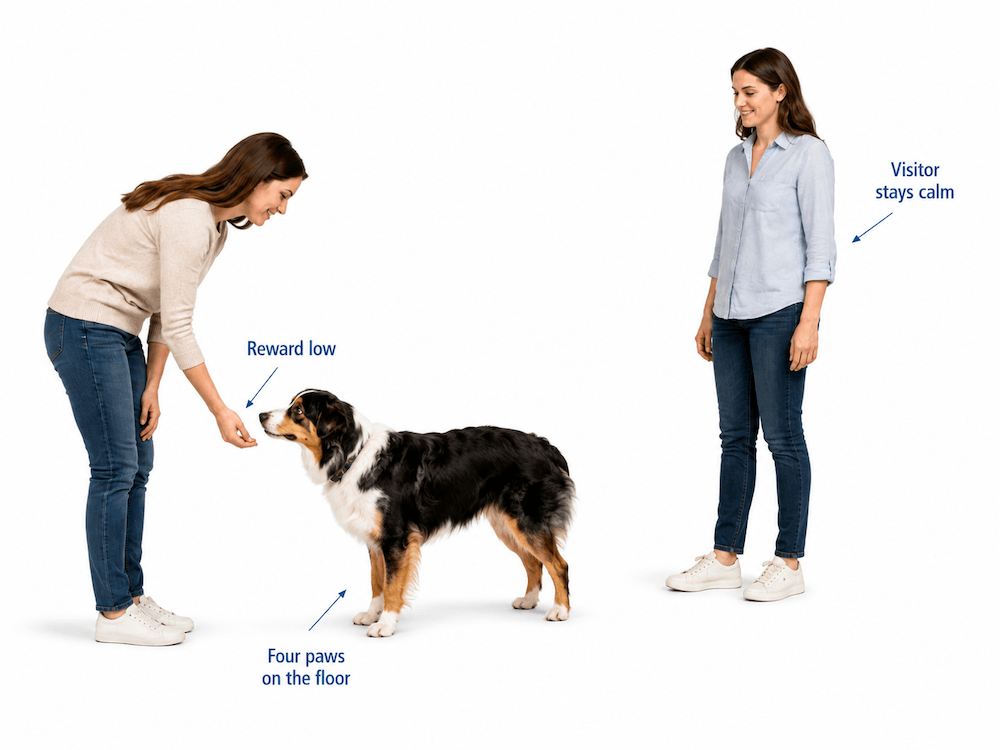
Reward your dog while all four paws are still on the floor, not after they have already jumped and landed. Mark the calm behavior with a word like “yes,” then deliver the treat low near your dog’s nose so they do not spring upward.
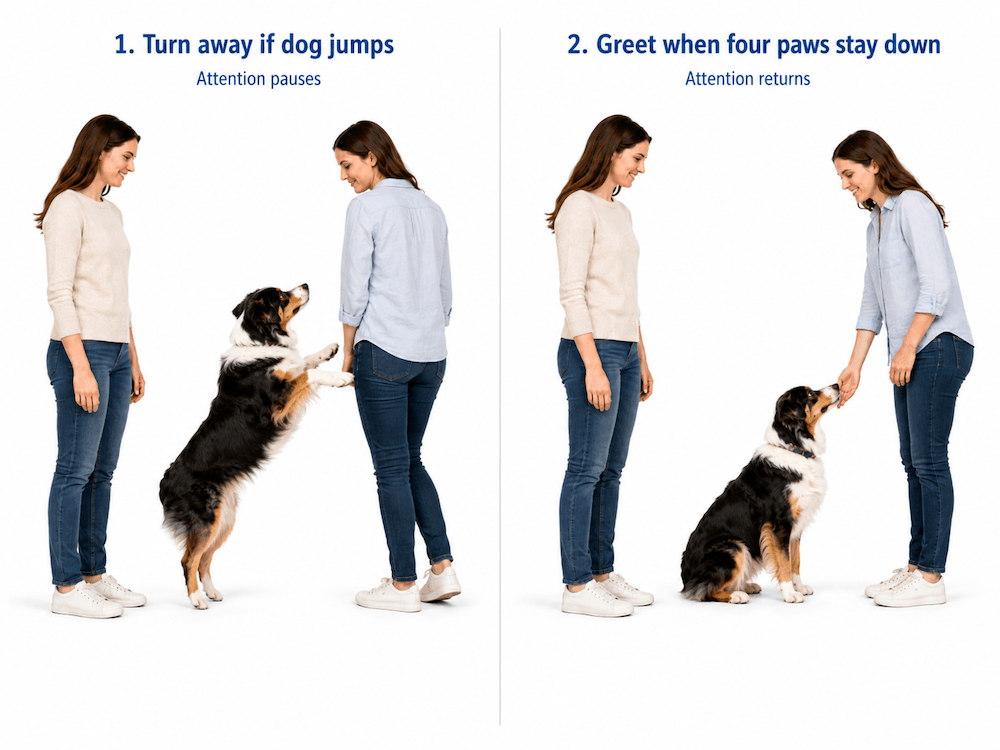
Step 4: Remove Attention When Jumping Happens
If your dog jumps, make the consequence calm and boring. The person should turn slightly away, avoid eye contact, and pause attention until the dog’s feet return to the floor.
Step 5: Practice With Easy People First
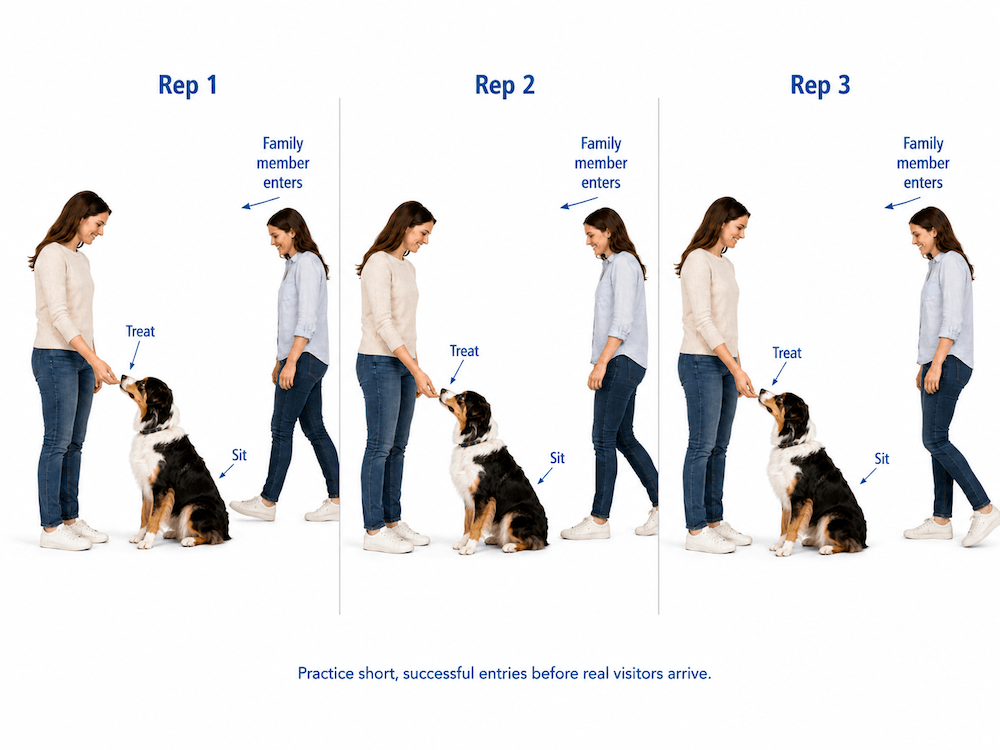
Start with calm family members or familiar friends before using exciting visitors. Have the person enter, pause, reward calm feet, step out, and repeat for a few short successful rounds.
Step 6: Add Visitors Slowly
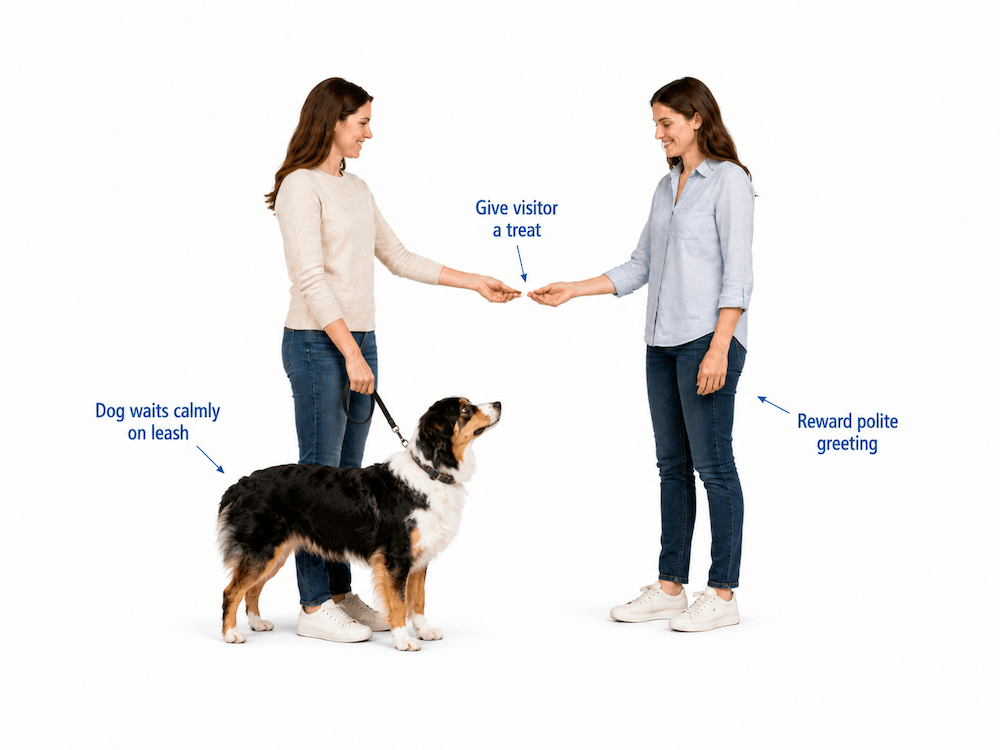
Once your dog can greet household members calmly, practice with one calm visitor who follows your instructions. Ask them to avoid excited voices, bending over, or petting unless your dog’s feet stay on the floor.
Step 7: Practice in Different Places
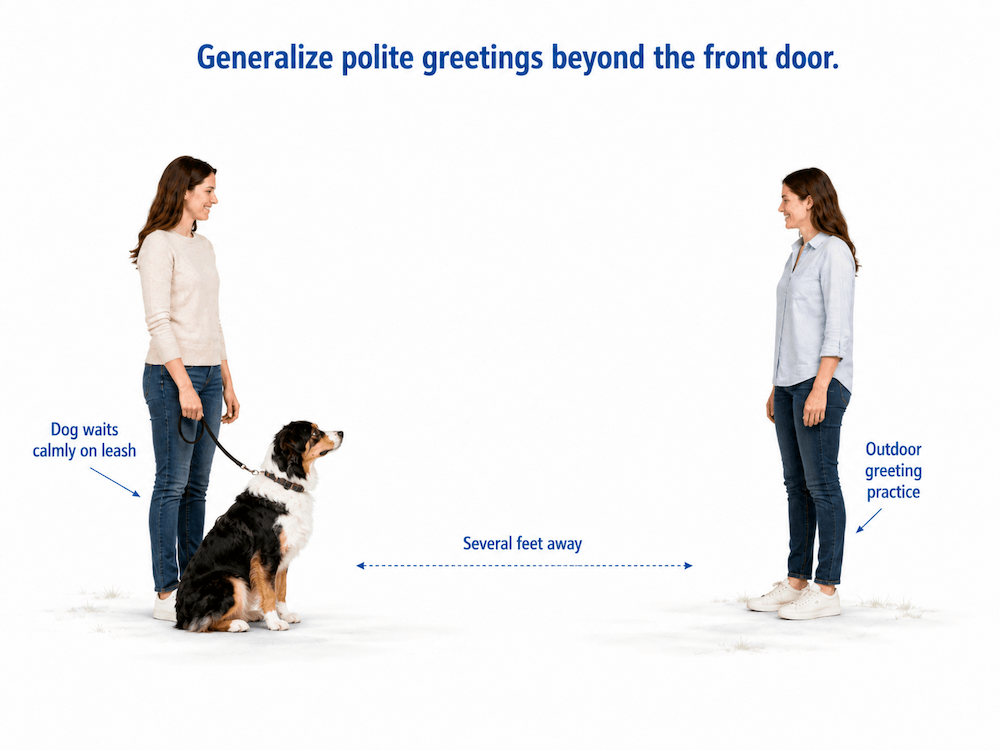
Dogs need practice in more than one setting because the front-door rule may not automatically transfer to walks, parks, or the vet clinic. Start in low-distraction places, and skip greetings when your dog is too excited to stay calm.
How to Handle Real-World Jumping Scenarios
Jumping often shows up in predictable places: the front door, the couch, the sidewalk, the car, or when children run through the house. Instead of using one reaction for every situation, match your management to the risk level. A large dog jumping on a toddler needs stricter prevention than a small dog bouncing near an adult who is helping with training.
| Situation | Best Management | Training Goal |
|---|---|---|
| Front door | Use a leash, gate, or mat before opening. | Reward calm waiting as people enter. |
| Guests seated | Keep treats nearby and reward settled behavior. | Teach calm presence, not repeated greetings. |
| Children visiting | Use a barrier unless calm behavior is reliable. | Protect kids from scratches and falls. |
| Walk greetings | Ask permission and stop several feet away. | Practice greeting only when the dog is calm. |
| Coming home | Enter quietly and reward after calm feet. | Reduce excitement during daily arrivals. |
| Car exits | Leash before opening the door fully. | Prevent explosive greetings after travel. |
Helpful Tips for Teaching Your Dog Not to Jump on People
Once your dog understands the basic pattern, small refinements make training faster. These tips focus on timing, consistency, and making the polite behavior easier than the jump.
| Tip | Why It Helps | How to Apply It |
|---|---|---|
| Reward low | Low rewards keep your dog from springing upward. | Deliver treats near your dog’s nose or chest. |
| Practice arrivals | Door greetings are usually the hardest moment. | Repeat short entries with calm family members. |
| Use calm voices | Excited voices can trigger more bouncing. | Ask guests to speak softly and move slowly. |
| Pay early | Early rewards prevent the jump from starting. | Treat before your dog’s front feet lift. |
| Add distance | Distance lowers excitement and improves control. | Start greetings several feet from the person. |
| Use a mat | A mat gives your dog a clear station. | Reward your dog for staying there during arrivals. |
Mistakes That Keep Dogs Jumping on People
Most jumping problems persist because the dog is still getting something from the behavior. Even occasional attention can keep jumping strong, especially if the dog only gets rewarded sometimes. That is why consistency matters more than a dramatic correction.
| Mistake | Why It Backfires | What to Do Instead |
|---|---|---|
| Pushing down | Many dogs read pushing as attention or play. | Turn away and reward feet on the floor. |
| Shouting “off” | Loud reactions can increase excitement. | Stay quiet and make calm behavior pay. |
| Allowing exceptions | Mixed rules make jumping worth trying again. | Ask every person to follow one greeting rule. |
| Waiting too long | Late rewards confuse the behavior you want. | Reward before the front feet lift. |
| Overexciting guests | Fast greetings make impulse control harder. | Coach visitors before they enter. |
| Skipping management | Your dog rehearses jumping during every greeting. | Use leashes, gates, mats, or distance. |
When Dog Jumping Needs Extra Safety or Professional Help
Some jumping is a simple manners issue. Other cases need a veterinarian, certified trainer, or veterinary behavior professional because the jumping is part of a bigger pattern. Getting help early is especially important when people could be injured or when the dog looks distressed.
A veterinarian can help rule out pain, medical changes, or anxiety-related concerns when behavior shifts suddenly. A qualified trainer or behavior consultant can help you build a safer plan for visitor greetings, leash greetings, and household routines. For dogs with aggression, panic, or severe fear, a veterinary behaviorist may be the safest choice.
How to Maintain Progress After Jumping Training
Once your dog improves, keep greeting rules predictable. Continue rewarding polite greetings often enough that the behavior stays strong, especially during exciting moments like holidays, parties, travel, or visitors your dog loves. Over time, rewards can become more natural: calm praise, petting, a toy, or permission to say hello.
Watch for small signs that the old habit is returning. If your dog starts bouncing, pawing, grabbing sleeves, or rushing the door again, make the setup easier for a few days. Progress is not ruined by one excited greeting, but repeated rehearsals can bring the behavior back.
A practical maintenance plan is to refresh door practice once or twice a week. Ask a family member to enter calmly, reward your dog for the greeting behavior, and end the session before excitement builds. This keeps the skill familiar instead of waiting until a real guest arrives.
What Research Says About Dog Jumping and Humane Training
Veterinary behavior guidance describes jumping as a common greeting behavior that can be reinforced by attention, including reactions people may not think of as rewards. VCA’s veterinary behavior resource explains that dogs may jump to reach face level, gain interaction, express excitement, or, in some cases, cope with anxiety or conflict during greetings.[1]
The American Veterinary Society of Animal Behavior’s humane training position statement recommends reward-based training for dog training and behavior modification. It summarizes evidence that reward-based methods are effective, and that aversive methods can harm welfare and the human-animal bond. This supports using treats, praise, management, and calm removal of attention rather than physical corrections.[2]
A 2004 study in Animal Welfare by Hiby, Rooney, and Bradshaw surveyed 364 dog owners and found that owner-rated obedience was positively associated with reward-based training, while reported problem behaviors were associated with punishment-based training. The study does not prove that every individual dog will respond the same way, but it supports the general welfare-focused direction of rewarding desired behavior instead of relying on punishment.[3]
A 2011 study in Applied Animal Behaviour Science by Rooney and Cowan found links between training history, owner interaction style, and dogs’ behavior and learning ability. Dogs whose owners used more rewards tended to perform better in a novel training task, while higher punishment use was linked with less desirable behavior patterns. For jumping, this reinforces the value of patient, consistent, reward-based practice.[4]
Frequently Asked Questions
The Bottom Line
Training a dog not to jump on people is about teaching a better greeting, not punishing excitement. The most effective plan is to prevent the jump, reward calm behavior, and pause attention when jumping happens. Choose one clear greeting rule, such as sit, four paws on the floor, or go to mat, and make sure everyone follows it. Practice first with easy people and quiet setups before adding visitors, children, busy places, or exciting greetings. Avoid yelling, pushing, kneeing, or rough corrections, because these can confuse or overstimulate your dog. If jumping is paired with fear, aggression, mouthing, or a risk of knocking someone over, use barriers and get professional help. With patience and consistency, your dog can learn that polite greetings are the fastest way to get the attention they want.