How to Soften Dog Eye Boogers: 6 Easy Ways (Complete Guide)


Canine Bible is reader-supported. We receive affiliate commissions via some of our links. Learn more.
To soften dog eye boogers, use a warm, damp cloth or sterile saline to gently loosen the crust before wiping it away. Never pick at dry buildup, because pulling can irritate the skin, lashes, or delicate tissue around the eye. Most mild eye discharge can be cleaned at home with patience, soft pressure, and clean materials. But not all eye boogers are the same. Color, texture, odor, swelling, or repeated buildup can point to irritation, allergies, infection, blocked tear ducts, or breed-related tear staining. Some dogs only need routine grooming, while others need a veterinarian’s help before the eye becomes painful. This guide explains how to soften eye crust safely, what to avoid, and when discharge is more than just normal “sleep” in the eyes.
Softening Dog Eye Boogers: Safety Overview
| Safety Point | What Dog Owners Should Know |
|---|---|
| Use gentle moisture | A warm, damp cloth or sterile saline can soften crust without pulling on sensitive skin around the eye. |
| Avoid picking | Dry crust should not be scraped or pulled because it can irritate the eyelids, lashes, or eye surface. |
| Watch the color | Clear or light discharge may be routine, but yellow, green, bloody, or foul-smelling discharge needs veterinary attention. |
| Check for pain | Squinting, pawing, redness, swelling, or keeping the eye closed can signal discomfort or injury. |
| Clean with care | Wipe from the inner corner outward using a fresh clean section of cloth or gauze for each pass. |
| Consider the breed | Flat-faced, long-haired, or tear-stain-prone dogs may need more frequent eye-area grooming and monitoring. |
| Know when to call | Repeated buildup, sudden changes, or discharge with redness or swelling should be checked by a veterinarian. |
What to Know Before Softening Dog Eye Boogers
The area around your dog’s eye is delicate, and dried crust can stick to fur, lashes, or tender skin. Softening matters because it lets you remove the buildup without tugging, rubbing hard, or making your dog more resistant to future cleaning. Think of this as gentle hygiene, not a treatment for an irritated or infected eye.
Do not start by focusing only on the crust. First, look at your dog’s comfort, eye shape, discharge color, and whether the problem is new or normal for them. A calm dog with a small amount of pale crust near the inner corner is very different from a dog with a swollen, red, half-closed eye and thick discharge.
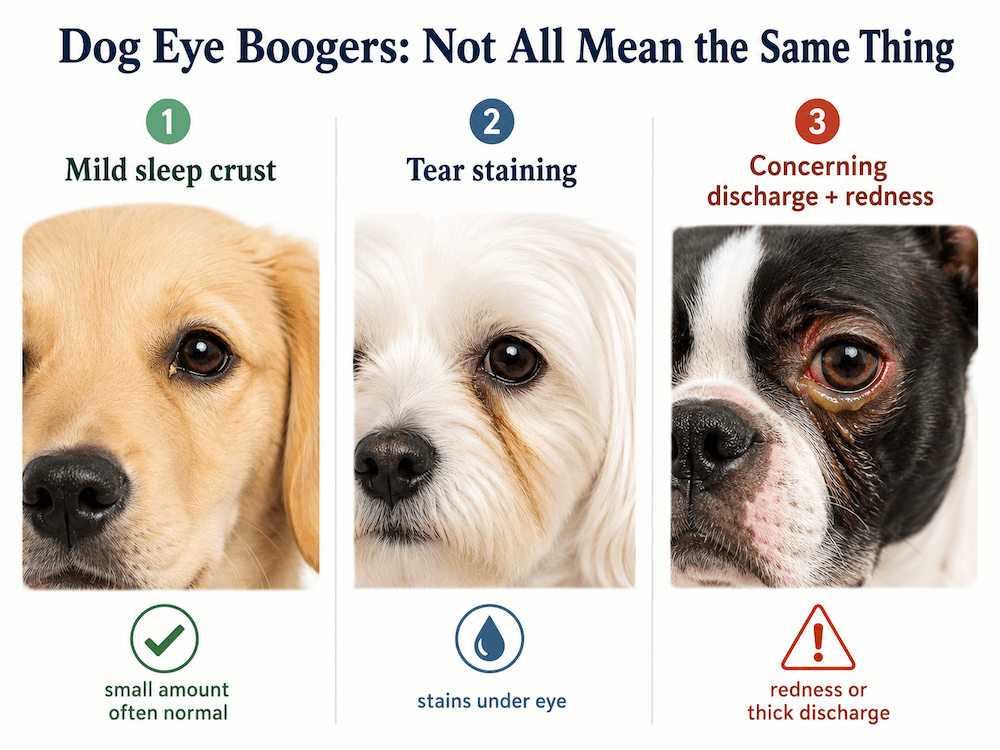
Normal Dog Eye Boogers vs Concerning Eye Discharge
Before wiping anything away, use the look and pattern of the discharge to decide how cautious to be. This table helps dog owners compare common mild buildup with signs that may need veterinary attention.


| What You See | Often Means | Best Owner Action |
|---|---|---|
| Light sleep crust | Normal dried tears, mucus, dust, or skin cells. | Soften and wipe gently during routine grooming. |
| Clear watery tears | Mild irritation, wind, dust, allergies, or tear overflow. | Monitor pattern and clean the face gently. |
| Reddish-brown stains | Tears drying on light fur over time. | Clean routinely and check for odor or skin soreness. |
| Thick yellow discharge | Possible infection, inflammation, or dry eye issue. | Call your veterinarian before home treatment. |
| Green discharge | Possible infection or deeper eye irritation. | Schedule veterinary care promptly. |
| Red or swollen eye | Inflammation, injury, allergy, or infection is possible. | Avoid rubbing and contact your veterinarian. |
| Squinting or pawing | Your dog may have pain or a corneal problem. | Treat it as urgent and seek veterinary advice. |
When It Is Safe to Soften Dog Eye Boogers at Home
Home cleaning is most appropriate when the discharge is small, dry, light-colored, and limited to the corners of the eyes. Your dog should be acting normally, eating normally, and keeping both eyes open without squinting, rubbing, or flinching. In that situation, softening the buildup is mainly a comfort and grooming step.
Be more cautious if this is a new problem, your dog has a history of eye disease, or one eye looks different from the other. Eye problems can worsen quickly because the eye surface is exposed, sensitive, and easy to injure with rough handling. When you are unsure, it is safer to pause cleaning and ask your veterinarian what they want you to do before the appointment.
When to Call a Veterinarian About Dog Eye Boogers
Some eye discharge should not be managed as routine grooming. If your dog shows pain, swelling, discharge color changes, or a sudden increase in buildup, the safest next step is to contact your veterinarian rather than trying stronger cleaning methods at home.
Supplies You Need for Softening Dog Eye Boogers
You do not need harsh products or a complicated kit to soften mild eye crust. The safest setup is clean, simple, and easy to control near your dog’s face.


| Supply | Why It Helps | How to Use It |
|---|---|---|
| Soft cloth | It holds warmth without scraping delicate skin. | Dampen it with warm water and wring well. |
| Sterile saline | It moistens crust without soaps or fragrances. | Apply to gauze, not directly into an irritated eye. |
| Clean gauze | It gives controlled wiping for small areas. | Use a fresh piece for each eye. |
| Treats | They help your dog stay calm and still. | Reward before, during, and after gentle handling. |
| Towel | It steadies small dogs and catches drips. | Place it under your dog or over your lap. |
| Good light | It helps you avoid the eye surface. | Clean in daylight or a softly lit room. |
How to Soften Dog Eye Boogers Step by Step
The process should be slow, gentle, and short. Stop if your dog pulls away sharply, squints, cries, paws at the eye, or the crust does not soften after moisture and patience.
Step 1: Wash Your Hands and Set Up a Calm Space
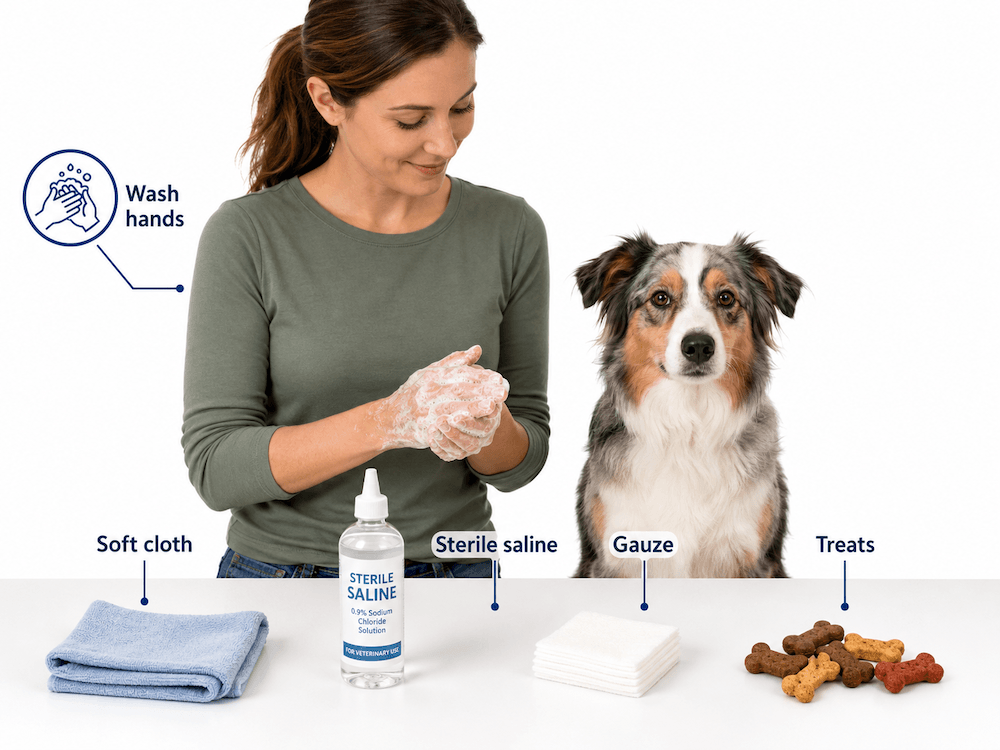
Wash your hands before touching your dog’s face, then gather your cloth, sterile saline or warm water, gauze, and treats. Choose a quiet spot where your dog does not feel trapped, such as a mat, couch corner, or your lap for a small dog. Good lighting helps you see whether the buildup is on the fur, near the inner corner, or too close to the eye surface for safe wiping.
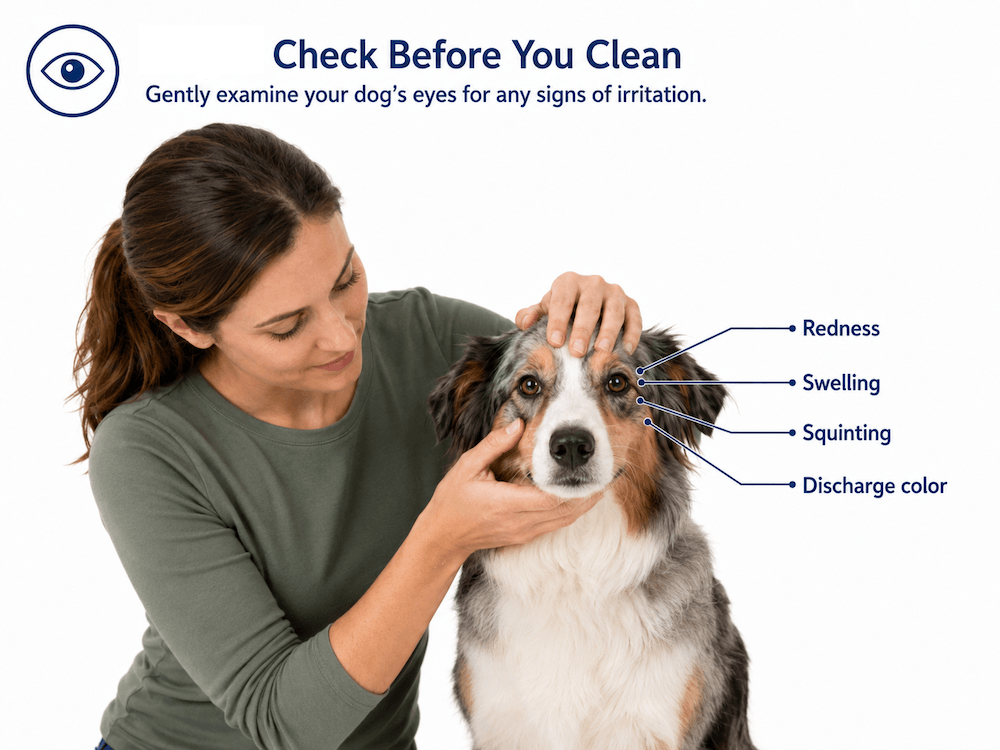
Step 2: Check the Eye Before You Touch the Crust
Look at both eyes from the front and side. Compare redness, swelling, discharge color, eyelid position, blinking, and whether one eye looks cloudier or more uncomfortable than the other. If the eye looks painful or abnormal, skip cleaning and contact your veterinarian because wiping may make an injury feel worse.
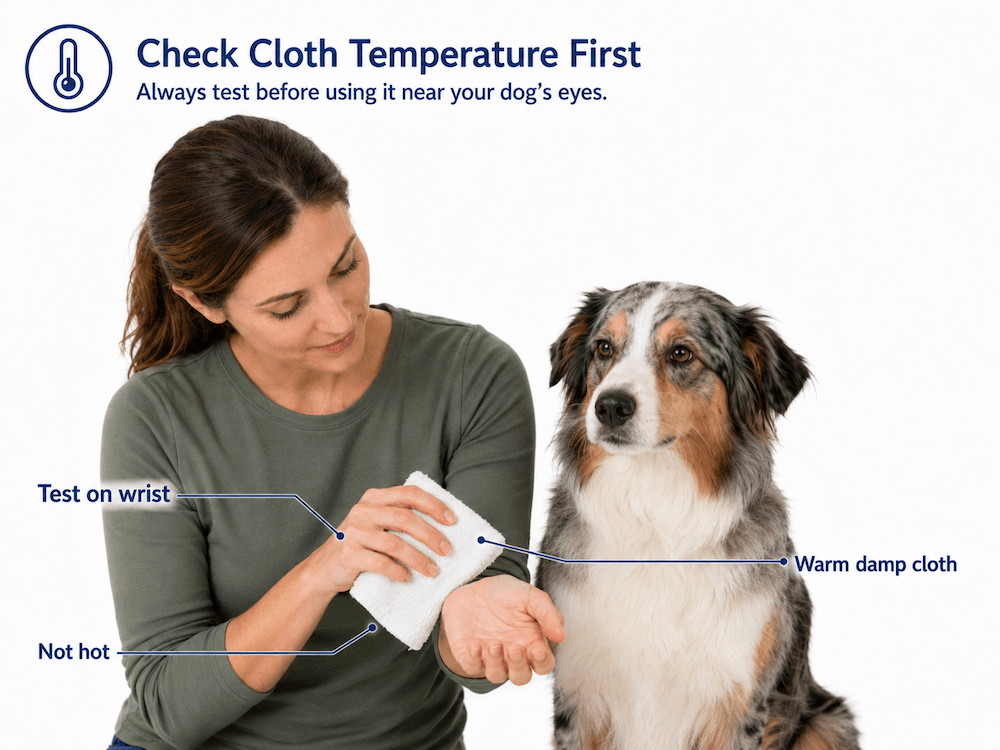
Step 3: Warm the Cloth and Test the Temperature
Wet a soft cloth or gauze with warm water, then wring it out so it is damp rather than dripping. Test it against the inside of your wrist, just as you would before using anything warm on sensitive skin. The cloth should feel comfortably warm, never hot.
Step 4: Hold Moisture on the Crust Before Wiping
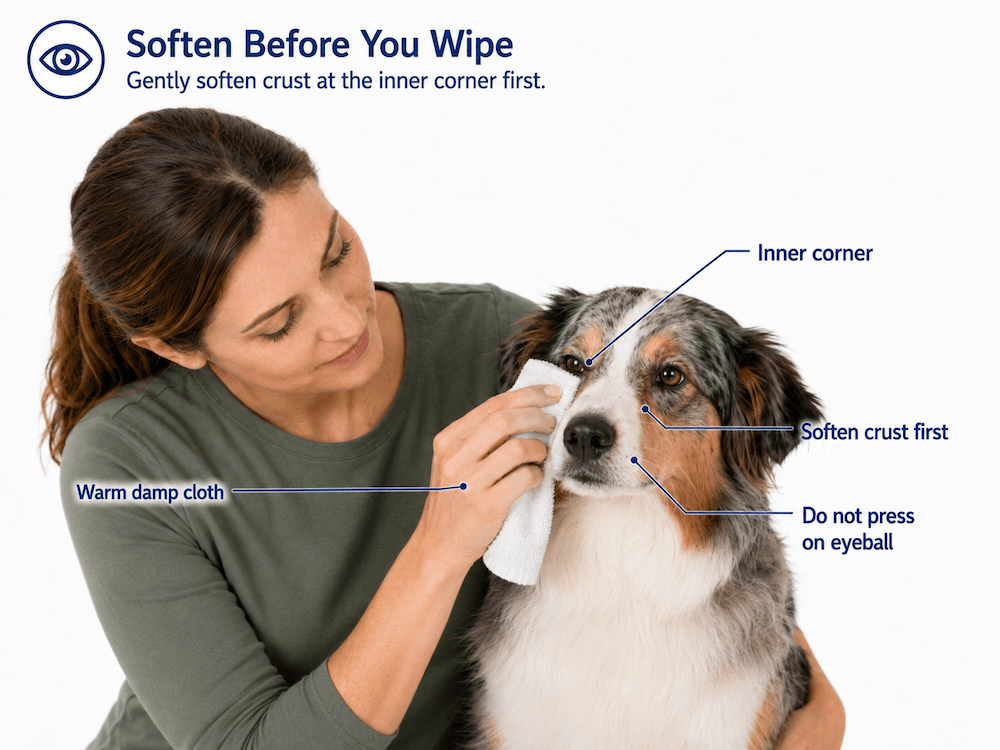
Gently place the warm damp cloth over the crusted fur near the inner corner of the eye, avoiding pressure on the eyeball itself. Hold it there briefly so the dried buildup absorbs moisture and starts to loosen. For stubborn crust, repeat the softening step instead of increasing pressure.
Step 5: Wipe Away From the Eye With Light Pressure
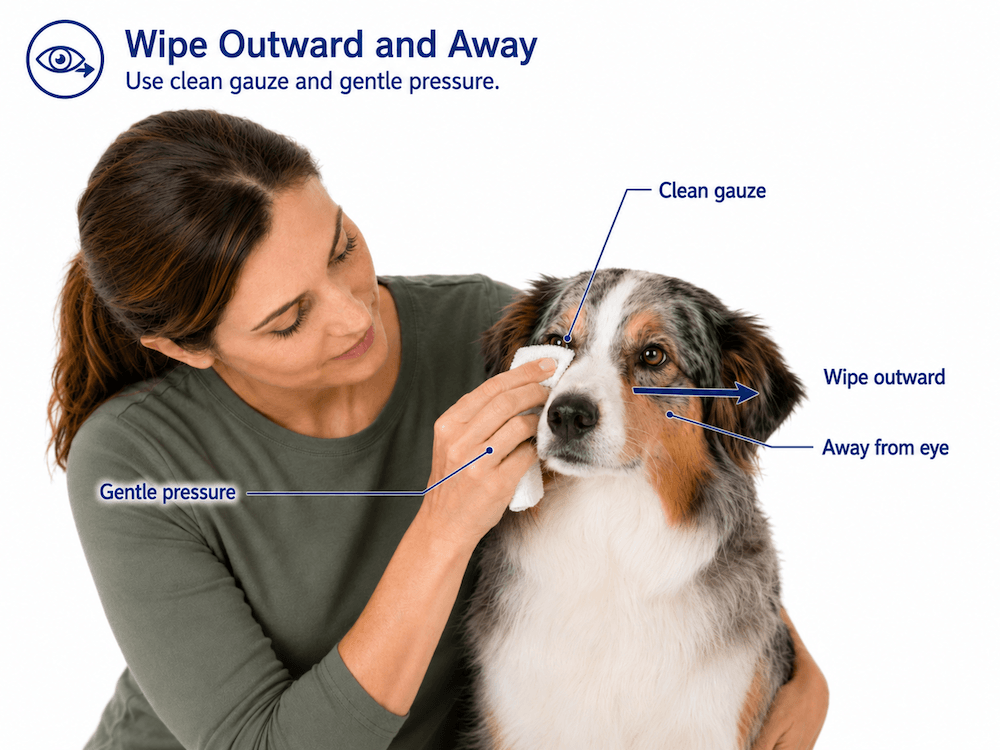
Once the crust feels softer, wipe from the inner corner outward, following the direction of the fur and moving away from the eye. Use a fresh, clean section of cloth or gauze for each pass so you do not smear debris back toward the eye. If the buildup is tangled in longer fur, soften again and work in tiny motions rather than pulling.
Step 6: Dry the Fur and Reward Your Dog
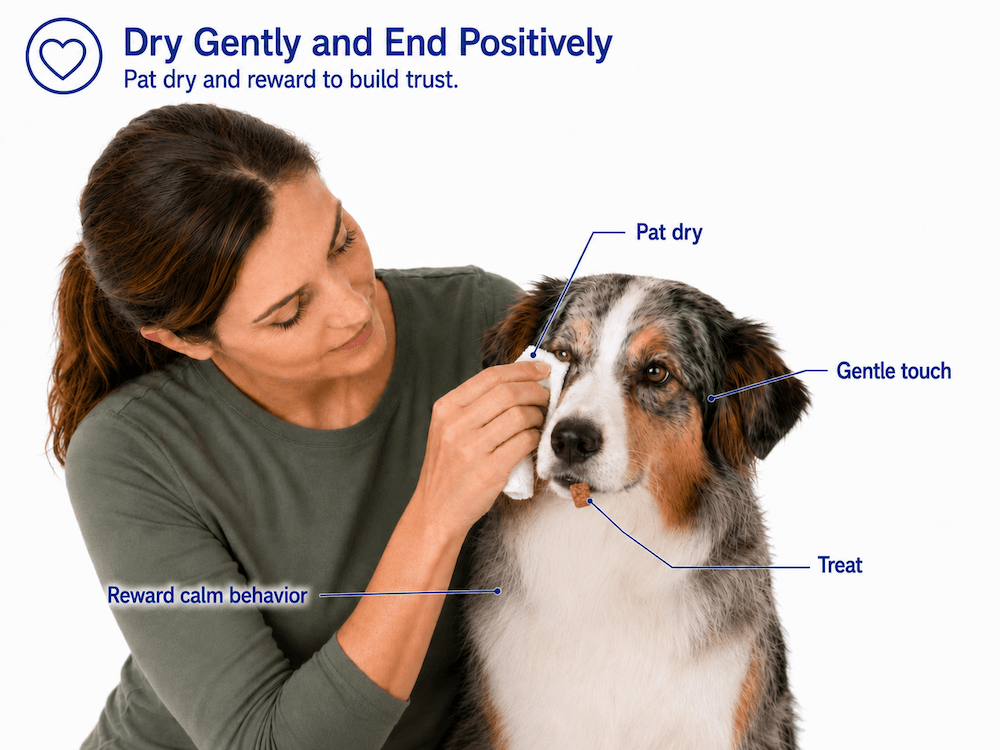
After the buildup is gone, lightly pat the damp fur dry with a clean cloth. Give your dog praise, a treat, or a short break so the experience ends calmly. This matters because dogs who learn that eye cleaning is brief and gentle are less likely to resist routine grooming later.
What Not to Use on Dog Eye Boogers
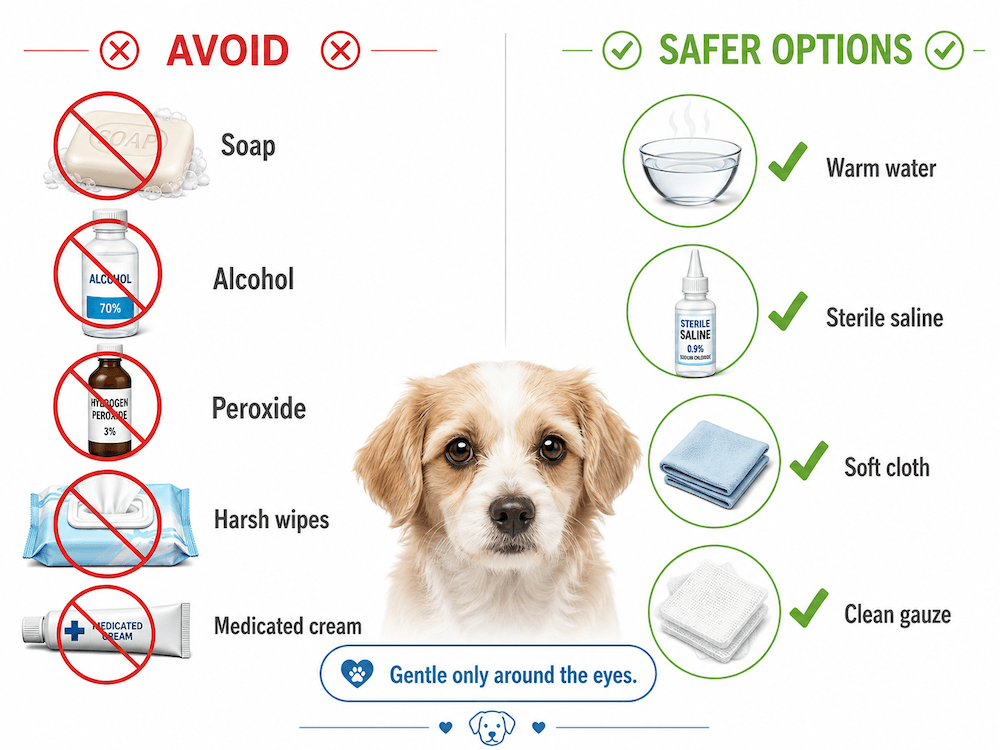
The safest eye-area cleaning products are simple, clean, and non-irritating. Avoid anything that stings, leaves residue, contains fragrance, or is meant to bleach stains rather than soften crust.
Do not use hydrogen peroxide, alcohol, essential oils, makeup remover, medicated human eye drops, harsh tear-stain products, or shampoo close to the eye unless your veterinarian specifically approves the product and shows you how to use it safely. Even products that seem mild can irritate the eye surface if they run into the eye. If you are dealing with staining rather than crust, address it separately with grooming and veterinary guidance instead of using stronger chemicals near the eye.
Helpful Tips for Softening Dog Eye Boogers
A few small adjustments can make eye cleaning easier, especially for dogs who get daily buildup or dislike face handling. This focuses on practical refinements that improve comfort without repeating the main cleaning steps.
| Tip | Why It Helps | How to Apply It |
|---|---|---|
| Clean early | Fresh buildup softens faster than dried crust. | Check the eyes after sleep or outdoor walks. |
| Use tiny sessions | Short handling prevents stress and face avoidance. | Clean one eye, reward, then pause if needed. |
| Separate cloths | One cloth can transfer debris between eyes. | Use fresh gauze or a new cloth section. |
| Trim face fur | Hair can trap tears and dried discharge. | Ask a groomer or vet for safe trimming. |
| Track patterns | Changes can reveal irritation or recurring issues. | Note color, amount, frequency, and discomfort. |
| Reward stillness | Positive handling makes future cleaning easier. | Treat calm chin-rests or relaxed sitting. |
Mistakes to Avoid When Softening Dog Eye Boogers
Most problems happen when owners try to remove crust too quickly or treat discharge as only a cosmetic issue. This highlights mistakes that can make the eye area more irritated or delay needed care.
| Mistake | Why It Can Backfire | Safer Choice |
|---|---|---|
| Picking dry crust | It can pull fur, lashes, or irritated skin. | Soften first with warm moisture. |
| Rubbing hard | Friction can worsen soreness around the eye. | Use light outward wiping only. |
| Using chemicals | Harsh products may sting or damage tissue. | Use warm water or sterile saline. |
| Ignoring pain | Pain signs may point to eye injury. | Stop cleaning and call your vet. |
| Sharing cloths | Debris can move from one eye to another. | Use clean material for each eye. |
| Using old drops | Leftover medication may be wrong or expired. | Use only vet-prescribed eye medication. |
Why Some Dogs Get Eye Boogers More Often
Some dogs simply collect more dried tears and debris because of their face shape, coat type, tear flow, or environment. Flat-faced dogs, dogs with prominent eyes, dogs with long facial hair, and light-coated dogs prone to tear staining may show buildup more visibly. Wind, dust, pollen, smoke, grooming products, and outdoor debris can also make the eyes water more.
Frequent eye boogers are not automatically dangerous, but they should be predictable, mild, and comfortable. If a dog suddenly develops more discharge than usual, the change matters more than the amount alone. Eye boogers that keep returning quickly after cleaning may be a clue that the eye is irritated, tears are not draining normally, or the tear film is not doing its job well.
What Veterinary Research Says About Dog Eye Discharge
The Merck Veterinary Manual explains that conjunctivitis in dogs can involve redness, swelling around the cornea, discharge, and mild discomfort, and that appearance alone may not identify the cause without a veterinary exam. That supports the safety-first approach: cleaning mild crust is reasonable, but red, swollen, painful, or persistent discharge should not be treated as simple grooming.[1]
VCA Animal Hospitals describes epiphora as tear overflow that can come from poor tear drainage or excess tear production, with signs such as dampness beneath the eyes, reddish-brown staining, odor, skin irritation, and possible skin infection. This helps explain why some dogs need routine eye-area hygiene while others need evaluation for tear duct, eyelid, allergy, injury, or infection-related causes.[2]
Cornell’s canine health information on keratoconjunctivitis sicca notes that dry eye can cause thick yellow-green discharge, redness, squinting, and face rubbing. That matters because owners may mistake thick crust for ordinary eye boogers when it can actually be linked to inadequate tear production and eye discomfort.[3]
Merck’s cornea reference notes that corneal ulceration can involve pain, tearing, blinking or spasm, corneal changes, and possible bacterial involvement, with treatment depending on clinical examination. This supports avoiding rough wiping or home medication when a dog is squinting, pawing, cloudy-eyed, or suddenly producing abnormal discharge.[4]
Frequently Asked Questions
The Bottom Line
Softening dog eye boogers is usually a simple, gentle process when the buildup is mild, light-colored, and your dog’s eyes look comfortable. A warm, damp cloth or sterile saline-moistened gauze can loosen dried crust without pulling on the skin, lashes, or sensitive eye area. The key is to soften first, wipe lightly, and stop if your dog shows pain, squinting, swelling, redness, or unusual discharge. Never pick at dry crust or use harsh products near the eyes, because irritation can make the problem worse. Some dogs need routine face cleaning because of their breed, coat type, tear staining, or environment. But if eye boogers become thick, yellow, green, smelly, one-sided, or frequent, it is safest to contact your veterinarian. With gentle cleaning and careful monitoring, you can keep your dog more comfortable while knowing when eye discharge needs professional attention.