How to Clean Dog Eye Boogers: 6 Safe Steps (Vet-Approved)

Canine Bible is reader-supported. We receive affiliate commissions via some of our links. Learn more.
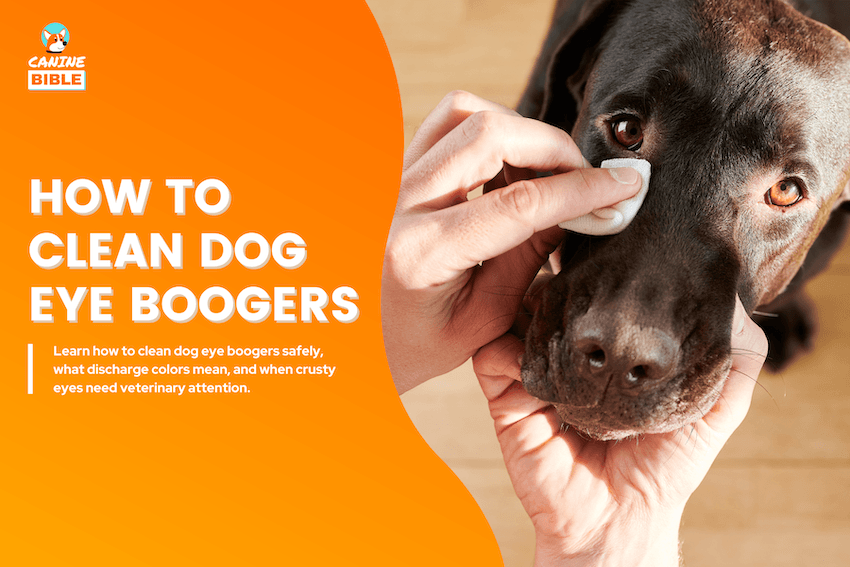
To clean dog eye boogers, gently wipe the discharge away with a soft, damp cloth or sterile gauze, moving from the inner corner outward. Use warm water or a vet-approved eye wipe, and never scrape, pick, or use harsh products near your dog’s eyes. Most mild eye crust is normal, especially after sleep, but the color, amount, and frequency can tell you a lot. Some eye boogers are harmless, while others may point to allergies, irritation, blocked tear ducts, infection, or injury. Knowing what is normal for your dog helps you clean their eyes safely without missing warning signs. This guide explains the right cleaning method, what different types of discharge may mean, and when it is time to call your veterinarian.
What to Know Before Cleaning Dog Eye Boogers
| Key Point | What Dog Owners Should Know |
|---|---|
| Normal crust | Small amounts of dry eye crust after sleep are common and can usually be wiped away gently. |
| Safe cleaning | Use a soft damp cloth, sterile gauze, or vet-approved eye wipe instead of scraping or pulling at the crust. |
| Color matters | Clear or light brown discharge is often less concerning than yellow, green, bloody, or thick mucus-like discharge. |
| Comfort check | Squinting, pawing, redness, swelling, or holding the eye closed can mean the eye is painful or irritated. |
| Common triggers | Dust, allergies, wind, tear staining, blocked tear ducts, and eye shape can all affect how much discharge appears. |
| Prevention routine | Regular gentle wiping, trimmed facial hair, clean bedding, and avoiding irritants can reduce buildup around the eyes. |
| Vet attention | Call your veterinarian if discharge is heavy, colored, painful, sudden, one-sided, or keeps coming back after cleaning. |
Common Causes of Dog Eye Boogers
Dog eye boogers can come from normal tear buildup, dust, allergies, face shape, blocked tear drainage, dry eye, infection, or injury. Mild crust that appears after sleep and wipes away easily is usually less concerning, but discharge that is sudden, colored, painful, one-sided, or keeps returning may point to a problem that needs veterinary attention.
| Cause | How It Usually Looks | Concern Level |
|---|---|---|
| Normal tear buildup | Small dry crust near the inner eye corner after sleep. | Usually low if the eye looks clear and comfortable. |
| Dust or wind | Clear watery tearing or light debris after outdoor exposure. | Low if it clears quickly and does not worsen. |
| Allergies | Watery eyes, mild mucus, rubbing, or seasonal flare-ups. | Mild to moderate if symptoms keep returning. |
| Facial hair irritation | Crust or staining where hair touches the eye area. | Moderate if the eye becomes red or irritated. |
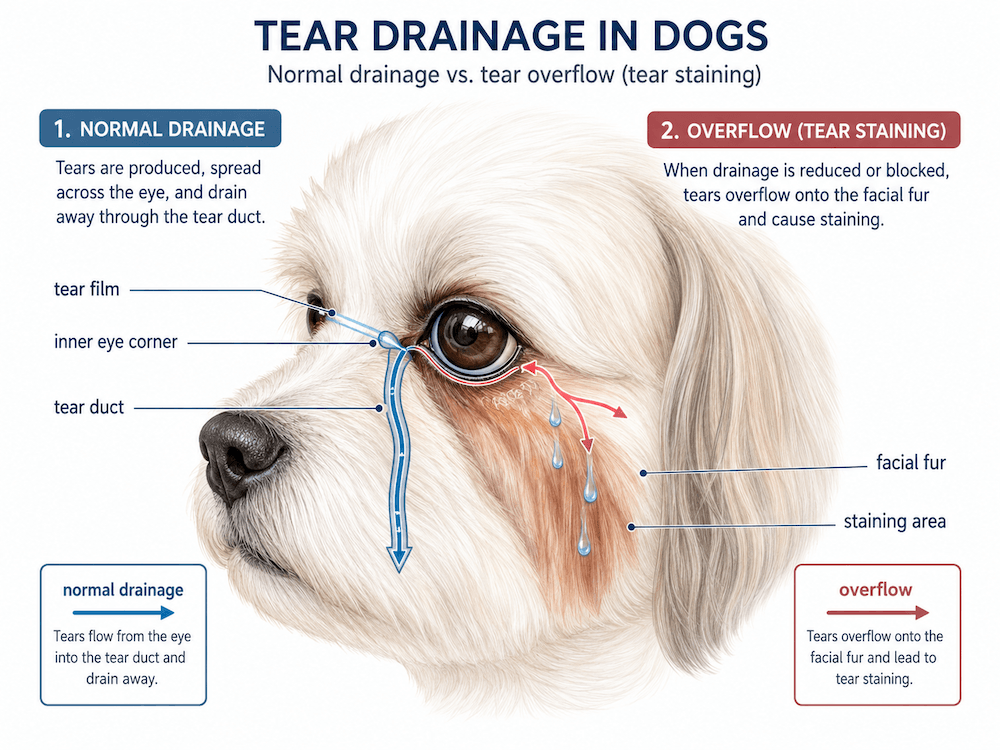
| Blocked tear drainage | Frequent wetness, tear staining, or buildup below the eyes. | Moderate if staining is constant or skin becomes sore. |
| Dry eye | Thick, sticky mucus that may keep coming back. | Moderate to high because treatment may be needed. |
| Infection | Yellow, green, thick, or smelly discharge with redness. | High and should be checked by a veterinarian. |
| Eye injury | Sudden discharge with squinting, pawing, or cloudiness. | Urgent, especially if only one eye is affected. |
Why Some Dogs Get More Eye Boogers Than Others
Some dogs naturally collect more discharge because of face shape, hair around the eyes, shallow eye sockets, allergies, dust exposure, or tear drainage issues. Small breeds, white-coated dogs, flat-faced dogs, and dogs with long facial hair may need more frequent face cleaning.
A dog with mild tear staining may only need daily wiping and drying. A dog with sudden heavy discharge, squinting, or redness needs more than grooming because the eye itself may be irritated or painful.


Dog Eye Booger Colors and What They Mean
Dog eye booger color can help you decide whether your dog likely needs simple cleaning, closer monitoring, or a veterinary exam. Mild clear, tan, or light brown crust is often linked to normal tearing and dried debris, while yellow, green, bloody, or suddenly heavy discharge may point to infection, injury, irritation, or another eye problem that should not be ignored.
| Color | What It May Mean | Concern Level |
|---|---|---|
| Clear | Often normal tearing or mild irritation from dust, wind, or allergies. | Usually low if the eye looks comfortable and clear. |
| White or gray | May be dried mucus, mild irritation, or possible dry eye. | Mild to moderate if it becomes thick, sticky, or recurring. |
| Light tan | Common dried tear debris, especially after sleep. | Usually low when it wipes away easily. |
| Brown | Often tear staining from moisture drying on the fur. | Usually low unless the skin becomes red, wet, or irritated. |
| Dark brown or black | Usually old dried tears, dirt, or crust trapped in facial hair. | Low to moderate if crust is stuck, smelly, or recurring. |
| Yellow | May suggest infection, inflammation, or deeper eye irritation. | Moderate to high, especially with redness or squinting. |
| Green | Can point to infection or significant inflammation. | High and should be checked by a veterinarian. |
| Red or bloody | May signal trauma, injury, ulcer, or bleeding around the eye. | Urgent, especially if your dog is pawing or holding the eye closed. |
When It Is Safe to Clean Dog Eye Boogers at Home
Home cleaning is reasonable when the discharge is mild, your dog’s eye looks open and comfortable, and the crust wipes away easily after softening. Your job is hygiene, not treatment.
Remember to ALWAYS consult your vet before cleaning your dog’s eyes if there is redness, swelling, pain, or unusual discharge. If you can’t reach your vet, you can chat live with a registered online veterinary professional via our online vet chat or video chat support (24 hours a day, 7 days a week). Or use Chewy’s online vet services (6 a.m. – midnight ET).
Supplies You Need to Clean Dog Eye Boogers
You do not need a complicated kit. Choose soft, clean materials and avoid anything that can sting, scratch, or leave fibers near the eye.
| Supply | Why You Need It | How to Use It |
|---|---|---|
| Soft cloth | Gentle fabric reduces rubbing and skin irritation. | Dampen it with warm water before wiping. |
| Sterile gauze | Useful for controlled, single-use cleaning. | Use a fresh pad for each eye. |
| Warm water | Softens dried crust without harsh ingredients. | Use lukewarm, not hot, water. |
| Sterile saline eyewash | Can help flush minor dust or debris. | Use only plain sterile eyewash. |
| Dog eye wipes | Convenient for daily tear stain care. | Choose wipes made for eye-area use. |
| Clean towel | Dry fur helps reduce skin irritation. | Pat the area dry after cleaning. |
| Treats | Rewards make future cleaning easier. | Reward calm stillness after each step. |
Avoid alcohol, hydrogen peroxide, essential oils, human medicated drops, leftover eye medication, contact lens disinfecting solution, or anything scented. Products that are safe for skin are not automatically safe near a dog’s eye.


How to Clean Dog Eye Boogers Step by Step
Choose a calm time when your dog is relaxed. Good moments include after a walk, after breakfast, or during a quiet grooming routine. Sit beside your dog rather than leaning over their face. This feels less threatening and gives you better control.
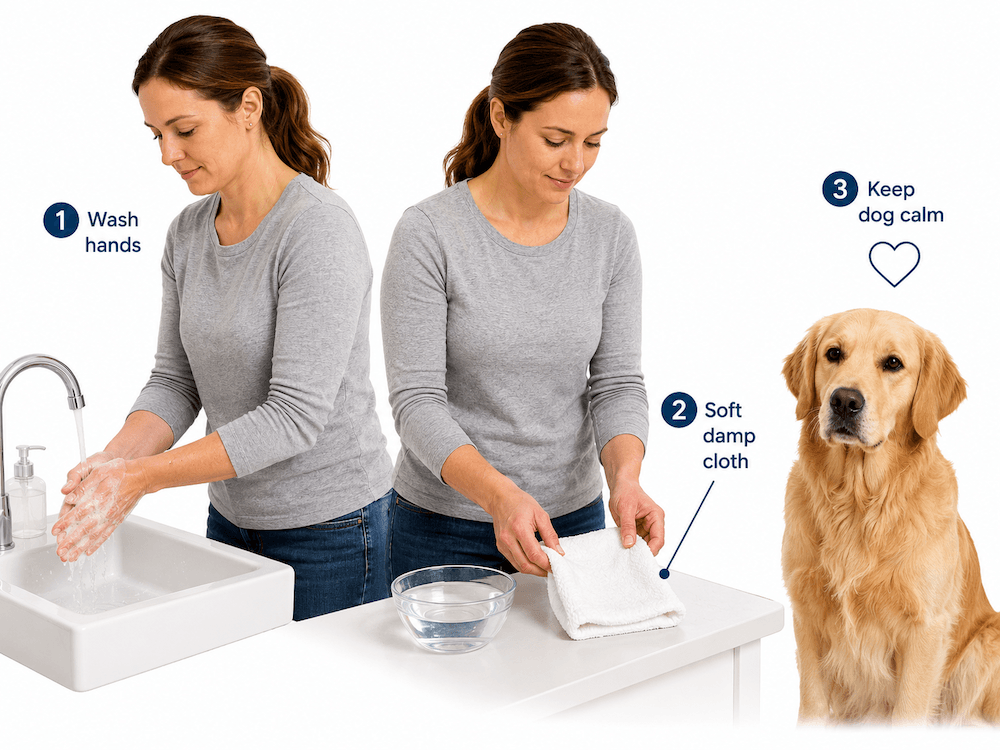
Step 1: Wash your hands and prepare a clean cloth
Wash your hands first, then dampen a soft cloth or gauze pad with warm water. Wring it out so it is wet enough to soften crust but not dripping into your dog’s eye.
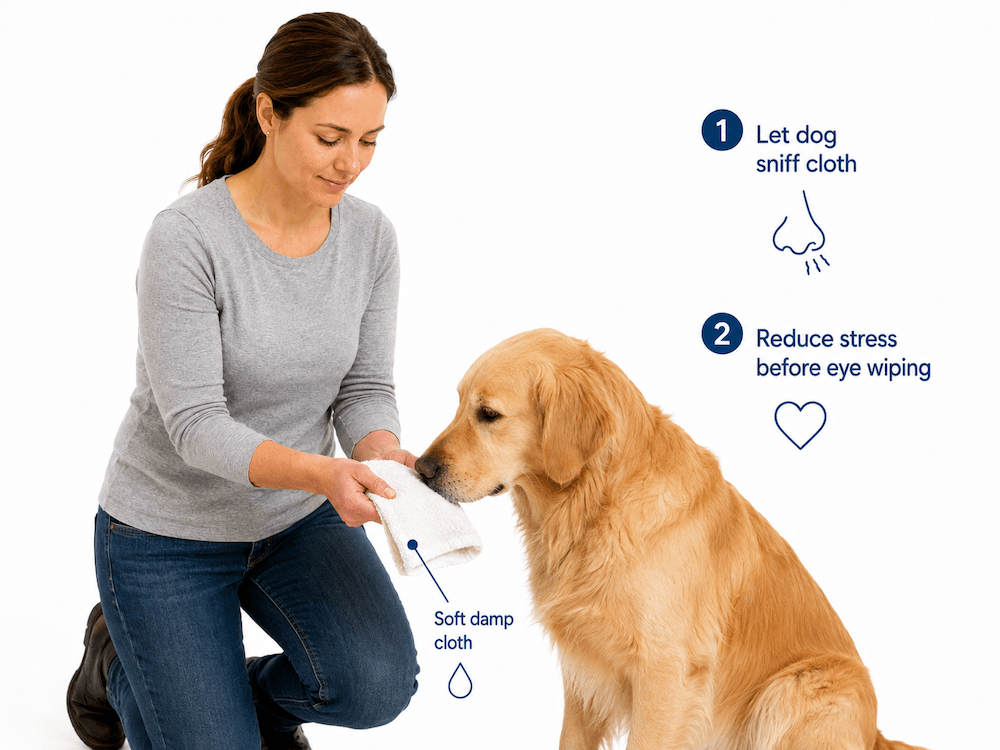
Step 2: Help your dog settle before touching the face
Let your dog sniff the cloth, then reward calm behavior. Hold the chin lightly if needed, but do not clamp the muzzle or force the head still.
Step 3: Soften dried eye boogers before wiping
Hold the damp cloth gently over the crusted area for several seconds. This loosens the buildup so you do not have to pull on fur or skin. For stubborn crust, repeat the softening step instead of rubbing harder. Patience is safer than pressure.
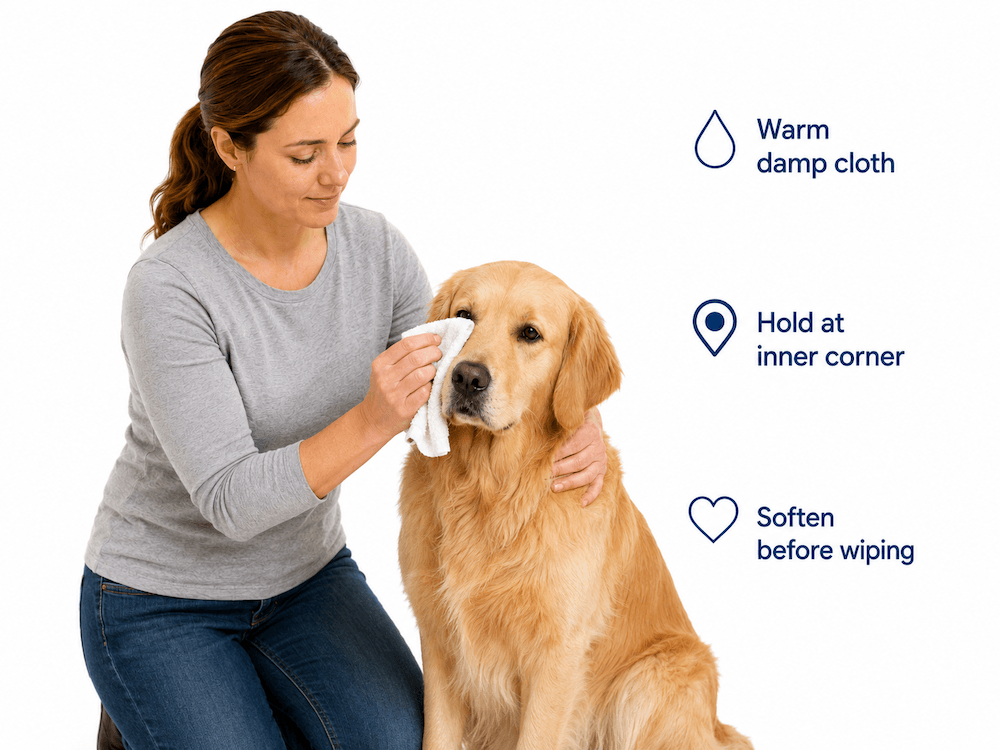
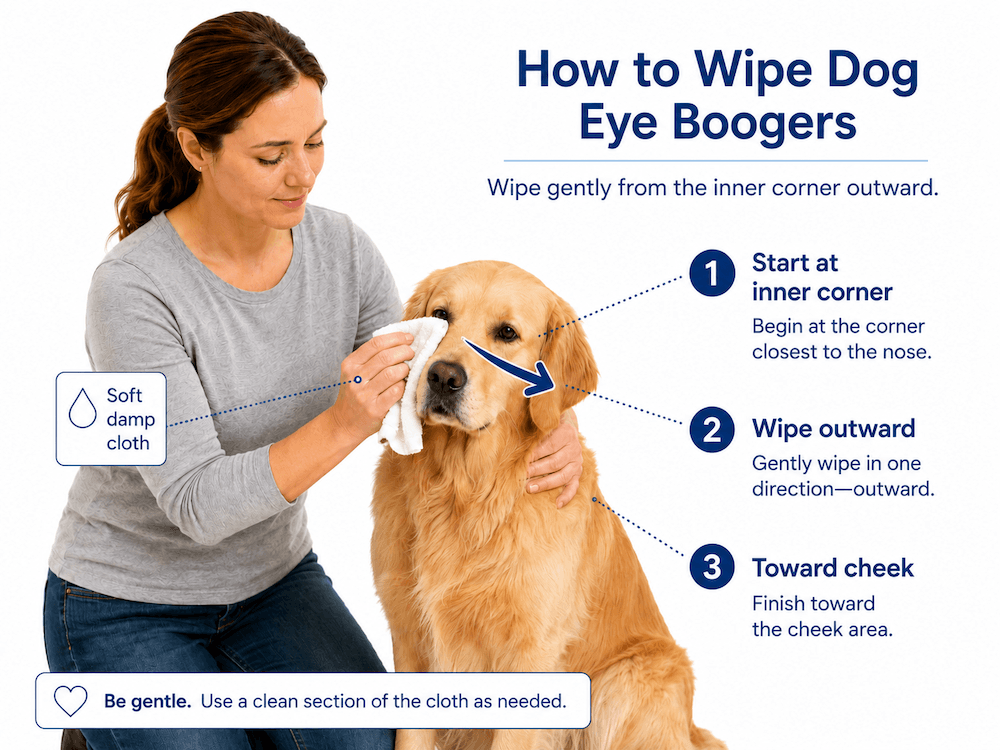
Step 4: Wipe away from the eye
Wipe from the inner corner outward, moving away from the eyeball and toward the cheek or ear. Use light pressure and a fresh part of the cloth for each pass. Do not drag discharge back toward the eye. If both eyes need cleaning, use a new gauze pad or clean cloth section for the second eye.
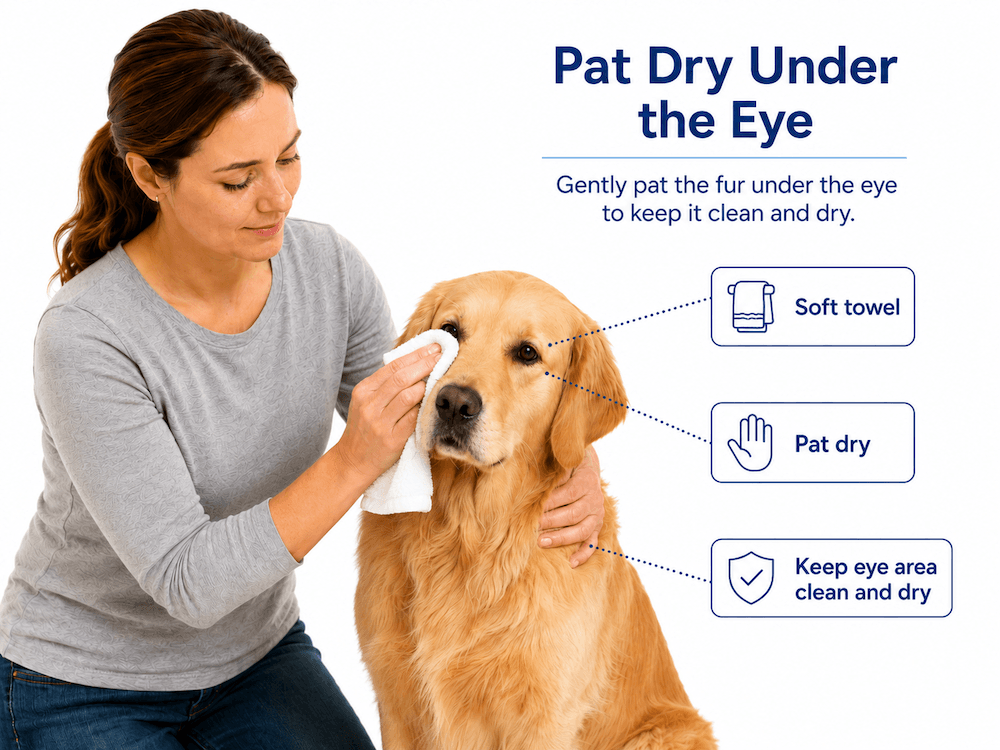
Step 5: Dry the fur around the eye
After removing the discharge, gently pat the surrounding fur dry. Damp fur under the eyes can contribute to staining, odor, and skin irritation.
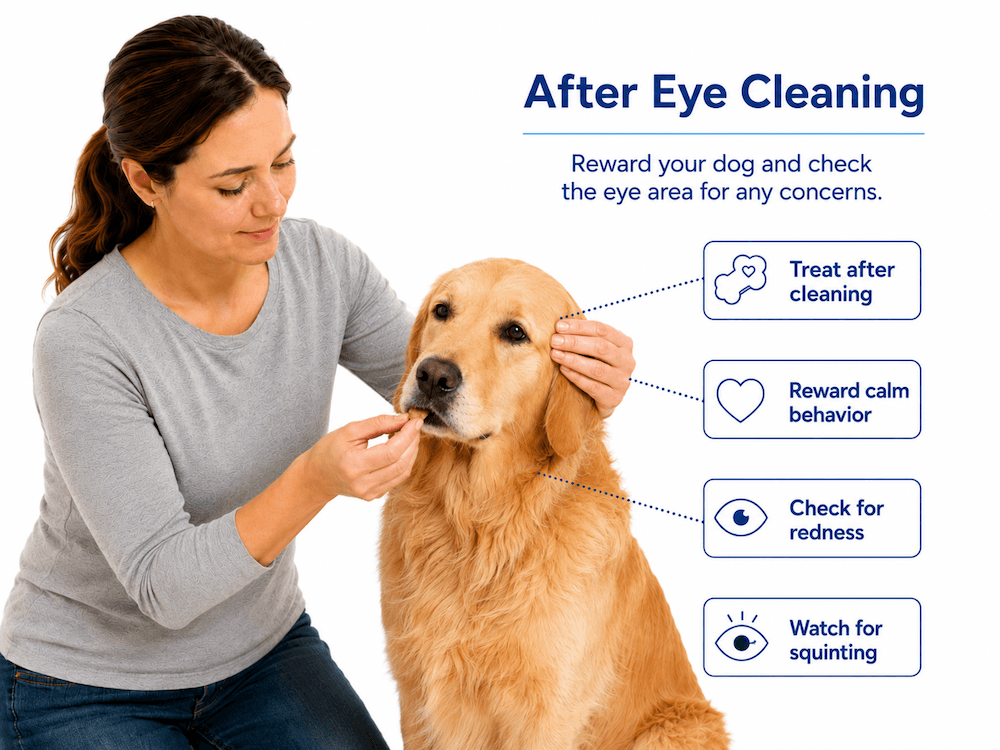
Step 6: Reward your dog and check the eye again
Give a treat and let your dog relax. Then take one quick look at the eye for redness, swelling, squinting, cloudiness, or fast-returning discharge. If your dog looks comfortable and the discharge does not quickly return, routine cleaning is usually enough.
How to Handle Dried or Stuck Dog Eye Boogers
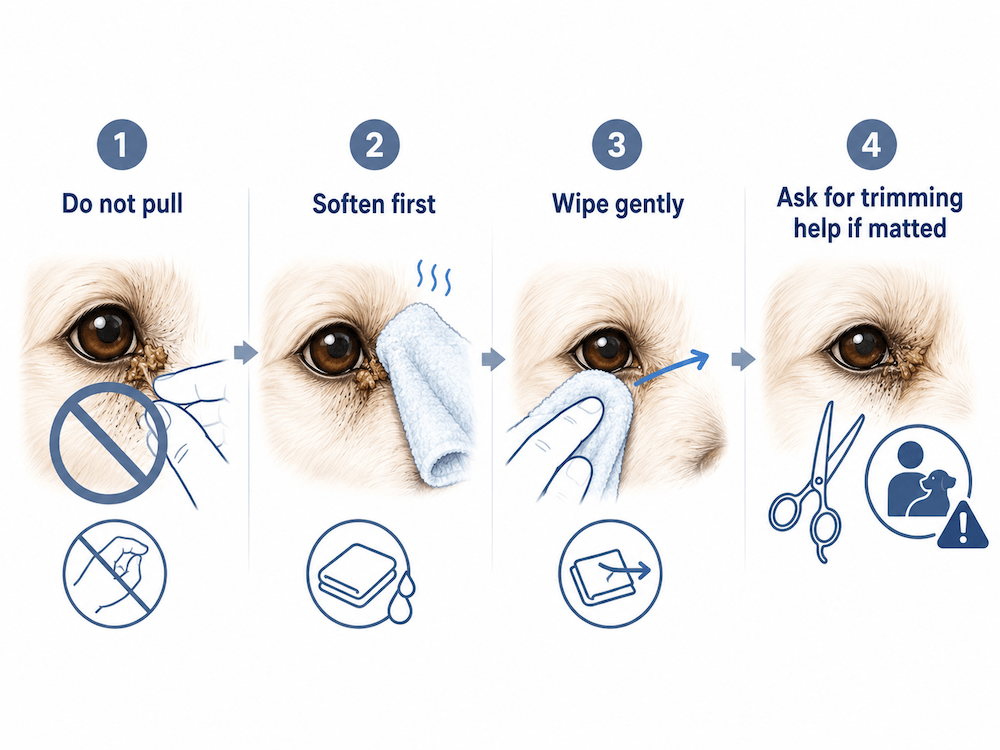
Dried crust can cling tightly to facial hair, especially in long-haired, white-coated, toy, and flat-faced dogs. Pulling it off can hurt and may leave the skin sore.
Use a warm damp cloth for longer softening, then wipe in small sections. If the crust is matted into hair, ask a groomer or veterinarian to trim the area safely rather than using scissors close to the eye at home.
What to Do After Cleaning Your Dog’s Eye Boogers
After cleaning, your dog’s eye area should look more comfortable, not redder or wetter. Dry the fur, reward your dog, and check again later that day.
Helpful Tips for Cleaning Dog Eye Boogers Safely
A good routine makes eye cleaning faster and less stressful. The goal is not to scrub the face perfectly clean; it is to keep the eye area comfortable while watching for changes.
| Cleaning Tip | Why It Helps | How to Apply It |
|---|---|---|
| Clean daily if needed | Routine wiping prevents crust from hardening. | Do a quick wipe during grooming. |
| Use one side once | Fresh fabric lowers germ transfer. | Fold the cloth after each wipe. |
| Keep sessions short | Brief handling reduces facial sensitivity. | Stop before your dog gets restless. |
| Trim facial hair safely | Shorter hair traps less moisture and debris. | Use a professional for close trimming. |
| Dry after cleaning | Dry fur helps protect nearby skin. | Pat under the eye with a towel. |
| Track changes | Patterns help catch problems early. | Note color, amount, and comfort. |
Mistakes to Avoid When Cleaning Dog Eye Boogers
Most problems happen when owners scrub too hard, use the wrong product, or assume every eye booger is harmless. Gentle cleaning is helpful; harsh cleaning can make irritation worse.
| Mistake | Why It Can Be Risky | Better Choice |
|---|---|---|
| Picking dry crust | It can pull hair and irritate skin. | Soften first with a damp cloth. |
| Scrubbing the eyelid | Friction can worsen redness and swelling. | Use light, outward wiping motions. |
| Using peroxide | It can seriously irritate eye tissue. | Use warm water or approved wipes. |
| Sharing cloth areas | Germs can move between eyes. | Use a fresh pad or section. |
| Using old eye drops | Wrong medication can delay healing. | Use medication only when prescribed. |
| Ignoring pain signs | Eye pain can worsen quickly. | Call your veterinarian promptly. |
When to Call a Veterinarian About Dog Eye Boogers
Eye problems can worsen quickly because the cornea is delicate and constantly exposed. When in doubt, treat pain signs seriously.
| Warning Sign | Why It Matters | What to Do |
|---|---|---|
| Squinting | Squinting often means eye pain. | Arrange a prompt veterinary exam. |
| Red eye | Redness can signal inflammation or injury. | Do not rely on cleaning alone. |
| Yellow-green mucus | Colored discharge may suggest infection. | Call your veterinarian for guidance. |
| Cloudy surface | Cloudiness can involve the cornea. | Seek urgent veterinary attention. |
| Pawing or rubbing | Rubbing can worsen scratches or ulcers. | Prevent rubbing and call the vet. |
| One-sided discharge | One eye may have debris or injury. | Monitor closely or schedule an exam. |
| Heavy recurring buildup | Chronic discharge may have an underlying cause. | Ask about tear and eye tests. |
What Veterinary Evidence Says About Dog Eye Discharge
The American College of Veterinary Ophthalmologists describes warm, wet compresses, sterile saline eyewash, and patient softening as common supportive methods for removing debris around the eye, while warning that contact lens solution is not the same as plain sterile eyewash. This supports a gentle cleaning approach that softens crust before wiping rather than scraping.[1]
The MSD Veterinary Manual explains that conjunctivitis in dogs commonly involves redness, swelling around the eye, discharge, and mild discomfort, and that the visible appearance alone is often not enough to identify the cause. That is why persistent, colored, painful, or one-sided discharge should be evaluated rather than repeatedly cleaned at home.[2]
The Merck Veterinary Manual emphasizes that the cornea is important for vision and that ulcers can cause watering and spasmodic winking, while injury or trauma is often considered when corneal inflammation affects one eye. This is the reason squinting, cloudiness, or pawing at the eye should be treated as more urgent than ordinary morning crust.[3]
Veterinary resources on epiphora and dry eye describe how tear overflow, blocked tear drainage, eyelid or hair interference, and inadequate tear production can all contribute to discharge or staining. They also note that keeping the area clean and dry can help, but products such as hydrogen peroxide should not be used near the eyes.[4]
Frequently Asked Questions
The Bottom Line
Cleaning dog eye boogers is usually simple when you soften the crust first, wipe gently away from the eye, and use a clean cloth or gauze for each eye. Mild morning crust or light tear staining is common, but changes in color, amount, or comfort can signal a bigger problem. Never scrape dried buildup, use harsh products, or apply human eye drops without veterinary guidance. A calm routine with warm water, gentle handling, and a quick post-cleaning check can keep your dog’s eye area clean and comfortable. If discharge is yellow, green, bloody, sudden, one-sided, or paired with redness, squinting, swelling, or pawing, contact your veterinarian. The safest approach is to treat routine crust as grooming, but treat painful or unusual discharge as a health concern.