How to Remove a Tick From a Dog: 7 Vet-Approved Steps (& What to Avoid)

Canine Bible is reader-supported. We receive affiliate commissions via some of our links. Learn more.
To remove a tick from a dog, use fine-tipped tweezers or a tick-removal tool to grasp the tick close to the skin. Pull upward with steady, even pressure, then clean the bite area and your hands. Do not twist, crush, burn, or cover the tick with oil, because this can make removal harder or increase irritation. A tick bite may look minor, but safe removal matters because ticks can spread disease. You also need to know what to do if the head stays in, the skin becomes swollen, or your dog starts acting sick. Some ticks are easy to spot, while others hide between toes, inside ears, under collars, or in thick fur. This guide explains how to remove a tick safely, what mistakes to avoid, and when to call your veterinarian.
Common Causes of Ticks in Dogs
| Common Cause | Why It Increases Risk | What Dog Owners Can Do |
|---|---|---|
| Tall Grass | Ticks wait on grass for passing animals. | Check your dog after grassy walks. |
| Wooded Areas | Leaf litter and brush create tick habitats. | Stay on clear trails when possible. |
| Wildlife Exposure | Deer, rodents, and birds can carry ticks. | Limit access to wildlife-heavy areas. |
| Untrimmed Yard | Overgrown spaces give ticks places to hide. | Keep grass short and remove brush. |
| No Tick Prevention | Unprotected dogs are easier tick targets. | Use vet-recommended tick prevention consistently. |
| Outdoor Adventures | Hiking and camping increase tick exposure. | Do full-body checks after trips. |
| Other Pets | Ticks can enter the home on animals. | Check all pets after outdoor time. |
How Ticks Can Affect Your Dog’s Health
Ticks can affect your dog in two main ways: by irritating the skin where they attach and by transmitting disease while they feed. A single tick bite may only leave a small bump, but some ticks can carry bacteria, parasites, or toxins that cause more serious illness.
Tickborne diseases do not always cause symptoms right away. A dog may seem normal after the tick is removed, then develop signs days or weeks later. This is why it is important to monitor your dog after any tick bite, even if removal seemed easy.
Possible health problems linked to ticks include:
Call your veterinarian if your dog develops fever, weakness, limping, swollen joints, pale gums, appetite loss, vomiting, wobbliness, breathing changes, or sudden behavior changes after a tick bite. Also seek help if the bite area becomes very swollen, painful, hot, red, or starts draining.


What to Know Before Removing a Tick From Your Dog
A tick in dogs is not removed by waiting for it to “back out.” Once attached, it feeds by anchoring its mouthparts into the skin. The safest approach is to remove it promptly with the right grip and steady pressure.
Most attached ticks can be removed at home if your dog is calm, the tick is visible, and it is not lodged deep in a sensitive area such as the eyelid, inner ear canal, mouth, or genitals. Call your veterinarian if the tick is difficult to reach, your dog is painful or aggressive, or the skin already looks badly infected.
| What to Check | Why It Matters | What to Do |
|---|---|---|
| Tick Location | Some areas are harder and riskier to handle. | Call your vet for ticks near eyes, ears, mouth, or genitals. |
| Your Dog’s Behavior | A painful or frightened dog may bite or jerk away. | Use gentle restraint or get veterinary help. |
| Skin Condition | Swelling, bleeding, or infection needs extra care. | Remove only if the skin looks normal. |
| Number of Ticks | Multiple ticks may mean heavier exposure. | Check the whole body and contact your vet. |
| Dog’s Health Status | Puppies, seniors, and sick dogs may be higher risk. | Ask your vet before handling difficult cases. |
| Removal Tool | The right tool helps avoid crushing the tick. | Use fine-tipped tweezers or a tick-removal tool. |
| Warning Signs | Illness can appear after a tick bite. | Watch for fever, weakness, limping, or appetite changes. |
Supplies You Need to Remove a Tick From a Dog
You do not need a large kit, but preparation helps you remove the tick cleanly and quickly. Fine-tipped tweezers are the most useful household tool because they let you grip close to the skin without crushing the tick’s body.
| Supply | Why You Need It | Best Use |
|---|---|---|
| Fine-Tipped Tweezers | They help grip the tick close to the skin. | Use for most visible attached ticks. |
| Tick Tool | It can slide under the tick cleanly. | Use according to the tool’s directions. |
| Gloves | They reduce contact with tick fluids. | Wear them before handling the tick. |
| Rubbing Alcohol | It helps clean tools and store the tick. | Use after removal, not to detach it. |
| Sealed Container | It prevents the tick from escaping. | Save the tick if your vet requests it. |
| Dog Treats | They help your dog stay calmer. | Reward stillness before and after removal. |
Before removing a tick, call your vet if it is in a sensitive area or if your dog seems painful, weak, feverish, or hard to handle. If you can’t reach your vet, you can chat live with a registered online veterinary professional via our online vet chat or video chat support (24 hours a day, 7 days a week). Or use Chewy’s online vet services (6 a.m. – midnight ET).
How to Remove a Tick From a Dog Step by Step
Follow these steps to safely remove ticks from a dog.
Step 1: Keep Your Dog Still and Expose the Tick
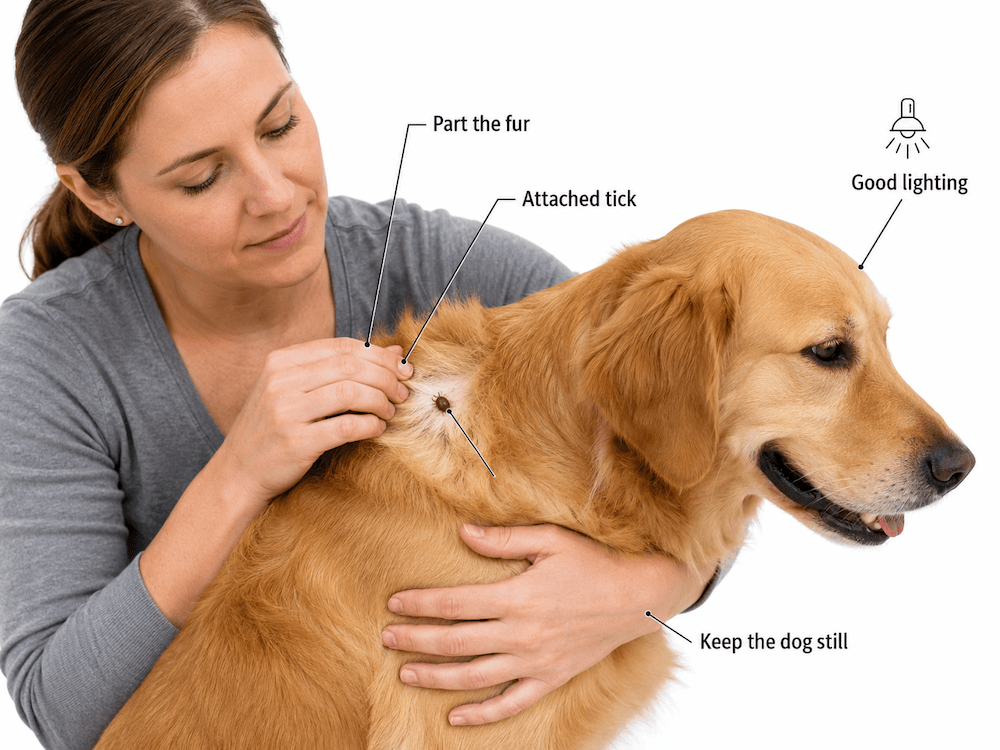
Have your dog stand, sit, or lie in a comfortable position. Part the fur around the tick so you can clearly see where the tick enters the skin. Use treats, a calm voice, and gentle restraint. If your dog is anxious or likely to bite, pause and call your vet or groomer for help.
Step 2: Grip the Tick Close to the Skin
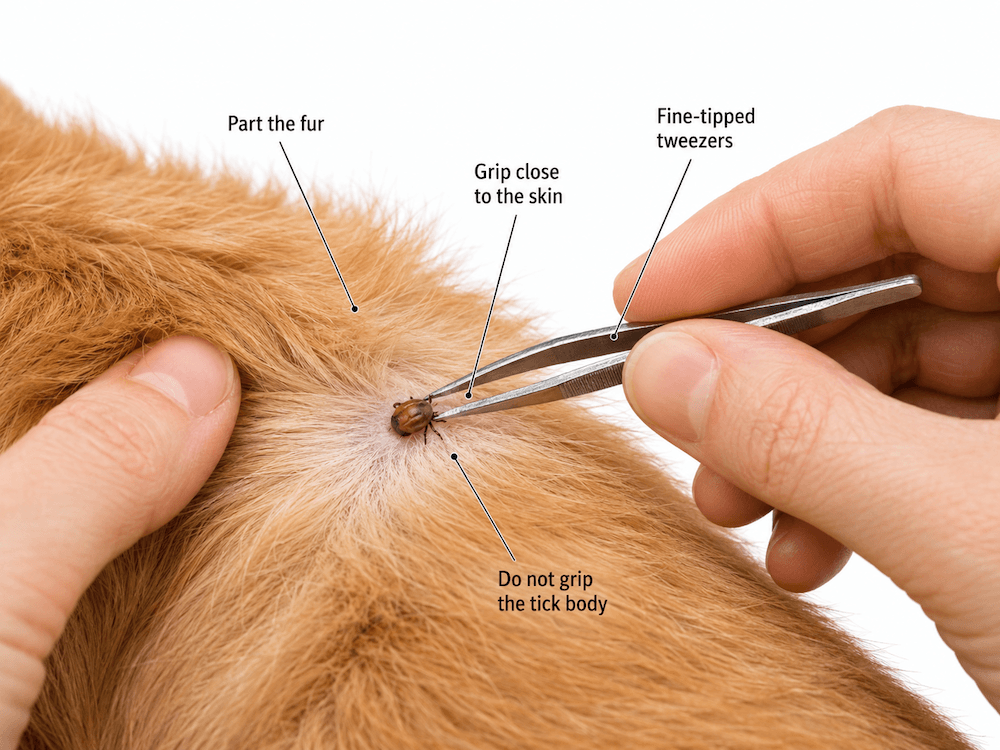
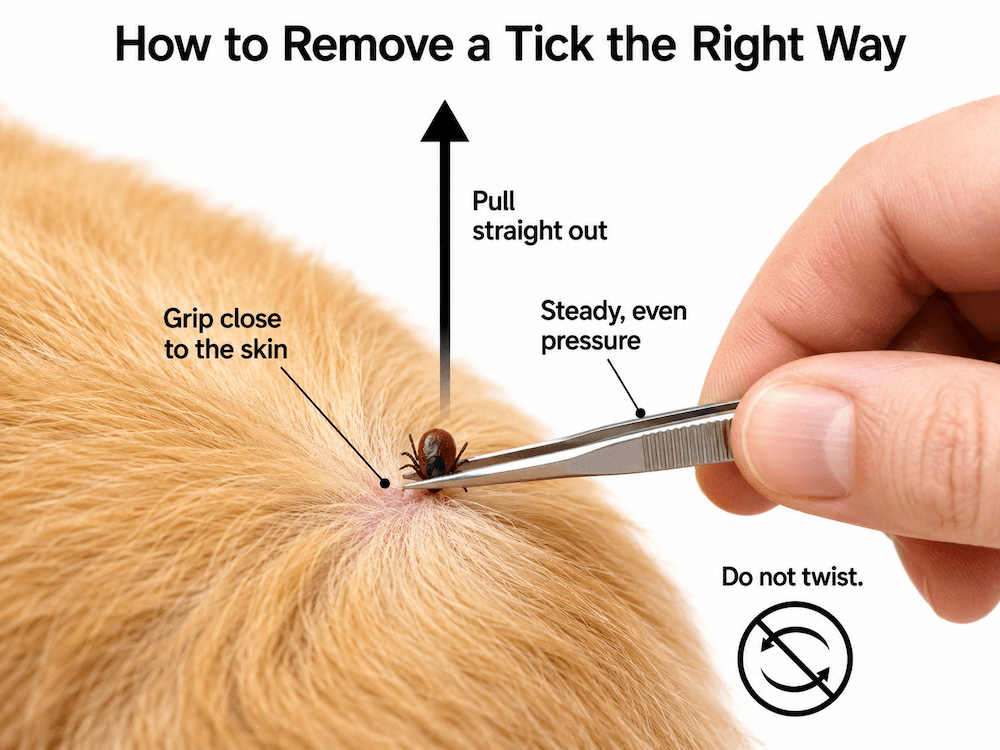
Use fine-tipped tweezers to grasp the tick as close to the skin as possible. Aim for the tick’s mouthpart area, not the swollen body. Do not squeeze the tick’s belly. Crushing the body can make the tick harder to remove cleanly and may increase exposure to tick fluids.


Step 3: Pull Straight Out With Steady Pressure
Pull upward or outward in one steady motion, depending on the angle of the skin. Keep the pressure even and controlled. Do not twist, jerk, or wiggle the tick. If the skin lifts slightly, continue with steady pressure until the tick releases.
Step 4: Check the Tick and the Bite Site
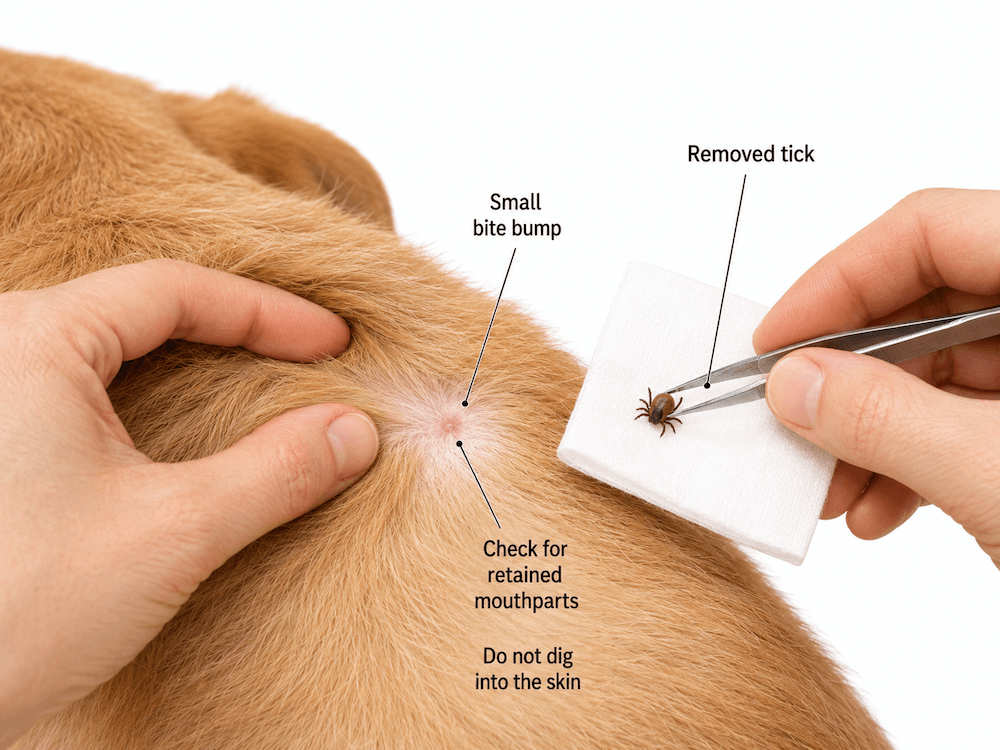
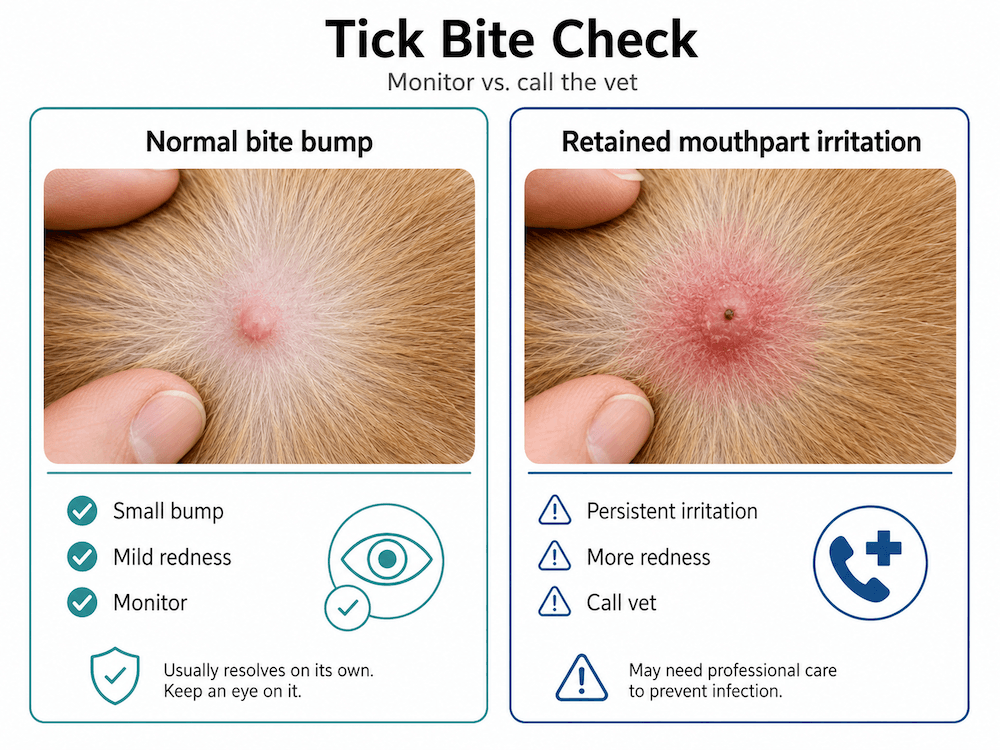
After removal, look at the tick and your dog’s skin. It is common for the bite site to look like a small red bump.
If tiny dark mouthparts remain, do not dig aggressively. Try gently removing visible pieces with clean tweezers, but if they do not come out easily, let the skin heal and monitor for irritation.
Step 5: Kill or Contain the Tick
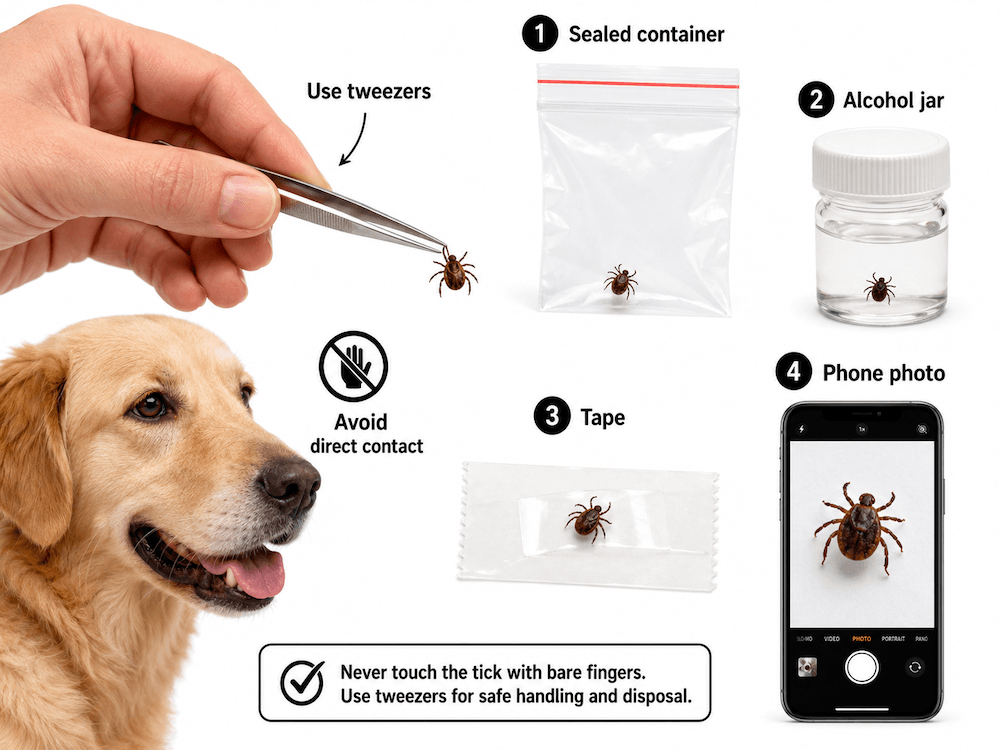
Place the tick in rubbing alcohol, tape it securely, or seal it in a small container or plastic bag. Do not crush it with your fingers. You can also take a clear photo of the tick next to a coin or ruler. This may help your veterinarian identify the tick type if your dog develops symptoms.
Step 6: Clean the Bite Area and Wash Your Hands
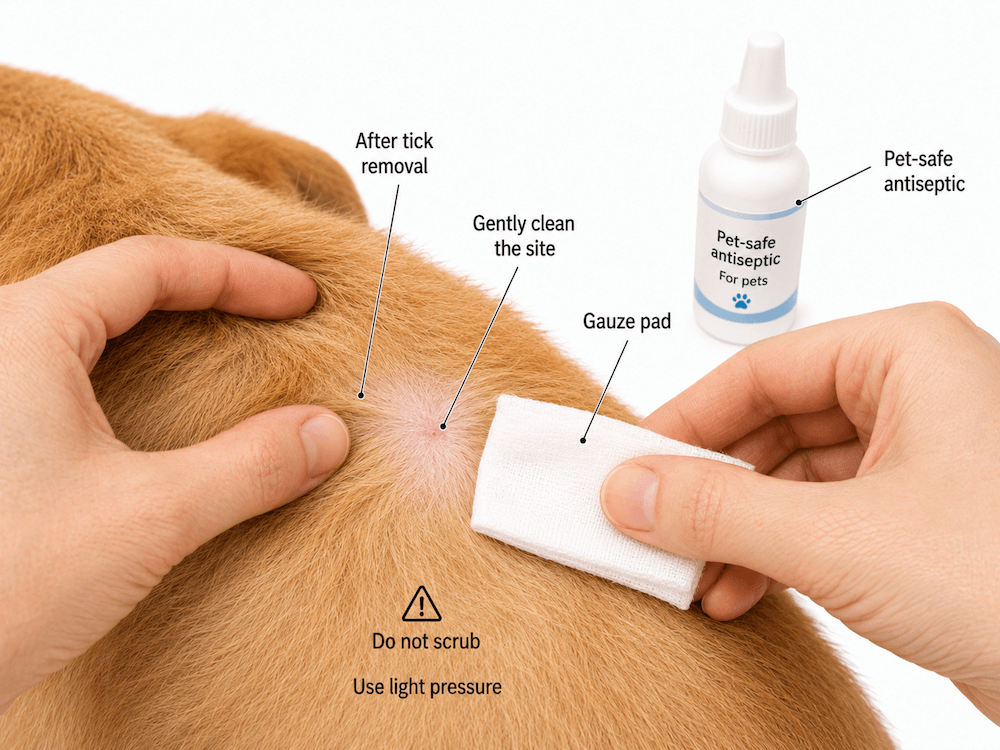
Clean your dog’s bite area with mild soap and water or a pet-safe antiseptic recommended by your vet. Wash your hands and clean the tweezers afterward. Avoid harsh chemicals, hydrogen peroxide, essential oils, or strong disinfectants unless your veterinarian specifically recommends them.
Step 7: Check the Rest of Your Dog’s Body
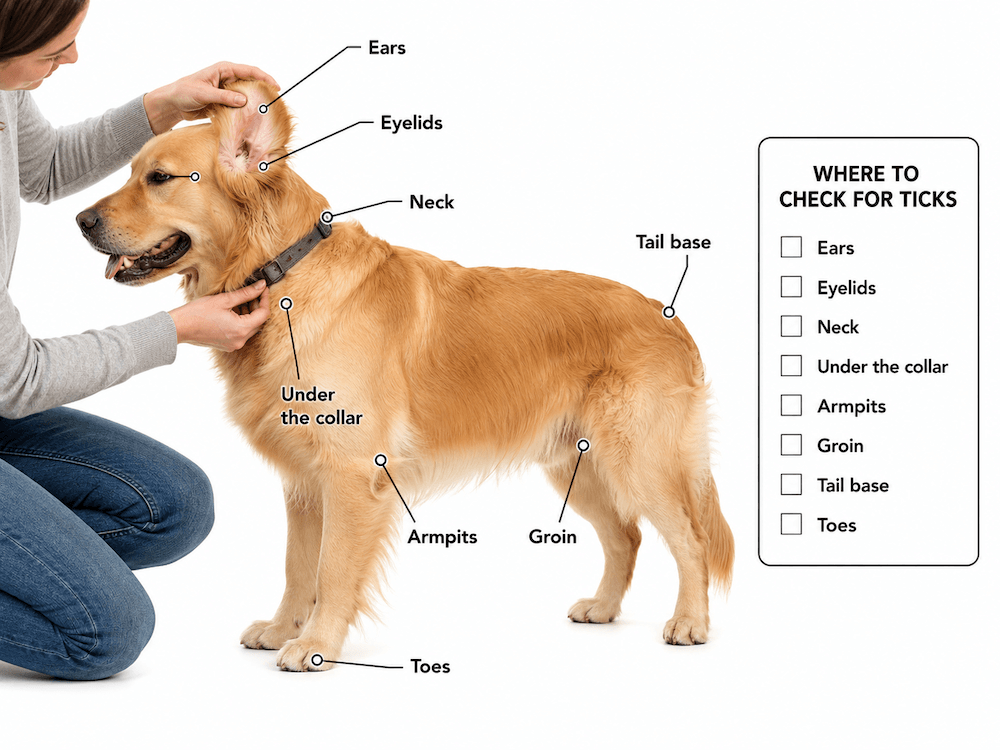
Finding one tick means there may be more. Check your dog’s ears, eyelids, collar area, armpits, groin, tail base, belly, and between the toes. Ticks can be hard to spot in long, dark, or dense coats. The CDC specifically recommends daily tick checks for pets that go outdoors, especially after time in tick-prone areas.
Helpful Tips for Removing a Tick From a Dog Safely
A calm setup makes tick removal easier. Good lighting, clean tools, and steady handling matter more than speed alone.
| Tip | Why It Helps | How to Apply It |
|---|---|---|
| Use Good Light | You can see the attachment point clearly. | Use daylight or a phone flashlight. |
| Part the Fur | Fur can hide the tick’s mouthparts. | Separate hair before using tweezers. |
| Stay Calm | Your dog may mirror your tension. | Use a quiet voice and treats. |
| Grip Low | This reduces squeezing the tick’s body. | Place tweezers close to the skin. |
| Pull Steadily | Even pressure helps the tick release. | Pull straight without twisting or jerking. |
| Record the Date | Symptoms may appear days later. | Note the bite date and location. |
Mistakes to Avoid When Removing a Tick From a Dog
Old tick-removal myths can make the problem worse. The CDC warns against petroleum jelly, heat, nail polish, or other substances because they may irritate the tick and increase the chance of infected fluid entering the skin.
| Mistake | Why It Is Risky | What to Do Instead |
|---|---|---|
| Burning the Tick | Heat can injure your dog’s skin. | Use tweezers or a tick tool. |
| Using Petroleum Jelly | It delays removal and may irritate the tick. | Remove the tick promptly by hand tool. |
| Twisting Hard | Mouthparts may break off in the skin. | Pull straight with even pressure. |
| Squeezing the Body | It may expose skin to tick fluids. | Grip close to the skin instead. |
| Digging Deeply | You can cause pain and infection. | Call your vet if pieces remain. |
| Skipping Monitoring | Some symptoms appear days later. | Watch behavior, appetite, and movement. |
What to Do If the Tick Head Stays in Your Dog
What many owners call the “tick head” is usually the tick’s mouthparts. If a small piece remains, it may cause a local bump or irritation, but aggressive digging can create more damage than the remnant itself.
Try removing visible pieces with clean tweezers only if they come out easily. If the skin becomes red, swollen, painful, draining, or your dog keeps licking or scratching the area, contact your veterinarian.
What to Monitor After Removing a Tick From Your Dog
After removal, your job is not finished. Write down the date, where on the body the tick was attached, where your dog likely picked it up, and whether the tick looked flat or engorged.
A small bump or mild redness can happen after a tick bite. More concerning signs include spreading redness, heat, swelling, discharge, fever, lethargy, appetite loss, limping, stiff joints, pale gums, bruising, wobbliness, or breathing changes.
The CDC notes that signs of tickborne disease in pets may not appear for 7–21 days or longer after a tick bite.
| Sign | Usually Normal | Call Your Vet If |
|---|---|---|
| Small Bump | A pea-sized bump may appear briefly. | It grows, drains, or becomes painful. |
| Mild Redness | Slight redness can follow a bite. | Redness spreads or feels hot. |
| Scratching | Brief attention to the spot may happen. | Your dog licks or scratches constantly. |
| Energy Level | Your dog acts normal after removal. | Lethargy, weakness, or collapse appears. |
| Movement | Walking should stay normal. | Limping, stiffness, or wobbliness develops. |
| Appetite | Eating and drinking remain normal. | Appetite drops or vomiting occurs. |
When to Call a Veterinarian After a Tick Bite
Call your veterinarian if your dog develops signs of illness after a tick bite, even if you removed the tick successfully. Tickborne diseases can cause vague symptoms at first, including tiredness, fever, appetite loss, lameness, swollen joints, or swollen lymph nodes.
MSD Veterinary Manual notes that Lyme disease in dogs commonly causes signs such as fever, appetite loss, painful or swollen joints, shifting lameness, swollen lymph nodes, and lethargy. It also notes that once a tick attaches, Lyme bacteria transmission may take 1–2 days, which is why prompt removal matters.
| Situation | Why It Matters | Recommended Action |
|---|---|---|
| Fever or Lethargy | These can signal tickborne illness. | Call your vet the same day. |
| Limping or Stiffness | Joint pain can occur with Lyme disease. | Schedule a veterinary exam promptly. |
| Swollen Bite Site | Infection or irritation may be developing. | Ask your vet about skin care. |
| Many Ticks Found | Heavy exposure increases health risk. | Ask about prevention and testing. |
| Wobbliness | Weakness may signal urgent illness. | Seek urgent veterinary care. |
| Breathing Changes | This can become an emergency. | Go to an emergency vet immediately. |
What Research Says About Tick Bites and Dogs
Research shows that tick bites can affect dogs in more ways than simple skin irritation. Ticks found on dogs may carry several pathogens, including Ehrlichia, Anaplasma, Babesia, Hepatozoon, and Rickettsia species, depending on the region and tick type.[1]
A 2024 study in Frontiers in Veterinary Science found that brown dog ticks were common on owned dogs in Vietnam, and many tested tick pools carried at least one microorganism. The study also linked tick infestation risk with factors such as outdoor lifestyle, age, breed, body size, and bathing frequency. For dog owners, this supports regular tick checks after outdoor exposure and consistent prevention.[2]
Another Frontiers in Veterinary Science study of owned dogs in central Thailand found tickborne pathogens such as Ehrlichia, Babesia, and Hepatozoon, including some co-infections. The researchers also reported blood changes such as low platelet counts in infected dogs, which helps explain why symptoms like lethargy, bruising, bleeding, fever, or weakness should be taken seriously after tick exposure.[3]
PLOS research also shows that tickborne infections in dogs are not always obvious. A PLOS ONE study in St. Kitts found evidence of Ehrlichia, Babesia, Anaplasma, and Hepatozoon infections in dogs, but many infected or exposed dogs did not show clear illness signs. This matters because a dog may seem normal after a tick bite while still needing monitoring.
How to Prevent More Ticks After Removing One From Your Dog
Removing the tick solves the immediate problem, but prevention reduces the chance of the next bite. Ask your veterinarian which tick preventive is safest for your dog’s age, weight, health history, lifestyle, and local tick risk.
CDC guidance notes that dogs are susceptible to tickborne diseases and that most tickborne diseases affecting dogs do not have vaccines, except Lyme disease in dogs in some situations. CAPC also recommends year-round tick control for pets, especially because ticks on dogs can also create household exposure risks.
Follow these practical prevention habits:
Frequently Asked Questions
The Bottom Line
Removing a tick from a dog is safest when you use fine-tipped tweezers or a tick-removal tool, grip the tick close to the skin, and pull straight out with steady pressure. Avoid Vaseline, alcohol, heat, twisting, or squeezing the tick, because these methods can delay removal or irritate the bite area. Afterward, clean the skin, check your dog for more ticks, and monitor for swelling, limping, fever, weakness, appetite loss, or behavior changes. When in doubt—especially if the tick is near the eye, ear, mouth, genitals, or your dog seems unwell—call your veterinarian for guidance.
Sources
- Ehrlichiosis, Babesiosis, Anaplasmosis and Hepatozoonosis in Dogs from St. Kitts, West Indies
- The detection of zoonotic microorganisms in Rhipicephalus sanguineus (brown dog ticks) from Vietnam and the frequency of tick infestations in owned dogs
- Tick-borne pathogens Ehrlichia, Hepatozoon, and Babesia co-infection in owned dogs in Central Thailand