How Long Dogs Stay in Heat? Cycle, Timeline, Stages, Signs & More

Canine Bible is reader-supported. We receive affiliate commissions via some of our links. Learn more.
A dog usually stays in heat for about 2 to 4 weeks. For most dogs, the average heat cycle lasts around 18 to 21 days. However, the exact length can vary based on age, breed, health, and individual hormone patterns. Some dogs show obvious bleeding and swelling, while others have subtle signs that are easy to miss. A dog may also remain fertile for only part of the heat cycle, which can confuse many owners. Understanding each stage helps you prevent unwanted pregnancy, spot abnormal symptoms, and know when to call your vet. This guide explains what happens during heat, how long each phase lasts, and what changes are normal or concerning.
Dog Heat Cycle Timeline Overview
| Heat Cycle Point | What It Means for Your Dog |
|---|---|
| Average length | Most dogs stay in heat for about 2 to 4 weeks, with many cycles lasting around 18 to 21 days. |
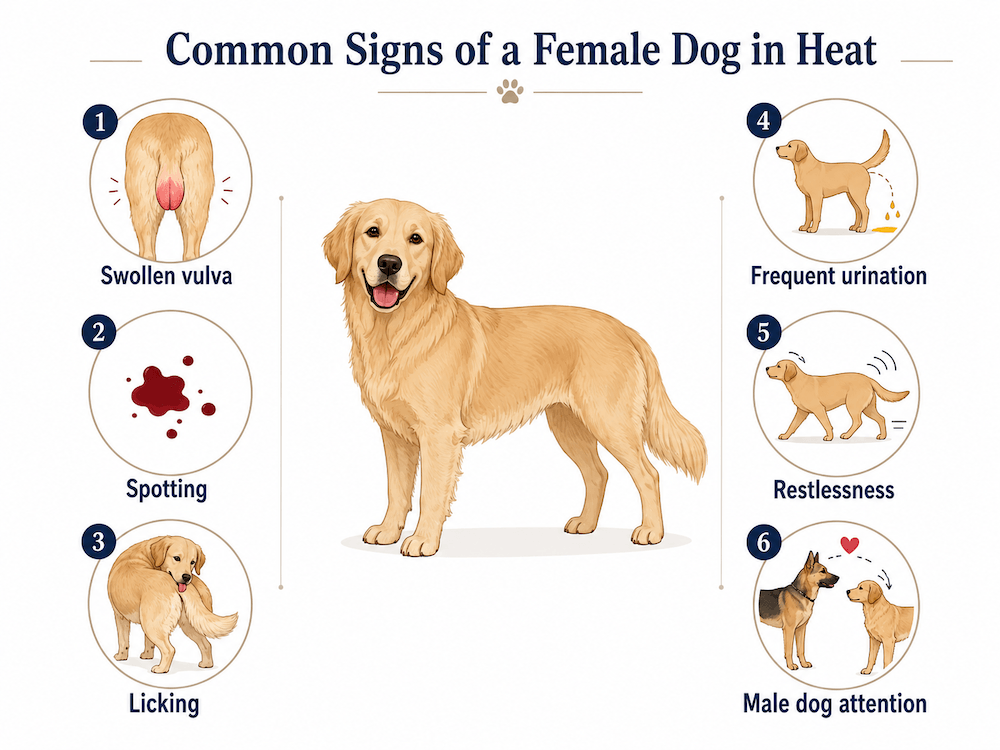
| Early signs | Swelling of the vulva, bloody discharge, licking, and increased attention from male dogs often appear first. |
| Fertile window | A dog is usually most fertile after the first several days, but timing can vary from one dog to another. |
| Behavior changes | Some dogs become clingier, restless, more vocal, or more interested in roaming during heat. |
| Pregnancy risk | Unspayed dogs should be kept away from intact males during the entire heat cycle to prevent accidental mating. |
| Normal variation | Cycle length, bleeding amount, and visible symptoms can differ based on age, breed, size, and individual hormones. |
| Vet concerns | Heavy bleeding, foul-smelling discharge, severe lethargy, fever, or a heat cycle that seems unusually long should be checked by a vet. |
What It Means When a Dog Is in Heat
“In heat” means an intact female dog is in the reproductive part of her cycle when hormones change, physical signs appear, and she may become able to mate. Owners often use the phrase for the whole visible period, even though fertility is only part of that window.
A dog does not have a human-style period. Bleeding is part of the canine reproductive cycle, and pregnancy risk may rise when discharge becomes lighter or straw-colored, not only when bleeding is obvious. Merck notes that vaginal discharge can decrease and become straw-colored during estrus, when the dog is receptive to breeding.
The 4 Stages of a Dog’s Heat Cycle
A dog’s reproductive cycle has four main stages: proestrus, estrus, diestrus, and anestrus. Proestrus is when bleeding and swelling usually begin, estrus is the fertile stage when a dog may accept mating, diestrus is the period after heat, and anestrus is the resting phase before the next cycle.
| Stage | Typical Length | What Happens | Owner Note |
|---|---|---|---|
| Proestrus | About 7 to 10 days. | Bleeding and vulvar swelling usually begin. | Male dogs may show strong interest. |
| Estrus | About 5 to 10 days. | This is the fertile, receptive stage. | Pregnancy risk is highest during this phase. |
| Diestrus | About 2 months. | The body moves out of fertility. | Watch for post-heat illness or false pregnancy. |
| Anestrus | About 4 to 5 months. | This is the resting phase between cycles. | Most dogs return to their normal routine. |
What Owners Usually Notice During a Dog’s Heat
Heat can look a little different from dog to dog, but many owners notice a similar pattern: bleeding and swelling first, then a fertile window when pregnancy risk is highest, followed by fading signs as the cycle ends.


| What You May Notice | What Happens | Owner Action |
|---|---|---|
| Early heat | Bleeding and swelling usually begin. | Start supervision and avoid male dogs. |
| Fertile window | Discharge may lighten, and she may stand, flag, or seek males. | Do not rely on discharge color alone; keep her away from intact males. |
| Late heat | Swelling and discharge gradually fade. | Continue precautions until signs fully stop. |
| After heat | Hormones remain active during diestrus. | Watch for illness or false pregnancy signs. |
What Affects How Long a Dog Stays in Heat?
Heat length varies because dogs do not all mature or cycle the same way. A first heat may be shorter, quieter, or irregular, while adult dogs often become more predictable over time.
Breed size matters, too. Smaller dogs often reach puberty earlier, while large and giant breeds may mature later. Merck lists puberty in dogs as ranging from about 6 to 24 months, with smaller breeds tending earlier and larger breeds later.
Factors that can affect heat timing include:
How Often Do Dogs Go Into Heat?
Most intact female dogs go into heat about twice a year, often around every 6 to 7 months. This is an average, not a rule. How often dogs go into heat can vary depending on factors such as age, breed, size, and individual dog. Some smaller dogs may go into heat more often, while some larger breeds may cycle less often. Cornell notes that the four main stages of the dog heat cycle are proestrus, estrus, diestrus, and anestrus, and that bloody discharge is one of the most noticeable signs of heat.
| Dog Type | Common Pattern | What It Means |
|---|---|---|
| Small breeds | May cycle earlier and sometimes more often. | Track dates carefully from the first heat. |
| Medium breeds | Often cycle around every six months. | Individual timing can still vary. |
| Large breeds | May mature later and cycle less often. | Longer gaps are not always abnormal. |
| First heat | May be shorter, quieter, or irregular. | Ask your vet about unusual patterns. |
| Senior intact dogs | They do not have human-style menopause. | Heat cycles may continue into older age. |
How to Tell When Your Dog’s Heat Is Ending
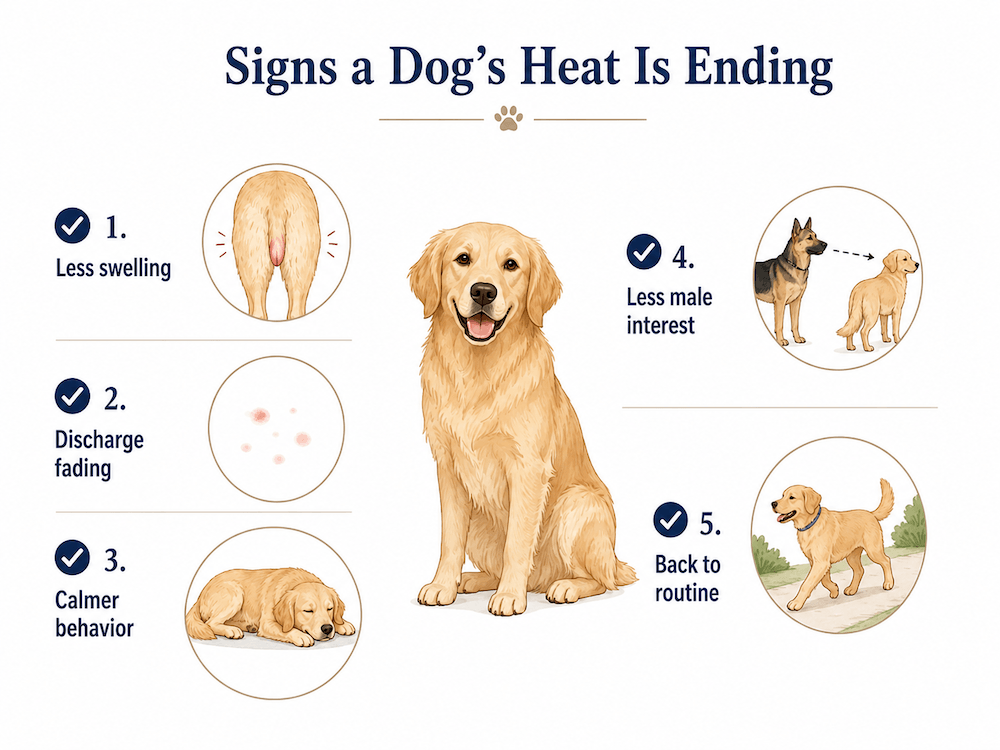
Heat is usually ending when discharge stops, vulvar swelling goes down, and your dog’s behavior returns closer to normal. Male dogs may also become less intensely interested.


Do not stop precautions the moment bleeding fades. VCA describes the cycle as ending when all discharge has stopped, and the vulva has returned to normal size, which is safer than relying on bleeding alone.
What to Monitor After Your Dog’s Heat Ends
After heat ends, continue watching your dog’s appetite, energy, thirst, urination, discharge, and behavior. Most dogs return to normal without problems, but some may show false pregnancy signs or develop reproductive illness.
| What to Monitor | Healthy Sign | Call Your Vet If |
|---|---|---|
| Appetite | Eating returns to her normal pattern. | She refuses food or seems nauseous. |
| Energy | Activity and mood return to normal. | She seems weak, dull, or unusually tired. |
| Discharge | No unusual discharge is present. | Discharge is foul-smelling, bloody, or pus-like. |
| Swelling | Vulvar swelling gradually goes down. | Swelling remains severe or looks painful. |
| Behavior | Licking, restlessness, and clinginess improve. | She seems distressed, painful, or withdrawn. |
| Male interest | Male dogs show less attention. | Males remain highly interested for weeks. |
| Drinking | Water intake and urination stay normal. | She drinks or urinates much more than usual. |
| Nesting | Mild mothering behavior fades on its own. | She guards toys, produces milk, or seems unwell. |
Monitor more closely if your dog becomes clingy, nests, guards toys, develops enlarged mammary glands, or acts unusually motherly. These can happen with false pregnancy, but severe discomfort, milk production, appetite loss, or illness should be discussed with your veterinarian.
Normal vs Concerning Dog Heat Cycle Patterns
Some variation is normal. A young dog may have a subtle first heat, while an adult dog may have more obvious discharge and behavior changes. However, heat should not make your dog severely ill. Heavy bleeding, foul-smelling discharge, fever, collapse, or illness after heat should be checked by a veterinarian.
| Pattern | Usually Normal | Call Your Vet If |
|---|---|---|
| Bleeding | Light to moderate spotting can be normal. | Bleeding is heavy, prolonged, or worsening. |
| Discharge color | Red, pink, or straw-colored discharge may occur. | Discharge is green, pus-like, or foul-smelling. |
| Behavior | Restlessness or clinginess can happen. | She seems weak, painful, or withdrawn. |
| Appetite | Mild appetite changes may occur. | She refuses food or vomits repeatedly. |
| Cycle length | Two to four weeks is common. | Signs continue beyond about four weeks. |
| After heat | Hormonal changes may continue quietly. | Illness appears weeks after heat ends. |
Pregnancy Risk During a Dog’s Heat Cycle
A female dog can become pregnant during the fertile part of her heat cycle, but owners should not try to guess fertility by bleeding alone. The discharge may become lighter around the time she is more receptive, which can make the timing easy to misread.
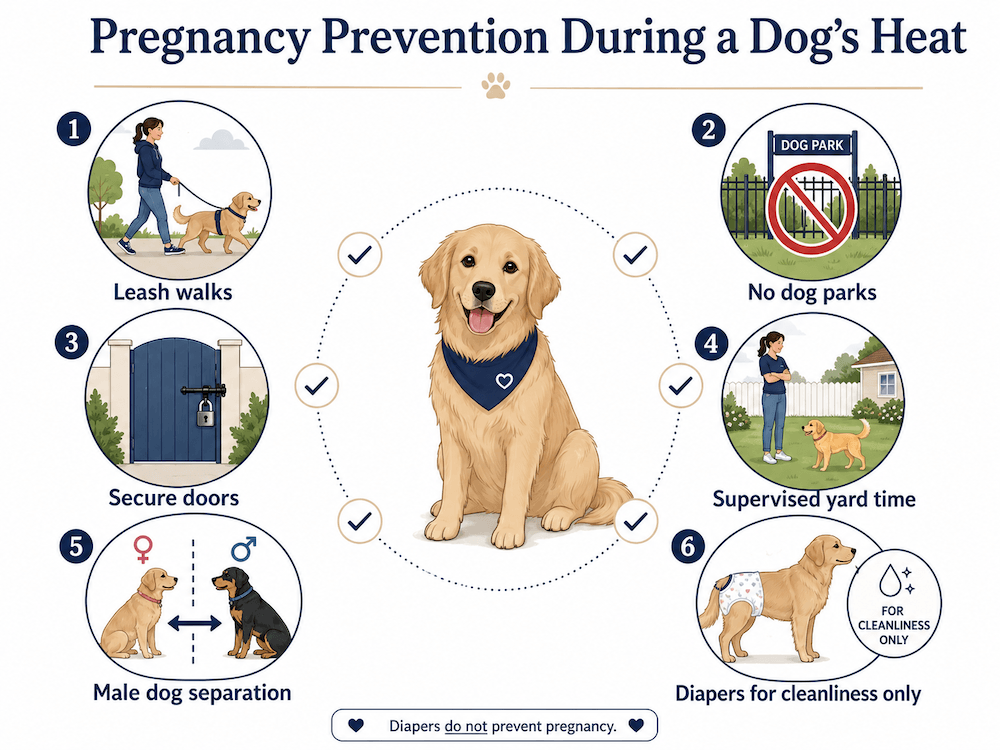
For dogs not intentionally bred under veterinary guidance, keep them away from intact male dogs throughout the entire heat cycle. This includes walks, yards, daycare, dog parks, grooming visits, and multi-dog homes.
Helpful Tips for Managing a Dog in Heat
Managing heat is mostly about cleanliness, supervision, and pregnancy prevention. Your dog may also need extra patience because hormone changes can affect mood, energy, and attention. Use the heat cycle as a time to maintain calm, predictable routines. Short leash walks, washable bedding, and quiet enrichment usually work better than high-stimulation outings.
| Tip | Why It Helps | How to Apply It |
|---|---|---|
| Track dates | Patterns help predict future cycles. | Record day one of swelling or discharge. |
| Use leashes | Roaming risk may increase during heat. | Keep outdoor trips controlled and brief. |
| Skip dog parks | Other dogs may react strongly. | Choose quiet walks away from dogs. |
| Protect bedding | Spotting can stain fabric and furniture. | Use washable covers or dog-safe diapers. |
| Offer enrichment | Mental activity helps restless dogs settle. | Use puzzle toys, sniff mats, or chews. |
| Watch appetite | Mild changes may happen during heat. | Call your vet if she refuses food. |
Mistakes That Can Make a Dog’s Heat Cycle Riskier
Many heat-cycle problems happen because owners underestimate how fast mating can occur. Intact male dogs may become very persistent when a female is in heat. Dog diapers can help with cleanliness, but they are not a reliable pregnancy-prevention tool. They should never replace supervision, leashes, or physical separation.
| Mistake | Why It Matters | Better Choice |
|---|---|---|
| Stopping precautions | Fertility may continue after bleeding lightens. | Wait until all signs fully resolve. |
| Trusting diapers | Diapers do not reliably prevent mating. | Use diapers only for cleanliness. |
| Using dog parks | Other dogs may react strongly to scent. | Walk in quiet, controlled areas. |
| Ignoring males | Intact males may become very persistent. | Use physical separation and supervision. |
| Missing illness signs | Some problems appear after heat ends. | Monitor appetite, energy, thirst, and discharge. |
| Guessing breeding dates | Ovulation timing varies between dogs. | Use veterinary timing tests for breeding. |
Common Myths About How Long Dogs Stay in Heat
Dog heat cycles are easy to misunderstand because bleeding, fertility, and behavior do not always line up neatly. A dog may stop bleeding but still attract males, or she may show very subtle signs from the beginning.
| Myth | Fact | Owner Takeaway |
|---|---|---|
| Bleeding means fertile | Fertility may rise after bleeding changes. | Do not use bleeding alone for timing. |
| Heat lasts one week | Visible heat often lasts weeks. | Plan for two to four weeks. |
| Diapers prevent pregnancy | Diapers are mainly for hygiene. | Separate dogs physically during heat. |
| Older dogs stop cycling | Dogs do not have human menopause. | Senior intact dogs still need monitoring. |
| Silent heat is impossible | Some dogs show subtle signs. | Track behavior and male interest. |
When to Call a Veterinarian About a Dog in Heat
Call your veterinarian if your dog’s heat seems unusually long, unusually painful, or followed by signs of illness. This is especially important for intact adult or senior female dogs, since reproductive conditions such as pyometra can develop after a heat cycle.
Pyometra is a serious, potentially life-threatening uterine infection. Warning signs may include foul-smelling or pus-like vaginal discharge, poor appetite, lethargy, vomiting, fever, increased thirst or urination, a swollen or painful abdomen, or discharge after the cycle appears to have ended.
Also contact your vet if heat signs last longer than about 4 weeks, bleeding is very heavy or includes large clots, your dog seems weak or collapses, a spayed dog shows heat-like signs, or accidental mating may have occurred. Possible mating should be discussed quickly because options depend on your dog’s health, cycle stage, and timing.
What Veterinary Research Says About Heat Cycles in Dogs
Veterinary references describe the dog reproductive cycle as variable, not perfectly calendar-based. Proestrus averages around 9 days, with a possible range from a few days to about three weeks, and estrus averages around 9 days as well.[1]
The estrous cycle averages about two to three weeks for most dogs and begins with vulvar swelling or vaginal discharge. This supports the practical owner estimate of about 2 to 4 weeks for visible heat signs, while still allowing for individual variation.[2]
Cornell’s dog estrous cycle resource notes that bloody vaginal discharge usually lasts between 14 and 21 days. For owners, this means a dog can appear to be “in heat” for several weeks, not just during the days when bleeding is heaviest.[3]
Post-heat monitoring matters because pyometra is a serious risk in intact female dogs. Cornell describes pyometra as a potentially life-threatening uterine infection, and AVMA Journals notes that removal of the ovaries and uterus prevents pyometra.[4]
Should You Spay a Dog to Stop Heat Cycles?
Spaying prevents future heat cycles and removes the risk of accidental pregnancy. It also prevents pyometra when both ovaries and the uterus are removed, according to AVMA Journals.
The best timing is not the same for every dog. Your veterinarian can help weigh breed, age, growth, household needs, heat-cycle management, and long-term health considerations. Spaying may be worth discussing if:
Frequently Asked Questions
The Bottom Line
Most dogs stay in heat for about 2 to 4 weeks, with many averaging around 18 to 21 days. The fertile window is usually shorter than the full visible cycle, but owners should treat the entire heat as a pregnancy-risk period. Bleeding, swelling, behavior, and fertility timing can vary, so it is safest to track your dog’s pattern and keep her away from intact males until all signs have fully resolved. Call your veterinarian if heat lasts unusually long, discharge smells bad, your dog seems sick, or concerning symptoms appear in the weeks after heat. With careful supervision, good hygiene, and clear red-flag awareness, most heat cycles can be managed calmly and safely at home.