How to Leash Train a Dog to Walk: In 7 Easy Steps (Vet-Approved)

Canine Bible is reader-supported. We receive affiliate commissions via some of our links. Learn more.
Leash training a dog means teaching them to walk calmly beside you without pulling, lunging, or dragging behind. Start with the right leash setup, reward loose-leash walking, and practice in short, low-distraction sessions. The goal is not just control, but safe, relaxed walks for both you and your dog. Some dogs learn quickly, while puppies, rescues, reactive dogs, or high-energy breeds may need more time. Pulling, stopping, barking, or chasing distractions are common problems, but they can be improved with the right steps. Many owners also make leash training harder by moving too fast or correcting the dog at the wrong moment. This guide explains how to build better leash manners, avoid common mistakes, and handle different walking challenges.
Why Leash Training Your Dog Matters
| Why It Matters | How It Helps Your Dog and Walks |
|---|---|
| Improves safety | A leash-trained dog is easier to guide away from traffic, hazards, and unsafe situations. |
| Reduces pulling | Teaching loose-leash walking prevents walks from becoming a constant tug-of-war. |
| Prevents owner injuries | Better leash manners lower the risk of falls, wrist strain, and sudden pulling accidents. |
| Protects your dog’s neck and body | Calmer leash walking reduces repeated pressure from pulling, choking, or lunging. |
| Builds better focus | Your dog learns to check in with you instead of reacting to every distraction. |
| Makes walks more enjoyable | Relaxed leash manners allow both you and your dog to enjoy exercise and sniffing. |
| Supports social manners | A trained dog is less likely to rush people, dogs, bikes, or wildlife on walks. |
| Helps prevent reactivity | Calm leash skills can reduce frustration, overexcitement, and lunging around triggers. |
| Strengthens your bond | Reward-based leash training teaches your dog to trust your guidance outdoors. |
What Leash Training Actually Teaches Your Dog
Leash training is not just about stopping pulling. It teaches your dog that staying connected to you makes good things happen: movement, treats, praise, sniff breaks, and calm access to the world.
A well-trained leash walk usually includes:
Loose-leash walking is different from a strict heel. A heel means the dog stays in a precise position beside your leg. Loose-leash walking gives the dog more freedom, as long as the leash stays relaxed and the dog remains manageable.
What to Know Before You Start Leash Training a Dog
Start leash training when your dog is calm, comfortable, and able to focus for a few seconds at a time. A dog who is overexcited, scared, in pain, or already reacting to other dogs may need easier practice conditions before outdoor walks.
For puppies, begin indoors or in a quiet yard before moving to sidewalks. For adult dogs, rescues, or strong pullers, expect to rebuild habits slowly instead of fixing everything in one walk.
Leash training is usually safe to practice at home when your dog can wear a collar or harness comfortably, take treats, and move without pain. If your dog coughs when pressure touches the neck, limps, panics outdoors, or reacts aggressively on leash, involve a veterinarian or qualified force-free trainer before pushing harder.


Supplies You Need for Leash Training a Dog
The right equipment does not train the dog by itself, but it makes learning safer and easier. For many dogs, a well-fitted harness reduces pressure on the neck, while a standard 4- to 6-foot leash gives better control than a retractable leash. VCA notes that head halters require gentle handling because sudden leash jerks can injure the neck, and they may need to be paired with another attachment for safety.
| Supply | Why It Helps | Best Use |
|---|---|---|
| 4–6 Foot Leash | Gives control without keeping the dog trapped. | Use for daily loose-leash training walks. |
| Front-Clip Harness | Helps redirect dogs that pull forward. | Use for strong pullers or young learners. |
| Back-Clip Harness | Keeps pressure away from the neck. | Use for puppies and relaxed walkers. |
| Flat Collar | Holds ID tags and suits gentle walkers. | Use when your dog does not pull hard. |
| Treat Pouch | Keeps rewards fast and easy to deliver. | Wear it where your hand naturally reaches. |
| High-Value Treats | Make focusing outdoors worth the effort. | Use tiny pieces for frequent rewards. |
| Poop Bags | Keep walks responsible and neighborhood-safe. | Carry extras on every training walk. |
Safety Notes for Leash Training a Dog
Leash training protects more than manners. Pulling can increase the risk of falls, hand injuries, and loss of control, especially with large dogs or slippery surfaces. A 2025 BMJ Group summary of an Injury Prevention review reported substantial hand and wrist injury costs among dog walkers, with older adults and women especially at risk when pulled by a leash.
Use safer handling habits:
For dogs with breathing issues, neck pain, tracheal sensitivity, eye pressure concerns, or brachycephalic anatomy, ask your veterinarian which walking equipment is safest. Harnesses may be recommended for dogs with breathing issues, heart disease, neck pain, or brachycephalic structure.
A Simple Leash Training Timeline for Dogs
Some dogs improve in a few days. Others need weeks of consistent practice, especially if they have rehearsed pulling for months or years. Use this timeline as a guide, not a deadline. Puppies, rescue dogs, adolescent dogs, high-energy breeds, and reactive dogs often need more repetition.
| Training Stage | Main Goal | What to Practice |
|---|---|---|
| Days 1–3 | Build comfort with gear and rewards. | Practice indoors for short, calm sessions. |
| Week 1 | Teach walking near you pays. | Reward every few steps on a loose leash. |
| Weeks 2–3 | Add quiet outdoor distractions. | Use stop-and-go before pulling escalates. |
| Weeks 4–6 | Improve consistency in real walks. | Practice turns, check-ins, and sniff breaks. |
| Ongoing | Maintain calm leash habits. | Reward good choices in new environments. |
How to Leash Train a Dog Step-by-Step
The easiest way to leash train a dog is to teach the skill in layers. Begin indoors, reward the dog for staying near you, then slowly add movement, outdoor smells, other people, and other dogs.
Step 1: Let Your Dog Get Comfortable With the Gear
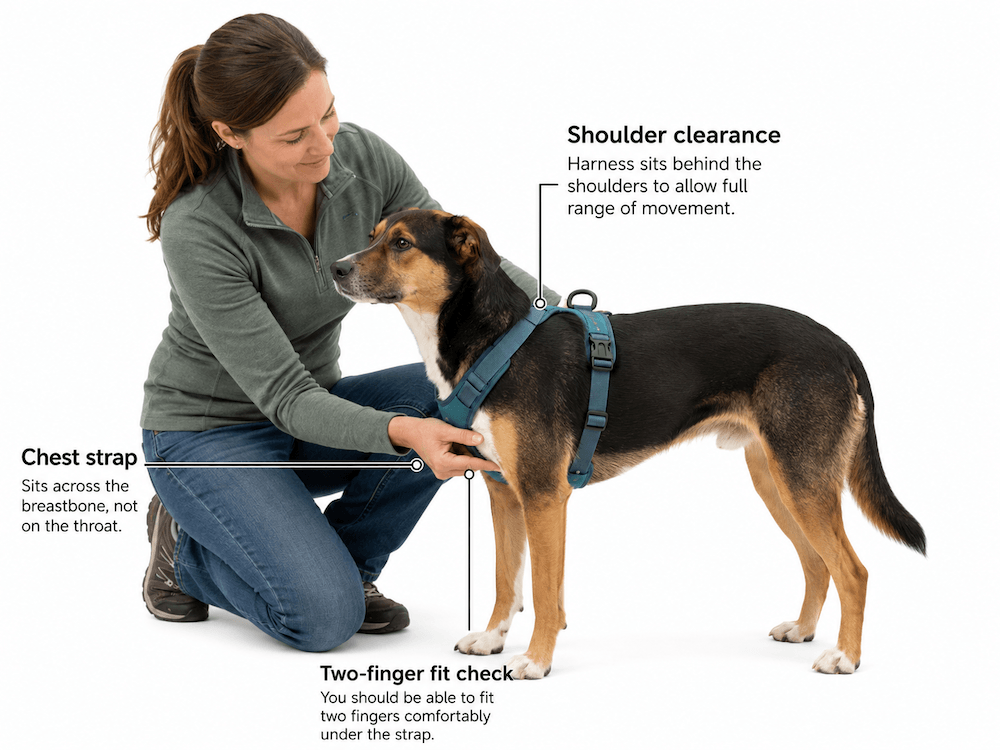
Before walking, let your dog wear the harness or collar indoors for short periods. Reward calm behavior while the gear is on. Check that the harness does not rub behind the front legs, restrict shoulder movement, or sit too high on the throat. For collars, you should usually be able to fit two fingers underneath without it sliding over the head.


Step 2: Teach Your Dog That Staying Near You Pays
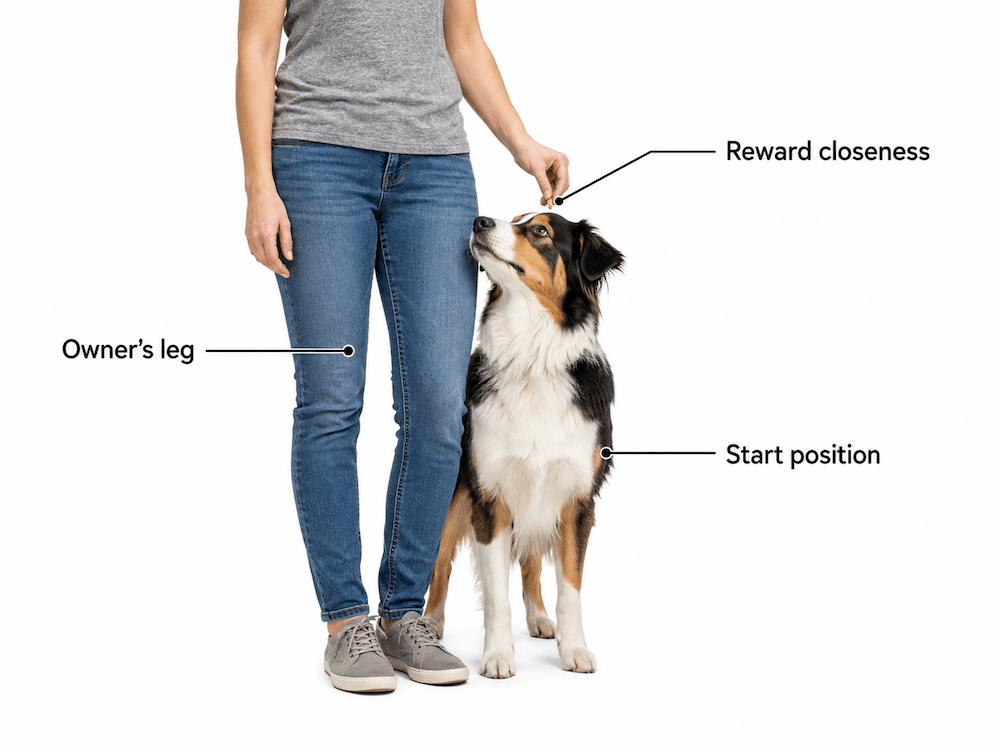
Start indoors or in a quiet yard. Stand still with your dog on leash and reward when they look at you, step toward you, or stand near your leg. Do not ask for a long walk yet. You are teaching the dog that being close to you is valuable before distractions compete for attention.
Step 3: Take One or Two Steps, Then Reward
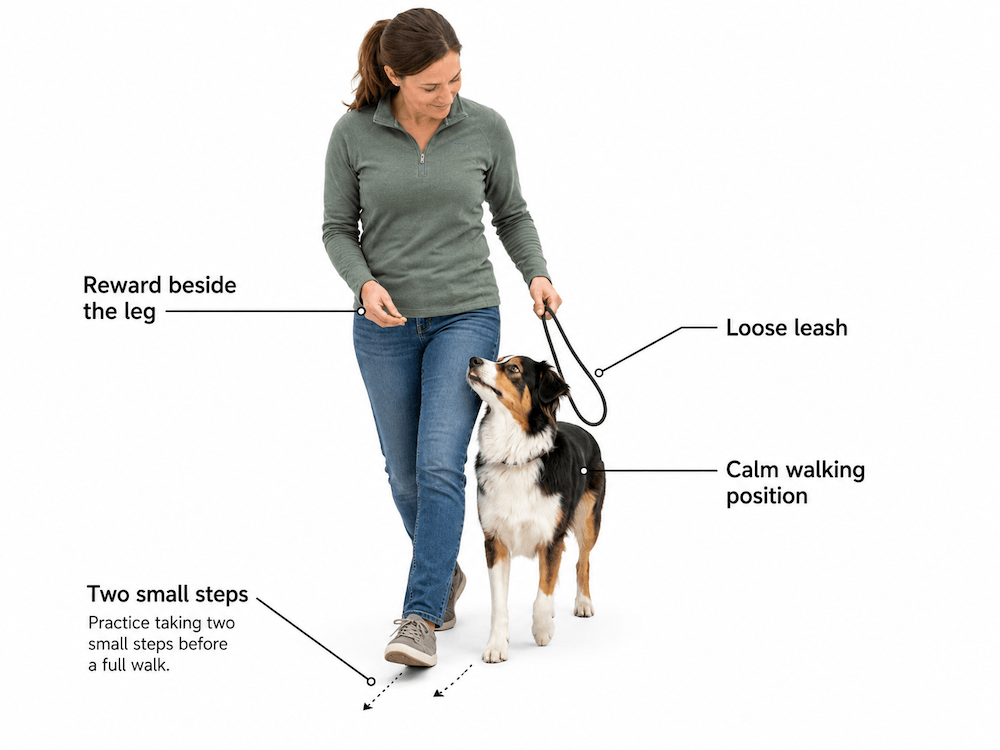
Walk one or two steps. If the leash stays loose, mark the behavior with “yes” or a clicker, then reward near your leg. At first, reward often. Your dog is learning the exact position and pace you want.
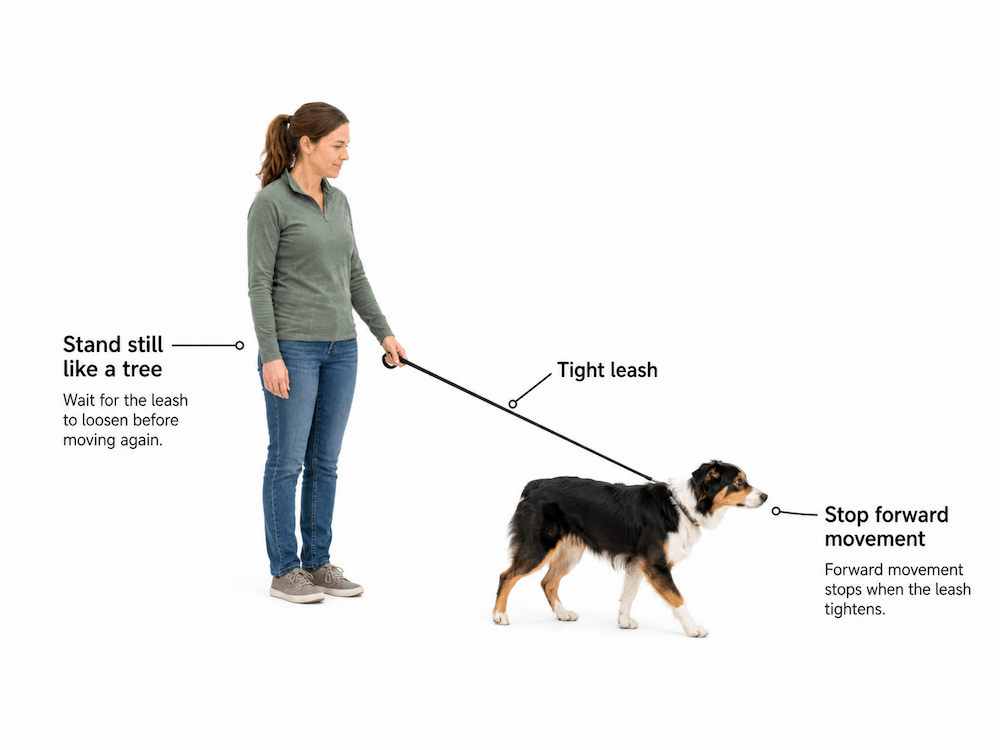
Step 4: Stop When the Leash Tightens
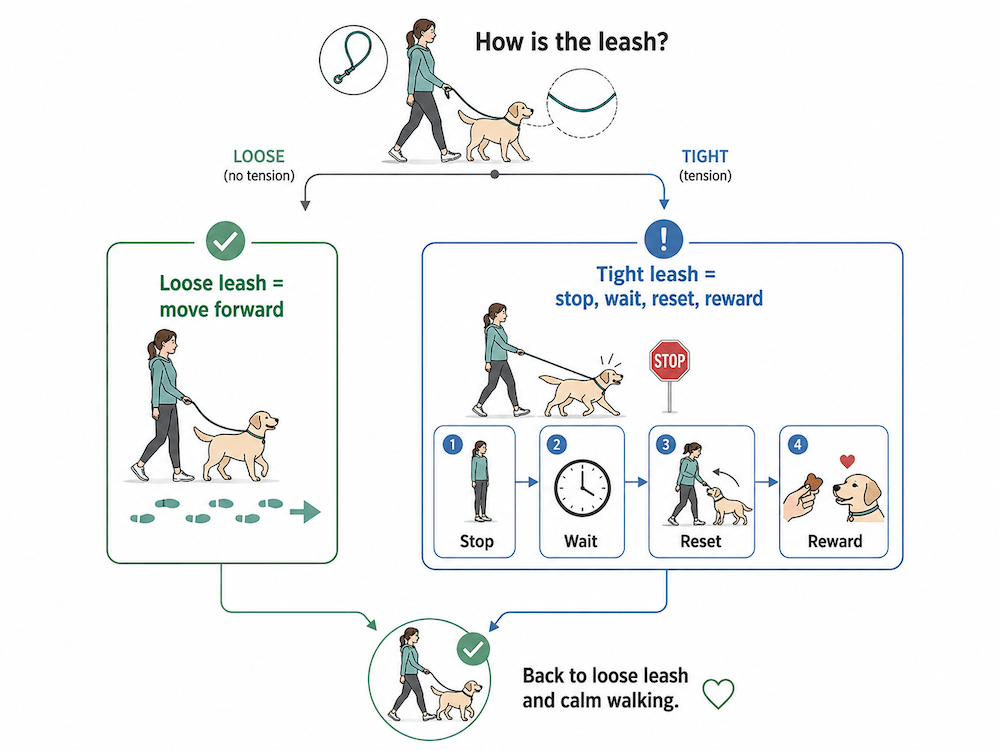
When your dog pulls, stop walking. Stand still and wait for the leash to loosen, your dog to look back, or your dog to move closer. Then reward and move forward again. This teaches the dog that pulling does not make the walk continue, while a loose leash does.
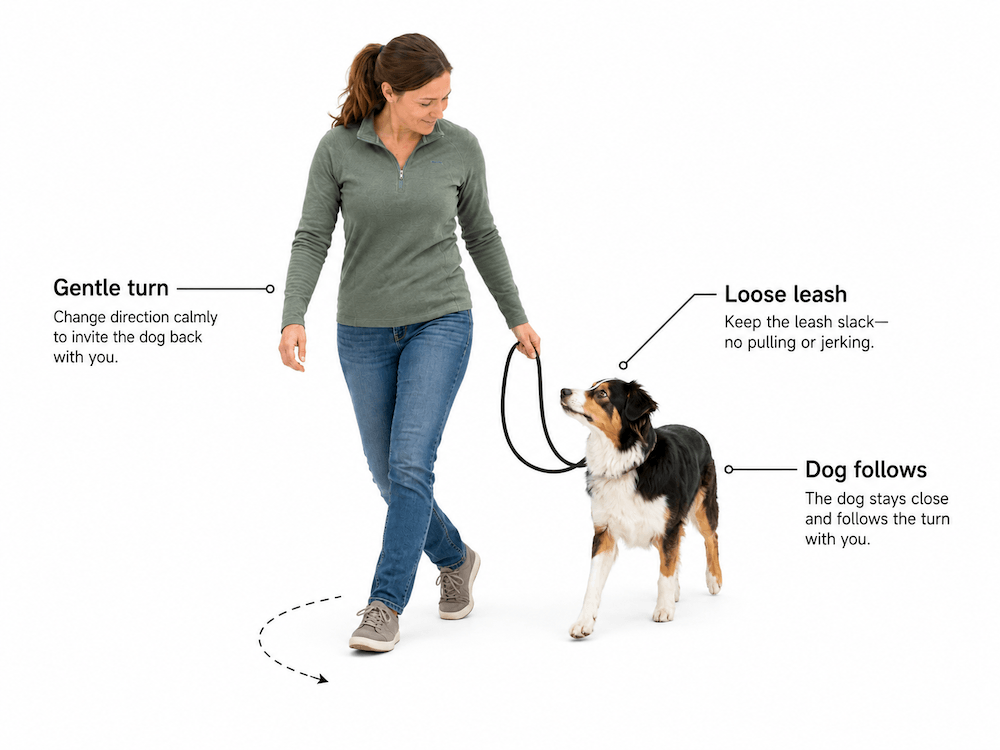
Step 5: Change Direction Before Pulling Builds
If your dog keeps charging ahead, turn and walk the other way before the leash becomes fully tight. Use a cheerful voice, not a yank. Reward when your dog turns with you and catches up. This keeps the dog mentally connected instead of locking into forward pulling.
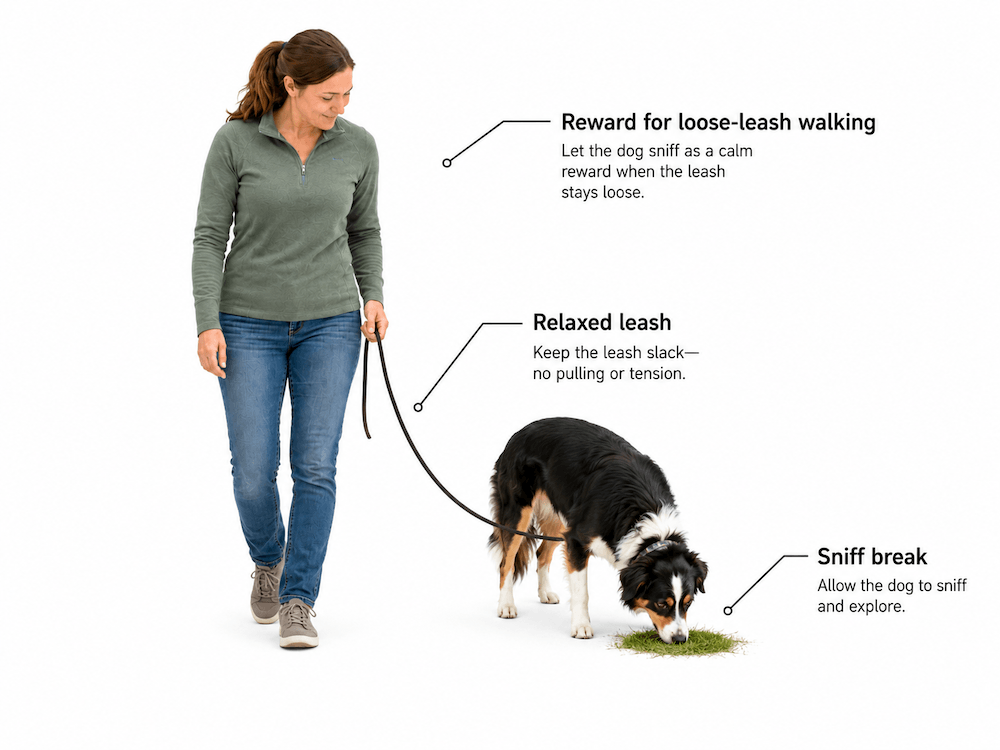
Step 6: Add Sniff Breaks as Rewards
Dogs need walks for more than exercise. Sniffing provides mental enrichment and can make leash training less frustrating. Use a cue like “go sniff” when your dog has walked nicely for several steps. After the sniff break, say “let’s go” and reward when your dog reconnects with you.
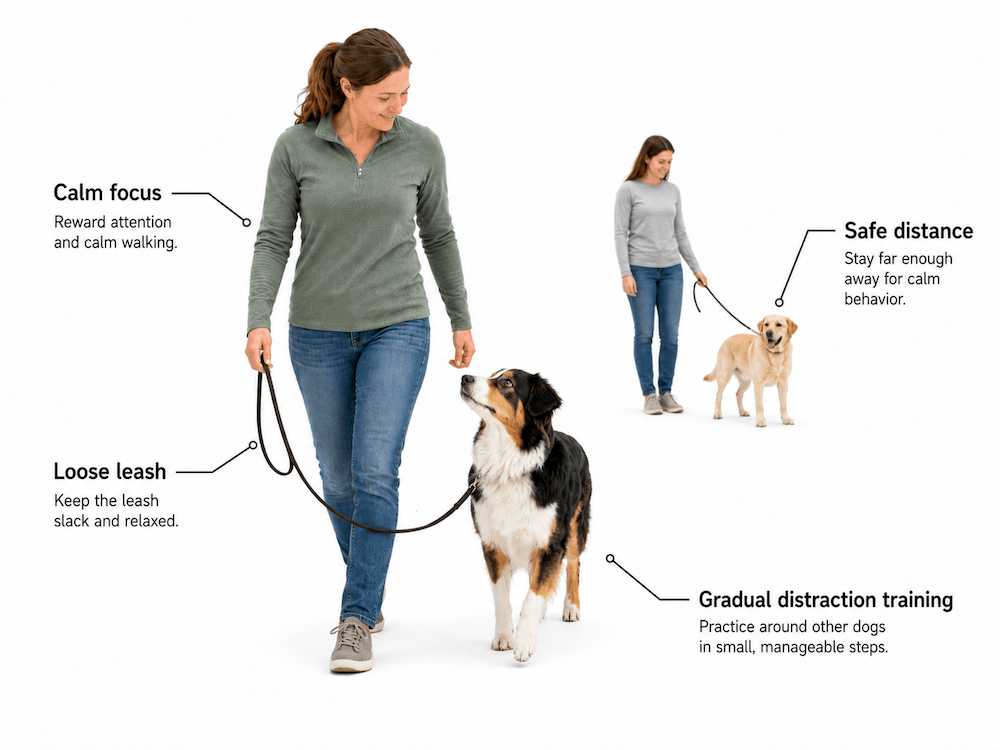
Step 7: Practice Around Mild Distractions First
Do not start leash training in the hardest place your dog knows. Begin with quiet streets, empty parking lots, calm parks, or your driveway. When your dog can succeed there, gradually add more distractions. Move farther away from triggers before your dog starts barking, lunging, or pulling hard.
How to Stop a Dog From Pulling on the Leash
For many dogs, pulling is not stubbornness. It usually happens because the outside world is exciting, the dog naturally walks faster than humans, and pulling has worked before.
Use this simple rule: loose leash makes the walk continue; tight leash makes the walk pause. Be consistent, but calm. If you sometimes let pulling work, your dog may keep trying.
How to Handle Lunging, Barking, or Leash Reactivity
Leash reactivity is different from ordinary pulling. A reactive dog may bark, growl, lunge, freeze, spin, or explode when they see another dog, person, bike, car, or animal. Veterinary Partner describes leash reactivity as a response often triggered by anxiety, fear, or frustration.
The first goal is not obedience. The first goal is distance and emotional control.
Use this approach:
Do not punish barking or lunging with leash pops, yelling, or forced exposure. That may suppress the warning signs while increasing the dog’s stress.
What to Do When Your Dog Refuses to Walk on Leash
Some dogs pull forward. Others stop, sit, back away, or try to go home. This can happen with puppies, newly adopted dogs, fearful dogs, and dogs uncomfortable with gear or the environment.
First, rule out simple causes: the harness may rub, the pavement may be hot, the dog may be tired, or the environment may be too loud. If your dog suddenly refuses walks after previously enjoying them, consider pain or illness.
Start with small, low-pressure steps:
Never drag a scared dog down the street. That can damage trust and make future walks harder.
What Research Says About Leash Training and Dog Behavior
Veterinary behavior guidance strongly favors reward-based training. The American Veterinary Society of Animal Behavior states that its current humane dog training position recommends reward-based methods for dog training and behavior modification. For dog owners, this supports using food, praise, sniff breaks, and movement rewards instead of leash corrections.
A 2020 study in PLOS ONE compared dogs trained with reward-based and aversive-based methods. The study found welfare concerns associated with aversive methods, including behavioral and physiological indicators of stress. This matters for leash training because leash jerks, intimidation, or pain-based tools may make some dogs more anxious during walks.[1]
A review by Ziv found that aversive training methods can jeopardize dogs’ physical and mental health, and did not show clear evidence of being more effective than positive reinforcement. For owners, the practical takeaway is simple: leash training should teach the dog what earns progress, not rely on discomfort.[2]
Welfare organizations such as RSPCA and Dogs Trust describe loose-leash training as a reward-based process: reward the dog when the leash is loose, stop when pulling begins, and continue when the dog returns to a calmer position. That aligns closely with modern learning principles and is practical for everyday walks.
Helpful Tips for Leash Training a Dog Successfully
Good leash training rewards the behavior you want before the dog fails. That means you should reward early, practice in easy places, and avoid asking for perfect walking when your dog is already overstimulated.
| Tip | Why It Helps | How to Apply It |
|---|---|---|
| Start Indoors | Fewer distractions make learning easier. | Practice beside a hallway or quiet room. |
| Reward Often | Frequent rewards clarify the right behavior. | Treat when the leash forms a soft curve. |
| Use Tiny Treats | Small rewards prevent overfeeding. | Use pea-sized pieces during repetitions. |
| Walk Slowly | A steady pace lowers excitement. | Move calmly instead of rushing forward. |
| Reward Check-Ins | Eye contact keeps your dog connected. | Treat when your dog looks back voluntarily. |
| Use Sniffing | Life rewards make training practical. | Say “go sniff” after several nice steps. |
| End Early | Short wins prevent frustration. | Stop before your dog gets overstimulated. |
Common Mistakes That Make Leash Training Harder
Many leash problems continue because the dog gets accidentally rewarded for pulling. If pulling gets the dog to the tree, the dog park, another dog, or the front door, the habit becomes stronger.
Avoid harsh corrections, too. The American Veterinary Society of Animal Behavior recommends reward-based training for dog training and behavior modification, and research has linked aversive training methods with poorer welfare indicators in dogs.
| Mistake | Why It Backfires | Better Choice |
|---|---|---|
| Leash Jerking | It can increase fear, pain, or frustration. | Stop, redirect, and reward the reset. |
| Moving While Pulling | The dog learns pulling works. | Pause until the leash softens. |
| Starting Outside | Busy places overwhelm new learners. | Begin indoors or in a quiet yard. |
| Using Long Sessions | Tired dogs make more mistakes. | Practice five to ten minutes at a time. |
| Skipping Rewards | The dog has no reason to stay close. | Pay generously for loose-leash moments. |
| Allowing Greetings | Pulling may become the greeting strategy. | Only greet when the leash is relaxed. |
| Using Retractable Leashes | They reward distance and tension. | Use a standard leash for training. |
Normal vs Concerning Leash Training Problems
Some leash struggles are normal during learning. Others suggest fear, pain, overarousal, or a need for professional help.
| Behavior | Usually Normal | Needs More Help |
|---|---|---|
| Pulling | Mild pulling during exciting moments. | Constant choking, dragging, or loss of control. |
| Stopping | Brief pauses to sniff or observe. | Freezing, trembling, or refusing every walk. |
| Barking | Occasional alert barking at surprises. | Repeated lunging, growling, or frantic barking. |
| Leash Biting | Short puppy mouthing during excitement. | Hard biting with jumping or frustration. |
| Lagging Behind | Slowing near new sights or smells. | Limping, weakness, coughing, or collapse. |
| Ignoring Treats | Brief distraction in new places. | Stress so high the dog cannot eat. |
Leash Training Puppies vs Adult Dogs
Puppies are usually easier to shape early, but they have short attention spans and may bite the leash, zigzag, or sit down suddenly. Keep puppy sessions playful and short.
Adult dogs may have more stamina, but they may also have stronger pulling habits. Rescues may need extra time if they are unsure about traffic, strangers, or new neighborhoods.
| Factor | Puppy Leash Training | Adult Dog Leash Training |
|---|---|---|
| Session Length | Keep sessions very short and playful. | Use short sessions with clearer structure. |
| Distractions | Everything may feel new and exciting. | Known triggers may already be established. |
| Pulling Habit | Often easier to prevent early. | May require habit replacement over time. |
| Fear Response | Move carefully during sensitive periods. | Watch for past trauma or uncertainty. |
| Reward Style | Use food, praise, and gentle play. | Use food, sniffing, and real-life rewards. |
| Main Goal | Build confidence and basic habits. | Replace pulling with calmer choices. |
When to Call a Veterinarian, Trainer, or Behaviorist
Call your veterinarian if your dog suddenly resists walks, limps, coughs on leash, tires quickly, pants heavily, collapses, shows pain when gear is fitted, or becomes unusually irritable. These signs may point to pain, respiratory issues, orthopedic problems, or other health concerns.
Contact a qualified force-free trainer if your dog pulls so hard you cannot safely hold them, jumps and bites the leash, or cannot focus even in quiet places. A trainer can help adjust timing, rewards, equipment, and practice difficulty.
Seek help from a veterinary behaviorist or veterinarian-guided behavior professional if your dog lunges, growls, snaps, panics, redirects biting toward you, or reacts intensely to people or dogs. Those cases need behavior modification, not just more obedience.
How to Maintain Progress After Leash Training
Once your dog improves, keep rewarding good leash choices in real life. You do not need to treat every step forever, but you should still reward check-ins, calm passing, and loose-leash walking around difficult distractions.
Rotate rewards. Use treats sometimes, but also use sniff breaks, praise, access to a favorite route, and permission to greet only when appropriate.
Signs your dog is improving include a softer leash, more frequent check-ins, faster recovery after distractions, and fewer pulling bursts. If your dog regresses, go back to easier locations for a few sessions instead of increasing pressure.
Frequently Asked Questions
The Bottom Line
Leash training your dog is about creating safer, calmer, and more enjoyable walks for both of you. With the right leash setup, short practice sessions, and consistent rewards, your dog can learn that walking beside you is more rewarding than pulling ahead. Progress may take time, especially with puppies, rescues, strong pullers, or reactive dogs, but small daily improvements add up. Avoid tugging, harsh corrections, or rushing into busy areas before your dog is ready. If your dog shows fear, pain, or intense leash reactivity, get help from a veterinarian or qualified trainer. With patience and consistency, leash training becomes a foundation for better manners, stronger trust, and more relaxed outdoor adventures.