What Does It Mean When a Dog Licks You? Reasons & Red Flags

Canine Bible is reader-supported. We receive affiliate commissions via some of our links. Learn more.
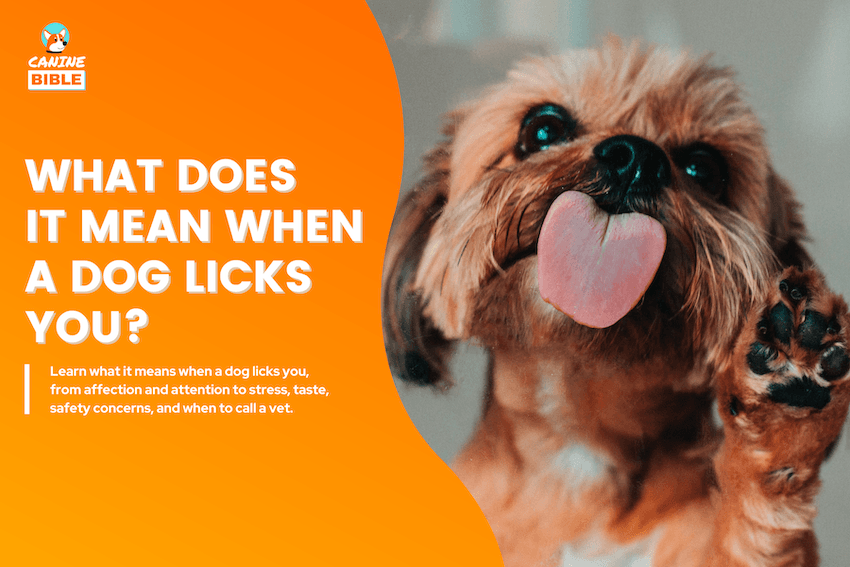
When a dog licks you, it usually means they are showing affection, seeking attention, exploring your scent or taste, or communicating a need. Licking is a normal dog behavior, but the meaning can change depending on the dog, the situation, and the body language that comes with it. Some dogs lick because they are happy and bonded to you, while others may lick when they feel anxious, overstimulated, hungry, or unsure. A quick lick on your hand may mean something very different from constant licking of your face, feet, furniture, or their own paws. Many owners also wonder whether dog licking is safe, whether it should be discouraged, and when it could point to a medical or behavioral problem. Understanding why dogs lick helps you respond in a way that supports comfort, boundaries, and your dog’s overall well-being.
Dog Licking Clues Owners Should Notice
| Clue to Check | What to Notice | What It Helps You Decide |
|---|---|---|
| Body posture | Loose and relaxed, or tense, tucked, restless, or frozen. | Friendly behavior, uncertainty, or stress. |
| Situation | Greeting, meals, exercise, visitors, grooming, or alone time. | The likely trigger behind the licking. |
| Intensity | Brief and interruptible, or frantic and repetitive. | Normal behavior or a possible concern. |
| Target | Hands, face, feet, furniture, paws, belly, or one spot. | Social, scent-related, soothing, or discomfort-related licking. |
| Pattern | New, occasional, daily, seasonal, or worsening. | A habit or a meaningful change. |
| Other signs | Itching, drooling, nausea, hiding, limping, or appetite changes. | Possible skin, pain, anxiety, or health issue. |
| Redirection | Stops easily, pauses briefly, or quickly returns. | Whether training, management, or a vet check may help. |
Why Dogs Lick People: The Most Common Meanings
Dog licking is not one single message. It is a flexible behavior dogs may use in different emotional, social, and sensory situations. A dog licking your hand after you come home, licking your face when excited, licking your legs after a workout, or licking your arm while you stop petting them may all look similar, but the meaning can change depending on the dog’s body language and what happens next.
Common Areas Dogs Lick and What It Means
Dogs may lick different parts of your body for different reasons, from affection and attention to taste, scent, curiosity, or comfort-seeking. The area your dog chooses can give helpful context, but licking should also be judged by the dog’s body language, intensity, and whether the behavior is new or persistent. Some licking is harmless, but licking near the mouth, eyes, ears, wounds, or surgical sites should be discouraged for hygiene and safety.
| Area Dogs Lick | What It May Mean | Owner Note |
|---|---|---|
| Hands | Your dog may be seeking attention, affection, or food smells. | This is common after eating, cooking, or petting your dog. |
| Face | Face licking may be greeting, excitement, or interest in scent. | Avoid licking near the eyes, nose, and mouth. |
| Mouth | Your dog may smell food or want close social contact. | Discourage mouth licking for hygiene and safety. |
| Feet | Feet often taste salty and carry strong everyday scents. | This can become a habit if it gets a reaction. |
| Legs | Leg licking may happen after sweat, lotion, or outdoor smells. | It is usually harmless if the skin is healthy. |
| Arms | Your dog may be showing affection or responding to scent. | Redirect calmly if licking becomes too persistent. |
| Ears | Ear licking may be curiosity, grooming behavior, or scent interest. | Avoid allowing licking inside the ear canal. |
| Wounds | Your dog may be drawn to blood, moisture, or skin changes. | Do not allow licking of cuts, sores, or surgical sites. |
Is It Safe When a Dog Licks You?
For many healthy adults, an occasional lick on intact skin is usually low risk. The bigger concern is where the dog licks and who is being licked. Dog saliva is not sterile, and the CDC notes that bacteria found in dog and cat mouths can cause illness if saliva gets into an open wound or sore.


Face licking is best limited, especially around the mouth, eyes, nose, acne lesions, cold sores, cuts, surgical sites, medical devices, or broken skin. People with weakened immune systems, people without a spleen, young children, older adults, and people with certain chronic illnesses should be more cautious because they may be at higher risk from bacteria that healthy people usually tolerate better.
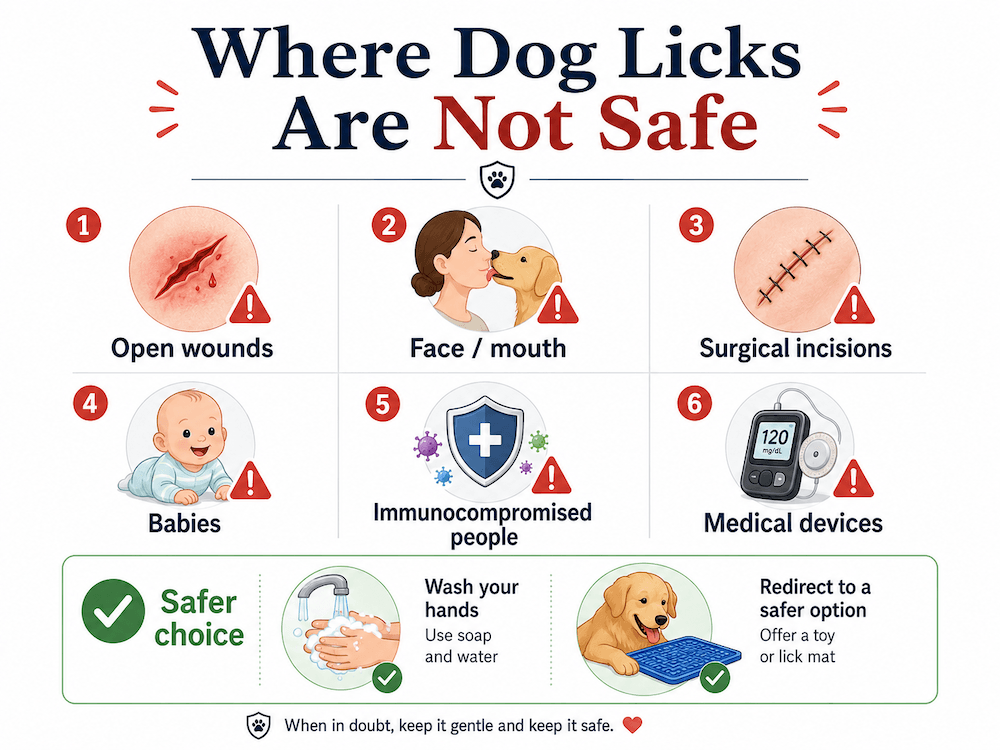
Dog licking should also be avoided after your dog eats raw food, chews on questionable outdoor items, gets into garbage, or has diarrhea or oral disease. If your dog licks a cut or scrape, wash the area with soap and water. CDC guidance for dog-related wounds emphasizes washing minor wounds thoroughly with soap and water, covering them, and seeking medical care for deeper wounds or concerning signs.
How to Read Your Dog’s Body Language When They Lick You
Body language helps you understand whether licking is welcome interaction, a request for space, or a sign that your dog is unsure. Instead of focusing on the lick alone, watch what your dog does immediately before and after it. A lick followed by staying close and calmly engaging is very different from a lick followed by turning away, avoiding contact, or trying to leave.


Some dogs use licking as a subtle way to soften an interaction. This can happen when a person leans over them, hugs them, touches a sensitive area, or gets too close to their face. In that situation, the lick may not mean “I like this”—it may mean “please slow down” or “I need more space.”
This matters most during close-contact situations, such as children reaching for the dog, visitors greeting them, grooming, nail trims, vet handling, or face-to-face contact. If your dog licks and then disengages, let them move away instead of pulling them back into the interaction.
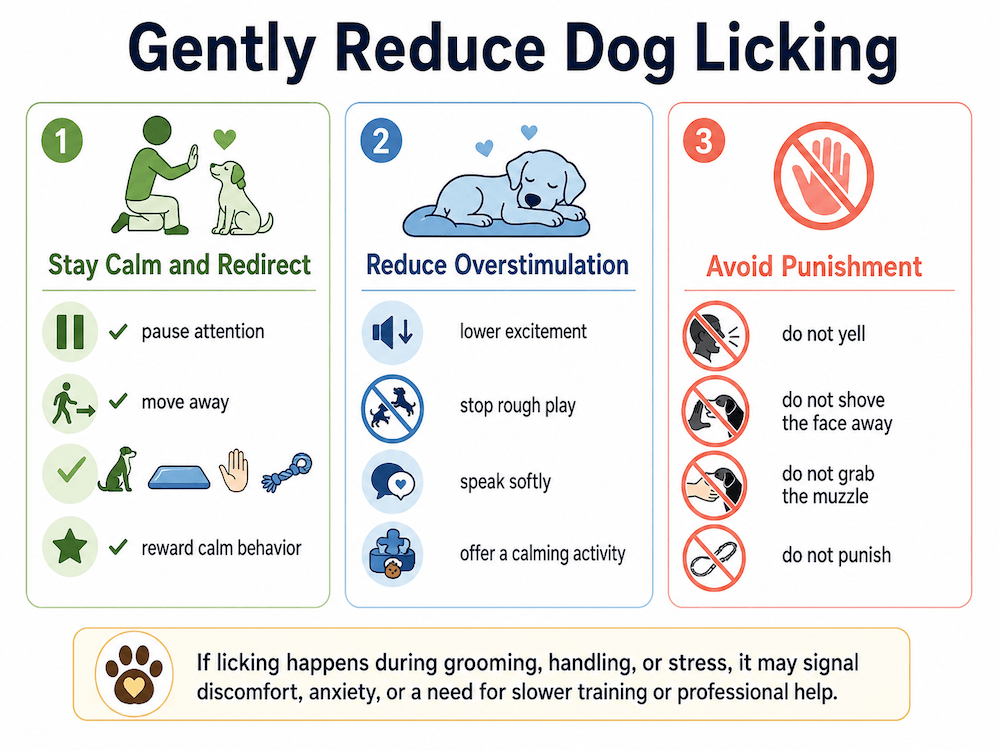
Avoid punishing a dog for licking, especially when the behavior may be linked to stress or discomfort. Merck Veterinary Manual cautions that pain- or fear-based techniques can worsen fear and anxiety and may contribute to aggression. A better approach is to adjust the situation, teach a more appropriate behavior, and give your dog a clearer way to communicate.
When Dog Licking Becomes Too Much
A dog licking you occasionally is usually normal. A dog licking constantly, frantically, suddenly, or in a way that interrupts sleep, meals, play, rest, or normal interaction deserves closer attention. Excessive licking of people, objects, or the dog’s own body can be associated with anxiety or pain, while obsessive self-licking may point to allergies or other health problems.
| Licking Pattern | Likely Concern Level | What to Check | What to Do |
|---|---|---|---|
| Brief happy greeting licks | Usually low | Loose body, soft face, easy to redirect. | Allow if comfortable; teach calm greetings if needed. |
| Licking for attention | Low to moderate | Happens when ignored or bored. | Reward quiet sitting, mat work, or toy engagement. |
| Licking during hugs or restraint | Moderate | Turning away, freezing, tucked tail, whale eye. | Stop the interaction and give space. |
| Sudden intense licking | Moderate to high | Pain, nausea, drooling, restlessness, appetite change. | Call your veterinarian, especially if new. |
| Self-licking one area | Moderate to high | Redness, swelling, odor, hair loss, limping. | Book a vet exam to check skin, pain, or infection. |
| Compulsive licking | High if persistent | Hard to interrupt, disrupts sleep or play. | Ask your vet about medical and behavior causes. |
How to Gently Reduce Dog Licking Without Damaging Trust
The goal is not to make your dog afraid to communicate. The goal is to teach a cleaner, calmer replacement behavior. If your dog licks for attention, respond before the licking starts by giving them a predictable outlet: a chew, puzzle feeder, lick mat, short training session, sniff walk, or calm mat routine.
Common Misunderstanding About Dog Licking Behavior
Dog licking is commonly misunderstood because it looks affectionate, funny, or harmless. Often, it is. But owners should avoid turning every lick into the same meaning.
| Misunderstanding | What It Really Means | Owner Takeaway |
|---|---|---|
| Every lick means love | Licking can mean affection, attention, taste, stress, or discomfort. | Read the whole body and situation. |
| Dog saliva is clean | Dog mouths carry bacteria that can infect wounds. | Avoid licking on broken skin or near the mouth. |
| Licking should always be stopped | Occasional relaxed licking is usually normal. | Set boundaries calmly if you dislike it. |
| Scolding fixes licking | Attention can reinforce licking, and punishment can increase stress. | Redirect and reward a better behavior. |
| Only anxious dogs lick | Many happy, healthy dogs lick too. | Concern rises when licking is sudden, intense, or compulsive. |
When to Call a Veterinarian About Dog Licking
Call your veterinarian if your dog’s licking is new, intense, repetitive, self-injuring, or paired with other symptoms. This is especially important if your dog is licking one body area over and over, because localized licking may point to itching, pain, infection, injury, allergies, anal gland problems, dental discomfort, or joint pain.
You should also call your vet if licking comes with vomiting, diarrhea, drooling, loss of appetite, pacing, whining, limping, skin redness, hair loss, odor, swelling, wounds, ear shaking, or sudden behavior changes. Excessive licking with skin damage, discomfort, or disruption of normal activities warrants veterinary care.
A veterinary behavior professional may be helpful if licking appears connected to anxiety, separation distress, fear, compulsive behavior, or handling sensitivity. Behavior cases are easier to improve when pain and medical issues are ruled out first, because training alone cannot fix licking that is driven by discomfort.
For human health, contact a healthcare provider if dog saliva gets into a bite, deep scratch, open wound, surgical site, or sore and you develop redness, swelling, drainage, fever, increasing pain, or illness. Capnocytophaga infections are rare but can be serious, especially for people with weakened immune systems or other risk factors
What Research Says About Dog Licking and Communication
Research on dog-human communication supports the idea that licking is context-dependent rather than a single “I love you” signal. A Journal of Veterinary Behavior study found that lip licking and looking away may function as appeasement signals during dog-human interactions, especially in certain conflict or greeting contexts.[1]
Human-dog bonding research also shows that social signals matter. A well-known Science study found that mutual gaze between dogs and owners was associated with increased urinary oxytocin in owners, supporting the idea that dog-human bonding involves measurable social and hormonal feedback. This does not prove that licking itself always means affection, but it does support the broader point that dogs use social behaviors to maintain relationships with people.[2]
Veterinary behavior sources also caution that excessive licking can be linked to anxiety, pain, allergies, nausea, or other medical problems. This matters because owners may mistake a repeated stress or discomfort signal for affection and miss an early warning sign.
Frequently Asked Questions
The Bottom Line
Dog licking usually means your dog is communicating through affection, attention, curiosity, habit, or emotional state. A gentle lick during a relaxed greeting is often normal, while frantic or repetitive licking may point to stress, discomfort, nausea, pain, or a skin problem. The best way to understand the meaning is to look at your dog’s body language, the situation, and whether the behavior is new or increasing. Licking is not always unsafe, but it is smart to avoid licking near mouths, eyes, open wounds, babies, or immunocompromised people. If you do not want your dog to lick, calmly redirect them to a toy, mat, sit, or another calm behavior instead of punishing them. When licking becomes sudden, excessive, hard to interrupt, or paired with other symptoms, a veterinarian can help rule out medical causes.