How to Tell if Your Dog Is in Pain 101: Signs & Key Steps to Help


Canine Bible is reader-supported. We receive affiliate commissions via some of our links. Learn more.
You can often tell if your dog is in pain by watching for changes in behavior, movement, posture, appetite, sleep, or reactions to touch. Dogs rarely show pain the way humans do, so even subtle signs like limping, restlessness, panting, hiding, or acting unusually quiet can matter. Some signs are obvious, but others are easy to miss or mistaken for aging, tiredness, or “bad behavior.” Pain can look different depending on whether it is sudden or chronic, mild or severe, and physical or internal. A dog with joint pain may move stiffly, while a dog with stomach pain may pace, tremble, or refuse food. Knowing what to watch for can help you catch problems earlier and avoid waiting until your dog is clearly suffering. In this guide, we’ll break down the most common signs, what they can mean, and when it is time to call your vet.
Why Recognizing Pain in Dogs Matters
| Why It Matters | Key Impact |
|---|---|
| Catches problems early | Recognizing pain sooner can help you address injuries or illness before they get worse. |
| Prevents more suffering | Spotting pain quickly can reduce how long your dog stays uncomfortable. |
| Supports faster treatment | Early action gives your vet a better chance to start the right care sooner. |
| Reduces behavior problems | Pain can cause hiding, irritability, restlessness, or aggression that may improve once the cause is treated. |
| Helps avoid emergencies | Some pain signs point to serious issues that need urgent veterinary attention. |
| Protects long-term mobility | Finding pain early can help limit worsening joint, spine, or movement problems over time. |
| Saves money later | Addressing a problem early is often simpler and less expensive than treating an advanced condition. |
| Improves peace of mind | Knowing the warning signs helps you feel more confident about when your dog needs help. |
Common Causes of Pain in Dogs
Dogs can feel pain for many different reasons, and the signs are not always obvious at first. Some of the most common causes include injuries, joint problems, dental issues, ear infections, and internal discomfort that may manifest as changes in movement, behavior, or daily routines.
| Cause of Pain | What It May Look Like | What Owners Should Know |
|---|---|---|
| Arthritis | Stiff walking, trouble rising, or reluctance to jump. | Often mistaken for aging and usually worsens without veterinary care. |
| Injury or Trauma | Limping, yelping, swelling, or sudden guarding of one area. | New pain after a fall, collision, or rough play needs prompt attention. |
| Dental Disease | Bad breath, dropping food, or chewing on one side. | Mouth pain is common and can be easy to miss. |
| Ear Infection | Head shaking, ear scratching, or crying when touched. | It can become more painful quickly if left untreated. |
| Stomach Upset | Pacing, hunched posture, vomiting, or refusing food. | Abdominal pain can range from mild upset to an emergency. |
| Urinary Problems | Straining, frequent urination, or crying while peeing. | Urinary pain may signal infection, stones, or a blockage. |
| Skin Wounds | Licking, scratching, redness, or pain when handled. | Hot spots, bites, and wounds can become painful and infected fast. |
| Back or Neck Pain | Shaking, stiffness, lowered head, or refusing stairs. | These signs may look subtle but can reflect serious discomfort. |
| Paw or Nail Injury | Limping, licking a paw, or holding the foot up. | Small cuts, torn nails, or trapped debris can be very painful. |
| Post-Surgical Pain | Restlessness, tenderness, or reluctance to move normally. | Some soreness is expected, but worsening pain should be checked. |
Why Owners May Miss Signs of Pain in Dogs
Pain in dogs can be surprisingly difficult to recognize, especially when the signs are mild, gradual, or inconsistent. Many dogs do not show pain in obvious ways, which means changes in behavior, movement, appetite, and energy can be easy to misread. These points explain why pain is often overlooked at first and why subtle changes still deserve attention.
Remember to always consult with your vet before making any changes that could affect your dog’s health, nutrition, or well-being. If you can’t reach your vet, you can chat live with a registered online veterinary professional via our online vet chat or video chat support (24 hours a day, 7 days a week). Or use Chewy’s online vet services (6 a.m. – midnight ET).
How to Tell if Your Dog Is in Pain Step by Step
Here are some steps to help you determine if your dog is in pain.


Step 1: Look for Changes in Your Dog’s Normal Behavior
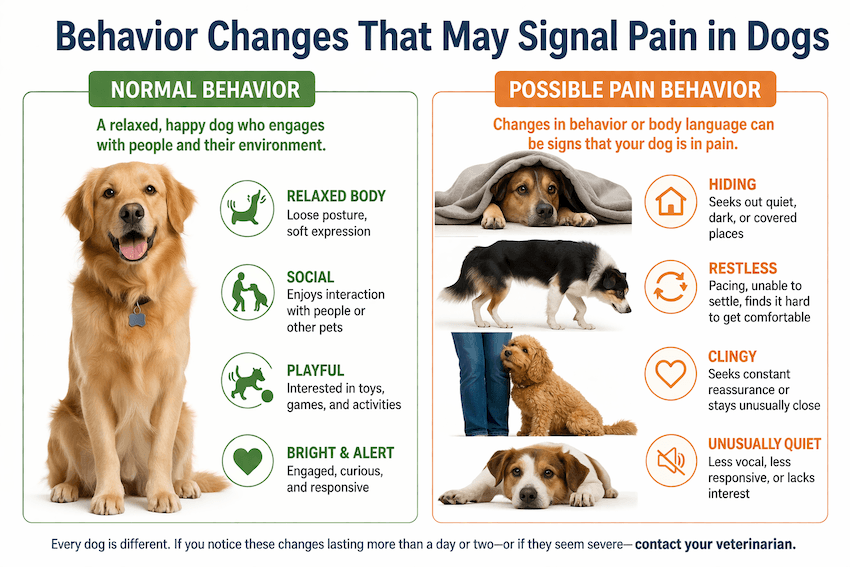
Start by comparing your dog’s behavior today with what is normal for them. Pain often shows up first as a personality change, such as hiding, clinginess, irritability, restlessness, sleeping more, or seeming less interested in family interaction.
Do not dismiss these changes as moodiness alone. In dogs, pain frequently appears as altered behavior before owners notice a physical injury.
Step 2: Watch How Your Dog Moves, Walks, and Lies Down
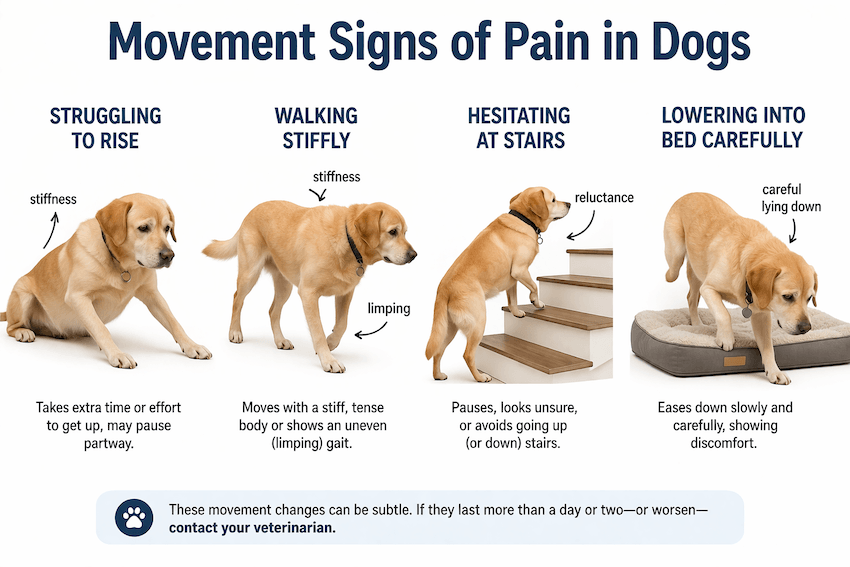
Observe your dog getting up, walking, turning, jumping, using stairs, and lying down. Pain may show up as limping, stiffness, slower movement, reluctance to jump, difficulty using stairs, shifting weight, or repeated position changes when trying to get comfortable.
This matters because movement changes are among the most common owner-noticed signs of pain, especially with joint, back, paw, or abdominal problems. Chronic pain can be subtle and may look like “just getting older.”


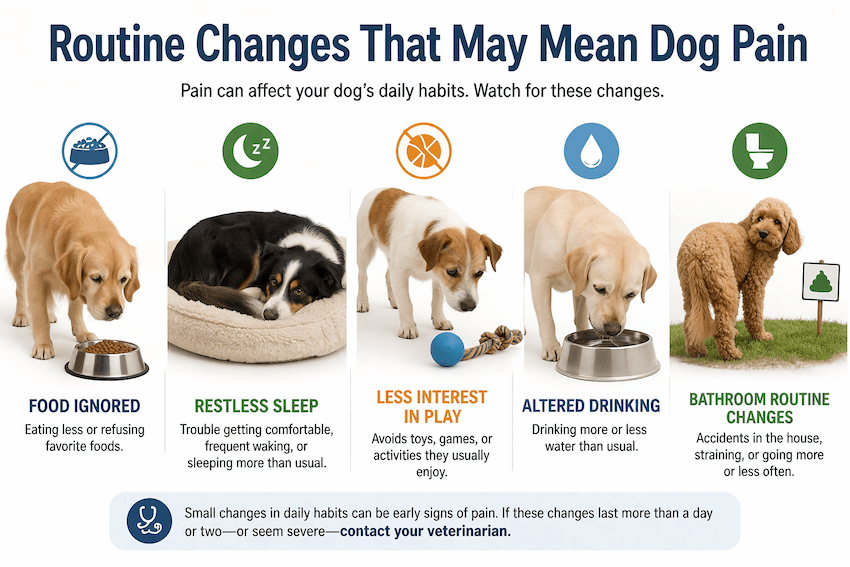
Step 3: Check for Changes in Eating, Drinking, Sleep, and Daily Routine
Pay attention to appetite, water intake, sleep quality, bathroom habits, and interest in play or walks. A painful dog may eat less, stop chewing normally, sleep in odd positions, wake more often, or suddenly lose interest in usual activities.
These everyday changes matter because pain affects more than movement. Research on chronic pain in dogs has linked pain with reduced activity, appetite changes, and poorer sleep quality.
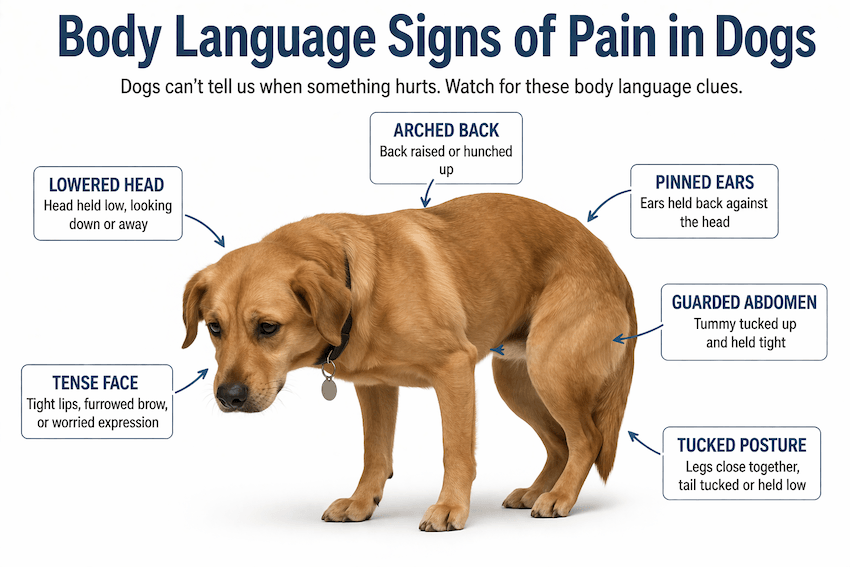
Step 4: Notice Body Language, Posture, and Facial Signs
Look at your dog’s posture and expression. Signs that can suggest pain include a tucked posture, tense abdomen, arched back, lowered head, pinned ears, lip licking, panting at rest, trembling, or a “worried” facial expression.
Pain assessment in dogs relies heavily on body language because they cannot describe what they feel. Veterinary pain guidance emphasizes observing posture, demeanor, and behavioral cues together rather than relying on a single sign.
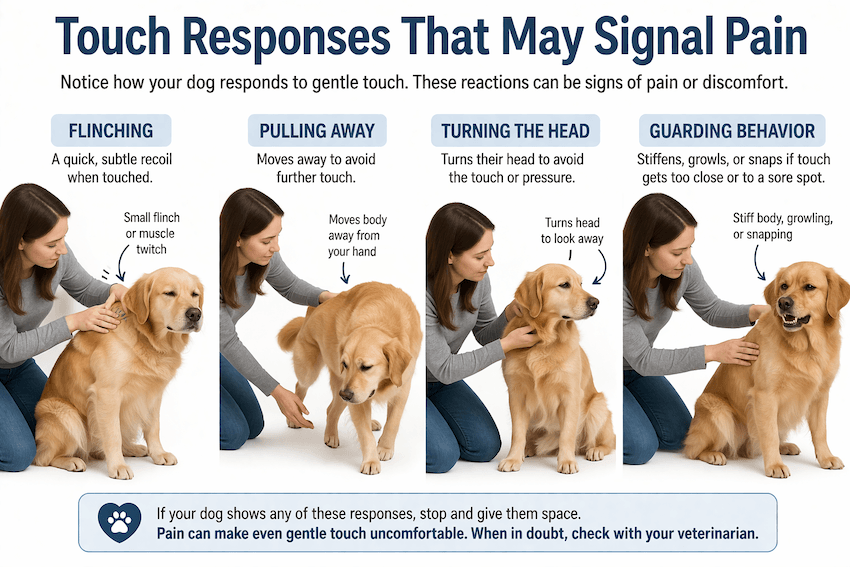
Step 5: Gently Check for Reactions to Touch Without Forcing It
If your dog is calm and safe to approach, gently observe whether they react when you touch certain areas during normal handling, such as while petting, drying paws, lifting into the car, or clipping a leash. Warning signs include flinching, turning suddenly, pulling away, freezing, growling, yelping, or guarding one area.
Do not press hard or repeatedly test a sore spot. Your job is to notice a reaction, not to confirm pain by provoking it. Pain can increase irritability or defensive behavior, especially if the dog expects handling to hurt.
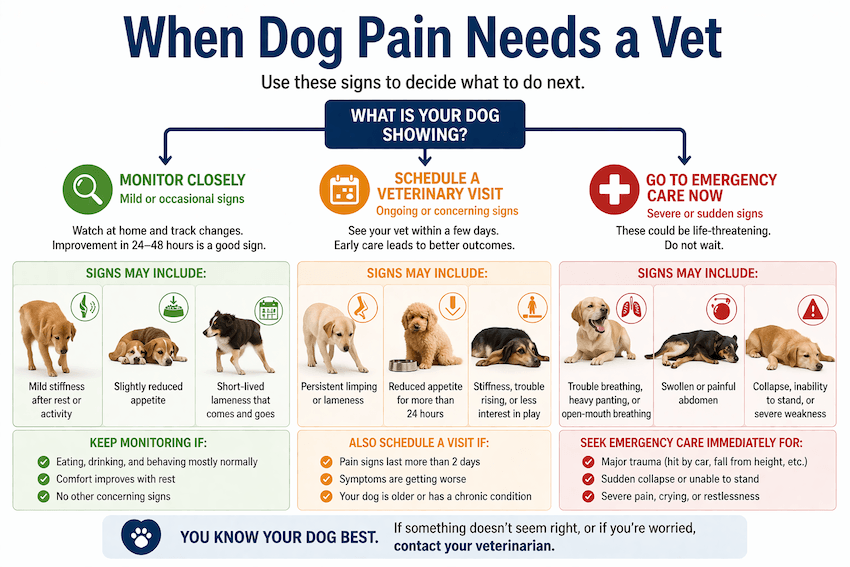
Step 6: Look at the Full Pattern and Decide How Urgent It Is
After observing your dog, ask whether you are seeing one mild change or a cluster of changes. One brief hesitation may not mean much, but limping, panting, reduced appetite plus hiding are more concerning.
Call your veterinarian promptly if signs are new, persistent, worsening, or affecting eating, sleep, or movement. Seek emergency care immediately for collapse, breathing difficulty, major injury, a swollen abdomen, inability to stand, uncontrolled bleeding, or severe distress.
What Research Says About Signs of Pain in Dogs
The 2022 AAHA pain management guidelines emphasize that recognizing pain in dogs depends on combining behavior changes, physical signs, and owner observations rather than waiting for one obvious signal. The guidelines also note that owner-reported changes are especially important for chronic pain, because those cases can be subtle at first.
WSAVA pain guidance makes a similar point: dogs are nonverbal patients, so pain is assessed through behavioral signs, likely causes, and careful observation over time. Clinically, that matters because a quiet, withdrawn dog may be just as painful as one that cries out.
A 2024 review on chronic pain in dogs reported common owner-noticed signs such as reduced activity, appetite changes, poorer sleep, altered posture, and gait changes, including stiffness or lameness. This helps explain why pain is often mistaken for normal aging, especially in older dogs.[1]
A 2025 Frontiers review of acute and chronic pain assessment in dogs describes a wide behavioral range that can include restlessness, lethargy, aggression, fearfulness, vocalization, self-directed attention to a body part, and changes in appetite or social behavior. Clinically, that means pain can look like a behavior problem when the real issue is discomfort.[2]
Additional Tips for Telling if Your Dog Is in Pain
Small details are often what make pain easier to recognize in dogs, especially when the signs are mild or inconsistent. Here are some practical ways to observe patterns more carefully and notice changes that may otherwise be easy to miss.
| Tip | Why It Helps | How to Apply It |
|---|---|---|
| Compare to normal | Small changes stand out better against your dog’s baseline. | Think about appetite, sleep, play, and movement from last week. |
| Watch transitions | Pain often appears during rising, turning, jumping, or stairs. | Observe your dog after rest and during everyday movements. |
| Check daily patterns | Routine disruptions often reveal subtle ongoing discomfort. | Note changes in eating, sleeping, potty habits, and walks. |
| Use video clips | Short recordings help you notice signs you may miss live. | Film gait, posture, and difficult moments for vet review. |
| Look for clusters | Several mild signs together are more meaningful than one. | Count how many changes appeared at the same time. |
| Handle gently | Forceful checking can worsen pain or trigger defensive reactions. | Stop if your dog flinches, freezes, growls, or pulls away. |
| Track duration | Persistent signs are more concerning than brief isolated changes. | Write down when signs began and whether they worsen. |
| Call early | Early veterinary input can prevent worsening pain and complications. | Contact your vet when signs persist or limit normal activity. |
Common Mistakes When Trying to Tell if Your Dog Is in Pain
Pain in dogs is often overlooked because some warning signs are subtle, gradual, or easy to misread. This highlights common mistakes owners make, so it is easier to spot possible pain earlier and respond more appropriately.
| Mistake | Why It’s a Problem |
|---|---|
| Waiting for crying | Many painful dogs stay quiet and show only subtle changes. |
| Blaming old age | Stiffness and slowing down may reflect pain, not aging alone. |
| Checking too roughly | Hard handling can increase pain and create fear or guarding. |
| Watching one sign | Single signs mislead; pain is usually judged by patterns. |
| Delaying the vet | Persistent pain may worsen while the underlying cause progresses. |
| Ignoring behavior shifts | Hiding, clinginess, or irritability may be pain-related changes. |
| Giving human medicine | Many human pain drugs are dangerous or toxic to dogs. |
| Missing emergencies | Collapse, breathing trouble, or abdominal swelling need urgent care. |
What to Do After Noticing Signs of Pain in Dogs
If you notice signs of pain, stay calm and reduce unnecessary activity right away. Let your dog rest in a quiet, comfortable area, and avoid rough play, jumping, stairs, or long walks until you have a better sense of what is going on. Think about when the signs started and whether they appeared suddenly or have been building over time. Pay close attention to whether your dog seems stable, slowly worsening, or clearly distressed.
Over the next several hours or day, watch for changes in movement, appetite, drinking, bathroom habits, sleep, posture, reaction to touch, and overall behavior. Notice whether your dog is getting up normally, walking comfortably, resting better, or becoming more withdrawn or restless. It helps to write down what you see and when you see it, especially if the signs come and go. Short phone videos of walking, rising, or other concerning moments can also be useful to share with your veterinarian.
Contact a veterinarian if the signs persist, worsen, or start interfering with normal eating, walking, or resting. Get prompt veterinary attention if your dog has trouble walking, changes in breathing, collapse, repeated vomiting, abdominal swelling, or is unable to urinate. Do not give human pain medications unless a veterinarian specifically instructs you to do so, because many are unsafe for dogs. When in doubt, a timely call to your vet is the safest next step.
Frequently Asked Questions
The Bottom Line
Learning how to tell if your dog is in pain comes down to noticing changes early and taking them seriously. Dogs often show pain in subtle ways, so shifts in behavior, movement, posture, appetite, or sleep can be important even when there is no obvious injury. The sooner you recognize those signs, the sooner you can protect your dog from unnecessary suffering and get the right help. When in doubt, trust the pattern you are seeing and contact your veterinarian, especially if the signs are persistent, worsening, or severe.