
How to Comfort a Dog With a Fever: 6 At-Home Tips (Vet-Approved)


Canine Bible is reader-supported. We receive affiliate commissions via some of our links. Learn more.
To comfort a dog with a fever, keep them calm, cool, hydrated, and closely monitored while you contact your veterinarian for guidance. Do not give human fever medicine unless your vet specifically tells you to, because many common pain relievers are dangerous for dogs. A fever is usually a sign that the body is fighting infection, inflammation, heat stress, toxin exposure, or another underlying problem. Your dog may need rest and gentle support at home, but some fever signs require urgent veterinary care. The tricky part is knowing when cooling, water, and quiet care are enough—and when waiting could put your dog at risk. Temperature readings, behavior changes, appetite, breathing, and other symptoms all help determine the next step. This guide explains how to comfort your dog safely, what not to do, and when a fever should be treated as an emergency.
Dog Fever Comfort and Safety Overview
| Key Point | What It Means for Your Dog |
|---|---|
| Supports comfort | A quiet, cool resting area helps reduce stress while your dog’s body responds to the underlying problem. |
| Protects hydration | Fresh water should be available because fever can increase fluid needs and make dehydration more likely. |
| Avoids unsafe medicine | Human fever reducers can be toxic to dogs, so medication should only be given with veterinary direction. |
| Tracks severity | Temperature, appetite, energy, breathing, vomiting, diarrhea, and pain signs help show whether the fever is worsening. |
| Guides vet timing | A mild fever may need monitoring, but high fever, weakness, collapse, or worsening symptoms require urgent veterinary care. |
| Clarifies the cause | Fever is a symptom, not a diagnosis, and may be linked to infection, inflammation, toxins, heat illness, or other health problems. |
| Supports recovery | Rest, gentle care, and prompt veterinary guidance give your dog the safest path back to normal behavior and appetite. |
What to Know Before Comforting a Dog With a Fever
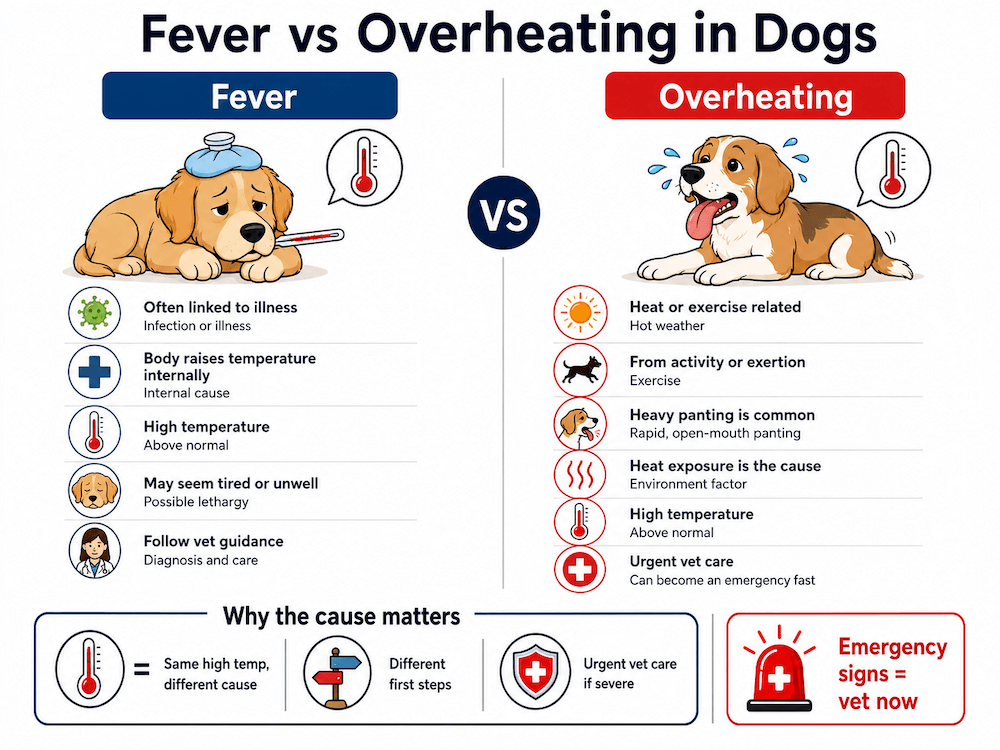
A dog with a fever may look tired, clingy, restless, shaky, or uninterested in food. Some dogs hide, pant, drool, or seem sore when touched, while others only show subtle changes in energy or appetite. A warm nose or warm ears can raise suspicion, but they are not reliable enough to confirm a fever on their own.
It is also important to separate true fever from heat-related overheating. A dog who becomes hot after exercise, being outside in humid weather, sitting in a car, having a seizure, or struggling to breathe may be dealing with hyperthermia or heatstroke rather than a simple fever. That situation can become dangerous very quickly and needs urgent veterinary care. When in doubt, treat a high temperature with serious symptoms as an emergency.
Safe at-home support is reasonable only when your dog is stable, breathing normally, able to rest, and not showing severe symptoms. Even then, the fever should be discussed with a veterinarian, especially if the reading is clearly above normal or your dog is not acting like themselves. Comfort care should help your dog feel calm and supported, not delay diagnosis when something more serious is happening.


How to Check if Your Dog May Have a Fever
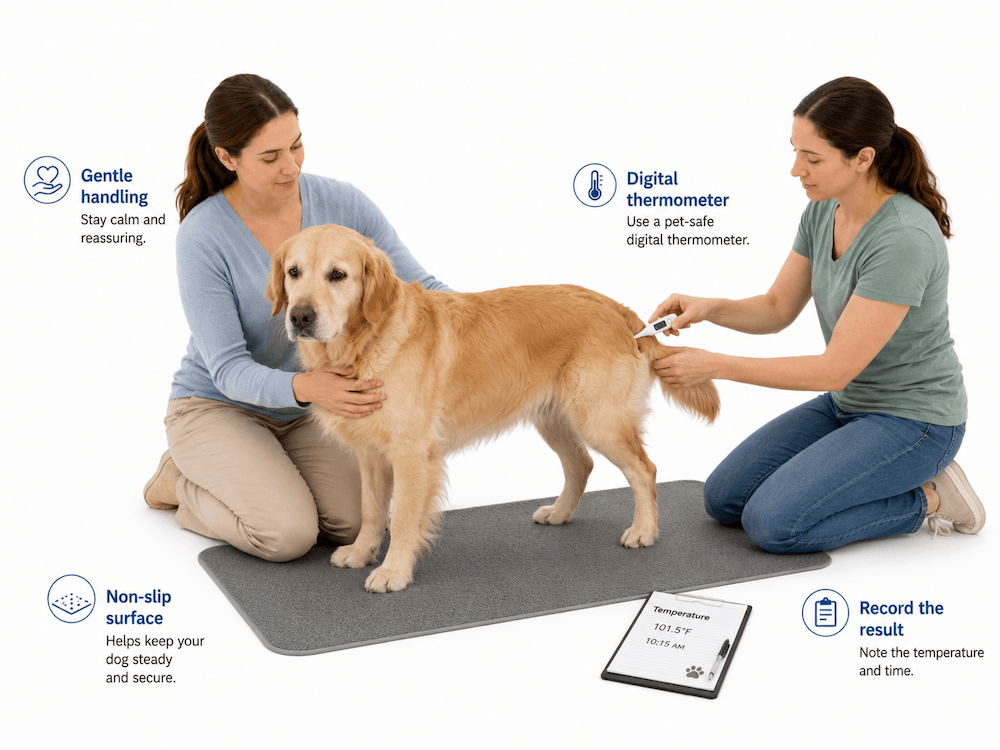
The most accurate at-home method to tell if your dog has a fever is a rectal temperature using a digital thermometer made for quick readings. Ear thermometers can be less reliable unless they are designed for pets and used correctly, and touching the nose, ears, or belly is only a rough clue.
Prepare before you start so the process is quick and calm. Have another adult gently steady your dog if needed, use lubricant, and stop if your dog panics or resists strongly. The goal is to collect useful information without creating a bite risk or making a sick dog more stressed.
| Supply | Why It Helps | How to Use It |
|---|---|---|
| Digital thermometer | Gives a useful temperature reading. | Label it for pet use only. |
| Lubricant | Makes rectal temperature-taking more comfortable. | Apply a small amount before insertion. |
| Fresh water | Supports hydration during illness. | Offer small, frequent chances to drink. |
| Quiet bed | Helps your dog rest with less stress. | Place it in a cool, calm room. |
| Notebook | Tracks changes your vet may need. | Record temperature, symptoms, and timing. |
| Vet contact | Prevents delays if symptoms worsen. | Keep your clinic and ER numbers ready. |
Dog Fever Temperature and Symptom Guide
A number by itself does not tell the whole story. A dog with a moderate temperature but severe symptoms may need care faster than a dog with a slightly higher reading who is bright, drinking, and stable. Use the table as a practical guide, but rely on your veterinarian’s instructions for your dog’s specific situation.
| Reading or Pattern | What It May Mean | What to Do |
|---|---|---|
| Normal range | Your dog may still feel unwell. | Monitor symptoms and call if signs continue. |
| Slightly high | Stress, activity, or early illness may contribute. | Rest indoors and recheck as advised. |
| Clear fever | An underlying illness may need diagnosis. | Call your veterinarian for next steps. |
| High fever | Your dog may need prompt treatment. | Arrange same-day or urgent veterinary care. |
| Very high temperature | This can become dangerous quickly. | Seek emergency veterinary help immediately. |
| Normal temperature, severe signs | Serious illness can occur without fever. | Call urgently if your dog seems very sick. |
How to Comfort a Dog With a Fever Safely at Home
Comforting a feverish dog is mostly about reducing stress, supporting hydration, monitoring changes, and avoiding unsafe shortcuts. These steps are meant for a dog who is stable enough to rest at home while you contact your veterinarian.


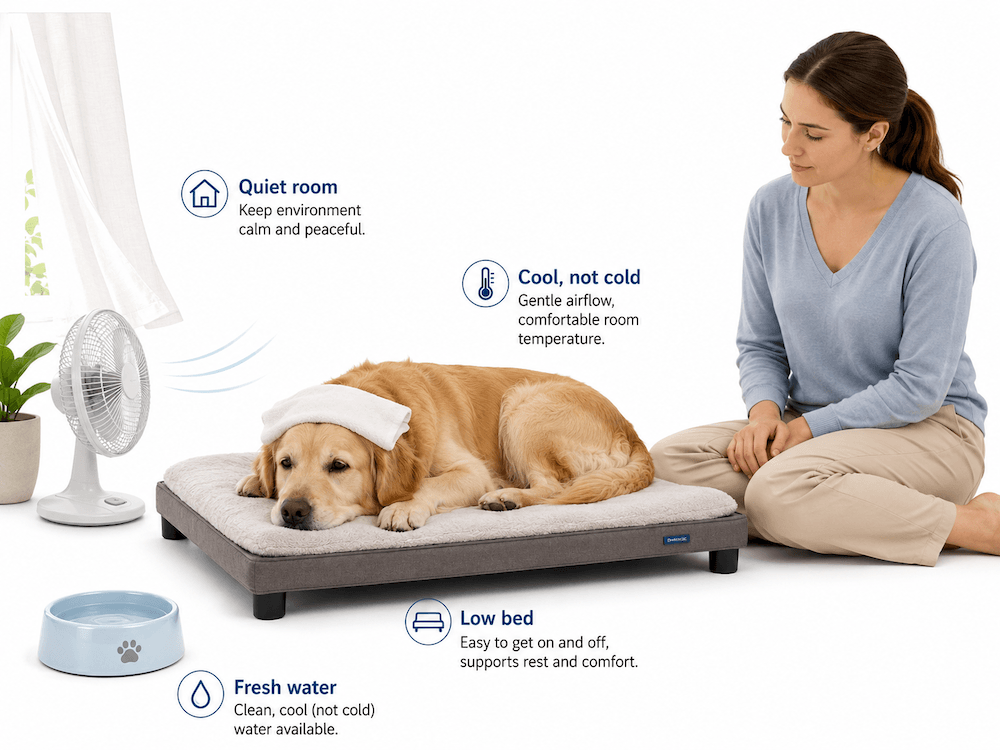
Step 1: Move Your Dog to a Calm, Cool Resting Area
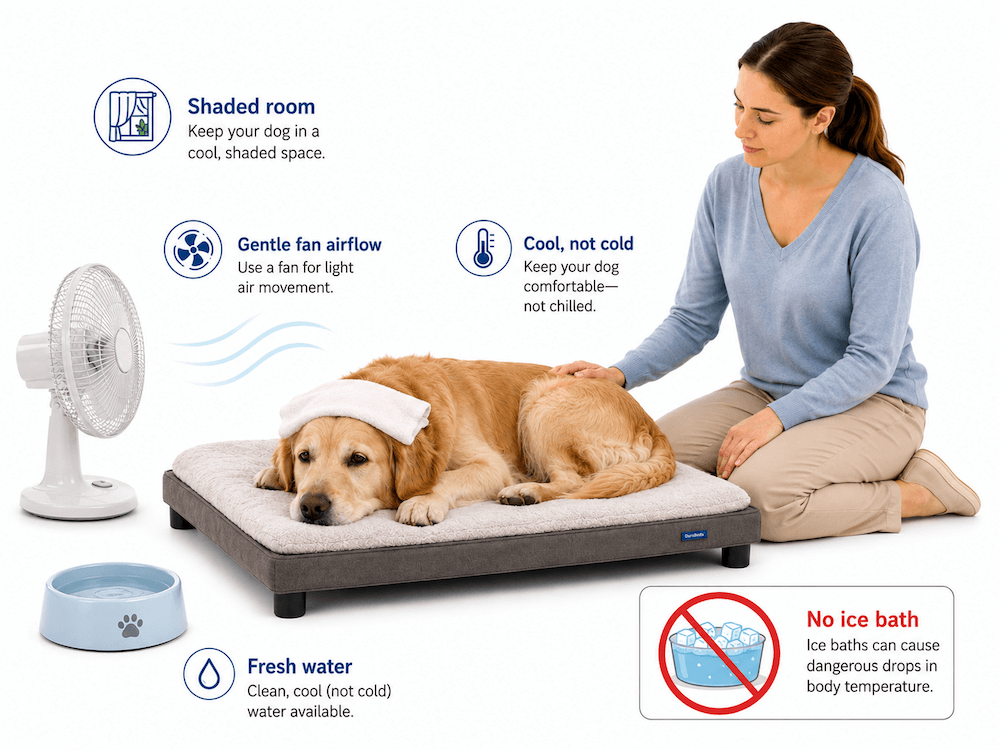
Choose a quiet room with good airflow, low noise, and a comfortable place to lie down. Keep the room cool, but avoid cold air, ice packs, or anything that makes your dog shiver. Let your dog rest somewhere you can easily monitor breathing, posture, and alertness.
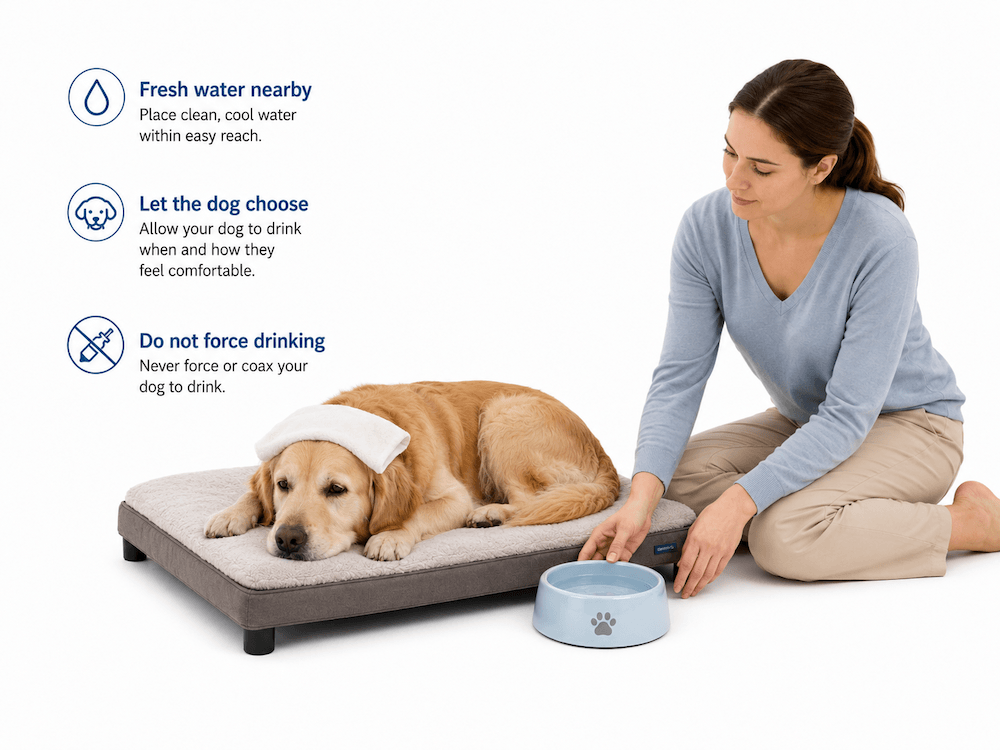
Step 2: Offer Water Without Forcing It
Place fresh water within easy reach and encourage small drinks. Do not syringe water into your dog’s mouth unless your veterinarian instructs you to, because weak or nauseous dogs can choke or inhale fluid. Call your vet if your dog will not drink, vomits water, or seems dehydrated.
Step 3: Take a Temperature Reading if It Is Safe
Use a lubricated digital rectal thermometer only if your dog can be handled calmly. Write down the temperature, time, and any symptoms you notice. If your dog is painful, panicked, or unsafe to handle, skip the reading and call your veterinarian.
Step 4: Keep Activity Very Low
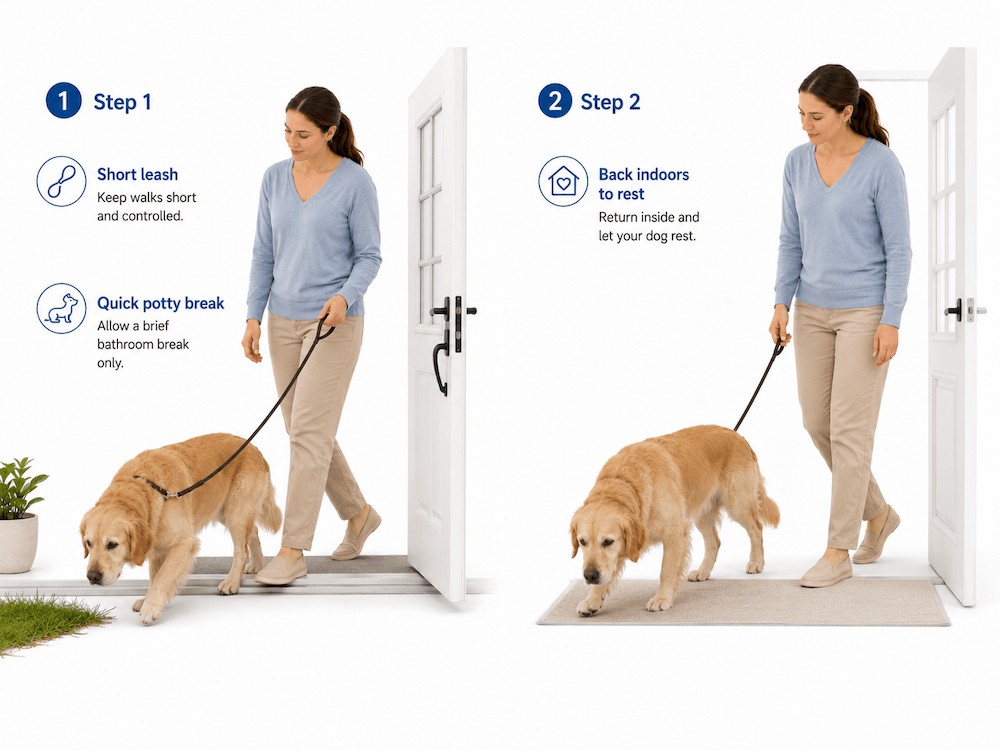
Skip walks, running, rough play, training, grooming, and unnecessary car rides unless you are going to the vet. Use short leash potty breaks only, then return your dog indoors to rest. If your dog struggles to stand, refuses to move, or seems painful, call your veterinarian promptly.
Step 5: Use Gentle Cooling, Not Aggressive Chilling
Use gentle cooling such as a comfortable room, shade, airflow, and access to water. Avoid ice baths, alcohol rubs, freezing towels, or prolonged cold-water soaking. If the high temperature followed heat exposure, heavy exercise, or being trapped in a hot space, seek urgent veterinary care.
Step 6: Call Your Veterinarian With Specific Details
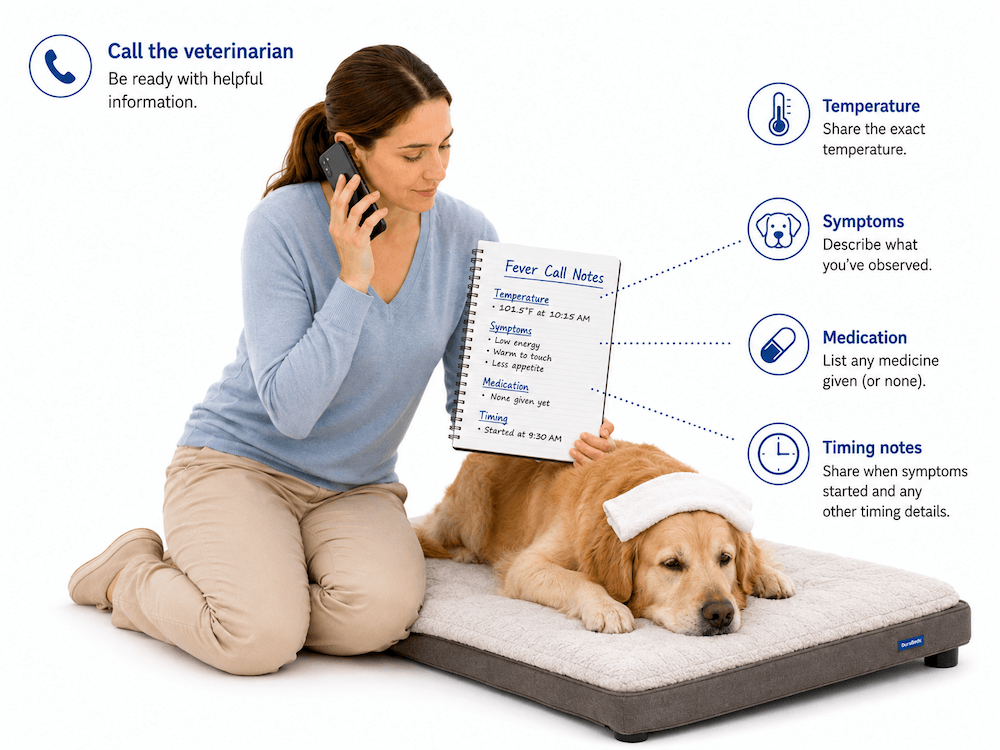
Give your veterinarian your dog’s temperature, age, breed, weight, symptoms, medications, recent vaccines, toxin risks, and how long the signs have been present. Mention vomiting, diarrhea, coughing, limping, pain, wounds, appetite changes, or drinking changes. If your dog is worsening and your clinic is closed, contact an emergency veterinary hospital.
What Not to Give a Dog With a Fever
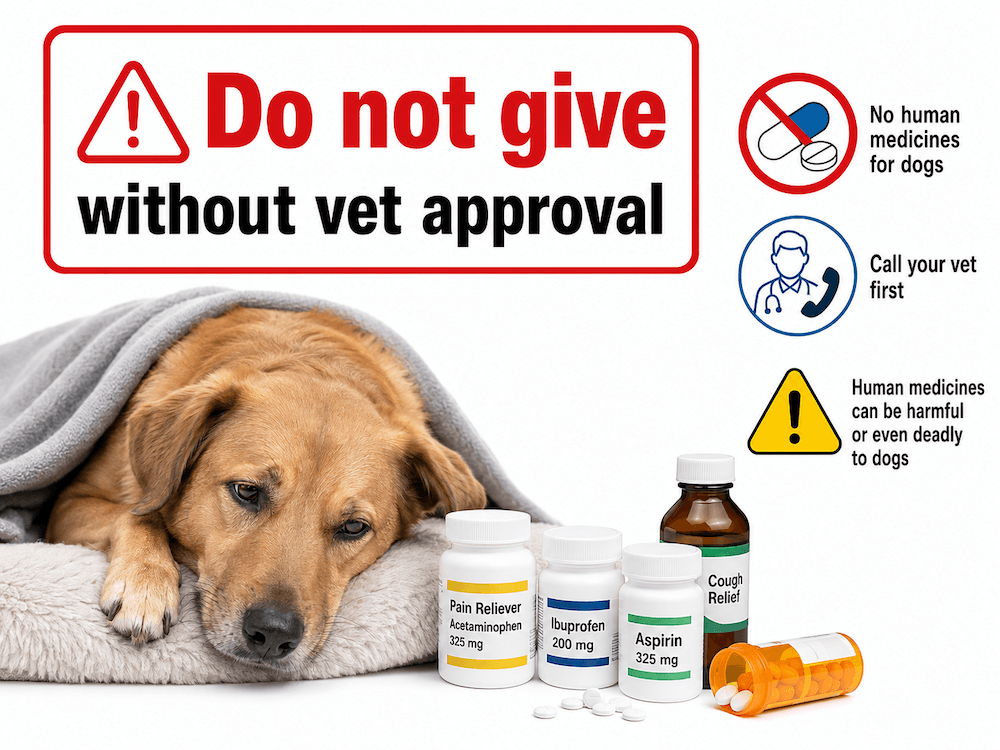
Do not give acetaminophen, ibuprofen, naproxen, aspirin, cold medicine, leftover antibiotics, herbal fever products, or another pet’s medication unless your veterinarian specifically directs it. Dogs process many drugs differently than people, and the wrong dose or product can cause stomach ulcers, kidney injury, liver damage, blood problems, or dangerous interactions.
Medication risks are higher if your dog is small, elderly, dehydrated, vomiting, pregnant, already taking other medications, or has kidney, liver, stomach, heart, or bleeding problems. If your dog has already swallowed a human medication, do not wait for symptoms to appear. Call your veterinarian, an emergency hospital, or a pet poison helpline with the product name, strength, amount, and time of exposure.
Helpful Tips for Comforting a Dog With a Fever
Small changes can make a sick dog feel more secure while you wait for veterinary guidance. The best comfort routine is quiet, predictable, and easy to monitor.
| Tip | Why It Helps | How to Apply It |
|---|---|---|
| Keep notes | Trends matter more than one moment. | Record temperature, appetite, drinking, and symptoms. |
| Reduce noise | Stress can make sick dogs more restless. | Limit visitors, children, and household activity. |
| Offer bland interest | Appetite changes help show severity. | Ask your vet before changing meals. |
| Use short potty breaks | Rest supports recovery during fever. | Go outside briefly on leash only. |
| Watch breathing | Breathing changes can signal urgency. | Check effort, rate, gum color, and panting. |
| Prepare transport | Fast action helps if symptoms worsen. | Keep keys, carrier, and vet numbers ready. |
Mistakes That Can Make a Dog With a Fever Worse
The most dangerous mistakes usually come from trying to treat a dog like a person. Human fever medicine, aggressive cooling, and “wait and see” delays can create bigger problems than the fever itself. Comfort care should be gentle, cautious, and paired with veterinary guidance.
| Mistake | Why It Is Risky | Safer Choice |
|---|---|---|
| Giving human medicine | Some pain relievers can poison dogs. | Use only veterinarian-approved medication. |
| Using ice baths | Overcooling can increase stress and shivering. | Use gentle airflow and a cool room. |
| Forcing water | Weak dogs may choke or aspirate. | Offer water calmly and call if refused. |
| Ignoring behavior | Collapse or confusion can mean emergency. | Watch energy, breathing, and awareness closely. |
| Exercising the dog | Activity can worsen dehydration and weakness. | Use short leash potty breaks only. |
| Waiting too long | The cause may worsen without treatment. | Call early when fever is clear. |
How to Tell if Fever Comfort Care Is Working
Comfort care is helping when your dog rests more easily, drinks small amounts, breathes normally, and remains responsive to your voice or gentle movement. A stable dog may still seem tired, but they should not become progressively weaker, more painful, more confused, or harder to wake. Improvement should be judged by the whole picture, not just whether the ears feel cooler.
Keep monitoring simple and consistent. Check your dog’s temperature only as often as your veterinarian advises, because repeated handling can stress a sick dog. Watch for appetite, water intake, urination, stool, vomiting, coughing, limping, gum color, breathing effort, and willingness to stand. If the pattern worsens or new symptoms appear, your dog needs veterinary guidance rather than more home care.
What to Monitor After Comforting a Dog With a Fever
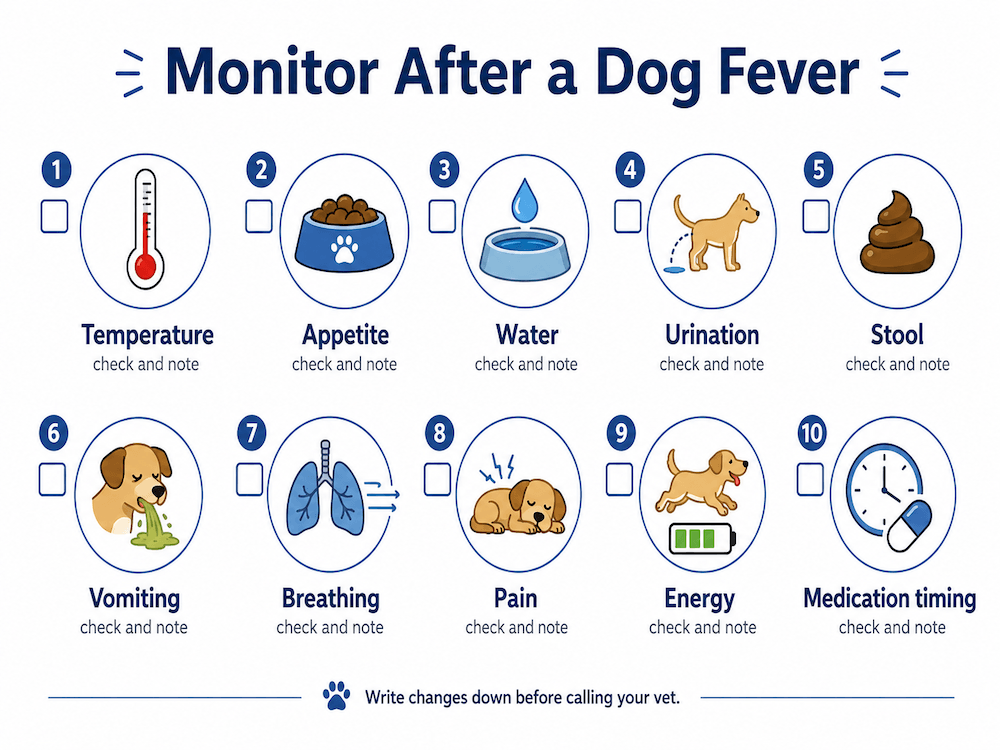
After your dog is settled, the next job is tracking whether the fever pattern is improving, staying the same, or getting worse. Write down the time of each temperature reading, any medication your veterinarian approved, appetite, water intake, urination, vomiting, diarrhea, coughing, pain signs, and energy level. This record can help your veterinarian decide whether your dog needs testing, fluids, medication, imaging, or emergency care.
Keep your dog’s routine simple until your veterinarian says otherwise. Avoid dog parks, daycare, strenuous walks, grooming, travel, and close contact with other pets if an infectious cause is possible. Wash bowls, bedding, and soiled areas as needed, and separate pets if one dog has vomiting, diarrhea, coughing, or nasal discharge. When your dog begins acting normal again, return to activity gradually rather than jumping straight back into exercise.
What Veterinary Research Says About Fever in Dogs
The Merck Veterinary Manual lists a dog’s normal rectal temperature range as 99.5°F to 102.5°F, which is why dogs often feel warmer than people even when they are not sick. Merck also explains that true fever involves the body’s temperature-control center being reset higher, while heatstroke and other hyperthermia causes raise temperature through different mechanisms and may require different emergency handling.
Veterinary references on fever of unknown origin describe infection, immune-mediated disease, inflammation, and cancer as important causes that may require a systematic diagnostic approach. A retrospective study of 50 dogs with fever reported that causes were often identifiable after diagnostic workups, with immune-mediated, infectious, and neoplastic diseases among the important categories.[1]
Medication safety is a major part of fever care. The FDA warns that human NSAIDs or unapproved NSAIDs do not have the same safety assurances in pets and can be harmful, while a veterinary toxicology review reported thousands of NSAID exposure incidents involving dogs and cats.
A review on heatstroke in dogs describes it as a severe heat disorder associated with body temperature elevation above about 41°C, which is one reason owners should not assume every high temperature is a simple fever. Dogs that become hot after heat exposure, exertion, seizures, or breathing difficulty need urgent veterinary care because the treatment priorities can be different from routine fever comfort.[2]
Frequently Asked Questions
The Bottom Line
Comforting a dog with a fever starts with calm, safe support: rest, fresh water, gentle cooling, and close monitoring. A fever is a sign that something else may be happening in your dog’s body, so the goal is not to treat the number alone but to watch the whole picture. Never give human fever medicine unless your veterinarian specifically approves it, because many common drugs can be dangerous for dogs. If your dog is weak, vomiting, refusing water, breathing abnormally, having trouble walking, or running a high temperature, contact a veterinarian right away. For mild cases, a quiet room, short potty breaks, hydration support, and good notes can help your dog stay comfortable while you get guidance. Trust your instincts if your dog seems unusually sick, because early veterinary care can prevent a fever from becoming a bigger emergency.