Cataracts in Dogs: Symptoms, Types, Causes, Signs & Prevention

Canine Bible is reader-supported. We receive affiliate commissions via some of our links. Learn more.
Cataracts are a common eye condition in dogs, especially in seniors and those with underlying health issues like diabetes. Many owners mistake early signs—such as a slightly cloudy eye, bumping into objects, or hesitation in unfamiliar spaces—as normal aging, when in fact they may indicate developing vision impairment. Left untreated, cataracts can progress and lead to significant vision loss or even blindness. The good news is that with proper care, many dogs with cataracts can continue to live happy, fulfilling lives. Advances in veterinary ophthalmology, particularly surgical treatment, can often restore vision, while supportive at-home care helps dogs adapt to changes in sight. This guide covers everything you need to know about cataracts in dogs—from causes and symptoms to diagnosis, treatment options, prevention, and daily management—so you can protect your dog’s vision and overall quality of life.
What Are Cataracts in Dogs?
Cataracts, in simple terms, are the clouding of the eye’s lens, which leads to impaired vision and, in some cases, blindness. In dogs, cataracts occur when the normally clear lens becomes opaque, preventing light from properly reaching the retina. This disruption affects how images are formed and gradually reduces visual clarity. As the cataract progresses, the cloudiness can worsen, eventually blocking vision entirely if left untreated.
Types
Cataracts can develop in several forms, each with different causes and patterns of progression:


| Type | Description |
|---|---|
| Inherited (Genetic) Cataracts | Common in certain breeds and can develop at a young age due to genetic predisposition. |
| Diabetic Cataracts | Caused by high blood sugar levels; often develop rapidly and can lead to sudden blindness. |
| Age-Related (Senile) Cataracts | Develop slowly in older dogs as part of the natural aging process. |
| Traumatic Cataracts | Result from injury to the eye, such as scratches, punctures, or blunt trauma. |
| Secondary Cataracts | Occur as a complication of other eye diseases like uveitis or retinal disorders. |
| Toxic or Nutritional Cataracts | Rare; caused by exposure to toxins or severe nutritional imbalances. |
Predisposed Dog Breeds for Cataracts in Dogs
Cataracts are often associated with aging, but certain dogs are more prone to developing them due to genetic predisposition, underlying health conditions like diabetes, or breed-related risk factors. Some breeds are especially susceptible to inherited cataracts that can appear early in life and progress over time.
| Category | Breeds | Notes on Risk Factors |
|---|---|---|
| Genetically Predisposed Breeds | Poodle, Cocker Spaniel, Siberian Husky, Boston Terrier, Miniature Schnauzer | Inherited cataracts are common; may develop early in life and progress over time. |
| Diabetes-Prone Breeds | Labrador Retriever, Golden Retriever, Dachshund, Beagle, Pug | Higher risk of diabetes, which often leads to rapid-onset cataracts and vision loss. |
| Senior Dogs (All Breeds) | All breeds (typically over 7–8 years) | Age-related (senile) cataracts develop gradually due to natural lens changes. |
| Brachycephalic Breeds | French Bulldog, Shih Tzu, Pekingese, Bulldog | Eye structure increases susceptibility to trauma and secondary eye conditions. |
| Working & Active Breeds | Border Collie, Australian Shepherd, Belgian Malinois | Higher exposure to eye injuries, increasing risk of traumatic cataracts. |
| Toy Breeds | Chihuahua, Yorkshire Terrier, Toy Poodle | May develop inherited or age-related cataracts; small eye size can complicate progression. |
Causes
Symptoms
Stages of Cataracts
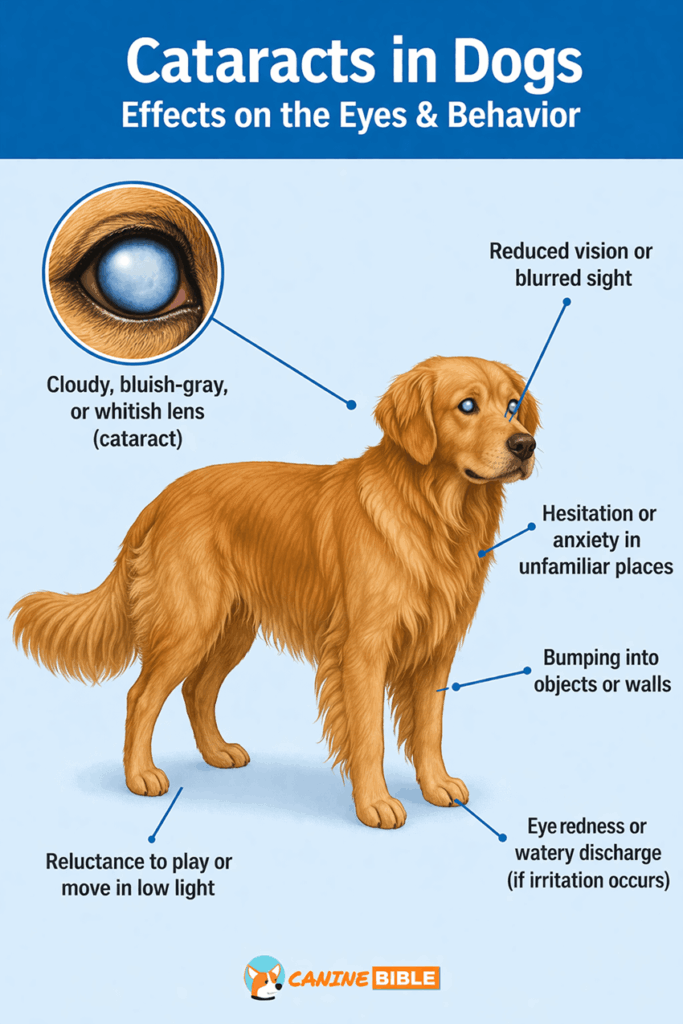
- Early stage: Mild lens cloudiness with little to no noticeable vision changes.
- Moderate stage: Increased cloudiness, causing blurred vision and occasional difficulty navigating.
- Advanced stage: Significant lens opacity leading to severe vision impairment or blindness, sometimes with secondary eye complications.
Top Ways to Prevent Cataracts in Dogs
While not all cataracts can be prevented—especially those caused by genetics—early care and proactive health management can reduce the risk or slow their progression.
| Prevention Strategy | Why It Helps | How to Do It |
|---|---|---|
| Manage Blood Sugar Levels | Diabetes is a leading cause of rapid cataract development. | Monitor glucose regularly, follow a vet-approved diet, and use insulin if prescribed. |
| Provide an Antioxidant-Rich Diet | Antioxidants protect the lens from oxidative damage. | Include vitamins C & E, beta-carotene, lutein; feed high-quality, balanced dog food. |
| Protect Eyes from Injury | Eye trauma can trigger cataract formation. | Avoid rough play near the face, use protective gear if needed, trim sharp objects at home. |
| Regular Eye Checkups | Early detection allows monitoring and timely intervention. | Schedule routine vet exams, especially for senior or high-risk breeds. |
| Manage Underlying Health Conditions | Diseases like uveitis or infections can lead to secondary cataracts. | Treat eye inflammation promptly and follow vet treatment plans closely. |
| Genetic Screening (for Breeding Dogs) | Reduces risk of inherited cataracts in future generations. | Test breeding dogs and avoid mating those with known genetic eye conditions. |
| Limit Exposure to Toxins | Certain toxins may contribute to lens damage. | Keep dogs away from harmful chemicals, medications, and unsafe foods. |
Actionable Resources
If you want to protect your dog’s vision or slow the progression of cataracts, here are some practical steps you can take under veterinary guidance:


How Cataracts Are Diagnosed in Dogs
Diagnosing cataracts requires a thorough veterinary eye examination to confirm lens clouding and rule out other eye conditions. Key steps include:
- Physical Eye Examination: A veterinarian evaluates the eye for cloudiness, vision response, and overall eye health.
- Ophthalmic Testing:
- Ophthalmoscopy: Used to examine the lens and retina for clarity and underlying issues.
- Slit-lamp examination: Provides a detailed view of the structures within the eye.
- Vision Assessment: Tests to determine how well your dog can see and respond to visual cues.
- Additional Tests:
- Blood tests: Often recommended to check for underlying conditions like diabetes.
- Ocular ultrasound: Used if the lens is too cloudy to see the retina clearly.
Early diagnosis is important because cataracts can progress over time—detecting them early allows for better management, monitoring, and consideration of treatment options such as surgery to preserve or restore vision.
Treatment & Care
The most effective treatment for cataracts in dogs is surgery (phacoemulsification), which can restore vision in many cases. If surgery isn’t an option, care focuses on managing underlying conditions (like diabetes), reducing eye inflammation, and regular monitoring. At home, keeping a consistent environment helps dogs adapt to vision changes and stay comfortable.
Always consult your veterinarian before starting any new treatment or supplement for cataracts. You can get personalized joint-care advice from an online registered vet anytime, anywhere through Dutch. You can also chat with an online vet to ask questions about managing your dog’s cataracts symptoms, treatment options, and lifestyle adjustments tailored to their condition.
Conventional Medical Treatments
| Treatments | Notes / Examples |
|---|---|
| Cataract Surgery (Phacoemulsification) | The most effective treatment; removes the cloudy lens and often replaces it with an artificial intraocular lens (IOL). |
| Anti-Inflammatory Eye Drops | Used to control inflammation (e.g., uveitis) before or after surgery; may improve comfort but do not cure cataracts. |
| Medications for Underlying Conditions | Managing diseases like diabetes is crucial to slow cataract progression and prevent complications. |
| Antibiotic Eye Drops | Prescribed if infection is present or after surgery to prevent complications. |
| Monitoring & Supportive Care | Regular eye exams to track progression; focus on maintaining quality of life if surgery is not an option. |
Nutritional Support & Supplements
| Supplement | Notes / Examples |
|---|---|
| Lutein & Zeaxanthin (View on Amazon) | Support eye health and protect the lens from oxidative damage; commonly used for vision support. |
| Omega-3 Fatty Acids (Fish Oil) (View on Amazon) | Reduce inflammation and support overall eye health, especially in dogs with underlying conditions. |
| Vitamin C & Vitamin E (View on Amazon) | Powerful antioxidants that help protect the lens from free radical damage. |
| Bilberry Extract (View on Amazon) | May improve circulation to the eyes and support retinal and lens health. |
| Zinc & Selenium (View on Amazon) | Essential minerals that contribute to antioxidant defense and eye tissue repair. |
| Vet vs. OTC Supplements | Veterinary-recommended products ensure proper dosing and safety; OTC supplements can vary in quality and effectiveness. |
Alternative & Integrative Therapies
| Therapy | Notes / Examples |
|---|---|
| Antioxidant Eye Drops | May help slow oxidative damage in early stages; not a cure but can support eye health. |
| Herbal Remedies | Natural extracts like bilberry or eyebright are sometimes used to support vision, though scientific evidence is limited. |
| Acupuncture | May improve circulation around the eyes and support overall eye health in some dogs. |
| Laser Therapy (Cold Laser) | Occasionally used to reduce inflammation and promote healing in surrounding eye tissues. |
| Dietary Therapy | Whole-food, antioxidant-rich diets may help reduce oxidative stress affecting the lens. |
| Homeopathic Treatments | Some owners use remedies for eye clarity support, but effectiveness is not strongly supported by research. |
| Vision Support & Environmental Adaptation | Not a treatment, but improving lighting, reducing obstacles, and maintaining routine helps dogs adapt to vision loss. |
Surgical Options
| Surgical Option | Notes / Examples |
|---|---|
| Phacoemulsification | Gold standard cataract surgery; uses ultrasound to break up and remove the cloudy lens. |
| Intraocular Lens (IOL) Implant | Artificial lens placed after cataract removal to restore near-normal vision. |
| Lens Removal Without Implant | Cataract is removed but no artificial lens is placed; vision improves but may remain slightly impaired. |
| Enucleation (Eye Removal) | Reserved for severe cases with pain, glaucoma, or complications when vision cannot be restored. |
Emotional & Lifestyle Impact
Cataracts affect more than just a dog’s vision—they can significantly impact daily life and emotional well-being. Dogs with vision loss may become more cautious, less playful, or anxious in unfamiliar environments, as reduced sight makes it harder to navigate, recognize people, or engage in normal activities.
For owners, it can be challenging to watch a dog struggle with declining vision, along with the adjustments required for their care. Daily routines may shift to include more guidance, safer walking environments, and consistent home layouts to prevent confusion or injury. With patience, reassurance, and small lifestyle changes, pet parents can help their dogs feel secure, confident, and comfortable despite vision loss.
Typical Annual Cost of Treating Cataracts
| Category | Estimated Annual Cost Range | Notes |
|---|---|---|
| Routine Vet Visits & Eye Exams | $200 – $600 | Includes ophthalmic exams and monitoring of cataract progression. |
| Diagnostic Testing | $300 – $1,000 | Includes bloodwork, eye ultrasounds, and pre-surgical evaluations. |
| Medications (Eye Drops, Anti-Inflammatories) | $200 – $800 | Used to manage inflammation, prevent complications, or treat underlying conditions. |
| Supplements & Nutritional Support | $200 – $1,000 | Antioxidants like lutein, omega-3s, and vitamins for eye health support. |
| Cataract Surgery (Per Eye) | $2,500 – $5,000 | Phacoemulsification with possible lens implant; typically a one-time cost per eye. |
| Post-Surgery Care & Follow-Ups | $300 – $1,000 | Includes medications, rechecks, and ongoing monitoring after surgery. |
| Insurance & Wellness Plans | $360 – $960 | Helps offset costs for diagnostics, surgery, and medications. |
| Typical Annual Range | Non-Surgical Cases: $600 – $2,000 | With Surgery: $3,000 – $8,000+ (per eye) | |
Cataract care can add up quickly—from diagnostic exams to possible surgery and follow-up care. Pet insurance can ease the financial burden and help ensure your dog gets the best treatment without compromise. If you want to compare plans and find out which providers offer the best coverage for eye conditions and surgeries, check out our full guide to the Best Pet Insurance for Dogs.
Frequently Asked Questions
The Bottom Line
Cataracts are a common eye condition in dogs, but they don’t have to define your dog’s life. While they can lead to vision loss, early detection, proper veterinary care, and thoughtful lifestyle adjustments can make a significant difference. With options like surgery, ongoing monitoring, and supportive home care, many dogs continue to live happy, safe, and fulfilling lives. The goal isn’t just preserving vision when possible—but ensuring your dog’s comfort, confidence, and quality of life every step of the way.