Pancreatitis in Dogs: Symptoms, Types, Causes, Signs & Prevention

Canine Bible is reader-supported. We receive affiliate commissions via some of our links. Learn more.
Pancreatitis is a common and potentially serious condition in dogs, involving inflammation of the pancreas that can disrupt digestion and overall health. Early signs—such as vomiting, abdominal pain, loss of appetite, and lethargy—are often mistaken for minor stomach upset, which can delay proper treatment. Left unmanaged, pancreatitis can lead to severe complications and recurring episodes. The good news is that with timely veterinary care and proper management, many dogs recover well and can maintain a good quality of life. Advances in veterinary treatment, along with at-home strategies like dietary control, weight management, and avoiding high-fat foods, play a key role in prevention and long-term care. This guide covers everything you need to know about pancreatitis in dogs—from causes and symptoms to diagnosis, treatment, prevention, and daily management—so you can better protect your dog’s health.
What Is Pancreatitis in Dogs?
Pancreatitis, in simple terms, is the inflammation of the pancreas, an organ that plays a vital role in digestion and blood sugar regulation. In dogs, it often occurs when digestive enzymes become activated too early, causing the pancreas to essentially begin digesting itself. This leads to irritation, pain, and inflammation that can range from mild to life-threatening. As the condition progresses, it can disrupt normal digestion and affect other organs, making early recognition and treatment essential.
Types
Pancreatitis in dogs can take several forms, each with different causes and levels of severity:
| Type | Description |
|---|---|
| Acute Pancreatitis | A sudden inflammation of the pancreas that can range from mild discomfort to a life-threatening emergency. |
| Chronic Pancreatitis | Long-term or recurring inflammation that may cause ongoing digestive problems and gradual damage to pancreatic tissue. |
| Mild Pancreatitis | Causes less severe symptoms and often improves with prompt veterinary care, fluid support, and dietary management. |
| Severe Pancreatitis | A more dangerous form that can lead to dehydration, intense abdominal pain, systemic inflammation, and complications affecting other organs. |
| Recurrent Pancreatitis | Occurs when a dog has repeated flare-ups, often triggered by underlying risk factors such as diet, obesity, or other health conditions. |
| Secondary Pancreatitis | Develops alongside other medical issues, such as endocrine disease, high-fat intake, certain medications, or gastrointestinal disorders. |
Predisposed Dog Breeds
Pancreatitis can affect dogs of any age or breed, but some are more prone to developing the condition due to genetic factors, metabolism, or body type. Breeds such as Miniature Schnauzers, Yorkshire Terriers, and Cocker Spaniels are considered at higher risk, especially when combined with factors like obesity or a high-fat diet.


| Size / Group | Breeds | Notes on Risk Factors |
|---|---|---|
| Small Breeds (High Risk) | Miniature Schnauzer, Yorkshire Terrier, Dachshund, Cocker Spaniel | Higher risk of fat metabolism disorders and hyperlipidemia, making them more prone to pancreatitis. |
| Medium Breeds | Beagle, English Bulldog, Border Collie | Prone to overeating and weight gain, which increases pancreatic stress, especially on high-fat diets. |
| Large Breeds | Labrador Retriever, Golden Retriever, Boxer | Obesity and dietary indiscretion (e.g., eating fatty foods) are common triggers. |
| Toy Breeds | Poodle (Toy & Miniature), Chihuahua | Sensitive digestive systems; even small dietary changes or rich foods can trigger inflammation. |
| Overweight Dogs (All Breeds) | All breeds | Excess body fat increases the risk of pancreatitis and worsens severity of episodes. |
| Dogs with Underlying Conditions | All breeds | Conditions like diabetes, hypothyroidism, or high triglyceride levels significantly raise the risk. |
Causes
Symptoms
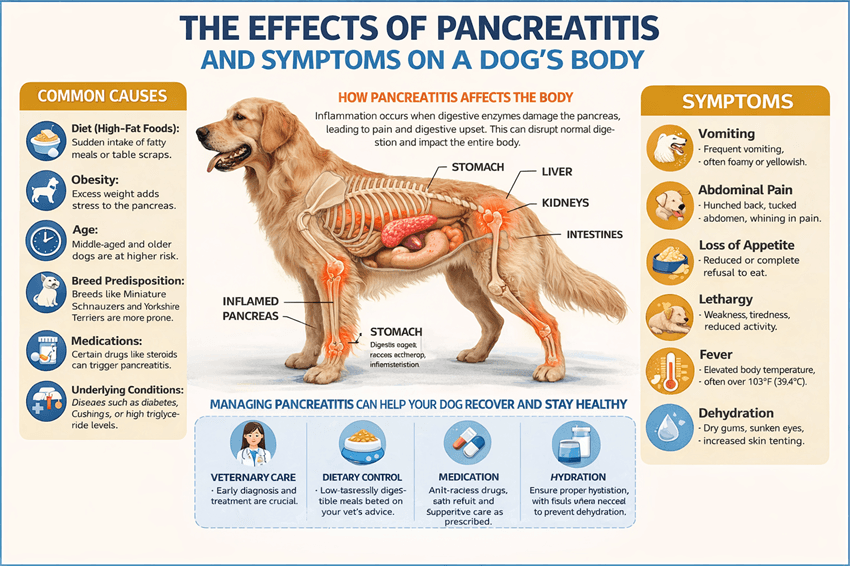
Pancreatitis in dogs is a serious condition that affects the digestive system and overall health. Early signs can be subtle—such as reduced appetite or mild lethargy—but often progress quickly if untreated. Common symptoms include vomiting, abdominal pain (often seen as a hunched posture), diarrhea, loss of appetite, lethargy, fever, and dehydration. In severe cases, dogs may become weak, collapse, or develop complications affecting other organs.
Recognizing these signs early and seeking prompt veterinary care is essential to prevent complications and support your dog’s recovery and quality of life.
Stages of Pancreatitis in Dogs
- Early stage (Mild): Slight appetite loss, mild vomiting
- Moderate stage: Vomiting, pain, lethargy.
- Advanced stage: Intense pain, dehydration, complications.
Top Ways to Prevent Pancreatitis in Dogs
Because pancreatitis can be a serious and recurring condition, prevention and proactive care are essential. With proper diet, weight management, and regular veterinary checkups, the risk of flare-ups can be reduced and your dog’s overall health better protected.


| Prevention Strategy | Why It Helps | How to Do It |
|---|---|---|
| Maintain a Healthy Weight | Obesity increases the risk of pancreatitis and worsens inflammation. | Feed controlled portions, avoid frequent treats, and monitor body condition regularly. |
| Low-Fat, Balanced Diet | High-fat meals are a major trigger for pancreatitis episodes. | Choose vet-recommended low-fat dog food and avoid fatty table scraps. |
| Avoid Sudden Diet Changes | Rapid dietary shifts can stress the pancreas and trigger inflammation. | Introduce new foods gradually over 5–7 days. |
| Limit Table Scraps & Human Food | Rich, greasy foods can overload the pancreas and cause flare-ups. | Avoid feeding leftovers, especially fatty meats, fried foods, and dairy. |
| Manage Underlying Conditions | Diseases like diabetes or high triglycerides increase pancreatitis risk. | Work with your vet to control chronic conditions through diet and medication. |
| Regular Veterinary Checkups | Early detection of risk factors helps prevent severe episodes. | Schedule routine exams and blood tests, especially for at-risk dogs. |
| Be Cautious with Medications | Certain drugs can increase the risk of pancreatic inflammation. | Only give medications prescribed by a veterinarian and discuss potential side effects. |
Actionable Resources
If you want to prevent or manage pancreatitis in your dog, here are some helpful resources to explore with your veterinarian:
How Pancreatitis Is Diagnosed in Dogs
Diagnosing pancreatitis requires a thorough veterinary evaluation, as symptoms can mimic other digestive issues. Key steps include:
- Physical Examination: A vet checks for abdominal pain, dehydration, fever, and overall condition
- Imaging:
- Ultrasound – most useful for identifying inflammation and changes in the pancreas
- X-rays – may help rule out other causes of vomiting or abdominal pain
- Blood Tests: Used to detect elevated pancreatic enzymes and assess organ function.
- Specialized Tests: Pancreas-specific tests (such as canine pancreatic lipase) help confirm the diagnosis.
- Fluid & Electrolyte Assessment: Evaluates dehydration and imbalances caused by vomiting or diarrhea
Early diagnosis is crucial because pancreatitis can progress quickly—prompt treatment helps reduce complications and improve recovery outcomes.
Treatment & Care
Pancreatitis is a serious and sometimes life-threatening condition in dogs, but it doesn’t have to define their quality of life. With early recognition, proper veterinary care, and consistent dietary management, many dogs recover well and avoid future flare-ups. By maintaining a low-fat diet, keeping your dog at a healthy weight, and monitoring for early warning signs, you can significantly reduce the risk of recurrence.
Always consult your veterinarian before starting any new treatment or supplement for pancreatitis. You can get personalized joint-care advice from an online registered vet anytime, anywhere through Dutch. You can also chat with an online vet to ask questions about managing your dog’s pancreatitis symptoms, treatment options, and lifestyle adjustments tailored to their condition.
Conventional Medical Treatments
| Treatments | Benefits / Role |
|---|---|
| Intravenous (IV) Fluid Therapy | Rehydrates the dog, supports circulation, and helps stabilize the pancreas during acute episodes. |
| Pain Management | Medications such as opioids or other analgesics relieve abdominal pain and improve comfort. |
| Anti-Nausea & Anti-Vomiting Drugs | Drugs like maropitant or ondansetron help control vomiting and reduce gastrointestinal distress. |
| Low-Fat Prescription Diet | Reduces pancreatic stimulation and supports recovery while preventing future flare-ups. |
| Antibiotics (if needed) | Used when secondary infection is suspected, though not always required in uncomplicated cases. |
| Hospitalization & Supportive Care | Severe cases require close monitoring, electrolyte correction, and intensive supportive treatment. |
Supplement Support
| Supplement / Nutrient | Benefits / Role |
|---|---|
| Low-Fat Diet (Primary Support) | Reduces pancreatic workload and helps prevent flare-ups by limiting fat digestion demands. |
| Highly Digestible Proteins | Supports recovery while being gentle on the digestive system and easier to absorb. |
| Omega-3 Fatty Acids (Fish Oil) | May help reduce inflammation, but should be used cautiously and under veterinary guidance due to fat content. |
| Probiotics | Support gut health and help restore balance in the digestive system after inflammation or illness. |
| Antioxidants (Vitamin E, Vitamin C) | Help reduce oxidative stress and support overall cellular health during recovery. |
| Vitamin B12 (Cobalamin) | Often depleted in dogs with chronic pancreatitis; supports energy levels and digestive function. |
| Electrolytes | Help maintain hydration and balance, especially important during vomiting or fluid loss. |
| Digestive Enzymes | May aid digestion in chronic cases where pancreatic function is impaired. |
| Small, Frequent Meals | Reduces strain on the pancreas by spreading digestion over smaller portions throughout the day. |
Alternative & Integrative Therapies
| Therapy | Benefits / Role |
|---|---|
| Acupuncture | May help reduce pain, nausea, and inflammation while supporting overall recovery. |
| Herbal Support (Vet-Guided) | Certain herbs may support digestive health and reduce inflammation, but must be used under veterinary supervision. |
| Probiotic Therapy | Supports gut health, improves digestion, and helps restore balance after gastrointestinal upset. |
| Digestive Enzyme Support | Assists in breaking down food in dogs with reduced pancreatic function, especially in chronic cases. |
| Massage Therapy | Promotes relaxation, reduces stress, and may improve circulation during recovery. |
| Stress Reduction & Calm Environment | Minimizes triggers that can worsen digestive issues and supports healing. |
| Holistic Dietary Planning | Customized low-fat, easily digestible meal plans tailored to the dog’s condition and recovery stage. |
Surgical Options
| Surgical Option | Benefits / Role |
|---|---|
| Arthroscopy | Minimally invasive surgery to clean the joint and reduce pain. |
| Joint Replacement | Hip or elbow replacement in severe cases; restores mobility and reduces pain. |
| Arthrodesis (Joint Fusion) | Stabilizes a damaged joint by fusing bones together, eliminating painful movement. |
| Corrective Surgeries | Used in cases of hip or elbow dysplasia to improve alignment, reduce pain, and preserve joint function. |
Emotional & Lifestyle Impact
Pancreatitis affects more than just a dog’s digestion—it can significantly impact their daily life and overall well-being. Dogs experiencing flare-ups may become lethargic, lose interest in food, or appear uncomfortable due to abdominal pain, which can limit their normal activity and enjoyment.
For owners, the experience can be stressful, especially when managing sudden episodes or strict dietary needs. Daily routines often shift toward carefully controlled feeding, avoiding high-fat treats, and closely monitoring for early warning signs. Frequent vet visits and ongoing care may also be necessary. With consistency, attention, and the right support, pet parents can create a stable routine that helps reduce flare-ups and keeps their dog comfortable, maintaining a good quality of life.
Typical Annual Cost of Treating Pancreatitis in Dogs
| Category | Estimated Cost Range | Notes |
|---|---|---|
| Initial Vet Visit & Diagnostics | $200 – $800 | Includes exams, blood tests, ultrasound, or pancreatic enzyme tests. |
| Medications | $100 – $500 | Pain relief, anti-nausea drugs, and supportive medications. |
| Prescription Low-Fat Diet | $300 – $1,000/year | Specialized food to manage and prevent recurrence. |
| Hospitalization (Acute Cases) | $500 – $3,000+ | IV fluids, monitoring, and intensive care depending on severity. |
| Follow-Up Visits & Monitoring | $200 – $600 | Repeat exams and bloodwork for recovery and long-term management. |
| Chronic Management | $300 – $1,200/year | Ongoing diet, supplements, and occasional medications for recurrent cases. |
| Insurance & Wellness Plans | $360 – $960 | Can help offset emergency and hospitalization costs. |
| Typical Cost Range | Mild Cases: $300 – $1,500 | Severe / Hospitalized Cases: $1,500 – $5,000+ | |
Pancreatitis care can become costly—especially with emergency visits, hospitalization, and ongoing dietary management. Pet insurance and wellness plans can help reduce the financial burden and ensure your dog receives timely treatment without compromise. If you want to compare plans and find out which providers offer the best coverage for pancreatitis and digestive conditions, check out our full guide to the Best Pet Insurance for Dogs and Best Pet Wellness Plans.
Other Health Issues Related to Pancreatitis in Dogs
As pancreatitis progresses or becomes recurrent, dogs may develop additional health complications, and some symptoms may be linked to these conditions rather than pancreatitis alone.
- Dehydration
- Electrolyte Imbalances
- Chronic Digestive Issues
- Weight Loss
- Diabetes Mellitus
- Liver Disease
- Gallbladder Disease
- Intestinal Inflammation
- Malabsorption of Nutrients
- Weakness / Lethargy
- Decreased Appetite
- Vomiting & Diarrhea (chronic cases)
- Systemic Inflammation
- Organ Dysfunction (in severe cases)
Frequently Asked Questions
The Bottom Line
Pancreatitis is a serious and potentially life-threatening condition in dogs, but it doesn’t have to define their lives. While some cases can recur, early recognition, prompt veterinary care, and consistent dietary management can make a significant difference in recovery and prevention. By maintaining a low-fat diet, managing your dog’s weight, and avoiding known triggers, you can help reduce the risk of future episodes. With the right care and attention, many dogs with pancreatitis go on to live comfortable, happy, and healthy lives.