What Can I Give My Dog for Pain at Home? Safe Options & What to Avoid


Canine Bible is reader-supported. We receive affiliate commissions via some of our links. Learn more.
The safest thing you can give your dog for pain at home is comfort care and only medication approved by your veterinarian. Do not give human pain relievers like ibuprofen, naproxen, acetaminophen, or aspirin unless your vet specifically tells you to. Pain in dogs can come from injuries, arthritis, stomach problems, dental disease, infections, or hidden emergencies, so the cause matters just as much as the symptom. Some mild soreness may improve with rest, restricted activity, soft bedding, and close monitoring, but other signs need urgent veterinary care. The challenge is that dogs often hide pain, and a medication that seems harmless to people can be dangerous or even fatal for pets. This guide explains what is safe, what to avoid, when to call your vet, and how to help your dog feel more comfortable at home.
Common Signs of Pain in Dogs
| Pain Sign | What It May Mean for Your Dog |
|---|---|
| Limping or stiffness | Trouble walking, rising, jumping, or climbing stairs may point to joint pain, injury, arthritis, or soreness. |
| Low energy | A painful dog may sleep more, avoid play, or seem unusually tired even without heavy activity. |
| Appetite changes | Eating less, refusing treats, or chewing differently can happen when pain affects the mouth, stomach, back, or overall comfort. |
| Restlessness | Pacing, shifting positions, or struggling to settle may mean your dog cannot get comfortable. |
| Panting or whining | Heavy panting, crying, trembling, or vocalizing can be signs of discomfort, stress, or worsening pain. |
| Behavior changes | Hiding, clinginess, irritability, or snapping can be a dog’s way of protecting a painful area. |
| Urgent warning signs | Sudden collapse, severe bloating, trouble breathing, major injury, or intense pain should be treated as a veterinary emergency. |
What Can I Give My Dog for Pain at Home?
The safest thing you can give your dog for pain at home is supportive comfort care, such as rest, restricted activity, soft bedding, gentle handling, and a call to your veterinarian for medication guidance. You should not give human pain relievers such as ibuprofen, naproxen, acetaminophen, or aspirin unless your veterinarian specifically instructs you to do so, because over-the-counter human pain medicines can be dangerous or even deadly to pets.
Pain in dogs is a symptom, not a diagnosis. A stiff senior dog after exercise, a limping puppy, a dog with belly pain, and a dog recovering from surgery may all need very different treatment plans. Recognizing pain and identifying whether it is acute or chronic are key parts of safe treatment, especially because owner observations often help detect subtle pain changes at home.
Remember to ALWAYS consult your veterinarian before giving your dog any pain medication, supplement, or home remedy. If you can’t reach your vet, you can chat live with a registered online veterinary professional via our online vet chat or video chat support (24 hours a day, 7 days a week). Or use Chewy’s online vet services (6 a.m. – midnight ET).
Understanding Your Dog’s Pain Patterns at Home
Dogs rarely show pain in one obvious way. Some cry or limp, but many become quieter, avoid stairs, lick one area, pant, tremble, hide, sleep more, or act irritable when touched. Pain assessment in dogs should include observation of posture, gait, behavior, appetite, and owner-reported changes, especially for chronic pain that develops gradually.


The type of pain matters because the safest home response depends on the likely source. A mild limp after rough play may need rest and a vet check if it does not improve, while abdominal pain, sudden back pain, collapse, or refusal to bear weight can be urgent. You do not need to diagnose your dog at home, but noticing the pattern helps you decide whether to monitor briefly, call your regular vet, or go to emergency care.
| Pain Pattern | What You May Notice | Possible Meaning | First Safe Response |
|---|---|---|---|
| Sudden Limp | Favoring one leg after play or exercise. | Sprain, strain, paw injury, or joint pain. | Restrict activity and check the paw gently. |
| Stiff Rising | Slow standing after naps or resting. | Arthritis or chronic joint discomfort is possible. | Use rugs, ramps, and shorter leash walks. |
| Whining | Vocalizing when touched, moved, or lifted. | Pain may be moderate, severe, or worsening. | Call your vet before handling further. |
| Licking Area | Repeated licking of a paw, joint, or wound. | Local irritation, injury, infection, or soreness. | Inspect gently and prevent chewing or licking. |
| Hunched Back | Arched posture, trembling, or reluctance to walk. | Back, neck, abdominal, or internal pain. | Limit movement and seek veterinary advice. |
| Not Eating | Refusing food with lethargy or hiding. | Pain may involve illness or internal discomfort. | Contact a vet the same day. |
| Behavior Change | Snapping, hiding, clinginess, or sudden irritability. | Dogs may protect painful areas silently. | Avoid punishment and schedule a vet exam. |
Common Types of Pain Dogs May Experience
Dogs can have different types of pain depending on the cause, location, and how long it has been happening. These categories can help you describe your dog’s symptoms more clearly to your veterinarian, but they should not be used to diagnose your dog at home.
| Type of Pain | What It Means | Owner Action |
|---|---|---|
| Acute pain | Starts suddenly after injury, surgery, or illness. | Note when it began and what happened before it. |
| Chronic pain | Builds slowly and may last weeks or months. | Keep a dated diary of comfort and routine changes. |
| Inflammatory pain | Comes from irritated or inflamed tissue. | Take photos of visible changes for comparison. |
| Orthopedic pain | Affects bones, ligaments, tendons, or support structures. | Mention slips, falls, landings, or uneven movement. |
| Soft-tissue pain | Affects muscles, fascia, or connective tissues. | List recent exercise, grooming, rough play, or accidents. |
| Nerve pain | Comes from nerve irritation, pressure, or damage. | Record videos of posture, coordination, or foot placement. |
| Oral pain | Affects the teeth, gums, tongue, jaw, or mouth. | Look for drool, odor, swelling, or one-sided chewing. |
| Organ-related pain | Comes from deeper body systems. | Track bathroom changes, retching, pacing, and water intake. |
What You Can Safely Give or Do at Home for Dog Pain
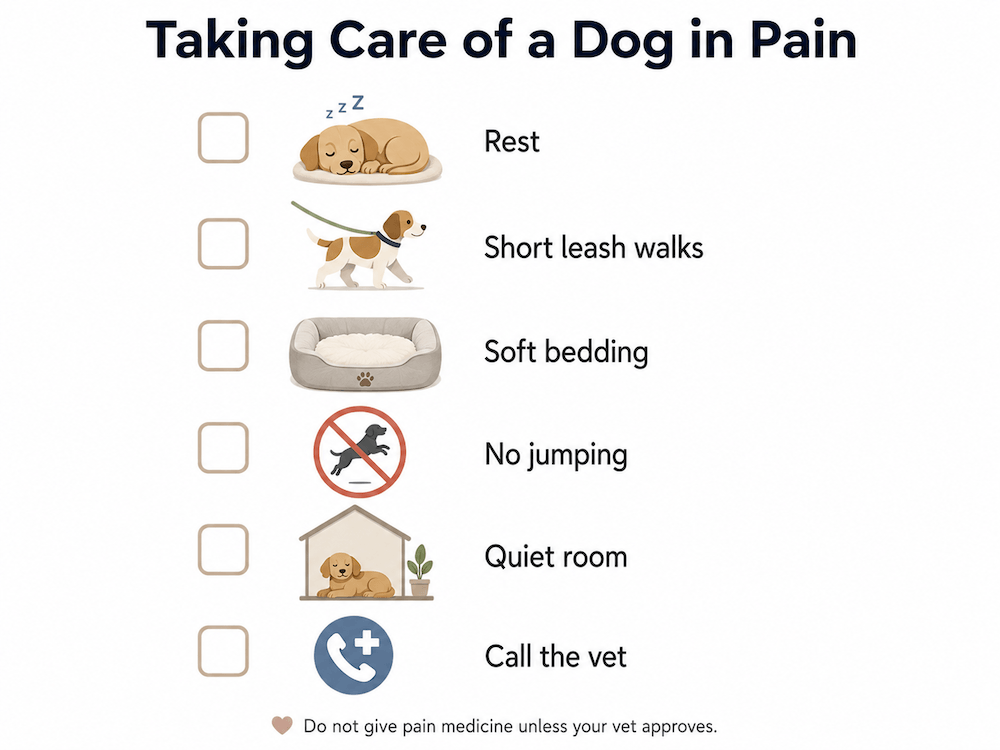
At home, the safest pain relief for dogs is usually supportive care rather than medication: restrict activity, prevent running or jumping, use leash-only potty breaks, and provide a soft, stable resting area until your vet can guide treatment. Cold packs may help with fresh swelling, bruising, or minor strains, while warmth may ease some stiffness, but any persistent limp, worsening pain, swelling, wound, infection, or lameness lasting more than 24 hours should be checked by a veterinarian.


| Home Support | Best For | How It Helps | Important Limit |
|---|---|---|---|
| Rest | Mild limping, soreness, or overexertion. | Reduces strain on painful muscles and joints. | Not enough for fractures or severe pain. |
| Cold Pack | Fresh swelling, bruising, or minor strains. | May reduce swelling and local discomfort. | Always wrap it and supervise closely. |
| Warm Compress | Stiffness or certain soft swollen areas. | May improve comfort and local circulation. | Avoid heat on fresh swelling or burns. |
| Soft Bedding | Senior dogs, arthritis, or post-activity soreness. | Cushions joints and encourages comfortable rest. | It does not treat the pain source. |
| Traction | Dogs slipping on tile or wood floors. | Improves footing and reduces joint strain. | Still restrict stairs during painful episodes. |
| Leash Potty | Injuries, limping, or post-vet recovery. | Prevents running, jumping, and sudden turns. | Use only short, controlled bathroom trips. |
| Weight Support | Overweight dogs with chronic joint pain. | Less body weight means less joint load. | Weight loss should be gradual and planned. |
| Vet-Approved Supplements |
Chronic arthritis or mobility support. | May support joints over weeks to months. | They are not emergency pain relievers. |
What About CBD, Fish Oil, or Joint Supplements for Dog Pain?
CBD, fish oil, glucosamine, chondroitin, green-lipped mussel, and similar products are often marketed for dog pain, especially arthritis. These are not ideal for sudden pain because they do not work like immediate rescue medications. They may be considered as part of a chronic joint-support plan, but they should be discussed with your veterinarian, especially if your dog takes NSAIDs, seizure medications, liver-affecting medications, or has chronic illness.
The evidence for omega-3 fatty acids in canine osteoarthritis is more supportive than many supplements, with clinical studies suggesting benefits for arthritic dogs and possible reduction in NSAID dose in some cases. CBD research is still developing: a 2023 systematic review found that CBD may reduce pain scores in dogs with osteoarthritis, but the certainty of evidence was very low and higher-quality trials are still needed. These products may have a role for some dogs, but they should not replace a veterinary exam when pain is new, severe, or worsening.
Safe Comfort Care for Dog Pain at Home
For mild soreness, the safest first response is to reduce strain and make your dog comfortable. Keep walks short and on leash, block stairs if needed, prevent jumping, and provide a supportive bed in a quiet area. Avoid rough play, long walks, slippery floors, or anything that makes your dog limp, pant, tremble, or resist movement.
Cold or warm compresses may help in limited situations, but they should be used gently and only if your dog allows handling. Never force a painful dog to tolerate touch, stretching, massage, or bathing. If your dog guards a body part, snaps, cries, or pulls away, stop and contact your veterinarian.
Human Pain Relievers You Should Not Give Dogs Without a Vet
Many dog owners search for this question because they want to help immediately, but human pain relievers are one of the biggest safety traps. Dogs are not small people; the FDA notes that human NSAIDs may last longer, be processed differently, be absorbed differently, or reach higher blood levels in pets. That is why online dose charts for human medications can be dangerous.
| Medication | Common Owner Assumption | Why It Is Risky | Safer Owner Move |
|---|---|---|---|
| Ibuprofen | “It helps people, so it may help dogs.” | Can cause ulcers, bleeding, and kidney damage. | Do not give; call a veterinarian. |
| Naproxen | “One tablet seems small enough.” | Long-lasting effects can increase toxicity risk. | Treat ingestion as urgent. |
| Acetaminophen | “It is gentler than an NSAID.” | Can harm the liver and blood cells. | Use only if prescribed by a vet. |
| Aspirin | “Baby aspirin is safe for dogs.” | Can irritate the stomach and affect clotting. | Ask your vet before any dose. |
| Leftover NSAIDs | “This worked last time.” | Today’s pain may have a different cause. | Confirm with your vet first. |
| Steroid Mix | “More anti-inflammatory help is better.” | NSAID-steroid overlap can increase ulcer risk. | Never combine without veterinary direction. |
When Dog Pain Needs Veterinary Care
A mild limp after a busy day may be watched briefly if your dog is otherwise normal and improving. Pain should not be watched at home when it is severe, sudden, worsening, unexplained, or paired with other concerning symptoms.
| Situation | Risk Level | What To Do |
|---|---|---|
| Mild soreness | Lower concern if improving quickly. | Use rest and monitor for changes. |
| Persistent limp | Moderate concern after repeated or lasting limping. | Schedule a veterinary exam soon. |
| No weight-bearing | Higher concern for injury or severe pain. | Call your vet the same day. |
| Swollen abdomen | Emergency concern, especially with restlessness. | Seek emergency care immediately. |
| Trouble breathing | Emergency concern regardless of suspected pain. | Go to an emergency clinic now. |
| Major trauma | Emergency concern after falls, bites, or accidents. | Transport carefully and get urgent care. |
| Pain plus vomiting | Higher concern for abdominal or systemic disease. | Contact your veterinarian promptly. |
How Vets Choose Safe Pain Medicine for Dogs
Veterinarians do not choose pain medicine based only on the fact that a dog hurts. They consider the dog’s weight, age, diagnosis, hydration, kidney and liver health, stomach history, current medications, and the type of pain involved. A dog with arthritis may need a different plan than a dog with a torn ligament, dental abscess, back injury, belly pain, or post-surgical discomfort.
Dog-approved anti-inflammatory medications can be very helpful when prescribed correctly, but they are not appropriate for every dog. Some dogs need bloodwork first, some need stomach protection, some need imaging, and some need a completely different type of treatment. The goal is not just to reduce pain for a few hours; it is to treat the underlying cause safely.
What Research Says About Pain Relief for Dogs at Home
Veterinary pain management has moved toward proactive, multimodal care, meaning pain is best managed by identifying it early and combining appropriate medication with supportive strategies. The 2022 AAHA guidelines state that recognizing pain is fundamental to treatment and that both pharmacologic and nonpharmacologic options may be part of acute and chronic pain management.[1] For owners, this supports a practical takeaway: rest and comfort help, but persistent pain should be assessed rather than guessed at.
The FDA’s pet pain reliever guidance supports using medications that are approved and labeled for dogs when NSAIDs are appropriate. It also explains why human NSAIDs can be unsafe in pets: dogs and cats may absorb, process, and clear these drugs differently than people. [2] This is the strongest reason not to treat dog pain with a human medicine cabinet approach.
Merck Veterinary Manual’s toxicology guidance is especially clear on ibuprofen: it is no longer recommended in dogs and may cause gastrointestinal ulceration, bleeding, kidney damage, neurologic signs, and potentially lethal toxicity at high doses.[3] This matters clinically because owners often reach for ibuprofen first when they see limping, even though it can make a painful situation much more dangerous.
For chronic arthritis, evidence is more supportive of integrated care than single-solution treatment. Cornell’s osteoarthritis resource describes management as a combination of lifestyle changes, rehabilitation, pain medication, joint support, and sometimes surgery, with earlier diagnosis helping long-term outcomes. Research on CBD is promising but uncertain, while omega-3 fatty acids have stronger support as a chronic joint-support tool rather than an emergency pain reliever.[4]
Frequently Asked Questions
The Bottom Line
Pain in dogs can be hard to recognize because many dogs hide discomfort instead of crying or limping clearly. The safest thing you can do at home is observe your dog’s posture, movement, appetite, behavior, and daily routine for changes. Rest, gentle support, and preventing further strain may help in mild situations, but they should not replace veterinary care when pain is severe, sudden, or worsening. Never give human pain medicine unless your veterinarian specifically tells you to, because many common medications can be dangerous for dogs. If your dog has trouble walking, refuses food, seems weak, has a swollen belly, or shows sudden behavior changes, contact a vet as soon as possible. Keeping notes, photos, or short videos can also help your veterinarian understand what is happening. When in doubt, it is always safer to ask your vet than to guess at the cause of your dog’s pain.