What to Do When Approached by an Off-Leash Dog: Safety Tips That Work

Canine Bible is reader-supported. We receive affiliate commissions via some of our links. Learn more.
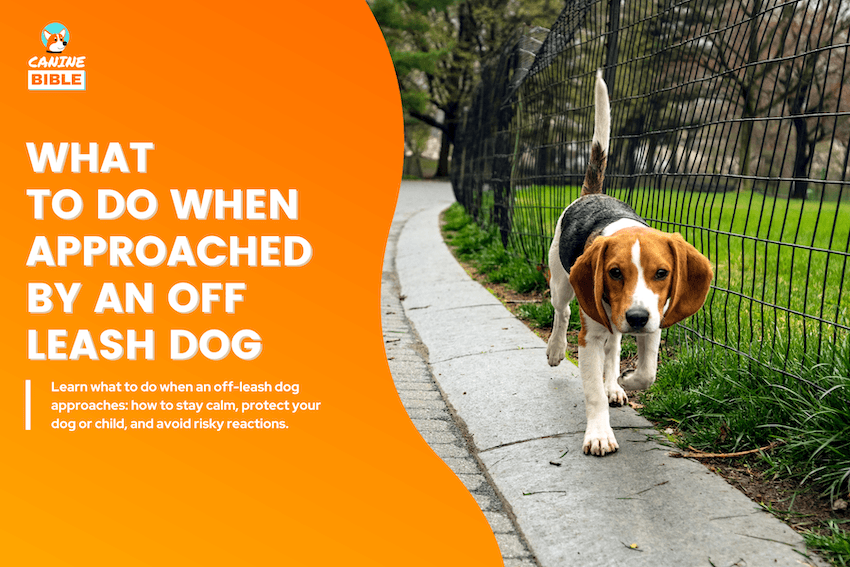
When approached by an off-leash dog, stay calm, avoid running, and do not make sudden movements. Turn slightly sideways, keep your hands close, and slowly create distance without staring directly at the dog. Most loose dogs are curious or excited, but some may be fearful, territorial, or unpredictable. How you respond can affect whether the encounter stays harmless or becomes dangerous. The right action may also change depending on whether you are walking alone, with a child, with your dog, or near the dog’s property. Many people instinctively yell, run, or reach out, but those reactions can make the situation worse. This guide explains how to read the dog’s behavior, protect yourself, and respond safely in different off-leash dog scenarios.
The Importance of Knowing How to Deal with an Off-Leash Dog
| Key Reason | Why It Matters |
|---|---|
| Improves safety | Knowing how to stay calm and move correctly can reduce the chance of triggering a chase, jump, or bite. |
| Reduces panic | A clear plan helps you avoid instinctive reactions like running, yelling, or reaching toward the dog. |
| Protects children | Children may freeze, scream, or move suddenly, so adults need to know how to guide them safely during an encounter. |
| Helps your dog | If you are walking your own dog, your response can affect whether the off-leash dog becomes more excited, fearful, or defensive. |
| Shows risk level | Body language such as stiff posture, direct staring, raised hackles, or growling can help you judge whether the situation is escalating. |
| Prevents mistakes | Common actions like grabbing the dog, turning your back quickly, or making intense eye contact can make some encounters worse. |
| Supports prevention | Understanding where loose-dog encounters are more likely can help you choose safer walking routes and carry appropriate deterrents. |
Are Off-Leash Dogs Dangerous?
Off-leash dogs are not always dangerous, but they can become risky because their behavior is harder to control or predict. Even a friendly dog may run, jump, chase, ignore recall, frighten children, approach reactive dogs, or cause a person to fall.
The risk is higher when the dog is stiff, barking, growling, staring, charging, guarding property, or approaching a child, senior, cyclist, or leashed dog. A loose dog may also be lost, scared, injured, overstimulated, or protective, which can make its behavior change quickly.
The safest approach is to treat any unfamiliar off-leash dog with caution. Stay calm, avoid running or reaching toward it, create distance slowly, and use a barrier when possible.


How to Read an Off-Leash Dog’s Body Language
An off-leash dog may be playful, curious, frightened, territorial, overstimulated, or defensive. A loose body, curved approach, and relaxed movement may suggest curiosity or friendliness, but they do not guarantee safety. A stiff body, hard stare, growling, raised hackles, tucked tail, repeated lip licking, or attempts to move away can signal stress, discomfort, or possible escalation.
Dogs may display stress or threat-avoiding behaviors such as nose licking and turning away before escalating to more defensive behavior. This matters because people often miss early discomfort signals and continue interacting when the safest response is to stop, give space, and leave.
| Dog Signal | Possible Meaning | Safer Response |
|---|---|---|
| Loose body | The dog may be curious or social. | Stay calm and avoid encouraging jumping. |
| Hard stare | The dog may be tense or focused. | Look away and slowly create distance. |
| Stiff posture | The dog may feel defensive or aroused. | Use a barrier and avoid reaching. |
| Lip licking | The dog may be stressed or uncertain. | Stop interaction and give more space. |
| Tucked tail | The dog may be fearful or overwhelmed. | Do not corner, chase, or touch it. |
| Growling | The dog is warning you to back off. | Back away calmly without punishment. |
Quick Safety Checklist When an Off-Leash Dog Approaches
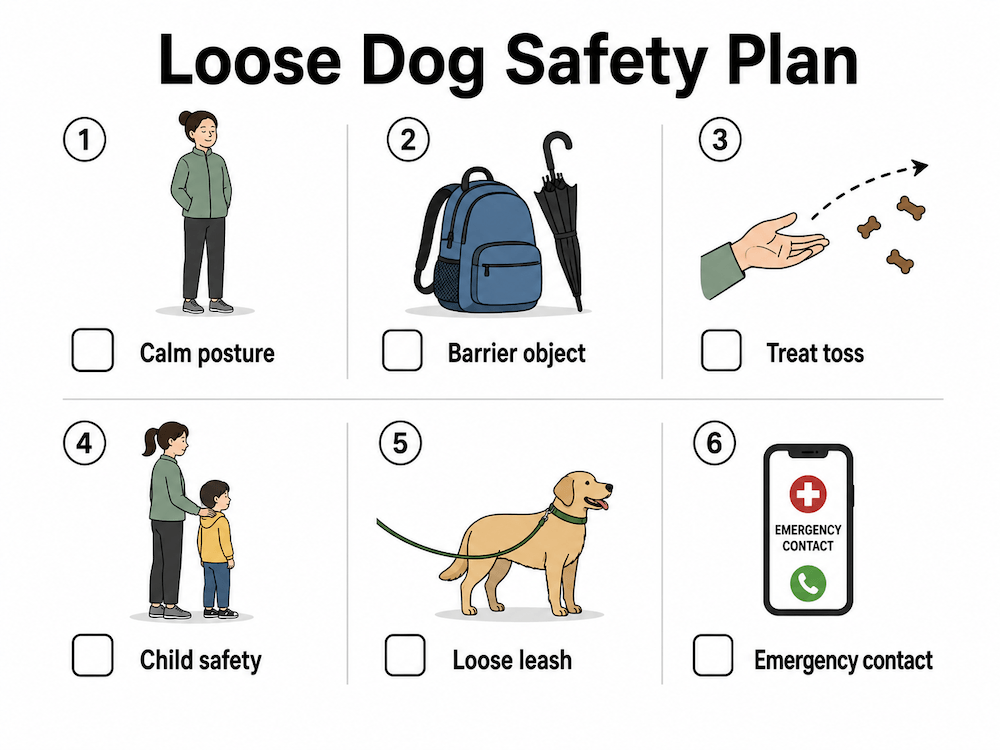
Keep your response simple: stop, stay calm, turn sideways, avoid staring, keep your hands close, and slowly create distance. If you are with a child, coach them to stay still and quiet. If you are with your dog, avoid leash tension and move away calmly. If the dog keeps approaching, use a barrier such as a bag, jacket, stroller, bike, trash can, parked car, or fence.


What to Do When an Off-Leash Dog Approaches You Alone
If you are alone, make yourself calm, still, and uninteresting. Stop moving quickly, turn slightly sideways, keep your arms close, and avoid direct eye contact. If the dog keeps coming, use a calm but firm voice such as “No,” “Stop,” or “Go home,” then slowly back away when it is safe.
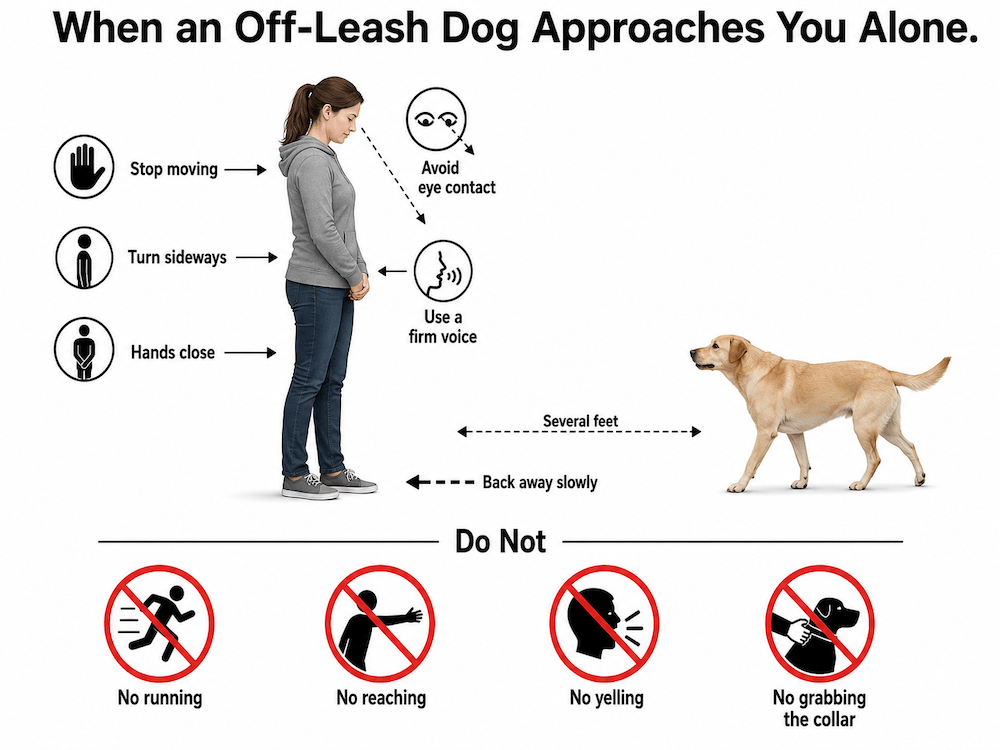
Do not bend over the dog, extend your hand for it to sniff, grab its collar, or try to pet it. Even a friendly-looking dog may be lost, overstimulated, fearful, protective, or injured. AVMA guidance recommends speaking calmly and firmly if needed, avoiding eye contact, staying still until the dog leaves, or backing away slowly until the dog is out of sight.
What to Do When an Off-Leash Dog Approaches Your Child
Children need simple instructions because they may instinctively run, scream, wave their arms, or stare. Tell the child to stand still, stay quiet, keep their hands close, and avoid looking directly at the dog. Calmly place yourself between the child and the dog if you can do so without lunging or making sudden movements.
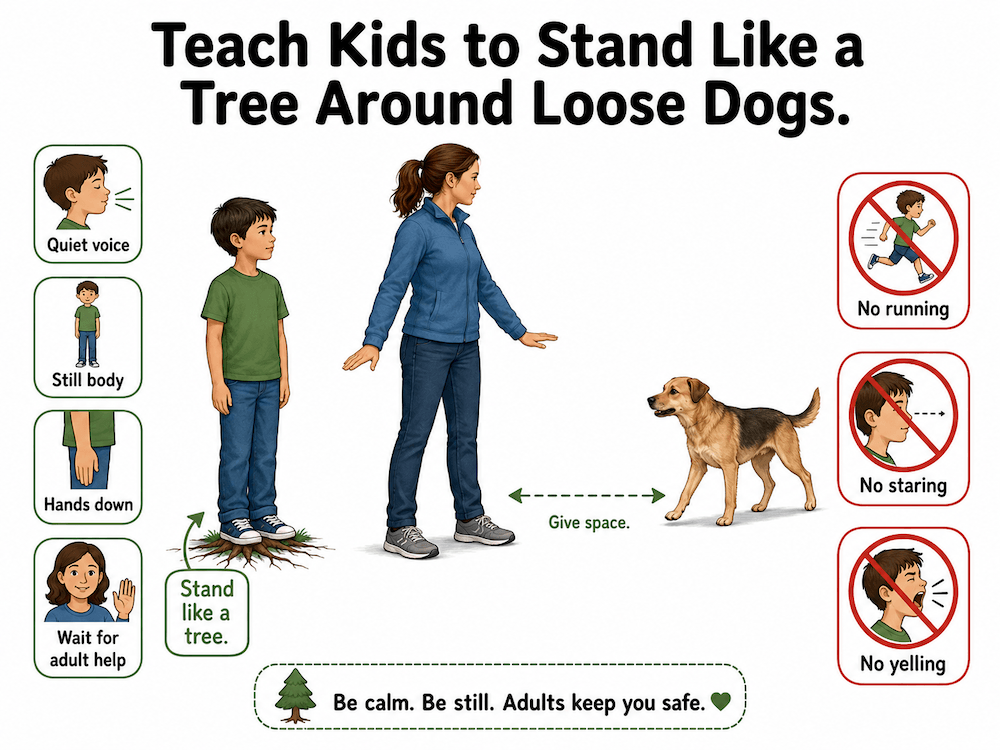
Teach children to “stand like a tree,” meaning they should stand still with their arms at their sides when an unknown loose dog approaches. This approach helps avoid triggering chase or extra excitement.
What to Do When an Off-Leash Dog Approaches Your Dog
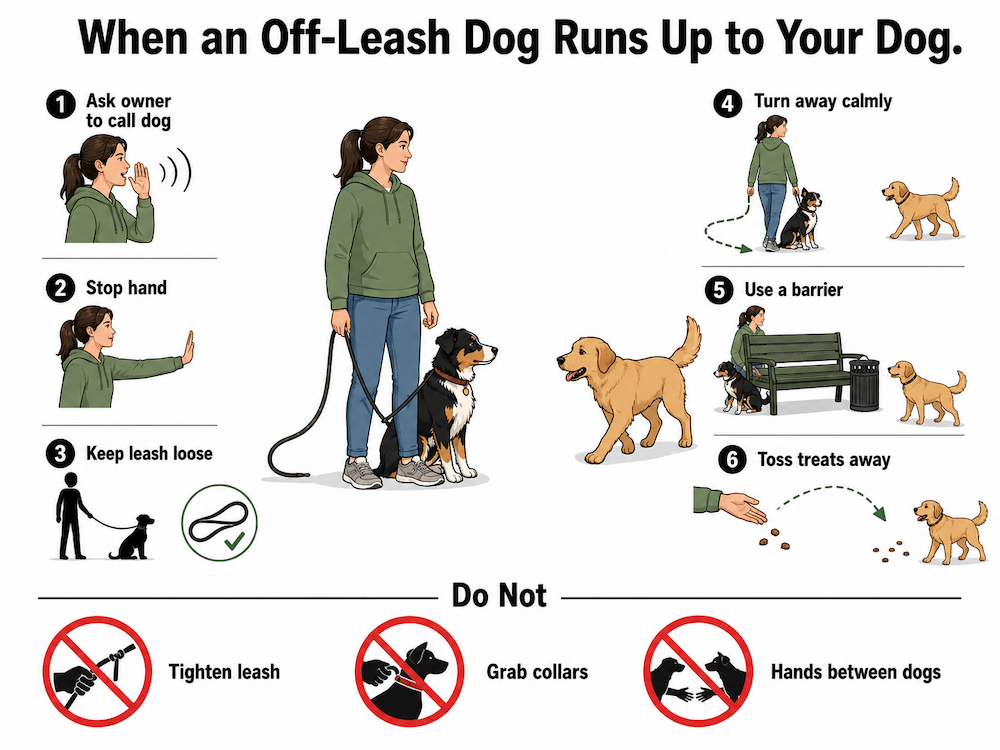
When you are walking your own dog, first ask the other owner to call or leash their dog. If the owner does not respond, put your hand up like a stop signal, move away without running, and keep your dog’s leash as loose as safely possible. A tight leash can make your dog feel trapped and may increase reactivity.
What to Do If an Off-Leash Dog Knocks You Down or Bites
If a dog knocks you down, protect your head, neck, face, and ears. Curl into a ball or lie still with your hands over the back of your neck and your elbows over your ears. Stay quiet and still until the dog moves away or help arrives.
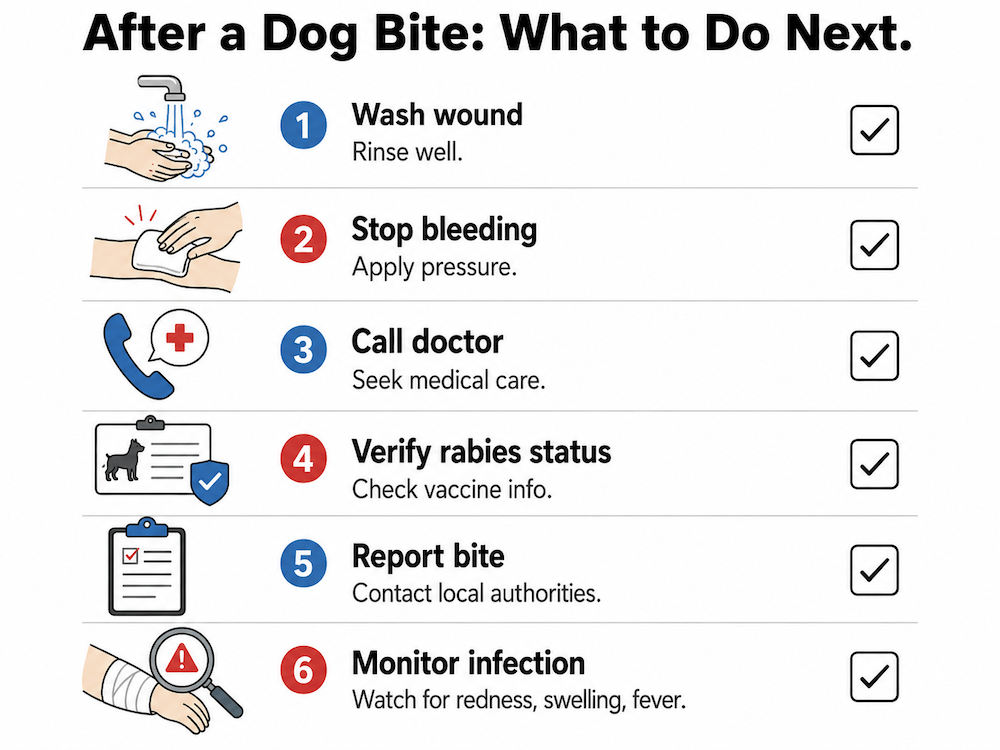
If you are bitten, wash the wound thoroughly with soap and running water. Seek medical care for deep wounds, punctures, uncontrolled bleeding, facial wounds, severe pain, signs of infection, or any bite from a dog with unknown rabies vaccination status.
If your dog is bitten, move your dog away once it is safe, then check for bleeding, punctures, swelling, limping, or pain. Call your veterinarian because small puncture wounds can hide deeper tissue injury.
Off-Leash Dog Encounter Scenarios and Safer Responses
Different off-leash dog encounters call for different decisions. The safest response depends on the dog’s speed, posture, distance, and whether vulnerable people or pets are with you.
| Scenario | Safer Move | Avoid This |
|---|---|---|
| Dog sniffing | Stay still and let the dog disengage. | Do not pet, hug, or grab it. |
| Dog chasing | Stop running and stand calmly sideways. | Do not scream or sprint faster. |
| Dog barking | Use a calm voice and back away. | Do not yell back at the dog. |
| Dog jumping | Fold your arms and turn away. | Do not push, knee, or swat. |
| Dog circling | Keep it visible without hard staring. | Do not spin, panic, or lunge. |
| Dog attacking | Use a barrier and protect your neck. | Do not reach near its mouth. |
Myths vs Facts About Off-Leash Dog Encounters
Loose-dog encounters are commonly misunderstood. These myths matter because the wrong instinct can make an uncertain dog more excited or defensive.
| Myth | Fact |
|---|---|
| Wagging means safe | A wagging tail can also signal arousal, stress, uncertainty, or excitement. |
| Running helps | Running may trigger a chase response, especially in excited or reactive dogs. |
| Hands help | Reaching toward an unfamiliar dog can feel threatening and may increase tension. |
| Small dogs are harmless | Small dogs can still bite, start conflict, or cause another dog to react defensively. |
| Friendly dogs always obey | Even social dogs may ignore recall when they are overstimulated, scared, or excited. |
| A tight leash is safer | Constant leash tension can make your own dog feel trapped, tense, or more defensive. |
What Veterinary Research Says About Off-Leash Dog Encounters
The AVMA advises people to speak calmly and firmly, avoid eye contact, stay still until the dog leaves, or back away slowly when approached by an unfamiliar dog. This supports the core advice to avoid running, yelling, staring, and sudden movement.
The CDC explains that most dog bites are preventable and gives public health guidance on avoiding risky interactions, washing bite wounds, and getting medical advice when needed. This supports the article’s emphasis on prevention first and medical care after a bite.
The BC SPCA recommends “stand like a tree” when an unknown off-leash dog approaches, especially to prevent chase and reduce the chance of a nip or bite. This supports the child-safety and stillness sections.
A Frontiers in Veterinary Science study on dog signaling emphasized that stressed dogs may show signals such as nose licking and turning away, and that ignored or misinterpreted signals can precede aggression. This supports reading body language before deciding how close to get.[1]
Frequently Asked Questions
The Bottom Line
When an off-leash dog approaches, the safest response is to stay calm, avoid sudden movement, and create distance without running. Turn your body slightly sideways, keep your hands close, and avoid direct eye contact so you do not add pressure to the situation. If you are with a child, help them stay still and quiet while you calmly place yourself between them and the dog. If you are walking your own dog, keep the leash as loose as safely possible and move away before tension builds. Barriers, firm verbal cues, and treat tosses can help redirect the approaching dog without direct contact. Never grab collars or place your hands between dogs, because redirected bites can happen quickly. With a simple safety plan, you can respond more confidently and reduce the risk of panic, conflict, or injury.