How to Pet a Dog 101: 8 Easy Steps (& When You Shouldn’t)

Canine Bible is reader-supported. We receive affiliate commissions via some of our links. Learn more.
Pet a dog by approaching calmly, letting them sniff you first, and gently stroking areas most dogs enjoy, like the chest, shoulders, or base of the neck. Avoid sudden movements and sensitive spots, and always watch the dog’s body language to guide your touch. While this sounds simple, not every dog wants to be petted the same way—or at all. Some dogs love head pats, while others find them uncomfortable or threatening. Knowing where and how to pet can make the difference between building trust and causing stress. What about shy dogs, puppies, or unfamiliar dogs in public? Understanding these nuances helps you create positive, safe interactions every time.
Why Knowing How to Pet a Dog Matters
| Why It Matters | Key Impact |
|---|---|
| Builds trust | Gentle, respectful petting helps dogs feel safer and more comfortable around people. |
| Reduces stress | Petting a dog the right way can lower tension instead of making the dog feel overwhelmed. |
| Improves safety | Knowing how to approach and touch a dog helps reduce the risk of fearful or defensive reactions. |
| Prevents mistakes | It helps people avoid common errors like rushing in, hugging too tightly, or touching sensitive areas. |
| Supports children | Teaching proper petting habits helps kids interact with dogs more gently and responsibly. |
| Respects boundaries | Not every dog enjoys the same kind of touch, so proper petting helps honor individual comfort levels. |
| Strengthens bonding | Positive touch can improve the relationship between dogs and the people who care for them. |
| Helps in public | Understanding dog body language makes it easier to handle greetings with unfamiliar dogs more appropriately. |
How to Pet a Dog the Right Way
Petting a dog the right way means moving calmly, letting the dog choose whether to interact, and using gentle touch in areas many dogs find less threatening, such as the chest, shoulders, or side of the body. The goal is to create a safe, positive interaction rather than assuming every dog wants contact. Asking first, reading body language, and stopping early when a dog looks unsure are the most important parts of doing it well.
If the dog is not yours, ask the owner first and respect a no. A friendly-looking dog may still be fearful, overstimulated, in pain, training, or simply not interested in being touched. That is one reason bite-prevention guidance from veterinary and animal-welfare organizations starts with permission instead of assuming access.
Step-by-Step Guide for How to Pet a Dog
Follow these steps to properly and safely pet a dog.


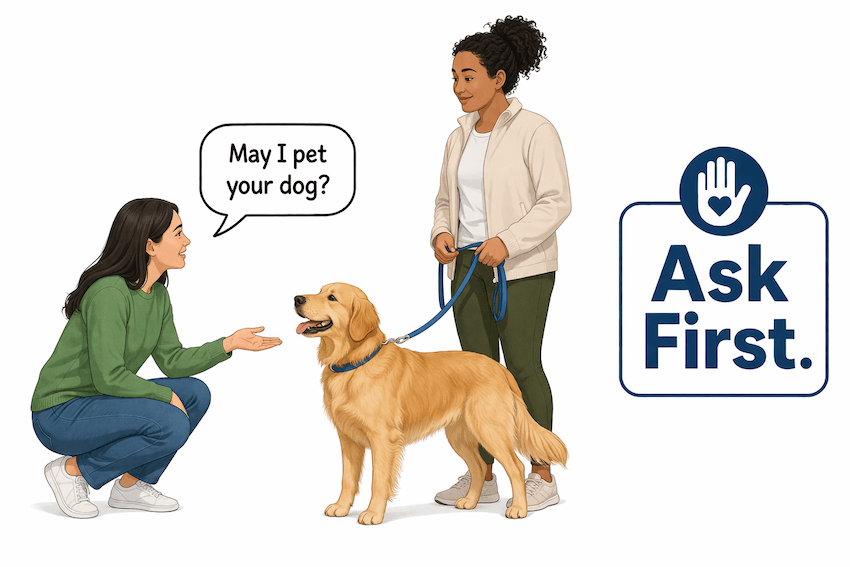
Step 1: Ask Before You Touch
Ask the owner whether the dog enjoys being petted and whether there are any areas to avoid. If the owner says no, stop there.
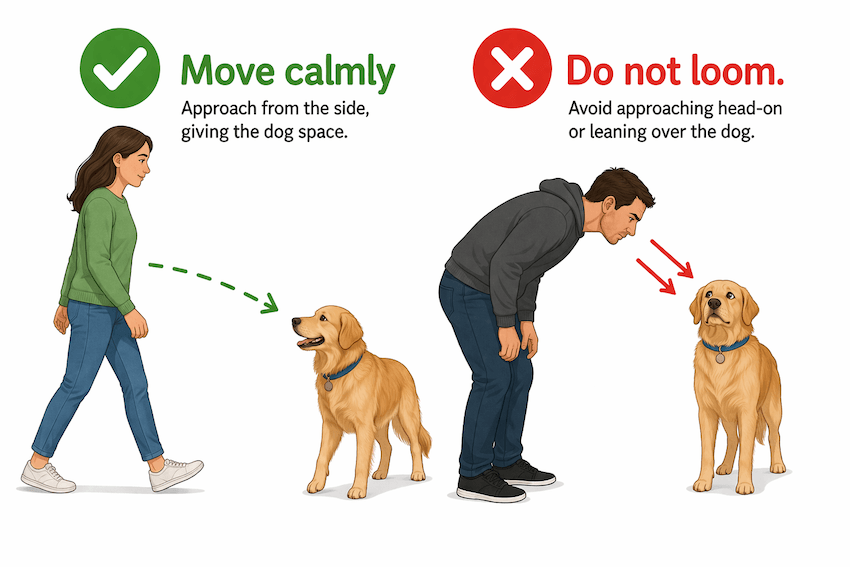
Step 2: Approach Calmly From the Side
Walk slowly, avoid sudden movements, and do not lean over the dog’s head. Keep your body slightly sideways rather than looming directly over the dog.
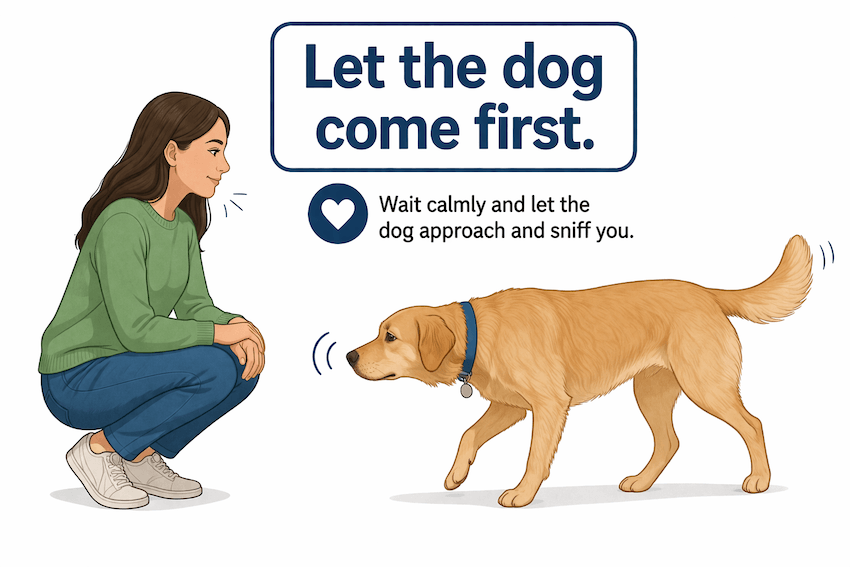
Step 3: Let the Dog Choose the Greeting
Pause and let the dog come forward to sniff or investigate. Do not chase the dog with your hand or force contact if they hang back.


Step 4: Start in a Safer Spot
Begin with one hand and gentle strokes on the side of the chest, shoulders, or side of the body. Research on dogs’ responses to tactile contact has found fewer discomfort-related behaviors when dogs are touched on the chest and neck than when they are touched on the head, muzzle, paws, or tail.
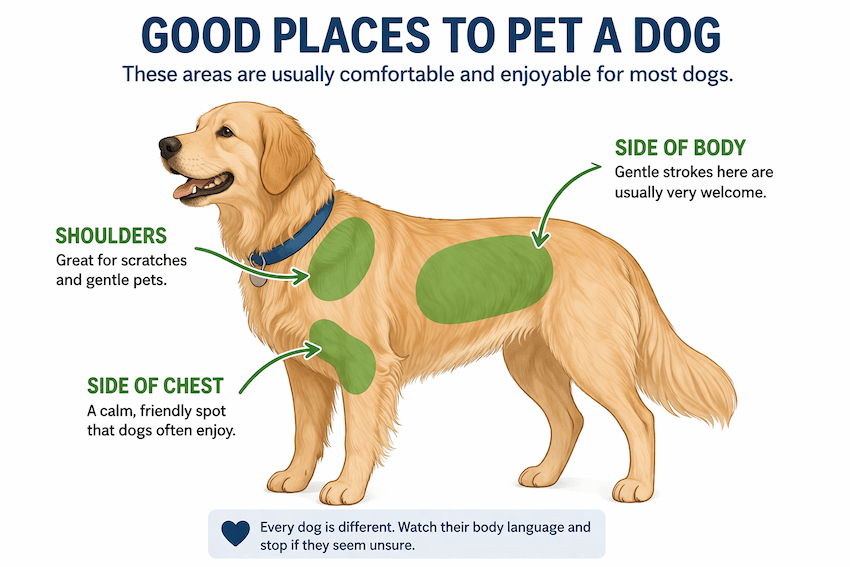
Step 5: Use Gentle Strokes, Not Grabbing
Use slow, light strokes instead of patting hard, squeezing, hugging, or restraining. Many dogs tolerate human affection better when the touch is brief and predictable rather than intense or prolonged.
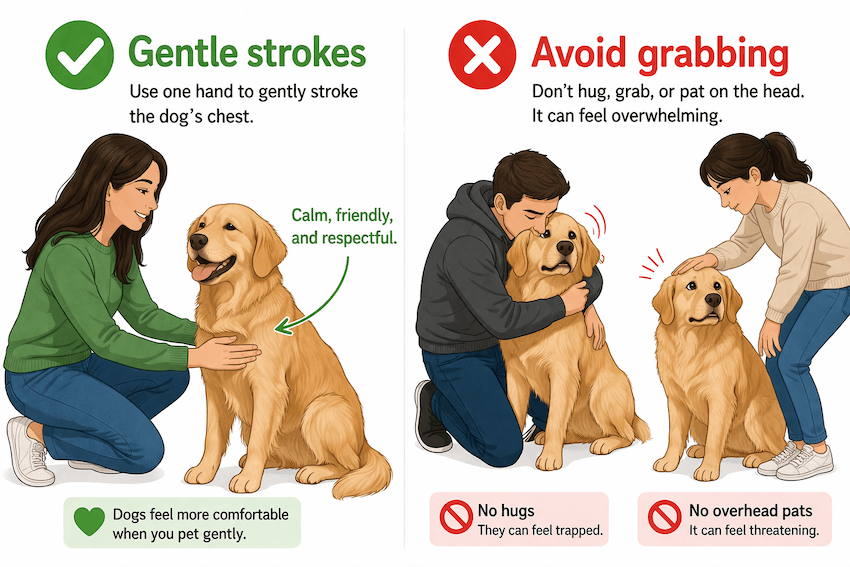
Step 6: Try the Pet, Pause, Observe Method
Pet briefly for a few seconds, then stop. If the dog leans in, stays near you, nudges for more, or re-engages, that is a good sign they want the interaction to continue. If they turn away or move off, respect that answer. This method helps avoid overhandling and gives the dog a clear chance to opt in or out. Guidance from animal-welfare organizations and behavior educators consistently recommends this kind of pause-based “consent” check.
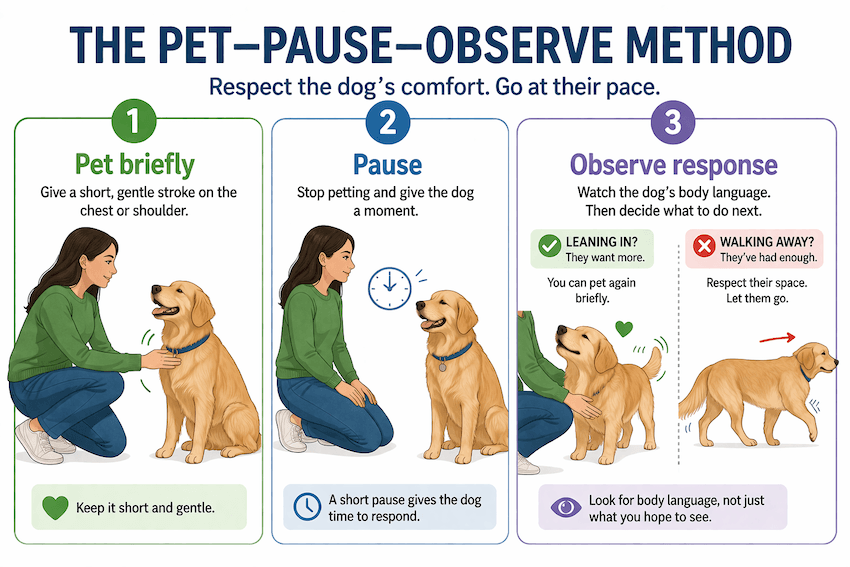
Step 7: Stop at the First Signs of Discomfort
Stop immediately if the dog freezes, turns away, lip licks, yawns from stress, shows whale eye, growls, or moves off. Subtle signals often happen before a snap or bite, and missing them is a common human mistake.
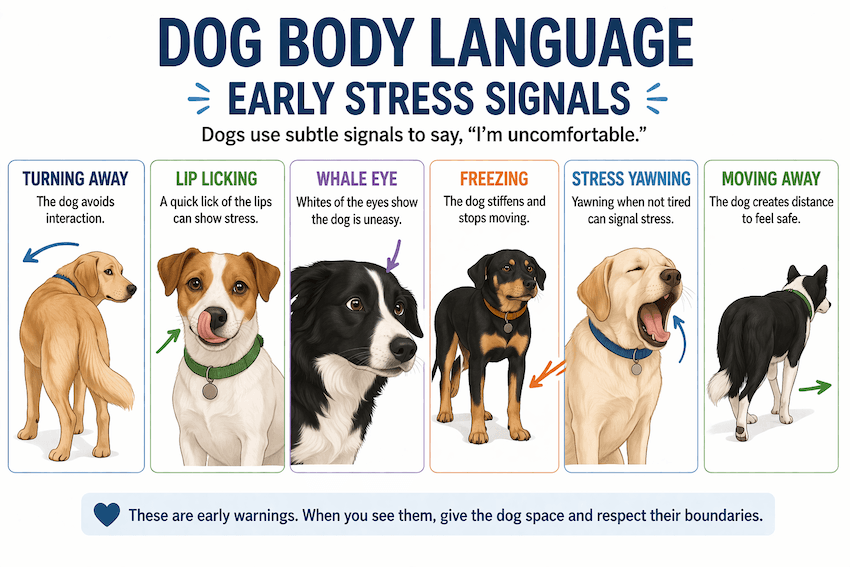
Step 8: Teach Children to Pet Dogs Gently
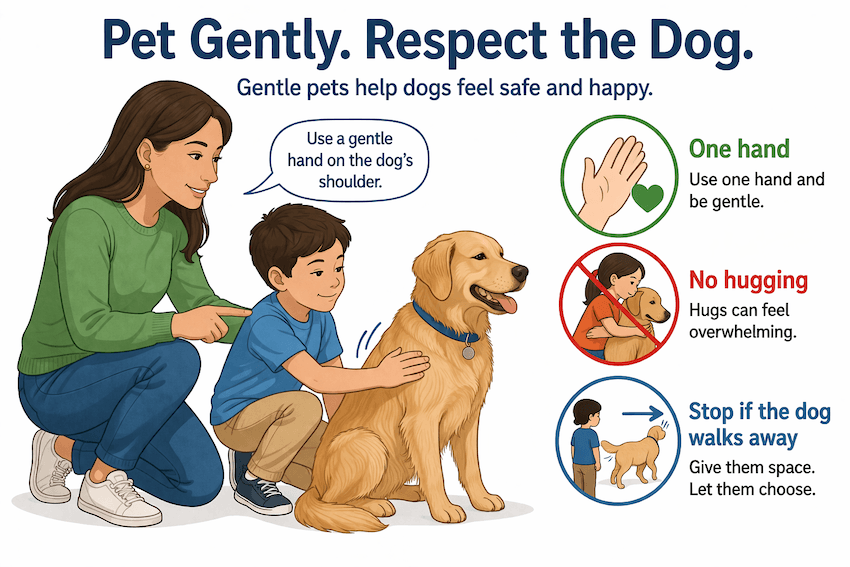
Show children how to use one hand, gentle touch, and short interactions. Teach them not to hug dogs, bother dogs that are sleeping or eating, or continue petting when a dog walks away. Children often misread canine distress signals, but research shows these skills can be improved through education.
Evidence-Backed Guidance on How to Pet a Dog
Veterinary bite-prevention guidance from the AVMA and ASPCA recommends asking the owner first, approaching slowly, and letting an unfamiliar dog choose whether to come closer. Those recommendations matter because many unsafe interactions begin when humans assume a dog wants immediate contact.
Behavior research summarized in a welfare review found that dogs showed more appeasement or discomfort-type behaviors when touched on the head, muzzle, paw, or tail, while chest and neck petting was associated with fewer such signs. Clinically, that supports starting with side-oriented, low-pressure touch instead of going straight for the head.[1]
A Frontiers-linked study on teaching children and parents to understand dog signaling found that people can improve their interpretation of canine distress cues after education. That is important because lip licking, freezing, head turning, and whale eye are easy for humans to miss.[2]
RSPCA guidance also highlights stress signals such as yawning, lip licking, turning the head away, and showing the white of the eye. In practice, these are early warnings to stop, create space, and not push the interaction further.
Additional Tips for How to Pet a Dog
| Tip | Why It Helps | How to Apply It |
|---|---|---|
| Ask first | Permission prevents unwanted contact with nervous or busy dogs. | Check with the owner before moving closer. |
| Turn sideways | A side angle feels less threatening than facing head-on. | Stand slightly off-center near the dog’s shoulder. |
| Let the dog choose | Choice lowers pressure and improves comfort. | Pause and wait for the dog to approach. |
| Start low and side | Chest and shoulder contact is often better tolerated. | Begin with one hand on the chest or shoulder. |
| Keep it brief | Short touch is easier for dogs to process. | Pet for a few seconds, then pause. |
| Watch the whole body | Comfort shows in posture, face, and movement. | Look for soft eyes, loose muscles, and leaning in. |
| Stop early | Ending early prevents escalation and overhandling. | Quit at the first sign of tension or avoidance. |
| Coach children closely | Kids often miss subtle stress signals. | Teach one gentle hand and stop if the dog leaves. |
Common Mistakes When You Pet a Dog
| Mistake | Why It’s a Problem |
|---|---|
| Reaching over the head | This can feel sudden, intrusive, and threatening. |
| Petting without permission | The dog may be fearful, painful, or training. |
| Hugging right away | Many dogs find restraint more stressful than soothing. |
| Touching paws or tail first | These areas are often more sensitive. |
| Ignoring subtle signals | Stress signs often appear before stronger reactions. |
| Crowding the dog | Blocking space makes it harder for the dog to disengage. |
| Putting your face close | Face-to-face pressure raises bite risk unnecessarily. |
| Continuing after the dog leaves | Following the dog ignores their clear boundary. |
Things to Remember When Petting a Dog
After the interaction, give the dog space and let them decide whether to return. A successful interaction usually looks calm and low-drama: the dog stays loose, remains nearby, or chooses to re-engage later. Keep using the same respectful pattern over time—ask, approach calmly, pet briefly, pause, and observe. If a dog repeatedly freezes, growls, startles, avoids touch, or reacts to normal handling, that is a reason to stop pushing contact and speak with a veterinarian or qualified behavior professional, since pain, fear, and handling sensitivity can all affect how dogs respond to touch.
Frequently Asked Questions
The Bottom Line
Petting a dog the right way comes down to respect, awareness, and timing. When you move calmly, let the dog choose the interaction, and use gentle touch in the right areas, you create a positive experience instead of stress. The key is not just how you pet, but whether the dog wants to be petted at all. By paying attention to body language and using simple methods like pet, pause, and observe, you can build trust and avoid common mistakes. Every dog is different, and learning to adjust your approach is what truly makes the interaction safe and enjoyable. When done correctly, petting becomes more than just contact—it becomes a way to communicate comfort, trust, and connection.