What Causes Dogs to Have Diarrhea? Common Causes, Treatments & Prevention

Canine Bible is reader-supported. We receive affiliate commissions via some of our links. Learn more.
Dogs can develop diarrhea when something irritates or disrupts their digestive system, including dietary changes, spoiled food, stress, parasites, infections, medications, or underlying illness. In many cases, it is mild and temporary, but persistent or severe diarrhea can signal a more serious problem. The color, consistency, frequency, and other symptoms can offer important clues about the cause. A single loose stool may not be alarming, while repeated episodes, blood, vomiting, or weakness deserve closer attention. Puppies, senior dogs, and dogs with chronic health conditions can become dehydrated more quickly. Even common causes, such as switching foods too fast or eating table scraps, can affect dogs differently. Understanding the possible triggers helps you know when home care may be reasonable and when it is time to contact a veterinarian.
Diarrhea in Dogs: What Owners Should Know
| Key Point | What It Means for Dog Owners |
|---|---|
| Common causes | Food changes, scavenging, stress, parasites, infections, medications, and disease can trigger diarrhea. |
| Stool patterns | Frequency, volume, color, mucus, and blood can provide useful clues about intestinal irritation. |
| Mild episodes | One or two loose stools may resolve if the dog remains comfortable and otherwise normal. |
| Warning signs | Vomiting, weakness, pain, blood, black stool, or appetite loss increases concern. |
| Higher-risk dogs | Puppies, seniors, toy breeds, and medically vulnerable dogs may deteriorate more quickly. |
| Home monitoring | Track stool changes, hydration, appetite, behavior, and any recent food or exposure changes. |
| Veterinary care | Persistent, recurring, severe, or exposure-related diarrhea should be assessed by a veterinarian. |
What Is Diarrhea in Dogs?
Diarrhea in dogs is the passage of loose, watery, or unusually frequent stool. It happens when the intestines move contents too quickly, absorb too little water, or become irritated and inflamed. Diarrhea is a symptom rather than a disease itself. A brief episode may follow a minor dietary upset, while repeated or severe diarrhea can point to infection, parasites, toxins, digestive disease, or another underlying health problem.
What Causes Dogs to Have Diarrhea?
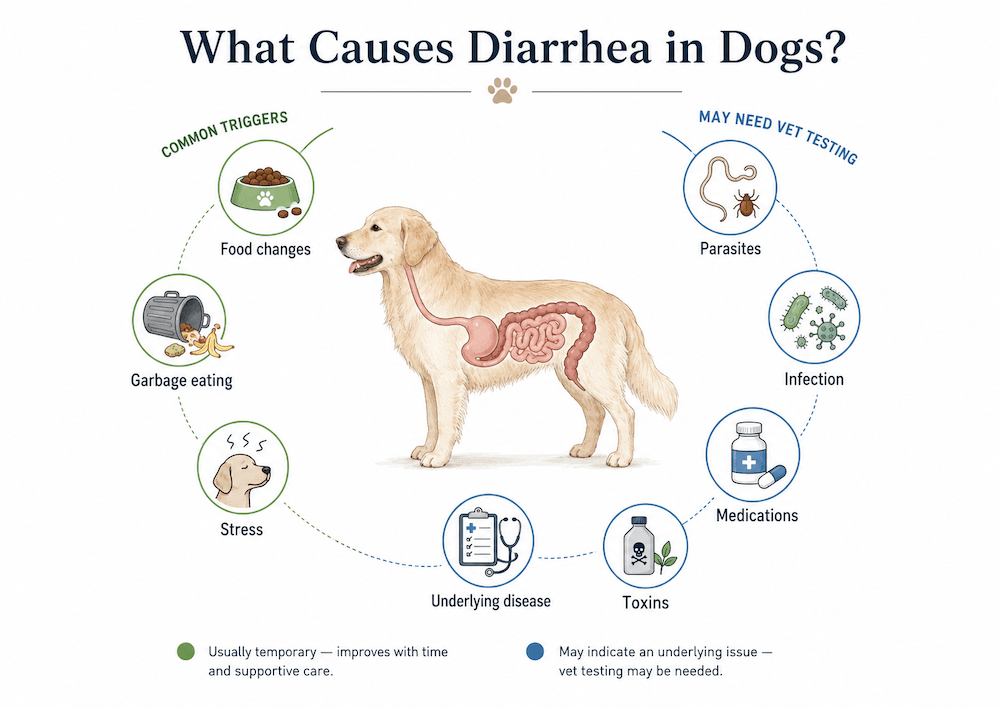
Dogs develop diarrhea when the intestines cannot absorb water normally or when inflammation, irritation, infection, or rapid intestinal movement pushes stool through too quickly. Common triggers include eating something unusual, changing foods abruptly, stress, parasites, infections, medications, toxins, and underlying digestive or organ disease.
One or two loose stools in an otherwise normal adult dog may be temporary, but repeated diarrhea can cause dehydration and may signal a condition requiring treatment. The dog’s age, behavior, appetite, stool appearance, and accompanying symptoms matter more than diarrhea alone.
How Diarrhea Develops in a Dog’s Digestive System
A healthy digestive tract moves food at a controlled rate while absorbing water, electrolytes, and nutrients. Diarrhea develops when this balance is disturbed. The intestines may secrete extra fluid, fail to absorb enough water, become inflamed, or move their contents too rapidly for normal stool to form.
Diarrhea is therefore a symptom rather than a single disease. Two dogs may produce similar-looking loose stool for completely different reasons. One may have eaten a fatty table scrap, while another may have parasites, pancreatitis, or a chronic intestinal disorder.


| Diarrhea Type | Typical Pattern | Common Clues |
|---|---|---|
| Acute | Begins suddenly and lasts a short time. | Often follows diet changes, stress, parasites, infection, or medication. |
| Recurring or chronic | Repeatedly returns or continues for several weeks. | May involve food sensitivity, inflammation, malabsorption, or underlying disease. |
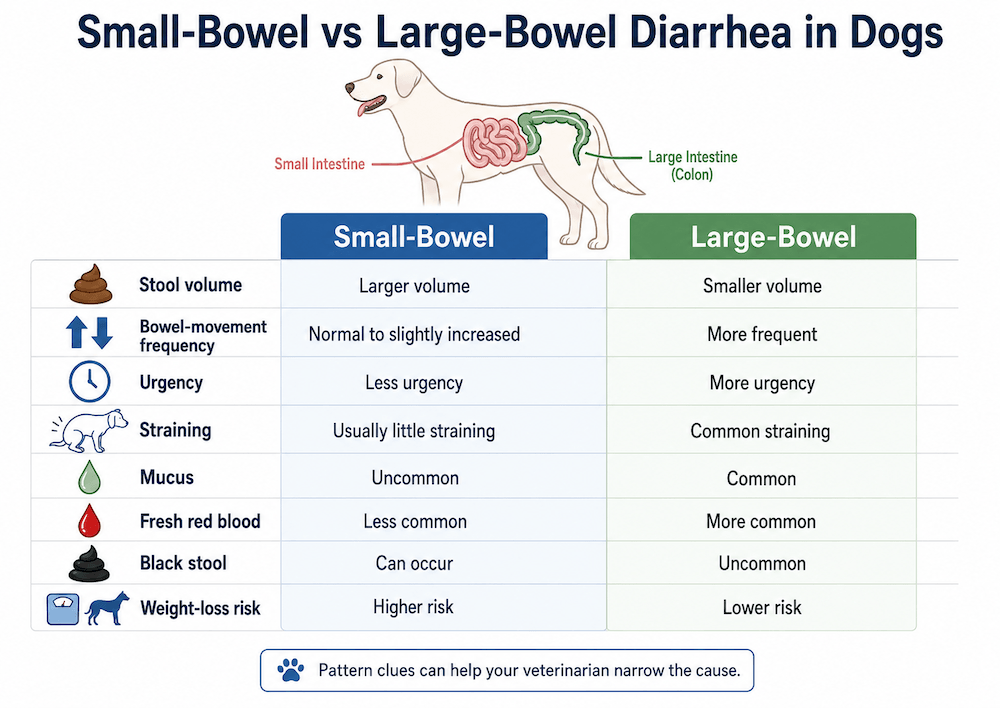
| Small-intestinal | Produces larger stools with normal or mildly increased frequency. | Weight loss or black, tarry stool may occur. |
| Large-intestinal | Causes frequent, small stools with urgency or straining. | Mucus and fresh red blood are common signs. |
7 Common Causes of Sudden Diarrhea in Dogs
Sudden diarrhea in dogs often follows dietary changes, stress, infections, parasites, medications, toxins, or the ingestion of something unusual. Identifying recent changes, exposures, and accompanying symptoms can help narrow the likely cause and determine whether veterinary care is needed.
1. Eating something unusual: Dogs may develop sudden diarrhea after eating garbage, spoiled food, feces, rich leftovers, fatty foods, plants, prey, or drinking stagnant water.
2. Changing food too quickly: Switching foods abruptly can disrupt digestion and cause loose stool, gas, or abdominal discomfort, while new treats, chews, supplements, toppers, or flavored medications may also be responsible.
3. Stress and excitement: Travel, boarding, adoption, separation, storms, veterinary visits, and household changes can irritate the colon and cause frequent stools, urgency, mucus, or small streaks of fresh blood.
4. Intestinal parasites: Roundworms, hookworms, whipworms, Giardia, and coccidia can cause watery, soft, bloody, mucous-coated, or recurring diarrhea, especially in puppies and dogs exposed to contaminated environments.


5. Viral and bacterial infections: Infectious illnesses can range from mild digestive upset to severe disease, particularly in puppies and unvaccinated dogs with vomiting, fever, weakness, or appetite loss.
6. Medications and supplements: Antibiotics, anti-inflammatory drugs, dewormers, chemotherapy drugs, and some supplements may irritate the digestive tract or disturb normal intestinal bacteria.
7. Toxins and foreign material: Toxic substances and swallowed objects can cause diarrhea along with vomiting, pain, drooling, weakness, bloating, tremors, or other signs requiring urgent veterinary care.
Why Some Dogs Have Recurring or Chronic Diarrhea
When diarrhea repeatedly returns, the original trigger may still be present, or the dog may have an ongoing digestive or systemic condition. Simply switching among several over-the-counter foods can complicate the picture by introducing new ingredients without testing a single diet consistently.
| Possible Cause | Common Clues | How It Is Evaluated |
|---|---|---|
| Food-responsive disease | Loose stool, gas, mucus, vomiting, or weight changes. | A strict veterinary diet trial may identify dietary triggers. |
| Chronic enteropathy | Recurring diarrhea, poor appetite, vomiting, or weight loss. | Testing may include diet trials, bloodwork, imaging, or biopsies. |
| Pancreatic disorders | Pain, vomiting, greasy stools, weight loss, or increased appetite. | Specific blood tests assess pancreatitis or digestive-enzyme deficiency. |
| Systemic disease | Weakness, thirst changes, vomiting, weight loss, or collapse. | Blood and urine tests assess hormones and organ function. |
| Structural disease | Persistent diarrhea, pain, anemia, vomiting, or appetite changes. | Imaging or intestinal sampling may reveal growths or tissue changes. |
Small-Bowel vs. Large-Bowel Diarrhea in Dogs
Small-bowel diarrhea usually produces larger amounts of loose stool with a normal or moderately increased number of bowel movements. Dogs may develop weight loss when the problem continues, while black, tarry stool can indicate digested blood from higher in the digestive tract.
Large-bowel diarrhea more often causes frequent, small stools with urgency, straining, mucus, or fresh red blood. These patterns help veterinarians estimate which intestinal area may be affected, but stool appearance alone cannot confirm the underlying cause.
What Stool Color, Frequency, and Contents May Mean
Stool appearance can help narrow the possibilities, but it rarely identifies the cause by itself. Food coloring, treats, grass, supplements, and rapid intestinal transit can change stool color. Owners should evaluate the entire dog rather than relying on one visual feature.
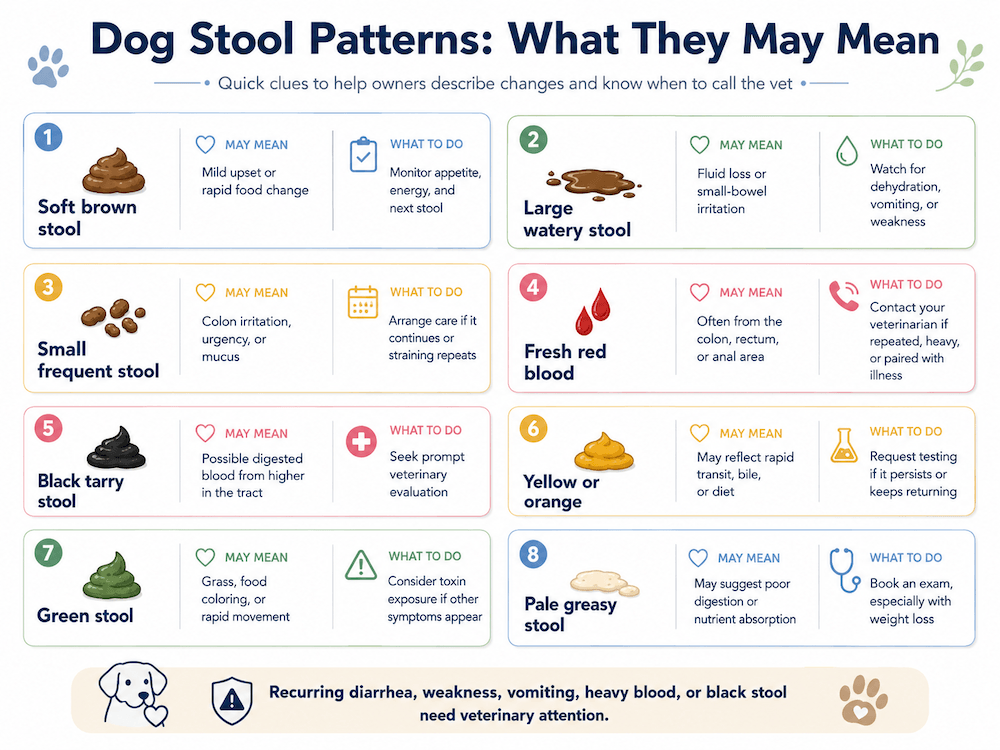
Black, tar-like stool is particularly concerning because it may contain partially digested blood. Fresh red streaks can occur with colon inflammation or straining and do not always indicate catastrophic bleeding, but the quantity, repetition, and dog’s overall condition determine the urgency.
Mucus often accompanies large-bowel irritation. Visible worms are possible with some parasite infections, but many common parasites are microscopic or shed eggs that owners cannot see. A normal-looking stool between episodes does not rule out a parasite or chronic disorder.
When Dog Diarrhea Needs Veterinary Attention
A single soft stool in a comfortable, energetic adult dog may be monitored briefly. The threshold for calling should be lower when the dog is young, elderly, very small, pregnant, immunocompromised, taking important medication, or living with another health condition.
Signs of dehydration can include tacky or dry gums, reduced energy, weakness, sunken-looking eyes, and reduced skin elasticity. These signs can be subtle, and skin testing is less reliable in older, very thin, or overweight dogs. Vomiting combined with diarrhea accelerates fluid and electrolyte losses.
Do not wait for the usual monitoring period if an unvaccinated puppy has diarrhea. Parvovirus can progress from vague signs to vomiting, hemorrhagic diarrhea, dehydration, and circulatory compromise within a short period.
What Dog Owners Can Safely Do for Mild Diarrhea
Home monitoring is most appropriate for a healthy adult dog that has had only a small number of loose stools and remains bright, comfortable, interested in food, and able to drink. Puppies, very small dogs, seniors, pregnant dogs, and dogs with diabetes or other chronic conditions can become unstable more quickly and deserve earlier veterinary guidance.
A temporary bland diet for dogs may be useful in selected mild cases, but homemade chicken-and-rice combinations are not balanced for long-term feeding. They are also inappropriate when a dog cannot tolerate those ingredients. Ask your veterinarian before withholding food, particularly for puppies, toy breeds, diabetic dogs, underweight dogs, or dogs with another illness.
How Veterinarians Identify the Cause of Diarrhea in Dogs
The evaluation begins with the dog’s age, vaccination and parasite-prevention history, diet, medications, recent treats, travel, scavenging, toxin exposure, and duration of symptoms. Photographs and a written stool log can help, but a fresh stool sample is usually more useful.
A physical examination checks hydration, temperature, gum color, abdominal pain, body weight, heart rate, and circulation. A dog with one mild episode may need little or no testing, while persistent diarrhea or signs of systemic illness often require a broader investigation.
Fecal testing may identify worms, Giardia, or other parasites, and young or incompletely vaccinated dogs may need prompt parvovirus testing. Blood tests can reveal dehydration, anemia, inflammation, electrolyte abnormalities, or signs of liver, kidney, pancreatic, or endocrine disease.
X-rays or ultrasound may be recommended when a foreign object, obstruction, intestinal thickening, mass, pancreatitis, or another abdominal problem is suspected. Chronic or unexplained cases may require specialized blood tests, a structured diet trial, endoscopy, or intestinal biopsy.
How Veterinarians Treat Diarrhea in Dogs
Treatment depends on the suspected cause, fluid loss, symptom severity, and the dog’s overall condition. Mild cases may be managed with hydration support, small portions of a highly digestible diet, and monitoring, while dehydrated or seriously ill dogs may require intravenous fluids and hospital care.
Cause-specific treatment may include deworming or antiprotozoal medication for parasites and veterinary medication for nausea, pain, or intestinal inflammation. Antibiotics are not routinely needed and are generally reserved for specific bacterial infections or dogs with signs of severe systemic illness.
For recurring diarrhea, treatment may involve a structured diet trial or long-term management of pancreatic, hormonal, inflammatory, or organ disease. Lasting improvement depends on controlling the underlying problem rather than only firming the stool.
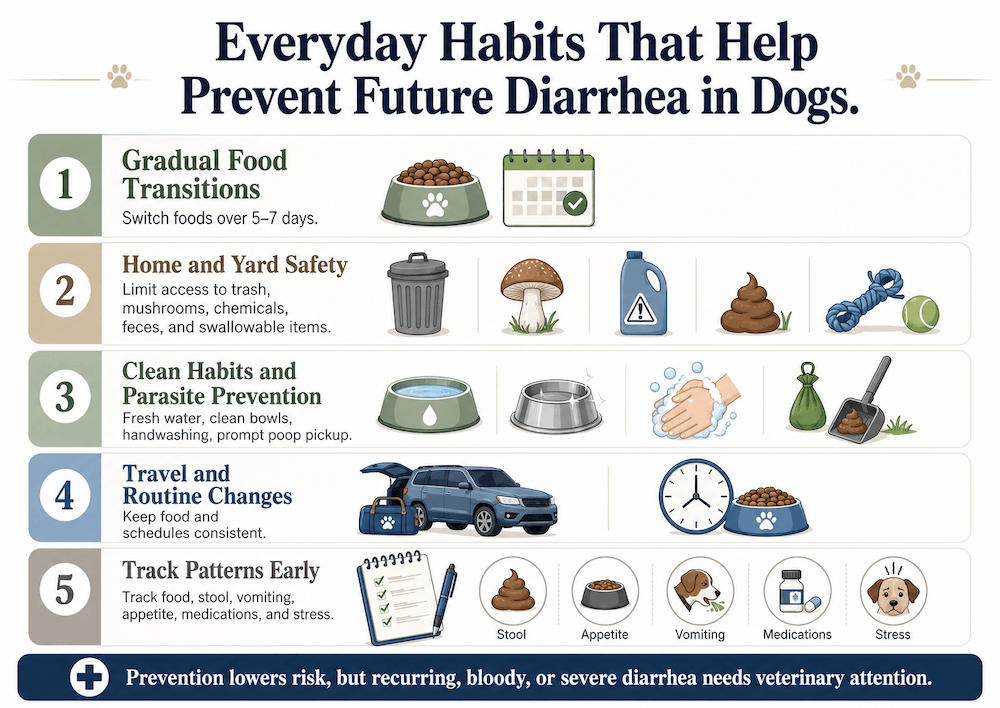
How to Reduce the Risk of Future Diarrhea in Dogs
Introduce new foods gradually unless your veterinarian recommends an immediate change. Keep trash, compost, medications, chemicals, food waste, mushrooms, feces, stagnant water, and swallowable objects out of reach, while maintaining appropriate vaccinations, parasite prevention, prompt waste cleanup, and good hygiene.
Avoid sudden changes in treats, chews, supplements, table food, and routine, especially during travel or boarding. For recurring diarrhea, record your dog’s diet, medications, stool quality, vomiting, appetite, and stressful events so your veterinarian can identify patterns over time.
What Veterinary Research Says About Diarrhea in Dogs
The Merck Veterinary Manual explains that small-intestinal and large-intestinal diarrhea often create different patterns. Larger-volume stool and possible weight loss are more typical of small-intestinal disease, while urgency, mucus, frequent small stools, straining, and fresh blood more often point toward colon involvement. These distinctions help guide testing but do not replace diagnosis.[1]
The WSAVA and ENOVAT guidelines for canine acute diarrhea recommend against routine antimicrobial treatment in mild and moderate cases, including many cases with blood, when the dog does not have severe systemic illness. The guidelines place greater emphasis on mental status, hydration, circulation, fluid therapy, and response to supportive care.[2]
A study published in PLOS ONE found measurable disruption of fecal microbial communities in dogs with acute and chronic gastrointestinal disease. This supports the understanding that diarrhea is associated with intestinal dysbiosis, although microbiome changes may be a consequence, contributor, or combination of both depending on the dog.[3]
A randomized clinical trial published in the Journal of Veterinary Internal Medicine examined metronidazole for acute diarrhea, while later trials and reviews have continued to evaluate antibiotic-sparing approaches. Collectively, this body of work supports using antibiotics selectively rather than treating every loose stool as a bacterial infection.[4]
Frequently Asked Questions
The Bottom Line
Diarrhea in dogs can result from dietary changes, scavenging, stress, parasites, infections, medications, toxins, or underlying disease. A brief, mild episode may improve with careful monitoring, fresh water, and a simple veterinarian-approved diet. However, repeated or persistent diarrhea should not automatically be dismissed as a sensitive stomach. Stool appearance can provide clues, but your dog’s energy, appetite, hydration, age, and accompanying symptoms are more important. Contact a veterinarian promptly if diarrhea occurs with vomiting, blood, black stool, pain, weakness, dehydration, or suspected toxin or foreign-object exposure. Puppies, senior dogs, and dogs with chronic conditions may need care sooner. Recognizing the warning signs helps you respond safely while avoiding unnecessary or potentially harmful home treatments.
For practical next steps, learn what to give a dog with diarrhea and how to stop dog diarrhea safely when symptoms are mild. You can also explore probiotics for dogs with diarrhea and compare the best dog foods for diarrhea to support digestive recovery and help maintain healthier stools.
Sources
- Differentiation of Small Intestinal from Large Intestinal Diarrhea
- ENOVAT GUIDELINES FOR ANTIMICROBIAL USE IN CANINE ACUTE DIARRHEA
- The fecal microbiome in dogs with acute diarrhea and idiopathic inflammatory bowel disease
- Metronidazole treatment of acute diarrhea in dogs: A randomized double blinded placebo-controlled clinical trial