What Are Signs of a Dog Dying of Old Age? 10 Signs & What to Expect


Canine Bible is reader-supported. We receive affiliate commissions via some of our links. Learn more.
Signs that a dog may be dying of old age include extreme weakness, loss of appetite, difficulty standing, reduced awareness, incontinence, and changes in breathing. These symptoms often become more frequent or severe as the body’s major systems begin to decline. However, aging signs can overlap with treatable illnesses, pain, dehydration, or medication side effects. Some dogs withdraw and sleep more, while others become restless, confused, or unusually clingy. The final stage may develop gradually over weeks or appear suddenly after a health crisis. Knowing what each change means can help you recognize suffering, seek veterinary guidance, and make compassionate end-of-life decisions.
Understanding End-of-Life Changes in Senior Dogs
| End-of-Life Change | What It May Mean |
|---|---|
| Reduced mobility | Standing, walking, and changing position may become increasingly difficult. |
| Lower intake | Interest in food and water may decline as illness progresses. |
| Breathing changes | Breaths may become rapid, shallow, irregular, or visibly labored. |
| Behavior changes | Dogs may withdraw, appear confused, become restless, or seek more reassurance. |
| Loss of control | Bladder or bowel accidents may increase as strength and awareness decline. |
| Ongoing discomfort | Panting, trembling, vocalizing, or difficulty settling may signal poor comfort. |
| Declining quality of life | More bad days and unmet basic needs may indicate the need for veterinary guidance. |
Signs a Dog May Be Dying of Old Age
The following signs may appear gradually over weeks or months, or become more pronounced during a dog’s final days. Look for persistent changes from your dog’s normal routine, especially when several signs occur together or continue despite treatment.
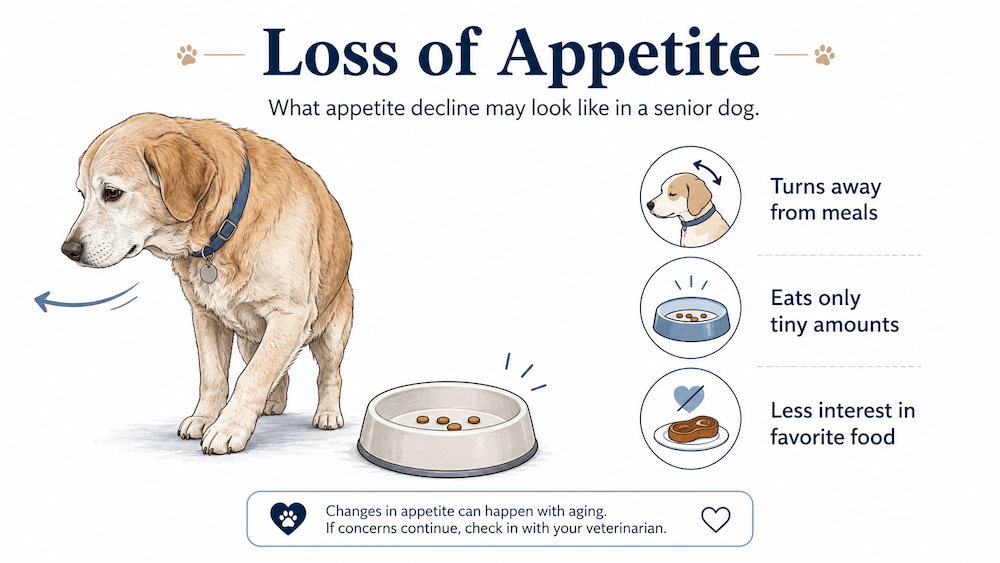
1. Loss of Appetite
A dog nearing the end of life may start refusing regular meals, eating only very small amounts, or ignoring even favorite foods. This becomes more concerning when it happens alongside weakness, weight loss, or reduced interest in daily life.
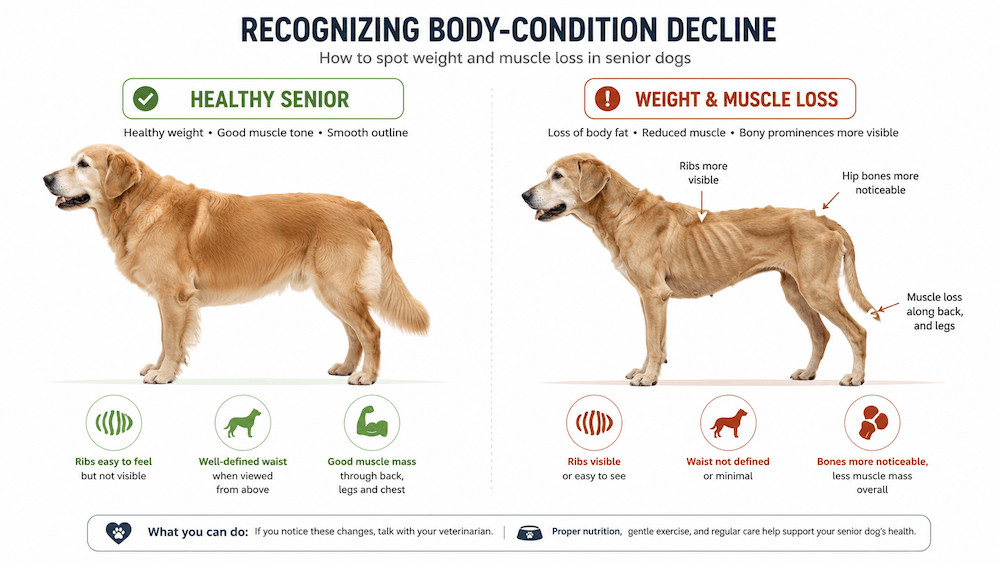
2. Progressive Weight and Muscle Loss
As the body declines, the ribs, spine, hips, or skull may become more noticeable. This kind of gradual wasting is often easier to see over time than from day to day.
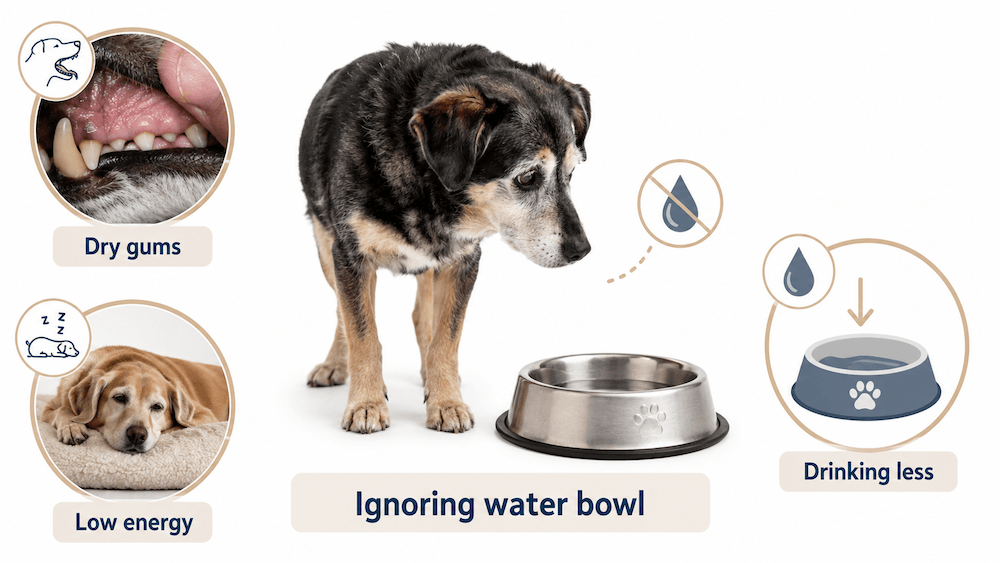
3. Reduced Drinking or Dehydration
Some dogs drink much less as they weaken or become too tired to reach the bowl. Dry gums, sunken eyes, and worsening lethargy may appear as dehydration develops.
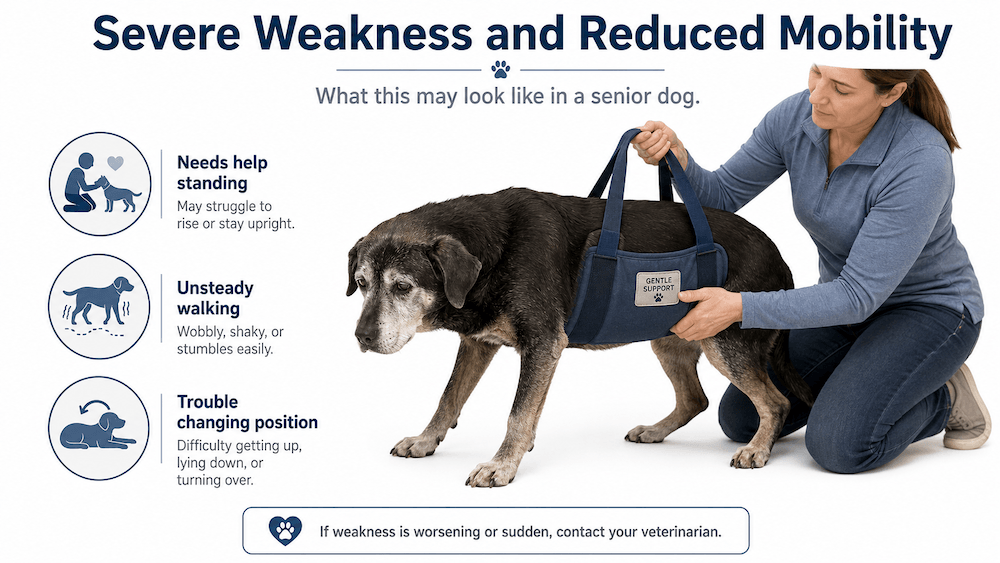
4. Severe Weakness or Reduced Mobility
A senior dog may struggle to rise, walk, change position, or go outside without help. Weakness becomes especially serious when the dog can no longer move comfortably enough to meet basic needs.


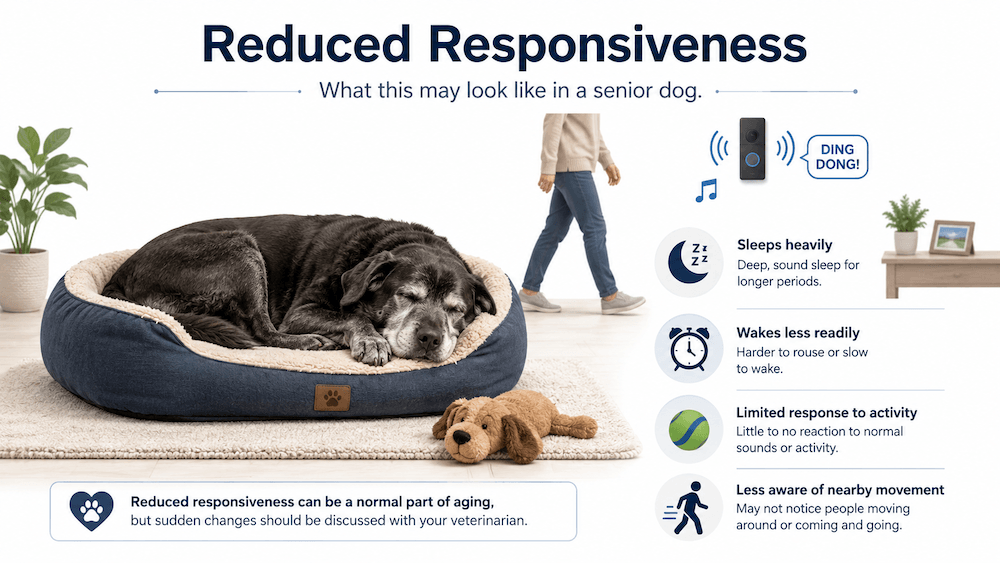
5. Increased Sleep or Reduced Responsiveness
Dogs in decline may sleep most of the day and respond less to voices, touch, or activity around them. This sign is more meaningful when the dog also seems hard to rouse or disconnected from familiar routines.
6. Withdrawal and Loss of Interest
A dog may stop seeking affection, greeting family members, playing, or enjoying familiar routines. Some dogs hide more, while others appear emotionally distant or disengaged.

7. Confusion or Unusual Behavior
End-of-life decline may bring disorientation, pacing, staring, nighttime restlessness, or appearing lost in familiar spaces. These changes can overlap with cognitive decline, but they are more concerning when paired with physical deterioration.

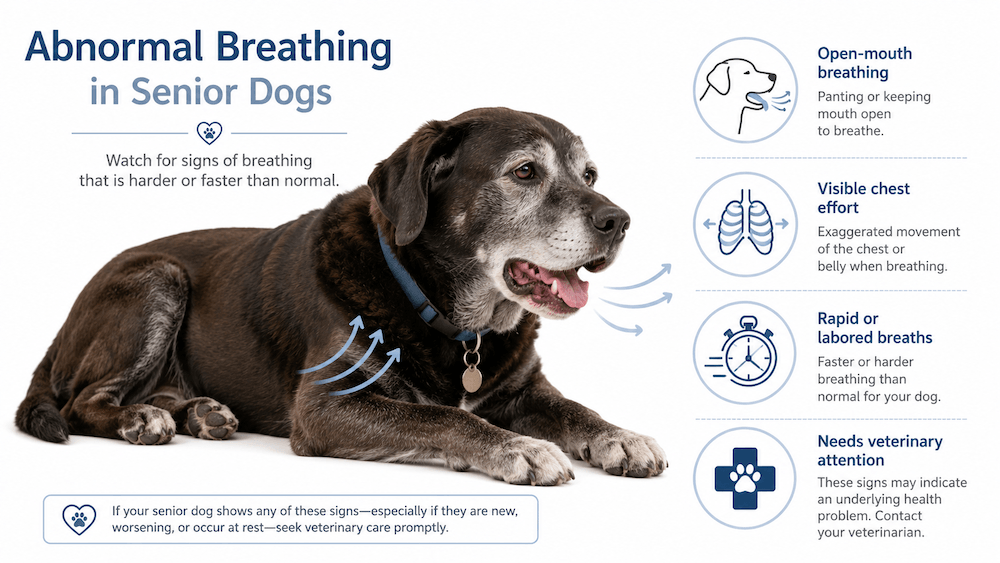
8. Labored or Irregular Breathing
Breathing may become faster, shallower, noisier, or visibly difficult, even at rest. Open-mouth breathing, abdominal effort, or long pauses between breaths are especially concerning signs.
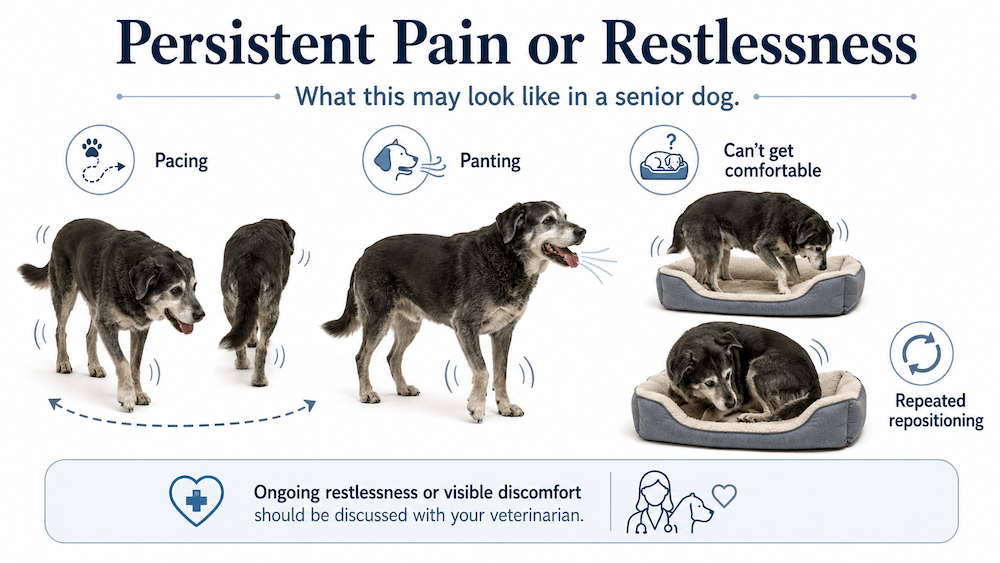
9. Persistent Pain or Restlessness
Pain may appear as panting, trembling, whining, repeated repositioning, or an inability to get comfortable. Some dogs seem agitated rather than obviously painful, especially in the final stage of decline.
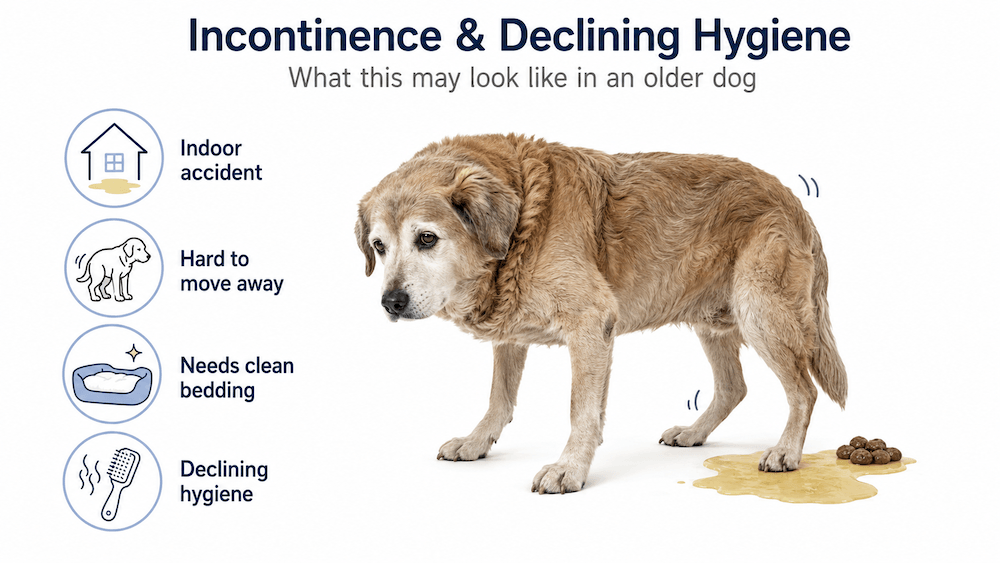
10. Incontinence or Declining Hygiene
Urine or stool accidents may become more frequent, especially when a dog is too weak, confused, or immobile to move away from soiled bedding. Hygiene often declines as the dog loses strength and body control.
These signs can accompany terminal decline, but they can also occur with conditions that may respond to medication, supportive care, rehabilitation, dietary changes, or environmental adjustments. Do not assume that an elderly dog is dying without veterinary assessment, particularly when a change appears suddenly.


What “Dying of Old Age” Actually Means for Dogs
Dogs do not usually die from age itself. “Dying of old age” is an everyday phrase used when an elderly dog’s body is becoming less able to recover from chronic disease, organ dysfunction, frailty, or several medical problems occurring at the same time.
A senior dog may have arthritis, heart disease, cancer, kidney disease, neurologic decline, dental disease, or cognitive dysfunction. Sometimes one condition becomes terminal; in other cases, several moderate problems combine until the dog can no longer eat, move, breathe, rest, or interact comfortably.
Frailty is also different from simply being old. A frail dog has reduced physical reserve and may show weakness, poor endurance, muscle loss, slower movement, and increased vulnerability to illness. Research has found that frailty status can be associated with shorter survival independently of chronological age, although it cannot predict an individual dog’s exact remaining time.
This distinction matters because age should not automatically rule out useful treatment. A 15-year-old dog with manageable arthritis may still have a comfortable and enjoyable life, while a younger dog with advanced organ failure may require end-of-life care.
Normal Aging vs End-of-Life Decline in Dogs
Healthy senior dogs often slow down, sleep more, develop gray hair, lose some hearing or vision, and need extra time to recover after activity. These changes may require adjustments, but they do not necessarily indicate that death is near.
| Area | Possible Senior Change | Concerning Decline | Owner Action |
|---|---|---|---|
| Appetite | Eats more slowly but still finishes regular meals. | Repeatedly refuses food or accepts only hand-fed treats. | Arrange a veterinary examination promptly. |
| Mobility | Rises slowly but walks and toilets independently. | Falls, cannot stand, or avoids moving despite assistance. | Request pain and mobility assessment. |
| Sleep | Sleeps longer but wakes readily and interacts. | Is difficult to rouse or remains distressed overnight. | Record the pattern and accompanying signs. |
| Interaction | Becomes calmer but still enjoys familiar company. | Withdraws completely and loses interest in favorite activities. | Discuss quality of life with your veterinarian. |
| Toileting | Has an occasional accident with an identifiable trigger. | Frequently soils the body or cannot move away. | Check for illness and provide hygiene support. |
| Breathing | Pants briefly after exercise, excitement, or warm weather. | Breathes laboriously, irregularly, or open-mouthed at rest. | Seek urgent or emergency veterinary care. |
| Body Condition | Develops mild age-related muscle reduction over time. | Continues losing weight and muscle despite nutritional support. | Arrange examination and nutrition review. |
| Cognition | Responds more slowly but follows familiar routines. | Paces, stares, gets trapped, or reverses sleep patterns. | Screen for pain, disease, and cognitive dysfunction. |
Dog Health Problems That Can Resemble End-of-Life Decline
Appetite loss, weakness, confusion, withdrawal, accidents, and reduced mobility do not always mean that an older dog is dying. These changes can also result from painful, treatable, or manageable medical problems, particularly when they appear suddenly or worsen over a short period.
| Possible Problem | What Owners May Notice | Why It Resembles Decline | Recommended Action |
|---|---|---|---|
| Pain or Arthritis | Stiffness, trembling, or trouble moving. | Pain can reduce activity, appetite, and interaction. | Request a pain and mobility exam. |
| Dehydration | Weakness, dry gums, or less urination. | Fluid loss can quickly lower energy. | Contact a veterinarian if drinking decreases. |
| Dental Disease | Drooling, slow chewing, or refusing food. | Mouth pain may look like appetite decline. | Arrange an oral exam. |
| Infection | Lethargy, fever, vomiting, or appetite loss. | Illness can cause sudden weakness or withdrawal. | Schedule a prompt veterinary exam. |
| Medication Effects | Sleepiness, confusion, vomiting, or unsteadiness. | Side effects may mimic age-related decline. | Ask the veterinarian to review medications. |
| Organ Disease | Weight loss, thirst, coughing, or weakness. | Organ disease can affect several body functions. | Discuss testing, treatment, and prognosis. |
| Neurological Conditions | Circling, falling, head tilt, or confusion. | Brain or balance problems may look like rapid decline. | Seek prompt care for sudden symptoms. |
| Cognitive Dysfunction | Pacing, staring, accidents, or nighttime waking. | Brain aging can affect awareness and routines. | Ask about screening and symptom management. |
A sudden change should never be dismissed as “just old age.” Prompt veterinary assessment is especially important when an older dog stops eating, cannot stand, becomes disoriented, develops breathing changes, or declines noticeably within hours or days.
What the Final Days or Hours May Look Like for a Dying Dog
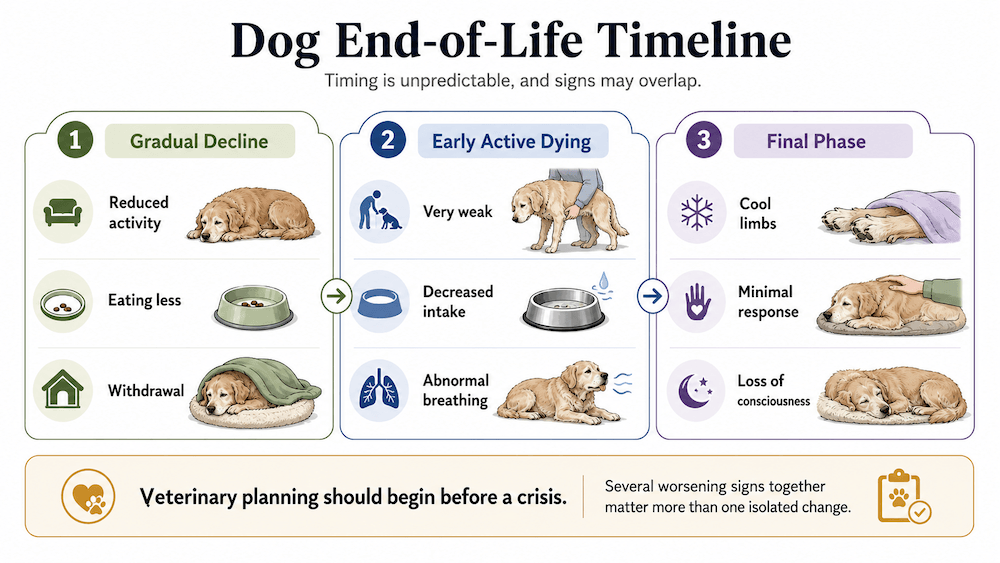
The dying process is highly individual. A dog may decline slowly over months, deteriorate over several days, experience a sudden medical crisis, or have a brief period of apparent improvement before worsening again. It is usually impossible to predict the exact day or hour based only on outward signs.
Gradual End-of-Life Decline
During a gradual decline, owners may notice reduced stamina, weight loss, decreased appetite, difficulty moving, increasing accidents, and less enthusiasm for social contact. The dog may still have comfortable periods, enjoy certain foods, or respond to affection.
This stage does not necessarily mean death is imminent. It is often the appropriate time to discuss prognosis, pain control, mobility support, home nursing, palliative care, and what should happen if the dog has a crisis.
Early Active Dying
As active dying begins, a dog may sleep nearly continuously, withdraw, become confused, eat and drink very little, or alternate between deep fatigue and restlessness. The dog may have difficulty finding a comfortable position or appear less aware of the environment.
Changes can occur rapidly during this stage. A veterinarian or hospice team should already have provided clear instructions about whom to contact, which medications to use, and what symptoms mean the plan needs to change.
The Final Phase
In the final hours, a dog may lose consciousness, develop abnormal or noisy breathing, become incontinent, have cool paws or limbs, show muscle twitching, or stop taking anything by mouth. Gums may become unusually pale, gray, or blue as circulation and oxygen delivery decline.
Abnormal breathing, blue gums, severe agitation, and inability to remain comfortable should not be watched without professional guidance. These signs may reflect active dying, but they may also indicate a treatable emergency in a dog that was not expected to die.
How to Assess a Senior Dog’s Quality of Life
Quality of life is broader than whether a dog is still alive, eating a treat, or wagging occasionally. It includes physical comfort, emotional well-being, mobility, hygiene, appetite, hydration, rest, social engagement, and the ability to enjoy activities that previously mattered to that individual dog.
| Situation | What You May Notice | Recommended Timing | Next Step |
|---|---|---|---|
| Stable Senior Change | Mild slowing without pain, distress, or appetite loss. | Record and discuss at the next examination. | Continue monitoring normal daily functions. |
| Progressive Decline | Weight, appetite, mobility, or engagement steadily decreases. | Schedule a veterinary visit promptly. | Discuss diagnostics, comfort, and prognosis. |
| Poor Quality of Life | Pain, weakness, distress, and bad days persist. | Request a same-day end-of-life discussion. | Review hospice or euthanasia options. |
| Active Crisis | Breathing difficulty, collapse, seizures, or severe uncontrolled pain. | Seek emergency care immediately. | Call while arranging safe transport. |
Quality-of-Life Scale for Senior Dogs
A quality-of-life scale can help you track whether your dog remains comfortable and able to enjoy daily life. Score each category from 0 to 10, with 10 representing the best possible condition and 0 representing severe difficulty. Complete the scale at the same time each day and focus on changes over time rather than one unusually good or bad moment.
| Quality-of-Life Area | 8–10: Doing Well | 4–7: Needs Support | 0–3: Serious Concern |
|---|---|---|---|
| Hurt and Breathing | Pain is controlled, and breathing is comfortable at rest. | Discomfort, panting, stiffness, or restlessness occurs regularly. | Pain or breathing difficulty remains severe despite treatment. |
| Hunger | Eats enough willingly and remains interested in meals. | Needs encouragement, hand-feeding, or frequent food changes. | Consistently refuses food or cannot eat comfortably. |
| Hydration | Drinks normally and shows no signs of dehydration. | Drinks inconsistently or needs veterinarian-directed fluid support. | Cannot maintain hydration or repeatedly refuses water. |
| Hygiene | Stays clean, dry, and free from pressure sores. | Needs regular help after accidents or while repositioning. | Remains soiled, develops sores, or cannot be kept comfortable. |
| Happiness | Responds to family and still enjoys favorite activities. | Shows reduced interest but still has enjoyable moments. | Appears withdrawn, distressed, confused, or consistently disengaged. |
| Mobility | Moves independently or comfortably with minor assistance. | Needs a harness, ramp, medication, or frequent assistance. | Cannot stand, walk, reposition, or toilet without distress. |
| More Good Days | Comfortable and enjoyable days clearly outnumber difficult ones. | Good and bad days occur in roughly equal numbers. | Distressing or uncomfortable days consistently outnumber good ones. |
Add the seven scores for a possible total of 70. A total above 35 may indicate an acceptable quality of life when every essential area remains manageable, while a score of 35 or below deserves a prompt veterinary discussion. However, a very low score for pain or breathing is serious regardless of the total and may require urgent care.
The scale is not a pass-or-fail test and should not determine euthanasia on its own. Record the score daily, note what caused each low rating, and share the pattern with your veterinarian so the care plan can be adjusted before discomfort becomes a crisis.
Helping a Senior Dog Stay Comfortable
Comfort care should be tailored to your dog’s diagnosis and supervised by a veterinarian. Palliative care focuses on easing pain and symptoms during serious illness, while hospice care places comfort at the center when the condition is advanced and no longer curable.
Provide soft, dry bedding near the family, along with non-slip mats, ramps, supportive harnesses, and easy access to food, water, and toileting areas. Keep your dog clean and dry after accidents, and gently reposition dogs who cannot move independently under veterinary guidance.
Offer food and water without forcing them, and give only medications prescribed for that dog. Avoid syringe-feeding, human pain relievers, leftover medicines, or unsupervised dose changes. Keep a written crisis plan with veterinary contacts, transportation details, and clear instructions for what to do if your dog’s comfort declines suddenly.
When to Consider Euthanasia for Your Dog
Euthanasia may be considered when illness or age-related decline causes suffering that can no longer be controlled adequately. The decision should be based on your dog’s overall comfort, daily functioning, prognosis, and response to treatment—not age or one difficult day alone.
Warning signs include persistent pain, serious breathing difficulty, repeated food or water refusal, inability to stand or toilet comfortably, frequent distress, and loss of interest in nearly all meaningful activities. A continuing pattern of low quality-of-life scores or more bad days than good can also indicate that the current care plan is no longer providing enough comfort.
Discuss euthanasia with your veterinarian before an emergency develops. Ask what further decline may look like, which symptoms can still be relieved, and what would indicate that waiting is likely to prolong suffering. Planning early gives you time to consider the timing, location, sedation, family involvement, and aftercare arrangements without making every decision during a crisis.
What to Do If You Think Your Dog Is Dying
Contact your veterinarian or an emergency veterinary hospital and describe exactly what has changed, when it began, and whether your dog can breathe, stand, respond, eat, drink, and toilet normally. Even in a very old dog, sudden deterioration may result from a painful or treatable emergency rather than the natural dying process.
Keep your dog in a quiet, comfortable area on soft, dry bedding while you seek guidance. Minimize unnecessary movement, stay nearby if your presence is calming, and do not force food, water, or medication into a dog who cannot swallow comfortably or is struggling to breathe.
If your dog has a hospice or end-of-life plan, follow the instructions provided and contact the designated veterinary team. Do not wait for a routine appointment when your dog appears unable to breathe or remain comfortable; immediate veterinary support may be needed to relieve suffering or provide humane euthanasia.
What Research Says About End-of-Life Decline in Dogs
The 2023 AAHA Senior Care Guidelines for Dogs and Cats emphasize that changes commonly dismissed as old age may reflect chronic pain, cognitive dysfunction, organ disease, or other treatable conditions. The guidelines recommend assessing pain, mobility, nutrition, cognition, quality of life, and the progression of chronic disease rather than using age alone to guide medical decisions.[1]
The Ohio State University Veterinary Medical Center’s Honoring the Bond program describes quality of life as the dog’s overall physical and mental well-being. Its guidance recommends identifying favorite activities, tracking good and bad days, comparing current behavior with earlier photos or videos, and repeating quality-of-life assessments over time.[2]
The International Association for Animal Hospice and Palliative Care guidelines describe early active-dying changes such as increased sleep, withdrawal, confusion, reduced food and water intake, and restlessness. Later changes may include loss of consciousness, abnormal breathing, respiratory secretions, cold extremities, twitching, and incontinence.[3]
A study published in The Journals of Gerontology: Series A adapted a frailty phenotype for older dogs and found that frail dogs had significantly shorter survival than nonfrail dogs, even after accounting for factors such as age and breed.[4] Separately, a Journal of the American Veterinary Medical Association analysis of Dog Aging Project end-of-life surveys found that pain or suffering was the most frequently reported reason for euthanasia, while poor quality of life became increasingly influential with age.[5]
Frequently Asked Questions
The Bottom Line
Recognizing the signs of a dog dying of old age means looking for a progressive decline in comfort, mobility, appetite, awareness, breathing, and interest in daily life. One isolated symptom does not necessarily mean death is near, because many age-related changes can also result from treatable illness or pain. Track your dog’s good and bad days and note whether medication and supportive care still restore comfort. Contact your veterinarian when symptoms worsen, basic needs become difficult to meet, or your dog appears distressed. Early discussions about palliative care, hospice, and euthanasia can prevent rushed decisions during a crisis. The most compassionate choice is the one that protects your dog from avoidable suffering while honoring the bond you share.
Sources
- 2023 AAHA Senior Care Guidelines for Dogs and Cats
- How Will I Know? Assessing Quality of Life and Making Difficult Decisions for Your Pet
- Animal Hospice and Palliative Care Guidelines
- Canine Model of Human Frailty: Adaptation of a Frailty Phenotype in Older Dogs
- Analysis of 2,570 responses to Dog Aging Project End of Life Survey demonstrates that euthanasia is associated with cause of death but not age