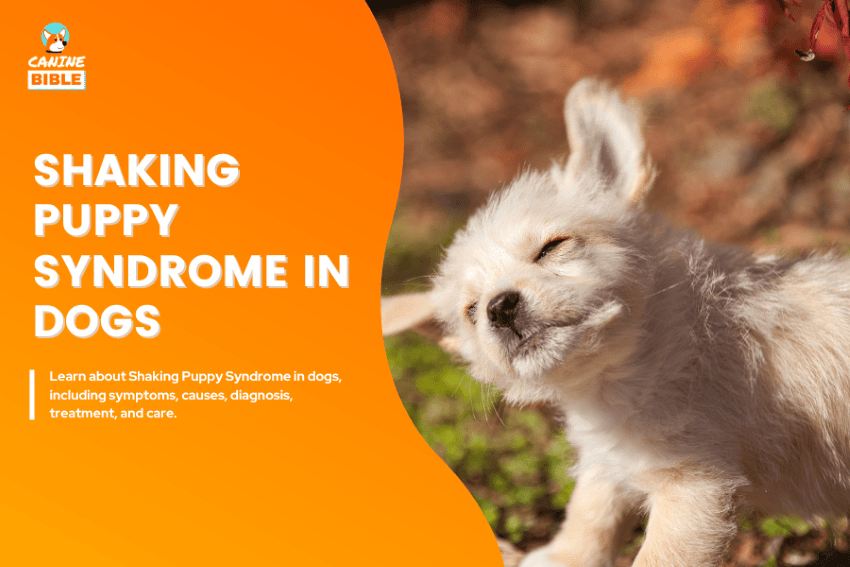
Shaking Puppy Syndrome (Hypomyelination) in Dogs: Symptoms, Types, Causes, Signs & Prevention

Canine Bible is reader-supported. We receive affiliate commissions via some of our links. Learn more.
A comprehensive guide to Shaking Puppy Syndrome (hypomyelination) in dogs, including causes, affected breeds, early signs, diagnosis, treatment, prognosis and what pet parents should know when caring for an affected puppy.
Shaking Puppy Syndrome at a Glance
Most common in
Young puppies, particularly in certain breeds with inherited forms.
Common signs
Tremors, shaking, poor coordination and difficulty walking.
Diagnosis
Neurologic examination, history, imaging and genetic testing when available.
Treatment
Primarily supportive care, environmental management and assistance with daily activities.
Prognosis
Varies by breed and severity; some affected puppies improve as they mature.
Underlying cause
Abnormal development or formation of myelin in the nervous system.
What Is Shaking Puppy Syndrome in Dogs?
Shaking Puppy Syndrome is a neurologic disorder associated with hypomyelination, meaning the protective myelin covering around nerve fibers does not develop normally. Myelin helps electrical signals travel efficiently through the nervous system, so inadequate myelination can interfere with normal movement and coordination. Affected puppies commonly develop noticeable body tremors, an unsteady gait and difficulty coordinating their movements at a young age. The shaking is often most apparent when a puppy is awake, excited or attempting to move and may lessen considerably or disappear during sleep. Several inherited forms of hypomyelination have been identified in dogs, and the severity and long-term outlook can differ depending on the breed and underlying cause.


Types
Shaking Puppy Syndrome can occur in several forms of hypomyelination, with differences depending on the affected breed and underlying genetic cause. Some forms primarily affect the central nervous system, causing generalized tremors, poor coordination, and difficulty walking, while others may involve different patterns of myelin abnormalities. Understanding the specific form can help pet parents and veterinarians better anticipate how symptoms may develop and whether they are likely to improve as the puppy matures.
Central Nervous System Hypomyelination
Abnormal myelin development in the brain and spinal cord can cause generalized tremors, poor coordination and difficulty walking beginning early in puppyhood.
Springer Spaniel Hypomyelination
An inherited form reported in Springer Spaniels that primarily affects male puppies and can produce severe tremors and problems with coordinated movement.
Weimaraner Hypomyelination
A breed-associated form characterized by tremors that usually appear in very young puppies. Clinical signs may become less pronounced as affected dogs mature.
Chow Chow Hypomyelination
Hypomyelination has also been reported in Chow Chows, producing early-onset tremors and impaired coordination associated with abnormal development of nervous-system myelin.
Samoyed Hypomyelination
A hereditary form reported in Samoyeds that can cause tremors, an unsteady gait and other neurologic abnormalities beginning during early development.


Dalmatian Hypomyelination
A rare breed-associated form in which inadequate myelin formation can interfere with normal nerve signaling and produce tremors and coordination problems in young puppies.
Peripheral Nervous System Hypomyelination
Less commonly, abnormal myelin formation can involve peripheral nerves, potentially causing weakness, abnormal reflexes and impaired movement rather than predominantly generalized tremors.
Other & Unclassified Forms
Hypomyelination has been described in additional breeds and individual dogs. The inheritance pattern, severity and expected progression can differ depending on the underlying abnormality.
Predisposed Dog Breeds
While Shaking Puppy Syndrome (hypomyelination) can affect any dog, certain breeds have a higher genetic risk. Factors such as inherited traits and abnormal myelin development make some breeds more prone to hypomyelination than others.
| Breed / Group | Breeds | Notes on Risk Factors |
|---|---|---|
| Spaniel Breeds | English Springer Spaniel | A hereditary form of hypomyelination has been reported in English Springer Spaniels. Affected puppies can develop generalized tremors and difficulty with coordinated movement. |
| Sporting Breeds | Weimaraner | Weimaraners are associated with an inherited form of hypomyelination. Tremors generally become apparent in young puppies and may improve as the dog matures. |
| Northern Breeds | Samoyed | Hereditary hypomyelination has been described in Samoyeds. Abnormal myelin development can interfere with normal nerve signaling and cause tremors and coordination problems. |
| Spitz-Type Breeds | Chow Chow | Hypomyelination has been reported in Chow Chows and may cause early-onset shaking, an unsteady gait, and other abnormalities involving coordination. |
| Non-Sporting Breeds | Dalmatian | A rare breed-associated form of hypomyelination has been reported in Dalmatians. Inadequate myelin formation may lead to tremors and impaired coordination during puppyhood. |
| Other Dogs | Other breeds and mixed-breed dogs | Hypomyelination can occur outside recognized breed-associated forms. The underlying cause, inheritance pattern, severity, and progression may vary between affected dogs. |
Causes
Shaking Puppy Syndrome (hypomyelination) in dogs usually develops from inherited genetic abnormalities that disrupt normal myelin formation rather than a single acquired cause. While the underlying genetic defect can vary among breeds, understanding the factors that affect myelin development can help pet parents recognize at-risk puppies, pursue appropriate veterinary testing, and make informed breeding decisions.
Genetics
Shaking Puppy Syndrome is commonly associated with inherited genetic abnormalities that interfere with the normal development and formation of myelin in the nervous system.
Abnormal Myelin Development
Hypomyelination occurs when nerve fibers do not develop enough of their protective myelin coating, disrupting efficient nerve signal transmission and normal motor control.
Breed Predisposition
Inherited forms of hypomyelination have been reported in certain dog breeds, making genetics and family history important risk factors for affected puppies.
Sex-Linked Inheritance
In some breed-associated forms, hypomyelination can follow a sex-linked inheritance pattern, causing male puppies to be affected more frequently or more severely.
Developmental Abnormality
The disorder develops while the puppy’s nervous system is maturing. Inadequate myelin formation during this early period can lead to tremors and impaired coordination.
Family History
Puppies born to carrier or affected bloodlines may have a greater risk of inherited hypomyelination. Responsible breeding practices can help reduce transmission in susceptible lines.
Other or Unknown Causes
Not every case has a clearly identified genetic cause. Rare cases of hypomyelination may occur without a confirmed inherited mutation or recognized breed-associated pattern.
Symptoms
Shaking Puppy Syndrome symptoms in dogs can vary depending on the severity, extent, and location of hypomyelination. Some signs may be mild at first, while others become more noticeable as puppies begin standing and walking. Common warning signs include body tremors, shaking, poor coordination, an unsteady gait, difficulty standing or walking, and abnormal movements. Because similar symptoms can also be caused by other neurological or metabolic conditions, any persistent or unusual changes should be evaluated by a veterinarian.
- Generalized body tremors
- Shaking that worsens with activity
- Reduced tremors during sleep
- Unsteady or wobbly gait
- Poor coordination
- Difficulty standing or walking
- Wide-based stance
- Abnormal limb movements
- Frequent stumbling or falling
- Difficulty performing controlled movements
Hypomyelination primarily affects movement, balance and coordination.
Stages & Progression of Shaking Puppy Syndrome in Dogs
Shaking Puppy Syndrome in dogs can progress differently depending on the severity of hypomyelination, the affected breed, and the underlying genetic abnormality. Signs typically become noticeable during early puppyhood as puppies begin standing and walking. Understanding the progression of the condition can help pet parents recognize changes in tremors, coordination, and mobility, and determine what supportive care may be needed.
Early Puppyhood
Hypomyelination is present during early nervous-system development, although signs may not be obvious immediately after birth.
Onset of Signs
Tremors typically become noticeable during early puppyhood, particularly when the puppy is awake, active, excited, or attempting purposeful movement.
Developing Mobility
As the puppy begins standing and walking, an unsteady gait, poor coordination, stumbling, and difficulty controlling movements may become more apparent.
Later Course
The long-term course varies with the underlying form and breed. Some affected puppies may show reduced tremors as they mature, while others can have persistent neurologic signs.
Shaking Puppy Syndrome does not have a formal Stage I–IV staging system. This chart is a simplified developmental guide; the age of onset, severity, and long-term progression can vary among affected puppies and breed-associated forms of hypomyelination.
Top Ways to Prevent Shaking Puppy Syndrome in Dogs
Because Shaking Puppy Syndrome (hypomyelination) is often an inherited developmental disorder, prevention primarily focuses on responsible breeding and genetic risk management. By avoiding breeding affected dogs or known carriers, reviewing family health histories, and using genetic testing when available, the risk of passing inherited hypomyelination to future puppies may be reduced.
| Prevention Strategy | Why It Helps | How to Do It |
|---|---|---|
| Avoid Breeding Affected Dogs | Some forms of Shaking Puppy Syndrome are inherited, so breeding affected dogs may pass the underlying genetic abnormality to puppies. | Remove affected dogs from breeding programs and discuss inherited hypomyelination with a veterinarian or veterinary geneticist. |
| Identify Carrier Dogs | Dogs carrying an inherited variant may appear healthy but can still pass the genetic abnormality to their offspring. | Use breed-appropriate genetic testing when a validated test is available and review results before planning a breeding. |
| Review Family Health History | A history of affected puppies or related dogs can indicate an increased hereditary risk within a bloodline. | Review pedigrees and breeder health records for known cases of hypomyelination, tremors, or related neurologic disorders. |
| Use Responsible Breeding Practices | Careful breeding decisions can help reduce the likelihood of inherited hypomyelination being passed to future generations. | Follow breed-specific genetic recommendations and avoid breeding combinations known to place puppies at increased risk. |
| Seek Genetic Counseling | Inheritance patterns can differ between breed-associated forms of hypomyelination. | Consult a veterinarian, veterinary neurologist, or genetics professional when planning breeding from an at-risk bloodline. |
| Choose Breeders Carefully | Responsible breeders monitor hereditary disorders and make breeding decisions intended to reduce genetic disease within their lines. | Ask about neurologic disease in the puppy’s relatives, available genetic testing, and the health history of both parents. |
| Monitor Puppies Early | Early recognition does not prevent inherited hypomyelination, but it can help affected puppies receive appropriate evaluation and supportive care sooner. | Watch young puppies for persistent tremors, poor coordination, stumbling, or difficulty standing and walking as they develop. |
| Schedule Veterinary Evaluation | Tremors can have causes other than hypomyelination, making an accurate veterinary assessment important. | Have puppies with persistent shaking or abnormal movement evaluated by a veterinarian, particularly when related dogs have similar signs. |
Actionable Resources
If you want to help reduce the risk of inherited Shaking Puppy Syndrome or support an affected dog, here are some things you can do under veterinary guidance.
How Is Shaking Puppy Syndrome in Dogs Diagnosed
Diagnosing Shaking Puppy Syndrome (hypomyelination) in dogs requires a comprehensive veterinary and neurological evaluation to identify characteristic tremors and coordination problems while ruling out other possible causes. Key steps include:
1. History & Physical Examination
Your veterinarian reviews the puppy’s age, breed, family history, age when the shaking began, and how the tremors change during activity, excitement, rest, or sleep.
2. Neurological Examination
A neurological examination evaluates the puppy’s tremors, gait, balance, coordination, posture, reflexes, and limb movements to help determine which parts of the nervous system are affected.
3. Laboratory Tests
Bloodwork, urinalysis, and other laboratory tests may be used to rule out metabolic abnormalities, infections, and other illnesses that can cause tremors or abnormal movement.
4. Advanced Imaging
MRI may be recommended to evaluate the brain and spinal cord and look for abnormalities that support hypomyelination or help rule out other neurological disorders.
5. Genetic Testing
For some inherited forms of hypomyelination, genetic testing may help identify a disease-associated variant and support the diagnosis when an appropriate breed-specific test is available.
6. Diagnosis & Rule-Outs
Veterinarians combine the puppy’s history, characteristic neurological signs, test results, and breed information while ruling out other causes of tremors before reaching a diagnosis.
Early diagnosis is important because recognizing Shaking Puppy Syndrome early can help veterinarians rule out other causes of tremors and begin appropriate supportive care to improve the puppy’s mobility, safety, and quality of life.
Nutritional Support & Supplements
Proper nutrition can play an important supportive role for dogs with Shaking Puppy Syndrome by helping maintain healthy growth, energy, muscle development, and overall neurological health. Depending on your puppy’s individual needs, veterinarians may recommend a complete and balanced puppy diet and, when appropriate, specific nutritional supplements such as omega-3 fatty acids. Supplements should be used under veterinary guidance, as nutrition can support overall health but cannot correct the underlying hypomyelination.
Important: Nutrition and supplements may support
overall health but cannot correct the underlying hypomyelination.
Always discuss supplements or major dietary changes with your
veterinarian, especially for a growing puppy with neurological signs.
Supportive care—such as safe mobility assistance, nutritional support, physical rehabilitation, and lifestyle adjustments—plays an important role in maintaining comfort and quality of life for dogs with Shaking Puppy Syndrome. These measures can help affected puppies move more safely, maintain strength, and adapt to coordination difficulties, although they do not correct the underlying hypomyelination. Any diet, supplement, exercise, or rehabilitation plan should be reviewed with your veterinarian or veterinary neurologist.
Over-the-Counter Products
Over-the-counter treatments and supplements mentioned in this article for shaking puppy syndrome in dogs can be found on Amazon and Chewy.


Always consult your veterinarian before starting any new treatment, medication, or home-care regimen for canine shaking puppy syndrome. Puppies and dogs with persistent vomiting, diarrhea, weakness, or dehydration may require prompt veterinary care. If you can’t reach your vet, you can chat live with a registered online veterinary professional via our online vet chat or video chat support (24 hours a day, 7 days a week). Or use Chewy’s online vet services (6 a.m. – midnight ET).
Treatment & Care
Treatment for Shaking Puppy Syndrome (hypomyelination) in dogs is primarily supportive, as there is currently no specific treatment that can correct abnormal myelin development. Care may include physical rehabilitation, mobility assistance, environmental modifications, nutritional support, and injury prevention to help affected puppies move safely and maintain their quality of life. Some puppies may experience reduced tremors and improved coordination as they mature, although outcomes vary depending on the underlying form and severity of hypomyelination.
Medications
Common medications used to treat shaking puppy syndrome in dogs include:
| Treatment / Support | Examples | How It Is Used | Important Considerations |
|---|---|---|---|
| Supportive Care | Daily assistance, monitoring, safe handling | Helps affected puppies manage tremors, poor coordination, and difficulty performing normal daily activities. | There is no specific treatment that corrects the underlying hypomyelination, so care is generally focused on safety, function, comfort, and quality of life. |
| Physical Rehabilitation | Controlled exercises, assisted movement, rehabilitation therapy | May help puppies maintain muscle strength, mobility, balance, and confidence while learning to compensate for poor coordination. | Exercise should be appropriate for the puppy’s abilities. Overexertion or unsafe activities may increase the risk of stumbling, falling, or injury. |
| Mobility Assistance | Support harnesses, slings, assisted walking | Provides additional stability for puppies that have difficulty standing or walking because of tremors and poor coordination. | Mobility aids should fit properly and be selected according to the puppy’s size, strength, and individual needs. |
| Environmental Modification | Non-slip flooring, padded areas, ramps, blocked stairs | Creates a safer environment for puppies that stumble, lose their balance, or have difficulty controlling their movements. | Slippery floors, steep stairs, sharp furniture edges, and unprotected elevated surfaces may increase the risk of injury. |
| Nutritional Support | Complete puppy diet, appropriate calorie intake, hydration | Supports normal growth, muscle development, energy needs, and overall health during puppyhood. | Nutrition supports general health but does not reverse hypomyelination. Supplements should only be used when recommended by a veterinarian. |
| Feeding Assistance | Stable bowls, supervised feeding, assisted feeding when needed | Helps puppies with pronounced tremors or poor coordination eat and drink more safely and consistently. | Puppies that cannot eat or drink normally should be evaluated promptly because inadequate nutrition and hydration can become serious concerns. |
| Injury Prevention | Padded resting areas, restricted heights, supervised activity | Reduces the chance of injury from falls, collisions, or uncontrolled movements. | Puppies with significant coordination problems may require closer supervision, particularly around stairs, furniture, pools, and other hazards. |
| Medications | Veterinarian-prescribed medications when clinically indicated | Medication may be prescribed if an affected puppy has another condition or symptom that requires specific medical management. | No medication is currently established to restore the abnormal myelin responsible for Shaking Puppy Syndrome. Treatment should be individualized by a veterinarian. |
| Veterinary Monitoring | Neurological exams, growth monitoring, follow-up evaluations | Allows veterinarians to monitor changes in tremors, coordination, mobility, growth, and overall quality of life as the puppy matures. | The clinical course varies. Some affected puppies may improve as they mature, while neurological signs can persist in others. |
| Specialist Care | Veterinary neurologist, rehabilitation veterinarian | Specialist evaluation may help confirm the diagnosis, rule out other neurological diseases, and develop an individualized management and rehabilitation plan. | Referral may be particularly useful when signs are severe, worsening, atypical, or the diagnosis remains uncertain. |
Alternative & Integrative Therapies
Integrative and supportive therapies can help manage tremors, improve mobility, and enhance quality of life for dogs with Shaking Puppy Syndrome (hypomyelination). Options such as physical rehabilitation, massage therapy, hydrotherapy, and comfort-focused care may be used alongside conventional supportive care. While these therapies cannot correct the underlying hypomyelination, they may help maintain muscle strength, improve movement, and support overall well-being. Any integrative therapy should be discussed with your veterinarian to ensure it is safe and appropriate for your puppy.
Surgical Options
Surgery is not a standard treatment for Shaking Puppy Syndrome (hypomyelination) because the condition results from abnormal development of myelin within the nervous system rather than a structural problem that can be surgically corrected. Treatment instead focuses on supportive care, physical rehabilitation, mobility assistance, injury prevention, and improving quality of life. Surgery would generally only be considered if a dog develops a separate medical condition requiring surgical treatment. Your veterinarian or veterinary neurologist can determine the most appropriate management plan based on the severity of the neurological signs, mobility, and overall health of your puppy.
Emotional & Lifestyle Impact
Shaking Puppy Syndrome can be emotionally challenging for both affected dogs and their families. Puppies may experience difficulties with mobility, coordination, balance, and everyday activities, which can require additional supervision and lifestyle adjustments. With thoughtful care, a safe environment, and appropriate support, many affected puppies can continue to enjoy comfortable, engaging, and fulfilling lives as they grow.
For Dogs
- May experience tremors, shaking, and poor coordination
- May need help with standing, walking, or daily activities
- Safe surroundings can reduce the risk of falls and injuries
- Gentle exercise and rehabilitation may support mobility
- Can still enjoy play, affection, and time with family
For Pet Parents
- It’s normal to feel worried or uncertain about your puppy’s future
- Focus on safety, comfort, mobility, and quality of life
- Adapt your home with non-slip surfaces and protected areas
- Work closely with your veterinarian or veterinary neurologist
- Celebrate progress and enjoy everyday activities together
“Shaking Puppy Syndrome may change how your puppy moves, but it doesn’t take away the joy. Focus on safe adventures, small victories, and the bond you share.”
Brighter tomorrows.
Shaking Puppy Syndrome Prognosis
A dog’s prognosis with Shaking Puppy Syndrome (hypomyelination) depends on several factors, including the underlying form of hypomyelination, severity of neurological signs, affected breed, and level of supportive care. Some affected puppies may experience reduced tremors and improved coordination as they mature, while others may continue to have neurological signs throughout life. Working closely with your veterinary team can help monitor progress, manage mobility challenges, prevent injuries, and maintain the best possible quality of life for your dog.
Key Factors That Influence Prognosis
Typical Annual Cost of Treating Canine Shaking Puppy Syndrome (Hypomyelination)
| Category | Estimated Cost Range | Notes |
|---|---|---|
| Initial Veterinary Evaluation | $100 – $300+ | Includes a physical examination, medical history, and initial assessment of tremors, coordination, gait, and other neurological signs. |
| Veterinary Neurologist Consultation | $200 – $500+ | A specialist neurological examination may help localize the problem, evaluate characteristic signs, and determine which additional tests are appropriate. |
| Bloodwork & Laboratory Testing | $150 – $500+ | Bloodwork and other laboratory tests may be recommended to rule out metabolic, infectious, or other medical causes of tremors. |
| MRI & Advanced Neurological Testing | $2,000 – $5,000+ | Advanced imaging may be recommended in selected cases to evaluate the brain and spinal cord and exclude other neurological disorders. |
| Genetic Testing | $100 – $300+ | Breed-specific genetic testing may help support the diagnosis of certain inherited forms of hypomyelination when an appropriate test is available. |
| Physical Rehabilitation | $50 – $150+ per session | Rehabilitation may include controlled exercises and other techniques designed to support strength, mobility, balance, and safe movement. |
| Mobility & Safety Equipment | $50 – $500+ | Harnesses, slings, non-slip flooring, ramps, padded areas, and other home modifications may help reduce falls and injuries. |
| Nutritional Support & Supplements | $200 – $1,000+ per year | May include a complete and balanced puppy diet and veterinarian-recommended nutritional support. Supplements do not correct the underlying hypomyelination. |
| Follow-Up Veterinary Care | $100 – $500+ per visit | Follow-up examinations may be used to monitor tremors, coordination, mobility, growth, and overall quality of life as the puppy matures. |
| Pet Insurance Coverage | Varies | Coverage varies by provider and policy. Congenital or hereditary conditions may have specific eligibility requirements, exclusions, waiting periods, or coverage limits. |
| Typical Cost | Costs vary widely: puppies requiring only veterinary evaluation and supportive care may have relatively modest expenses, while referral to a neurologist, MRI, genetic testing, and ongoing rehabilitation can increase total costs substantially. | |
Shaking Puppy Syndrome care can add up quickly — from daily medications to possible surgeries. Pet insurance can ease the financial burden and ensure your dog gets the best treatment without compromise. If you want to compare plans and find out which providers offer the best coverage for shaking puppy syndrome and chronic conditions, check out our full guides to the Best Pet Insurance for Dogs and Best Pet Wellness Plans.
Related Health Conditions
Some health conditions are related to Shaking Puppy Syndrome because they may affect the nervous system, cause tremors or abnormal movements, or produce similar problems with balance and coordination. Understanding these related conditions can help dog owners recognize overlapping signs, learn what else veterinarians may consider during diagnosis, and better understand how hypomyelination differs from other neurological disorders.
- Degenerative Myelopathy
- Vestibular Disease
- Seizures
- Epilepsy
- Congenital neurological disorders
- Other inherited myelin disorders
- Cerebellar disorders and ataxia
- Metabolic disorders that cause tremors
- Toxin-related tremors
- Infectious or inflammatory neurological disease
Frequently Asked Questions
The Bottom Line
Shaking Puppy Syndrome (hypomyelination) can be challenging for both puppies and their families, but many affected dogs can still enjoy comfortable, fulfilling lives with appropriate supportive care. Although there is no specific treatment that corrects the underlying abnormal myelin development, some puppies may experience reduced tremors and improved coordination as they mature. By providing a safe environment, supporting mobility, preventing injuries, maintaining proper nutrition, and scheduling regular veterinary checkups, you can help your puppy adapt to neurological challenges. Above all, your patience, care, and commitment can make a meaningful difference in your dog’s comfort, confidence, and overall quality of life.