What to Do When a Dog Has a Seizure: 8 Safe Steps (& Warning Signs)


Canine Bible is reader-supported. We receive affiliate commissions via some of our links. Learn more.
When a dog has a seizure, stay calm, keep the dog away from stairs, furniture, and sharp objects, and time how long the seizure lasts. Do not hold the dog down or put your hands in its mouth. Most seizures pass within a few minutes, but a seizure lasting more than five minutes, repeated seizures, or a first-time seizure needs urgent veterinary guidance. What happens before, during, and after the seizure can help your vet understand the cause. Some dogs recover quickly, while others seem confused, restless, hungry, or temporarily unsteady afterward. Knowing what is normal, what is dangerous, and what not to do can make the moment less frightening. This guide explains how to respond safely, when to call a vet, and what signs may point to a more serious problem.
What a Dog Seizure Looks Like & Why Timing Matters
| What You May See | Why Timing Matters |
|---|---|
| Sudden collapse | A dog may fall over, become stiff, or lose awareness when seizure activity begins. |
| Paddling or jerking | Rhythmic leg movements, twitching, or full-body shaking can help identify the active seizure phase. |
| Drooling or foaming | Excess saliva is common during seizures and does not mean the dog is choking. |
| Loss of control | Some dogs urinate, defecate, or vocalize because they are not consciously controlling their body. |
| Focal signs | Face twitching, chewing motions, or one-sided movements may be a partial seizure. |
| Confused recovery | Afterward, a dog may pace, stumble, seem blind, act hungry, or appear disoriented. |
| Long or repeated episodes | A seizure over five minutes or multiple seizures in 24 hours needs urgent veterinary care. |
What to Do When a Dog Has a Seizure: 8 Safe Steps
During a seizure, your dog is not fully aware of their surroundings and cannot control their movements. That means well-meaning actions like holding them, opening their mouth, or trying to comfort them face-to-face can accidentally hurt both of you. Your job is to manage the environment, track the episode, and prepare for veterinary guidance if the seizure lasts too long, repeats, or recovery looks abnormal.
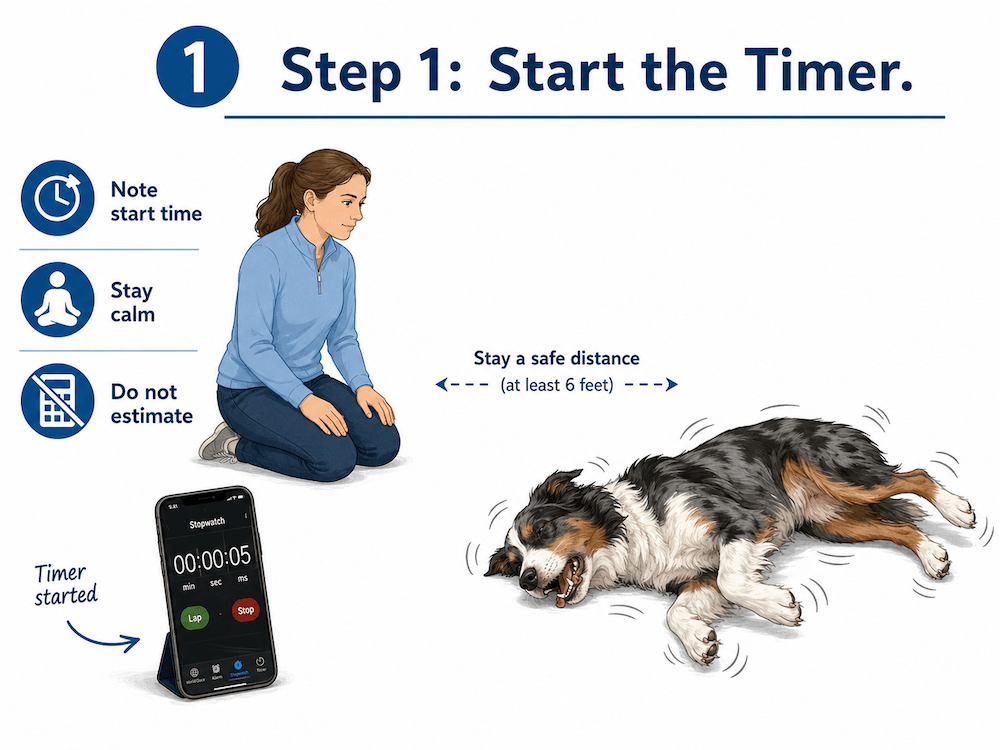
Step 1: Stay Calm and Start a Timer
Start timing the seizure as soon as you notice abnormal movements or altered awareness. Use your phone timer rather than estimating. Note whether the seizure started suddenly, followed by unusual behavior, happened during sleep, occurred after eating or playing, or came after possible toxin exposure.
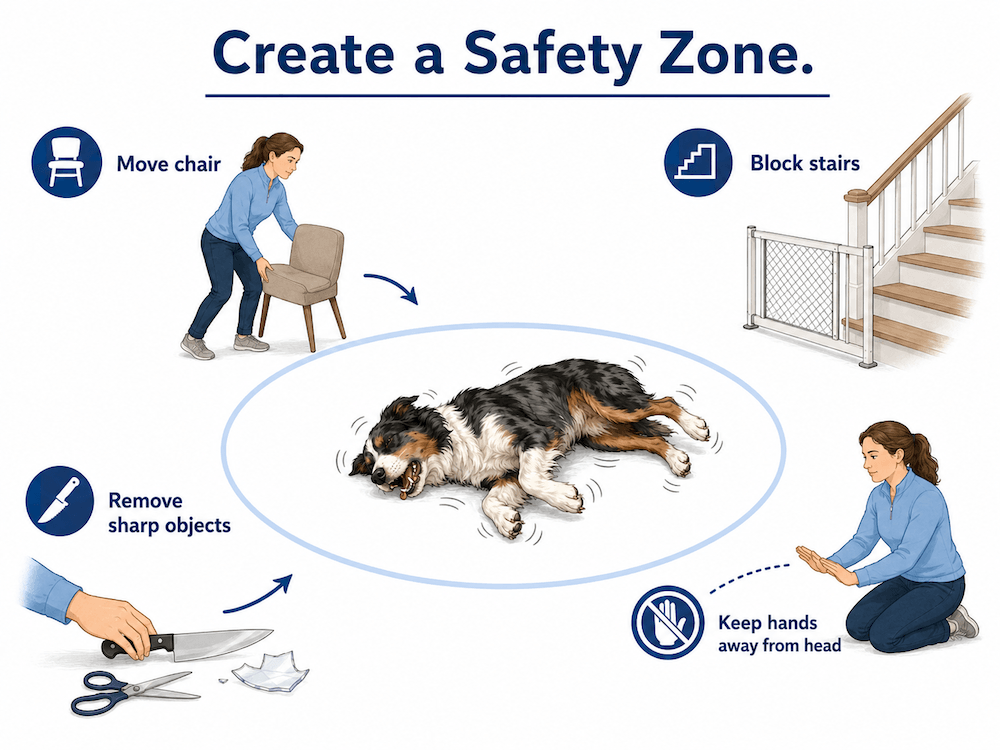
Step 2: Move Hazards Away, Not the Dog
Clear furniture, sharp objects, cords, toys, glass items, or anything that could fall onto your dog. If your dog is near stairs, a pool, a balcony, a fireplace, or a hard edge, block access only if you can do so safely. Place a folded towel, pillow, or blanket nearby as a buffer if it does not require you to put your hands near your mouth or head.
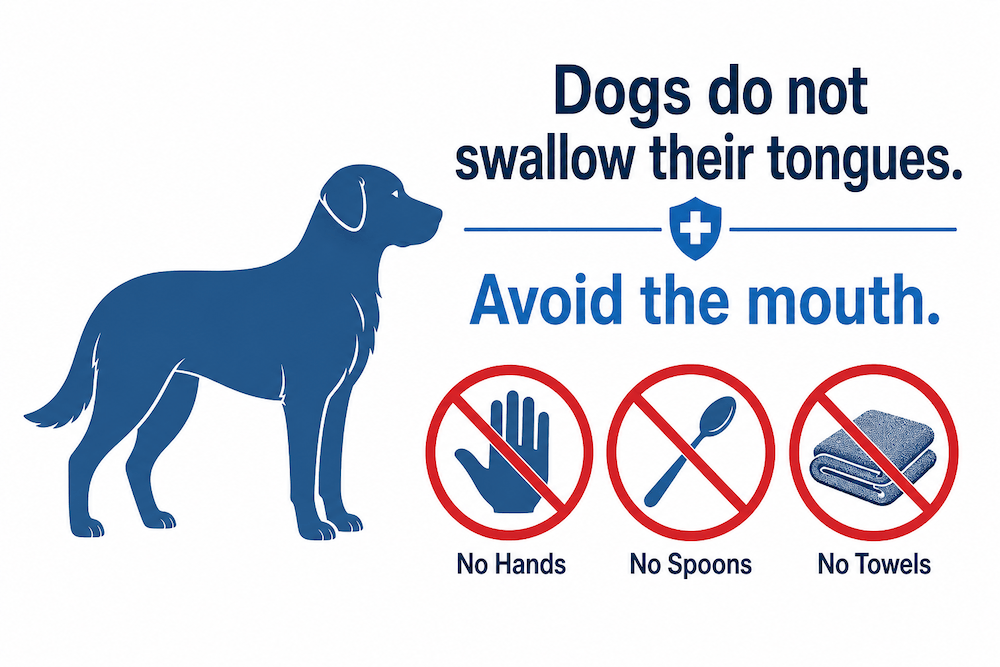
Step 3: Do Not Put Anything in Your Dog’s Mouth
Do not put your fingers, a spoon, a towel, medication, water, food, or any object into your dog’s mouth during a seizure. Dogs do not swallow their tongues during seizures, and trying to open the mouth can lead to a serious bite or injury to the dog. Putting fingers or objects into the mouth will not help and creates a high risk of being badly bitten.


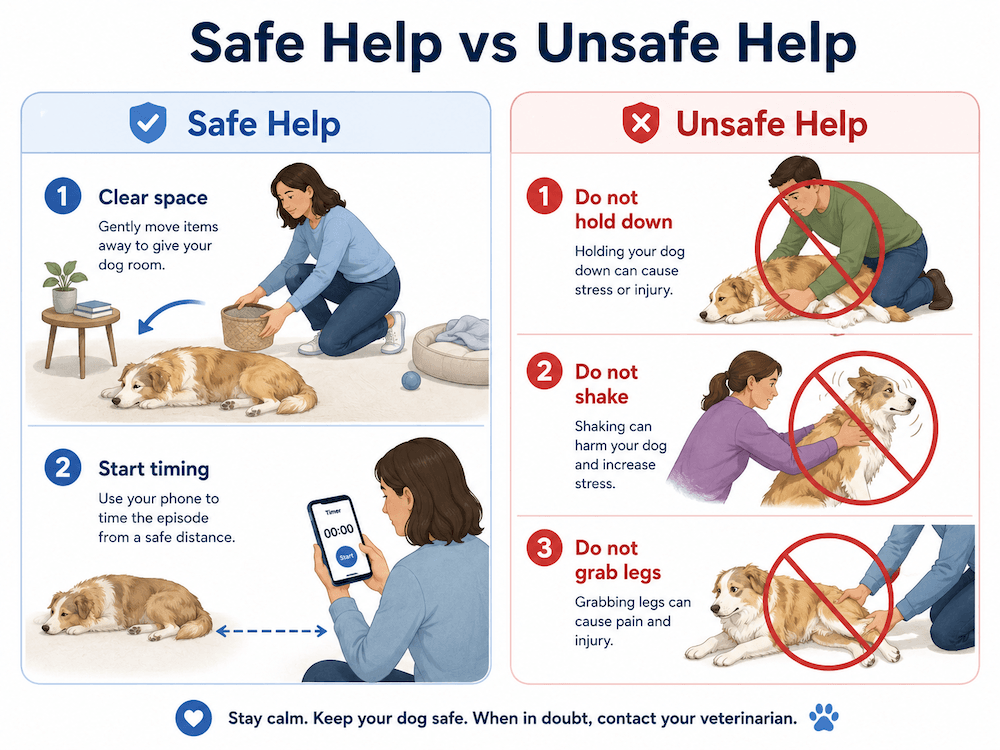
Step 4: Do Not Restrain the Seizure
Avoid holding your dog down, hugging them, pinning their legs, or trying to stop the paddling. Restraint can increase stress, cause injury, and put your face and hands close to uncontrolled movements.
Step 5: Reduce Noise, Bright Light, and Heat
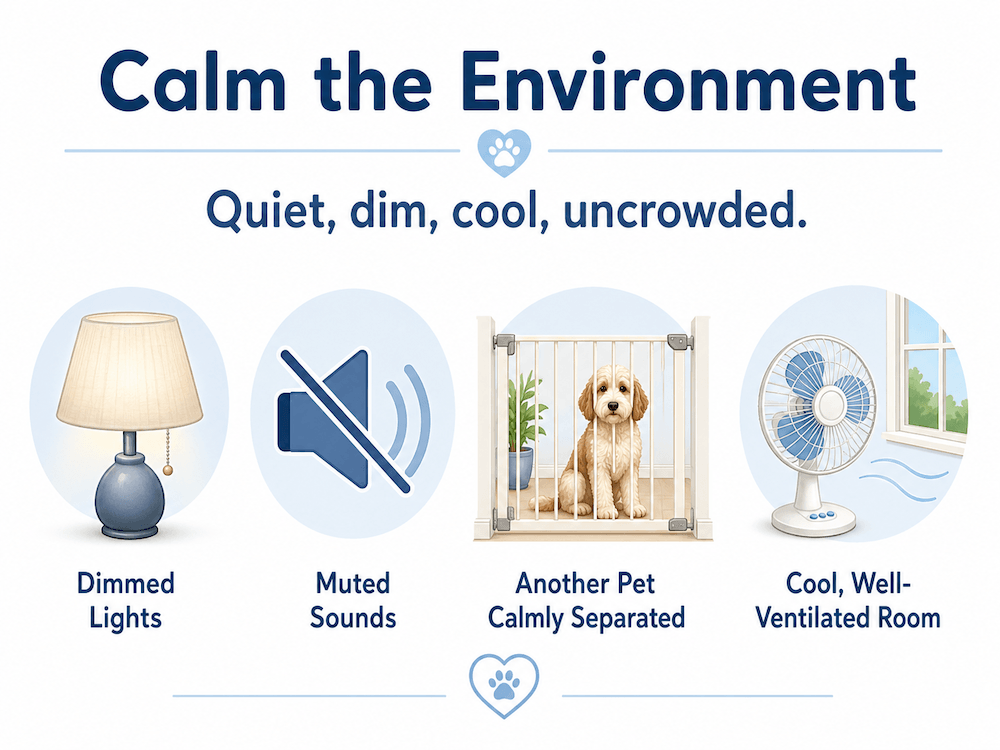
Dim the lights, turn off loud music or the TV, ask people to step back, and keep other pets away. A quiet environment helps reduce extra stimulation and prevents other animals from reacting unpredictably.
Step 6: Record a Short Video If It Is Safe
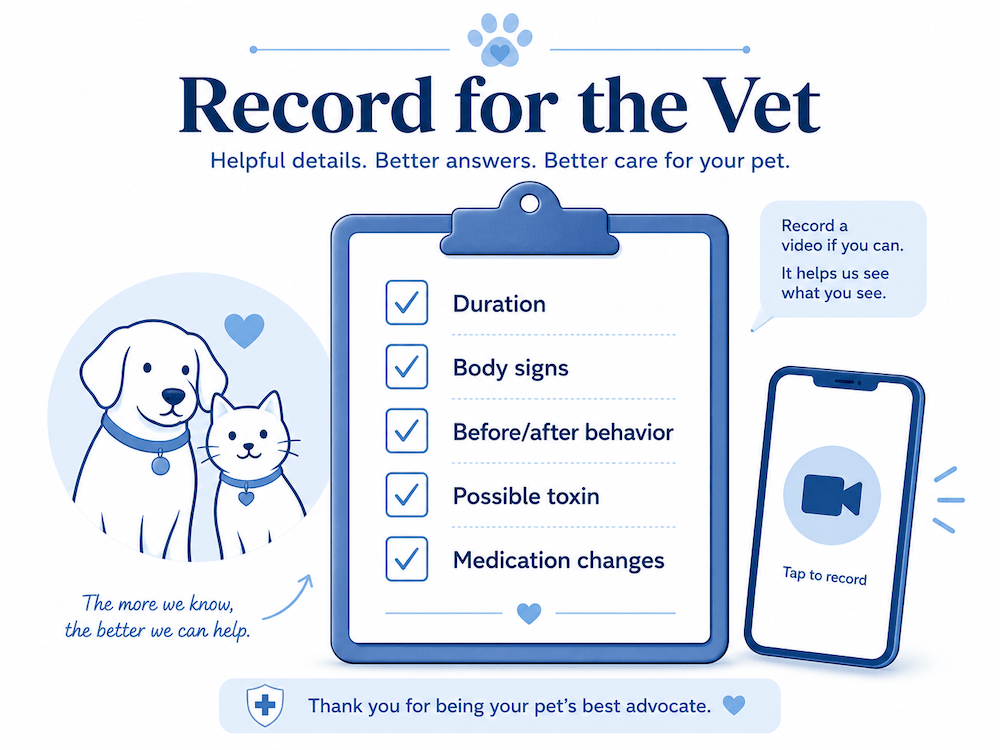
If your dog is in a safe space and you do not need to move hazards, record a short video. Capture the whole body if possible, including face, limbs, breathing pattern, and any one-sided twitching. Video helps your vet distinguish seizure activity from fainting, vestibular episodes, tremors, pain events, sleep movements, or other seizure-like episodes.
Do not risk safety to film. If the dog is near stairs, water, traffic, or another danger, skip the video and protect the area first.


Step 7: Call Urgently If the Seizure Is Prolonged, Repeats, or Recovery Is Abnormal
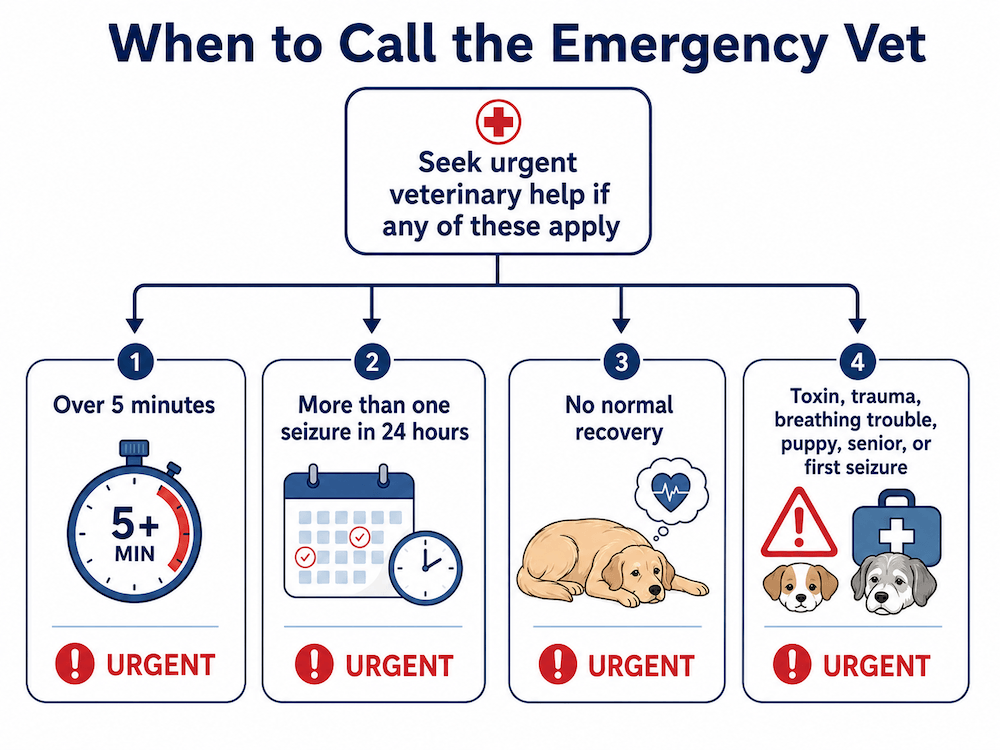
Call an emergency veterinarian immediately if the seizure continues for more than five minutes, your dog has more than one seizure in 24 hours, your dog does not regain awareness between episodes, or your dog has trouble breathing, turns blue or pale, overheats, collapses after trauma, or may have eaten something toxic.
Step 8: Let Your Dog Recover Quietly and Contact Your Vet
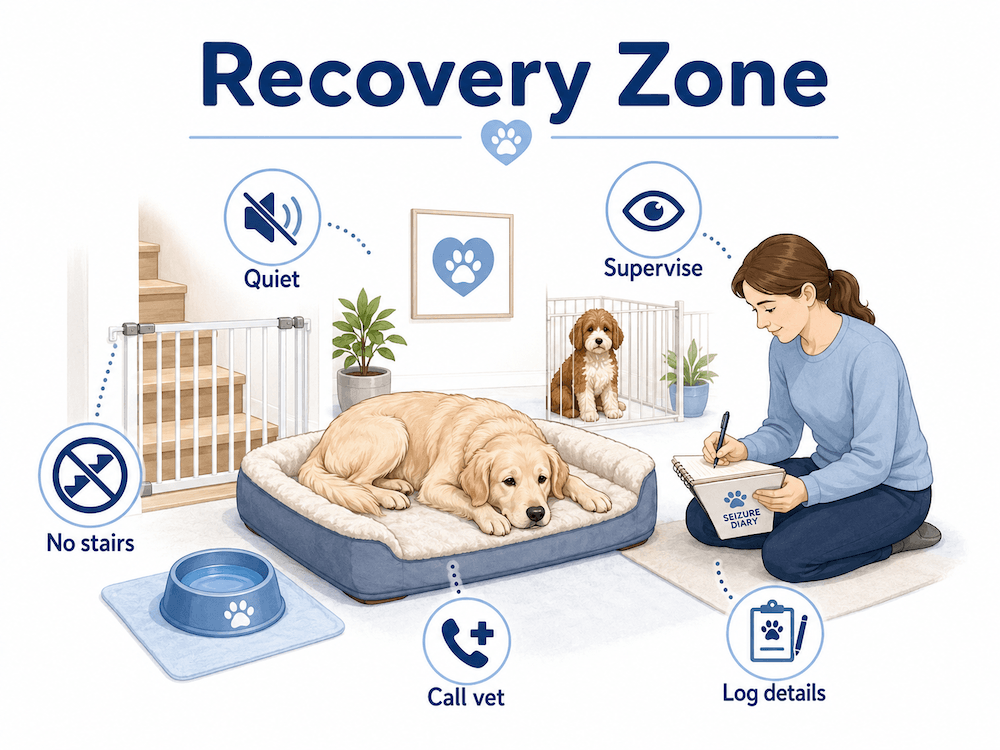
After the seizure ends, your dog may be confused, restless, hungry, thirsty, temporarily blind, wobbly, clingy, or unusually reactive. Keep the room calm, block stairs, keep children and other pets away, and avoid putting your face near your dog until they are fully oriented. Dogs may be disoriented during the postictal period and may sometimes show aggressive behavior because they are confused, not because they are “bad.”
What to Do Based on the Seizure Situation
Use this as a calm first-aid guide. It does not replace veterinary care, but it helps owners decide whether to monitor, call the vet, or seek emergency help based on timing, recovery, and risk signs.
| Situation | What It May Mean | What to Do |
|---|---|---|
| Single brief seizure | May stop on its own, but still needs a vet record. | Time it, keep your dog safe, log details, and call your vet for advice. |
| Seizure over 2 minutes | May still stop, but urgency is increasing. | Call your vet or emergency clinic while continuing to monitor safely. |
| Seizure near or over 5 minutes | Possible status epilepticus. | Seek emergency veterinary care immediately. |
| More than one seizure in 24 hours | Possible cluster seizures. | Call an emergency vet, even if each seizure is brief. |
| No full recovery between seizures | High-risk seizure emergency. | Go to an emergency veterinary clinic immediately. |
| First seizure | Cause is unknown and needs evaluation. | Call your vet the same day; go urgently if severe or prolonged. |
| Possible toxin, trauma, or illness | May be a reactive seizure or brain-related emergency. | Contact an emergency vet or poison-control resource right away. |
Remember to contact your vet after any seizure, especially a first, long, repeated, or abnormal one. If you can’t reach your vet, you can chat live with a registered online veterinary professional via our online vet chat or video chat support (24 hours a day, 7 days a week). Or use Chewy’s online vet services (6 a.m. – midnight ET).
What Not to Do During a Dog Seizure
During a dog seizure, what you avoid doing is just as important as what you do. These actions can increase the risk of injury, choking, or bites. Instead, focus on keeping the area safe, timing the seizure, and watching your dog closely during recovery.
What Happens After a Dog Seizure
The period after a seizure is called the postictal phase. Some dogs recover quickly and seem almost normal within minutes. Others pace, pant, drool, whine, appear blind, bump into objects, seem ravenously hungry, act clingy, or become temporarily disoriented. The postictal phase can include confusion, disorientation, salivation, pacing, restlessness, and temporary blindness.
Offer water only when your dog is alert and swallowing normally. If they are still stumbling, dazed, or drooling heavily, wait and supervise. If recovery is unusually long, severe, or different from previous episodes, call your veterinarian.
Some dogs may urinate, defecate, drool, or vomit around the time of the seizure. Clean gently once your dog is steady, but do not bathe or stress them immediately unless there is a safety reason. Your vet will care more about the seizure details than whether your dog looks messy afterward.
What Causes Seizures in Dogs?
Dog seizures can come from problems inside the brain, problems outside the brain that affect brain function, or idiopathic epilepsy, where no underlying cause is found after appropriate evaluation. Epilepsy can be idiopathic or structural, while reactive seizures are caused by metabolic disturbances or toxins and are not classified as epilepsy because the brain may be structurally normal.
| Cause Category | What It Means | Possible Clues | Owner Action |
|---|---|---|---|
| Idiopathic epilepsy | Recurring seizures with no confirmed underlying cause. | Often starts in young to middle-aged dogs; normal between seizures. | Keep a seizure diary and follow your vet’s treatment plan. |
| Reactive seizure | Brain reacts to a body-wide problem or toxin. | Possible toxin access, low blood sugar, liver disease, kidney disease, electrolyte issue. | Call a vet urgently, especially with toxin exposure or illness signs. |
| Structural brain disease | Seizure linked to disease or damage inside the brain. | First seizure in an older dog, behavior change, weakness, circling, abnormal neurologic signs. | Ask your vet about advanced diagnostics if recommended. |
| Trauma-related seizure | May happen soon after injury or later from brain scarring. | Fall, car accident, head injury, collapse, or neurologic changes. | Seek emergency care after trauma-related seizure activity. |
| Medication or toxin-related seizure | Certain substances may lower seizure threshold or poison the dog. | Access to chocolate, xylitol, antifreeze, rodenticide, alcohol, medications, or chemicals. | Call an emergency vet or poison-control resource immediately. |
What Dog Seizure Stages Can Look Like
Dog seizures often happen in phases: a pre-ictal phase before the seizure, the ictal phase during the seizure, and the post-ictal recovery phase afterward. Signs include hiding, nervousness, salivation, collapse, paddling, confusion, pacing, restlessness, and temporary blindness depending on the phase and seizure type.
How Veterinarians Diagnose and Treat Dogs After Seizures
After a seizure, your vet will usually start with history: what happened, how long it lasted, what the dog did before and after, whether there was toxin exposure, trauma, medication or supplement use, diet changes, illness signs, and previous seizure episodes.
Basic testing may include a physical exam, neurologic exam, bloodwork, urinalysis, blood sugar, electrolyte evaluation, and tests aimed at liver, kidney, heart, or toxin concerns. The minimum laboratory testing for epilepsy commonly includes CBC, biochemical profile, and urinalysis, especially to help rule out reactive seizures from metabolic disease or intoxication.
If your vet suspects a brain-related cause, they may recommend advanced diagnostics such as MRI, CT, cerebrospinal fluid analysis, infectious disease testing, or referral to a veterinary neurologist. MRI, CSF analysis, PCR testing for infectious agents, and other tests may be considered when intracranial causes are suspected.
Treatment depends on the cause, frequency, severity, and risk pattern. A dog may not automatically start daily anti-seizure medication after one brief seizure, especially if testing is normal and the dog recovers well. However, antiseizure medications are often considered after repeated seizures, cluster seizures, status epilepticus, severe seizures, increasing seizure frequency, or prolonged recovery.
How to Prepare If Your Dog May Have Another Seizure
For a dog with a seizure history, work with your veterinarian to create a clear seizure plan that covers when to call, what counts as an emergency, whether rescue medication is appropriate, and where to go after hours. Keep a seizure diary with the date, time, duration, symptoms, recovery length, possible triggers, medication timing, missed doses, diet changes, stress events, and illness signs so your vet can spot patterns and adjust treatment if needed.
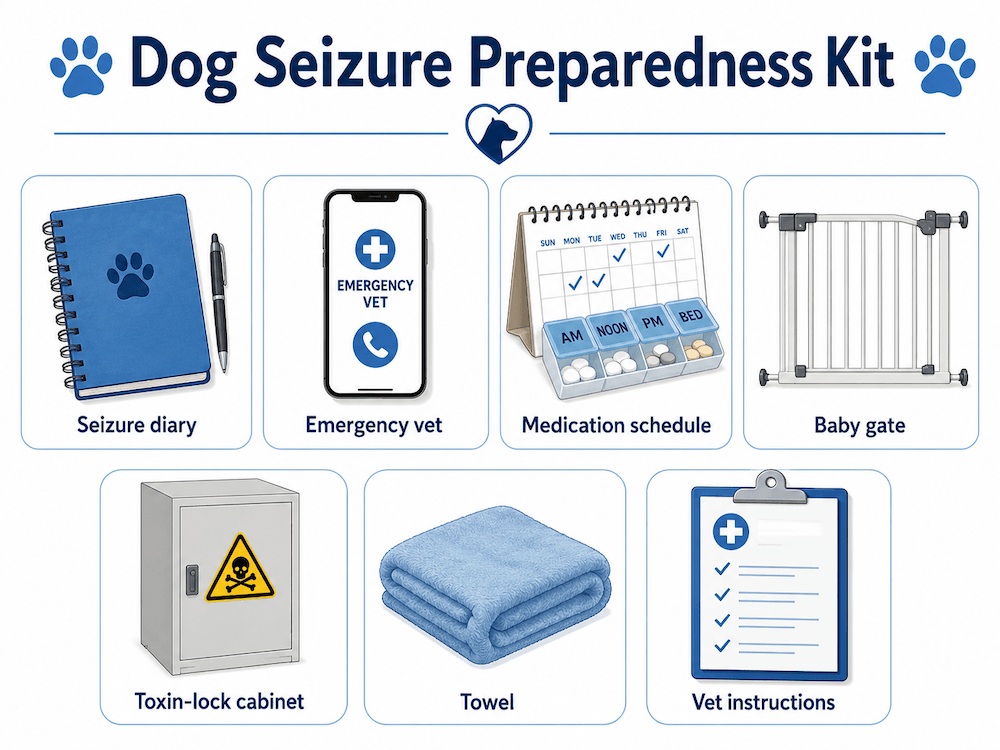
Make your home safer by blocking stairs, avoiding unsupervised access to pools or balconies, and locking away medications, xylitol, chocolate, caffeine, alcohol, rodenticides, antifreeze, and household chemicals. If your dog takes anti-seizure medication, give it exactly as prescribed and never skip, stop, or change doses without veterinary guidance.
What Research Says About Seizures in Dogs
Veterinary evidence supports a fast, organized response to seizure emergencies. The 2024 ACVIM consensus statement on status epilepticus and cluster seizures in dogs and cats concluded that seizure emergencies should be managed with an early, rapid, stage-based approach, along with treatment of complications and underlying causes.[1]
Merck Veterinary Manual emphasizes that poor seizure control can lead to increasing seizure frequency and duration, cluster seizures, status epilepticus, and death. This supports the advice to track seizure patterns, report changes, and seek emergency care when seizures repeat or do not stop.
Tufts notes that seizure frequency, body parts affected, timing, duration, and possible triggers are important to track because they help assess treatment response and guide medication adjustments. Tufts also explains that some dogs may have triggers such as stress, anxiety, foods, or medications, but many dogs have seizures without an obvious trigger and often during sleep.
Cornell and VCA both reinforce the owner-first-aid message: protect the dog from injury, avoid the mouth, time the episode, and recognize that status epilepticus is an emergency. VCA also highlights that seizures are not usually painful, even though they can look dramatic, and that the main home priority is preventing injury until the seizure ends.
Frequently Asked Questions
The Bottom Line
When a dog has a seizure, the most important things you can do are stay calm, keep your dog safe, and time the episode. Do not restrain your dog or put anything in their mouth, because this can cause injury and will not stop the seizure. Afterward, give your dog a quiet recovery space and watch for confusion, stumbling, hunger, or unusual behavior. Call your veterinarian after any first seizure, and seek emergency care if the seizure lasts close to five minutes, happens more than once in 24 hours, or your dog does not recover normally. A seizure diary, video, and clear emergency plan can help your vet understand patterns and choose the right treatment. With preparation and fast decision-making, you can protect your dog during a frightening moment and know when professional care is needed.