How Cold Is Too Cold for Your Dog? Safe Temperatures & Warning Signs

Canine Bible is reader-supported. We receive affiliate commissions via some of our links. Learn more.
For most dogs, temperatures below 45°F can start to feel uncomfortable, and anything below 32°F may become unsafe without proper protection. Small dogs, puppies, seniors, short-haired breeds, thin dogs, and dogs with health problems can get cold much sooner. But temperature alone does not tell the whole story. Wind, rain, snow, coat type, body size, activity level, and time outside all change how cold your dog actually feels. Some dogs can happily play in chilly weather, while others may shiver after a quick potty break. Knowing the warning signs of cold stress, when to use a coat, and when to bring your dog inside can help you keep winter outings safe.
Dog Cold Weather Safety Overview
| Cold Weather Factor | What It Means for Your Dog |
|---|---|
| Temperature range | Many dogs start feeling uncomfortable below 45°F, and freezing temperatures can become risky without protection. |
| Breed and coat | Thick-coated northern breeds usually tolerate cold better than short-haired, thin-coated, or hairless dogs. |
| Size and age | Small dogs, puppies, seniors, and underweight dogs lose body heat faster and may need shorter outdoor time. |
| Wind and wet weather | Wind, rain, snow, and damp fur can make a mild cold day feel much harsher and increase chill risk. |
| Time outside | A quick potty break may be safe when a long walk, yard time, or waiting outside could become too cold. |
| Warning signs | Shivering, lifting paws, whining, slowing down, seeking shelter, or acting weak can mean your dog is too cold. |
| Vet attention | Call a veterinarian if your dog seems confused, very weak, unusually sleepy, painful, or unable to warm up normally. |
How Cold Is Too Cold for Your Dog?
There is no single temperature that is “too cold” for every dog, but cold weather becomes more concerning below 45°F (7°C) for some dogs, especially small, thin-coated, senior, young, or ill dogs. Once temperatures fall near or below 32°F (0°C), the risk of cold stress, frostbite, and hypothermia increases, especially with wind, snow, rain, or long exposure.
The safest rule is simple: if your dog is shivering, lifting paws, slowing down, whining, refusing to walk, or trying to go home, it is too cold for that dog at that moment. Cold-weather safety is about choosing the right outing length, using protection when needed, and knowing when to bring your dog inside before discomfort becomes dangerous.
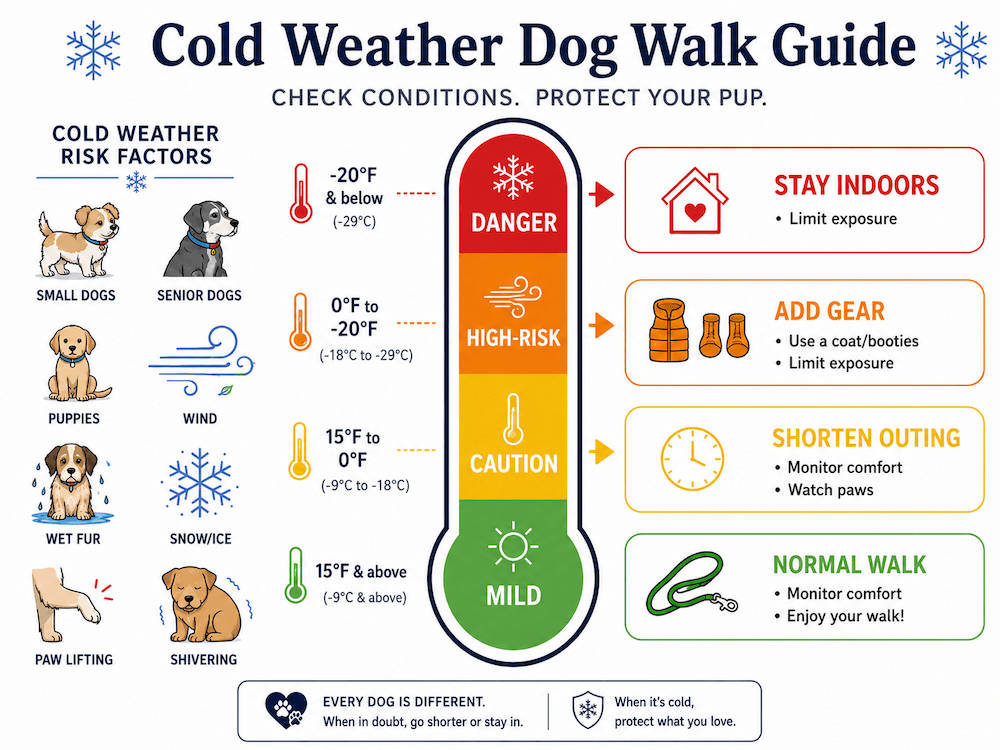
Dog Cold Weather Temperature Chart
This chart gives a practical starting point for deciding whether your dog can go for a walk, needs protection, or should only go outside briefly. These ranges are not a substitute for watching your dog’s behavior, because wind chill, rain, snow, wet fur, and health status can make the same temperature feel much colder.
| Temperature | General Risk | What to Do | Watch Closely If |
|---|---|---|---|
| Above 45°F | Usually comfortable for healthy adult dogs. | Walk normally, but still monitor behavior. | Your dog is tiny, thin, elderly, or sick. |
| 32–45°F | Some dogs may feel cold or uncomfortable. | Shorten walks and consider a coat. | Your dog has short fur or low body fat. |
| 20–32°F | Cold injury risk rises with longer exposure. | Use brief, supervised, purposeful outings. | Your dog shivers, limps, or lifts paws. |
| Below 20°F | Dangerous for many dogs without protection. | Limit trips to quick bathroom breaks. | Your dog is vulnerable or not cold-acclimated. |
| Wet Cold | Wet fur makes heat loss happen faster. | Dry your dog immediately after returning inside. | Rain, slush, or snow soaks the coat. |
| Wind Chill | Moving air strips warmth from the body. | Treat windy days as colder than shown. | Your dog has thin fur or exposed skin. |
Why Some Dogs Get Cold Faster Than Others
A dog’s cold tolerance depends on more than fur. Small dogs lose heat faster because they have more surface area relative to body mass, short-coated dogs lack insulation, and older or sick dogs may have less ability to regulate body temperature. Age, size, nutrition, health, coat thickness, and acclimation are important cold-weather factors. That means two dogs standing in the same yard can have very different safety limits.


| Risk Factor | Lower Cold Risk | Higher Cold Risk |
|---|---|---|
| Coat Type | Dense double coats trap warmth better. | Thin, short, or hairless coats chill quickly. |
| Body Size | Larger dogs often retain warmth longer. | Toy breeds lose heat very quickly. |
| Age | Healthy adults regulate temperature more reliably. | Puppies and seniors need extra protection. |
| Body Condition | Fit dogs may tolerate brief cold outings. | Underweight dogs have less insulation. |
| Health Status | Healthy dogs recover from cold faster. | Ill or arthritic dogs may struggle. |
| Acclimation | Cold-climate dogs may adapt gradually. | Indoor dogs may chill sooner outside. |
Signs Your Dog Is Too Cold
Your dog’s behavior is often more important than the number on the thermometer. A dog that is shivering, lifting paws, slowing down, whining, turning back, or seeking shelter is telling you the cold is no longer comfortable. Signs such as shivering, whining, paw lifting, reluctance to walk, tail tucking, and sudden anxiety are clues that a dog may be too cold.
| Cold Sign | What It Can Mean | Owner Action |
|---|---|---|
| Shivering | Your dog is trying to generate heat. | Go inside and warm your dog gradually. |
| Paw Lifting | Paws may be cold, irritated, or painful. | Check pads for ice, salt, or injury. |
| Slowing Down | Your dog may be conserving energy. | End the walk and head home. |
| Whining | Your dog may feel stressed or uncomfortable. | Stop exposure instead of pushing onward. |
| Seeking Shelter | Your dog wants relief from the weather. | Move to a warmer protected area. |
| Weakness | This can suggest serious cold stress. | Warm gently and call a veterinarian. |
How Wind, Rain, Snow, and Ice Change Cold Risk for Dogs
A calm 35°F day and a windy, wet 35°F day are not the same for your dog. Wind pulls heat away from the body, while rain, slush, and wet snow reduce the insulating effect of the coat. Cold risk also rises when paws contact ice, frozen ground, or chemical de-icers. Paw protection or washing paws after winter walks, especially where salt is used, is important.
Here are some key weather factors that make cold worse:
How Long Can a Dog Stay Outside in Cold Weather?
There is no exact safe time for every dog. A thick-coated, healthy adult dog moving briskly in dry snow may tolerate a longer outing than a short-haired senior standing still in wet wind.


Use these time ranges as conservative owner guidelines, not rigid rules:
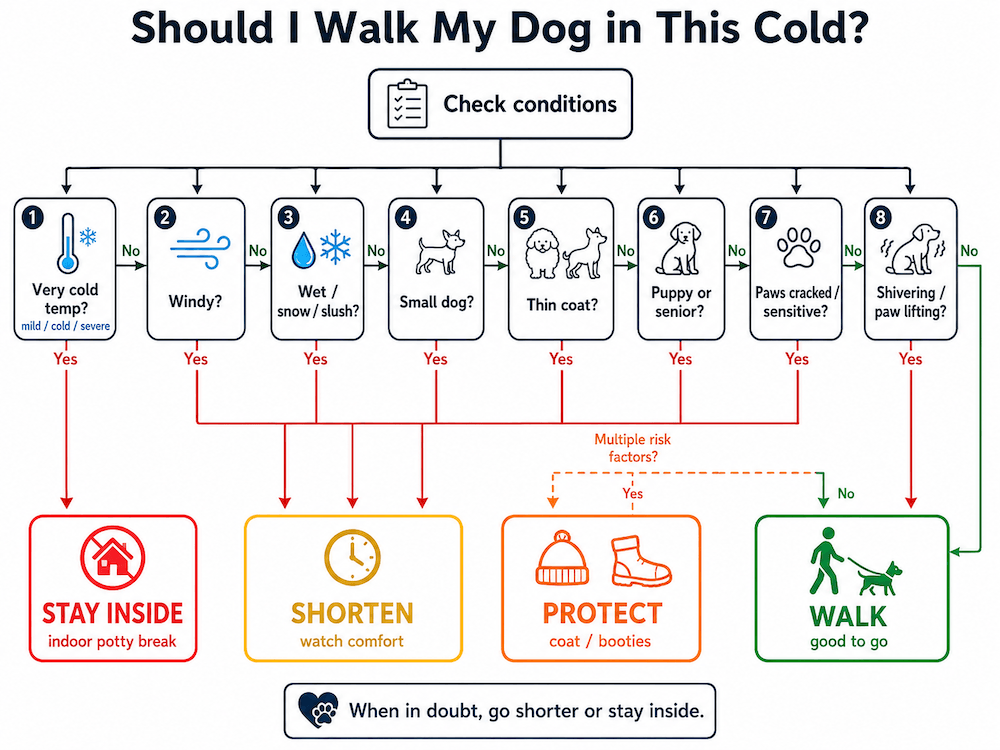
Does Your Dog Need a Coat or Boots in Cold Weather?
Dogs most likely to benefit from a winter coat include toy breeds, short-haired dogs, hairless breeds, puppies, seniors, thin dogs, and dogs with medical problems. A good dog coat should cover the chest and core without restricting shoulder movement, breathing, urination, or normal walking.
Dog boots are helpful when the ground is icy, salted, extremely cold, or painful to walk on. If your dog refuses boots, paw balm plus wiping and drying after walks may still reduce irritation.
| Winter Gear | Best For | Fit Check |
|---|---|---|
| Dog Coat | Small, thin-coated, senior, or underweight dogs. | It should cover the chest comfortably. |
| Waterproof Jacket | Snow, sleet, rain, and wet winter walks. | It should not trap wet fabric inside. |
| Dog Boots | Ice, salt, frozen ground, and paw pain. | They should stay on without rubbing. |
| Paw Balm | Dogs that dislike boots or have dry pads. | Use before walks and wipe afterward. |
| Reflective Gear | Dark mornings, snowstorms, and evening walks. | Visibility should cover both dog and leash. |
Frostbite and Hypothermia in Dogs
Frostbite and hypothermia are different cold-related problems, but they can happen together. Frostbite affects body parts such as the ears, paws, and tail tips, while hypothermia affects the whole body as core temperature drops.
Prolonged cold exposure can cause frostbite or life-threatening hypothermia, and serious hypothermia signs include weakness, disorientation, shallow breathing, slow pulse, collapse, and unconsciousness.
| Cold Injury | What It Affects | Possible Signs | What to Do |
|---|---|---|---|
| Frostbite | Usually affects ears, paws, tail, or nose. | Skin may look pale, blue, gray, or painful. | Warm gently and call your veterinarian. |
| Hypothermia | Affects the whole body and vital organs. | Weakness, confusion, shallow breathing, or collapse may occur. | Seek urgent veterinary care immediately. |
| Paw Irritation | Affects pads and skin between toes. | Limping, licking, redness, or cracks may appear. | Rinse, dry, inspect, and protect paws. |
| Cold Stiffness | Often affects joints, muscles, and movement. | Your dog may move slowly or resist walking. | Use shorter walks and safer footing. |
What to Do If Your Dog Gets Too Cold
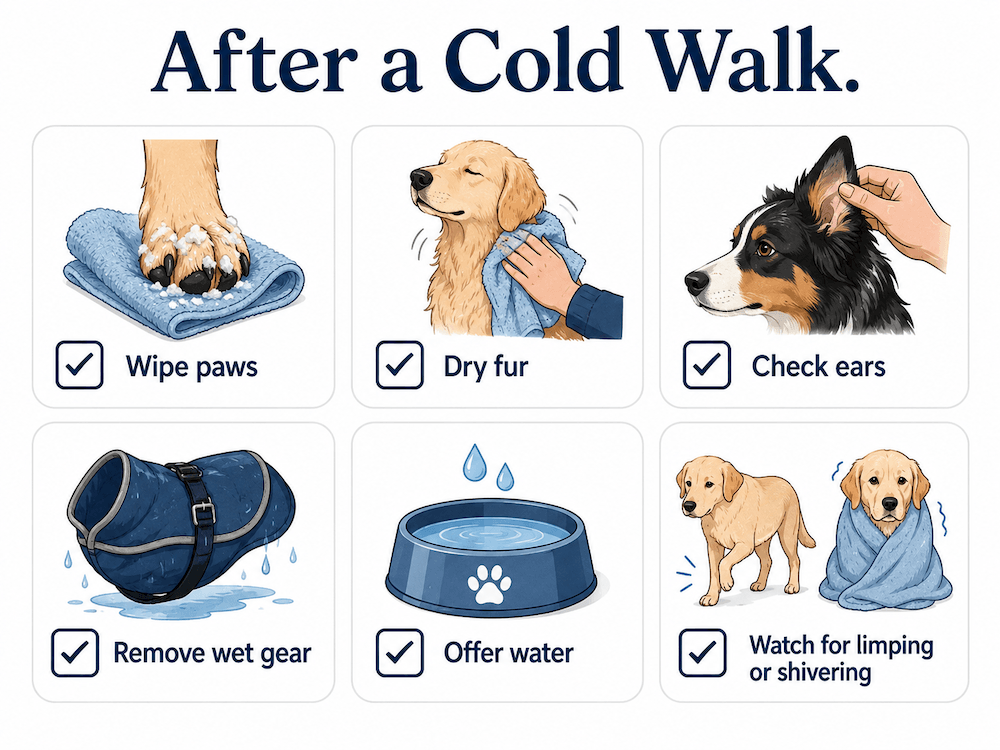
If your dog shows mild cold stress, calmly end the outing and move indoors. Dry your dog with a towel, remove wet gear, check paws and ears, and let your dog warm gradually in a comfortable room.
Do not use very hot water, heating pads directly on the skin, or aggressive rubbing on painful areas. If your dog seems weak, confused, collapsed, unusually sleepy, or unable to warm up normally, treat it as urgent and contact a veterinarian.
Follow these safe first actions:
What to Monitor After Your Dog Comes Inside From the Cold
After a winter walk, check your dog before settling back into the day. Look at the paws, ears, tail tip, belly, and any thinly furred areas, then dry your dog completely if the coat is damp.
Signs of a successful winter outing include normal walking, relaxed behavior, warm dry fur, comfortable paws, and no lingering shivering. Keep monitoring for the next hour if your dog is a puppy, senior, small breed, short-coated breed, underweight, arthritic, or recovering from illness.
When Cold Weather Requires a Veterinarian
Call your veterinarian or an emergency clinic if your dog shows more than brief shivering, mild paw discomfort, or normal cold-weather hesitation. Serious cold stress may involve weakness, confusion, shallow or slow breathing, collapse, or an inability to warm up normally after coming inside.
Seek veterinary help promptly if your dog cannot stand, seems unusually sleepy or dull, keeps shivering indoors, has pale, gray, blue, black, swollen, or painful skin, or shows limping, bleeding paws, or severe paw licking. Puppies, seniors, sick dogs, underweight dogs, and short-coated breeds should be treated with extra caution because they can chill faster.
Suspected antifreeze exposure is always urgent, even if your dog seems normal at first. Antifreeze can be deadly in small amounts, so call a veterinarian or pet poison helpline immediately if your dog may have licked contaminated snow, puddles, garage floors, paws, or fur.
Helpful Tips for Keeping Your Dog Safe in Cold Weather
Cold-weather safety depends on adjusting walks to the conditions, keeping your dog dry, protecting the paws, and using layers when your dog needs extra warmth. When outdoor time becomes too harsh, indoor enrichment can help your dog stay active without unnecessary cold exposure.
| Tip | Why It Helps | How to Apply It |
|---|---|---|
| Check Wind | Wind can make cold feel more severe. | Shorten walks when gusts feel sharp. |
| Keep Moving | Gentle movement helps maintain body warmth. | Choose steady walks over standing outside. |
| Use Layers | Coats help vulnerable dogs retain heat. | Use a dry, well-fitted winter coat. |
| Protect Paws | Paws contact salt, ice, and chemicals. | Use boots, balm, or post-walk rinsing. |
| Dry Quickly | Wet fur loses warmth much faster. | Towel-dry paws, belly, chest, and ears. |
| Plan Indoors | Extreme cold limits safe outdoor activity. | Use puzzles, training, and scent games. |
Mistakes That Make Cold Weather More Dangerous for Dogs
Small winter mistakes can make cold exposure more dangerous, especially when owners ignore discomfort, leave dogs outside too long, or let wet clothing trap chill against the body. Cold-injured skin and irritated paws should be handled gently, with early warmth, inspection, and veterinary guidance when needed.
| Mistake | Why It’s Risky | Better Choice |
|---|---|---|
| Ignoring Signals | Cold-stress signs can worsen quickly. | End the walk at early discomfort. |
| Leaving Outside | Unsupervised dogs cannot escape worsening weather. | Bring dogs indoors during unsafe cold. |
| Using Wet Sweaters | Wet fabric can make chilling worse. | Use dry, weather-appropriate outer layers. |
| Skipping Paw Checks | Ice balls and salt can irritate paws. | Inspect paws after every winter walk. |
| Rubbing Frostbite | Rubbing may damage cold-injured tissues. | Warm gently and call your veterinarian. |
| Assuming Acclimation | Indoor dogs may not handle sudden cold. | Build exposure slowly and cautiously. |
What Veterinary Research Says About Cold Weather Risk in Dogs
Cornell’s Riney Canine Health Center emphasizes that cold tolerance is individual and affected by size, age, coat, health, nutrition, and acclimation. It also warns that prolonged cold exposure can cause frostbite and hypothermia, with ears, paws, and tail tips commonly affected by frostbite.
Purdue University College of Veterinary Medicine gives practical owner guidance: outdoor pets should be brought indoors below 20°F, and puppies, kittens, and short-haired pets should come inside below 40°F. This supports the idea that vulnerable dogs need earlier protection than healthy, cold-adapted adult dogs.
The AVMA advises that cats and dogs are susceptible to frostbite and hypothermia and generally should be kept inside during cold weather. This is especially important for owners who assume dogs can safely stay outdoors simply because they have fur.
A PubMed-indexed veterinary review explains that hypothermia in dogs and cats may be caused by environmental exposure, illness, medications, anesthesia, or trauma. For dog owners, the key point is that a cold dog with weakness, dullness, or abnormal breathing may have more than simple discomfort and may need urgent care.[1]
Frequently Asked Questions
The Bottom Line
Knowing how cold is too cold for your dog starts with the temperature, but it should never end there. A healthy, thick-coated dog may handle a chilly walk well, while a small, short-haired, senior, young, or sick dog may need protection much sooner. Wind, rain, snow, ice, wet fur, and time outside can all make cold weather more dangerous. Watch your dog closely for shivering, paw lifting, slowing down, whining, or trying to go back inside. When conditions are harsh, keep outings short, use proper winter gear, dry your dog afterward, and protect the paws. If your dog seems weak, confused, painful, collapsed, or unable to warm up normally, contact a veterinarian right away.