How Hot Is Too Hot for Dogs? Safe Temperatures & Heatstroke Signs

Canine Bible is reader-supported. We receive affiliate commissions via some of our links. Learn more.
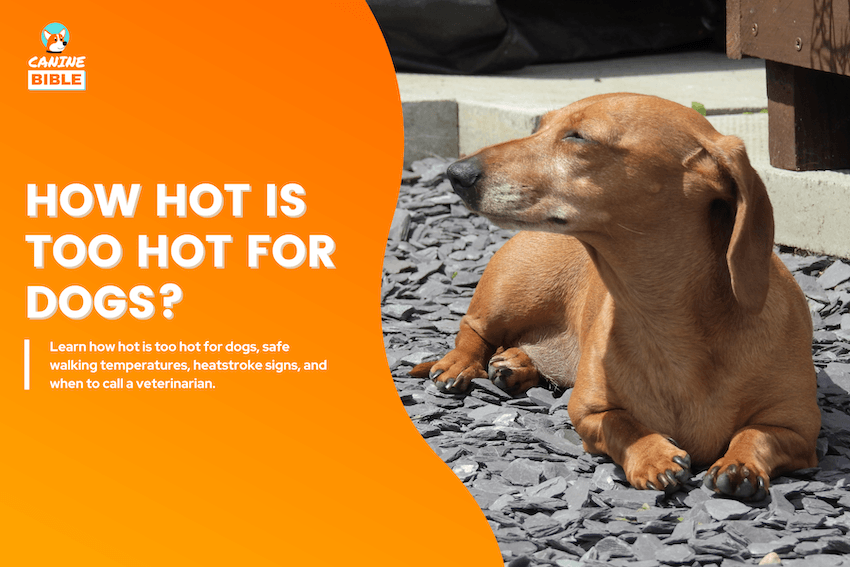
Temperatures above 85°F can be too hot for many dogs, especially with high humidity, direct sun, or limited shade. At 90°F and above, dogs are at serious risk of overheating, and heatstroke can become life-threatening fast. But the safe temperature is not the same for every dog. Breed, age, weight, coat type, health, pavement temperature, and activity level all change how much heat a dog can handle. A short walk may be safe for one dog but dangerous for a flat-faced breed, senior dog, puppy, or overweight dog. This guide explains the warning signs, risky temperatures, safe walking times, pavement dangers, and when heat requires urgent veterinary care.
Dog Heat Safety at a Glance
| Heat Risk Factor | What Dog Owners Should Know |
|---|---|
| Air temperature | Heat becomes risky for many dogs above 85°F, especially during exercise or long outdoor exposure. |
| Humidity | High humidity makes it harder for dogs to cool themselves through panting. |
| Direct sun | Sun exposure can quickly raise body temperature, even when the air does not feel extreme. |
| Hot pavement | Asphalt, concrete, and sand can burn paw pads and increase overall heat stress. |
| Dog type | Flat-faced breeds, puppies, seniors, overweight dogs, and dogs with health problems overheat more easily. |
| Activity level | Running, playing, or walking too long in warm weather can push a dog from uncomfortable to unsafe. |
| Warning signs | Heavy panting, drooling, weakness, vomiting, confusion, or collapse can signal a heat emergency. |
What Temperature Is Too Hot for Dogs?
As a practical rule, 80°F to 85°F is the caution zone, especially for high-risk dogs or humid days. Above 85°F, shorten walks, avoid midday heat, and watch closely. At 90°F or higher, many dogs should stay indoors except for short potty breaks.
A dog’s normal body temperature is roughly around 100.5°F to 102.5°F, and heatstroke can occur when body temperature rises to 105°F or higher. Body temperatures above 104°F can signal heat stress, while higher temperatures can become an emergency.
| Temperature | Risk Level | Best Owner Action |
|---|---|---|
| 70–79°F | Usually manageable for healthy dogs. | Offer water, shade, and normal rest breaks. |
| 80–84°F | Caution increases, especially with humidity. | Shorten walks and avoid intense activity. |
| 85–89°F | Risky for many dogs outdoors. | Walk early, stay shaded, and monitor closely. |
| 90–94°F | Unsafe for many dogs. | Limit outings to short potty breaks. |
| 95°F+ | High heat emergency risk. | Keep dogs indoors in cool ventilation. |
These ranges are practical safety guidelines, not a replacement for watching the dog in front of you. A young, fit retriever may tolerate a shaded 82°F walk better than a senior Bulldog can tolerate a sunny 76°F walk.
Why Dogs Overheat Faster Than People
Dogs do not cool themselves the same way humans do. Dogs have sweat glands mainly in their paws and rely heavily on panting to release heat. That makes heat dangerous when panting cannot keep up. This can happen when the air is humid, the dog is exercising, the dog has a short muzzle, or the dog is trapped in a poorly ventilated space.


Some of the key reasons dogs overheat include:
Dogs Most at Risk in Hot Weather
Any dog can overheat, but some dogs need extra protection at lower temperatures. Brachycephalic dogs, older dogs, overweight dogs, thick-coated or dark-coated dogs, and dogs with respiratory or heart disorders are among higher-risk groups.
A healthy dog can still develop heatstroke if the situation is intense enough. Risk is not only about breed; it is also about the day, the activity, and the dog’s condition.
| High-Risk Dog | Why Heat Is More Dangerous |
|---|---|
| Flat-faced breeds | Bulldogs, French Bulldogs, Pugs, Boxers, Boston Terriers, and Shih Tzus may struggle to cool through panting. |
| Senior dogs | Aging bodies often regulate temperature less efficiently. |
| Puppies | Young dogs may play past safe limits and overheat quickly. |
| Overweight dogs | Extra body fat can trap heat and make movement harder. |
| Thick-coated dogs | Double coats can hold heat when activity is intense. |
| Dark-coated dogs | Dark fur can absorb more heat in direct sun. |
| Dogs with heart or breathing disease | These dogs may overheat quickly because their bodies work harder in heat. |
| Large or giant breeds | Larger bodies may cool more slowly during warm weather. |
| Muzzled dogs | Poorly fitted muzzles can restrict panting and reduce cooling. |
Signs Your Dog Is Too Hot
Early overheating can look subtle. Cornell lists heavy panting, seeking shade, whining, reluctance to play, and drooling as early warning signs. More serious signs include difficulty breathing, vomiting, weakness, confusion, seizures, or collapse.


| Sign Level | What You May Notice | What to Do |
|---|---|---|
| Mild heat stress | Heavy panting, shade seeking, slowing down, or drooling. | Stop activity and move to cool shade. |
| Worsening heat | Restlessness, weakness, vomiting, diarrhea, or glazed expression. | Begin cooling and call your veterinarian. |
| Emergency signs | Collapse, confusion, seizures, pale gums, or difficult breathing. | Cool immediately and go to emergency care. |
| Paw injury | Limping, licking paws, redness, blisters, or peeling pads. | Leave hot surfaces and contact your vet. |
| Car heat risk | Panting, distress, drooling, weakness, or trapped exposure. | Remove from heat and seek urgent help. |
How to Walk a Dog Safely When It Is Hot
Walking in hot weather should be treated as a risk decision, not a routine habit. When temperatures climb, the safest walk is shorter, slower, shaded, and flexible.
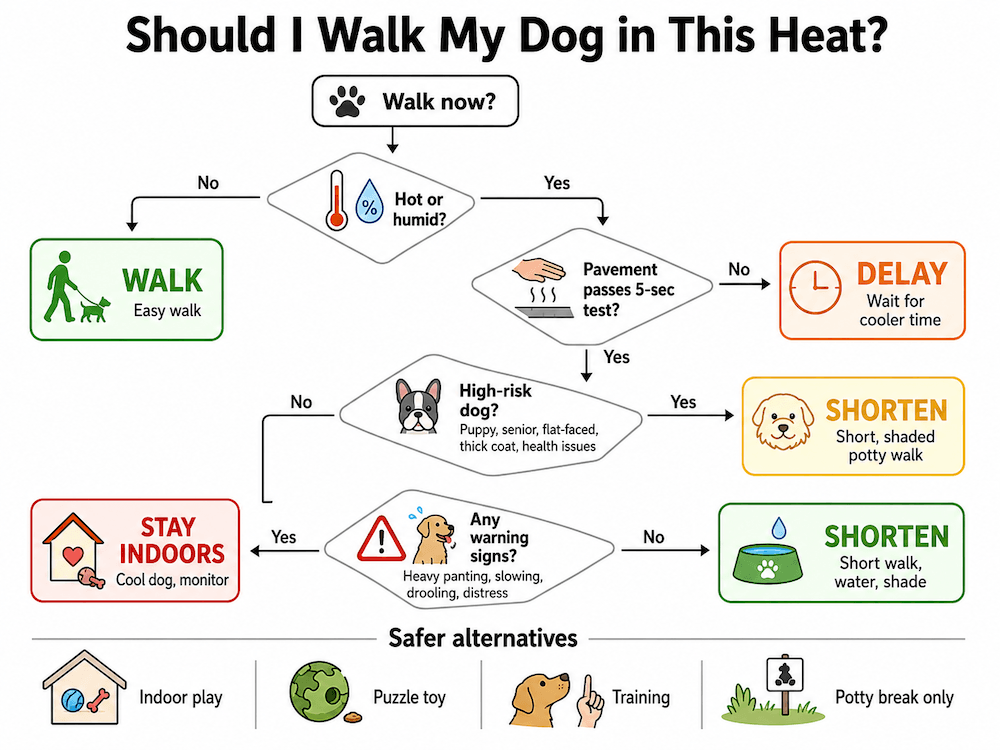
Use this decision guide:
Choose sniff walks over power walks. Letting your dog sniff, explore slowly, and take breaks provides enrichment without as much heat buildup.
What to Do If Your Dog Gets Too Hot
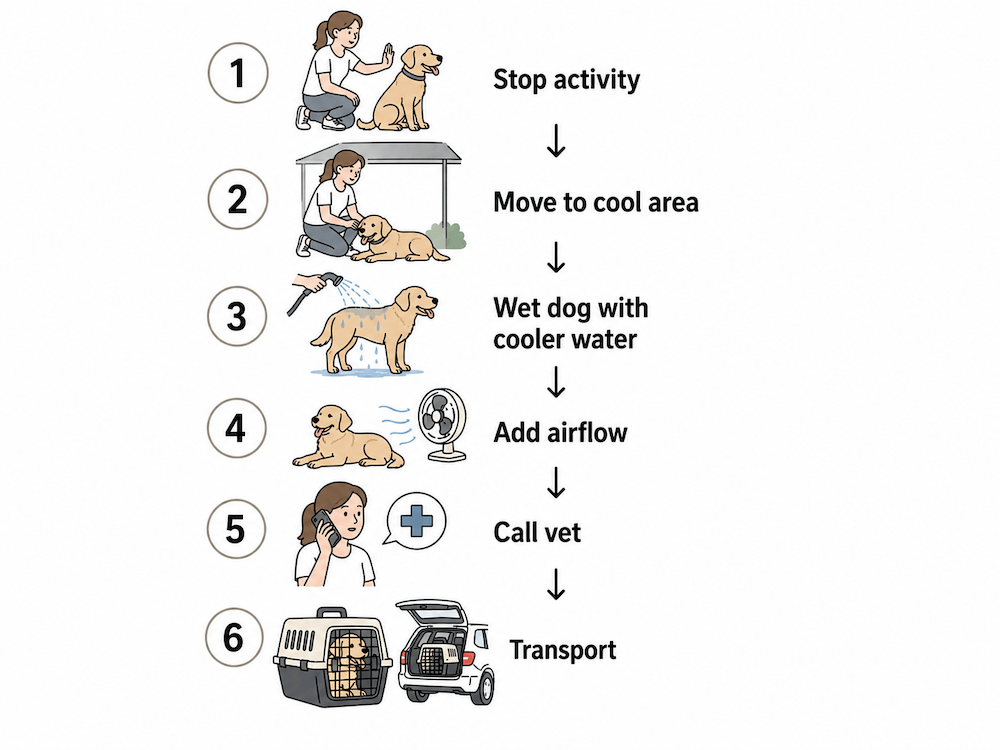
If your dog shows signs of overheating, stop activity immediately. Move them to shade, air conditioning, or a well-ventilated area, and begin cooling while contacting a veterinarian.
Use water that is cooler than your dog, plus airflow. Cold-water immersion can be effective for young, healthy dogs, while pouring or spraying cooler water with air movement is appropriate for older dogs or dogs with underlying health concerns.
Do not wait to see if severe signs pass on their own. Heatstroke is a medical emergency, and internal damage can continue even after a dog looks calmer.
What to Monitor After a Hot Walk or Heat Exposure
After a warm outing, bring your dog indoors or to shade and watch how quickly they recover. Mild panting should gradually settle with rest, water access, and cooling airflow.
For the next several hours, monitor appetite, energy, breathing, coordination, gum color, vomiting, diarrhea, and overall behavior. A dog that remains restless, weak, nauseous, disoriented, or unusually tired after cooling should be checked by a veterinarian.
Success looks like a dog who cools down, breathes normally, drinks comfortably, walks steadily, and returns to their usual behavior. Ongoing symptoms mean the heat exposure may have been more serious than it first appeared.
When to Call a Veterinarian About Dog Heat Exposure
Call your veterinarian or an emergency clinic if your dog shows more than brief, mild overheating. Heatstroke can become life-threatening quickly because prolonged high body temperature may damage organs, affect blood clotting, and lead to shock.
Seek urgent veterinary care if your dog has heavy panting that does not improve indoors, difficulty breathing, vomiting or diarrhea, weakness, wobbliness, confusion, collapse, seizures, pale or blue gums, or very red gums. Also call a vet for suspected heatstroke after exercise, car exposure, yard exposure, or signs of paw burns, open wounds, or severe limping.
Even if your dog seems better after cooling, veterinary guidance is still important after serious overheating. Internal complications may not be obvious right away, so it is safer to have your dog checked promptly.
Helpful Tips for Keeping Dogs Safe in Hot Weather
Small routine changes prevent most heat problems. The goal is not to stop your dog from enjoying summer—it is to change timing, intensity, surfaces, and cooling options.
| Heat Safety Tip | Why It Helps | How to Apply It |
|---|---|---|
| Walk early | Mornings are usually cooler than afternoons. | Schedule walks before the day heats up. |
| Choose shade | Shade reduces direct heat load. | Use trees, covered paths, or shaded yards. |
| Check pavement | Hot ground can burn paw pads. | Use the hand test before walking. |
| Carry water | Hydration supports normal cooling. | Offer small breaks during warm outings. |
| Slow the pace | Running creates more body heat. | Replace fetch with sniff walks. |
| Cool indoors | Airflow helps dogs recover faster. | Use fans, AC, mats, or cool rooms. |
Mistakes That Make Hot Weather More Dangerous for Dogs
Many heat emergencies happen because an outing seems harmless at first. Dogs may keep walking, playing, or trying to please their owner even when they are already too hot.
| Mistake | Why It Is Risky | Better Choice |
|---|---|---|
| Walking at noon | Heat and pavement are often strongest. | Walk early morning or late evening. |
| Ignoring humidity | Humid air makes panting less effective. | Shorten walks on muggy days. |
| Playing fetch | Sprinting rapidly raises body heat. | Use calm indoor enrichment instead. |
| Trusting shade only | Shade may not fix humidity or pavement. | Check temperature, surface, and airflow. |
| Leaving dogs in cars | Vehicle heat rises within minutes. | Leave dogs safely at home. |
| Waiting after collapse | Heatstroke can damage organs quickly. | Cool immediately and call a vet. |
What Research Says About Dogs and Hot Weather
Veterinary research supports a practical, prevention-first approach. In one VetCompass study of more than 900,000 UK dogs under veterinary care, confirmed heat-related illness events had a fatality rate of about 14%, and risk was higher in flat-faced dogs, very large dogs, heavier dogs, and certain breeds such as Chow Chows, Bulldogs, and French Bulldogs.[1]
Another study found that exercise-related heat illness was a bigger overall threat than hot cars in the UK dogs reviewed. This matters because many owners already understand car danger but may underestimate walks, fetch, running, and dog sports in warm weather.[2]
Cooling research and RVC guidance emphasize fast action: move the dog to a cooler area, use water and airflow, and seek veterinary help. Cold-water immersion may be effective for young, healthy dogs, while evaporative cooling with water plus airflow is broadly useful, especially for older or medically vulnerable dogs.
Vehicle safety guidance also remains essential. The AVMA’s parked-car data shows how quickly vehicle interiors heat up, which is why dogs should not be left unattended in cars during warm weather.
Frequently Asked Questions
The Bottom Line
Hot weather can become unsafe for dogs faster than many owners expect, especially when humidity, direct sun, exercise, or hot pavement are involved. As a general rule, be cautious above 85°F and avoid normal walks or outdoor play around 90°F and higher. Puppies, seniors, flat-faced breeds, overweight dogs, and dogs with heart or breathing problems need extra protection even at lower temperatures. The safest approach is to walk early, test the pavement, carry water, choose shade, and stop activity at the first signs of overheating. If your dog shows weakness, vomiting, confusion, breathing trouble, collapse, or seizures, cool them immediately and contact a veterinarian. A simple heat-safety plan can help your dog stay comfortable, active, and protected all summer.