Constipation in Dogs: Symptoms, Types, Causes, Signs & Prevention

Canine Bible is reader-supported. We receive affiliate commissions via some of our links. Learn more.
Constipation is a common digestive issue in dogs, affecting dogs of all ages—especially seniors. Many owners overlook early signs—straining to defecate, producing small or hard stools, or going longer than usual without a bowel movement—assuming it’s a minor or temporary problem. In reality, these can signal underlying health concerns. Left unaddressed, constipation can lead to discomfort, pain, reduced appetite, and more serious complications. The good news is that with proper care, most cases can be managed effectively. Advances in veterinary medicine, combined with at-home strategies such as diet changes, increased hydration, regular exercise, and appropriate supplements, make it possible to support healthy digestion and prevent recurrence. This guide covers everything you need to know about constipation in dogs—so you can help keep your dog comfortable and their digestive system running smoothly.
What Is Constipation in Dogs?
Constipation, in simple terms, is the difficulty or inability to pass normal stools. It occurs when stool becomes hard, dry, and difficult to eliminate due to slow movement through the digestive tract or inadequate water absorption. In dogs, it’s often linked to factors such as dehydration, low-fiber diets, lack of exercise, or underlying intestinal health issues. As stool remains in the colon longer, it loses moisture, making it increasingly harder to pass—leading to straining, discomfort, and potential complications if not addressed.
Types
Constipation in dogs can present in several forms, depending on the underlying cause and severity:
| Type | Description |
|---|---|
| Occasional Constipation | A short-term episode that may happen after dehydration, dietary changes, or not getting enough fiber. |
| Chronic Constipation | Repeated or ongoing difficulty passing stool, often linked to underlying health problems, pain, or poor intestinal motility. |
| Diet-Related Constipation | Caused by low-fiber diets, eating indigestible material like bones, or inadequate water intake. |
| Obstructive Constipation | Occurs when a blockage, pelvic narrowing, enlarged prostate, or mass makes it hard for stool to pass normally. |
| Pain-Related Constipation | Develops when dogs avoid defecating because of pain from arthritis, anal gland problems, or injuries around the hips or back. |
| Motility Disorders | Happens when the colon does not move stool effectively, which can lead to severe constipation or megacolon. |
| Other Causes | Medical issues such as dehydration, neurologic disease, medication side effects, or endocrine disorders can also contribute to constipation. |
Predisposed Dog Breeds
Constipation can affect any dog, but some may be more prone to it due to factors like age, diet, hydration levels, activity, or underlying health conditions. Senior dogs, less active dogs, and those with low-fiber diets or inadequate water intake are especially at risk of developing constipation.


| Category | Examples | Notes on Risk Factors |
|---|---|---|
| Senior Dogs | Older dogs of any breed | Slower metabolism, reduced activity, and weaker intestinal motility increase constipation risk. |
| Large & Giant Breeds | German Shepherd, Labrador Retriever, Great Dane | Higher likelihood of mobility issues or pelvic narrowing, making defecation more difficult. |
| Small & Toy Breeds | Chihuahua, Pug, Shih Tzu | More prone to dehydration and dietary imbalances, which can lead to hard stools. |
| Overweight Dogs | Any breed with obesity | Excess weight reduces activity levels and slows digestion, contributing to constipation. |
| Low-Activity Dogs | Indoor or sedentary dogs | Lack of exercise decreases gut motility, making bowel movements less frequent. |
| Dogs with Medical Conditions | Hypothyroidism, neurological disorders, prostate enlargement | Underlying health issues can interfere with normal bowel function or stool passage. |
| Dogs on Certain Diets | Low-fiber diets, high bone intake | Poor diet composition can lead to dry, compacted stools that are difficult to pass. |
Causes
Symptoms
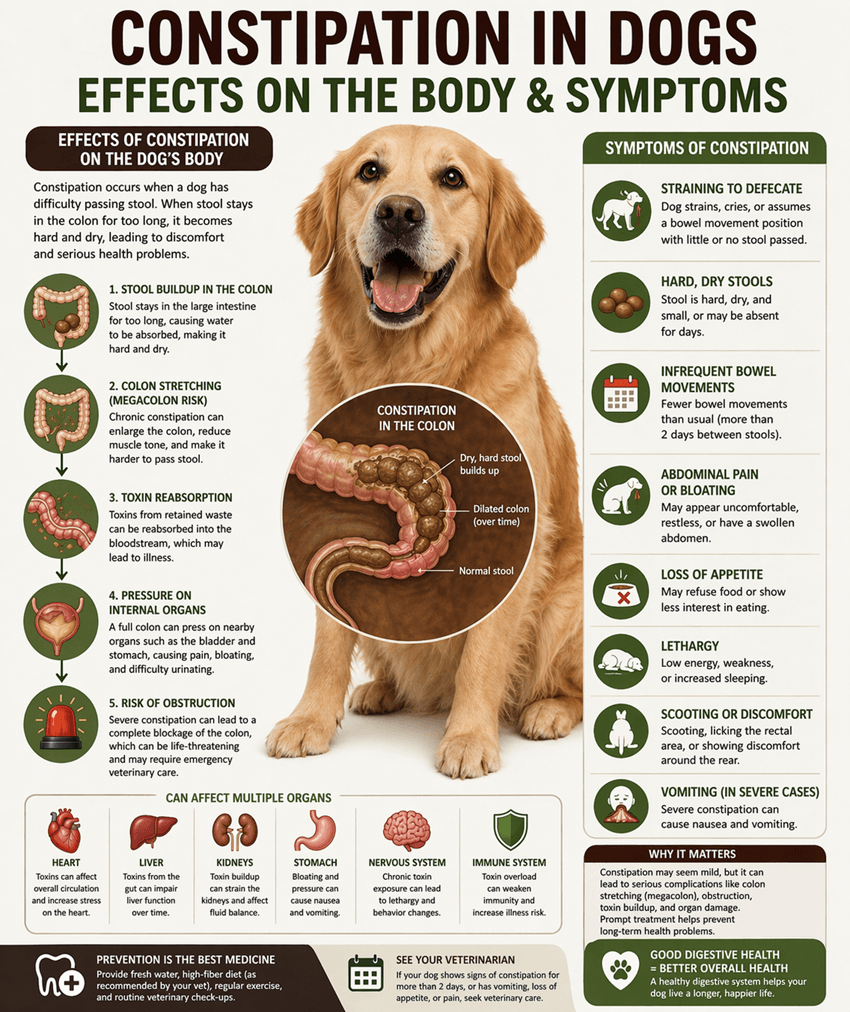
Constipation in dogs is a common digestive issue that affects bowel movements and overall comfort. Early signs are often subtle—such as straining to defecate or passing small, dry stools—but can worsen if left unaddressed.
This visual guide highlights the most common symptoms of constipation and how it impacts your dog’s digestive system, helping you recognize problems early and take steps to keep things moving regularly and comfortably.
Stages of Constipation
- Early stage: Mild straining, slightly reduced frequency of bowel movements.
- Moderate stage: Noticeable difficulty passing stool, dry or hard stools, discomfort.
- Advanced stage: Severe straining, no bowel movements, pain, bloating, possible complications (e.g., obstruction).
Top Ways to Prevent Constipation in Dogs
Because constipation can worsen over time if not addressed, early recognition and proactive care are important. With proper management, most cases can be relieved, helping restore regular bowel movements and keep your dog comfortable and healthy.


| Prevention Strategy | Why It Helps | How to Do It |
|---|---|---|
| Provide Plenty of Fresh Water | Hydration keeps stools soft and easier to pass. | Ensure constant access to clean water; consider wet food for added moisture. |
| Feed a Fiber-Rich Diet | Fiber supports healthy digestion and regular bowel movements. | Add pumpkin, vegetables, or vet-approved fiber supplements to meals. |
| Regular Exercise | Physical activity stimulates intestinal movement. | Daily walks, playtime, and consistent activity suited to your dog’s age and health. |
| Maintain a Healthy Weight | Obesity slows digestion and reduces mobility. | Control portions, avoid overfeeding, and limit high-calorie treats. |
| Establish a Routine | Consistent bathroom schedules promote regular bowel habits. | Take your dog out at the same times each day, especially after meals. |
| Avoid Indigestible Items | Bones, hair, or foreign objects can harden stool or cause blockages. | Monitor chewing habits and avoid giving cooked bones or unsafe objects. |
| Regular Veterinary Checkups | Early detection of underlying issues prevents chronic constipation. | Schedule routine exams and address digestive changes promptly. |
Actionable Resources
If you want to prevent or relieve constipation in your dog, here are some helpful steps you can take under veterinary guidance:
How Constipation Is Diagnosed in Dogs
Diagnosing constipation requires a thorough veterinary assessment to identify the cause and rule out more serious conditions. Key steps include:
- Physical Examination: A vet checks the abdomen for discomfort, bloating, or signs of blockage, and may assess the rectal area.
- Imaging:
- X-rays – Commonly used to detect stool buildup, obstructions, or enlarged organs.
- Ultrasound: May be used for a more detailed view of the digestive tract.
- Medical History: Discussion of diet, water intake, activity level, medications, and recent bowel habits.
- Laboratory Tests: Blood work or fecal analysis to check for infections, dehydration, or underlying health issues.
- Rectal Examination: In some cases, to identify blockages, masses, or anal gland problems.
Early diagnosis is important because untreated constipation can lead to discomfort and complications—addressing it promptly helps restore normal digestion and prevent recurrence.
Treatment & Care
The most effective treatments for constipation in dogs focus on relieving blockage, improving stool consistency, and supporting healthy digestion. This often includes a combination of increased hydration, dietary changes (such as adding fiber), exercise, and, when needed, veterinary treatments like stool softeners, laxatives, or enemas.
Always consult your veterinarian before starting any new treatment or supplement for constipation. You can get personalized joint-care advice from an online registered vet anytime, anywhere through Dutch. You can also chat with an online vet to ask questions about managing your dog’s constipation symptoms, treatment options, and lifestyle adjustments tailored to their condition.
Conventional Medical Treatments
| Treatments | Benefits / Role |
|---|---|
| Stool Softeners & Laxatives | Lactulose, polyethylene glycol; help soften stool and promote easier bowel movements (vet-guided use). |
| Enemas | Provide quick relief in moderate to severe cases; typically administered by a veterinarian. |
| Prokinetic Medications | Drugs that stimulate intestinal movement, helping stool pass through the colon more effectively. |
| Fluid Therapy | Rehydrates the body and softens impacted stool, especially in dehydrated or severe cases. |
| Manual Deobstipation | Veterinary procedure to remove impacted feces when other treatments are ineffective. |
| Surgery (Severe Cases) | Used for chronic conditions like megacolon or physical obstructions that cannot be managed medically. |
Supplement Support
| Supplement / Nutrient | Benefits / Role |
|---|---|
| Dietary Fiber (Pumpkin, Psyllium) | Helps bulk and soften stool, promoting regular and easier bowel movements. |
| Probiotics | Support gut health and improve digestion, helping regulate bowel movements. |
| Prebiotics | Feed beneficial gut bacteria, enhancing overall digestive function. |
| Omega-3 Fatty Acids (Fish Oil) | May help reduce intestinal inflammation and support healthy digestion. |
| Magnesium | Can help relax intestinal muscles and support bowel movement (use under vet guidance). |
| Electrolytes | Support hydration balance, which is essential for preventing dry, hard stools. |
| Digestive Enzymes | Assist in breaking down food properly, reducing digestive strain. |
| Vitamin B Complex | Supports metabolism and overall digestive system function. |
| Aloe Vera (Vet-Approved) | May provide mild natural laxative effects and soothe the digestive tract. |
Find the best supplements for constipation in dogs on Amazon and Chewy.

Alternative & Integrative Therapies
| Therapy | Benefits / Role |
|---|---|
| Abdominal Massage | Can gently stimulate bowel movement and relieve mild discomfort. |
| Acupuncture | May help regulate digestive function and improve intestinal motility. |
| Herbal Remedies (Vet-Approved) | Natural options like slippery elm or psyllium may support digestion and stool passage. |
| Probiotic Therapy | Supports a healthy gut microbiome, promoting regular bowel movements. |
| Hydrotherapy | Water-based exercise can encourage movement and stimulate digestion in inactive dogs. |
| Warm Compress | Applying gentle warmth to the abdomen may help relax muscles and ease discomfort. |
| Behavioral & Routine Training | Establishing consistent bathroom habits can help regulate bowel function. |
Surgical Options
| Surgical Option | Benefits / Role |
|---|---|
| Foreign Body Removal | Surgical removal of objects (bones, toys, debris) causing intestinal blockage. |
| Mass or Tumor Removal | Eliminates growths that obstruct the colon or rectum and interfere with normal stool passage. |
| Subtotal Colectomy | Removal of part of the colon in severe cases (e.g., megacolon) to restore bowel function. |
| Pelvic Canal Surgery | Corrects narrowing of the pelvic canal (often after fractures), allowing stool to pass more easily. |
| Prostate Surgery | Treats enlarged prostate in male dogs that compresses the rectum and causes constipation. |
Emotional & Lifestyle Impact
Constipation can affect more than just a dog’s digestion—it can impact their comfort, behavior, and daily routine. Dogs experiencing constipation may become restless, uncomfortable, less active, or even irritable, especially when trying to pass stool. Ongoing discomfort can reduce appetite and make them less interested in play or normal activities.
For owners, it can be stressful to watch a dog struggle with repeated discomfort or irregular bowel movements. Daily routines may need small adjustments, such as more frequent walks, increased access to fresh water, and dietary changes to support digestion. In some cases, closer monitoring of bathroom habits becomes necessary. With the right care and attention, most dogs recover well. By maintaining a balanced diet, proper hydration, and regular exercise, you can help restore your dog’s comfort and keep their digestive system functioning smoothly.
Typical Annual Cost of Treating Constipation in Dogs
| Category | Estimated Annual Cost Range | Notes |
|---|---|---|
| Routine Vet Visits & Diagnostics | $200 – $600 | Exams, fecal tests, and occasional imaging (X-rays or ultrasound). |
| Medications (Laxatives, stool softeners) | $100 – $500 | Lactulose, fiber supplements, or prokinetic drugs depending on severity. |
| Dietary Management | $300 – $900 | High-fiber or prescription diets, plus added hydration support. |
| Emergency Care (Enemas, Hospitalization) | $300 – $1,500 | Needed for severe or acute cases with impaction or dehydration. |
| Chronic Condition Management | $500 – $2,000 | Ongoing care for issues like megacolon or neurological disorders. |
| Surgery (if needed) | $1,500 – $5,000+ | Procedures such as foreign body removal or partial colectomy. |
| Insurance & Wellness Plans | $300 – $900 | Helps offset costs for diagnostics, treatments, and emergencies. |
| Typical Annual Range | Mild / Occasional Cases: $300 – $1,000 | Chronic / Severe Cases: $1,000 – $5,000+ | |
Constipation care can sometimes involve ongoing costs—especially if your dog needs special diets, supplements, or repeated veterinary visits. Pet insurance or wellness plans can help cover diagnostics and treatment, making it easier to manage your dog’s digestive health without added financial stress. If you want to compare options, explore guides on the Best Pet Insurance for Dogs and Best Pet Wellness Plans.
Other Health Issues Related to Constipation in Dogs
If constipation becomes frequent or severe, it may be linked to or lead to other health concerns affecting your dog’s overall well-being:
- Fecal impaction
- Bloating and abdominal discomfort
- Loss of appetite
- Dehydration
- Anal gland problems
- Intestinal blockage (from foreign objects or hair)
- Megacolon (chronic constipation with enlarged colon)
- Straining-related injuries or hernias
- Lethargy and reduced activity
- Behavioral changes (restlessness, irritability)
Frequently Asked Questions
The Bottom Line
Constipation is a common issue in dogs, but it doesn’t have to become a serious problem when addressed early. With proper care, including a balanced diet, adequate hydration, regular exercise, and timely veterinary support, most dogs can maintain healthy digestion and stay comfortable. By paying attention to your dog’s bowel habits and making simple lifestyle adjustments, you can prevent recurring issues and support long-term digestive health. The goal isn’t just relief in the moment—but keeping your dog feeling their best every day.