What Can I Give My Dog for an Upset Stomach? What Helps & When to Worry

Canine Bible is reader-supported. We receive affiliate commissions via some of our links. Learn more.
For a mild upset stomach, you may be able to give your dog small amounts of bland food, fresh water, and short-term stomach rest. Plain boiled chicken, white rice, or a veterinarian-recommended digestive diet can help some dogs, but only when symptoms are mild and your dog is otherwise acting normal. Not every upset stomach is safe to manage at home. Vomiting, diarrhea, loss of appetite, gas, or stomach gurgling can have many causes, from simple dietary upset to parasites, toxins, pancreatitis, or intestinal blockage. Some common home remedies and human medicines can make dogs worse. The right response depends on your dog’s symptoms, age, size, medical history, and how long the problem has been going on. This guide explains what may help, what to avoid, and when an upset stomach needs a veterinarian.
Common Signs of Upset Stomach in Dogs
| Common Sign | What It Can Mean for Your Dog |
|---|---|
| Vomiting | Occasional vomiting may happen with mild stomach upset, but repeated vomiting can lead to dehydration or signal a more serious problem. |
| Diarrhea | Loose or watery stool can occur after diet changes, stress, parasites, infection, or eating something inappropriate. |
| Loss of appetite | A dog with nausea or belly discomfort may skip meals, eat slowly, or show less interest in food than usual. |
| Drooling or lip licking | Excess drooling, swallowing, or lip licking can be a sign of nausea before vomiting occurs. |
| Gas or stomach noises | Gurgling, bloating, or excess gas may reflect digestive irritation, diet sensitivity, or rapid gut movement. |
| Abdominal discomfort | Restlessness, stretching, whining, or guarding the belly can suggest pain and should be taken seriously. |
| Lethargy | Low energy with stomach symptoms can mean your dog is dehydrated, painful, weak, or dealing with more than mild indigestion. |
| Dehydration signs | Dry gums, sunken eyes, weakness, or reduced urination can occur when vomiting or diarrhea causes fluid loss. |
Mild vs Concerning Upset Stomach in Dogs
An upset stomach is not a diagnosis. It is a sign that the digestive tract is irritated or that another body system is affecting digestion. A dog who vomits once after eating grass, then acts normal, drinks normally, and has no diarrhea is very different from a dog who vomits repeatedly, refuses food, has bloody stool, or looks weak.
Mild digestive upset often follows a sudden diet change, too many treats, table scraps, stress, or scavenging something unusual. These dogs may have one or two loose stools, mild nausea, temporary appetite changes, or a small amount of yellow bile vomit when the stomach is empty. If your dog is bright, hydrated, and improving, careful home support may be reasonable for a short time.


More concerning cases need veterinary input because vomiting and diarrhea can quickly cause dehydration and electrolyte imbalance. Cornell notes that vomiting plus diarrhea can accelerate dehydration, and black/tarry stool, lethargy, not eating, vomiting with diarrhea, or diarrhea lasting 48–72 hours should prompt veterinary care.
A key rule: do not try to “settle the stomach” at home if your dog may have swallowed a toxin, sock, toy, bone, corn cob, string, medication, or another foreign object.
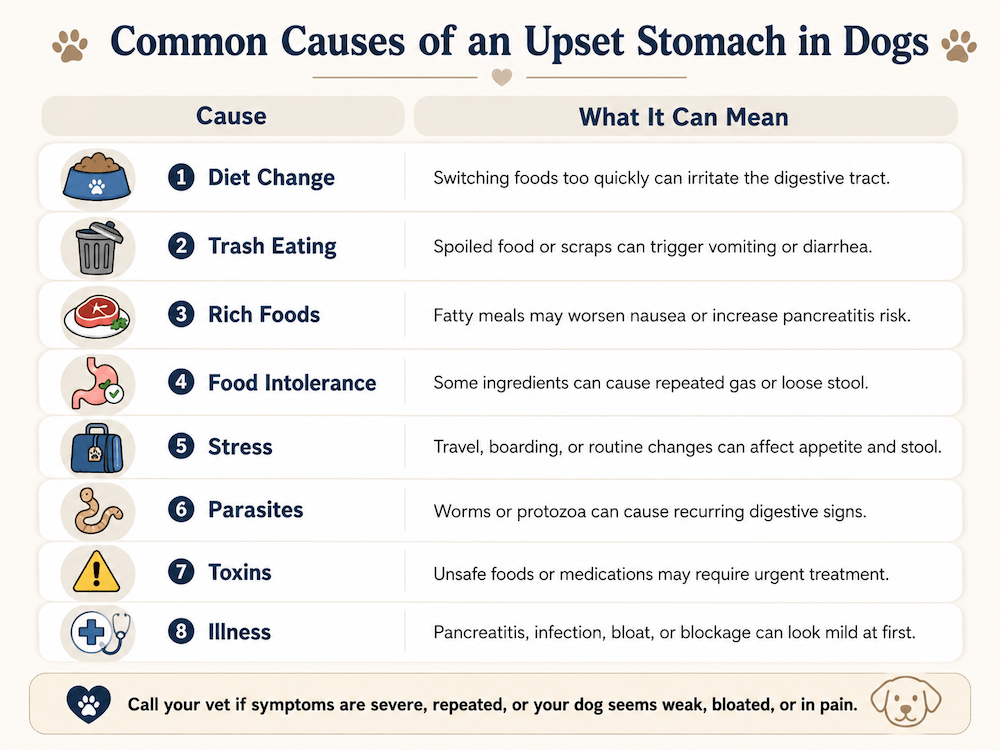
Common Causes of Upset Stomach in Dogs
Upset stomach in dogs is not one single condition. It is a symptom pattern that can come from mild dietary irritation, intestinal infection, toxin exposure, parasites, stress, pancreatitis, or a physical problem such as obstruction or bloat. Research on acute canine diarrhea notes that dietary indiscretion, food change, stress, parasites, bacterial or viral enteritis, and microbiome changes can all be involved.


How a Dog’s Upset Stomach Happens in the Body
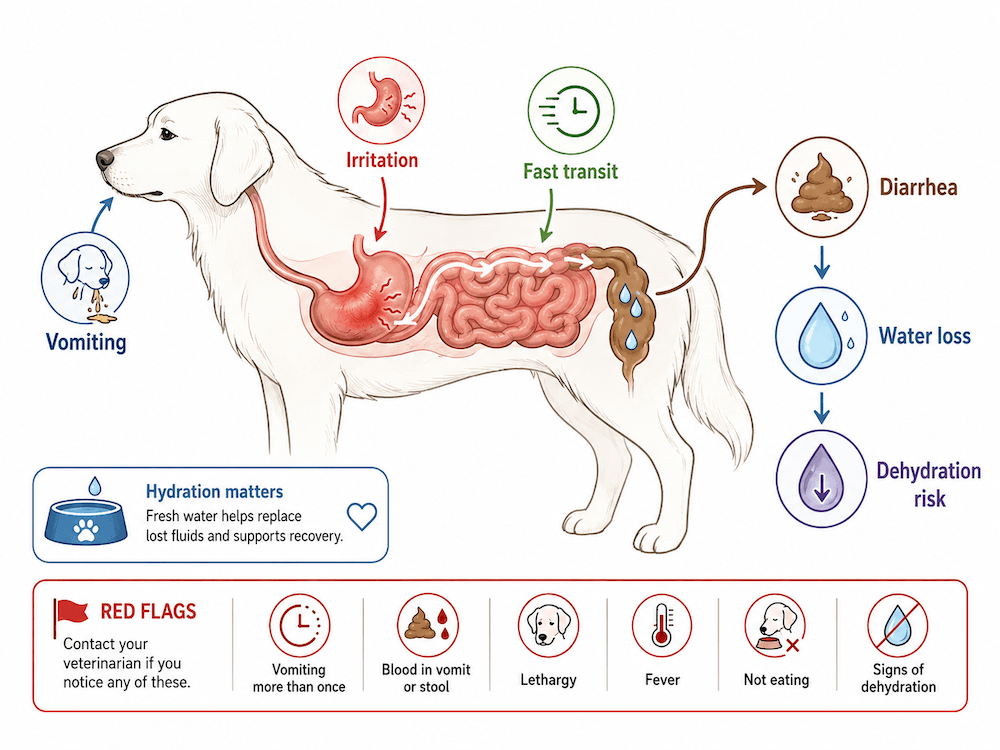
A dog’s upset stomach usually reflects irritation or inflammation somewhere in the gastrointestinal tract. Food changes, toxins, parasites, infection, stress, or illness can affect stomach emptying, intestinal movement, gut bacteria, and water absorption. Diarrhea happens when material passes through the GI tract too quickly, preventing normal water absorption and increasing dehydration risk.
Vomiting adds another risk because fluid and electrolytes are lost before they can be absorbed. This is why fresh water, careful monitoring, and early veterinary help matter more than trying several home remedies. If vomiting and diarrhea occur together, dehydration can develop faster, especially in small dogs, puppies, seniors, and dogs with kidney, heart, or endocrine disease.
What You Can Give a Dog for an Upset Stomach at Home
For mild cases, the safest approach is usually supportive care, not medication. That means keeping hydration available, reducing digestive workload, and feeding small, gentle meals once vomiting has stopped. The University of Missouri Veterinary Health Center says otherwise healthy pets that develop vomiting or diarrhea the same day and still act fairly normal may sometimes be managed supportively for 24–48 hours, but the same guidance lists multiple signs that require earlier veterinary attention.
| Safe Option | When It May Help | Important Safety Note |
|---|---|---|
| Fresh water | Helps prevent dehydration during mild vomiting, diarrhea, or reduced appetite. | Offer small amounts often if your dog vomits after drinking. |
| Ice chips | May help dogs who vomit after drinking too much water quickly. | Use only as a short-term way to encourage gentle hydration. |
| Short food pause | May help an adult dog’s stomach settle after isolated vomiting. | Do not fast puppies, toy breeds, seniors, or diabetic dogs without a vet. |
| Boiled chicken | Provides a plain, lean protein for a temporary bland meal. | Remove skin, bones, fat, oil, salt, garlic, onion, and seasoning. |
| Boiled turkey | Works as a lean bland protein when chicken is not suitable. | Use plain white meat without skin, gravy, butter, or seasoning. |
| White rice | Adds an easy-to-digest carbohydrate for temporary stomach support. | Serve plain and soft, without butter, salt, oil, or sauces. |
| Cooked pasta | Can be used as a bland carbohydrate for short-term feeding. | Use plain pasta only, without sauce, cheese, garlic, or onion. |
| Low-fat hamburger | Can replace chicken as a bland protein for mild diarrhea. | Boil, drain well, and avoid oil, seasoning, or added fat. |
| Plain pumpkin | May help some dogs with mild stool changes because of fiber. | Use plain canned pumpkin, never pumpkin pie filling. |
| Veterinary GI diet | Offers a balanced digestive diet made for stomach upset. | Use the specific formula your veterinarian recommends. |
| Dog probiotic | May support gut bacteria during mild, uncomplicated diarrhea. | Choose a dog-specific product and follow the label or vet instructions. |
| Plain baby food | May help encourage eating when a dog refuses bland meals. | Use meat-only options with no onion, garlic, spices, or sweeteners. |
| Small meals | Reduces stomach workload after vomiting or loose stool improves. | Feed tiny portions first, then slowly increase if tolerated. |
| Quiet rest | Helps reduce stress and activity while digestion settles. | Call a vet if restlessness, weakness, or belly pain appears. |
Remember to ALWAYS consult with your vet before giving your dog any food, supplement, medication, or home remedy for an upset stomach. If you can’t reach your vet, you can chat live with a registered online veterinary professional via our online vet chat or video chat support (24 hours a day, 7 days a week). Or use Chewy’s online vet services (6 a.m. – midnight ET).
What Not to Give Dogs for an Upset Stomach
The foods and substances below can worsen digestive upset or create serious health risks. ASPCA lists common dangerous foods such as chocolate, xylitol, alcohol, caffeine, grapes, raisins, onions, garlic, and raw yeast dough, and advises contacting a veterinarian or poison control if a pet eats something concerning.
| Do Not Give | Why It Is Risky | Safer Choice |
|---|---|---|
| Ibuprofen | Can cause stomach ulcers, kidney injury, or life-threatening toxicity. | Never use human pain medicine unless your vet prescribes it. |
| Acetaminophen | Can be toxic and may damage the liver or blood cells. | Call your veterinarian for dog-safe pain guidance. |
| Aspirin | Can worsen stomach irritation, bleeding risk, or ulcers. | Do not use it for stomach upset without veterinary direction. |
| Pepto-Bismol | Can be unsafe for some dogs and may complicate diagnosis. | Ask your veterinarian before using any bismuth product. |
| Imodium | Can be dangerous for certain dogs and some diarrhea causes. | Use only if your veterinarian says it is appropriate. |
| Human antacids | May be wrong for the cause or unsafe with conditions. | Use only products and doses approved by your veterinarian. |
| Leftover antibiotics | Can disrupt gut bacteria and may not treat the problem. | Let your veterinarian decide if antibiotics are needed. |
| Hydrogen peroxide | Inducing vomiting can be dangerous after some exposures. | Call a vet or poison helpline before inducing vomiting. |
| Chocolate | Can cause vomiting, diarrhea, tremors, seizures, or heart problems. | Contact a vet or poison control after any concerning exposure. |
| Xylitol | Can cause dangerous low blood sugar and liver damage. | Check labels on gum, candy, peanut butter, and baked goods. |
| Grapes or raisins | Can cause serious kidney injury in some dogs. | Treat any ingestion as a reason to call a vet. |
| Onion or garlic | Can damage red blood cells and worsen illness. | Avoid all forms, including powders, sauces, and broths. |
| Alcohol | Can cause poisoning, weakness, low blood sugar, or breathing problems. | Keep drinks, desserts, and fermenting foods away from dogs. |
| Caffeine | Can cause agitation, fast heart rate, tremors, or seizures. | Avoid coffee, tea, energy drinks, and caffeine pills. |
| Raw dough | Can expand in the stomach and produce alcohol. | Seek veterinary advice if your dog eats yeast dough. |
| Fatty foods | Can worsen vomiting or trigger pancreatitis in susceptible dogs. | Choose plain low-fat bland foods instead. |
| Dairy products | Can worsen gas or diarrhea in lactose-sensitive dogs. | Use bland meat and rice instead of milk or cheese. |
| Seasoned broth | May contain onion, garlic, salt, fat, or spices. | Use plain water unless your vet approves a broth. |
| Cooked bones | Can splinter and cause choking, injury, or obstruction. | Offer no bones when the stomach is upset. |
| Essential oils | Can irritate, poison, or worsen nausea in dogs. | Avoid using oils as stomach remedies. |
When a Dog’s Upset Stomach Needs Veterinary Care
A dog with mild soft stool but normal energy, normal drinking, and no repeated vomiting may improve with supportive care. A dog with repeated vomiting, blood, black stool, severe lethargy, painful belly, dehydration, toxin exposure, or unproductive retching needs veterinary help quickly. Vomiting beyond 24 hours, fever, lethargy, painful belly, and blood in vomit are reasons to call a vet.
| Sign | Risk Level | What Owners Should Do |
|---|---|---|
| One soft stool |
Usually mild if energy and appetite stay normal. | Monitor closely and simplify food temporarily. |
| Repeated vomiting | Can quickly cause dehydration and electrolyte problems. | Call your veterinarian for same-day guidance. |
| Blood present | May indicate irritation, ulcers, infection, or injury. | Contact a veterinarian promptly for advice. |
| Black stool | Can suggest digested blood from the upper tract. | Seek veterinary care instead of waiting. |
| Painful belly | May signal pancreatitis, blockage, or bloat. | Do not manage this only at home. |
| Bloated abdomen | Can be linked to life-threatening GDV. | Go to emergency care immediately. |
| Toxin exposure | Some poisons worsen before severe signs appear. | Call a vet or animal poison control. |
| Puppy or senior |
Young and older dogs dehydrate more easily. | Ask a vet before fasting or medicating. |
What Research Says About Upset Stomach Support in Dogs
Veterinary evidence supports a practical, cautious approach: hydration, appropriate nutrition, monitoring, and veterinary care when signs are severe or persistent. VCA’s nutrition guidance for GI upset explains that dogs and cats need proper nutrition to recover, and that veterinary GI diets may be highly digestible, low-fat, fiber-adjusted, hypoallergenic, energy dense, and complete and balanced depending on the suspected problem.
UC Davis highlights that acute and chronic gastrointestinal disease require different nutritional approaches. It notes that acute vomiting or diarrhea is commonly linked to dietary indiscretion or flare-ups of chronic GI disease, while chronic disease may involve inflammatory bowel disease, adverse food reaction, or colitis.[1]
Cornell’s diarrhea guidance supports the owner-friendly distinction between “worry or wait.” Many mild cases are uncomplicated and self-limiting, but lethargy, appetite loss, vomiting with diarrhea, black/tarry stool, or diarrhea that does not resolve in 48–72 hours should prompt care.
Probiotic research is still developing. In one randomized, double-blind, placebo-controlled trial of 60 dogs with acute diarrhea, probiotics, metronidazole, and placebo did not show statistically significant differences in time to resolution, although the probiotic group had the shortest average time to acceptable fecal consistency. The study also failed to support routine metronidazole use for that cohort, reinforcing why antibiotics should not be used casually for uncomplicated diarrhea.[2]
Feeding Guidelines to Avoid Upset Stomach in Dogs
Feeding habits play a major role in preventing upset stomach in dogs. Sudden food changes, oversized meals, fatty scraps, too many treats, and feeding too close to exercise can all trigger vomiting, diarrhea, gas, or poor appetite. The safest routine is to keep meals consistent, make diet changes gradually, offer appropriate portions, limit rich extras, and return to regular food slowly after a bland diet. Sudden diet changes can cause temporary diarrhea, and Merck advises reintroducing small amounts of bland food only after vomiting has stopped for 12–24 hours.
| Feeding Guideline | How It Helps Prevent Upset Stomach | Owner Tip |
|---|---|---|
| Change food gradually | Slow transitions give the digestive system time to adjust. | Mix new food into old food over several days. |
| Keep meals consistent | Predictable feeding helps reduce sudden digestive irritation. | Feed the same balanced diet at regular times. |
| Measure portions | Overfeeding can trigger vomiting, gas, or loose stool. | Use a measuring cup instead of guessing amounts. |
| Limit table scraps | Rich leftovers can upset digestion or increase pancreatitis risk. | Keep human food out of the regular routine. |
| Avoid fatty foods | Greasy foods are harder for many dogs to digest. | Skip bacon, sausage, gravy, butter, and fried foods. |
| Use treats carefully | Too many treats can unbalance the diet and stool. | Keep treats small and count them as calories. |
| Slow fast eaters | Eating too quickly can cause gulping, gas, or vomiting. | Use a slow feeder, puzzle bowl, or smaller meals. |
| Feed smaller meals | Smaller meals may be easier on sensitive stomachs. | Split daily food into two or three meals. |
| Separate exercise | Hard activity around meals may worsen stomach discomfort. | Allow calm time before and after feeding. |
| Store food properly | Stale or spoiled food can cause digestive upset. | Seal food tightly and check expiration dates. |
| Return slowly after illness | A gradual return lowers the chance of relapse. | Mix regular food back in once stool improves. |
| Avoid sudden extras | New chews or toppings can trigger sensitive digestion. | Introduce one new item at a time. |
Frequently Asked Questions
The Bottom Line
Most dogs with a mild upset stomach can be supported at home with fresh water, rest, and small amounts of bland food once vomiting has settled. Plain boiled chicken, turkey, white rice, plain pumpkin, or a veterinarian-recommended digestive diet may help, but these should be temporary options. Avoid human medications, fatty foods, dairy, seasonings, and unsafe ingredients like chocolate, xylitol, grapes, raisins, onion, or garlic. The biggest mistake is assuming every upset stomach is simple indigestion. Repeated vomiting, diarrhea with blood, black stool, belly pain, bloating, dehydration, weakness, or toxin exposure should be treated as a reason to call a veterinarian. Watch your dog’s energy, appetite, hydration, and stool closely while symptoms improve. When in doubt, veterinary guidance is the safest way to protect your dog’s comfort and health.