Fleas on Dogs: Symptoms, Types, Causes, Signs & Prevention

Canine Bible is reader-supported. We receive affiliate commissions via some of our links. Learn more.
Fleas are one of the most common external parasites in dogs, affecting pets of all ages and lifestyles. Many owners mistake early signs—like occasional scratching or mild skin irritation—as harmless, but they can quickly develop into a full infestation. Left untreated, fleas can cause severe itching, skin infections, allergic reactions, and even transmit parasites like tapeworms. The good news is that with proper prevention, timely treatment, and consistent home care, fleas can be effectively controlled. This guide covers everything you need to know about fleas in dogs—from causes and symptoms to treatment, prevention, and long-term management—so you can keep your dog comfortable and protected.
What Are Fleas in Dogs?
Fleas are small, wingless parasites that live on your dog’s skin and feed on blood. They are fast-moving and reproduce quickly, making infestations difficult to control if not addressed early. Fleas don’t just stay on your dog—they also live in the environment, including bedding, carpets, and furniture. Their bites cause itching and irritation, and in some dogs, they can trigger allergic reactions that lead to more severe skin problems.
Types
Fleas affecting dogs are generally similar in behavior, but the most common species include:
| Type | Description |
|---|---|
| Flea Infestation | The most common issue, caused by adult fleas living on the dog and feeding on blood. |
| Flea Allergy Dermatitis | An allergic reaction to flea saliva, leading to intense itching, redness, and skin irritation. |
| Tapeworm Transmission | Dogs can ingest infected fleas while grooming, leading to tapeworm infections. |
| Flea Bite Anemia | Occurs in severe infestations, especially in puppies, due to blood loss from flea feeding. |
| Secondary Skin Infections | Excessive scratching can break the skin, allowing bacteria to cause infections. |
| Environmental Infestation | Flea eggs, larvae, and pupae spread into carpets, bedding, and furniture, causing recurring infestations. |
Predisposed Dog Breeds
Fleas can affect dogs of all breeds. However, some dogs may be more prone to infestations or stronger reactions due to factors like coat type, living environment, grooming habits, or underlying skin allergies.


| Risk Group | Examples | Notes on Risk Factors |
|---|---|---|
| Outdoor Dogs | Dogs spending time in yards, parks, forests, or rural areas | Higher exposure to flea-infested environments and wildlife carriers |
| Multi-Pet Households | Homes with multiple dogs or cats | Fleas spread easily between animals, making infestations harder to control |
| Puppies | Young dogs under 6 months | More vulnerable to anemia and severe reactions from heavy infestations |
| Dogs Without Preventatives | Dogs not on monthly flea control treatments | Greatly increased risk of infestation and rapid flea reproduction |
| Allergy-Prone Dogs | Dogs with sensitive skin or history of allergies | More likely to develop flea allergy dermatitis with intense itching |
| Warm Climate Regions | Areas with mild winters and high humidity | Fleas thrive year-round, increasing exposure and reinfestation risk |
Causes
Symptoms
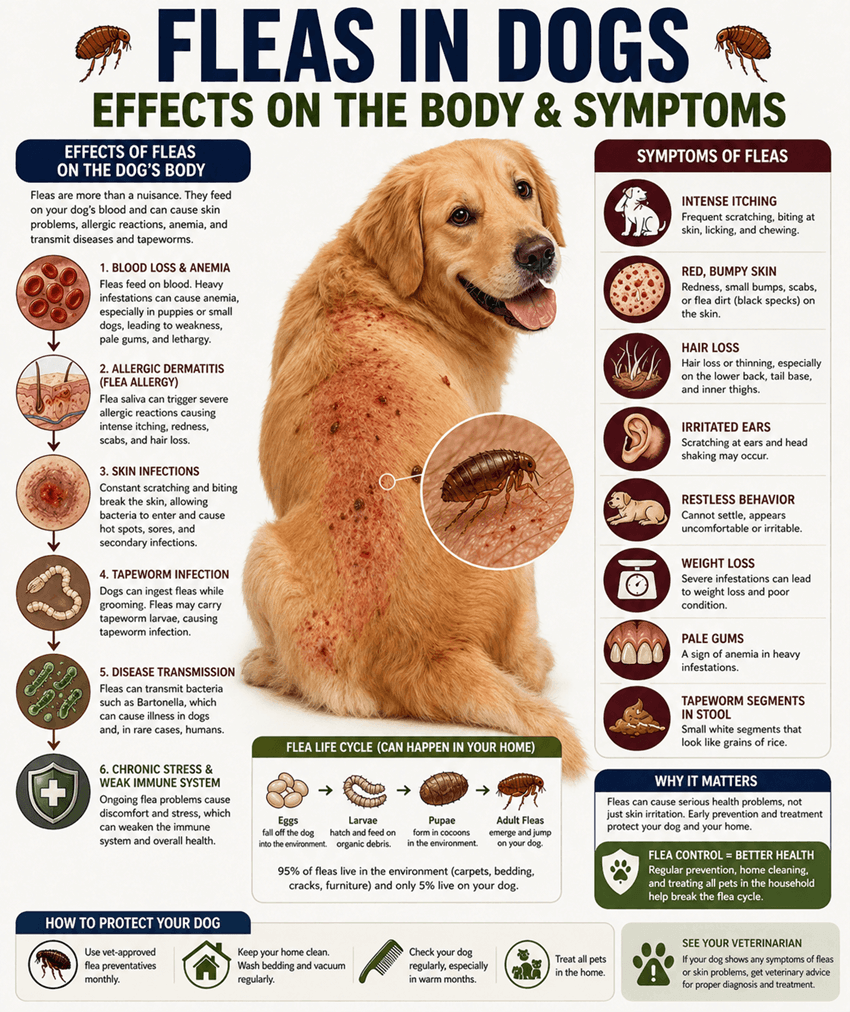
Flea infestations in dogs can range from mild to severe and often cause intense itching and discomfort. Early signs—like occasional scratching or small skin irritations—are easy to overlook but can quickly worsen if untreated.
This guide highlights the most common symptoms of fleas in dogs, helping you spot infestations early and take action to protect your dog’s health and comfort.
Stages of Arthritis
- Early stage: Occasional scratching, mild skin irritation, presence of a few fleas or flea dirt.
- Moderate stage: Frequent scratching, redness, hair loss, visible fleas.
- Advanced stage: Severe itching, skin infections, allergic reactions, and possible anemia or tapeworms.
Top Ways to Prevent Fleas in Dogs
Because flea infestations can spread quickly and become difficult to control, early prevention and consistent care are essential. With regular treatments, proper hygiene, and environmental control, you can protect your dog from discomfort and keep your home flea-free year-round.


| Prevention Strategy | Why It Helps | How to Do It |
|---|---|---|
| Monthly Flea Preventatives | Kills fleas before they reproduce and stops infestations early. | Use vet-recommended topical treatments, oral medications, or flea collars. |
| Regular Grooming & Inspection | Helps detect fleas or flea dirt before the infestation worsens. | Brush your dog often, check skin (especially neck, tail base, belly). |
| Clean Bedding & Living Areas | Flea eggs and larvae live in the environment, not just on the dog. | Wash bedding weekly in hot water, vacuum carpets and furniture frequently. |
| Yard Maintenance | Outdoor environments can harbor flea larvae and eggs. | Keep grass short, remove debris, consider pet-safe yard treatments. |
| Limit Contact with Infested Animals | Fleas spread easily between animals. | Avoid contact with untreated pets or stray animals. |
| Year-Round Prevention | Fleas can survive indoors even in colder months. | Continue flea prevention all year, not just in summer. |
| Routine Vet Checkups | Ensures proper prevention and early treatment if needed. | Follow vet guidance on the best products for your dog’s age and health. |
Actionable Resources
If you want to prevent or manage fleas in your dog, here are some helpful resources you can explore with veterinary guidance:
How Fleas Are Diagnosed in Dogs
Diagnosing fleas is usually straightforward and involves a physical check of your dog and their environment. Key steps include:
- Physical Examination: A vet looks for live fleas, flea dirt (black specks), and signs of scratching, redness, or skin irritation.
- Flea Comb Test: Using a fine-tooth flea comb to detect fleas or flea dirt in the coat.
- Skin Evaluation: Checking for hair loss, hot spots, or allergic reactions like flea allergy dermatitis.
- Environmental Check: Identifying fleas or eggs in bedding, carpets, or common resting areas.
- Additional Tests (if needed): In severe cases, tests may be done to check for anemia or secondary skin infections.
Early detection is important because flea infestations can spread quickly—prompt treatment helps prevent discomfort and more serious complications.
Treatment & Care
According to veterinary guidance, the most effective treatment for fleas in dogs involves a multi-step approach, combining fast-acting flea killers, long-term preventatives, and thorough environmental control. This may include oral or topical medications, flea shampoos, and home treatments to eliminate fleas at all life stages.
Always consult your veterinarian before starting any new treatment or supplement for fleas. You can get personalized joint-care advice from an online registered vet anytime, anywhere through Dutch. You can also chat with an online vet to ask questions about managing your dog’s flea symptoms, treatment options, and lifestyle adjustments tailored to their condition.
Conventional Medical Treatments
| Treatments | Benefits / Role |
|---|---|
| Topical Flea Treatments | Spot-on products (e.g., fipronil, imidacloprid) kill fleas on contact and provide lasting protection. |
| Oral Flea Medications | Fast-acting tablets (e.g., afoxolaner, fluralaner) kill fleas after biting and break the life cycle. |
| Flea Collars | Provide long-term protection by releasing active ingredients that repel and kill fleas. |
| Medicated Shampoos | Kill fleas on the dog quickly; useful for immediate relief but not long-term control alone. |
| Environmental Treatments | Sprays, powders, and foggers eliminate fleas, eggs, and larvae in the home and yard. |
| Anti-Itch & Skin Treatments | Antihistamines, medicated creams, or antibiotics help manage itching, inflammation, and infections. |
Supplement Support
| Supplement / Nutrient | Benefits / Role |
|---|---|
| Omega-3 Fatty Acids (Fish Oil) | Help reduce skin inflammation, itching, and irritation caused by flea bites. |
| Omega-6 Fatty Acids | Support skin barrier function and promote healthy coat recovery after infestation. |
| Biotin (Vitamin B7) | Supports skin healing and improves coat quality after hair loss. |
| Zinc | Plays a key role in skin repair, immune support, and wound healing. |
| Vitamin E | Provides antioxidant protection and helps soothe irritated skin. |
| Vitamin C | Supports immune function and helps the body recover from skin damage. |
| Probiotics | Support immune health and may help reduce allergic reactions like flea allergy dermatitis. |
| Coconut Oil | May help moisturize dry skin and has mild natural antimicrobial properties. |
| Brewer’s Yeast | Traditionally used to support skin health; sometimes believed to help deter fleas (effect varies). |
Find the best over-the-counter treatments and supplements for fleas in dogs on Amazon and Chewy.

Alternative & Integrative Therapies
| Approach | Benefits / Role |
|---|---|
| Herbal Flea Sprays | Plant-based sprays (e.g., neem, lavender) may help repel fleas; best used as a supplement to medical treatment. |
| Essential Oil Blends (Pet-Safe Only) | Some diluted oils may help deter fleas, but must be used cautiously to avoid toxicity. |
| Diatomaceous Earth (Food Grade) | Natural powder that can help kill flea larvae in the environment by drying them out. |
| Apple Cider Vinegar (Diluted) | May help create a less favorable environment for fleas on the skin; limited scientific evidence. |
| Frequent Bathing with Mild Soaps | Helps physically remove fleas and soothe irritated skin when done regularly. |
| Environmental Natural Remedies | Natural yard treatments and indoor cleaning methods may reduce flea populations without harsh chemicals. |
| Immune & Skin Support | Supporting overall health can help dogs better tolerate flea bites and reduce allergic reactions. |
Surgical Options
| Intervention | Benefits / Role |
|---|---|
| Treatment of Flea Allergy Dermatitis (FAD) | Manages severe allergic reactions with medications to reduce itching, inflammation, and skin damage. |
| Antibiotic Therapy | Treats secondary bacterial skin infections caused by excessive scratching and open wounds. |
| Antifungal Treatment | Addresses yeast infections that can develop in irritated, damaged skin. |
| Fluid Therapy & Supportive Care | Used in severe cases (especially puppies) to treat dehydration or weakness from heavy infestations. |
| Treatment for Anemia | Severe infestations can cause blood loss; treatment may include iron support or transfusion in critical cases. |
| Professional Pest Control | Eliminates large-scale infestations in the home when standard cleaning and treatments are not enough. |
Emotional & Lifestyle Impact
Fleas can affect more than just a dog’s skin—they can significantly impact their comfort and daily life. Dogs with flea infestations often become restless, constantly scratching, and uncomfortable, which can lead to poor sleep, irritability, and reduced interest in play or interaction.
For owners, dealing with fleas can be frustrating and time-consuming. Managing an infestation often requires frequent cleaning, home treatments, and consistent pet care routines. Bedding, carpets, and furniture may need repeated attention to fully eliminate fleas. With persistence and proper care, however, you can restore your dog’s comfort and maintain a clean, healthy living environment for both of you.
Typical Annual Cost of Treating Fleas in Dogs
| Category | Estimated Cost Range | Notes |
|---|---|---|
| Vet Visit & Diagnosis | $50 – $150 | Basic exam; higher if skin infections or allergies are present. |
| Flea Treatments (Topical/Oral) | $10 – $60 per month | Depends on product type, brand, and dog size. |
| Flea Shampoos & Sprays | $10 – $40 | Short-term relief; usually combined with other treatments. |
| Home & Environmental Treatment | $50 – $300 | Includes sprays, foggers, or professional pest control if infestation is severe. |
| Medications for Skin Issues | $50 – $200 | Antibiotics, antifungals, or anti-itch meds for secondary conditions. |
| Preventative Products (Annual) | $120 – $400 | Year-round flea prevention is the most cost-effective long-term strategy. |
| Typical Total Cost | Mild Case: $50 – $150 | Moderate Infestation: $150 – $500 | Severe Case: $500 – $1,000+ | |
Flea care can add up quickly — from monthly preventatives to home treatments and grooming. Pet insurance and pet wellness plans can ease the financial burden and ensure your dog gets consistent protection without compromise. If you want to compare plans and find out which providers offer the best coverage for parasite prevention and routine care, check out our full guide to the Best Pet Insurance for Dogs and Best Pet Wellness Plans.
Other Health Issues Related to Fleas in Dogs
Flea infestations can lead to additional health problems beyond itching and skin irritation. If left untreated, they may cause both physical and behavioral issues in dogs.
- Flea Allergy Dermatitis (severe allergic skin reaction)
- Skin Infections (bacterial or yeast)
- Hair Loss (from excessive scratching and biting)
- Hot Spots (painful, inflamed skin areas)
- Anemia (especially in puppies or small dogs)
- Tapeworm Infection (from ingesting fleas)
- Restlessness and Irritability
- Sleep Disturbances
- Reduced Appetite (in more severe infestations)
Frequently Asked Questions
The Bottom Line
Fleas are one of the most common and frustrating issues dogs face, but they don’t have to become a long-term problem. With early detection, consistent treatment, and proper prevention, you can quickly control infestations and keep your dog comfortable. By using regular flea preventatives, maintaining a clean home environment, and working closely with your veterinarian, you can protect your dog from itching, irritation, and more serious complications. Ultimately, the goal is not just eliminating fleas, but ensuring your dog stays healthy, comfortable, and flea-free year-round.