Lice in Dogs: Symptoms, Types, Causes, Signs & Prevention

Canine Bible is reader-supported. We receive affiliate commissions via some of our links. Learn more.
Learn about lice in dogs, including how these parasites spread, common symptoms, diagnosis, safe treatment options, and how to prevent reinfestation and protect other dogs in your home.
Lice at a Glance
Most common in
Puppies, senior dogs, and dogs in poor health or crowded settings.
Common signs
Itching, scratching, hair loss, and a rough or matted coat.
Diagnosis
Seeing live lice or eggs (nits) attached to hair shafts.
Treatment
Veterinarian-approved parasite control and cleaning bedding.
Prognosis
Usually excellent with appropriate treatment and follow-up.
How it spreads
Mostly direct contact with infested dogs; sometimes shared items.


What Are Lice in Dogs?
Lice are tiny, wingless, parasitic insects that live on a dog’s skin and coat. Dogs can host chewing lice, which feed mainly on skin debris, and sucking lice, which feed on blood. Lice cling to hair and lay eggs (nits) that stick to individual hair shafts. They spread primarily through close contact between dogs and sometimes through shared bedding or grooming tools. Infested dogs may develop itching, irritated skin, hair loss, and a dull or matted coat. Severe infestations, especially in puppies or debilitated dogs, can cause anemia or secondary skin infections. Unlike fleas, lice cannot jump; they crawl. Dog lice are highly host-specific and do not typically establish infestations on people.
Types
Dogs can develop infestations with different types of lice, and each can affect the body in different ways. Some feed on skin debris and secretions, while others feed on blood and may cause anemia in severe cases. Understanding the most common types can help pet parents recognize why symptoms, treatment options, and prognosis can vary so widely.
Chewing Lice (Biting Lice)
Lice that feed on skin debris, hair, and skin secretions, causing itching, irritation, and hair loss. Common species include Trichodectes canis and Heterodoxus spiniger.
Sucking Lice
Blood-feeding lice, primarily Linognathus setosus, that attach to a dog’s skin and cause itching, irritation, and discomfort. Heavy infestations may lead to anemia, especially in puppies.
Predisposed Dog Breeds
While lice can affect any dog, certain dogs are more susceptible due to poor health, inadequate grooming, or close contact with infested animals. Factors such as age, weakened immunity, crowded living conditions, and poor coat hygiene make some dogs more prone to lice infestations than others, regardless of breed.
| Risk Group | Breeds Affected | Notes on Risk Factors |
|---|---|---|
| Puppies & Young Dogs | All breeds, particularly puppies exposed to infested dogs or crowded environments. | Young dogs may be more vulnerable to heavy infestations, which can cause severe itching, skin irritation, and occasionally anemia. |
| Senior Dogs | All breeds, especially older dogs with underlying health conditions. | Age-related health problems, reduced grooming, and decreased mobility may make infestations harder to detect and manage. |
| Long-Haired & Dense-Coated Dogs | Shih Tzu, Maltese, Yorkshire Terrier, Afghan Hound, Old English Sheepdog | Dense or tangled coats may make lice and their eggs harder to spot. Poor grooming can allow infestations to go unnoticed, although coat length alone does not increase susceptibility. |
| Shelter & Kennel Dogs | All breeds living in shelters, kennels, rescue facilities, or crowded housing. | Close contact with infested dogs and shared bedding or grooming equipment increases opportunities for lice transmission. |
| Dogs with Poor Health | All breeds, including malnourished, debilitated, or immunocompromised dogs. | Poor nutrition, illness, and inadequate coat care can contribute to persistent infestations and increase the risk of skin infections or other complications. |
| Dogs Exposed to Infested Animals | Any breed that has direct contact with another dog carrying lice. | Lice spread primarily through direct dog-to-dog contact. Sharing contaminated bedding, brushes, or grooming tools may also contribute to transmission. |
Causes
Lice in dogs usually develop from direct contact with infested animals or contaminated bedding, grooming tools, and shared environments rather than a single underlying cause. While lice infestations can often be prevented, understanding the factors that increase risk can help pet parents make informed decisions about hygiene, parasite prevention, and early detection.


Direct Contact With Infested Dogs
Lice spread primarily through close physical contact with infected dogs, allowing parasites to crawl from one dog’s coat to another.
Shared Bedding & Grooming Tools
Sharing contaminated bedding, brushes, combs, or grooming equipment may transfer lice between dogs, although indirect transmission is less common.
Crowded Living Environments
Dogs living in crowded shelters, kennels, or multi-dog households have more opportunities for lice transmission when an infested dog is present.
Inadequate Parasite Prevention
Dogs not receiving effective lice-control treatments may remain vulnerable to infestations. Some flea and tick preventives also control lice, but protection varies by product.
Poor Grooming & Coat Hygiene
Infrequent grooming and heavily matted coats can make lice and their eggs harder to detect. This may allow an existing infestation to persist or become more severe.
Poor Health & Nutrition
Malnutrition, illness, and poor overall health may make dogs less able to tolerate heavy lice infestations and increase the risk of skin irritation or secondary complications.
Age & Vulnerability
Puppies and senior dogs with underlying health problems may be more vulnerable to complications from severe infestations, including skin infections and anemia.
Symptoms
Lice symptoms in dogs can vary widely depending on the type of lice, severity of the infestation, and overall health of the dog. Some signs may be subtle at first, while others can become more noticeable as the infestation progresses. Common warning signs include excessive scratching, intense itching, hair loss, skin irritation, a dry or matted coat, and visible lice or eggs attached to the hair. Severe infestations may cause secondary skin infections or anemia. Because many of these symptoms can also be caused by other conditions, any persistent or unusual changes should be evaluated by a veterinarian.
- Excessive scratching and itching
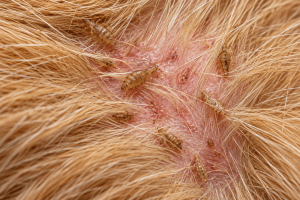
- Visible lice crawling through the fur
- Small eggs (nits) attached to hair shafts
- Redness and skin irritation
- Patchy hair loss or thinning fur
- Dry, rough, or dull-looking coat
- Matted or tangled hair
- Scabs or sores from repeated scratching
- Restlessness or frequent rubbing against objects
- Pale gums or weakness in severe infestations
Lice can affect the skin and coat across a dog’s body.
Stages & Progression of Lice in Dogs
Lice infestations in dogs can progress at different rates depending on the type of lice, severity of the infestation, and the dog’s overall health. Although lice infestations do not have formal medical stages, veterinarians assess how advanced the infestation is, whether skin damage or anemia has developed, and which treatment options may be most appropriate. Understanding the progression of lice infestations can also provide important insight into prognosis, expected recovery, and the level of care your dog may need.
Initial Exposure
Lice transfer to a dog through direct contact with an infested animal or contaminated items. Symptoms may be absent or difficult to notice during the earliest phase.
Early Infestation
Lice establish themselves in the coat and reproduce, attaching eggs to hair shafts. Mild itching, scratching, and coat changes may become noticeable.
Heavy Infestation
Increasing numbers of lice may cause persistent itching, skin redness, patchy hair loss, scabs, and a rough or matted coat. Veterinary treatment becomes particularly important.
Severe Complications
Prolonged, severe infestations may cause secondary skin infections or anemia, particularly in puppies and debilitated dogs. Additional veterinary care may be necessary.
This chart is a simplified visual guide, not an official veterinary staging system or a fixed timeline. Lice infestations do not always progress through every phase, and the severity depends on parasite numbers, the dog’s health, and access to treatment. Early diagnosis and appropriate parasite control can stop an infestation before serious complications develop.
Top Ways to Prevent Lice in Dogs
Because lice infestations spread mainly through direct contact and contaminated items, prevention focuses on hygiene, parasite control, and limiting exposure to infested dogs. By maintaining regular grooming, washing bedding and grooming tools, and using appropriate veterinarian-recommended preventives, the risk of lice infestations can be significantly reduced. Proactive care helps detect problems early, preventing discomfort and reducing the chance of reinfestation or spread to other dogs.
| Prevention Strategy | Why It Helps | How to Do It |
|---|---|---|
| Use Vet-Recommended Parasite Prevention | Effective lice-control products can eliminate parasites and help prevent infestations when used according to veterinary recommendations. | Ask your veterinarian about products that specifically control dog lice. Follow the recommended application schedule, as not all flea and tick preventives are effective against lice. |
| Avoid Contact With Infested Dogs | Lice spread primarily through direct contact between dogs, making exposure to infested animals the main transmission risk. | Keep your dog away from animals with known lice infestations until they have been appropriately treated. Check unfamiliar dogs for signs of parasites before prolonged close contact. |
| Maintain Regular Grooming | Routine brushing and coat maintenance make it easier to detect lice, attached eggs, and skin irritation before infestations become severe. | Brush your dog’s coat regularly, remove tangles, and inspect the skin and hair for crawling insects or small eggs attached to hair shafts. |
| Wash Bedding & Grooming Tools | Lice may occasionally spread through contaminated bedding, brushes, combs, and other shared grooming equipment. | Wash bedding and washable fabric items regularly, especially during an infestation. Clean grooming tools thoroughly and avoid sharing them between dogs until treatment is complete. |
| Check Other Dogs in the Household | Dogs living together can transmit lice through close contact, potentially causing recurring infestations when exposed animals are overlooked. | Examine all household dogs if one develops lice. Consult your veterinarian about appropriate treatment for exposed pets and temporarily separate infested animals when necessary. |
| Keep Living Areas Clean | Maintaining clean surroundings reduces opportunities for indirect lice transfer and supports effective infestation control. | Vacuum sleeping areas, clean kennels, and wash frequently used blankets. Pay particular attention to shared spaces when treating an active lice infestation. |
| Support Overall Health & Hygiene | Healthy nutrition and routine care support skin and coat condition. Dogs in poor health may experience more serious complications from heavy lice infestations. | Feed a complete, balanced diet, provide routine veterinary care, and maintain regular grooming. Seek veterinary advice for persistent skin irritation or coat problems. |
| Monitor for Early Signs & Reinfestation | Detecting lice early allows prompt treatment and reduces the likelihood of persistent infestations, skin damage, and transmission to other dogs. | Watch for excessive scratching, hair loss, redness, visible lice, or nits. Complete all prescribed treatments and follow-up checks, even if symptoms improve before the treatment course ends. |
Actionable Resources
If you want to prevent or treat lice infestations in your dog, here are some things you can do under veterinary guidance.
How Is Lice in Dogs Diagnosed
Diagnosing lice in dogs requires a veterinary examination to identify the presence, type, and severity of the infestation. Key steps include:
1. Physical Examination
Your veterinarian examines your dog’s skin and coat, reviews symptoms such as itching and hair loss, and asks about recent contact with other dogs or possible exposure to parasites.
2. Coat & Skin Inspection
The veterinarian carefully parts the fur to look for live lice, eggs (nits) attached to hair shafts, skin redness, scabs, and areas of hair loss. Visible parasites often confirm an infestation.
3. Fine-Tooth Comb Examination
A fine-tooth comb may be used to separate the hair and collect lice for closer inspection. The veterinarian also checks for nits firmly attached to individual hairs, which can help distinguish lice from loose dandruff.
4. Microscopic Identification
Collected lice or eggs may be examined under magnification to confirm their identity. Identifying chewing or sucking lice helps distinguish the parasites from other insects and assess potential complications.
5. Rule Out Other Conditions
Because fleas, mites, allergies, and skin infections can cause similar symptoms, your veterinarian may recommend skin scrapings, cytology, or other tests if lice are not found or another condition is suspected.
6. Assess Infestation Severity
The veterinarian evaluates the extent of skin irritation, hair loss, and parasite infestation. Bloodwork may be recommended if anemia is suspected, especially in puppies or dogs with severe sucking lice infestations.
Early detection is vital because lice infestations respond best to prompt treatment—allowing for more effective parasite control, preventing complications, and improving your dog’s comfort and quality of life.
Nutritional Support & Supplements
Proper nutrition can play an important supportive role for dogs with lice infestations by helping maintain healthy skin, coat condition, immune function, and overall well-being during recovery. Depending on your dog’s needs, veterinarians may recommend strategies such as highly digestible, nutrient-dense diets and supplements including omega-3 fatty acids, probiotics, essential vitamins, and skin-supporting nutrients. While nutritional support can promote recovery and skin health, it does not eliminate lice and should be combined with appropriate veterinary parasite treatment.
Important: Nutritional support and supplements cannot kill lice or replace veterinarian-approved parasite treatments. Most dogs eating a complete, balanced diet do not need additional supplements. Always consult your veterinarian before adding supplements, especially if your dog has anemia, underlying health conditions, or takes medications.
Supportive care—such as skin irritation management, nutritional support, regular grooming, and environmental hygiene—plays a crucial role in maintaining comfort and quality of life during treatment. These measures are not a cure for lice infestations and cannot replace veterinarian-approved parasite treatments, so any grooming products, medications, or supplements should be reviewed with your veterinarian to ensure safe and effective care.
Over-the-Counter Products
Over-the-counter treatments and supplements mentioned in this article for lice in dogs can be found on Amazon and Chewy.


Always consult your veterinarian before starting any new treatment, medication, or home-care regimen for canine lice. Puppies and dogs with persistent vomiting, diarrhea, weakness, or dehydration may require prompt veterinary care. If you can’t reach your vet, you can chat live with a registered online veterinary professional via our online vet chat or video chat support (24 hours a day, 7 days a week). Or use Chewy’s online vet services (6 a.m. – midnight ET).
Treatment & Care
According to current veterinary guidance, the most effective treatments for lice in dogs involve veterinarian-approved parasite control combined with proper grooming and environmental hygiene. These may include topical treatments or oral medications to eliminate lice, medicated shampoos or other approved products to help control infestations, and cleaning bedding and grooming tools to reduce the risk of reinfestation. Repeat treatment and follow-up examinations may be necessary to eliminate newly hatched lice.
Medications
Common medications used to treat lice in dogs include:
| Medication / Class | Examples | How It Is Used | Important Considerations |
|---|---|---|---|
| Fipronil | Fipronil-containing spot-on treatments and sprays | A topical insecticide used to eliminate lice and other external parasites. Certain formulations are labeled for treating chewing lice infestations in dogs. | Use only products appropriate for your dog’s age, weight, and health. Follow the specific product label, as not all formulations have identical indications or directions. |
| Imidacloprid | Imidacloprid spot-on treatments | A topical insecticide that acts on the nervous system of lice, helping eliminate infestations. It is also commonly used for flea control. | Check that the specific formulation is appropriate for lice control. Application frequency and bathing restrictions depend on the product and veterinary guidance. |
| Selamectin | Selamectin topical solution | A topical antiparasitic medication used against several external and internal parasites. It has demonstrated effectiveness against lice infestations in dogs. | Lice treatment may be off-label depending on the country and product. A veterinarian should determine whether it is suitable and establish the appropriate schedule. |
| Pyrethrin-Based Treatments | Dog-safe pyrethrin shampoos, sprays, and other labeled products | Insecticidal products that can kill lice on contact. They may be used as part of a veterinarian-recommended treatment plan for active infestations. | Use only formulations specifically approved for dogs and follow dilution and application directions. Excessive exposure can cause adverse reactions, and some products are unsafe for cats. |
| Permethrin | Dog-specific permethrin topical products and sprays | A synthetic pyrethroid insecticide that can eliminate lice and other external parasites. It may be used in suitable canine formulations. | Permethrin is highly toxic to cats. Never apply dog-specific permethrin products to cats, and prevent cat exposure to treated dogs according to veterinary and label instructions. |
| Insecticidal Collars | Flumethrin and imidacloprid combination collars | Certain antiparasitic collars release insecticidal ingredients over time. Some formulations can help control lice while also providing protection against other external parasites. | Verify that lice control is included in the product’s approved indications. Follow age, weight, fitting, and safety instructions. Not every flea and tick collar is effective against lice. |
| Isoxazoline Antiparasitics | Afoxolaner, fluralaner | Oral or topical antiparasitic medications primarily used for flea and tick control. Certain drugs in this class have also demonstrated effectiveness against specific species of dog lice. | Lice treatment may be off-label and effectiveness varies by drug and species. These medications require veterinary guidance, especially in dogs with a history of seizures or neurologic disorders. |
| Medicated & Antiseptic Shampoos | Chlorhexidine shampoos, veterinarian-approved soothing shampoos | May help manage skin irritation, surface bacteria, and secondary skin problems caused by excessive scratching during lice infestations. | Ordinary antiseptic or soothing shampoos do not eliminate lice unless they contain ingredients specifically effective against these parasites. They are supportive care, not a replacement for antiparasitic treatment. |
| Antibiotics | Cephalexin, amoxicillin-clavulanate, and other veterinarian-selected antibiotics | May be prescribed when excessive scratching and skin damage lead to a diagnosed secondary bacterial infection. They help control bacterial complications rather than the lice themselves. | Antibiotics are not routinely needed for uncomplicated lice infestations. Selection and treatment duration depend on the infection and veterinary assessment. |
| Itch & Inflammation Management | Veterinarian-prescribed antipruritic or anti-inflammatory medications | May be used in selected cases to relieve significant itching, discomfort, and inflammation while the underlying lice infestation is being treated. | These medications do not kill lice. Treatment must be individualized, particularly when skin infections or other health problems are present. Never give human anti-inflammatory medications without veterinary approval. |
The best way to get these medications is at Chewy Pet Pharmacy:
Alternative & Integrative Therapies
Integrative and supportive therapies can help manage itching, reduce discomfort, and improve quality of life for dogs with lice infestations. Options such as gentle grooming, soothing baths, skin-supportive treatments, and environmental hygiene may be used alongside conventional parasite treatments, but should always be discussed with your veterinarian to ensure they are safe and appropriate for your dog. These supportive measures do not replace effective lice treatment.
Surgical Options
Surgery is generally not necessary for treating lice in dogs because these parasites live on the skin and coat and can be eliminated with appropriate medications. Depending on the severity of the infestation, treatment may be used to eliminate lice and their eggs, relieve itching and skin irritation, prevent reinfestation, and improve quality of life. Some dogs may also need professional grooming, coat trimming, or treatment for secondary skin infections. Your veterinarian will determine the most appropriate approach based on the infestation’s severity, coat condition, and your dog’s overall health.
Emotional & Lifestyle Impact
A lice infestation can be uncomfortable and stressful for both dogs and their families. Dogs may experience changes in sleep, comfort, grooming habits, and behavior due to persistent itching and skin irritation, while some treatments may require temporary lifestyle adjustments. With proper parasite treatment, regular grooming, and supportive care, most dogs can recover fully and return to happy, comfortable lives.
For Dogs
- Persistent itching may cause restlessness and discomfort
- Scratching and skin irritation can disrupt normal sleep
- May become irritable or sensitive to touch and grooming
- May need temporary separation from other dogs during treatment
- Can return to normal play, comfort, and activity after successful treatment
For Pet Parents
- It’s normal to feel concerned about your dog’s discomfort
- Follow veterinary instructions for safe and effective treatment
- Maintain regular grooming and clean bedding and shared items
- Check other household dogs for possible lice infestations
- Provide patience, affection, and a comfortable recovery environment
A lice infestation may cause temporary discomfort, but it doesn’t have to disrupt your dog’s happiness. With proper treatment, gentle care, and patience, your dog can soon return to feeling comfortable and enjoying everyday life.
Brighter tomorrows.
Dog Lice Prognosis
A dog’s lice infestation prognosis depends on several factors, including the type of lice, severity of infestation, response to treatment, overall health, and level of supportive care. Most dogs recover fully with appropriate parasite treatment, while severe infestations may take longer to resolve, particularly when skin infections or anemia develop. Working closely with your veterinary team can help guide treatment decisions, manage symptoms, prevent reinfestation, and maintain the best possible quality of life for your dog.
Key Factors That Influence Prognosis
Typical Annual Cost of Treating Canine Lice
| Category | Estimated Cost Range (USD) | Notes |
|---|---|---|
| Initial Diagnosis & Examination | $50 – $150 | Includes veterinary consultation, skin and coat examination, and identification of live lice or eggs attached to hair shafts. |
| Additional Diagnostic Tests | $30 – $150 | Skin scrapings, microscopic examination, or skin cytology may be recommended to rule out mites, infections, or other conditions causing similar symptoms. Not routinely required for confirmed lice. |
| Topical Lice Treatments | $15 – $90 | Includes veterinarian-approved spot-on medications, sprays, or insecticidal shampoos effective against lice. Cost varies by product, dog size, and number of applications. |
| Repeat Parasite Treatments | $15 – $90 | Additional applications may be needed to eliminate newly hatched lice. Some longer-acting products do not require separate repeat treatment. Follow your veterinarian’s instructions. |
| Professional Grooming & Coat Care | $35 – $125 | May include coat trimming, detangling, and gentle grooming to improve skin access. Professional grooming is optional and may be helpful for heavily matted coats. |
| Bedding & Environmental Cleaning | $10 – $60 | Washing bedding, cleaning grooming tools, and replacing contaminated items when necessary help reduce the risk of reinfestation. |
| Follow-Up Veterinary Visits | $40 – $120 | Follow-up examinations may be recommended to confirm successful parasite elimination and check that itching, hair loss, and skin irritation have resolved. |
| Secondary Skin Infection Treatment | $50 – $250 | Includes veterinarian-prescribed antibiotics, antiseptic products, or other treatments when scratching causes a diagnosed bacterial infection. Not necessary for uncomplicated cases. |
| Severe Infestation & Anemia Care | $100 – $600+ | Severe sucking-lice infestations may cause anemia, particularly in puppies or debilitated dogs. Bloodwork, additional medications, and supportive veterinary care may increase costs. Hospitalization can cost substantially more. |
| Pet Insurance Coverage | Varies | Coverage depends on the insurance policy. Routine parasite prevention is often excluded, while treatment of infestations or complications may be eligible under certain plans. Check exclusions and deductibles. |
| Typical Treatment Range | Mild / Uncomplicated Infestation: $65 – $250 | Severe / Complicated Infestation: $250 – $1,000+ | |
Lice care can add up quickly — from daily medications to possible surgeries. Pet insurance can ease the financial burden and ensure your dog gets the best treatment without compromise. If you want to compare plans and find out which providers offer the best coverage for lice and chronic conditions, check out our full guides to the Best Pet Insurance for Dogs and Best Pet Wellness Plans.
Related Health Conditions
Some health conditions are closely linked to lice infestations because they may involve similar external parasites, affect the skin and coat, or cause overlapping symptoms. Understanding these related conditions can help dog owners recognize potential warning signs, distinguish lice from other skin problems, and better understand the diagnostic and treatment options their veterinarian may recommend.
- Fleas
- Ticks
- Mange
- Ear Mites
- Allergies
- Hot Spots (Acute Moist Dermatitis)
- Secondary Bacterial Skin Infections
- Ringworm (Dermatophytosis)
- Dry Skin & Dandruff in Dogs
- Anemia in Dogs
Frequently Asked Questions
The Bottom Line
Lice in dogs can cause significant itching, skin irritation, and discomfort, but the good news is that infestations are usually treatable with proper veterinary care. Early detection, effective parasite treatments, and good hygiene practices can help eliminate lice and prevent complications such as hair loss, secondary skin infections, or anemia in severe cases. By learning to recognize early warning signs, maintaining regular grooming, cleaning bedding and shared items, and following veterinarian-recommended parasite control measures, you can play a vital role in protecting your dog’s health. Above all, your love, care, and commitment can help your dog recover comfortably and return to a happy, healthy, and itch-free life.