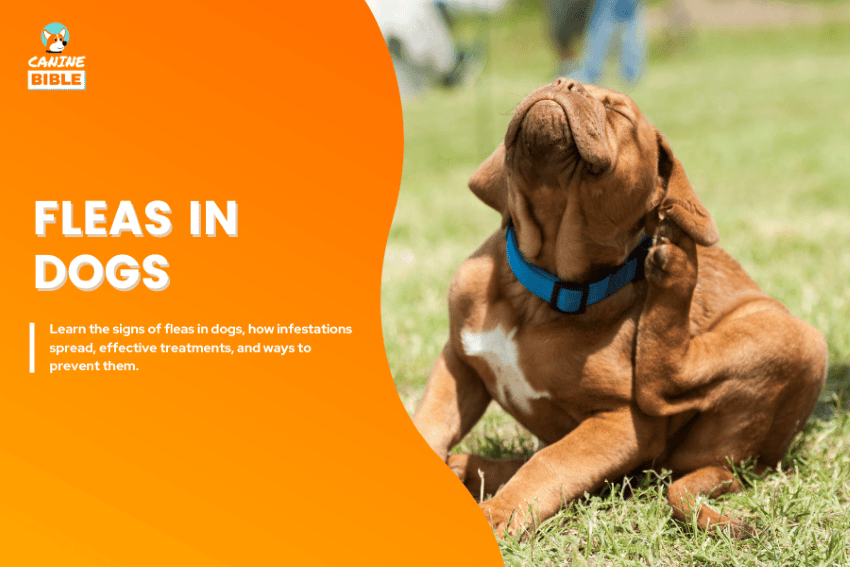
Fleas in Dogs: Symptoms, Types, Causes, Signs & Prevention

Canine Bible is reader-supported. We receive affiliate commissions via some of our links. Learn more.
A comprehensive guide to fleas in dogs, including how infestations occur, common symptoms, health risks, diagnosis, effective treatment options, flea prevention and what pet parents should know about protecting their dogs from these parasites.
Fleas at a Glance
Most common in
Dogs without regular flea prevention, especially in warm environments.
Common signs
Scratching, biting, hair loss, skin irritation and flea dirt.
Diagnosis
Physical examination, flea combing and identification of fleas or flea dirt.
Treatment
Veterinary-approved flea medications and environmental flea control.
Prognosis
Excellent with effective treatment and ongoing flea prevention.
Reinfestation risk
High without prevention and treatment of infested environments.
What Are Fleas in Dogs?
Fleas are small, wingless, blood-feeding external parasites that live on dogs and other animals. The most common flea species affecting dogs is the cat flea (Ctenocephalides felis), which can infest both dogs and cats. Fleas survive by biting their hosts and feeding on blood, often causing itching, scratching, skin irritation and discomfort. Some dogs develop flea allergy dermatitis, an allergic reaction to flea saliva that can cause intense itching, inflammation, hair loss and secondary skin infections. Heavy infestations can lead to anemia, particularly in puppies and small or weakened dogs, while infected fleas can transmit tapeworms when swallowed during grooming. Fleas reproduce rapidly, and their eggs, larvae and pupae can develop in carpets, bedding, furniture and outdoor environments. Successful flea control requires treating affected pets, addressing environmental infestations and maintaining an appropriate year-round prevention program.


Types
Dogs can develop different types of flea infestations, and each can affect the body in different ways. Some flea species primarily infest dogs, while others can affect cats, wildlife, and other animals. Understanding the most common types can help pet parents recognize symptoms, treatment options, and potential health risks, as severity can vary widely.
Cat Flea (Ctenocephalides felis)
The most common flea species affecting dogs worldwide. It feeds on blood and can cause intense itching, flea allergy dermatitis, skin infections and transmission of tapeworms.
Dog Flea (Ctenocephalides canis)
A flea species that commonly parasitizes dogs in certain regions, particularly cooler environments. It causes itching, skin irritation and discomfort, although it is less widespread than the cat flea.
Human Flea (Pulex irritans)
A flea species that can infest dogs, humans and other mammals. It feeds on blood and may cause itching, skin irritation and allergic reactions in affected animals.
False Human Flea (Pulex simulans)
A flea species found on dogs, cats, rodents and wildlife. It resembles the human flea and may cause itching and skin irritation when it infests domestic dogs.
Sticktight Flea (Echidnophaga gallinacea)
A flea that attaches firmly to the skin and remains in one location while feeding. It primarily affects birds but can infest dogs, causing localized irritation and inflammation.
Oriental Rat Flea (Xenopsylla cheopis)
A flea species primarily associated with rodents that may occasionally infest dogs. It is an important carrier of certain infectious diseases, including plague and murine typhus.


Chigoe Flea (Tunga penetrans)
A burrowing flea found in certain tropical regions. Female fleas can embed in a dog’s skin, particularly around the paws, causing painful lesions, swelling and inflammation.
Rabbit Flea (Spilopsyllus cuniculi)
A flea species primarily associated with rabbits that can occasionally bite or infest dogs exposed to rabbits or their environments, causing itching and skin irritation.
Hedgehog Flea (Archaeopsylla erinacei)
A flea species usually found on hedgehogs that can occasionally infest dogs after contact with wildlife or contaminated areas. It may cause itching and localized skin irritation.
Other Flea Species
Includes less common flea species associated with birds, rodents and other wildlife that may occasionally bite or infest dogs. Their occurrence varies by geographic region and environmental exposure.
Predisposed Dog Breeds
While fleas can affect any dog, certain breeds with thick or dense coats may be more difficult to check for infestations. Factors such as outdoor exposure, contact with infested animals, and inconsistent flea prevention increase the risk of flea infestations more than breed or genetics.
| Size / Group | Breeds | Notes on Risk Factors |
|---|---|---|
| Large & Giant Breeds | Golden Retriever, Bernese Mountain Dog, Newfoundland, Great Pyrenees, Saint Bernard, Leonberger | Thick, dense coats can make fleas and flea dirt harder to detect. Dogs spending time outdoors or around infested animals may face greater exposure, particularly without regular flea prevention. |
| Medium Breeds | Cocker Spaniel, English Springer Spaniel, Beagle, Brittany, Standard Poodle | Dogs frequently exploring grassy areas, parks, or wooded environments may encounter fleas. Longer coats can also make early infestations more difficult to notice during routine grooming. |
| Small Breeds | Dachshund, Miniature Schnauzer, Jack Russell Terrier, West Highland White Terrier | Small dogs can acquire fleas through contact with infested pets and environments. Heavy infestations may cause significant blood loss, especially in young, small, or weakened dogs. |
| Toy Breeds | Chihuahua, Maltese, Yorkshire Terrier, Pomeranian, Shih Tzu, Toy Poodle | Toy breeds are not inherently more susceptible to fleas, but their small body size can make severe infestations particularly concerning. Regular flea checks and appropriately dosed preventive products are important. |
| Working & Herding Breeds | German Shepherd, Border Collie, Australian Shepherd, Belgian Malinois, Australian Cattle Dog, Siberian Husky | Frequent outdoor activity, contact with other animals, and exposure to flea-infested environments can increase infestation risk. Dense double coats may also conceal fleas and early signs of skin irritation. |
| Other Breeds & Mixed Breeds | Labrador Retriever, Boxer, Greyhound, French Bulldog, Mixed-Breed Dogs | Fleas can affect dogs of any breed, coat type, or age. Risk depends primarily on environmental exposure, contact with infested animals, and preventive care rather than genetics. Dogs with flea allergies may react severely to even a few flea bites. |
Causes
Flea infestations in dogs usually develop from exposure to infested animals, contaminated environments, and a lack of consistent flea prevention rather than a single cause. While fleas cannot always be completely avoided, understanding the factors that increase infestation risk can help pet parents make informed decisions about parasite prevention, environmental control, and early detection.
Contact with Infested Animals
Dogs can acquire fleas through close contact with infested dogs, cats, or wildlife. Fleas may transfer between animals, particularly in households, shelters, dog parks, and other shared environments.
Contaminated Home Environment
Flea eggs, larvae, and pupae can accumulate in carpets, bedding, furniture, and floor cracks. Developing fleas may emerge as adults and infest dogs even when no fleas are immediately visible.
Outdoor Exposure
Spending time in shaded yards, parks, kennels, or areas visited by stray animals and wildlife can increase flea exposure. Dogs may pick up newly emerged adult fleas from infested environments.
Lack of Flea Prevention
Dogs that do not receive consistent, effective flea prevention are more vulnerable to infestations. Missed treatments, incorrect dosing, or unsuitable products can allow fleas to survive and reproduce.
Untreated Household Pets
Other dogs or cats living in the same home can maintain flea infestations when they are not adequately protected. Fleas can reproduce on untreated pets and continually contaminate shared living spaces.
Flea Life Cycle & Reinfestation
Fleas develop through egg, larval, pupal, and adult stages. Pupae can remain protected in the environment, allowing new fleas to emerge after treatment. Incomplete environmental control may lead to repeated infestations.
Warm & Humid Climates
Warm temperatures and high humidity create favorable conditions for flea development and reproduction. Infestations may occur year-round in warmer regions and can persist indoors even during colder months.
Symptoms
Flea symptoms in dogs can vary widely depending on the severity of the infestation, the dog’s sensitivity to flea bites, and overall health. Some signs may be subtle at first, while others can become more noticeable as the infestation progresses. Common warning signs include excessive scratching, biting or licking the skin, redness, hair loss, flea dirt, scabs, skin irritation, and restlessness. Severe infestations may cause anemia, particularly in puppies and small dogs. Because these symptoms can also be caused by other conditions, any persistent or unusual changes should be evaluated by a veterinarian.
- Excessive scratching or itching
- Frequent biting or chewing at the skin
- Redness and skin irritation
- Hair loss or thinning fur
- Small red bumps or flea bites
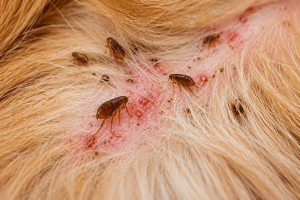
- Black flea dirt in the coat
- Visible fleas crawling through fur
- Scabs, crusts, or irritated skin
- Restlessness or difficulty sleeping
- Secondary skin infections from scratching
Fleas can affect any area, but itching is often most noticeable around the tail base, back, and neck.
Stages & Progression of Fleas in Dogs
Flea infestations in dogs can progress at different rates depending on the number of fleas, environmental conditions, and whether the dog receives effective treatment. Understanding the flea life cycle helps veterinarians determine how severe the infestation is, whether complications have developed, and which treatment options may be most appropriate. Understanding the stages of flea infestation can also provide important insight into recovery, reinfestation risk, and the level of care your dog may need.
Initial Exposure
Fleas begin feeding on the dog after exposure to infested animals or environments. Few or no symptoms may be noticeable, although sensitive dogs can develop itching after a single bite.
Early Infestation
Fleas may become more noticeable as itching, scratching, and skin irritation develop. Adult fleas or flea dirt may be found in the coat, and reproduction may begin.
Established Infestation
Fleas continue reproducing, with eggs, larvae, and pupae developing in the environment. Persistent scratching, hair loss, inflamed skin, and flea allergy dermatitis may occur.
Severe Complications
Untreated infestations may cause severe skin inflammation, secondary infections, or anemia from heavy blood loss, particularly in puppies and small or weakened dogs. Veterinary treatment may be urgently needed.
This chart is a simplified visual guide, not a formal veterinary staging system. Flea infestations do not always progress in a predictable sequence or timeframe. Some dogs develop severe allergic reactions after very few bites, while others may show minimal symptoms despite infestation. Early treatment, environmental control, and consistent flea prevention can interrupt the flea life cycle and prevent complications.
Top Ways to Prevent Fleas in Dogs
Because fleas are a common and highly preventable external parasite, consistent prevention and environmental management are essential. By using veterinarian-recommended flea preventives, maintaining a clean home, and regularly checking your dog for signs of fleas, the risk of infestation can be significantly reduced. Proactive care helps stop flea problems early, protecting your dog from itching, skin irritation, and other flea-related complications.
| Prevention Strategy | Why It Helps | How to Do It |
|---|---|---|
| Use Year-Round Flea Prevention | Consistent flea prevention helps kill fleas, interrupt their life cycle, and reduce the risk of recurring infestations. | Use veterinarian-recommended oral medications, topical treatments, or flea collars appropriate for your dog’s age, weight, and health. Follow the product’s dosing schedule. |
| Treat All Household Pets | Untreated dogs and cats can carry fleas, allowing parasites to reproduce and spread throughout the household. | Ensure every dog and cat receives an appropriate species-specific flea preventive. Never use dog-only flea treatments on cats, as certain ingredients can be toxic to them. |
| Keep Your Home Clean | Flea eggs, larvae, and pupae can develop in carpets, furniture, bedding, and floor cracks, contributing to reinfestation. | Vacuum carpets, rugs, furniture, and pet resting areas regularly. Empty the vacuum contents promptly and wash pet bedding frequently in hot water when the fabric allows. |
| Maintain Your Yard & Outdoor Areas | Shaded, humid outdoor environments visited by infested animals can support flea development and increase exposure. | Keep grass trimmed, remove yard debris, and discourage stray animals and wildlife from entering areas where your dog rests. Focus on shaded resting spots where fleas may develop. |
| Regular Grooming & Flea Checks | Routine coat inspections help detect adult fleas, flea dirt, and skin irritation before an infestation becomes more established. | Brush your dog regularly and use a fine-toothed flea comb, especially around the neck, back, belly, and tail base. Check for black flea dirt, redness, excessive scratching, or hair loss. |
| Avoid Flea-Infested Environments | Contact with infested animals or contaminated environments increases the likelihood of dogs acquiring fleas. | Limit contact with untreated or visibly infested animals. Inspect boarding facilities, kennels, and shared pet areas, and maintain flea protection during outdoor activities and travel. |
| Follow Proper Flea Treatment Guidelines | Incorrect dosing, missed treatments, and unsuitable products may reduce protection and allow fleas to survive and reproduce. | Follow product labels and veterinary instructions carefully. Use treatments suited to your dog’s weight and age, avoid combining products without veterinary guidance, and discuss any seizure history or medication concerns with your vet. |
| Monitor for Early Signs | Recognizing flea symptoms early allows prompt treatment, helping prevent flea allergy dermatitis, secondary skin infections, and severe infestations. | Watch for excessive scratching, biting, skin redness, flea dirt, and hair loss. Consult your veterinarian if symptoms persist or your dog develops severe irritation, weakness, or pale gums. |
Actionable Resources
If you want to prevent or control flea infestations in your dog, here are some things you can do under veterinary guidance:
How Are Fleas in Dogs Diagnosed
Diagnosing fleas in dogs requires a thorough veterinary evaluation to determine the presence of fleas, assess the severity of the infestation, and identify any related skin or health complications. Key steps include:
1. Physical Examination
Your veterinarian examines your dog’s skin and coat, reviews symptoms such as scratching, biting, and hair loss, and asks about flea prevention, outdoor exposure, and contact with other animals.
2. Flea Comb Examination
A fine-toothed flea comb is used to inspect the coat, particularly around the neck, back, belly, and base of the tail. Finding adult fleas or flea dirt helps confirm an infestation, although fleas may not always be visible.
3. Flea Dirt Identification
Small black specks collected from the coat are placed on a damp white paper towel. Flea dirt contains digested blood and typically produces reddish-brown stains when moistened, helping distinguish it from ordinary dirt or debris.
4. Skin & Allergy Evaluation
The veterinarian checks for redness, scabs, hair loss, and skin infections. Severe itching around the tail base and lower back may suggest flea allergy dermatitis, which can occur even when only a few fleas are present.
5. Additional Tests
Additional testing is not usually necessary to identify fleas. However, skin cytology may help detect secondary infections, while blood tests may be recommended if severe flea-related anemia is suspected, particularly in puppies or weakened dogs.
6. Diagnosis & Treatment Plan
Based on examination findings, your veterinarian determines whether fleas are present or likely to be causing symptoms. Treatment typically includes appropriate flea medication, protection for all household pets, environmental control, and care for any related skin complications.
Early detection is vital because flea infestations are easier to control when treated promptly—allowing for more effective parasite management, prevention of complications, and improved quality of life.
Nutritional Support & Supplements
Proper nutrition can play an important supportive role for dogs with fleas by helping maintain healthy skin, coat condition, immune function, and overall quality of life during treatment. Depending on your dog’s needs, veterinarians may recommend strategies such as balanced, nutrient-rich diets and supplements including omega-3 fatty acids, probiotics, essential vitamins, and skin-supporting nutrients. These may support skin recovery but do not replace effective flea treatments and prevention.
Important: Nutritional support and supplements
do not kill fleas, prevent infestations, or replace
veterinarian-approved flea treatments.
Always consult your veterinarian before adding supplements,
particularly if your dog has skin allergies, takes medication,
or has an underlying health condition. Effective flea control
requires appropriate parasite prevention and environmental
management.
Supportive care—such as skin irritation management, nutritional support, and environmental adjustments—plays a crucial role in maintaining comfort and quality of life during flea treatment. These options are not a substitute for effective flea control and may interact with medications, so any diet, supplement, or supportive care plan should be reviewed with your veterinarian.
Over-the-Counter Products
Over-the-counter treatments and supplements mentioned in this article for fleas in dogs can be found on Amazon and Chewy.


Always consult your veterinarian before starting any new treatment, medication, or home-care regimen for canine fleas. Puppies and dogs with persistent vomiting, diarrhea, weakness, or dehydration may require prompt veterinary care. If you can’t reach your vet, you can chat live with a registered online veterinary professional via our online vet chat or video chat support (24 hours a day, 7 days a week). Or use Chewy’s online vet services (6 a.m. – midnight ET).
Treatment & Care
According to current veterinary research, the most effective treatments for fleas in dogs are multimodal, combining several approaches for the best outcome. These may include oral flea medications or topical treatments to kill fleas, flea collars or other preventive products to help prevent reinfestation, and environmental flea control to eliminate developing fleas in the home. Additional care may include medicated shampoos, treatment for skin infections, and allergy management to relieve itching and irritation.
Medications
Common medications used to treat fleas in dogs include:
| Medication / Class | Examples | How It Is Used | Important Considerations |
|---|---|---|---|
| Isoxazolines | Afoxolaner, fluralaner, sarolaner, lotilaner | Oral or topical flea medications that kill adult fleas by disrupting their nervous systems. Commonly used for ongoing flea prevention and treatment, with protection lasting from approximately one month to several months depending on the product. | Generally effective when used as directed, but neurological adverse reactions, including tremors, incoordination, and seizures, have been reported. Discuss any history of seizures or neurological disorders with your veterinarian. |
| Neonicotinoids | Imidacloprid, dinotefuran | Topical flea medications that target the nervous systems of fleas. Used to kill adult fleas and reduce infestations, often as part of monthly flea prevention programs. | May cause temporary skin irritation, redness, or itching at the application site. Some combination products contain additional insecticides that are unsafe for cats. Always follow species-specific product labels. |
| Phenylpyrazoles | Fipronil | A topical insecticide that kills adult fleas by interfering with their nervous systems. Commonly used in spot-on flea treatments and combination products for ongoing parasite control. | May cause temporary irritation or hair changes at the application site. Effectiveness depends on correct application and following product instructions. Avoid allowing dogs to lick the product before it dries. |
| Spinosyn Insecticides | Spinosad | An oral flea medication that acts on the nervous systems of adult fleas, killing them after they feed on the treated dog. Used for treatment and ongoing prevention of flea infestations. | Vomiting is a possible side effect, and administration instructions may require giving the medication with food. Use caution in dogs receiving other medications, particularly high-dose ivermectin, and consult your veterinarian. |
| Fast-Acting Oral Flea Treatment | Nitenpyram | A rapidly acting oral medication that begins killing adult fleas within approximately 30 minutes. Often used when quick reduction of an existing flea infestation is needed. | Provides short-term flea control without lasting preventive protection. Additional ongoing flea prevention and environmental management are necessary to prevent reinfestation. Follow age and weight limits. |
| Macrocyclic Lactones | Selamectin | A topical antiparasitic medication used to treat and prevent flea infestations. Depending on the product, it may also protect against heartworms and certain other parasites. | Must be administered according to the product’s age, weight, and species guidelines. Possible adverse effects include temporary skin irritation or hair loss at the application site. |
| Insect Growth Regulators | Methoprene, pyriproxyfen, lufenuron | Help interrupt the flea life cycle by preventing immature fleas from developing into reproducing adults. Often combined with adult flea treatments to improve long-term infestation control. | These medications do not provide rapid relief from existing adult fleas when used alone. Effective treatment generally requires an adult flea killer and environmental control. |
| Synthetic Pyrethroids | Permethrin | Used in certain dog-specific topical flea and tick products. These insecticides affect parasite nervous systems and may provide flea-killing or repellent activity depending on the formulation. | Permethrin-containing dog treatments can be highly toxic to cats. Never apply dog-specific permethrin products to cats, and prevent cats from contacting recently treated dogs until the product has dried as directed. |
| Corticosteroids | Prednisone, prednisolone | May be prescribed for short-term control of severe itching and inflammation caused by flea allergy dermatitis. These medications help manage allergic symptoms but do not kill fleas or prevent infestations. | Potential side effects include increased thirst, urination, appetite, and susceptibility to infections. Long-term use requires veterinary supervision. Corticosteroids should not generally be combined with NSAIDs. |
| Antibiotics | Cephalexin, amoxicillin-clavulanate, other veterinarian-selected antibiotics | May be prescribed when excessive scratching and skin damage result in a secondary bacterial skin infection. These medications treat bacterial complications rather than the flea infestation itself. | Antibiotics should only be used when a bacterial infection is diagnosed or strongly suspected by a veterinarian. Not every dog with flea-related skin irritation requires antibiotic treatment. |
| Tapeworm Medications | Praziquantel | Used to treat tapeworm infections, particularly Dipylidium caninum, which dogs can acquire by swallowing infected fleas during grooming. | Praziquantel treats tapeworm infections but does not kill fleas. Effective flea control is essential to prevent dogs from becoming reinfected with tapeworms. |
The best way to get these medications is at Chewy Pet Pharmacy:
Alternative & Integrative Therapies
Integrative and supportive therapies can help manage symptoms, reduce discomfort, and improve quality of life for dogs with flea infestations. Options such as soothing oatmeal baths, gentle grooming, skin-supporting supplements, and environmental cleaning may be used alongside conventional flea treatments. However, these approaches do not replace veterinarian-approved flea medications and should always be discussed with your veterinarian to ensure they are safe and appropriate for your dog.
Surgical Options
Surgery is not typically required to treat flea infestations in dogs, as most cases can be effectively managed with veterinarian-approved flea medications, environmental control, and supportive skin care. Depending on the severity of the infestation, treatment may be used to eliminate fleas, relieve itching and inflammation, treat secondary skin infections, or improve quality of life. In rare cases, dogs with severe skin complications, such as deep abscesses or extensive tissue damage, may require surgical drainage or removal of damaged tissue. Your veterinarian will determine whether additional procedures are necessary based on the severity of the complications and your dog’s overall health.
Emotional & Lifestyle Impact
A flea infestation can be physically uncomfortable and stressful for both dogs and their families. Dogs may experience persistent itching, restlessness, disrupted sleep, skin irritation, and behavioral changes, while some treatments may cause temporary side effects. With proper flea control, environmental cleaning, and supportive care, most dogs can return to their normal routines and enjoy happy, comfortable lives after treatment.
For Dogs
- Persistent itching, scratching, and skin discomfort
- Restlessness and disrupted sleep from flea bites
- Possible irritability or changes in normal behavior
- Adjusting to flea treatments, baths, and grooming
- May experience hair loss, skin irritation, or allergic reactions
- Can return to normal play and activities with effective flea control
For Pet Parents
- May feel frustrated or concerned about recurring flea infestations
- Additional cleaning, laundry, and environmental flea control may be needed
- Managing flea prevention schedules for all household pets
- Monitoring your dog’s itching, skin health, and treatment response
- Working with your veterinarian to choose safe, effective flea treatments
- Maintaining consistent prevention to protect your dog’s comfort and well-being
A flea infestation may cause temporary discomfort, but with proper treatment, consistent prevention, and a little extra care, your dog can return to a happy, healthy, and itch-free life.
Brighter tomorrows.
Dog Fleas Prognosis
A dog’s prognosis for flea infestations depends on several factors, including the severity of the infestation, presence of flea allergies, response to treatment, overall health, and level of supportive care. Most flea infestations can be treated successfully, with dogs recovering fully when effective flea control and prevention are maintained. However, severe infestations may cause complications such as skin infections or anemia, particularly in puppies and weakened dogs. Working closely with your veterinarian can help guide treatment decisions, manage symptoms, prevent reinfestation, and maintain the best possible quality of life for your dog.
Key Factors That Influence Prognosis
Typical Annual Cost of Treating Canine Fleas
| Category | Estimated Annual Cost Range | Notes |
|---|---|---|
| Initial Veterinary Examination | $50 – $160 | Includes a veterinary consultation, physical examination, and flea comb inspection to identify fleas, flea dirt, skin irritation, and possible flea allergy dermatitis. Additional testing costs extra. |
| Topical Flea Treatments | $120 – $300 | Monthly spot-on flea medications such as fipronil or imidacloprid-based products. Costs depend on the brand, dog’s weight, and length of protection provided. |
| Oral Flea Medications | $180 – $480 | Prescription or veterinarian-recommended oral flea preventives, including medications containing afoxolaner, sarolaner, or fluralaner. Products may provide monthly or longer-lasting protection. |
| Long-Acting Flea Collars | $75 – $150 | Certain veterinarian-recommended flea collars provide protection lasting several months. Annual expenses depend on the brand, duration of effectiveness, and number of replacements needed. |
| Flea Baths & Grooming | $20 – $150 | Includes flea combs, appropriate shampoos, and occasional professional grooming. Baths may help remove fleas and soothe irritated skin but do not replace ongoing flea prevention. |
| Environmental Flea Control | $30 – $150 | Includes laundry supplies, cleaning products, and pet-safe environmental treatments when needed. Regular vacuuming and washing bedding help reduce flea eggs, larvae, and environmental contamination. |
| Professional Home Flea Treatment | $75 – $400+ | Professional pest control may be necessary for established household infestations. Costs are generally per treatment, and repeat visits may be needed. This is an occasional expense rather than routine annual care. |
| Flea Allergy & Skin Infection Treatment | $100 – $500+ | May include veterinary examinations, anti-itch medications, medicated shampoos, skin cytology, or antibiotics when secondary bacterial infections are present. Costs vary with complication severity. |
| Follow-Up Veterinary Exams | $40 – $200 | Recheck appointments may be recommended for persistent itching, flea allergy dermatitis, or skin infections to monitor treatment response and recovery. Uncomplicated infestations may not require additional visits. |
| Emergency Care for Severe Complications | $500 – $3,000+ | Rarely, heavy flea infestations can cause severe anemia, particularly in puppies and weakened dogs. Emergency treatment may include bloodwork, hospitalization, supportive care, and blood transfusions. |
| Pet Insurance Coverage | Varies | Standard pet insurance generally does not cover routine flea prevention. Some wellness add-ons may reimburse preventive products, while eligible flea-related illnesses may be covered depending on policy terms, deductibles, exclusions, and waiting periods. |
| Typical Annual Range | Routine Flea Prevention: $75 – $480 | Prevention Plus Infestation Treatment: $200 – $1,200+ | Severe Complications: $500 – $3,000+ | |
Fleas care can add up quickly — from daily medications to possible surgeries. Pet insurance can ease the financial burden and ensure your dog gets the best treatment without compromise. If you want to compare plans and find out which providers offer the best coverage for fleas and chronic conditions, check out our full guides to the Best Pet Insurance for Dogs and Best Pet Wellness Plans.
Related Health Conditions
Some health conditions are closely linked to flea infestations because they may develop from flea bites, affect the skin, or cause overlapping symptoms. Understanding these related conditions can help dog owners recognize potential warning signs, distinguish flea infestations from other skin problems, and better understand the diagnostic and treatment options their veterinarian may recommend.
- Flea Allergy Dermatitis (FAD)
- Hot Spots (Acute Moist Dermatitis)
- Bacterial Skin Infections (Pyoderma)
- Tapeworm Infections
- Anemia (Flea-Bite Anemia)
- Mange (Mite Infestations)
- Atopic Dermatitis (Skin Allergies)
- Yeast Skin Infections
- Dry Skin and Dandruff
- Food Allergies and Sensitivities
Frequently Asked Questions
The Bottom Line
Fleas in dogs are a common and treatable parasitic problem, but it’s important to remember that untreated infestations can lead to significant discomfort and health complications. Advances in veterinary flea medications, effective prevention products, and improved parasite control strategies now allow most dogs to recover quickly and live healthier, more comfortable lives. By learning to recognize early warning signs, using veterinarian-recommended flea prevention, maintaining a clean home, and scheduling regular veterinary checkups, you can play a vital role in protecting your dog’s health. Above all, your consistent care and commitment can help keep your dog happy, comfortable, and protected from recurring flea infestations.