What Kills Fleas on Dogs Instantly? How to Get Rid of Them (Vet-Approved)

Canine Bible is reader-supported. We receive affiliate commissions via some of our links. Learn more.
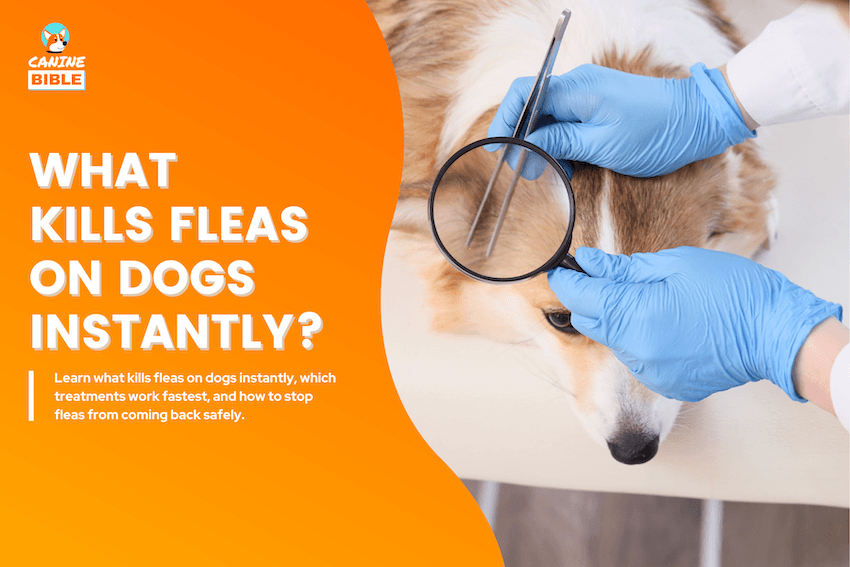
The fastest way to kill fleas on dogs is with a vet-approved fast-acting flea treatment, such as an oral flea medication or topical product designed to start killing fleas quickly. A flea comb and bath can remove many live fleas right away, but they usually do not stop new fleas from hatching or jumping back on your dog. That is why “instant” flea control depends on more than killing the fleas you can see. Some products work within hours, while others focus on breaking the flea life cycle over days or weeks. Using the wrong treatment, mixing products, or relying only on home remedies can put your dog at risk and leave the infestation active. This guide explains what works fastest, what to avoid, and how to keep fleas from coming back after the first treatment.
Common Signs of Fleas in Dogs
| Common Signs | What It Means |
|---|---|
| Excessive scratching | Frequent scratching, biting, or licking may mean fleas are irritating your dog’s skin. |
| Flea dirt | Tiny black specks on the skin or coat may be flea droppings, especially near the tail or belly. |
| Red or irritated skin | Inflamed skin can develop from flea bites, scratching, or an allergic reaction to flea saliva. |
| Hair loss | Patchy thinning around the back, tail base, or thighs may happen when a dog repeatedly chews itchy areas. |
| Restlessness | A dog that cannot settle, sleeps poorly, or seems uncomfortable may be reacting to active flea bites. |
| Scabs or hot spots | Open sores or crusty patches can form when scratching breaks the skin and causes secondary irritation. |
| Pale gums | Heavy flea infestations can contribute to blood loss, especially in puppies or small dogs. |
| Visible fleas | Seeing small, fast-moving insects on your dog confirms fleas are present and treatment is needed. |
How Fleas Can Affect Your Dog’s Health
Fleas are more than a temporary itching problem. Even a small number of flea bites can make some dogs intensely uncomfortable, especially if they are allergic to flea saliva. These dogs may scratch, bite, lick, or chew their skin until they develop redness, scabs, hair loss, or painful hot spots.
Heavy dog flea infestations can become more serious, especially for puppies, small dogs, senior dogs, or dogs that are already weak or underweight. Because fleas feed on blood, severe infestations can contribute to anemia, which may cause pale gums, tiredness, weakness, or unusual lethargy. Dogs can also swallow infected fleas while grooming, which can lead to tapeworms.
Dog owners should not ignore repeated scratching, flea dirt, hair loss, or skin wounds. Mild itching may improve once fleas are treated, but open sores, constant chewing, pale gums, severe restlessness, or signs of infection should be checked by a veterinarian. Flea problems can also overlap with allergies, mites, yeast, or bacterial skin infections, so the right treatment depends on what is actually causing the symptoms.


What Kills Fleas on Dogs Instantly?
The fastest way to kill fleas on dogs is a vet-approved fast-acting flea medication, especially nitenpyram, an oral flea adulticide that can start killing fleas within about 30 minutes. However, “instantly” can be misleading because no treatment removes every flea, egg, larva, and household source at the same moment.
For immediate relief, a flea comb or bath may remove live fleas from the coat, but these methods do not provide lasting protection. The most effective approach usually combines a fast-acting product for adult fleas with ongoing flea prevention and environmental control to stop reinfestation. CAPC notes that flea control should address fleas on the pet, the home environment, and future reinfestation risk.
Before using any fast-acting flea treatment, check with your veterinarian to make sure the product is safe for your dog’s age, weight, health status, and current medications. If you can’t reach your vet, you can chat live with a registered online veterinary professional via our online vet chat or video chat support (24 hours a day, 7 days a week). Or use Chewy’s online vet services (6 a.m. – midnight ET).
Fastest Flea Treatments for Dogs Compared
Fast flea treatments vary in how quickly they kill adult fleas, how long protection lasts, and whether they work best for same-day knockdown, monthly prevention, or longer flea and tick control. Comparing these details can help dog owners choose a safer, more practical option with guidance from their veterinarian.


| Treatment Type | Active Ingredient | Adult Flea Kill Speed | Protection Duration | Best Use | Limitation |
|---|---|---|---|---|---|
| Nitenpyram tablet | Nitenpyram | Starts in 30 minutes; 90%+ killed by 4 hours. | About 24 hours. | Same-day adult flea knockdown. | No monthly prevention. |
| Spinosad chew | Spinosad | Starts in 30 minutes; 98–100% killed by 4 hours. | About 30 days. | Fast oral monthly flea control. | Often needs veterinary approval. |
| Fluralaner chew | Fluralaner | Starts in 2 hours; up to 100% killed by 12 hours. | Up to 12 weeks. | Long-lasting flea and tick control. | Not ideal for every dog. |
| Sarolaner chew | Sarolaner | Starts in 3 hours; 96.2%+ killed by 8 hours. | About 35 days. | Fast monthly flea and tick control. | Caution with seizure history. |
| Afoxolaner chew | Afoxolaner | Starts in 4 hours; 99%+ killed by 8 hours. | About 30 days. | Monthly oral flea and tick control. | Needs correct weight dosing. |
| Lotilaner chew | Lotilaner | Starts in 4 hours; 100% killed by 12 hours. | About 30 days. | Monthly flea treatment for eligible dogs. | Usually given with food. |
| Dinotefuran topical | Dinotefuran | Starts in 2 hours; fleas killed by 4–6 hours. | About 1 month. | Fast topical flea control. | Directions vary by product. |
| Imidacloprid topical | Imidacloprid | Existing fleas killed within 12 hours. | About 4 weeks. | Monthly non-oral flea control. | Application errors reduce results. |
| Permethrin topical | Permethrin | Existing fleas killed within 12 hours. | At least 4 weeks. | Flea, tick, and mosquito coverage. | Toxic to cats. |
| Flea collar | Imidacloprid + flumethrin | Existing fleas killed within 24 hours. | Up to 8 months. | Long-term low-maintenance prevention. | Fit affects performance. |
| Selamectin topical | Selamectin | Over 98% killed within 36 hours. | About 30 days. | Broader parasite coverage. | Slower than oral fast-kill options. |
| Flea bath | Varies by shampoo | Kills or removes fleas during bathing. | Little residual protection. | Short-term visible flea relief. | Does not control eggs or pupae. |
| Flea combing | No active ingredient | Removes live fleas immediately. | No residual protection. | Puppies, sensitive dogs, and checks. | Does not treat the source. |
| Home treatment | IGR sprays, vacuuming, laundering | Works over days to weeks. | Depends on method used. | Stopping environmental reinfestation. | Pupae may keep emerging. |
What “Instant Flea Killing” Really Means for Dogs
“Instant” usually means killing or removing adult fleas currently on your dog, not eliminating the entire infestation. Adult fleas are only one part of the flea life cycle; eggs, larvae, and pupae may already be in bedding, carpets, furniture, or cracks in the floor.
That is why a dog can look better after treatment, then start scratching again days later. Merck Veterinary Manual notes that controlling a flea infestation can take 6 weeks to 3 months, especially when the home environment is involved.
| Flea Stage | Where It May Be | Why It Matters |
|---|---|---|
| Adult fleas | Usually live on the dog. | They bite, feed, mate, and lay eggs. |
| Flea eggs | Often fall into bedding and carpets. | They can hatch after visible fleas die. |
| Flea larvae | Hide in dark household areas. | They develop away from the dog. |
| Flea pupae | Remain protected inside cocoons. | They can emerge after treatment begins. |
| New adults | Jump back onto pets later. | They restart itching and reinfestation. |
Best Fast-Acting Options for Killing Fleas on Dogs
For the fastest adult flea kill, nitenpyram is often used as a short-term oral treatment. VCA Hospitals states that fleas begin dying approximately 30 minutes after dosing, with effects lasting up to 24–48 hours.
Longer-acting prescription flea preventives, including several oral isoxazoline products, may also begin killing fleas within hours and continue protecting the dog for weeks. Clinician’s Brief reports that isoxazoline products commonly have a flea onset of action around 2–4 hours, with near-complete flea kill often reported within 8 hours in product studies.
Dog flea shampoos, Dawn dish soap, vinegar, essential oils, and other home remedies are not the best answer for instant flea control. Some may remove fleas temporarily, while others can irritate skin or be unsafe if used incorrectly. The safest option is to use a dog-labeled flea product that matches your dog’s age, weight, health status, and medication history.
Potential Risks and Side Effects of Flea Treatments
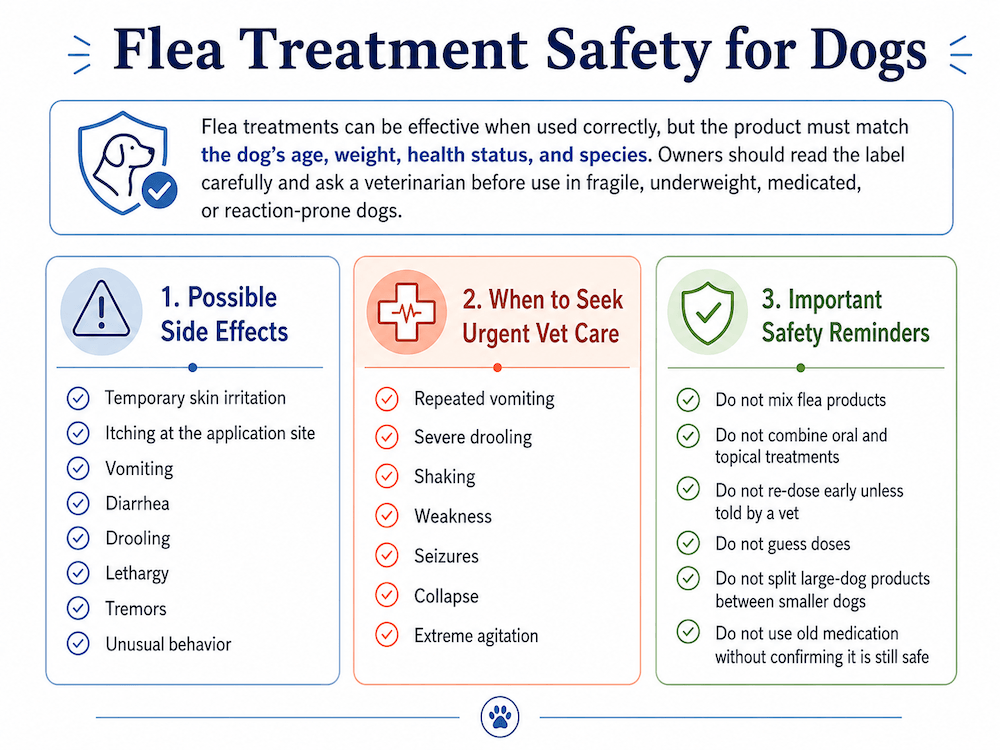
Dog flea treatments are safest when they are chosen carefully and used exactly as directed. Before applying or giving any product, check that it fits your dog’s needs and watch for anything unusual afterward, especially if your dog is young, senior, sensitive, or has existing health concerns.
What Owners Should Do Next
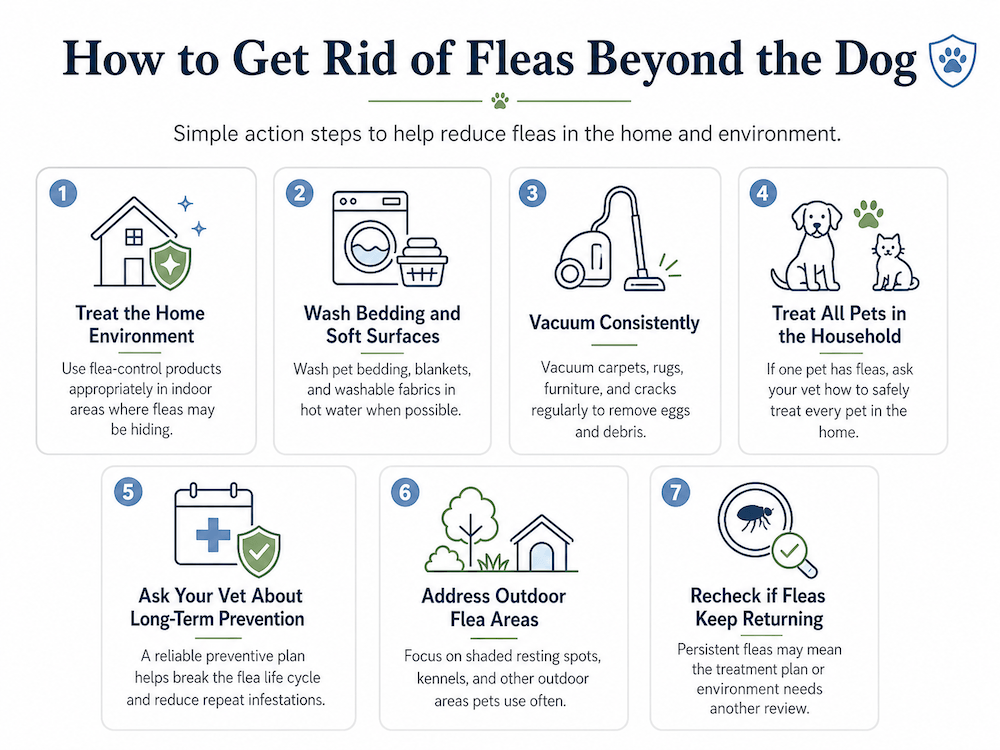
Fast flea killers can eliminate many adult fleas on your dog, but they do not remove every egg, larva, pupa, or hidden flea in the home. To stop the infestation from coming back, you need to treat your dog, your home, and any other pets that may be carrying fleas.
When to Call Your Vet About Fleas
Mild scratching with a few visible fleas may be manageable with the correct dog-safe flea treatment, flea combing, washing bedding, and consistent home cleaning. However, fleas should not be treated as a simple at-home problem if your dog is very young, very small, elderly, pregnant, nursing, medically fragile, or already dealing with allergies, seizures, chronic illness, or skin disease.
Call your veterinarian if your dog has pale gums, weakness, lethargy, a heavy flea infestation, severe itching, open sores, hot spots, hair loss, skin odor, pus, swelling, or worsening redness. You should also contact a vet urgently if your dog vomits repeatedly, develops tremors, has a seizure, seems disoriented, or shows any unusual reaction after flea medication.
Your vet may need to check for anemia, flea allergy dermatitis, secondary skin infections, tapeworms, or another condition that can look similar to flea-related irritation. They can also recommend a flea treatment plan that matches your dog’s age, weight, health history, and household risks, which is especially important when multiple pets are in the home.
What Research Says About Killing Fleas on Dogs Quickly
A clinical study on nitenpyram found that fleas started falling from treated dogs 30 minutes after treatment, supporting its role as a rapid adult flea knockdown option.[1]
Research on fluralaner, an isoxazoline flea and tick medication, found significant flea reduction within hours after administration, showing why longer-acting oral products can be useful beyond immediate relief.[2]
The Companion Animal Parasite Council recommends comprehensive flea control that targets the pet, the environment, and prevention of reinfestation, which is important because adult flea killing alone may not end the household infestation.
Merck Veterinary Manual also emphasizes that flea allergy dermatitis management involves eliminating existing fleas, addressing the home environment, preventing future infestations, and providing supportive care when needed.
Frequently Asked Questions
The Bottom Line
The closest option to “instant” flea killing is a fast-acting, vet-approved oral flea medication such as nitenpyram, which can begin killing adult fleas within about 30 minutes. For longer control, many dogs need a monthly or longer-lasting flea preventive. A bath or flea comb can help remove fleas right away, but it should not be the only treatment if your dog has an active infestation. To truly stop fleas, you need to kill adult fleas on your dog, prevent new bites, and reduce flea eggs and larvae in the home. Always choose flea products labeled for dogs and confirm safety with your veterinarian, especially for puppies, pregnant dogs, senior dogs, small breeds, or dogs with health conditions.