What Can I Give a Dog for Constipation? 12 At-Home Remedies

Canine Bible is reader-supported. We receive affiliate commissions via some of our links. Learn more.
For mild dog constipation, you can often give small amounts of plain canned pumpkin, extra water, wet food, or vet-approved fiber to help soften stool. Some dogs may also benefit from gentle exercise, but you should not give human laxatives, oils, or enemas unless your veterinarian approves them. What helps one constipated dog may not be safe for another, especially if the dog is a puppy, senior, pregnant, on medication, or has an underlying health condition. Constipation can also look similar to more serious problems, including dehydration, pain, obstruction, or anal gland issues. The right approach depends on how long your dog has been straining, whether they are still eating and acting normal, and what their stool looks like. Below, we’ll cover safe home options, what to avoid, when constipation becomes urgent, and how to help prevent it from coming back.
Dog Constipation: What Owners Should Know First
| What to Know First | What It Means for Your Dog |
|---|---|
| Mild constipation | Your dog may strain but still act normal, eat, drink, and pass small or firm stool. |
| Possible warning signs | Pain, vomiting, weakness, bloating, blood, or repeated unproductive straining needs veterinary attention. |
| Safe first steps | Water, wet food, plain pumpkin, and gentle walks may help mild cases when your dog is otherwise well. |
| What to avoid | Human laxatives, oils, enemas, bones, and random supplements can be risky without vet guidance. |
| Sensitive dogs | Puppies, seniors, pregnant dogs, small dogs, and dogs with health problems need extra caution. |
| Possible causes | Diet changes, dehydration, low fiber, pain, medications, anal glands, or blockage may contribute. |
| Vet timing | Call your vet if constipation persists, worsens, keeps returning, or appears painful. |
What Are the Symptoms of a Constipated Dog?
A constipated dog may strain to poop, pass small hard stools, or seem uncomfortable when trying to defecate. Because straining can sometimes look similar to urinary problems, pain, obstruction, or more serious digestive disease, symptoms that are severe, repeated, or paired with vomiting, bloating, weakness, or no stool for 48–72 hours should be checked by a vet.
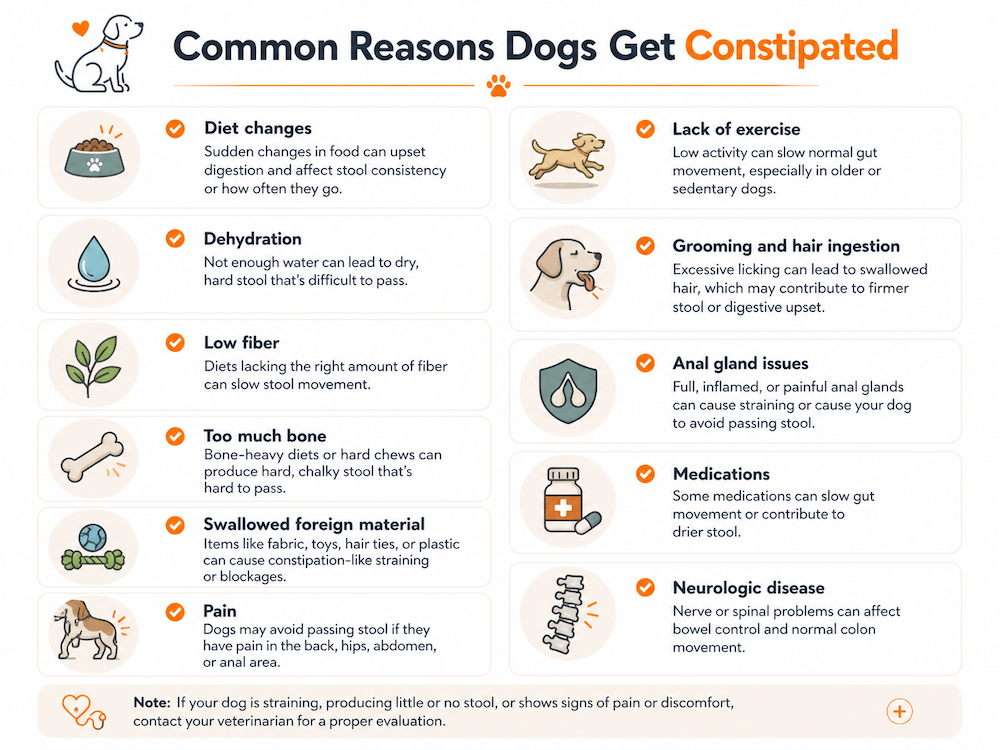
What are the Common Causes of Constipation in Dogs?
Constipation in dogs can be simple and temporary, but it can also be a sign of pain, diet problems, medication effects, obstruction, or disease. Recurring, painful, or unexplained constipation should be checked by a veterinarian because treatment depends on the cause.
What Can I Give a Dog for Constipation?
Mild dog constipation may improve with simple support like better hydration, moisture-rich food, gentle movement, or a small amount of vet-approved fiber, but what is safe depends on your dog’s size, age, health, medications, and symptoms. Dogs that are painful, bloated, vomiting, weak, or repeatedly straining without passing stool should not be treated casually at home.


Before giving constipation medications or making diet changes for your dog, check with your veterinarian first. If you can’t reach your vet, you can chat live with a registered online veterinary professional via our online vet chat or video chat support (24 hours a day, 7 days a week). Or use Chewy’s online vet services (6 a.m. – midnight ET).
What Not to Give a Constipated Dog
Some constipation “remedies” can make dogs worse, especially if the real problem is dehydration, pain, urinary trouble, obstruction, or another medical issue. Human laxatives, at-home enemas, mineral oil, bones, fatty foods, and random supplements can be risky without veterinary guidance, so it is safer to ask your vet before trying anything beyond basic hydration, diet support, and gentle activity. Make sure not to give your dog just anything without checking first, since some foods are toxic to dogs and may cause more harm than help.
| What to Avoid | Why It Can Be Risky | Safer Approach |
|---|---|---|
| Human laxatives | Some ingredients or doses can be unsafe for dogs, especially if obstruction is possible. | Use only if your veterinarian specifically approves the product for your dog. |
| Mineral oil without vet guidance | It can be dangerous if inhaled and may not address the real cause. | Ask your vet before using oils or lubricant-style remedies. |
| Enemas at home | Some enema products can cause poisoning, injury, or serious electrolyte problems. | Let a veterinarian perform enemas safely when they are needed. |
| Bones | Bones can create hard stool and may cause choking, injury, or blockage. | Avoid bones and call your vet if your dog may be obstructed. |
| High-fat foods | Greasy foods can trigger stomach upset and may increase pancreatitis risk. | Choose bland, vet-approved dietary support instead of fatty table scraps. |
| Random supplements | Unverified supplements may worsen diarrhea, dehydration, medication interactions, or discomfort. | Check with your vet before adding fiber powders, oils, herbs, or digestive products. |
Mild Constipation vs a Possible Emergency
Mild constipation may respond to hydration, fiber, wet food, and activity. Moderate or recurring constipation needs more caution because too much fiber can worsen discomfort if the dog is dehydrated, impacted, or blocked. Severe constipation, repeated straining, vomiting, weakness, abdominal pain, or inability to pass stool should be treated as a veterinary issue, not a home-remedy situation.


| Severity Level | What It Looks Like | What May Help | When to Call the Vet |
|---|---|---|---|
| Mild | Hard stool with otherwise normal behavior. | Water, wet food, pumpkin, and walks. | Call if it lasts beyond 24–48 hours. |
| Moderate | Repeated straining or visible discomfort occurs. | Ask your vet before adding laxatives. | Call the same day for guidance. |
| Recurring | Constipation keeps returning after temporary improvement. | A diet or medical review may help. | Schedule a veterinary exam soon. |
| Severe | No stool, pain, vomiting, or weakness appears. | Do not treat this at home. | Seek urgent veterinary care immediately. |
| High-risk dogs | Puppies, seniors, and sick dogs are vulnerable. | Use only a vet-approved constipation plan. | Call before trying home remedies. |
What Vets May Do for Dog Constipation
Veterinary treatment depends on your dog’s size, hydration, symptoms, medical history, and the suspected cause. Your vet’s goal is to help your dog pass stool safely while checking for problems like obstruction, pain, dehydration, or disease.
Your vet may perform a physical exam, check the abdomen, rectal area, anal glands, prostate, and hydration, and review diet, medications, activity level, and possible foreign material. Imaging, such as X-rays or ultrasound, may be recommended if blockage or severe stool buildup is suspected.
Treatment may include fluids, diet changes, dog-safe stool softeners, or clinic-performed enemas when appropriate. Severe cases may require manual stool removal, and recurring constipation may need treatment for anal gland disease, prostate problems, orthopedic pain, neurologic issues, or medication side effects.
What to Do to Prevent Constipation in Dogs
Keep your dog well-hydrated by making fresh water available throughout the day. For some dogs, moisture-rich food, water added to meals, or a vet-recommended wet diet may help support normal stool consistency.
Feed a balanced diet with the right amount of fiber for your dog’s size, age, activity level, and health needs. Avoid too many bones, sudden diet changes, high-fat foods, and random supplements, since these can upset digestion or worsen constipation in some dogs.
Regular exercise and consistent bathroom routines can also help support healthy bowel movement. If constipation keeps coming back, talk to your veterinarian because it may point to pain, medication effects, anal gland issues, orthopedic problems, neurologic disease, or another underlying condition.
Evidence-Backed Constipation Insights for Dogs
The MSD Veterinary Manual explains that mild constipation in dogs may be managed with hydration, high-fiber diets, and appropriate short-term laxatives, but it cautions that laxatives formulated for humans can be dangerous for animals. This supports the core rule: start with water, moisture, and safe fiber, not human medication.
For constipation, obstipation, and megacolon in small animals, MSD notes that dietary fiber is often preferred because it is well-tolerated and physiologic. It lists options such as psyllium, wheat bran, or pumpkin added to canned food, with the amount depending on the animal’s size and veterinary judgment.
Veterinary literature also supports fiber’s role in gastrointestinal health. A JAVMA review describes dietary fiber as nondigestible carbohydrates that can support gastrointestinal function in dogs and cats, while broader canine nutrition research notes that fiber can aid laxation and stool quality through several mechanisms.[1]
Frequently Asked Questions
The Bottom Line
Constipation in dogs can often be supported with simple changes like more water, wet food, gentle exercise, and vet-approved fiber, but the safest option depends on your dog’s size, age, health, symptoms, and the cause. Plain canned pumpkin or cooked sweet potato may help some mildly constipated dogs, but they are not guaranteed fixes and should be used carefully. Avoid human laxatives, mineral oil, enemas, bones, high-fat foods, and random supplements unless your vet specifically approves them. If your dog is vomiting, bloated, weak, painful, straining without producing stool, passing blood, or has not pooped for two to three days, contact your veterinarian promptly. Mild constipation may pass with supportive care, but recurring or painful constipation should always be checked. The goal is not just to help your dog poop, but to make sure there is not a more serious problem behind it.