What Are the Signs of Your Dog Dying? Behavior, Symptoms & More


Canine Bible is reader-supported. We receive affiliate commissions via some of our links. Learn more.
The signs of a dog dying often include extreme weakness, loss of appetite, labored breathing, confusion, withdrawal, incontinence, and a clear decline in comfort or awareness. Some dogs decline gradually over days or weeks, while others may worsen suddenly because of heart failure, organ disease, cancer, trauma, or another serious condition. But not every scary symptom means death is immediate. A senior dog who sleeps more may simply be aging, while a dog who cannot breathe comfortably needs urgent veterinary help. The hardest part is knowing when symptoms mean “monitor closely,” “call your vet,” or “seek emergency care now.” This guide explains the most common end-of-life signs in dogs, what they may mean, and how to recognize when your dog may be suffering.
Dog End-of-Life Signs at a Glance
Signs That May Be an Emergency, Not Just Dying
Some symptoms that look like a dog is dying may actually be a treatable emergency, especially if they appear suddenly. Collapse, pale or blue gums, severe weakness, repeated vomiting, bloated abdomen, seizures, poisoning, heavy bleeding, heatstroke, trauma, or sudden paralysis should not be watched at home.
Breathing trouble is always urgent. If your dog is gasping, breathing with effort, breathing very fast at rest, stretching their neck to breathe, or cannot lie down comfortably, seek emergency veterinary care right away.
Even if your dog is elderly or already ill, sudden distress deserves immediate help. A veterinarian may be able to relieve pain, stabilize breathing, treat shock, manage seizures, or help you make a compassionate end-of-life decision if recovery is not possible.


Normal Aging in Dog vs End-of-Life Decline
Normal aging can bring slower movement, more sleep, and small routine changes, but end-of-life decline is usually more persistent and harder to manage. This table can help you compare mild age-related changes with signs that may suggest worsening comfort, serious illness, or an emergency. When symptoms are sudden, severe, painful, or involve breathing trouble, collapse, pale gums, seizures, or inability to urinate, contact your vet or an emergency clinic right away.
| Area | Normal Aging | Concerning Decline | Urgent Sign |
|---|---|---|---|
| Appetite | May become pickier or eat slightly less. | Frequently skips meals or loses interest in food. | Refuses food and water or vomits repeatedly. |
| Energy | Sleeps more and tires faster after activity. | Seems weak, withdrawn, or uninterested most days. | Collapses, cannot rise, or seems profoundly weak. |
| Mobility | Moves slower or needs help with stairs. | Struggles to stand, walk, or settle comfortably. | Cannot walk, falls repeatedly, or cries when moving. |
| Breathing | May pant briefly after activity or excitement. | Breathes faster at rest or seems less comfortable. | Labored, noisy, blue-gum, or open-mouth breathing. |
| Pain | Mild stiffness may improve with rest or care. | Panting, trembling, guarding, or difficulty resting appears. | Persistent crying, severe restlessness, or obvious distress. |
| Confusion | Occasionally forgets routines or seems slower. | Wanders, stares, paces, or seems lost often. | Sudden disorientation, seizures, collapse, or unresponsiveness. |
| Bathroom habits | Needs more frequent bathroom breaks than before. | Has repeated accidents or struggles to posture. | Cannot urinate, passes blood, or has severe diarrhea. |
| Social interest | May prefer quieter spaces and shorter interaction. | Withdraws, hides, or no longer seeks comfort. | Becomes unresponsive or cannot be comforted. |
| Good days vs bad days | Still has more comfortable days than difficult ones. | Bad days become more frequent or last longer. | Pain, distress, or breathing trouble dominates the day. |
10 Common Signs Your Dog May Be Dying
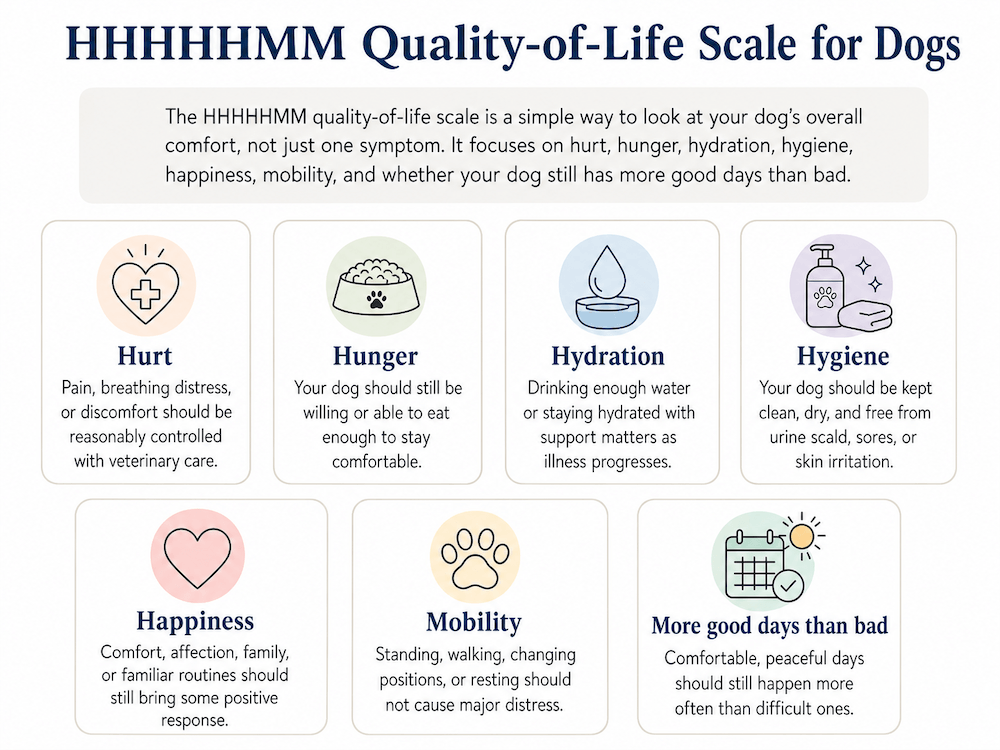
Watching a dog decline is heartbreaking, and it is normal to feel unsure about what you are seeing. These signs can suggest that a dog’s body is struggling or that quality of life is becoming poor, but they do not always mean death is immediate. Some symptoms can come from treatable emergencies, so owners should call a veterinarian whenever breathing, pain, collapse, seizures, or sudden changes are involved. Veterinary quality-of-life guidance often looks at pain, breathing, appetite, hydration, mobility, hygiene, happiness, and whether good days still outnumber bad days.
What Dog Dying Signs Mean by Body System
Many end-of-life signs are easier to understand when grouped by body system. Appetite changes often point to nausea, pain, or declining organ function. Breathing changes can be especially concerning because difficulty breathing is a major comfort issue; the Merck Veterinary Manual’s quality-of-life framework specifically includes pain and difficulty breathing under “Hurt,” noting that breathing difficulty can be very painful for animals.


What Quality-of-Life Signs Matter Most When a Dog Is Dying?
Quality of life is often more important than any single symptom. A dog who still eats, rests comfortably, recognizes family, enjoys gentle interaction, and can eliminate without distress may have some good time left with supportive care. A dog who cannot breathe comfortably, cannot rest, refuses food and water, cries or pants from pain, or can no longer stand may be suffering and should be evaluated promptly.
Veterinary quality-of-life tools commonly look at pain, hunger, hydration, hygiene, happiness, mobility, and whether good days still outnumber bad days. The Merck Veterinary Manual describes the HHHHHMM scale, which includes hurt, hunger, hydration, hygiene, happiness, mobility, and “more good days than bad” as practical quality-of-life markers.
What to Do If You Think Your Dog Is Dying
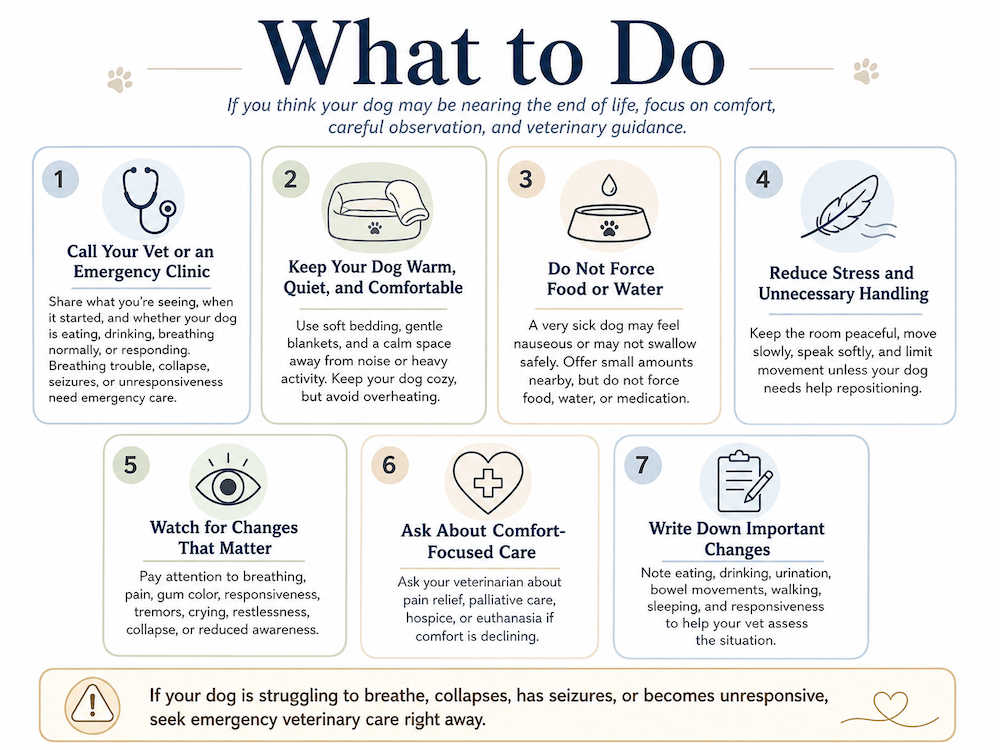
If you think your dog may be dying, take a slow breath and focus on comfort, safety, and getting veterinary guidance. You do not have to know exactly what is happening on your own; sudden, severe, painful, or unclear symptoms should always be discussed with your veterinarian or an emergency clinic
Preparing for Your Dog’s End-of-Life Care
Preparing for end-of-life care does not mean you are giving up on your dog. It means you are helping them stay safe, calm, clean, comfortable, and free from unnecessary suffering while you work with your veterinarian to make the most compassionate decisions possible.
| Preparation Step | How It Helps |
|---|---|
| Prepare yourself | Gives you space to ask questions and make calmer decisions. |
| Choose a quiet resting space | Helps your dog rest away from noise, activity, and stress. |
| Keep bedding clean and soft | Protects sore joints, fragile skin, and overall comfort. |
| Help with potty needs | Reduces distress if standing, walking, or posture is difficult. |
| Offer food and water without forcing it | Allows choice while avoiding choking, nausea, or added stress. |
| Use ramps, slings, or support if advised | May make movement safer for weak or painful dogs. |
| Plan transportation to the vet | Prevents rushed decisions if symptoms suddenly worsen. |
| Ask what symptoms mean “call immediately” | Helps you recognize urgent changes with more confidence. |
| Discuss at-home vs in-clinic euthanasia | Lets you understand options before an emotional crisis. |
How Veterinarians Help With Your Dog’s End-of-Life Decisions
Veterinarians can examine your dog, review their medical history, and look for signs of pain, breathing difficulty, dehydration, weakness, organ decline, or neurologic changes. This helps determine whether your dog’s symptoms may be treatable, manageable with comfort care, or part of a more serious end-of-life decline.
They may also use quality-of-life scoring to evaluate appetite, hydration, hygiene, mobility, comfort, happiness, and whether good days still outnumber bad days. Medication adjustments, pain relief, anti-nausea support, mobility help, palliative care, or hospice care may improve comfort when cure is no longer the goal.
If suffering is becoming difficult to control, your veterinarian can guide a gentle euthanasia conversation without pressure or judgment. They can also explain what to expect, where it can happen, and aftercare options such as cremation or burial, so you are not forced to make every decision at once.
When to Consider Euthanasia for Your Dog
Euthanasia may be considered when treatment can no longer give your dog a comfortable life, or when pain, fear, breathing distress, or severe weakness cannot be controlled. It is not a decision made because an owner has failed; it is a compassionate option to discuss with your veterinarian when comfort is becoming difficult to maintain. You may also want to understand how much it costs to put a dog down so you know what to expect from the appointment, aftercare, and related services.
| Sign to Consider | What It May Mean |
|---|---|
| Pain cannot be controlled | It may be time to discuss stronger comfort options, palliative care, or euthanasia with your vet. |
| Breathing is difficult | Breathing distress can mean comfort is hard to maintain and should be treated as urgent. |
| Your dog cannot rest comfortably | Constant pacing, panting, trembling, or distress may signal uncontrolled discomfort. |
| Eating and drinking have stopped | Refusing food and water can be a sign to call your vet promptly, especially with weakness or pain. |
| Mobility loss causes distress | Falling, crying, panic, or being unable to rise may mean movement is no longer comfortable. |
| Hygiene cannot be maintained | Soiling, wet bedding, pressure sores, or skin irritation can add pain and distress. |
| Your dog seems fearful, confused, or distressed | Ongoing fear, confusion, or inability to settle may mean quality of life is declining. |
| Bad days clearly outnumber good days | This may mean comfort is becoming difficult to restore consistently, even with supportive care. |
Veterinary References for Signs Your Dog May Be Dying
The AAHA/IAAHPC End-of-Life Care Guidelines explain that end-of-life care should prioritize comfort, caregiver education, and a personalized plan for the pet’s decline. This matters because signs such as pain, breathing distress, appetite loss, and immobility should be managed within a veterinary-guided comfort plan, not treated as isolated symptoms.
The Merck Veterinary Manual highlights quality-of-life markers such as hurt, hunger, hydration, hygiene, happiness, mobility, and more good days than bad. This supports using a whole-dog assessment rather than relying on one sign, such as appetite alone.
A Dog Aging Project End of Life Survey analysis found that owners frequently describe quality-of-life changes involving activity, appetite, and mobility near the end of life. This reinforces why these everyday changes are clinically meaningful when evaluating a dog’s decline.[1]
The MSD Veterinary Manual notes that death confirmation relies on multiple criteria, including lack of breathing, pulse, corneal reflexes, response to painful stimulation, and heartbeat. This matters because no single visible sign should be used alone to determine whether a dog has died.
Frequently Asked Questions
The Bottom Line
Recognizing the signs that your dog may be dying is one of the most painful parts of loving them, but it can also help you protect their comfort when they need you most. Changes like severe weakness, loss of appetite, labored breathing, confusion, pain, or fewer good days than bad days should never be ignored, especially when they appear suddenly or worsen quickly. A veterinarian can help you understand whether your dog’s symptoms may still be managed or whether end-of-life care should be discussed. Try to focus on keeping your dog warm, calm, clean, and surrounded by familiar comfort while you get guidance. Most importantly, remember that asking for help is not giving up—it is an act of love when your dog may be suffering.