Dog Coffee Toxicity Calculator: Calculate Risks & Poisoning Signs

Canine Bible is reader-supported. We receive affiliate commissions via some of our links. Learn more.
Whether your dog lapped up spilled coffee, chewed through coffee grounds, ate coffee beans, or got into a latte or coffee-flavored dessert, caffeine exposure can be dangerous—especially for small dogs or dogs with health conditions. While a tiny sip may not cause a problem for every dog, larger amounts or concentrated sources like espresso, cold brew, grounds, beans, caffeine pills, or caffeine powder can lead to serious symptoms. That’s why we created this Dog Coffee Toxicity Calculator—to help you quickly estimate your dog’s potential caffeine dose based on their weight, the coffee type, and the amount consumed. In this guide, you’ll also find caffeine charts, risk levels, safety tips, emergency symptoms, and answers to frequently asked questions so you know when to monitor, call your vet, or seek urgent help.
How Much Coffee Is Toxic to Dogs?
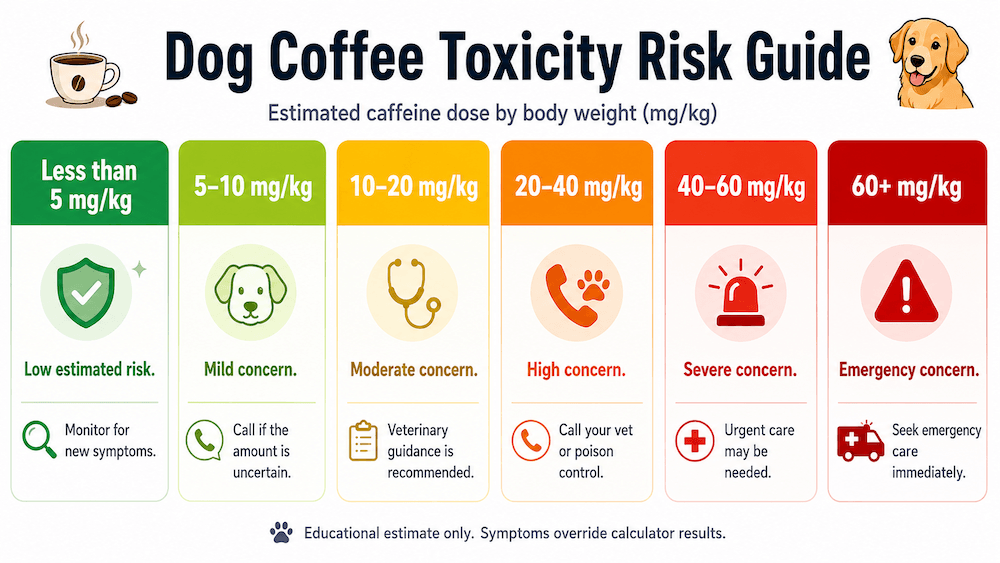
Coffee can become toxic to dogs when the caffeine dose is high for their body weight. As a general reference, signs of caffeine toxicity may begin around 20 mg/kg, heart-related effects may occur around 40–50 mg/kg, and seizures become more concerning around 60 mg/kg or higher. These are not “safe limits”—some dogs may react at lower amounts, especially if they are small or medically fragile.
The risk depends on four main things: your dog’s weight, the caffeine concentration, the amount swallowed, and the type of product. A few licks of weak brewed coffee may be less concerning for a large healthy dog, but the same amount can matter more for a toy breed, puppy, senior dog, or a dog with heart disease, kidney disease, liver disease, neurologic disease, or a seizure history.
Coffee grounds, coffee beans, espresso, coffee pods, caffeine tablets, energy drinks, and pre-workout products are much higher-risk than diluted brewed coffee because they can contain concentrated caffeine. If your dog ate grounds, beans, pods, pills, or an unknown amount—or shows vomiting, restlessness, rapid heartbeat, tremors, weakness, or seizures—contact a veterinarian or animal poison control right away.


Dog Coffee Toxicity Chart for Dogs
Caffeine content varies by brand, serving size, brew strength, and preparation method. Common estimates are about 96 mg of caffeine in 8 oz of brewed coffee, 63 mg in 1 oz of espresso, 62 mg in 8 oz of instant coffee, and 1–2 mg in decaf coffee servings.
The FDA warns that pure and highly concentrated caffeine products can be dangerous and difficult to measure accurately. This makes caffeine powder, concentrated liquid caffeine, and caffeine supplements especially concerning if a dog gets into them.
Caffeine Toxicity Chart by Dog Weight
These are toxicity reference points, not safe serving sizes. Individual dogs may react at lower amounts.
| Dog Weight | Approx. Weight in kg | 20 mg/kg Landmark | 40 mg/kg Landmark | 50 mg/kg Landmark | 60 mg/kg Landmark |
|---|---|---|---|---|---|
| 5 lb | 2.3 kg | 45 mg | 91 mg | 113 mg | 136 mg |
| 10 lb | 4.5 kg | 91 mg | 181 mg | 227 mg | 272 mg |
| 20 lb | 9.1 kg | 181 mg | 363 mg | 454 mg | 544 mg |
| 30 lb | 13.6 kg | 272 mg | 544 mg | 680 mg | 816 mg |
| 50 lb | 22.7 kg | 454 mg | 907 mg | 1,134 mg | 1,361 mg |
| 70 lb | 31.8 kg | 635 mg | 1,270 mg | 1,588 mg | 1,905 mg |
| 100 lb | 45.4 kg | 907 mg | 1,814 mg | 2,268 mg | 2,722 mg |
Coffee Caffeine Chart by Type
| Coffee Product | Typical Serving Size | Approx. Caffeine | Risk Notes for Dogs |
|---|---|---|---|
| Brewed coffee | 8 oz | ~96 mg | Risk depends on volume swallowed and dog weight |
| Espresso | 1 oz | ~63 mg | Small volume but concentrated |
| Instant coffee drink | 8 oz | ~62 mg | Risk rises with stronger mixes or dry powder |
| Decaf coffee | 8 oz | ~1–2 mg | Lower caffeine, but still not a dog treat |
| Coffee grounds | varies | variable/high | Higher concern; amount is hard to estimate |
| Coffee beans | varies | variable/high | Higher concern, especially chocolate-covered beans |
| Coffee pods | 1 pod | variable | Grounds plus unknown caffeine concentration |
| Coffee ice cream/dessert | varies | variable | May include caffeine, sugar, fat, chocolate, or xylitol |
Dog Coffee Toxicity Guidelines
The calculator estimates caffeine exposure in milligrams per kilogram of body weight.


Formula: Caffeine dose = total caffeine consumed in mg ÷ dog’s weight in kg
Methylxanthine sensitivity varies. In dogs, mild clinical signs may occur around 20 mg/kg, cardiotoxic effects may occur around 40–50 mg/kg, and seizures may occur at 60 mg/kg or higher. Merck also notes that severe signs and death may occur at lower doses because individual susceptibility varies.
Safety Guidelines Before Using This Result
Some situations make it harder to judge coffee and caffeine exposure safely. Unknown amounts of coffee grounds or beans, caffeine powder, small body size, symptoms, or added toxins like chocolate or xylitol can increase concern and may require faster veterinary guidance.
| Situation | Why It Matters | What to Do |
|---|---|---|
| Unknown amount | The dose may be underestimated. | Call your vet for guidance. |
| Grounds or beans | Caffeine levels are harder to estimate. | Contact poison control promptly. |
| Caffeine powder | Small amounts can be dangerous. | Seek urgent veterinary help. |
| Small dog | Less caffeine raises mg/kg dose. | Use extra caution and call. |
| Any symptoms | Signs can worsen quickly. | Contact a vet immediately. |
| Added toxins | Chocolate or xylitol adds risk. | Call poison control right away. |
What to Do If Your Dog Drank Coffee
1. Remove the coffee source. Move cups, mugs, coffee grounds, beans, pods, trash, and coffee desserts out of reach.
2. Estimate the exposure and use the calculator. Write down the coffee type, amount missing, time of ingestion, dog’s weight, and symptoms. Save the package or label if you have it. Use the calculator to estimate the caffeine dose and risk level. This can help you explain the exposure clearly when calling your veterinarian.
3. Contact a professional when needed. Call your veterinarian or animal poison control if the exposure is concentrated, uncertain, or causing symptoms. If you can't reach your vet, you can chat live with a registered online veterinary professional via our online vet chat or video chat support (24 hours a day, 7 days a week). Or use Chewy's online vet services (6 a.m. - midnight ET).
4. Monitor closely. If your veterinarian recommends monitoring at home, watch for vomiting, diarrhea, agitation, panting, tremors, weakness, or changes in heart rate.
What Not to Do
Do not induce vomiting unless a veterinarian or poison-control expert tells you to. Do not give hydrogen peroxide, salt, milk, oil, activated charcoal, or home remedies without professional guidance.
Factors That Can Affect Your Dog’s Risk
These factors can change your dog’s caffeine toxicity estimate, especially when the coffee type, amount consumed, time of ingestion, symptoms, or health status are uncertain. Use the calculator as a guide, but contact your veterinarian if key details are unclear.
| Risk Factor | Why It Matters | Owner Guidance |
|---|---|---|
| Dog weight | Small dogs reach higher doses faster. | Use the dog’s exact weight. |
| Coffee type | Espresso, grounds, and beans are stronger. | Select the closest coffee product. |
| Amount consumed | Missing amounts are often unclear. | Estimate what your dog actually consumed. |
| Time since ingestion | Recent exposure may need faster action. | Call sooner for concentrated products. |
| Symptoms | Clinical signs increase urgency. | Seek help if symptoms appear. |
| Added ingredients | Chocolate or xylitol adds danger. | Check labels and ingredient lists. |
| Health status | Sick or fragile dogs need caution. | Call your vet for case-specific advice. |
Symptoms of Coffee or Caffeine Poisoning in Dogs
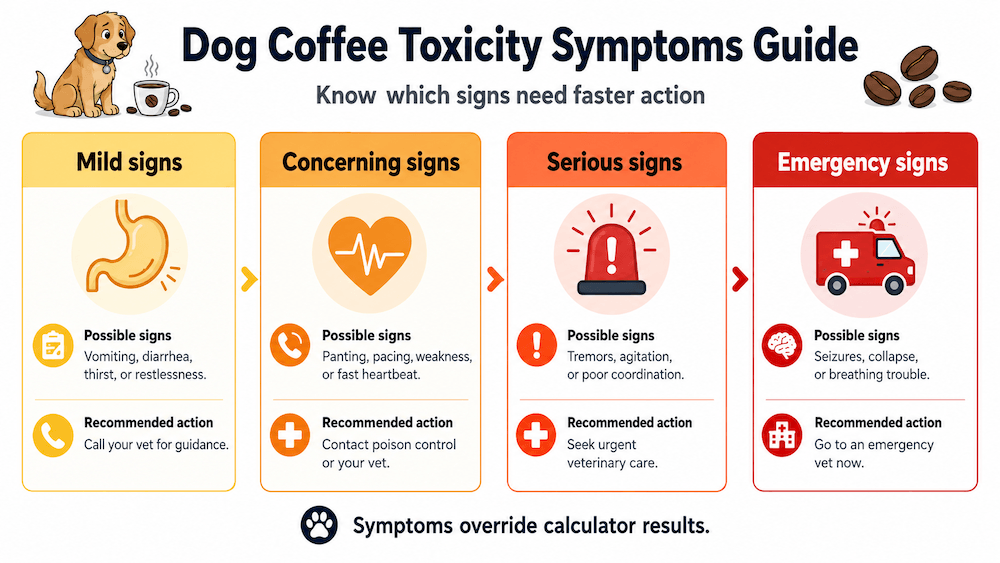
Caffeine toxicity can affect the digestive system, nervous system, heart, and body temperature. Possible signs include vomiting, diarrhea, restlessness, excessive thirst, excessive urination, abnormal heartbeat, tremors, and seizures.
Common Mistakes to Avoid When Using the Calculator
Avoid these common mistakes when estimating your dog’s coffee exposure.
| Mistake | Why It Matters | Better Action |
|---|---|---|
| Wrong coffee type | Grounds and espresso can be stronger. | Select the closest exact product. |
| Full cup entered | This may overestimate actual exposure. | Enter only the missing amount. |
| Grounds ignored | Grounds can contain concentrated caffeine. | Treat eaten grounds cautiously. |
| Units confused | Ounces and cups change results. | Double-check every selected unit. |
| Additives missed | Chocolate or xylitol adds danger. | Check all ingredient labels. |
| Symptoms dismissed | Clinical signs can override estimates. | Call when symptoms appear. |
How to Calculate Coffee Toxicity Manually
Manual calculation is helpful when you know the caffeine amount from a product label or reliable reference.
Formula
Dog weight in kg = dog weight in lb ÷ 2.2
Caffeine dose in mg/kg = caffeine consumed in mg ÷ dog weight in kg
Example Calculation
A 20 lb dog drinks about 4 oz of brewed coffee.
- First, convert weight: 20 lb ÷ 2.2 = 9.1 kg
- Next, estimate caffeine: If 8 oz of brewed coffee has about 96 mg of caffeine, then 4 oz has about 48 mg of caffeine.
- Now calculate the dose: 48 mg ÷ 9.1 kg = 5.3 mg/kg
Estimated result: mild concern. The owner should monitor closely and contact a veterinarian or poison control if the coffee was strong, the amount is uncertain, or symptoms appear.
Why Manual Calculations Can Be Inaccurate
Coffee strength varies. The exact amount consumed may be unclear. Grounds, beans, espresso, cold brew, caffeine pills, and caffeine powders are harder to estimate. Added ingredients may also create separate risks.
Frequently Asked Questions
The Bottom Line
The Dog Coffee Toxicity Calculator helps estimate your dog’s potential caffeine exposure after drinking coffee, eating coffee grounds, or getting into coffee-flavored products. Use it as a quick risk guide, not a diagnosis. If your dog has symptoms, consumed a concentrated caffeine source, or the amount is unknown, contact your veterinarian or animal poison control right away.
Coffee is not the only human food or drink that can be dangerous for dogs. If your dog may have consumed other ingredients, review our guide to poisonous and toxic foods for dogs. For mixed coffee drinks and desserts, check the label carefully: mochas, tiramisu, coffee ice cream, flavored lattes, and chocolate-covered espresso beans may also contain chocolate, xylitol, alcohol, grapes, raisins, dairy, or other unsafe ingredients. If chocolate was involved, use our Dog Chocolate Toxicity Calculator. If grapes or raisins were involved, see what to do if your dog ate grapes. For caffeine from tea, energy drinks, caffeine pills, supplements, or other sources, use our Dog Caffeine Toxicity Calculator. Do not try to make your dog vomit unless a veterinarian tells you to; for safety guidance, read how to make a dog throw up safely—and when not to.
With the calculator, caffeine charts, symptom guide, and safety steps in this article, you now have a clearer way to estimate your dog’s coffee toxicity risk, avoid common mistakes, and know when veterinary help is needed.