
Dog Chocolate Toxicity Calculator: Check Risks & Poisoning Signs


Canine Bible is reader-supported. We receive affiliate commissions via some of our links. Learn more.
Whether your dog snatched a brownie, ate a chocolate bar, or got into cocoa powder, chocolate ingestion can quickly become a serious concern. The risk depends on your dog’s weight, the type of chocolate, and how much was eaten, since chocolate contains theobromine and caffeine—compounds that can cause symptoms ranging from vomiting and diarrhea to rapid heartbeat, tremors, seizures, or worse. That’s why we created this Dog Chocolate Toxicity Calculator—to help you quickly estimate your dog’s potential risk based on the chocolate type, amount consumed, and your dog’s weight. In this guide, you’ll also find toxicity charts, warning signs, emergency steps, and answers to frequently asked questions so you can act quickly and responsibly.
How Much Chocolate Is Toxic to Dogs?
There is no single “safe amount” of chocolate for every dog. Toxicity depends on the dog’s weight, the type of chocolate, how much was eaten, and the dog’s individual sensitivity. FDA explains that chocolate contains theobromine and caffeine, both of which are toxic to dogs and act as stimulants on the nervous system and heart.
As a general guide, chocolate concern increases with the estimated methylxanthine dose.
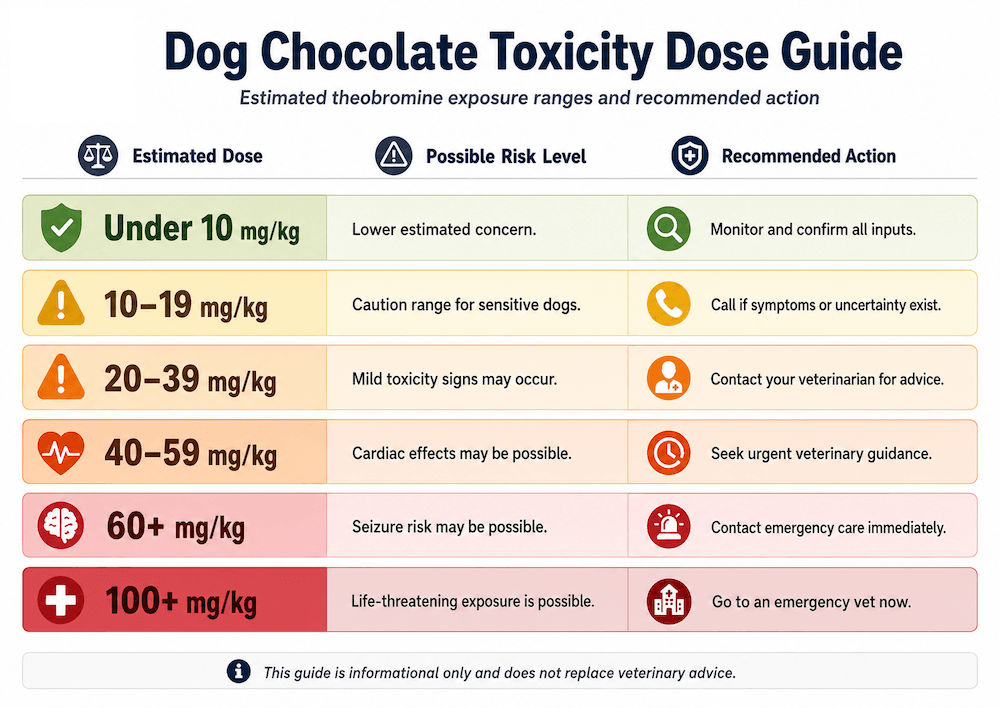
Chocolate Toxicity Chart for Dogs
Chocolate Toxicity Chart by Dog Weight
These are approximate amounts based on common methylxanthine estimates. Actual chocolate products vary by brand, recipe, cocoa percentage, and serving size.
| Dog Weight | Milk Chocolate | Dark Chocolate | Baking Chocolate | Cocoa Powder |
|---|---|---|---|---|
| 5 lb | 0.7 oz | 0.3 oz | 0.1 oz | 0.06 oz |
| 10 lb | 1.4 oz | 0.6 oz | 0.2 oz | 0.1 oz |
| 20 lb | 2.8 oz | 1.2 oz | 0.4 oz | 0.2 oz |
| 40 lb | 5.7 oz | 2.3 oz | 0.8 oz | 0.5 oz |
| 60 lb | 8.5 oz | 3.5 oz | 1.2 oz | 0.7 oz |
| 80 lb | 11.3 oz | 4.7 oz | 1.7 oz | 0.9 oz |
Chocolate Risk Chart by Type
The type of chocolate matters because different products contain different amounts of methylxanthines. Merck Veterinary Manual lists approximate methylxanthine concentrations ranging from about 1.1 mg/oz in white chocolate to about 807 mg/oz in cocoa powder.


| Chocolate Type | Approximate Methylxanthines | Owner Note |
|---|---|---|
| White Chocolate | About 1.1 mg per ounce. | Fat and sugar may upset stomachs. |
| Milk Chocolate | About 64 mg per ounce. | Small dogs can still be at risk. |
| Dark Chocolate | About 150–160 mg per ounce. | Cocoa percentage can change risk. |
| Semi-Sweet Chocolate | About 150–160 mg per ounce. | Common in baking chips and desserts. |
| Baking Chocolate | About 440 mg per ounce. | Small amounts can be dangerous. |
| Cocoa Powder | About 807 mg per ounce. | Treat exposure as urgent. |
| Cocoa Hulls | About 255 mg per ounce. | Some mulch products vary widely. |
| Brownies | Variable by recipe. | Risk depends on chocolate concentration. |
Chocolate Toxicity Guidelines for Dogs
The calculator estimates risk using your dog’s weight, chocolate type, and amount eaten. The main goal is to estimate methylxanthine exposure per kilogram of body weight. The basic formula is:
Estimated mg/kg dose = total methylxanthines eaten ÷ dog weight in kilograms
Where:
This calculation is useful, but it is not exact. Chocolate recipes vary by brand, cocoa percentage, and product type. Mixed desserts such as brownies, cookies, and cakes are harder to estimate because the actual chocolate concentration may be unknown.


Important Safety Notes Before Using This Result
This calculator is for educational use only. It cannot examine your dog, confirm exact chocolate content, predict individual sensitivity, or provide treatment. ASPCA recommends collecting packaging and noting whether the chocolate contains fillings such as raisins, macadamia nuts, or xylitol, because these can add separate risks.
| Safety Point | When It Applies | Recommended Action |
|---|---|---|
| Call a Vet | Risk is moderate, high, unknown, or symptomatic. | Contact your vet or poison control. |
| Emergency Signs | Tremors, seizures, collapse, or abnormal heartbeat occur. | Seek emergency veterinary care immediately. |
| Unknown Amount | You cannot confirm how much was eaten. | Use worst-case details and call. |
| High-Risk Chocolate | Cocoa powder, baking chocolate, or dark chocolate. | Treat the exposure more cautiously. |
| Small Dogs | Toy breeds reach risky doses quickly. | Do not dismiss small amounts. |
| Other Toxins | Xylitol, raisins, alcohol, or cannabis are present. | Call your vet immediately. |
| Home Remedies | Vomiting or charcoal is being considered. | Use only with veterinary instruction. |
| Tool Limits | The calculator cannot examine your dog. | Use it as an estimate only. |
What to Do If Your Dog Ate Chocolate
1. Remove the chocolate, wrappers, and packaging so your dog cannot eat more. Then check the label for chocolate type, cocoa percentage, package weight, serving size, and ingredients.
2. Estimate how much is missing and use the calculator. If the result is concerning, the amount is unknown, the product contains other toxic ingredients, or symptoms are present, call your veterinarian or poison control. If you can't reach your vet, you can chat live with a registered online veterinary professional via our online vet chat or video chat support (24 hours a day, 7 days a week). Or use Chewy's online vet services (6 a.m. - midnight ET).
3. When you call, be ready to share your dog’s weight, the type of chocolate, the estimated amount eaten, when your dog ate it, any symptoms, medical conditions or medications, and any other ingredients in the product.
4. Do not induce vomiting, give activated charcoal, offer milk or oils, or give human medications unless your veterinarian specifically tells you to.
Factors That Can Affect Your Dog’s Results
These factors can change your dog’s chocolate toxicity estimate, especially when the chocolate type, amount eaten, symptoms, or health status are uncertain. Use the calculator as a guide, but contact your veterinarian if key details are unclear.
| Factor | Why It Matters | What to Do |
|---|---|---|
| Dog Weight | Smaller dogs reach risky doses faster. | Enter your dog’s most recent weight. |
| Chocolate Type | Darker chocolate usually increases toxicity risk. | Choose the closest chocolate type listed. |
| Cocoa Percentage | Higher cacao often means higher concern. | Enter the percentage if available. |
| Amount Eaten | Dose depends on the missing amount. | Use the highest reasonable estimate. |
| Time Since Eating | Early action may improve treatment options. | Estimate when your dog ate it. |
| Symptoms | Symptoms can override calculator estimates. | Call a vet if symptoms appear. |
| Age & Life Stage | Puppies and seniors need extra caution. | Tell your vet your dog’s age. |
| Health Conditions | Heart, seizure, or organ disease increases concern. | Share all known medical conditions. |
| Pregnancy or Nursing | These dogs need more cautious guidance. | Contact your veterinarian for advice. |
| Medication Use | Medications may affect treatment decisions. | List all medications and supplements. |
| Multiple Dogs | The smallest dog may face highest risk. | Calculate using the smallest dog first. |
| Other Ingredients | Xylitol, raisins, caffeine, or alcohol add danger. | Check labels and call your vet. |
| Wrappers or Foil | Packaging may cause digestive blockage. | Mention missing wrappers to your vet. |
Dog Chocolate Poisoning Symptoms
Chocolate poisoning can affect the digestive system, heart, and nervous system. Signs can take several hours to develop and may last for several days.
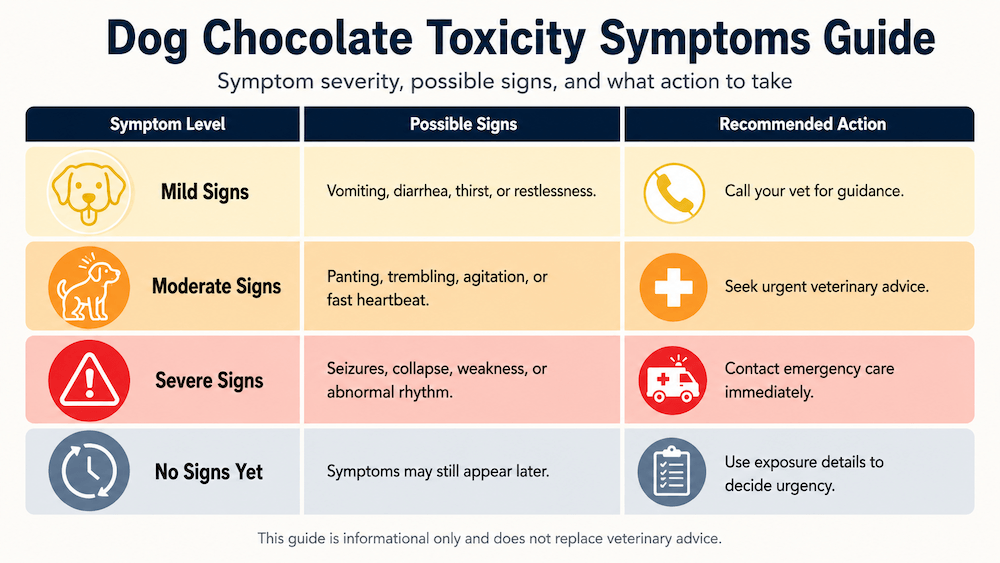
Common Mistakes to Avoid When Using the Calculator
The calculator is only as useful as the information entered. The most common mistakes involve underestimating the type of chocolate, using the wrong amount, or ignoring symptoms that require veterinary guidance.
| Mistake | Why It Matters | Better Action |
|---|---|---|
| Wrong Chocolate Type | Dark or baking chocolate raises risk. | Choose the closest high-risk match. |
| Full Package Weight | The calculator needs the eaten amount. | Enter only the missing portion. |
| Unit Confusion | Ounces and grams change the estimate. | Double-check the package unit first. |
| Ignoring Symptoms | Symptoms can override a low result. | Call a vet if signs appear. |
| Waiting Too Long | Chocolate symptoms may be delayed. | Call promptly if exposure seems risky. |
| Home Treatments | Some remedies can be unsafe. | Follow veterinary instructions only. |
| Other Ingredients | Xylitol or raisins can add danger. | Check labels and tell your vet. |
| Diagnosis Assumption | The tool cannot diagnose poisoning. | Use results as guidance only. |
How to Calculate Dog Chocolate Toxicity Manually
The calculator does the math for you, but manual calculation can help you understand the estimate.
Formula
Estimated mg/kg dose = total methylxanthines eaten ÷ dog weight in kilograms
Steps
- Convert pounds to kilograms: pounds ÷ 2.2.
- Estimate total methylxanthines eaten.
- Divide total methylxanthines by dog weight in kg.
- Compare the result with toxicity ranges.
Example Calculation
A 20-pound dog weighs about 9.1 kg.
If the dog eats 2 ounces of dark chocolate estimated at 150 mg methylxanthines per ounce, the total exposure is:
2 ounces × 150 mg = 300 mg
Then divide by body weight:
300 mg ÷ 9.1 kg = 33 mg/kg
This is a concerning estimate, so you should contact a veterinarian or pet poison-control service.
When Manual Calculations May Be Inaccurate
Manual calculations may be unreliable when the chocolate type is unknown, the amount eaten is uncertain, the product is a mixed dessert, multiple dogs were involved, or another toxic ingredient is present.
Frequently Asked Questions
The Bottom Line
Canine Bible's Dog Chocolate Toxicity Calculator helps you quickly estimate your dog’s potential risk based on weight, chocolate type, amount eaten, timing, and symptoms. Use it as a first step—not as a replacement for veterinary care. If the result is concerning, the amount is unknown, your dog ate dark chocolate, baking chocolate, cocoa powder, or symptoms appear, contact your veterinarian or pet poison control right away.
Chocolate is not the only human food that can be dangerous for dogs. If your dog may have eaten other ingredients, it may help to review our guide to poisonous and toxic foods for dogs. For mixed products, check the label carefully: chocolate treats may also contain raisins, grapes, coffee, espresso beans, or other caffeine sources. If grapes or raisins were involved, see what to do if your dog ate grapes. If your dog consumed coffee, espresso beans, energy products, or another caffeine source, use our Dog Caffeine Toxicity Calculator. Do not try to make your dog vomit unless a veterinarian tells you to; for safety guidance, read how to make a dog throw up safely—and when not to.