Flatulence in Dogs: Symptoms, Types, Causes, Signs & Prevention

Canine Bible is reader-supported. We receive affiliate commissions via some of our links. Learn more.
Flatulence is a common digestive issue in dogs, characterized by the excessive accumulation and release of gas from the gastrointestinal tract. While occasional gas is normal, frequent or foul-smelling flatulence may indicate dietary sensitivities, poor digestion, or underlying gastrointestinal disorders. Although no large-scale studies report the exact prevalence of flatulence alone, digestive conditions account for approximately 10–15% of canine veterinary visits, with excessive gas being a common symptom. Certain breeds, particularly brachycephalic dogs such as Bulldogs, Pugs, Boston Terriers, and Boxers, are more prone to flatulence because they swallow more air while eating. Left unmanaged, chronic flatulence can cause discomfort and may signal a health problem requiring veterinary attention. The good news is that with appropriate dietary management, high-quality nutrition, and treatment of any underlying conditions, most cases can be effectively controlled. This guide covers everything you need to know about flatulence in dogs—from causes and symptoms to diagnosis, treatment, prevention, and daily management—helping you support your dog’s digestive health and overall well-being.
What Is Flatulence in Dogs?
Flatulence, in simple terms, is the excessive buildup and release of gas in the digestive tract that can cause frequent gas passing, bloating, and unpleasant odors. In dogs, it is most often associated with dietary indiscretion, food intolerance, or digestive disorders, which increase the fermentation of food in the intestines. While occasional gas is normal, excessive flatulence may indicate an underlying health issue requiring veterinary attention.
Types
Flatulence in dogs can occur for several reasons, each with different underlying causes:
| Type | Description |
|---|---|
| Diet-Related Flatulence | The most common type, caused by foods that are difficult to digest or sudden dietary changes. |
| Aerophagia-Related Flatulence | Occurs when dogs swallow excessive air while eating, drinking, or panting rapidly. |
| Food Intolerance–Related Flatulence | Associated with sensitivities to certain ingredients such as dairy, soy, or specific proteins. |
| Gastrointestinal Disease–Related Flatulence | Develops secondary to digestive disorders such as inflammatory bowel disease (IBD) or malabsorption syndromes. |
| Parasite-Associated Flatulence | Caused by intestinal parasites that disrupt normal digestion and increase gas production. |
| Other Causes | Conditions such as pancreatic insufficiency, bacterial overgrowth, or chronic gastrointestinal infections can also contribute to excessive gas. |
Predisposed Dog Breeds
Flatulence can affect dogs of any age or breed. However, some breeds may be more prone to excessive gas due to their facial structure, eating habits, or digestive sensitivities. Brachycephalic (short-nosed) breeds, in particular, tend to swallow more air while eating and breathing, increasing their risk of flatulence.


| Size / Group | Breeds | Notes on Risk Factors |
|---|---|---|
| Brachycephalic Breeds | English Bulldog, French Bulldog, Pug, Boston Terrier, Boxer | Short-nosed anatomy causes increased air swallowing (aerophagia), leading to excessive gas production. |
| Large Breeds | Labrador Retriever, Golden Retriever, German Shepherd, Rottweiler, Great Dane | More likely to consume food rapidly, increasing swallowed air and digestive gas. |
| Deep-Chested Breeds | Weimaraner, Doberman Pinscher, Standard Poodle, Irish Setter | May be prone to gastrointestinal disturbances and increased gas accumulation. |
| Food-Sensitive Breeds | Boxer, Shar-Pei, Soft Coated Wheaten Terrier, Irish Setter | Higher rates of food intolerance and digestive sensitivities that can contribute to flatulence. |
| Greedy Eaters | Beagle, Labrador Retriever, Dachshund, Cocker Spaniel | Tendency to eat quickly increases air intake and fermentation of poorly digested food. |
| All Breeds | Any dog breed | Dietary changes, table scraps, gastrointestinal disease, or intestinal parasites can cause flatulence regardless of breed. |
Causes
Flatulence in dogs is commonly caused by rapid eating, dietary indiscretion, food intolerances, and poor-quality diets. Digestive disorders, intestinal parasites, and bacterial imbalances can also increase gas production, leading to frequent or foul-smelling flatulence.
Symptoms
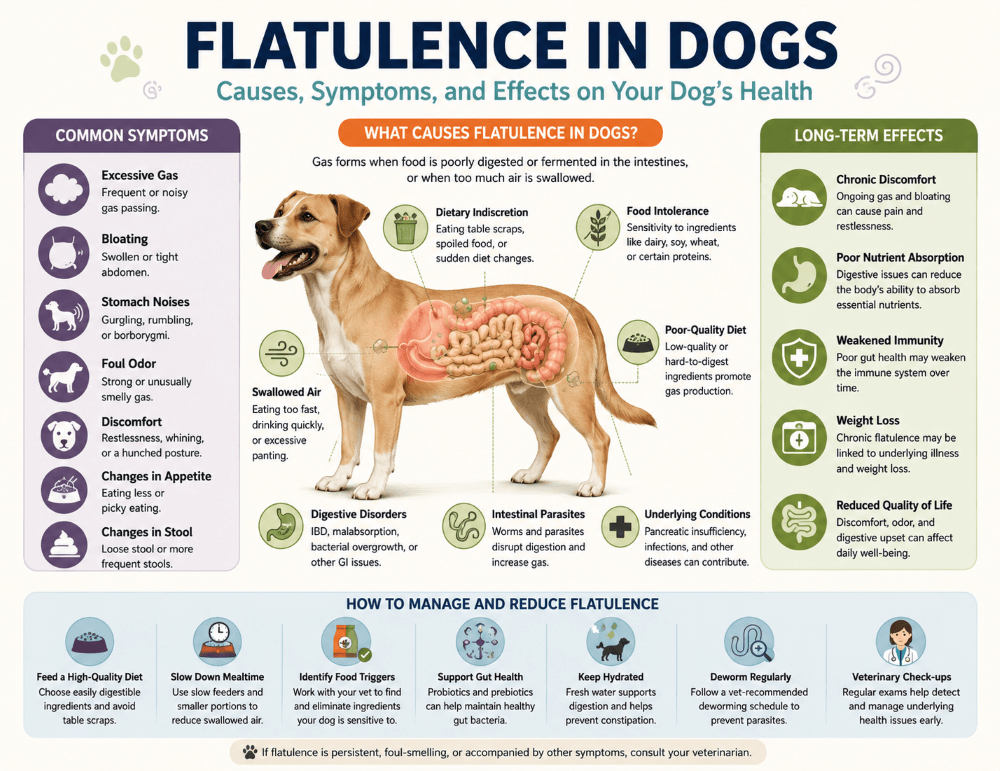
Flatulence in dogs is a common digestive issue that affects the gastrointestinal tract and can significantly impact comfort and well-being. Early signs are often subtle—such as occasional gas, mild stomach rumbling, or bloating—but can worsen over time if the underlying cause is not addressed.
This visual guide highlights the most common symptoms of flatulence and how digestive upset can affect different parts of a dog’s body, helping you recognize changes early and take steps to support your dog’s digestive health and overall comfort.


Stages of Flatulence
- Mild stage: Occasional gas, mild stomach rumbling, and little to no discomfort.
- Moderate stage: Frequent flatulence, bloating, abdominal discomfort, and noticeable digestive upset.
- Severe stage: Persistent or foul-smelling gas, chronic gastrointestinal signs, and potential underlying digestive disease.
Top Ways to Prevent Flatulence in Dogs
Because flatulence is often linked to diet, digestion, and eating habits, prevention focuses on identifying triggers and supporting healthy gastrointestinal function. With proper nutrition, gradual diet changes, and routine veterinary care, many cases of excessive gas can be reduced or prevented, helping your dog stay comfortable and maintain optimal digestive health.
| Prevention Strategy | Why It Helps | How to Do It |
|---|---|---|
| Feed a High-Quality Diet | Highly digestible ingredients reduce intestinal fermentation and gas production. | Choose premium dog foods and avoid low-quality fillers when possible. |
| Introduce Diet Changes Gradually | Sudden food changes can disrupt digestion and increase gas. | Transition to new foods over 7–10 days by mixing them with the current diet. |
| Slow Down Mealtime | Reduces the amount of air swallowed while eating. | Use slow-feeder bowls, puzzle feeders, or divide meals into smaller portions. |
| Identify Food Intolerances | Eliminating trigger ingredients can significantly reduce flatulence. | Work with your veterinarian to conduct a food trial or elimination diet. |
| Avoid Table Scraps | Human foods, especially fatty or spicy items, can cause digestive upset. | Feed dog-safe treats and avoid sharing meals from the table. |
| Maintain Regular Parasite Prevention | Intestinal parasites can interfere with digestion and increase gas production. | Follow a veterinarian-recommended deworming and parasite control schedule. |
| Schedule Routine Vet Checkups | Early detection of digestive disorders helps prevent chronic flatulence. | Have your dog examined regularly, especially if excessive gas is persistent. |
Actionable Resources
If you want to prevent or reduce flatulence in your dog, here are some helpful resources and strategies you can explore with your veterinarian’s guidance.
How Flatulence Is Diagnosed in Dogs
Diagnosing flatulence requires a thorough veterinary evaluation to identify potential dietary, digestive, or medical causes. Key steps include:
- Physical Examination: A veterinarian assesses abdominal comfort, body condition, diet history, and any signs of gastrointestinal disease.
- Dietary Review:
- Food History – Evaluates current diet, treats, table scraps, and recent dietary changes.
- Elimination Diet Trial – May be recommended if food intolerance or sensitivity is suspected.
- Laboratory Tests: Blood work and fecal analysis may be performed to check for parasites, infections, malabsorption disorders, or other underlying conditions.
- Additional Gastrointestinal Testing: Specialized tests may be recommended for conditions such as pancreatic insufficiency, inflammatory bowel disease (IBD), or bacterial overgrowth.
Early diagnosis is important because persistent or excessive flatulence can sometimes indicate an underlying digestive disorder—identifying the cause early allows for more effective treatment and improved long-term digestive health.
Treatment & Care
According to current veterinary recommendations, the most effective treatments for flatulence in dogs focus on identifying and addressing the underlying cause, often through dietary management, digestive support, and treatment of any gastrointestinal disorders. Common approaches include diet changes, slow-feeding strategies, probiotics, parasite control, and management of food intolerances or digestive diseases.
Always consult your veterinarian before starting any new treatment or supplement for flatulence. If you can’t reach your vet, you can chat live with a registered online veterinary professional via our online vet chat or video chat support (24 hours a day, 7 days a week). Or use Chewy’s online vet services (6 a.m. – midnight ET).
Conventional Medical Treatments
| Treatments | Benefits / Role |
|---|---|
| Dietary Modification | Switching to highly digestible or limited-ingredient diets can reduce gas production and improve digestion. |
| Probiotics & Digestive Supplements | Support healthy gut bacteria, improve digestion, and may reduce excessive flatulence. |
| Parasite Treatment | Deworming medications eliminate intestinal parasites that may contribute to gas and digestive upset. |
| Management of Underlying GI Disorders | Treating conditions such as inflammatory bowel disease (IBD), bacterial overgrowth, or malabsorption can resolve chronic flatulence. |
| Slow-Feeding Strategies | Slow-feeder bowls and smaller meals help reduce air swallowing and decrease gas formation. |
Supplement Support
| Supplement / Nutrient | Benefits / Role |
|---|---|
| Probiotics | Help balance gut bacteria and may reduce excessive gas production. |
| Prebiotics | Support beneficial intestinal microbes and promote digestive health. |
| Digestive Enzymes | Assist in breaking down food more efficiently, reducing intestinal fermentation. |
| Pumpkin | Provides soluble fiber that supports digestion and healthy stool consistency. |
| Psyllium Husk | May help regulate bowel movements and improve gastrointestinal function. |
| Omega-3 Fatty Acids (Fish Oil) | May help reduce intestinal inflammation associated with digestive disorders. |
| Vitamin B12 (Cobalamin) | Supports nutrient absorption and digestive health, especially in dogs with GI disease. |
| Zinc | Helps maintain intestinal lining health and normal digestive function. |
| L-Glutamine | Supports intestinal cell repair and overall gastrointestinal health. |
Find the best over-the-counter treatments and supplements for flatulence in dogs on Amazon and Chewy.

Alternative & Integrative Therapies
| Therapy | Benefits / Role |
|---|---|
| Probiotic Therapy | Supports healthy gut bacteria and may help reduce excessive gas production. |
| Prebiotic Supplementation | Promotes the growth of beneficial intestinal microbes and supports digestive balance. |
| Dietary Elimination Trials | Helps identify food sensitivities or intolerances that may be contributing to flatulence. |
| Digestive Enzyme Support | Assists with food digestion and may reduce fermentation-related gas formation. |
| Fiber Management | Adjusting dietary fiber levels can improve stool quality and reduce gastrointestinal gas. |
| Herbal Digestive Support | Certain veterinarian-approved herbal supplements may help support normal digestion and gut function. |
| Microbiome-Focused Nutrition | Specialized diets designed to support gut health may reduce chronic flatulence and digestive discomfort. |
Surgical Options
| Procedure / Intervention | Benefits / Role |
|---|---|
| Dietary Elimination Trial | Helps identify food allergies or intolerances that may be causing chronic flatulence. |
| Endoscopy | Allows direct examination of the gastrointestinal tract and collection of biopsies when digestive disease is suspected. |
| Intestinal Biopsy | Used to diagnose conditions such as inflammatory bowel disease (IBD), cancer, or chronic intestinal inflammation. |
| Surgical Correction of GI Disorders | May be necessary in rare cases involving intestinal obstruction, masses, or anatomical abnormalities contributing to digestive problems. |
Emotional & Lifestyle Impact
Flatulence may seem like a minor issue, but chronic or excessive gas can affect a dog’s comfort, daily routine, and overall well-being. Dogs experiencing frequent bloating, abdominal discomfort, or digestive upset may become restless, less active, withdrawn, or occasionally irritable, especially when symptoms are persistent. Some dogs may also show changes in appetite, sleep patterns, or interest in exercise.
For owners, managing chronic flatulence can be frustrating due to unpleasant odors, frequent cleanups, and concerns about underlying health problems. Daily routines may need to include dietary adjustments, slow-feeding strategies, and closer monitoring of digestive health. With proper nutrition, veterinary guidance, and identification of dietary triggers, however, most dogs can experience significant improvement in comfort, digestion, and quality of life.
Typical Annual Cost of Treating Canine Flatulence
| Category | Estimated Annual Cost Range | Notes |
|---|---|---|
| Routine Vet Visits & Diagnostics | $200 – $800 | Physical exams, fecal testing, bloodwork, and dietary consultations. |
| Prescription or Specialized Diets | $300 – $1,200 | Digestive-care, limited-ingredient, or highly digestible veterinary diets. |
| Probiotics & Digestive Supplements | $120 – $600 | Includes probiotics, digestive enzymes, fiber supplements, and gut-health products. |
| Treatment of Underlying Conditions | $200 – $2,000+ | Costs vary depending on conditions such as IBD, parasites, or pancreatic disease. |
| Advanced Diagnostics (if needed) | $500 – $3,000+ | May include abdominal ultrasound, endoscopy, biopsies, or specialized GI testing. |
| Insurance & Wellness Plans | $360 – $960 | May help offset costs related to diagnostics, treatments, and prescription diets. |
| Typical Annual Range | Simple Cases: $300 – $1,500 | Chronic / Underlying GI Disease: $1,500 – $5,000+ | |
Flatulence in dogs is often inexpensive to manage, but costs can increase when prescription diets, digestive supplements, diagnostic testing, or treatment for underlying gastrointestinal disorders are needed. Pet insurance and wellness plans may help offset expenses and support ongoing digestive health care. Check out our full guide to the Best Pet Insurance for Dogs and Best Pet Wellness Plans.
Other Health Issues Related to Flatulence in Dogs
While flatulence itself is often harmless, persistent or excessive gas may be associated with underlying digestive disorders and other health concerns. Some symptoms attributed to flatulence may actually be caused by these related conditions:
- Food Intolerances / Food Allergies
- Inflammatory Bowel Disease (IBD)
- Intestinal Parasites
- Small Intestinal Bacterial Overgrowth (SIBO)
- Exocrine Pancreatic Insufficiency (EPI)
- Malabsorption Disorders
- Chronic Diarrhea
- Abdominal Bloating
- Constipation
- Gastroenteritis
- Vomiting
- Weight Loss
- Poor Nutrient Absorption
- Changes in Appetite
- Stomach Rumbling (Borborygmi)
- Abdominal Discomfort or Pain
- Behavioral Changes (Restlessness, Irritability)
- Reduced Activity Levels
- Chronic Digestive Upset
- Reduced Quality of Life
Frequently Asked Questions
The Bottom Line
Flatulence is a common digestive issue in dogs that is often harmless, but persistent or excessive gas can sometimes signal an underlying health problem. While occasional flatulence is normal, frequent gas, bloating, or digestive discomfort should not be ignored. By feeding a high-quality diet, identifying food sensitivities, slowing down mealtimes, and addressing any underlying gastrointestinal conditions, many dogs experience significant improvement. Regular veterinary care and proactive digestive health management can help reduce symptoms, improve comfort, and support your dog’s overall well-being. Ultimately, the goal is not just to minimize gas, but to promote a healthy, comfortable, and happy life for your dog.