What Helps Dogs With Constipation? 15 Home Remedies for Relief

Canine Bible is reader-supported. We receive affiliate commissions via some of our links. Learn more.
What helps dogs with constipation depends on the cause, but increased hydration, gentle exercise, and veterinarian-approved dietary fiber may help mild cases. Some dogs may also benefit from canned food or prescribed stool softeners, especially when dehydration or hard stools are involved. However, constipation can sometimes signal pain, an obstruction, medication side effects, prostate problems, or another medical condition. Home remedies are not always safe, and human laxatives can be dangerous without veterinary guidance. Owners should also know the difference between mild straining and an emergency involving vomiting, abdominal swelling, severe discomfort, or an inability to pass stool. This article explains the safest ways to help a constipated dog, what not to give, and when veterinary care is necessary.
What Owners Should Know About Dog Constipation
| Key Consideration | What It Means for Your Dog |
|---|---|
| Mild support | Water, moist food, gentle walks, and regular toilet breaks may help uncomplicated cases. |
| Fiber use | Fiber may improve some firm stools but can worsen dehydration or severe impaction. |
| Possible causes | Diet, dehydration, pain, medication, swallowed material, or structural disease may contribute. |
| Warning signs | Vomiting, abdominal pain, weakness, or repeated unsuccessful straining require prompt attention. |
| Unsafe remedies | Human laxatives, mineral oil, and home enemas should not be given without veterinary direction. |
| Veterinary care | Persistent or recurring constipation may need fluids, imaging, medication, or stool removal. |
| Long-term prevention | Good hydration, regular activity, safe chewing habits, and pain control reduce future risk. |
What Constipation Means in Dogs
Constipation in dogs is the difficult, infrequent, or incomplete passage of stool. The stool is often unusually dry, hard, or formed into small pieces because it has remained in the colon long enough for additional water to be absorbed.
A dog may squat repeatedly, stay in position longer than normal, circle without producing stool, pass only a few hard pieces, or appear uncomfortable while defecating. Some constipated dogs pass mucus or a small amount of liquid around retained stool, which can be mistaken for diarrhea.
Severe constipation that does not respond to ordinary treatment is called obstipation. Repeated or prolonged retention can stretch the colon and weaken its ability to move stool, although advanced megacolon is considerably more common in cats than dogs.
Make Sure Your Dog Is Actually Constipated
Repeated squatting does not always mean stool is trapped in the colon. Large-bowel diarrhea, urinary difficulty, prostate disease, anal or rectal pain, and an intestinal obstruction can produce similar behavior but require different treatment.

Watch what comes out, how often your dog tries, whether urination remains normal, and whether other symptoms are present. A dog that is straining but producing no urine may have a urinary emergency rather than constipation.
The following comparison can help you describe the problem accurately, but it cannot replace an examination when the dog appears ill.
| Problem | What Owners May Notice | What Comes Out | Recommended Action |
|---|---|---|---|
| Constipation | Repeated squatting with difficult, uncomfortable defecation. | Hard, dry pieces or very little stool. | Use mild support only if otherwise well. |
| Large-Bowel Diarrhea | Frequent urgency and repeated small bowel movements. | Soft stool, mucus, or fresh red blood. | Do not automatically add more fiber. |
| Urinary Difficulty | Frequent squatting, licking, restlessness, or vocalizing. | Little or no urine is produced. | Seek urgent veterinary care. |
| Anal or Rectal Pain | Scooting, licking, swelling, or fear of defecating. | Stool may be normal but painful to pass. | Arrange a veterinary examination. |
| Intestinal Obstruction | Straining with vomiting, pain, or appetite loss. | Little stool, diarrhea, or nothing at all. | Seek prompt or emergency care. |
| Prostate or Pelvic Problem | Persistent straining or discomfort in an older dog. | Stool may appear unusually thin or ribbon-like. | Book a veterinary assessment. |
Thin or ribbon-shaped stool can occur when the colon or rectum is compressed by an enlarged prostate, mass, lymph nodes, pelvic narrowing, or another structural problem. Vomiting, abdominal pain, and appetite loss increase concern for significant fecal retention or obstruction.
What Causes Constipation in Dogs?
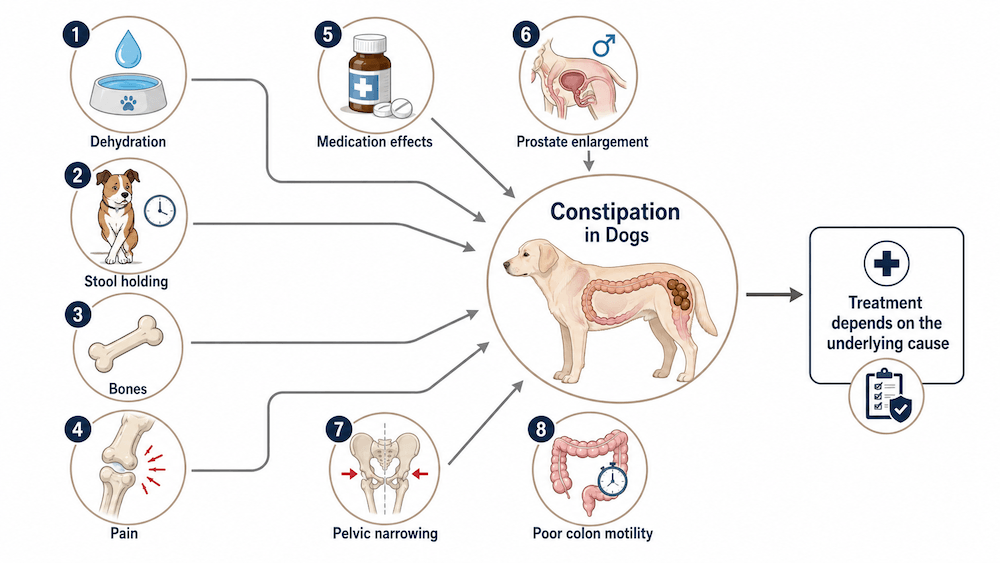
Constipation may begin with a simple disruption such as inadequate moisture, reduced activity, or a missed opportunity to defecate. It may also be caused by material inside the bowel, external compression of the colon, pain, medication effects, metabolic disease, or impaired nerve and muscle function.
Recurring constipation deserves more investigation than a single mild episode. Long-term treatment will fail when the real problem is a painful hip, an enlarged prostate, pelvic narrowing, a foreign object, or a medication that continues to slow intestinal movement.
What Helps Mild Dog Constipation at Home?
Home support is most appropriate when the change is recent and mild, the dog remains bright and comfortable, and there is no vomiting, appetite loss, abdominal swelling, severe pain, blood, suspected foreign-body ingestion, or difficulty urinating.
Do not combine several remedies at once. A sudden mixture of pumpkin, oils, supplements, new food, and extra treats may create diarrhea without addressing the actual reason the dog was unable to pass stool.
Hydration must come before or alongside additional fiber because bulk-forming fibers absorb water. Adding substantial fiber to a dehydrated dog or a colon already packed with stool can make passage more difficult.
Remember to ALWAYS consult your veterinarian before treating your dog’s constipation or changing its diet. If you can’t reach your vet, you can chat live with a registered online veterinary professional via our online vet chat or video chat support (24 hours a day, 7 days a week). Or use Chewy’s online vet services (6 a.m. – midnight ET).
Foods & Other Options That May Help Dogs With Constipation
Different strategies help different dogs. A mildly constipated dog with dry stool may benefit from more moisture and a modest increase in fiber, while a dog with an obstruction, painful defecation, poor colon movement, or severe impaction needs treatment directed at the cause.
| Food or Option | How It May Help | When It May Be Appropriate | Important Caution |
|---|---|---|---|
| Fresh Water | Supports stool moisture and normal colon function. | Helpful for nearly every uncomplicated mild case. | Vomiting water requires veterinary attention. |
| Water Added to Food | Increases moisture without introducing a new ingredient. | Useful for dogs eating mostly dry food. | Discard moistened leftovers promptly. |
| Complete Wet Dog Food | Provides substantially more dietary moisture than kibble. | May support dogs prone to dry stool. | Transition gradually unless a veterinarian advises otherwise. |
| Plain Canned Pumpkin | Adds moisture and soluble and insoluble fiber. | May help mild constipation in a hydrated dog. | Use pumpkin only, not pumpkin pie filling. |
| Cooked Pumpkin or Squash | Provides soft texture, moisture, and modest fiber. | Useful when plain canned pumpkin is unavailable. | Serve plain without butter, salt, or seasoning. |
| Cooked Sweet Potato | Adds moisture and dietary fiber to the meal. | May support mild cases in small portions. | Too much may cause gas or diarrhea. |
| Plain Green Beans | Adds low-fat plant fiber and meal bulk. | May support long-term stool regularity. | Avoid salty, seasoned, or onion-containing products. |
| Veterinary High-Fiber Diet | Provides a controlled blend of functional fibers. | Useful for recurring fiber-responsive constipation. | Not ideal for every motility or obstruction problem. |
| Highly Digestible Veterinary Diet | May reduce the volume of residue entering the colon. | Sometimes selected for poor motility or sensitive digestion. | Use only when recommended for the underlying problem. |
| Plain Psyllium Husk | Absorbs water and modifies stool consistency and bulk. | May help selected dogs under veterinary guidance. | Must be unflavored, xylitol-free, and given with water. |
| Wheat Bran | Adds mostly insoluble fiber and increases stool bulk. | May help some hydrated dogs with mild constipation. | Can worsen gas or produce excessively bulky stool. |
| Dog-Safe Broth | May encourage fluid intake or moisten meals. | Useful for dogs reluctant to drink plain water. | Choose low-sodium broth without onion or garlic. |
| Gentle Walking | Movement may encourage normal intestinal contractions. | Suitable when the dog is comfortable and mobile. | Do not exercise a painful or vomiting dog. |
| Frequent Toilet Breaks | Reduces stool holding and missed opportunities to defecate. | Helpful after meals and for reluctant dogs. | Address fear, weather, pain, or surface preferences. |
| Veterinary Laxative | Softens stool or changes intestinal water movement. | Used when diet and hydration are insufficient. | The product and dose must be veterinarian-approved. |
| Veterinary Enema | Softens and removes retained stool from the colon. | May be needed for moderate or severe retention. | Do not attempt with household enema products. |
| Manual Stool Removal | Relieves severe impaction that cannot pass naturally. | Used for obstipation or unsuccessful enemas. | Requires veterinary sedation or anesthesia. |
Pumpkin is often the first food owners consider, but it should not become a substitute for diagnosis. It may help a hydrated dog with mild, uncomplicated stool dryness, yet it cannot remove a bone fragment, shrink an enlarged prostate, correct pelvic narrowing, relieve severe pain, or restore a poorly functioning colon.
There is also no single pumpkin or psyllium amount that suits every dog. Appropriate quantities depend on body size, the existing diet, hydration, stool burden, medications, health conditions, and the type of fiber being used. Start only with a small, veterinarian-approved amount rather than repeatedly adding more when no stool appears.
Top Homemade Remedies for Dog Constipation
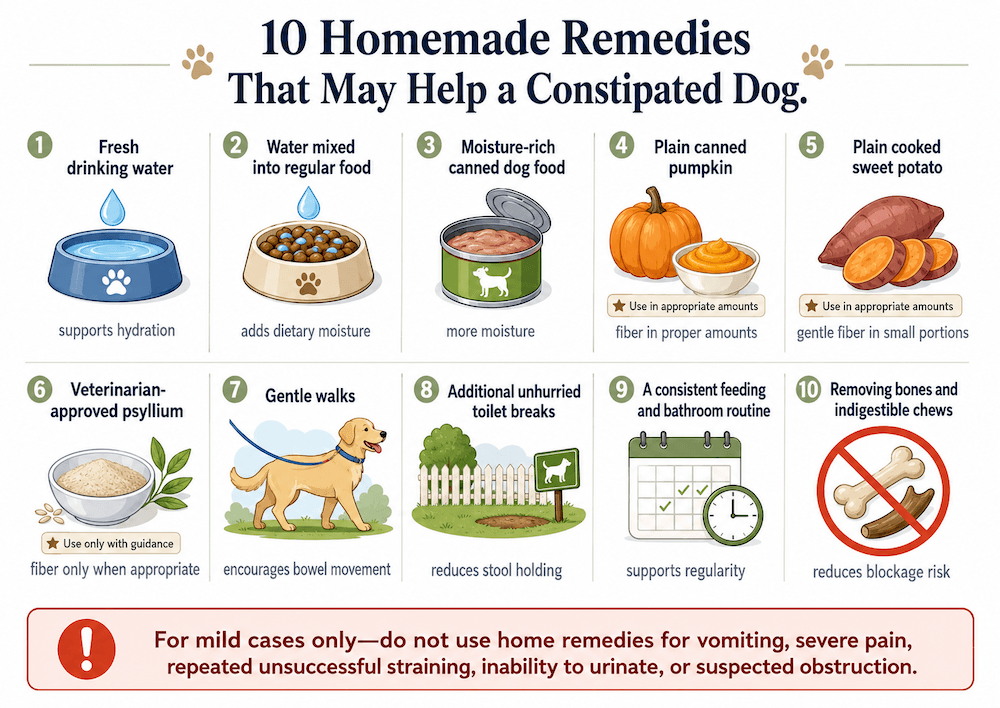
For mild, recent constipation in a dog that remains comfortable and otherwise well, supportive home measures may include fresh water, water added to regular meals, moisture-rich canned dog food, plain pumpkin, plain cooked sweet potato, veterinarian-approved psyllium, gentle walks, additional toilet breaks, a consistent feeding and bathroom routine, and removing bones or indigestible chews. These measures may improve hydration, stool consistency, movement, or toileting opportunities, but fiber is not appropriate for every dog. Do not attempt home treatment if your dog is vomiting, painful, weak, unable to urinate, repeatedly straining without producing stool, or may have swallowed an object.
How Fiber Helps—and When It Can Make Constipation Worse
Dietary fiber changes the amount of water held in stool, the volume of material in the colon, bacterial fermentation, and intestinal movement. Soluble fibers tend to absorb water and form a gel, while less soluble fibers add bulk and may stimulate movement through physical distention.
That sounds universally helpful, but constipation has several possible mechanisms. More bulk may be useful when stool is dry, and the colon still moves normally. It can be counterproductive when the dog is dehydrated, has a large impaction, has narrowed outflow, or cannot move the increased stool volume effectively.
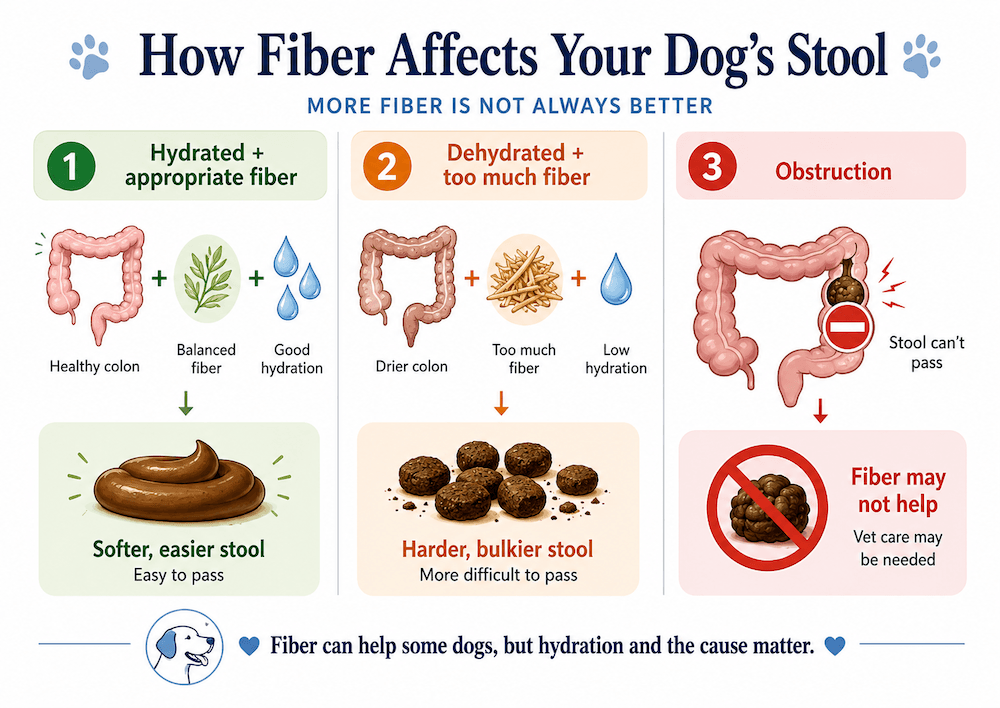
Too much fiber can also cause gas, abdominal discomfort, loose stool, frequent defecation, reduced diet digestibility, or poor acceptance of the meal. The best fiber type and amount therefore depend on the dog rather than on the popularity of a particular home remedy.
What Does Not Help and What Not to Give a Constipated Dog
The most dangerous constipation remedies are often products that appear ordinary because people use them at home. Human laxatives, enemas, mineral oil, stimulant products, and magnesium-containing remedies can cause aspiration, dehydration, electrolyte disturbances, severe diarrhea, or injury when the product or dose is inappropriate.
Food-based remedies can also cause problems. Oils and fatty foods may trigger digestive upset, while bones and indigestible chews can directly create or worsen fecal impaction.
| Do Not Give or Do | Why It May Be Unhelpful or Risky | Safer Approach |
|---|---|---|
| Human Laxatives | Ingredients and doses may be unsafe for dogs. | Use only a veterinarian-selected product. |
| Human Enemas | They may cause toxicity, injury, or electrolyte problems. | Have enemas administered by a veterinary team. |
| Oral Mineral Oil | Accidental inhalation may cause aspiration pneumonia. | Ask about safer veterinary stool softeners. |
| Castor Oil | It is a potent irritant cathartic. | Use gentle, diagnosis-based treatment instead. |
| Milk of Magnesia | Incorrect use may disrupt fluids and electrolytes. | Do not give without veterinary direction. |
| Stimulant Laxatives | They may be dangerous when obstruction is present. | Rule out blockage before medication. |
| Suppositories | Incorrect insertion may injure the rectum. | Use only when specifically prescribed. |
| Olive or Coconut Oil | Results are unreliable and excess fat causes upset. | Prioritize water and appropriate dietary moisture. |
| Butter or Grease | High fat may trigger vomiting or pancreatitis. | Avoid fatty food-based remedies. |
| Milk or Dairy | Diarrhea is an adverse effect, not safe treatment. | Use dog-appropriate hydration and diet changes. |
| Prunes or Prune Juice | They are sugary and not a standard dog remedy. | Choose a veterinarian-approved fiber source. |
| Pumpkin Pie Filling | It may contain sugar, spices, or unsuitable additives. | Use plain pumpkin without added ingredients. |
| Flavored Fiber Powder | Sweeteners or flavorings may be unsafe. | Choose plain, xylitol-free products with approval. |
| Large Fiber Amounts | Excess bulk may worsen dehydration or impaction. | Increase fiber gradually and with moisture. |
| Bones | Fragments can form hard stool or cause obstruction. | Prevent access to cooked and raw bones. |
| Rawhide or Indigestible Chews | Large pieces may contribute to gastrointestinal blockage. | Choose digestible, supervised alternatives. |
| Abrupt Food Changes | They may add diarrhea or vomiting to the problem. | Transition diets gradually when possible. |
| Manual Rectal Removal | It can cause pain, tearing, or a bite injury. | Leave impacted-stool removal to a veterinarian. |
| Withholding Water | Dehydration makes retained stool harder and drier. | Maintain access unless a veterinarian directs otherwise. |
| Repeated Home Remedies | They delay diagnosis of obstruction or underlying disease. | Seek care when the first mild approach fails. |
When Pumpkin and Other Foods Are Not Enough
Pumpkin and other foods may support normal stool formation, but they cannot remove a severe impaction, clear an obstruction, or correct an underlying medical problem. Veterinary treatment is necessary when stool remains trapped, symptoms worsen, or constipation is caused by disease or physical blockage.
When to Call a Veterinarian About Dog Constipation
A single delayed bowel movement may be monitored when the dog remains comfortable, eats and drinks normally, urinates normally, and later passes normal stool. Contact your veterinarian if no normal bowel movement occurs within about 24–48 hours or if hard stool and straining continue despite one cautious home adjustment.
Arrange a veterinary examination when constipation keeps returning, stools become consistently thin, defecation appears painful, or the dog needs pumpkin or supplements to remain regular. Seek prompt care if the dog repeatedly strains without producing stool, stops eating, becomes lethargic, develops abdominal discomfort, or passes a notable amount of blood.
Seek urgent veterinary care if the dog vomits repeatedly, develops a swollen or severely painful abdomen, collapses, may have swallowed a bone or foreign object, cannot keep water down, or repeatedly squats without producing urine. Retained stool becomes drier and harder to pass over time, so delaying treatment may allow constipation to progress to obstipation requiring enemas, sedation, or manual removal.
How to Help Prevent Dog Constipation From Returning
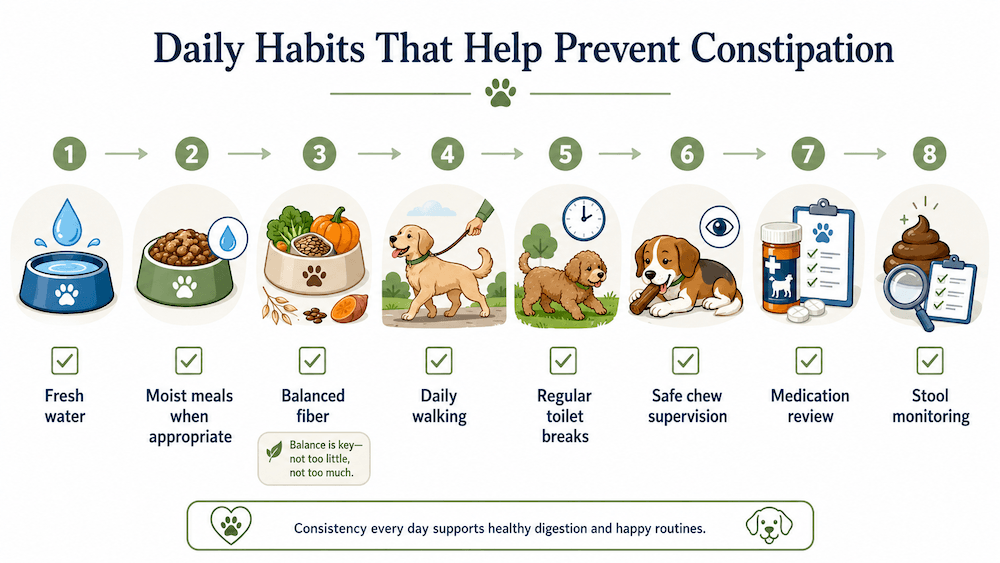
Help prevent recurring constipation by providing adequate water, a complete and appropriate diet, regular comfortable exercise, and frequent opportunities to defecate. Keep bones, corn cobs, fabric, hair, toys, garbage, and other indigestible materials out of reach, and supervise chews to reduce the risk of swallowed pieces.
Recurring constipation should be reviewed by a veterinarian rather than managed indefinitely with pumpkin, bran, or laxatives. Track stool frequency and consistency when changing food or adding fiber, make only one adjustment at a time, and address contributing problems such as dehydration, medication effects, arthritis, spinal pain, prostate enlargement, perineal hernia, or metabolic disease.
What Research Says About Constipation in Dogs
The Merck Veterinary Manual defines constipation as the infrequent or difficult passage of stool that is typically dry and hard. It distinguishes constipation from obstipation, in which the dog cannot evacuate the retained mass, and megacolon, in which the colon becomes enlarged and poorly able to move stool.
The manual identifies several possible causes, including inadequate water intake, bones or other poorly digested material, reluctance or pain when defecating, prostate enlargement, pelvic narrowing, neurological disease, metabolic abnormalities, and medication effects. This supports investigating recurring constipation rather than assuming every case is caused by insufficient dietary fiber.
For mild constipation, the manual discusses adequate hydration, access to water, avoidance of indigestible material, and appropriately selected high-fiber diets. More severe or recurring cases may require veterinary laxatives, enemas, fluid correction, or mechanical removal of impacted stool under anesthesia. It also warns that laxatives can worsen dehydration and that oral mineral oil may enter the lungs and cause aspiration pneumonia.
A 2022 review published in the Journal of the American Veterinary Medical Association explains that dietary fibers vary considerably in their physical and functional properties. Solubility, fermentability, water-holding capacity, and effects on the intestinal microbiome can influence how a particular fiber affects stool and digestive health, supporting an individualized approach rather than treating pumpkin, psyllium, bran, and other fibers as interchangeable remedies.[1]
Frequently Asked Questions
The Bottom Line
Mild dog constipation may improve with fresh water, added meal moisture, gentle exercise, regular bathroom breaks, and an appropriate amount of fiber. Plain pumpkin, cooked squash, sweet potato, or a veterinary high-fiber diet may help some dogs, but no single food works for every cause. Introduce only one change at a time and monitor your dog’s stool, appetite, comfort, and urination. Avoid human laxatives, household enemas, mineral oil, fatty foods, bones, and large amounts of fiber unless directed by a veterinarian. Home remedies cannot correct an obstruction, severe impaction, painful condition, or structural problem. Contact a veterinarian when constipation persists, repeatedly returns, or occurs with pain, vomiting, appetite loss, blood, or unusually thin stool. Seek urgent care when your dog cannot pass urine, may have swallowed an object, or repeatedly strains without producing stool.