15 Smells That Dogs Hate: Scents & Odors That Dogs Dislike


Canine Bible is reader-supported. We receive affiliate commissions via some of our links. Learn more.
Dogs tend to hate strong, sharp smells such as citrus, vinegar, alcohol, and certain intensely scented household products. Their powerful sense of smell makes odors that seem mild to us feel overwhelming or unpleasant to them. However, not every dog reacts the same way, and some commonly suggested scent deterrents may irritate dogs or even be unsafe when used incorrectly. Certain essential oils, cleaning chemicals, and concentrated fragrances deserve particular caution around pets. Understanding which smells dogs naturally avoid can help with training, household management, and keeping them away from specific areas. But knowing the difference between an unpleasant odor and a potentially harmful one is just as important. In this guide, we explain the smells dogs dislike most, why they react to them, and which scents you should avoid using around your dog.
Understanding Dogs’ Sense of Smell
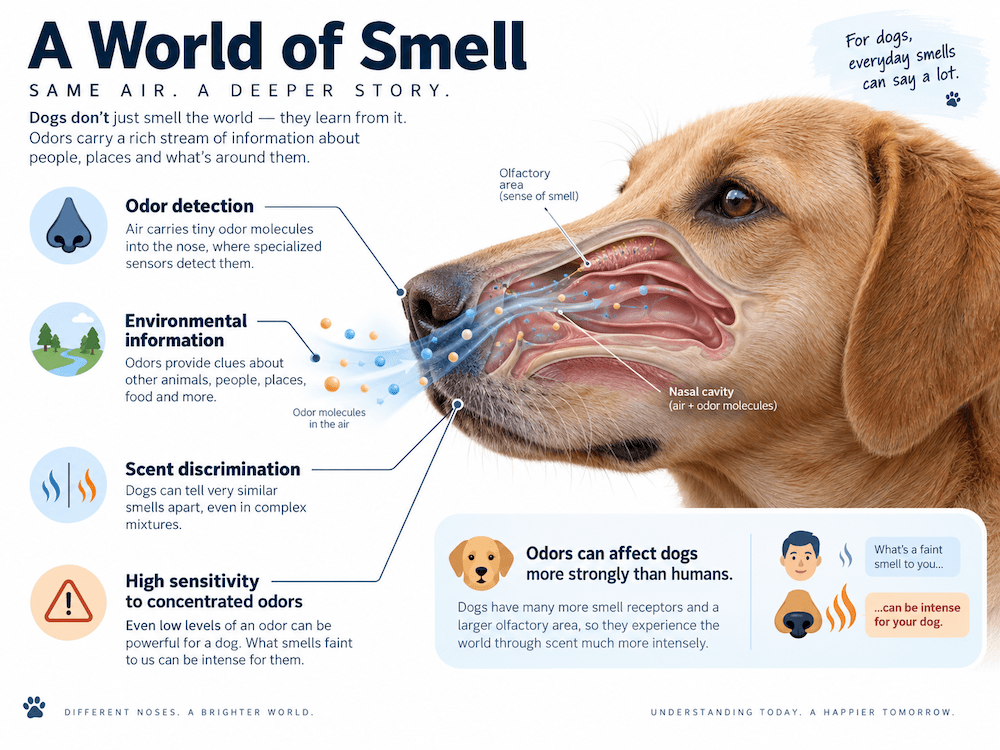
A dog’s olfactory system is built to collect, detect, separate, and interpret odor information. Sniffing allows dogs to repeatedly sample their environment, while the brain combines those scent signals with memory and experience to help identify people, animals, food, locations, and other environmental clues.
| Part or Process | What It Does |
|---|---|
| Nose & airflow | Pulls odor molecules into the nasal passages, where scent detection begins. |
| Olfactory receptors | Detect different scent molecules and send signals to the brain. |
| Sniffing | Repeatedly samples fresh air, helping dogs compare and track odors. |
| Scent discrimination | Separates individual smells within complex mixtures and busy environments. |
| Brain processing | Interprets scent signals and connects them with memory, meaning, and behavior. |
| Learning & experience | Builds recognition of familiar scents through repeated exposure and association. |
| Everyday use | Helps dogs identify food, animals, people, places, trails, and surroundings. |
What Smells Do Dogs Hate?
Dogs commonly dislike strong, sharp, pungent, or chemically intense odors, including citrus, vinegar, rubbing alcohol, hot peppers, citronella, and harsh cleaning fumes. Because dogs rely heavily on scent to explore their environment, an odor that seems merely noticeable to us can be much more intense for them.
However, there is no universal smell that every dog hates. Individual reactions vary, and several odors commonly promoted as “dog repellents” can irritate the nose, eyes, lungs, or skin—or become toxic if swallowed. The goal should be understanding your dog’s reaction, not deliberately overwhelming their sense of smell.
Why Are Dogs So Sensitive to Strong Smells?
A dog’s nose is designed to collect and analyze odor molecules with remarkable efficiency. Smell helps dogs investigate food, recognize other animals, navigate their surroundings, communicate, and make behavioral decisions.
That sensitivity does not mean every strong smell is unpleasant. Dogs develop individual preferences, and concentration matters: an odor a dog tolerates at a low level may become overwhelming when concentrated or sprayed directly nearby.
How Can You Tell If Your Dog Dislikes a Smell?
Dogs usually communicate odor aversion through avoidance rather than a single unmistakable behavior. Watch what happens immediately after your dog notices the scent.
15 Smells Dogs Commonly Dislike
No odor is universally disliked by every dog. The following smells are commonly intense, aversive, irritating, or avoided by dogs; several should never be deliberately used as repellents because their safety risks matter more than whether dogs dislike the smell.


1. Citrus

Why it may bother dogs
Lemons, limes, grapefruits, and oranges release sharp aromatic compounds, especially from their peels, that some dogs find overpowering. Concentrated citrus essential oils are much stronger than the smell of fresh fruit and can create additional safety concerns.
Safety advice
- Do not apply citrus essential oil to your dog.
- Prevent chewing on citrus peels or concentrated products.
- Never spray citrus mixtures near your dog’s nose or eyes.
2. Vinegar

Why it may bother dogs
Vinegar has a sharp acidic odor that many dogs appear reluctant to investigate closely. Diluted vinegar is commonly used for household cleaning, but intentionally spraying it around a dog can irritate sensitive tissues.
Safety advice
- Keep vinegar away from the eyes, nose, and mouth.
- Allow cleaned surfaces to dry before normal access.
- Do not spray vinegar directly onto your dog as a deterrent.
3. Rubbing Alcohol

Why it may bother dogs
Rubbing alcohol has an intensely sharp, volatile smell that dogs may avoid. More importantly, isopropyl alcohol can be dangerous if swallowed and should not be treated as a convenient homemade repellent.
Safety advice


- Store rubbing alcohol securely away from pets.
- Never apply it to your dog’s coat unless specifically directed by a veterinarian.
- Clean spills before allowing your dog into the area.
4. Chili Peppers and Capsaicin

Why it may bother dogs
Hot peppers contain capsaicin, which produces burning and irritation rather than merely an unpleasant aroma. Pepper flakes, chili powder, cayenne, or pepper sprays should never be scattered or sprayed to discourage a dog, because airborne particles can reach the nose, eyes, and respiratory tract.
Safety advice
- Never blow or spray pepper products toward a dog.
- Do not sprinkle chili powder where a dog may sniff or lick it.
- Flush accidental eye or skin exposure with plenty of water and seek veterinary advice if irritation persists.
5. Citronella

Why it may bother dogs
Citronella has a strong lemon-like aroma and has historically been used in scent-based dog deterrents and anti-bark devices. Dogs vary considerably in their reactions, however, and repeated scent-based punishment can cause distress or simply lose effectiveness as the dog becomes accustomed to it.
Safety advice
- Do not spray citronella directly into a dog’s face.
- Avoid relying on citronella to treat barking or anxiety.
- Address the underlying behavior with management and reward-based training.
6. Bleach and Chlorine Fumes

Why it may bother dogs
The strong chlorine odor from bleach may cause dogs to retreat, but bleach is a cleaning chemical—not a dog deterrent. Concentrated products can irritate or damage the mouth, eyes, skin, and respiratory tract if exposure occurs.
Safety advice
- Keep dogs out of the room while concentrated bleach is being used.
- Follow label dilution and rinsing directions carefully.
- Never mix bleach with ammonia or other household chemicals.
7. Ammonia

Why it may bother dogs
Ammonia produces an extremely sharp odor that can irritate the respiratory system and eyes. Although dogs may naturally back away from it, ammonia-based cleaners should never be deliberately placed around the home or yard to repel them.
Safety advice
- Ventilate areas where ammonia cleaners are used.
- Prevent access until cleaned surfaces are ready for normal use.
- Never combine ammonia with chlorine bleach.
8. Strong Perfumes and Colognes

Why it may bother dogs
Perfumes and colognes combine multiple volatile fragrance compounds, and heavily scented products may be overwhelming to some dogs. A dog that moves away when perfume is sprayed may simply be seeking cleaner air rather than displaying fear of that particular fragrance.
Safety advice
- Apply sprays away from your dog.
- Avoid spraying fragrance onto pet bedding or clothing.
- Give your dog access to an unscented, well-ventilated space.
9. Smoke

Why it may bother dogs
Cigarette smoke, wildfire smoke, burning materials, and heavy fireplace smoke contain airborne irritants in addition to producing powerful odors. A dog leaving a smoky environment should not be viewed simply as disliking the smell—reducing smoke exposure protects the respiratory system.
Safety advice
- Keep dogs away from cigarette and vaping smoke.
- Move your dog to clean air if smoke accumulates indoors.
- Seek veterinary care for persistent coughing or breathing difficulty.
10. Acetone and Nail Polish Remover

Why it may bother dogs
Acetone and similar solvents evaporate quickly and produce a strong chemical smell that many dogs may avoid. These products can also irritate tissues and should be kept securely stored rather than used to create scent barriers.
Safety advice
- Use nail products in a ventilated area away from your dog.
- Clean spills immediately.
- Keep bottles and used cotton pads out of reach.
11. Concentrated Essential Oils

Why it may bother dogs
Essential oils such as tea tree, eucalyptus, wintergreen, cinnamon, and pine release highly concentrated aromatic compounds. A dog’s response may range from avoidance to respiratory irritation, and certain oils can cause poisoning after ingestion or skin exposure.
Safety advice
- Never assume an essential oil is safe because it is “natural.”
- Prevent licking, spills, and direct skin application.
- Get veterinary guidance before using concentrated aromatic products around pets.
12. Onions and Garlic

Why it may bother dogs
Onions and garlic have pungent sulfur-containing aromas that some dogs may avoid, although the smell itself is not a reliable dog repellent. The more important issue is that eating members of the Allium family can damage canine red blood cells and cause illness.
Safety advice
- Keep onions, garlic, powders, and seasoning mixes inaccessible.
- Do not scatter them around gardens or furniture as repellents.
- Contact a veterinarian if your dog consumes a potentially significant amount.
13. Mothballs

Why it may bother dogs
Mothballs release strong pesticide vapors that can irritate a dog’s nose, eyes, and airways. Their odor does not reliably keep dogs away, and swallowing them or prolonged exposure to their fumes can cause poisoning. Never use mothballs as a dog repellent.
Safety advice
- Keep mothballs inaccessible and use only as directed on the label.
- Never scatter them in gardens, yards, or areas your dog can access.
- If your dog may have swallowed a mothball, contact a veterinarian immediately. Do not induce vomiting unless instructed.
14. Paint & Varnish Fumes

Why it may bother dogs
Paints and varnishes, especially solvent-based products, can release strong fumes that irritate a dog’s eyes and airways. Risk depends on the product and exposure; a mild smell does not guarantee safety. Keep dogs away during painting and refinishing.
Safety advice
- Keep your dog outside the work area and ventilate as directed on the product label.
- Prevent access to wet coatings, open cans, brushes, and paint thinners.
- Contact a veterinarian after ingestion or if coughing, weakness, or breathing difficulty develops.
15. Gasoline and Fuel Odors

Why it may bother dogs
Gasoline and other fuels release strong hydrocarbon vapors that can irritate the airways and cause illness with sufficient exposure. Swallowed fuel is especially dangerous if it enters the lungs. Never use fuel to create a scent barrier.
Safety advice
- Store fuel in sealed, approved containers away from pets and ignition sources.
- Keep dogs away from spills, refueling areas, and fuel-soaked materials.
- If your dog swallows fuel or develops symptoms after exposure, contact a veterinarian immediately. Do not induce vomiting.
Smells Dogs Dislike vs. Smells That Can Be Harmful
The key difference is whether a scent is simply unpleasant or whether exposure can cause irritation, toxicity, or other physical effects. This comparison keeps the focus on risk rather than repeating the individual smells already covered.
| Difference | Disliked Smell | Potentially Harmful Smell |
|---|---|---|
| Main issue | The dog finds the odor unpleasant or overwhelming. | Exposure may irritate tissues or cause toxic effects. |
| Typical response | Turns away, backs up, or leaves the area. | May develop coughing, drooling, vomiting, or weakness. |
| Risk level | Usually low if the dog can move away freely. | Depends on concentration, amount, and route of exposure. |
| Exposure route | Usually noticed through normal sniffing. | Inhalation, ingestion, skin contact, or eye exposure may matter. |
| Owner action | Remove the odor source if your dog seems uncomfortable. | Stop exposure and assess for physical symptoms. |
| Use as a deterrent | Still not reliable because dogs respond differently. | Should never be deliberately used to repel a dog. |
| Vet concern | Usually unnecessary if the dog quickly returns to normal. | Veterinary guidance may be needed if symptoms develop. |
Should You Use Smells to Keep Dogs Away?
Using an unpleasant odor may seem like an easy way to protect furniture, gardens, trash, or other areas, but harsh scent deterrents can create irritation without teaching the dog what to do instead. Physical management and positive reinforcement are usually more predictable approaches.
| Problem | Safer Approach | Avoid |
|---|---|---|
| Chewing furniture | Block access and redirect to appropriate chew items. | Homemade chemical or essential-oil sprays. |
| Entering a room | Use a gate, closed door, or trained boundary. | Strong fumes placed around entrances. |
| Garden digging | Fence vulnerable areas or provide a digging zone. | Chili powder, ammonia, or toxic plant material. |
| Getting into trash | Use a secure locking bin or inaccessible cabinet. | Odor deterrents placed inside or around trash. |
| Indoor marking | Clean enzymatically and address the behavior’s cause. | Ammonia-based scent deterrents or punishment. |
How to Keep Your Home Comfortable for a Dog’s Sensitive Nose
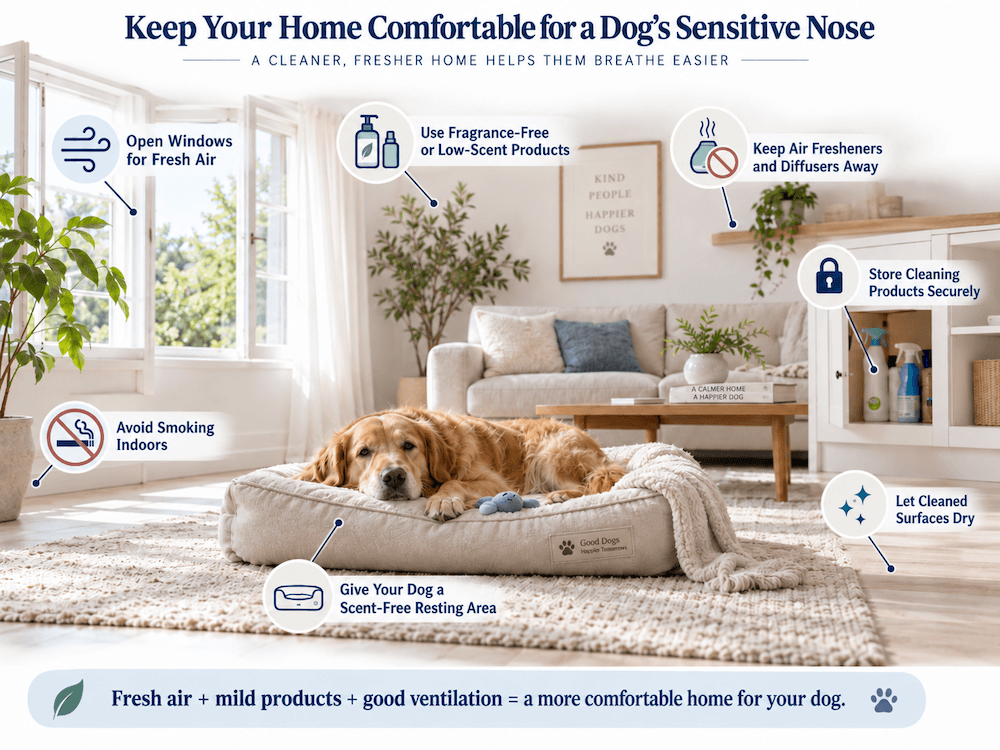
Dogs experience household odors more intensely than people, so everyday products and fragrances can sometimes make an otherwise comfortable space feel overwhelming. Creating a dog-friendly home does not require eliminating every scent, but reducing unnecessary strong odors can make the environment easier for your dog to tolerate. Small adjustments to how the home is cleaned and scented can help support a calmer, more comfortable living space.
What Should You Do if a Smell Is Overwhelming Your Dog?
For ordinary household odors, the simplest response is usually to remove the dog from the area and improve ventilation. Do not repeatedly bring your dog back toward a scent to test whether they dislike it.
When to Call a Veterinarian About Strong Odor Exposure in Dogs
If your dog simply moves away from a strong smell, sneezes once or twice, and otherwise acts normally, brief monitoring is usually reasonable. Move them to fresh air and make sure the odor source is no longer accessible.
Call your veterinarian if exposure is followed by persistent coughing, eye or nose irritation, drooling, vomiting, skin irritation, weakness, or unusual behavior. These signs may indicate more than simple odor aversion.
Seek urgent veterinary help for difficulty breathing, tremors, loss of coordination, repeated vomiting, collapse, or suspected poisoning. Prompt advice is also important after ingestion of concentrated essential oils, rubbing alcohol, hazardous cleaners, or significant amounts of onion or garlic.
What Veterinary Research Says About Smells Dogs Hate
A 2026 review of canine olfaction describes the dog nose as a highly specialized sensory system in which nasal anatomy, airflow, odor receptors, learning, and emotional processing all influence how dogs detect and respond to scents. This helps explain why dogs notice odor differences humans may barely perceive, but it does not establish that every dog shares the same list of disliked smells.[1]
Evidence about specific canine scent preferences is surprisingly limited. A 2022 study exposing 14 dogs to numerous fragrance samples found greater interaction with several odors—including mint, lavender, rose, blueberry, and blackberry—highlighting why popular online claims such as “all dogs hate mint” should be treated cautiously.[2]
Citronella has somewhat stronger evidence as an aversive stimulus. Controlled studies of citronella spray collars found reduced barking in some dogs, but effectiveness varied, dogs could habituate, and another evaluation documented behaviors such as freezing, sneezing, head shaking, and, in one dog, substantial distress. That makes citronella evidence of a potentially aversive stimulus—not a reason to spray it around dogs casually.[3]
Frequently Asked Questions
The Bottom Line
Dogs often dislike strong, sharp, or concentrated odors, but scent preferences can vary considerably from one dog to another. Citrus, vinegar, heavy fragrances, smoke, and certain chemical odors are common examples that may cause a dog to move away. The important distinction is that an unpleasant smell is not necessarily harmful, while some fumes, concentrated oils, and household substances can cause irritation or poisoning with sufficient exposure. Watching your dog’s body language can help you recognize when a scent is making them uncomfortable. Good ventilation, mild household products, and access to scent-free resting areas can make the home more comfortable for a dog’s highly developed sense of smell. Strong or potentially hazardous substances should never be deliberately used as dog repellents. Understanding what smells dogs hate ultimately helps owners make safer choices about fragrances, cleaning products, and everyday scent exposure.