What to Put on a Dog’s Dry Nose: 10 Home Remedy Options

Canine Bible is reader-supported. We receive affiliate commissions via some of our links. Learn more.
If your dog’s nose feels dry, rough, or cracked, you may wonder what you can safely put on it to restore moisture and comfort. The right choice depends on how dry the nose is, what caused it, and whether other symptoms are present. In many mild cases, a dog-safe nose balm or simple veterinarian-approved moisturizer can help protect and soften the skin. However, not every human lotion, oil, or ointment is safe for dogs, especially because they may lick products from their nose. Persistent cracking, bleeding, crusting, discoloration, or sores can also point to an underlying problem that moisturizer alone will not fix. In this guide, we’ll explain the safest options for a dog’s dry nose, what ingredients to avoid, when home care is reasonable, and when it is time to contact your veterinarian.
What to Know About Treatment for a Dog’s Dry Nose
| Consideration | What Dog Owners Should Know |
|---|---|
| Mild dryness | A dog-safe nose balm may help restore moisture. |
| Temporary dryness | Dryness after sleep, exercise, or dry weather may resolve naturally. |
| Product safety | Use products appropriate for dogs and likely licking. |
| Application | Apply only a thin layer and follow product directions. |
| Persistent changes | Ongoing crusting or thickening may need veterinary evaluation. |
| Underlying conditions | Moisturizers will not treat infection or other medical causes. |
| Warning signs | Bleeding, sores, pain, discharge, or pigment changes need attention. |
Remember to ALWAYS consult with your vet before applying any product, home remedy, or treatment to your dog’s nose for dryness, cracking, irritation, or other changes. If you can’t reach your vet, you can chat live with a registered online veterinary professional via our online vet chat or video chat support (24 hours a day, 7 days a week). Or use Chewy’s online vet services (6 a.m. – midnight ET).
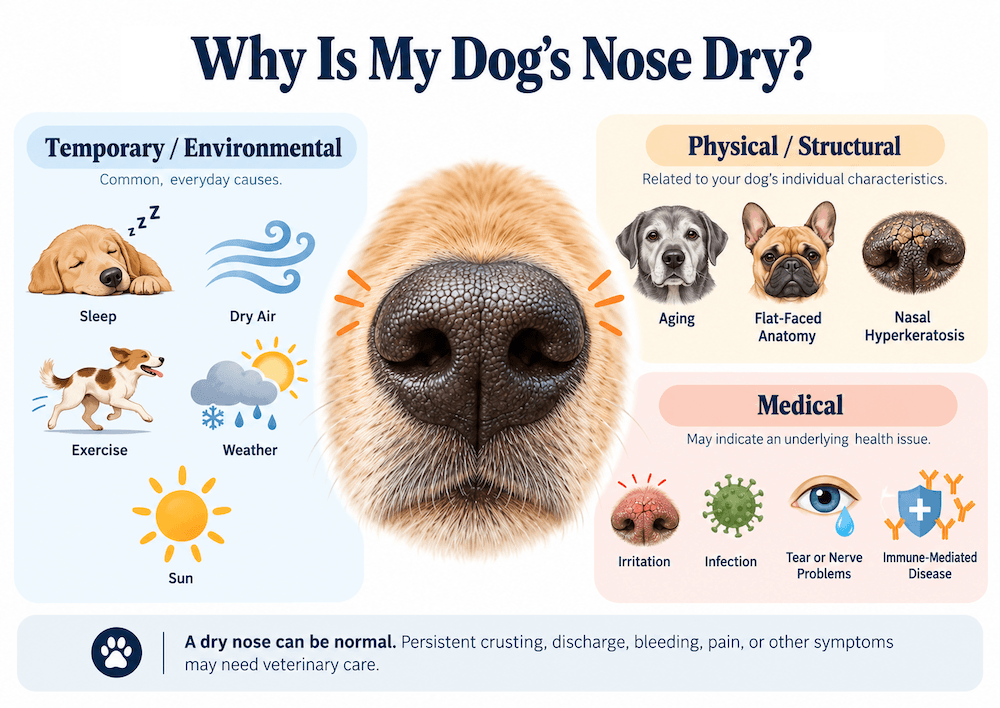
What Causes a Dry Nose in Dogs?
A dry nose has many possible explanations, ranging from temporary changes in moisture to skin, eye, neurologic, or immune-mediated conditions. The pattern and accompanying changes are often more informative than dryness alone.
The Best Things to Put on a Dog’s Dry Nose
The safest choice depends on whether the nose is simply dry or has a diagnosed condition. For routine home care, prioritize pet-formulated, lick-conscious products and apply only a thin layer.

Natural Dog Company
Best For: Mild dryness, roughness, or recurring chapping.
What to know: A purpose-made dog nose balm is generally the simplest first choice. These products typically combine moisturizing and protective ingredients to soften the nasal surface while creating a light barrier against further moisture loss. Choose a product specifically labeled for dogs and nose use. More product is not necessarily better—a thin coating is usually sufficient.


Raw Paws
Best For: Occasional, uncomplicated surface dryness.
What to know: A very small amount of plain coconut oil can act as an emollient and reduce surface dryness. Because dogs may immediately lick it away, apply sparingly and avoid treating it as a solution for persistent crusting or disease. Coconut oil does not treat infection, autoimmune disease, or nasal hyperkeratosis itself. Stop using it if it causes irritation or digestive upset from licking.

Nina Woof
Best For: Rough or chapped noses needing a richer barrier.
What to know: Shea butter is included in some pet-formulated balms because of its emollient properties. It can help soften rough nasal skin and reduce moisture loss. Choose a finished product formulated specifically for dogs. Avoid human cosmetic shea products that may contain fragrances, preservatives, essential oils, or other unsuitable ingredients.



Pet MD
Best For: Protecting mildly dry noses from continued moisture loss.
What to know: Beeswax is commonly combined with oils and butters in dog nose balms. It helps create a protective surface layer that can reduce moisture loss. It is most useful as part of a dog-formulated balm rather than as a stand-alone DIY treatment. Apply only a light coating according to the product directions.

Vetericyn
Best For: Mild surface dryness when included in a canine formulation.
What to know: Aloe may be included in canine moisturizing products designed for mild surface dryness. Use only a finished product specifically formulated for dogs. Do not apply raw aloe plant material or an unknown human aloe cosmetic to the nose. Whole aloe plant material contains compounds that can cause problems when ingested.

Dermoscent
Best For: Thick, rough, chronically crusted noses.
What to know: Veterinary-recommended emollients can help soften hardened keratin and improve flexibility of the nasal surface. They may be especially useful for dogs with nasal hyperkeratosis. Consistent application is often needed because these products manage the buildup rather than permanently eliminating every underlying cause. Do not tear, peel, or cut away thick keratin yourself.

PawSono
Best For: Mild dryness, roughness, or chapping that needs additional moisturizing support.
What to know: Some dog nose balms contain vitamin E combined with oils, waxes, or butters to help moisturize and condition dry nasal skin. Choose a finished product specifically formulated for dogs rather than applying human vitamin E creams or supplements directly to the nose. These balms are best suited to uncomplicated surface dryness and should be applied in a thin layer. Persistent crusting, bleeding, sores, or other abnormal changes still warrant veterinary evaluation.

My Dog Nose It
Best For: Dogs with lightly pigmented noses or substantial sun exposure.
What to know: A dog-safe sunscreen can help protect exposed nasal skin from ultraviolet damage. It is primarily protective rather than moisturizing. This may be particularly useful for dogs with pale or lightly pigmented noses. Choose a product designed for dogs rather than human sunscreen because the treated area will likely be licked.

BURT’S BEES
Best For: Mild dryness that needs added surface hydration.
What to know: Some dog-safe nose products contain humectants such as glycerin alongside emollients and protective ingredients. Humectants help attract and retain moisture at the skin surface. They can be useful for noses that feel mildly dry or slightly rough. Choose a product formulated specifically for canine nose use rather than a human moisturizer.
Bag Balm
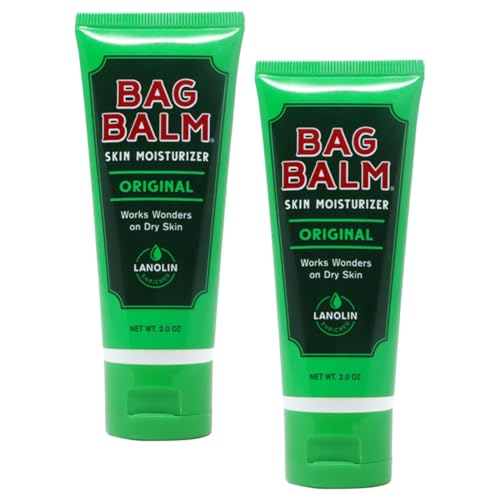
Best For: Very dry or chapped noses needing stronger moisture protection.
What to know: A veterinarian-approved barrier ointment can help reduce moisture loss and protect irritated nasal skin while it recovers. Depending on the formulation, it may contain petrolatum, mineral oil, or other occlusive ingredients in a pet-appropriate product. Barrier ointments protect the surface but do not treat infection, immune-mediated disease, or another underlying medical cause. Use them under veterinary guidance when the nose is severely chapped, recurrently cracked, or already being treated for another condition.
How to Apply Moisturizer to Your Dog’s Dry Nose
Applying a nose balm correctly reduces mess, unnecessary licking, and irritation.
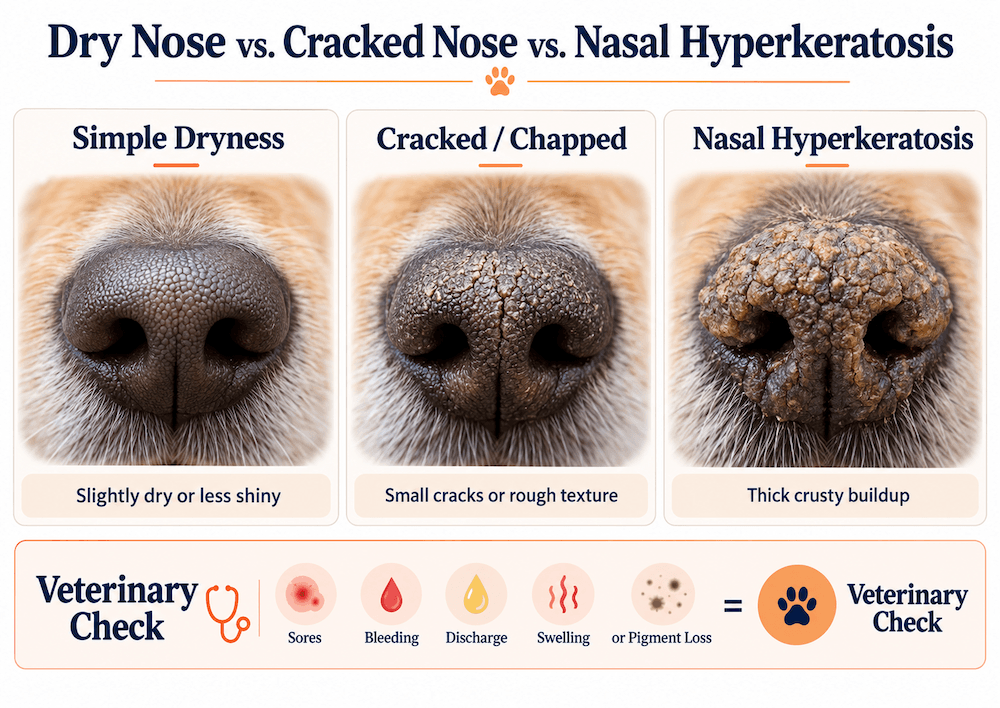
Dry Nose, Cracked Nose, or Nasal Hyperkeratosis: How Can You Tell?
These conditions can look similar at first glance, but the texture, severity, and accompanying changes help separate ordinary dryness from something that deserves veterinary evaluation.
Can Hydration or Diet Help a Dog’s Dry Nose?
Keep fresh water available at all times, particularly after exercise and during hot weather, and pay attention to how much water your dog should drink each day. Mild fluid loss can occur alongside a dry nose, but nose moisture alone is not a dependable hydration test; appetite, energy, gum moisture, fluid intake, urination, and the rest of the dog’s condition provide more useful context.
A complete and balanced diet supports normal skin health, but changing food is unlikely to solve ordinary nasal dryness by itself. Avoid randomly adding zinc, vitamin A, vitamin E, fatty acids, or other supplements because some nasal disorders require a specific diagnosis, and unnecessary supplementation can create new problems.
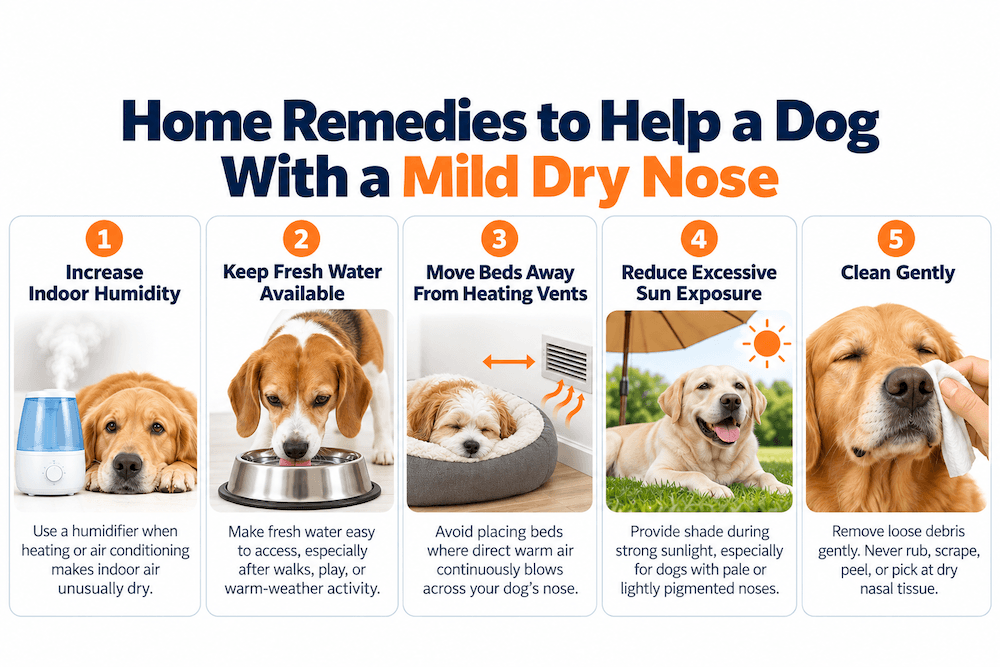
Home Remedies to Help a Dog With a Mild Dry Nose
For simple temporary dryness, supportive environmental changes may be enough without adding another topical product.
How to Prevent a Dog’s Nose From Becoming Dry
Preventing a dog’s nose from becoming dry often comes down to consistent environmental care and regular monitoring. Maintaining comfortable humidity, providing fresh water, limiting harsh weather and sun exposure, and using a dog-safe nose balm when needed can help reduce recurring dryness. Dogs that are older, flat-faced, or have an underlying medical condition may need closer attention and veterinary guidance.
| Prevention Tip | What to Do |
|---|---|
| Maintain humidity | Keep indoor air comfortably humid, especially during heating season. |
| Provide fresh water | Make clean drinking water available at all times. |
| Avoid dry airflow | Keep beds away from heaters, vents, and prolonged hot air. |
| Limit harsh weather | Reduce prolonged exposure to extreme heat, cold, or wind. |
| Protect from sun | Limit strong UV exposure, especially for lightly pigmented noses. |
| Use nose balm | Apply a dog-safe balm when recurrent mild dryness develops. |
| Check regularly | Watch for crusting, cracks, sores, discharge, or pigment changes. |
| Monitor higher-risk dogs | Check older and flat-faced dogs more closely for recurring dryness. |
| Manage medical causes | Follow veterinary treatment plans for diagnosed underlying conditions. |
What You Should Not Put on a Dog’s Dry Nose
Avoid products that are not designed for canine use or may cause irritation or problems if licked.
What about Vaseline? Plain petroleum jelly can act as a moisture barrier, but a purpose-made dog nose balm is generally preferable for routine use because it is formulated for canine skin and predictable licking. Persistent crusting or cracking should be evaluated rather than repeatedly covered with moisturizer.
When to Call a Veterinarian About a Dry Nose
Mild dryness after sleeping, exercise, dry weather, or indoor heating can often be monitored at home if your dog otherwise seems normal. The nose should not have pain, sores, bleeding, discharge, or significant crusting.
Schedule a veterinary visit if the dryness persists, keeps returning, or develops into thick crusting, deep cracks, bleeding, tenderness, swelling, sores, pigment changes, unusual discharge, eye problems, one-sided changes, or similar thickening of the paw pads. These signs can point to more than simple surface dryness.
Seek urgent veterinary care if nasal changes occur with significant facial swelling, severe dehydration or illness, profound weakness or collapse, or difficulty breathing. These symptoms may indicate a more serious problem that needs prompt treatment.
How Veterinarians Diagnose Persistent Dry or Crusty Noses
Persistent nasal changes can resemble one another even when their causes are very different. Your veterinarian will usually begin with the dog’s age, breed, medical history, medication history, duration of the problem, lesion distribution, and a close examination of the nose, skin, paw pads, eyes, and mouth.
Depending on what the nose looks like, testing may include surface cytology, skin scrapings, bacterial or fungal culture, bloodwork, tear-production testing, or a nasal skin biopsy. One-sided nose dryness accompanied by a dry or abnormal eye is particularly useful information because certain tear or nerve disorders can affect both structures on the same side.
Not every dog needs every test. The goal is to distinguish ordinary hyperkeratosis from inflammatory, infectious, immune-mediated, neurologic, metabolic, or other nasal disease before choosing treatment.
What Veterinary Research Says About Dry Noses in Dogs
A randomized, double-blind, placebo-controlled clinical trial published in Veterinary Dermatology evaluated 48 dogs with uncomplicated idiopathic nasal hyperkeratosis; 39 completed the 60-day study. Dogs treated daily with the tested restorative balm had significantly greater improvement in the overall clinical score than dogs receiving placebo, particularly in nasal suppleness and thickening. This supports topical emollient care for uncomplicated nasal hyperkeratosis, but the findings apply to the specific formulation studied rather than to every dog nose moisturizer.[1]
A 2025 prospective study published in Veterinary Sciences followed 20 dogs with familial or idiopathic nasal hyperkeratosis treated with a topical emollient twice daily for 60 days. Investigators recorded significant improvements in overall lesion scores, including dryness, crusting, affected area, and reported discomfort, with no adverse events reported. However, because the study was small, open-label, uncontrolled, and unblinded, its findings should be considered preliminary rather than definitive evidence that the product will work for every dog.[2]
Breed-related risk has also been studied. A 2021 study in Veterinary Record Open found nasal hyperkeratosis in 31.8% of 107 surveyed Griffon dogs compared with 13.2% of 493 control dogs; brachycephalic dogs within the control population also showed relatively frequent nasal hyperkeratosis. Because much of the prevalence data came from an owner questionnaire, the percentages should not be interpreted as universal rates, but the findings support a breed and facial-conformation component in some dogs.[3]
A 2025 review in Veterinary Clinics of North America: Small Animal Practice emphasizes that crusting, scaling, pigment changes, and other abnormalities of the nasal planum can result from hyperkeratotic, immune-mediated, infectious, allergic, neoplastic, or metabolic disorders. This is important for owners because a persistently dry or crusty nose should not automatically be treated as a simple moisture problem; unusual or progressive changes may require examination and sometimes biopsy or other diagnostic testing.[4]
Frequently Asked Questions
The Bottom Line
A mildly dry dog nose is often temporary and may improve with simple supportive care or a dog-safe nose balm. When moisturizing is needed, choose products formulated for dogs and suitable for an area that will likely be licked. Environmental changes such as improving indoor humidity, providing fresh water, and reducing excessive sun or dry airflow can also help prevent recurring dryness. Avoid human lotions, medicated creams, concentrated essential oils, and other products not intended for canine use. A thick, crusty, deeply cracked, bleeding, painful, or discolored nose may indicate hyperkeratosis or another underlying condition rather than ordinary dryness. Persistent or worsening changes should be evaluated by a veterinarian instead of repeatedly covered with moisturizer. Paying attention to both the nose and your dog’s overall health is the best way to tell when simple home care is enough.
Sources
- Control of canine idiopathic nasal hyperkeratosis with a natural skin restorative balm: a randomized double-blind placebo-controlled study
- Evaluation of the Interest in and Tolerance of a Topical Emollient in the Management of Canine Nasal Hyperkeratosis: An Open-Label, Prospective, Uncontrolled Pilot Study
- Nasal hyperkeratosis in Griffon breeds: Clinical, histopathological features and the prevalence in the Swedish population compared to a control group and other brachycephalic breeds
- Nasal Planum Dermatoses of the Dog: Clinical Presentations and Diagnostic Approach