How Much Water Should a Dog Drink? Daily Chart by Weight, Age & Weather

Canine Bible is reader-supported. We receive affiliate commissions via some of our links. Learn more.
Most dogs should drink about 1 ounce of water per pound of body weight per day, so a 20-pound dog usually needs around 20 ounces of water daily. This is only a general guideline, not a fixed rule for every dog. A dog’s water needs can change with age, diet, activity level, weather, health, and medication. Some dogs drink more because they eat dry food, exercise hard, or live in hot climates. Others may drink too little due to stress, illness, pain, or limited access to fresh water. Knowing what is normal for your dog can help you spot dehydration, overdrinking, and warning signs that deserve a vet call.
Dog Hydration Guide: Key Factors to Know
| Water Factor | What It Means for Your Dog |
|---|---|
| Daily guideline | Most dogs need about 1 ounce of water per pound of body weight each day. |
| Diet matters | Dogs eating dry kibble usually drink more than dogs eating wet or fresh food. |
| Activity level | Exercise, play, training, and long walks can increase your dog’s water needs. |
| Weather impact | Hot, humid, or dry weather can make dogs lose water faster through panting. |
| Dehydration risk | Too little water can lead to dry gums, low energy, thick saliva, and poor recovery. |
| Overdrinking concern | Sudden excessive thirst may point to health problems such as diabetes, kidney disease, or infection. |
| Vet attention | Call your vet if your dog’s drinking habits change suddenly or come with vomiting, lethargy, appetite loss, or accidents. |
Dog Water Intake Chart by Weight
The easiest way to estimate your dog’s daily water needs is to start with body weight. Use this as a baseline, then adjust for weather, activity, food type, and health.
One measuring cup equals 8 fluid ounces. If your dog eats wet food, fresh food, or kibble soaked with water, some of their daily fluid comes from food rather than the bowl.
| Dog Weight | Approximate Daily Water | Approximate Cups Per Day |
|---|---|---|
| 5 lb | About 5 ounces daily. | About ⅔ cup. |
| 10 lb | About 10 ounces daily. | About 1¼ cups. |
| 20 lb | About 20 ounces daily. | About 2½ cups. |
| 40 lb | About 40 ounces daily. | About 5 cups. |
| 60 lb | About 60 ounces daily. | About 7½ cups. |
| 80 lb | About 80 ounces daily. | About 10 cups. |
| 100 lb | About 100 ounces daily. | About 12½ cups. |
What Affects How Much Water a Dog Should Drink?
A dog’s water intake is not based on weight alone. A couch-loving senior eating canned food may drink far less from the bowl than a young athletic dog eating dry kibble after a summer hike.
The key is context. A temporary increase after play or heat is usually different from sudden thirst that lasts for days, causes accidents, or comes with appetite, weight, or energy changes.


| Factor | How It Changes Water Needs | Owner Takeaway |
|---|---|---|
| Dry food | Kibble contains little moisture, so dogs often drink more. | Expect more bowl visits after dry meals. |
| Wet food | Moist food adds fluid through the diet. | Lower bowl drinking may still be normal. |
| Exercise | Activity increases panting and fluid loss. | Offer water before, during, and after outings. |
| Hot weather | Heat increases thirst and dehydration risk. | Provide shade, breaks, and extra fresh water. |
| Age | Puppies and seniors may need closer monitoring. | Watch for changes in energy, appetite, and urination. |
| Medication | Some drugs can increase thirst or urination. | Ask your vet what is expected. |
| Illness | Vomiting, diarrhea, fever, and disease can alter intake. | Do not wait if symptoms appear together. |
Dog Water Intake Chart by Life Stage
A dog’s water needs change with age, body size, food moisture, activity level, weather, pregnancy, nursing, and health status. Puppies and nursing dogs can lose fluid quickly; adult dogs usually follow the 1 ounce per pound guideline, and senior dogs may drink more or less because of pain, mobility changes, medication, kidney disease, diabetes, or other health issues.
Puppy Water Intake Chart
Puppies need steady access to clean water because they are active, growing, and can dehydrate faster than adult dogs. Small puppies are especially vulnerable if they have vomiting, diarrhea, heat exposure, or poor appetite.
| Age | Typical Weight | Daily Water Intake | Notes |
|---|---|---|---|
| 8–12 weeks | 2–10 lb | 2–10 oz, ¼–1¼ cups, 60–300 mL | Watch closely for diarrhea, vomiting, or weak energy. |
| 3–4 months | 5–20 lb | 5–20 oz, ⅔–2½ cups, 150–590 mL | Offer water after play, meals, naps, and potty trips. |
| 5–6 months | 10–40 lb | 10–40 oz, 1¼–5 cups, 300–1,180 mL | Dry food, heat, and training can increase thirst. |
| 7–9 months | 15–60 lb | 15–60 oz, 2–7½ cups, 440–1,770 mL | Large-breed puppies may need more after activity. |
| 10–12 months | 20–80 lb | 20–80 oz, 2½–10 cups, 590–2,365 mL | Call your vet for sudden overdrinking or accidents. |
Adult Dog Water Intake Chart
Most adult dogs need about 1 ounce of water per pound of body weight per day. Intake can rise with dry food, hard exercise, warm weather, salty treats, or illness, and it may be lower when dogs eat wet or fresh food.
| Age | Typical Weight | Daily Water Intake | Notes |
|---|---|---|---|
| Adult toy dog | 5–10 lb | 5–10 oz, ⅔–1¼ cups, 150–300 mL | Small dogs can dehydrate faster during illness. |
| Adult small dog | 11–20 lb | 11–20 oz, 1⅓–2½ cups, 325–590 mL | Wet food may reduce bowl drinking. |
| Adult medium dog | 21–40 lb | 21–40 oz, 2⅔–5 cups, 620–1,180 mL | Offer extra water after walks or play. |
| Adult large dog | 41–70 lb | 41–70 oz, 5–8¾ cups, 1,210–2,070 mL | Heat, dry food, and activity can raise needs. |
| Adult giant dog | 71–100 lb | 71–100 oz, 9–12½ cups, 2,100–2,955 mL | Track intake if bowls empty unusually fast. |
| Very large adult | 100+ lb | 100+ oz, 12½+ cups, 2,955+ mL | Ask your vet for guidance if thirst increases suddenly. |
Senior Dog Water Intake Chart
Senior dogs may drink more or less because of aging, medication, kidney disease, diabetes, pain, dental disease, or difficulty reaching the bowl. A change in drinking habits matters more than one isolated day, especially when it comes with accidents, weight loss, appetite changes, or low energy.
| Age | Typical Weight | Daily Water Intake | Notes |
|---|---|---|---|
| Senior toy dog | 5–10 lb | 5–10 oz, ⅔–1¼ cups, 150–300 mL | Call for weakness, vomiting, or refusal to drink. |
| Senior small dog | 11–20 lb | 11–20 oz, 1⅓–2½ cups, 325–590 mL | Place bowls near resting areas for easier access. |
| Senior medium dog | 21–40 lb | 21–40 oz, 2⅔–5 cups, 620–1,180 mL | Monitor accidents, urgency, and overnight urination. |
| Senior large dog | 41–70 lb | 41–70 oz, 5–8¾ cups, 1,210–2,070 mL | Medication can increase thirst and urination. |
| Senior giant dog | 71–100 lb | 71–100 oz, 9–12½ cups, 2,100–2,955 mL | Call for sudden thirst, weight loss, or appetite changes. |
| Very large senior | 100+ lb | 100+ oz, 12½+ cups, 2,955+ mL | Measure intake if refills become noticeably frequent. |
Pregnant Dog Water Intake Chart
Pregnant and nursing dogs may need more water because of higher fluid demands, appetite changes, body temperature regulation, and milk production. Nursing can raise water needs sharply, so fresh water should stay close to the whelping area at all times.


| Stage | Typical Weight | Daily Water Intake | Notes |
|---|---|---|---|
| Early pregnancy | Use pre-pregnancy weight | About 1 oz per lb daily, or 60–70 mL/kg. | Intake may stay close to normal unless appetite changes. |
| Mid pregnancy | Slight weight gain | Normal to slightly higher than baseline. | Keep fresh water available as food intake increases. |
| Late pregnancy | Noticeably heavier | Often higher than normal, based on comfort and appetite. | Place bowls nearby so she does not avoid walking. |
| Whelping period | Rapid body changes | Offer frequent small drinks as tolerated. | Call your vet for weakness, collapse, fever signs, or distress. |
| Nursing | Varies by litter size | May be 2–3 times normal, especially with large litters. | Keep water beside the whelping box at all times. |
| Weaning | Returning toward baseline | Usually decreases as milk production slows. | Monitor thirst, appetite, mammary comfort, and energy. |
Dog Water Intake by Weather Conditions
Weather can change how much water your dog needs, especially during hot, humid, dry, or very cold days. Dogs may drink more after panting, outdoor play, long walks, or time in heated indoor air, while sudden extreme thirst or refusal to drink should still be watched closely.
| Condition | Effect on Water Intake | Watch For |
|---|---|---|
| Hot weather | Dogs often drink more due to panting and fluid loss. | Heavy panting, drooling, weakness, vomiting, or confusion. |
| Humid weather | Panting cools less effectively, so overheating risk rises. | Restlessness, slowing down, shade-seeking, or excessive panting. |
| Dry weather | Dry air can increase moisture loss and thirst. | Dry gums, thick saliva, low energy, or less urination. |
| Cold weather | Some dogs drink less despite still needing hydration. | Dark urine, constipation, dry indoor air, or reduced drinking. |
| After exercise | Water needs rise after walks, training, play, or hiking. | Fast gulping, vomiting water, or unusual tiredness. |
How to Measure Your Dog’s Daily Water Intake at Home
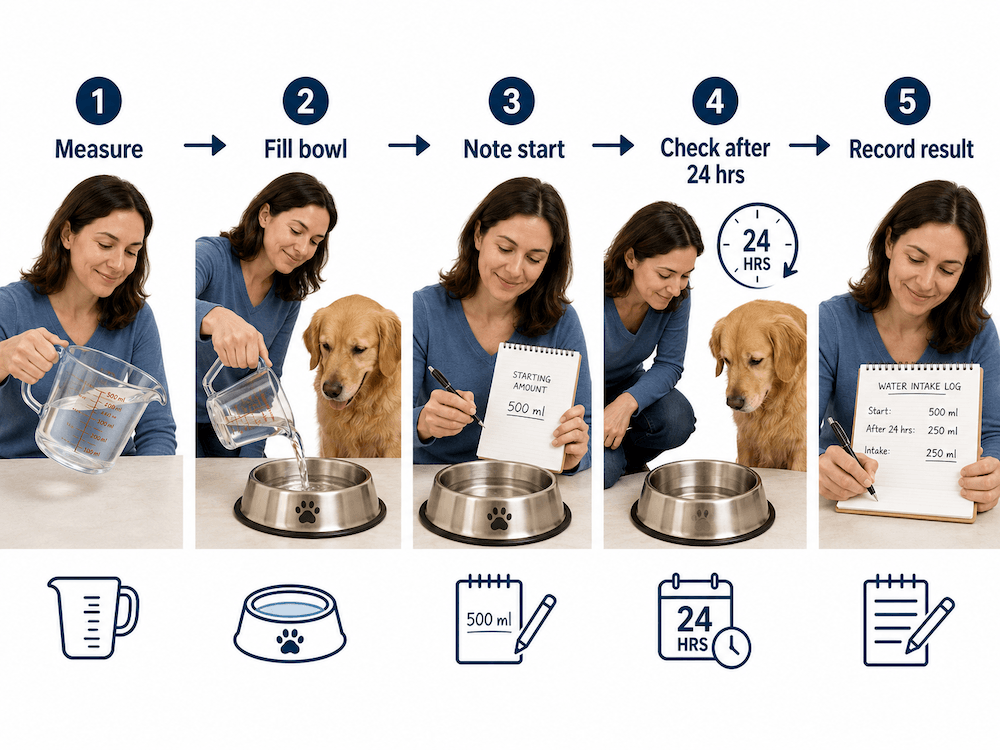
Measuring water intake is simple, but it works best when you do it for one dog at a time. Multi-dog homes make exact tracking harder because you may not know who drank what.
Start with a measured amount in the morning. At the same time the next day, subtract what remains and estimate any spills or water added to food.
How to Tell If Your Dog Is Drinking Enough Water
A dog who is drinking enough usually has moist gums, normal energy, normal urination, and a steady appetite. Their urine should not be consistently dark, strong-smelling, or unusually scant. You do not need to obsess over every sip. What matters most is whether your dog’s drinking pattern is stable and matches their day.
Normal Dog Water Drinking vs. Concerning Changes
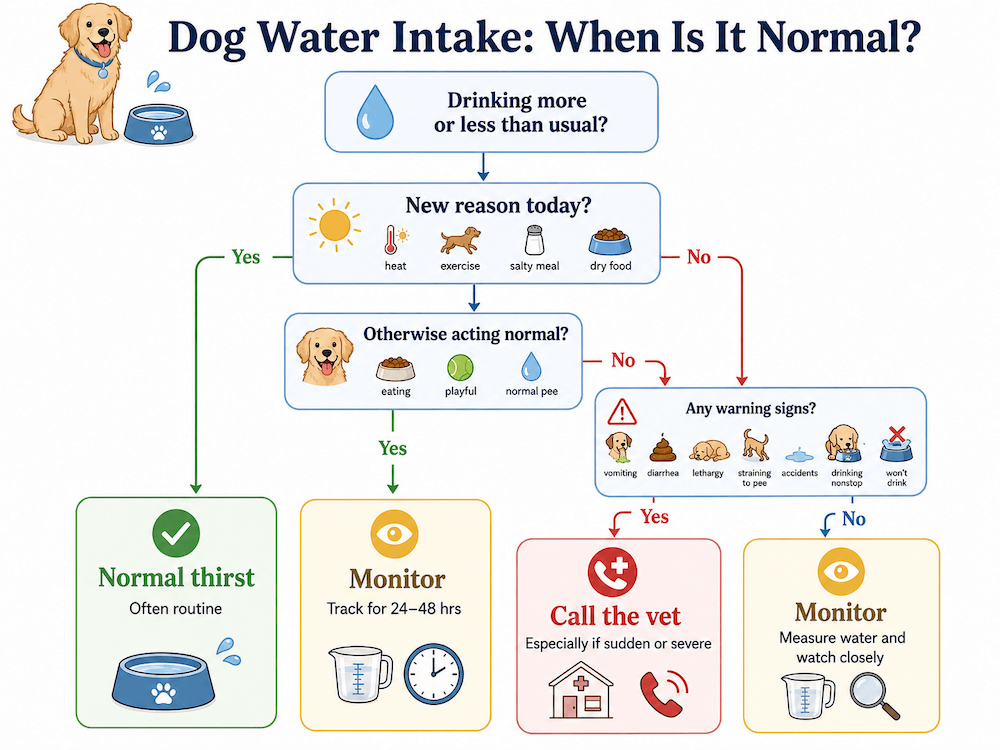
A single thirsty afternoon is not usually a crisis. A clear pattern change, especially with other symptoms, deserves attention. Use this table to separate ordinary variation from signs that may need veterinary guidance.
Why Your Dog May Be Drinking More Water Than Usual
Dogs commonly drink more after exercise, warm weather, salty treats, dry food, or a long nap. That kind of thirst usually makes sense and settles once the dog cools down, rests, and returns to their normal routine.
More concerning thirst is persistent, unexplained, or paired with increased urination. Health conditions that can increase thirst include kidney problems, diabetes, urinary tract infections, hormonal disease, fever, pain, and some medications.
A useful practical threshold: if your dog is consistently drinking more than about 1.5 ounces per pound per day, or you are refilling bowls much more often than usual, start measuring and call your veterinarian for guidance.
Can a Dog Drink Too Much Water?
Yes. Most dogs self-regulate well, but excessive water intake can happen because of medical problems, behavior, medication, or intense water play.
Overdrinking from a bowl over days is different from swallowing large amounts during swimming, dock diving, hose chasing, or retrieving toys in water. Rapid water gulping during play is uncommon but can become dangerous because it may dilute sodium levels in the body.
If your dog seems bloated, wobbly, nauseous, weak, confused, or unusually tired after heavy water play, treat it as urgent and contact a veterinarian or emergency clinic.
Why Your Dog May Not Be Drinking Enough Water
Some dogs drink less because they get moisture from wet food, dislike a dirty bowl, avoid a noisy water station, or feel stressed in a new environment. Others avoid water because of nausea, mouth pain, dental disease, neck pain, fever, or weakness.
Low water intake becomes more serious when it appears with vomiting, diarrhea, heat exposure, lethargy, or reduced urination. In those cases, the issue is not just “picky drinking”; the dog may be losing fluids or feeling too unwell to drink normally.
Try adding fresh water in a clean bowl, moving the bowl to a quiet area, offering ice cubes, or adding water to food if your dog is eating. Do not syringe large amounts of water into your dog’s mouth unless your veterinarian instructs you to do so, especially if your dog is weak, vomiting, coughing, or struggling to swallow.
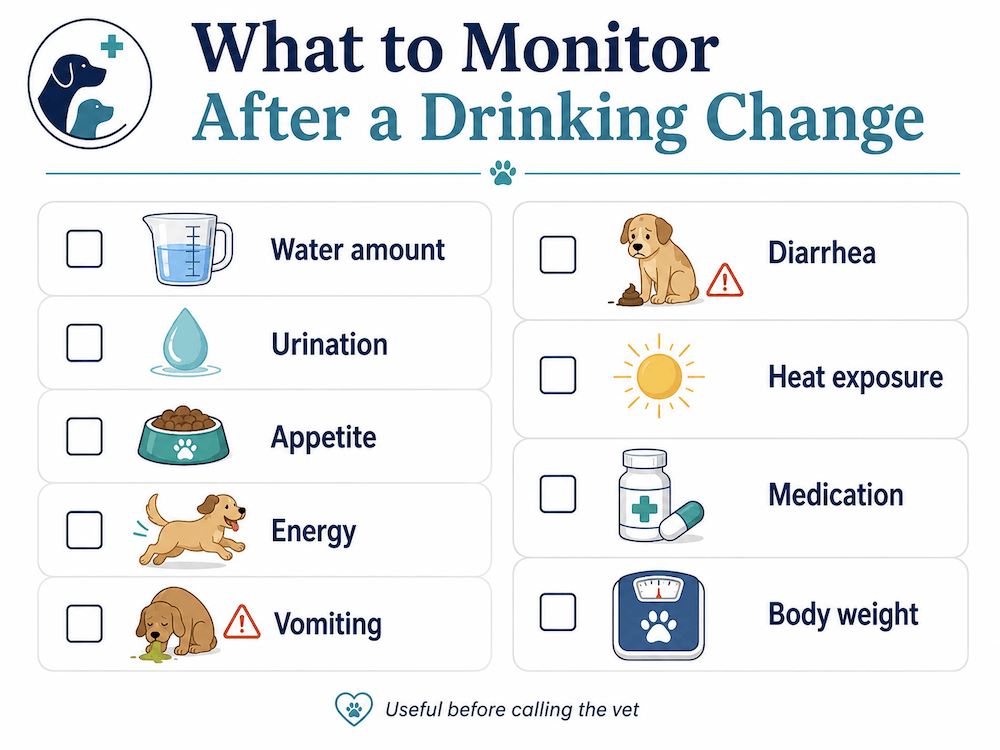
What to Monitor After Your Dog’s Drinking Changes
If your dog seems well but you notice a drinking change, monitor for 24–48 hours. Measure water, note meals, track urination, and write down anything unusual, such as heat exposure, new treats, medication, stress, or diet changes.
A normal pattern should return once the clear trigger passes. If the change continues, becomes more dramatic, or comes with other symptoms, your notes can help your vet decide what tests or treatment may be needed.
Helpful Hydration Tips for Dogs
Good hydration is mostly about access, freshness, comfort, and routine. Dogs are more likely to drink normally when water is easy to find, clean, and available in the places they already spend time.
| Hydration Tip | Why It Helps | How to Apply It |
|---|---|---|
| Refresh water often | Fresh water is more appealing to many dogs. | Change water at least daily, and more in heat. |
| Wash bowls | Residue and slime can discourage drinking. | Clean bowls with hot, soapy water regularly. |
| Add stations | Easy access supports steady drinking. | Place bowls upstairs, downstairs, and outdoors. |
| Travel prepared | Dogs lose water faster during outings. | Carry water and a collapsible bowl. |
| Support seniors | Older dogs may avoid distant bowls. | Keep water near resting areas. |
| Use food moisture | Moist food can improve total fluid intake. | Add water to meals if your dog tolerates it. |
Mistakes That Can Affect How Much Water a Dog Drinks
Water seems simple, but small mistakes can change your dog’s intake or make it harder to notice a health issue. The biggest mistake is restricting water because a dog is having accidents, unless your veterinarian specifically tells you to do so.
| Mistake | Why It Can Be a Problem | Better Approach |
|---|---|---|
| Restricting water | It can worsen dehydration or hide illness. | Ask your vet before limiting access. |
| Ignoring accidents | New accidents can reflect increased thirst. | Track drinking, urination, and timing. |
| Dirty bowls | Some dogs avoid stale or slimy water. | Wash bowls and refresh water often. |
| One bowl only | Limited access can reduce drinking. | Offer multiple bowls in busy homes. |
| Forcing water | Weak dogs may choke or aspirate. | Call your vet if your dog cannot drink. |
| Overdoing water play | Repeated gulping can become dangerous. | Limit hose, lake, and pool gulping games. |
When to Call a Veterinarian About Your Dog’s Water Intake
Call your veterinarian if your dog’s water intake changes suddenly and stays unusual for more than a day or two. Call sooner if the change comes with vomiting, diarrhea, weakness, appetite loss, weight loss, fever signs, pain, accidents, blood in the urine, or repeated nighttime urination.
Same-day vet advice is especially important if your dog is drinking far more than usual and urinating excessively. Seek urgent care if your dog cannot keep water down, seems weak or wobbly, collapses, pants heavily, drools, vomits, acts disoriented, or refuses both food and water.
Puppies, small dogs, senior dogs, and medically fragile dogs can decline faster, so it is safer to call early. Do not withhold water to stop urination unless your veterinarian gives specific instructions, because increased thirst is often a clue and removing water can make the problem worse.
Veterinary Evidence Behind Dog Water Intake
The MSD Veterinary Manual explains that many mammalian species in neutral temperatures need roughly 44–66 mL of water per kilogram of body weight, and it also notes that dry foods contain far less moisture than canned foods. This supports why the common 1-ounce-per-pound rule is useful, while also explaining why wet-fed dogs may drink less from the bowl.[1]
The Merck Veterinary Manual lists veterinary maintenance fluid formulas such as 30 × body weight in kg + 70 mL per day for dogs and cats within a typical weight range, plus a species-specific metabolic formula for dogs. These formulas are used in clinical fluid planning, not as a home drinking target, but they reinforce that fluid needs scale with body size.[2]
A peer-reviewed clinical review in Today’s Veterinary Practice defines polydipsia as water intake over 100 mL/kg/day and highlights common causes of excessive thirst and urination in dogs, including chronic kidney disease, diabetes mellitus, and hyperadrenocorticism. This supports the practical advice to measure and call a veterinarian when drinking rises sharply or stays high without a clear reason.[3]
A Frontiers in Veterinary Science study found that dogs eating high-moisture fresh food consumed less free-choice bowl water than dogs eating dry kibble, but had higher total water intake when dietary moisture was included. The study was industry-funded, so it should be interpreted with that context, but it supports the broader point that food moisture changes how much a dog drinks.[4]
Frequently Asked Questions
The Bottom Line
Knowing how much water your dog should drink starts with a simple guideline: about 1 ounce per pound of body weight per day. Still, the “right” amount can shift with age, diet, weather, activity, pregnancy, nursing, medication, and health conditions. A dog eating wet food may drink less from the bowl, while an active dog on a hot day may need noticeably more. What matters most is learning your dog’s normal pattern and watching for sudden changes in thirst, urination, appetite, or energy. Never restrict water to manage accidents unless your veterinarian specifically tells you to do so. If your dog is drinking far more or far less than usual, vomiting, acting weak, or having urinary changes, call your vet. With clean water, smart monitoring, and quick action when patterns change, you can help keep your dog safely hydrated every day.
Sources
- Nutritional Requirements of Small Animals
- Maintenance Fluid Plan in Animals
- A Stepwise Diagnostic Approach to Polyuria and Polydipsia
- Feeding fresh food and providing water ad libitum is clinically proven to exceed calculated daily water requirements and impact urine relative supersaturation in dogs