Ear Infection In Dogs: Symptoms, Types, Causes, Signs & Prevention

Canine Bible is reader-supported. We receive affiliate commissions via some of our links. Learn more.
Ear infections are one of the most common health issues in dogs, affecting pets of all ages—especially those with floppy ears or underlying allergies. Many owners overlook early signs like head shaking, ear scratching, or a mild odor, assuming they’re minor or temporary. In reality, these can be early indicators of infection. Left untreated, ear infections can become painful and recurrent, and may even lead to hearing loss or more serious complications. The good news is that with prompt care, most ear infections resolve quickly and comfortably. Modern veterinary treatments, combined with simple at-home practices like regular ear checks, proper cleaning, and moisture control, can help prevent future issues. This guide covers everything you need to know about ear infections in dogs—from causes and symptoms to diagnosis, treatment, prevention, and daily care—so you can keep your dog healthy, comfortable, and itch-free.
What Are Ear Infections in Dogs?
An ear infection, in simple terms, is the inflammation of the ear caused by an overgrowth of bacteria, yeast, or parasites. In dogs, it most commonly affects the outer ear (otitis externa), where the warm, moist environment creates ideal conditions for microbes to thrive. As the infection progresses, it causes irritation, redness, swelling, and discharge. If left untreated, the inflammation can worsen and spread deeper into the ear, potentially affecting the middle or inner ear and causing more serious pain, balance issues, or long-term damage.
Types
Ear Infection can take several forms, each with different causes:


| Type | Description |
|---|---|
| Otitis Externa | The most common type, affecting the outer ear canal and often caused by bacteria, yeast, or allergies. |
| Otitis Media | Infection of the middle ear, usually developing when untreated outer ear infections spread deeper. |
| Otitis Interna | A more serious inner ear infection that can affect balance, coordination, and hearing. |
| Bacterial Ear Infection | Caused by bacterial overgrowth, often producing discharge, odor, and inflammation. |
| Yeast Ear Infection | Linked to fungal overgrowth, commonly associated with allergies and characterized by dark, waxy debris. |
| Parasitic (Ear Mites) | Caused by mites, especially in puppies, leading to intense itching and dark, crumbly discharge. |
| Other Causes | Underlying conditions such as allergies, hormonal imbalances, moisture buildup, or foreign objects can trigger infections. |
Predisposed Dog Breeds to Ear Infections
Ear infections are often thought of as occasional, minor issues. However, some dogs are more prone to developing them frequently due to factors like ear shape, allergies, or breed predisposition.
| Size / Group | Breeds | Notes on Risk Factors |
|---|---|---|
| Floppy-Eared Breeds | Cocker Spaniel, Basset Hound, Beagle, Labrador Retriever, Golden Retriever | Poor air circulation traps moisture and debris, creating an ideal environment for yeast and bacteria. |
| Hairy Ear Canal Breeds | Poodle, Schnauzer, Shih Tzu, Lhasa Apso | Excess hair in the ear canal can trap wax and moisture, increasing infection risk. |
| Allergy-Prone Breeds | French Bulldog, Bulldog, Boxer, West Highland White Terrier | Chronic skin allergies often affect the ears, leading to recurrent inflammation and infections. |
| Water-Loving Breeds | Labrador Retriever, Golden Retriever, Portuguese Water Dog, Spaniels | Frequent swimming increases moisture buildup, which promotes bacterial and yeast overgrowth. |
| Narrow Ear Canal Breeds | Shar-Pei, Chow Chow, English Bulldog | Restricted ear canals reduce airflow and make it harder for debris and wax to clear naturally. |
| Small & Toy Breeds | Chihuahua, Yorkshire Terrier, Maltese | Wax buildup and sensitivity can lead to irritation and infection if ears are not regularly maintained. |
Causes
Symptoms
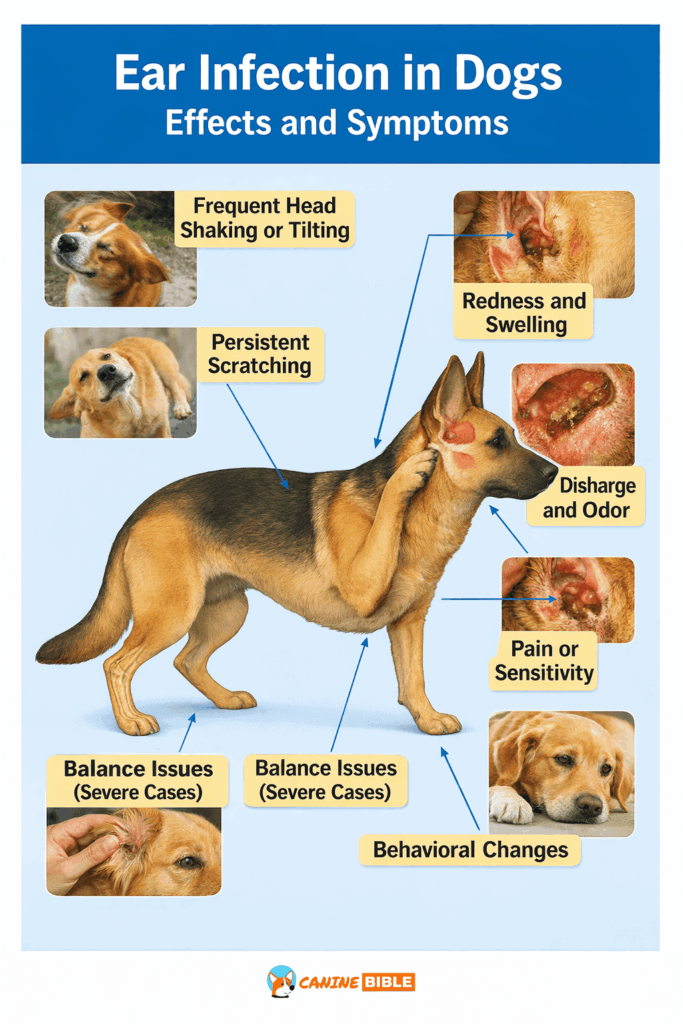
Stages of Ear Infection in Dogs
- Early stage: Mild symptoms such as occasional head shaking, light scratching, or a slight odor that can be easy to overlook.
- Moderate stage: Increased discomfort with frequent scratching, redness, swelling, and visible discharge.
- Advanced stage: Severe pain, strong odor, heavy discharge, possible balance issues, and risk of deeper ear damage or chronic infection.
Top Ways to Prevent Ear Infections in Dogs
Because ear infections can worsen and become recurrent if left untreated, early recognition and prompt care are essential. With timely treatment and proper management, most infections resolve quickly, helping prevent complications and keeping your dog comfortable and healthy.
| Prevention Strategy | Why It Helps | How to Do It |
|---|---|---|
| Regular Ear Cleaning | Removes wax, debris, and microbes that can lead to infection. | Use vet-approved ear cleaners weekly or as recommended; avoid over-cleaning. |
| Keep Ears Dry | Moisture creates an ideal environment for yeast and bacteria. | Dry ears thoroughly after baths or swimming; use drying solutions if needed. |
| Manage Allergies | Allergies are a leading cause of chronic ear inflammation and infections. | Work with your vet on diet trials, medications, or allergy control plans. |
| Routine Ear Checks | Early detection prevents minor issues from becoming serious infections. | Inspect ears weekly for redness, odor, discharge, or scratching. |
| Proper Grooming | Excess hair and dirt can trap moisture and bacteria in the ear canal. | Trim hair around ears and inside canals if advised by your vet or groomer. |
| Prevent Parasites | Ear mites and other parasites can trigger irritation and infection. | Use regular parasite prevention treatments recommended by your vet. |
| Regular Vet Checkups | Helps identify underlying conditions before infections become recurrent. | Schedule routine exams, especially for dogs prone to ear problems. |
Actionable Resources
If you want to prevent or reduce the risk of ear infections in your dog, here are some practical steps you can take under veterinary guidance:


How Ear Infections Are Diagnosed in Dogs
Diagnosing ear infections requires a full veterinary assessment to identify the underlying cause and severity. Key steps include:
- Physical Examination: A vet checks for redness, swelling, discharge, odor, and pain response in the ear.
- Otoscope Examination:
- Visual inspection of the ear canal and eardrum for inflammation, blockage, or damage.
- Detection of foreign objects, excess wax, or structural issues.
- Laboratory Tests: Ear swab (cytology) may be performed to identify bacteria, yeast, or parasites such as ear mites..
- Additional Testing: In chronic or severe cases, culture and sensitivity tests or allergy evaluations may be recommended.
Early diagnosis is crucial because ear infections can progress quickly—catching them sooner allows for effective treatment and helps prevent complications or recurrence.
Treatment & Care
According to current veterinary guidance, the most effective treatments for ear infections in dogs are multimodal, combining targeted medications (such as antibiotics or antifungals), anti-inflammatory therapies to reduce swelling and pain, thorough ear cleaning, and management of underlying causes like allergies or moisture buildup for optimal results.
Always consult your veterinarian before starting any new treatment or supplement for an ear infection. You can get personalized joint-care advice from an online registered vet anytime, anywhere through Dutch. You can also chat with an online vet to ask questions about managing your dog’s ear infection symptoms, treatment options, and lifestyle adjustments tailored to their condition.
Conventional Medical Treatments
| Treatments | Notes / Examples |
|---|---|
| Medicated Ear Drops | Combination drops with antibiotics, antifungals, and anti-inflammatories (vet-prescribed). |
| Ear Cleaning Solutions | Used to remove debris, wax, and discharge before applying medication. |
| Oral Antibiotics | Prescribed for severe or deep infections that extend beyond the outer ear. |
| Antifungal Medications | Used for yeast infections, either topical or oral depending on severity. |
| Corticosteroids | Reduce inflammation, swelling, and itching; typically used short-term under veterinary guidance. |
| Parasite Treatments | Medications targeting ear mites or other parasites causing irritation and infection. |
Nutritional Support & Supplements
| Supplement | Notes / Examples |
|---|---|
| Omega-3 Fatty Acids (Fish Oil) (View on Amazon) | Help reduce inflammation associated with allergies, a major cause of recurrent ear infections. |
| Probiotics (View on Amazon) | Support gut health and immune balance, which may help reduce chronic yeast and bacterial overgrowth. |
| Quercetin (Natural Antihistamine) (View on Amazon) | Acts as a natural anti-inflammatory and antihistamine, helpful for allergy-related ear issues. |
| Zinc & Vitamin E | Support skin and ear canal health, helping maintain a strong protective barrier. |
| Hypoallergenic Diets | Elimination or limited-ingredient diets can reduce food-related allergies that trigger ear infections. |
| Vet vs. OTC Supplements | Vet-recommended products ensure safety and effectiveness; over-the-counter options vary in quality. |
Alternative & Integrative Therapies
| Therapy | Notes / Examples |
|---|---|
| Herbal Ear Drops | Natural blends (e.g., calendula, mullein) may help soothe irritation and support mild cases. |
| Apple Cider Vinegar (Diluted) | Can help restore ear pH and inhibit yeast growth; only for mild cases and never on broken skin. |
| Coconut Oil | Has mild antimicrobial properties and can help moisturize dry, irritated ear canals. |
| Probiotic Therapy | Supports immune balance and may help reduce recurring infections linked to gut health. |
| Allergy Management (Holistic) | Includes diet changes, herbal support, and environmental adjustments to reduce triggers. |
| Ozone Therapy | Used by some vets to help reduce bacteria and promote healing in chronic infections. |
| Important Note | Always consult a veterinarian before using alternative treatments, especially for moderate or severe infections. |
Surgical Options
| Surgical Option | Notes / Examples |
|---|---|
| Ear Flushing (Deep Cleaning) | Performed under sedation to remove severe debris, wax buildup, and infection deep within the ear canal. |
| Lateral Ear Canal Resection | Improves airflow and drainage by opening the ear canal; often used in chronic or recurrent cases. |
| Total Ear Canal Ablation (TECA) | Removal of the entire ear canal in severe, end-stage disease; eliminates chronic pain and infection. |
| Bulla Osteotomy | Surgical cleaning of the middle ear to remove infection and debris when deeper structures are affected. |
Emotional & Lifestyle Impact
Ear infections affect more than just a dog’s ears—they can significantly impact their comfort, behavior, and overall well-being. Dogs dealing with ongoing ear irritation may become less playful, more withdrawn, or even irritable, especially when their head or ears are touched. Constant itching, discomfort, and pain can interfere with sleep, focus, and daily activities, making even simple routines stressful.
For owners, this can also be challenging, as it involves recognizing subtle symptoms, managing treatments, and preventing recurrence. Daily routines may need to include regular ear checks, cleaning, and keeping ears dry after baths or swimming. In some cases, long-term management of underlying issues like allergies is necessary. With consistency, proper care, and guidance from a veterinarian, pet parents can reduce discomfort, prevent future infections, and help their dogs stay happy, comfortable, and engaged.
Typical Annual Cost of Treating Ear Infections in Dogs
| Category | Estimated Annual Cost Range | Notes |
|---|---|---|
| Routine Vet Visits & Exams | $100 – $400 | Includes initial diagnosis, follow-ups, and ear checks. |
| Diagnostic Tests | $50 – $300 | Ear swabs, cytology, and cultures to identify bacteria, yeast, or mites. |
| Medications (Drops, Oral Drugs) | $100 – $600 | Includes antibiotics, antifungals, anti-inflammatories; varies by severity. |
| Ear Cleaning & Maintenance Products | $50 – $200 | Routine cleaning solutions and preventive care products. |
| Chronic / Allergy Management | $200 – $1,000 | Includes long-term allergy treatment, diet trials, or medications. |
| Surgery (if needed) | $1,000 – $5,000+ | Procedures like TECA or ear canal resection for severe, recurring infections. |
| Insurance & Wellness Plans | $300 – $900 | Helps offset recurring costs, especially for chronic cases. |
| Typical Annual Range | Mild / Occasional Cases: $200 – $800 | Chronic / Severe Cases: $1,000 – $5,000+ | |
Ear infection care can add up quickly — from vet visits and medications to ongoing management of chronic or recurring cases. Pet insurance can help reduce the financial strain and ensure your dog receives prompt, effective treatment without delays. If you want to compare plans and see which providers offer the best coverage for ear infections and related conditions like allergies, explore our full guide to the Best Pet Insurance for Dogs.
Frequently Asked Questions
The Bottom Line
Ear infections are one of the most common health issues dogs experience, but they don’t have to become a recurring or serious problem. With early recognition, proper veterinary care, and consistent at-home management, most infections can be treated effectively and prevented from coming back. By keeping your dog’s ears clean and dry, addressing underlying causes like allergies, and staying alert to early warning signs, you can greatly reduce the risk of chronic issues. With the right approach, dogs prone to ear infections can remain comfortable, active, and free from ongoing discomfort—enjoying a healthy, happy life.