What Does a Dog Seizure Look Like? (With Pictures & Videos)


Canine Bible is reader-supported. We receive affiliate commissions via some of our links. Learn more.
A dog seizure can look dramatic, with sudden collapse, stiffening, jerking or paddling movements, drooling, and loss of awareness, but not every seizure is this obvious. Some dogs experience subtler episodes involving facial twitching, staring, unusual movements, or brief changes in behavior. What happens before, during, and after a seizure can also vary depending on the type and cause. Some episodes last only seconds, while others continue long enough to become a medical emergency. Certain behaviors, including fainting, tremors, sleep movements, and vestibular problems, can sometimes be mistaken for seizures. Knowing the different signs can help you recognize what is happening and determine when veterinary attention is needed. In this guide, we’ll break down what dog seizures look like, the different types, warning signs, possible causes, and what to do if your dog has one.
What Is a Seizure in Dogs?
A seizure in dogs is a sudden, temporary episode of abnormal electrical activity in the brain that can affect movement, awareness, behavior, or bodily functions. Some seizures cause dramatic signs such as collapse, body stiffening, paddling, and loss of consciousness, while others produce subtler changes like facial twitching, staring, repetitive movements, or brief confusion. A seizure itself is not a single disease; it is a neurological event that can occur because of epilepsy, brain disease, metabolic problems, toxin exposure, or other underlying conditions.
What Does a Dog Seizure Look Like?
A dog seizure can look like sudden collapse, body stiffening, rhythmic jerking or paddling of the legs, jaw movements, drooling, and loss of awareness. However, not every seizure causes full-body convulsions—some are much subtler and may involve facial twitching, repetitive movements, staring, unusual behavior, or brief periods of reduced responsiveness.
What an owner sees depends on which part of the brain is affected and whether the abnormal activity remains localized or spreads. A seizure may last only seconds, and the recovery period afterward can sometimes be more noticeable than the seizure itself. Because fainting, tremors, sleep movements, vestibular disease, and other disorders can resemble seizures, appearance alone cannot always confirm what happened.
What Does a Generalized Dog Seizure Look Like?
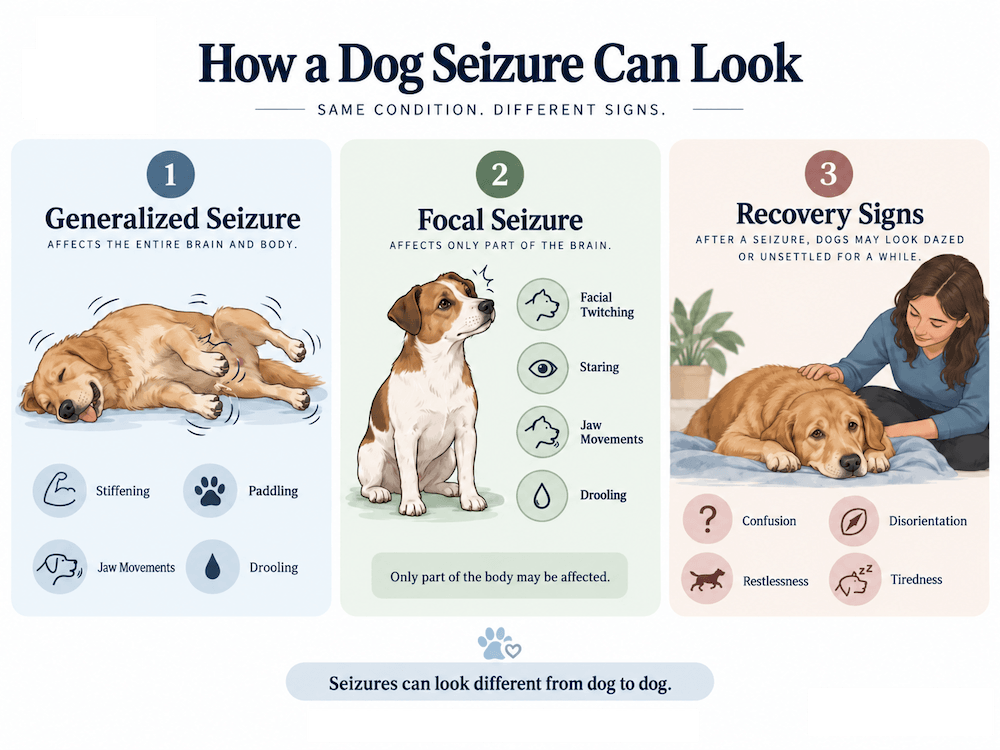
A generalized seizure usually causes sudden collapse, body stiffening, loss of awareness, and rhythmic jerking or paddling of the legs. The dog may also make chewing motions, drool, vocalize, have enlarged pupils, or lose bladder or bowel control. These movements are involuntary and often involve the entire body.
What Does a Focal Seizure Look Like in a Dog?
A focal seizure affects a more limited area and may cause facial twitching, repeated jaw movements, one-sided limb movements, staring, excessive salivation, or brief unusual behaviors while the dog remains standing. Some focal seizures stay localized, while others spread and develop into a generalized seizure with collapse and full-body convulsions.


Can a Dog Have a Seizure Without Shaking?
Yes. Shaking is not required for an episode to be a seizure. Some focal seizures cause primarily behavioral, sensory, or autonomic signs rather than obvious convulsions.
A dog might suddenly stare, become briefly unresponsive, repeatedly twitch one side of its face, snap at the air, salivate excessively, or make repetitive jaw movements. However, staring by itself is not enough to diagnose a seizure, especially if the dog readily responds to its name, food, touch, or another distraction.
Dog Seizure Videos: What a Seizure Can Look Like
Real seizure episodes can look different from dog to dog. The videos below show examples of dogs experiencing seizures, including signs such as collapse, stiffening, paddling movements, and reduced awareness. Some seizures may appear much subtler than these examples.
1. Dogs Experiencing Seizures
This video from Southeast Veterinary Neurology shows real examples of dogs experiencing seizures and demonstrates several of the physical movements owners may notice during an episode.
2. Canine Seizure Example
This Mayo Clinic video provides another real-world example of what a seizure can look like in a dog, helping illustrate how quickly an episode may begin and how a dog may behave during it.
What Do Mild Vs Life-Threatening Seizures Look Like in Dogs?
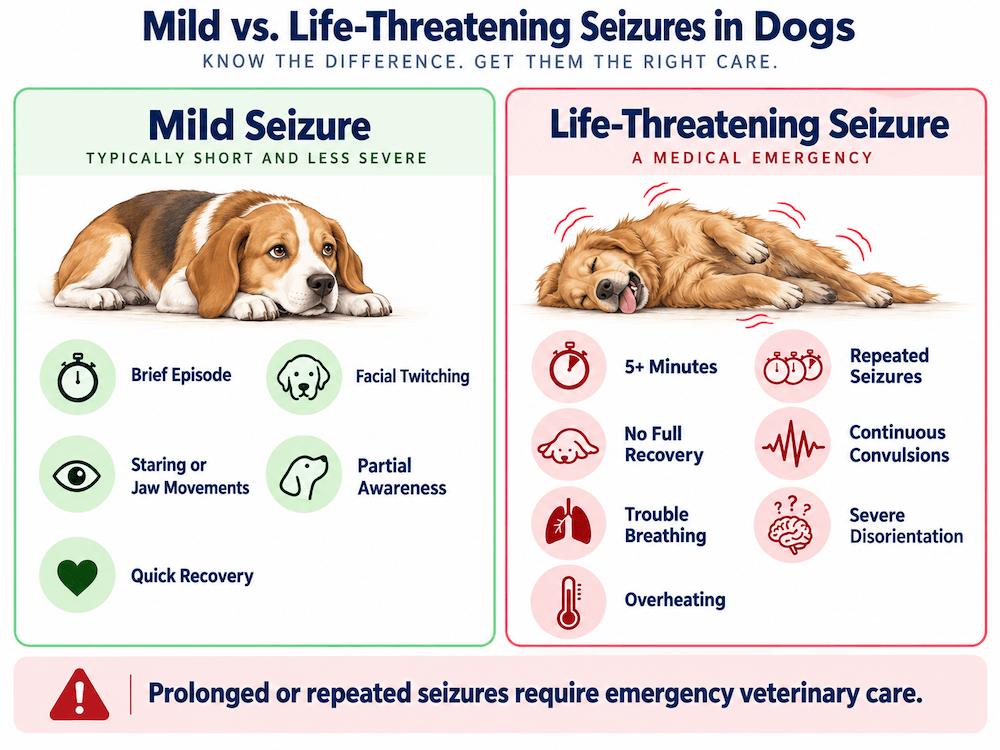
Mild seizures are often brief and may cause subtle signs such as facial twitching, staring, jaw movements, or short periods of altered awareness, with the dog recovering relatively quickly afterward. Life-threatening seizures are usually prolonged, repeated, or occur without full recovery between episodes, and may involve continuous convulsions, severe disorientation, breathing problems, or overheating.


A seizure lasting about five minutes or longer, or multiple seizures occurring close together, should be treated as an emergency. The key difference is not only how dramatic the seizure looks, but also its duration, frequency, and how well the dog recovers afterward.
What Do Multiple Seizures Look Like in Dogs?
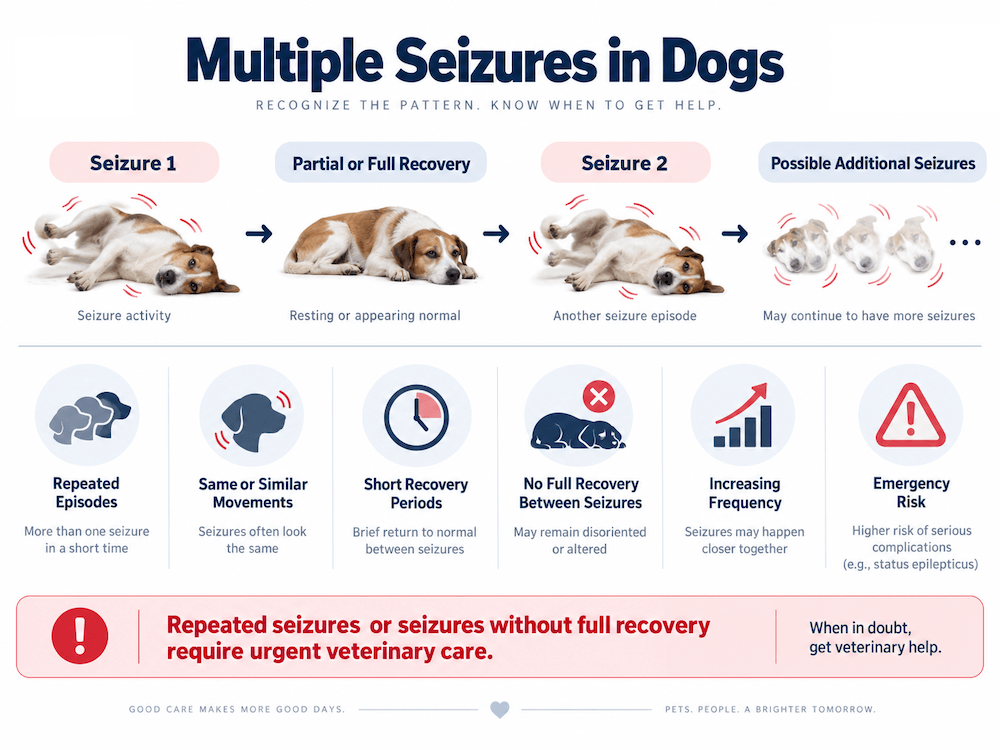
Multiple seizures may appear as two or more separate seizure episodes occurring within a short period, sometimes with the dog seeming to recover between them and sometimes without returning fully to normal. Each episode may look similar to the last, with collapse, stiffening, paddling, facial twitching, or altered awareness, depending on the seizure type.
This pattern is more concerning than a single brief seizure because repeated activity can escalate quickly and may develop into a seizure emergency. If another seizure begins before your dog has fully recovered, or several seizures occur within the same day, seek urgent veterinary care.
Common Signs of a Seizure in Dogs
Seizures in dogs can look very different depending on the type, ranging from full-body stiffening and paddling to brief jerks, localized twitching, staring, or repetitive behaviors. The pattern of movement, level of awareness, and whether signs affect the whole body or stay localized can provide useful clues about what type of seizure may be occurring.
| Seizure Type | What It May Look Like | Awareness | Key Clue |
|---|---|---|---|
| Tonic-clonic | Stiffening followed by repeated jerking or paddling movements. | Usually lost during the convulsive phase. | Both sides of the body are involved. |
| Focal motor | Twitching or repetitive movement of one body region. | May appear preserved or partially altered. | Signs remain localized, especially at the beginning. |
| Focal behavioral | Repetitive snapping, staring, chewing, or unusual brief behavior. | Responsiveness may change during the episode. | Behavior is sudden, stereotyped, and repeatedly similar. |
| Myoclonic | Brief, shock-like jerks affecting muscles or limbs. | Awareness may be relatively preserved. | Movements are extremely brief and sudden. |
| Tonic or atonic | Sudden sustained stiffness or abrupt loss of muscle tone. | May be altered depending on seizure type. | There may be little rhythmic paddling. |
What Happens Before, During, and After a Dog Seizure?
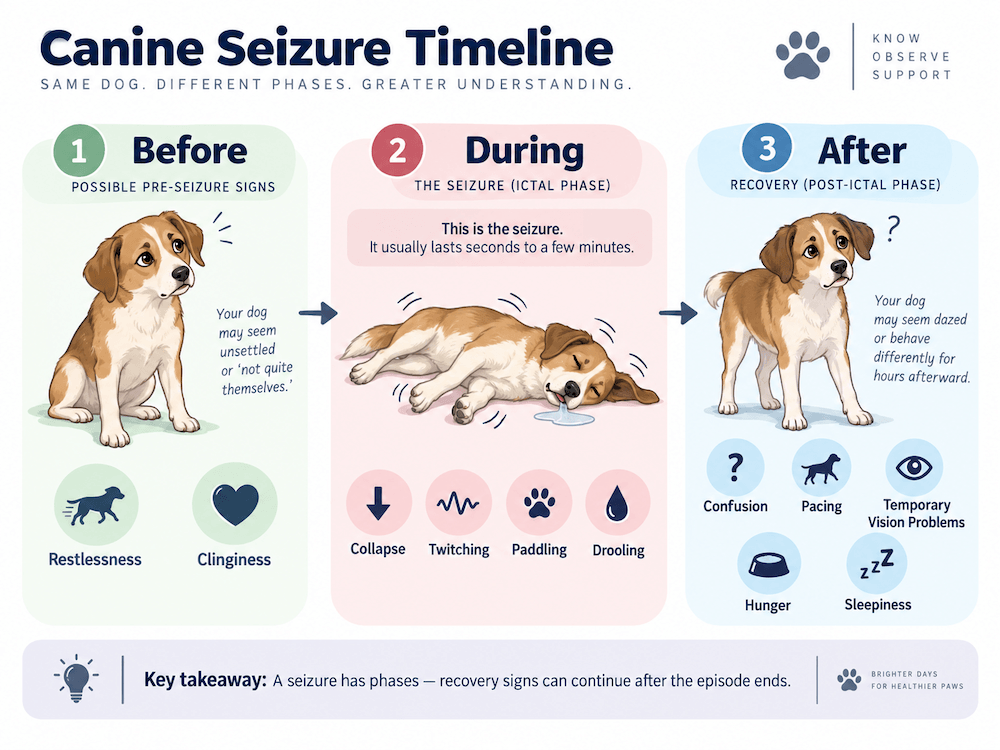
A seizure episode is often easiest to understand as a timeline. Owners may see changes before the seizure, the seizure itself, and then a recovery period called the post-ictal phase.
Not every dog displays all three stages clearly. In some cases, the seizure begins with no recognizable warning and the owner notices only the convulsion and recovery period.
How Long Does a Dog Seizure Usually Last?
Many seizures end within seconds to a couple of minutes. Because owners are understandably focused on their dog, however, estimating duration without a clock is notoriously difficult.
Timing matters because a seizure approaching or exceeding five minutes should be treated as an emergency. A prolonged seizure may become self-sustaining and can cause dangerous changes in body temperature, oxygenation, metabolism, and brain function.
Repeated seizures also matter even when each individual seizure is short. Multiple seizures occurring close together can develop into a seizure emergency, particularly when the dog does not completely recover between episodes.
A useful habit is to start a timer as soon as you recognize abnormal seizure activity. Note when the active movements or abnormal behavior stop separately from how long the dog remains confused afterward.
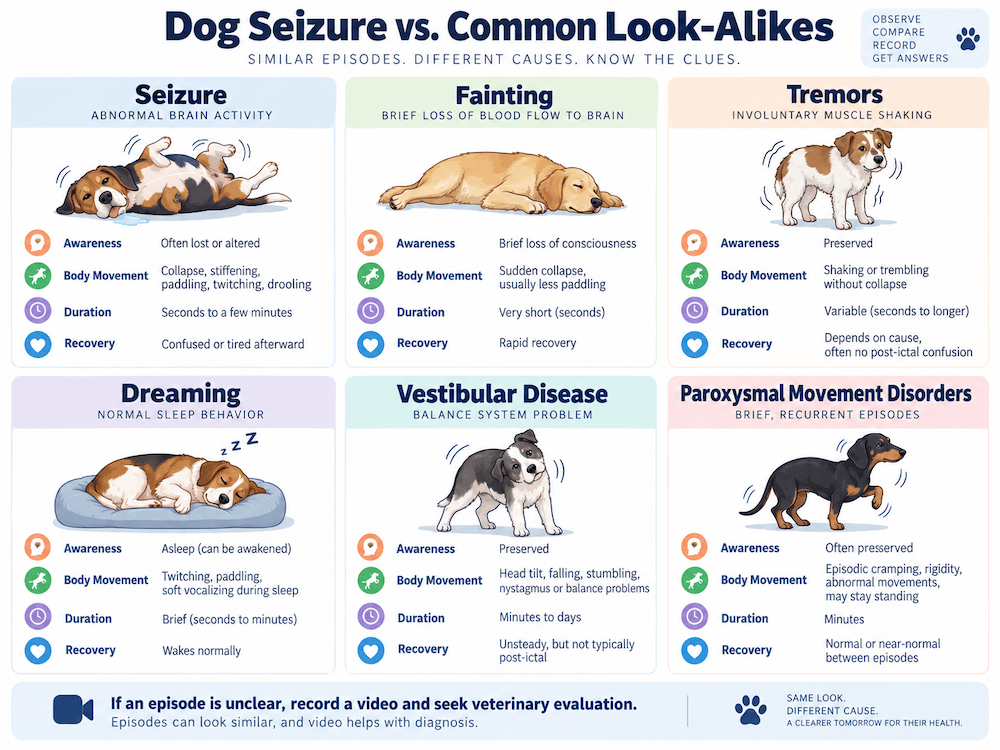
What Can Be Mistaken for a Dog Seizure?
Not every collapse, shake, twitch, or strange behavior is caused by abnormal electrical activity in the brain. Distinguishing seizures from similar episodes can be difficult even for veterinarians, especially when the event has already ended by the time the dog reaches the clinic.
What Causes Seizures in Dogs?
Knowing what a seizure looks like is only the first part of the picture. A seizure is a clinical event rather than a single disease, and several very different problems can produce similar-looking episodes.
| Cause Category | Common Examples | Why It Matters |
|---|---|---|
| Reactive | Low blood sugar, electrolyte disorders, liver problems, or toxins. | Correcting the underlying disturbance may stop the seizures. |
| Structural | Tumors, inflammation, infection, trauma, stroke, or developmental disease. | The brain itself contains an identifiable abnormality. |
| Idiopathic epilepsy | Recurrent unprovoked seizures without an identified structural cause. | Long-term seizure management may eventually be needed. |
Dog Breeds With High Risk of Seizures
Some dog breeds have a documented familial or suspected genetic predisposition to idiopathic epilepsy, although risk can vary substantially between bloodlines and populations. Breed predisposition does not mean an individual dog will develop seizures, and seizures can occur in any purebred or mixed-breed dog for many other reasons.
| Breed | Seizure Association |
|---|---|
| Australian Shepherd | Breed-associated idiopathic epilepsy with a suspected inherited component. |
| Beagle | Genetic and population evidence supports increased idiopathic epilepsy risk. |
| Bernese Mountain Dog | Familial idiopathic epilepsy has been documented in the breed. |
| Border Collie | A strong familial component to idiopathic epilepsy has been reported. |
| Golden Retriever | Familial idiopathic epilepsy has been described in breed-specific studies. |
| Irish Wolfhound | A notable inherited predisposition to idiopathic epilepsy has been documented. |
| Keeshond | Inherited epilepsy has long been recognized in some breed lines. |
| Labrador Retriever | Breed studies support a hereditary component to idiopathic epilepsy. |
| Shetland Sheepdog | Familial epilepsy has been documented in certain Sheltie bloodlines. |
| Vizsla | Familial idiopathic epilepsy, often with focal signs, is documented. |
What Should You Do While Your Dog Is Having a Seizure?
Watching a seizure is frightening, but the safest response is usually to protect the dog from injury while observing the episode closely. Do not attempt to stop the movements by force.
Dogs cannot swallow their tongues during a seizure, so there is no need to put anything in their mouth; jaw movements are involuntary, and a dog may bite without realizing your hand is nearby. Once the convulsions stop, keep the environment calm by reducing noise and bright light and keeping children and other animals away. During recovery, your dog may be confused, frightened, uncoordinated, or temporarily defensive, so approach carefully even if they are normally gentle.
What Information Should You Record After a Dog Seizure?
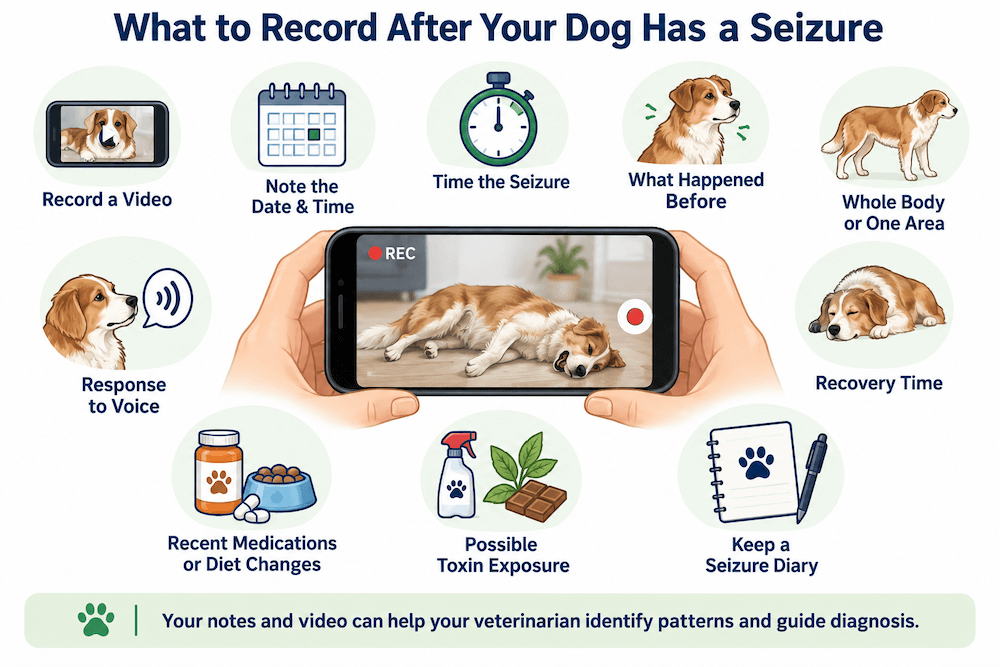
After a dog has a seizure, the details you record can be extremely helpful during veterinary evaluation. If it is safe, take a video and note the date, time, seizure duration, what happened immediately beforehand, which parts of the body were involved, and how your dog responded and recovered.
Also record any recent medication or diet changes and possible toxin exposure. For dogs with repeated episodes, keeping a seizure diary can make it easier to spot changes in frequency, duration, and severity over time.
When to Call a Veterinarian About a Dog Seizure
If your dog has a seizure for the first time, contact your veterinarian even if the episode is brief and your dog seems normal afterward. A veterinary exam can help determine whether the event was truly a seizure and whether an underlying problem such as toxin exposure, metabolic disease, or neurological illness may be involved.
Dogs with previously diagnosed epilepsy may not need emergency care after every short, typical seizure if they already have a veterinary management plan. However, contact your veterinarian if seizures become longer, more frequent, more intense, or otherwise different from your dog’s usual pattern.
Seek emergency veterinary care if a seizure lasts about five minutes or longer, another seizure begins before your dog fully recovers, or your dog has multiple seizures within a short period. Emergency care is also warranted if toxin exposure, head trauma, overheating, severe illness, breathing difficulty, prolonged unresponsiveness, or injury occurs around the seizure.
How Veterinarians Determine Whether an Episode Was a Seizure
The first question is often not “What caused the seizure?” but “Was this actually a seizure?” A veterinarian will combine your description and video with the dog’s age, medical history, physical examination, and neurological examination.
Blood and urine testing may be used to look for underlying problems such as abnormal glucose, electrolyte disturbances, organ dysfunction, or other systemic conditions that can trigger seizures. Additional testing depends on the dog’s history and examination.
When disease inside the brain is a concern, advanced diagnostics may include magnetic resonance imaging and analysis of cerebrospinal fluid. A neurological specialist may become involved when seizures are difficult to classify, severe, beginning at an unusual age, associated with abnormal neurological findings, or poorly controlled.
A normal dog between episodes does not automatically rule out epilepsy or structural brain disease. Likewise, an unusual movement captured on video does not automatically confirm epilepsy. Diagnosis depends on the overall pattern.
Treatments for Dogs with Seizures
Treatment depends on why the seizures are occurring, how often they happen, how severe they are, and whether the dog has an underlying medical problem. Some dogs need emergency medication only, while others require long-term antiseizure therapy and regular monitoring.
| Treatment | When It May Be Used | What Owners Should Know |
|---|---|---|
| Emergency rescue medication | Prolonged or repeated seizures requiring rapid control. | May include veterinary-prescribed benzodiazepines such as midazolam or diazepam. |
| Phenobarbital | Common long-term treatment for recurrent seizures. | Blood testing may be needed to monitor levels and organ function. |
| Levetiracetam | Used alone or alongside another antiseizure medication. | Often requires consistent dosing to maintain seizure control. |
| Potassium bromide | Long-term seizure control, sometimes combined with phenobarbital. | Blood levels and a consistent diet may require monitoring. |
| Other antiseizure drugs | Used when first-line medications provide insufficient control. | Zonisamide and other options may be considered by a veterinarian. |
| Treating the underlying cause | Needed for toxins, metabolic disease, inflammation, or structural brain problems. | Controlling the cause may reduce or eliminate reactive seizures. |
| Dietary support | May supplement medical management in selected dogs with epilepsy. | Specialized diets should complement, not replace, prescribed treatment. |
Dogs should never have an antiseizure medication stopped or changed suddenly without veterinary guidance. Abrupt withdrawal can trigger breakthrough seizures or more severe seizure activity.
Prevention of Seizures in Dogs
Not every seizure can be prevented, particularly when a dog has idiopathic epilepsy or structural brain disease. However, owners can often reduce avoidable triggers, improve seizure control, and lower the chance of breakthrough episodes by following a consistent management plan.
What Research Says About Seizures in Dogs
The International Veterinary Epilepsy Task Force describes epileptic seizures as brief, transient events resulting from abnormal neuronal activity and recognizes focal, generalized, and focal-to-generalized presentations. Its consensus work also emphasizes that owner descriptions and video recordings are central to identifying seizure type because routine electroencephalography is less practical in veterinary medicine than in human medicine. The same guidance notes that post-ictal signs can include disorientation, pacing, fatigue, hunger, thirst, poor coordination, temporary blindness, and behavioral changes.[1]
The 2024 ACVIM Consensus Statement on status epilepticus and cluster seizures supports treating prolonged seizures as emergencies once seizure activity reaches approximately five minutes. It also defines cluster seizures as more than two self-limiting seizures occurring within 24 hours and highlights the risk that seizure emergencies can become progressively harder to control when treatment is delayed.[2]
The Merck Veterinary Manual distinguishes epileptic seizures from reactive seizures caused by temporary metabolic or toxic disturbances. It also recognizes that seizures can appear as motor activity, impaired awareness, behavioral or sensory changes, or autonomic signs rather than only as classic full-body convulsions. This distinction matters because identifying and correcting an acute toxin or metabolic disturbance can be central to stopping reactive seizures.
Frequently Asked Questions
The Bottom Line
A dog seizure can range from dramatic full-body convulsions to subtle facial twitching, staring, or repetitive movements. Generalized seizures typically affect the whole body, while focal seizures may involve only one area or cause brief behavioral changes. Watching what happens before, during, and after the episode can provide valuable clues about the type of seizure your dog experienced. Timing the seizure, recording a video when safe, and keeping a seizure diary can also help your veterinarian evaluate recurring episodes. A first seizure should be discussed with a veterinarian, while seizures lasting about five minutes or repeated episodes close together require emergency attention. Dogs with recurring seizures may need long-term medication, treatment of an underlying condition, or both. Knowing the warning signs and having a clear response plan can help you protect your dog when a seizure occurs.
For more guidance on canine seizures and epilepsy, read what to do when a dog has a seizure, explore our guide to the best dog foods for seizures & epilepsy, see these homemade food recipes for dogs with seizures and epilepsy, and learn more about CBD oil for dogs with seizures.