Dog Ibuprofen Toxicity Calculator: Estimate Risk- Will It Kill a Dog?

Canine Bible is reader-supported. We receive affiliate commissions via some of our links. Learn more.
Whether your dog swallowed Advil, Motrin, or another ibuprofen-containing medication, quick action matters. Ibuprofen is not safe for dogs and can become dangerous even in small amounts, especially for small breeds, puppies, seniors, or dogs with kidney or stomach problems. That’s why we created this dog ibuprofen toxicity calculator—to help you estimate your dog’s possible exposure based on weight, amount eaten, and product strength. In this guide, you’ll also find toxicity charts, warning signs, emergency steps, and answers to frequently asked questions so you know when to contact your veterinarian or animal poison control.
How Much Ibuprofen Is Toxic to Dogs?
Ibuprofen has a narrow margin of safety in dogs, and there is no safe at-home dose unless a veterinarian specifically prescribes it. Toxicity is usually estimated in mg of ibuprofen per kg of body weight, which means small dogs can reach a dangerous dose from a single tablet much faster than large dogs.
As a general guide for veterinary toxicology, doses of 25 mg/kg or higher may cause gastrointestinal problems such as vomiting, diarrhea, abdominal pain, loss of appetite, or stomach ulcers. Higher exposures, often around 100–175 mg/kg or more, increase the risk of kidney injury, while doses around 400 mg/kg or higher may cause neurological signs such as tremors, seizures, coma, or shock. Doses above 600 mg/kg are considered potentially lethal in dogs.
Because toxicity can vary by dog, product strength, time since ingestion, repeated dosing, health status, and whether symptoms are present, these numbers should not be treated as “safe” cutoffs.
Will It Kill My Dog?
Yes, ibuprofen can kill a dog, especially after a high dose, repeated exposure, delayed treatment, or ingestion by a small dog. Severe poisoning can cause stomach ulcers, internal bleeding, acute kidney failure, seizures, coma, shock, and death. Even if your dog seems normal at first, ibuprofen exposure should be treated as urgent because serious signs may develop later.


Do not wait to see what happens. If your dog ate ibuprofen, may have eaten ibuprofen, or the amount is unknown, call your veterinarian, an emergency vet, ASPCA Animal Poison Control, or Pet Poison Helpline right away. Do not induce vomiting or give home treatments unless a veterinary professional specifically instructs you to.
Dog Ibuprofen Toxicity Chart
The chart below gives a practical look at how quickly ibuprofen exposure changes by body weight.
Ibuprofen Toxicity Chart by Dog Weight
| Dog Weight | 25 mg/kg Estimate | 100 mg/kg Estimate | 400 mg/kg Estimate |
|---|---|---|---|
| 5 lb | About 57 mg | About 227 mg | About 907 mg |
| 10 lb | About 113 mg | About 454 mg | About 1,814 mg |
| 20 lb | About 227 mg | About 907 mg | About 3,629 mg |
| 30 lb | About 340 mg | About 1,361 mg | About 5,443 mg |
| 50 lb | About 567 mg | About 2,268 mg | About 9,072 mg |
| 70 lb | About 794 mg | About 3,175 mg | About 12,701 mg |
| 100 lb | About 1,134 mg | About 4,536 mg | About 18,144 mg |
These numbers are estimates based on body weight and published toxicology ranges. They are not safety guarantees. Call a veterinarian or animal poison control if your dog ate ibuprofen, has symptoms, or you are unsure how much was swallowed.
Ibuprofen Risk Chart by Exposure Level
This table explains the general concern behind common exposure ranges.


| Exposure | Main Concern | Owner Action |
|---|---|---|
| Unknown amount | Risk cannot be estimated safely. | Call a vet or poison control. |
| Any amount with symptoms | Symptoms increase urgency. | Seek urgent veterinary care. |
| Around 25 mg/kg+ | Gastrointestinal signs may occur. | Get professional guidance. |
| Around 100–175 mg/kg+ | Kidney injury risk rises. | Contact an emergency vet. |
| Around 400 mg/kg+ | Neurologic signs may occur. | Treat as an emergency. |
| Repeated doses | Ulcers or organ injury may develop. | Call your veterinarian. |
Common Ibuprofen Product Strengths
Ibuprofen is found in several human products, and the strength can vary widely. Always check the full product label. Combination products can include other ingredients that may change the emergency plan.
| Product Type | Common Strength | Why It Matters |
|---|---|---|
| Regular tablet | 200 mg | One tablet can be concerning for small dogs. |
| Liquid gel | Often 200 mg | Capsules may be swallowed quickly. |
| Prescription tablet | 400–800 mg | Higher strength means fewer tablets can cause danger. |
| Children’s liquid | Varies | mg and mL are easy to confuse. |
| Cold/flu product | Varies | Other active ingredients may also be toxic. |
Ibuprofen Toxicity Guidelines for Dogs
Ibuprofen is a nonsteroidal anti-inflammatory drug, or NSAID. Some NSAIDs are prescribed for dogs, but human NSAIDs such as ibuprofen and naproxen can be extremely dangerous when dogs ingest them without veterinary direction. Pet Poison Helpline specifically warns that ibuprofen should not be administered to companion animals.
The calculator estimates exposure using this formula:
Total ibuprofen eaten in mg ÷ dog’s weight in kg = estimated mg/kg exposure
For example, a 10 lb dog weighs about 4.5 kg. If that dog eats one 200 mg ibuprofen tablet, the estimated exposure is about 44 mg/kg. That is a meaningful exposure and should prompt a call to a veterinarian or animal poison control.
The calculation is only as good as the information entered. If the amount eaten is unknown, more than one dog may have had access, the product is liquid, or your dog vomited part of it, the estimate may be incomplete.
Factors That Can Affect Your Dog’s Results
Ibuprofen risk is not based on weight alone. These factors can change how urgent the situation is.
| Factor | Why It Matters | What Owners Should Check |
|---|---|---|
| Weight | Small dogs reach higher mg/kg doses faster. | Use your dog’s current weight. |
| Amount eaten | Missing pills may underestimate exposure. | Count tablets and check packaging. |
| Product strength | Prescription tablets may be much stronger. | Read the mg listed on the label. |
| Time since ingestion | Early treatment may reduce absorption. | Estimate when access happened. |
| Symptoms | Clinical signs increase urgency. | Watch for vomiting, weakness, tremors, or collapse. |
| Health history | Kidney, liver, or stomach disease can raise risk. | List conditions and current medications. |
| Other ingredients | Combination products may add toxins. | Check every active ingredient. |
Have this information ready before calling your vet or poison control. It can help them decide whether your dog needs monitoring, bloodwork, decontamination, fluids, or emergency care.
Common Mistakes to Avoid
Many ibuprofen emergencies become riskier because owners wait, guess, or try home treatment first.
| Mistake | Why It Matters | Better Approach |
|---|---|---|
| Waiting for symptoms | Damage can begin before signs are obvious. | Call after suspected ingestion. |
| Guessing the dose | Wrong pill counts can change risk. | Check the bottle and missing tablets. |
| Confusing mg and mL | Liquid products require concentration math. | Read the label carefully. |
| Ignoring formulation | Cold products may contain extra toxins. | Check all active ingredients. |
| Using estimates as exact advice | Dogs vary in sensitivity and health risk. | Use the result to guide a vet call. |
| Inducing vomiting at home | This can be unsafe in some dogs. | Only do this if instructed. |
| Giving another pain reliever | More medication may worsen toxicity. | Do not give human pain medicine. |
What to Do If Your Dog Ate Ibuprofen
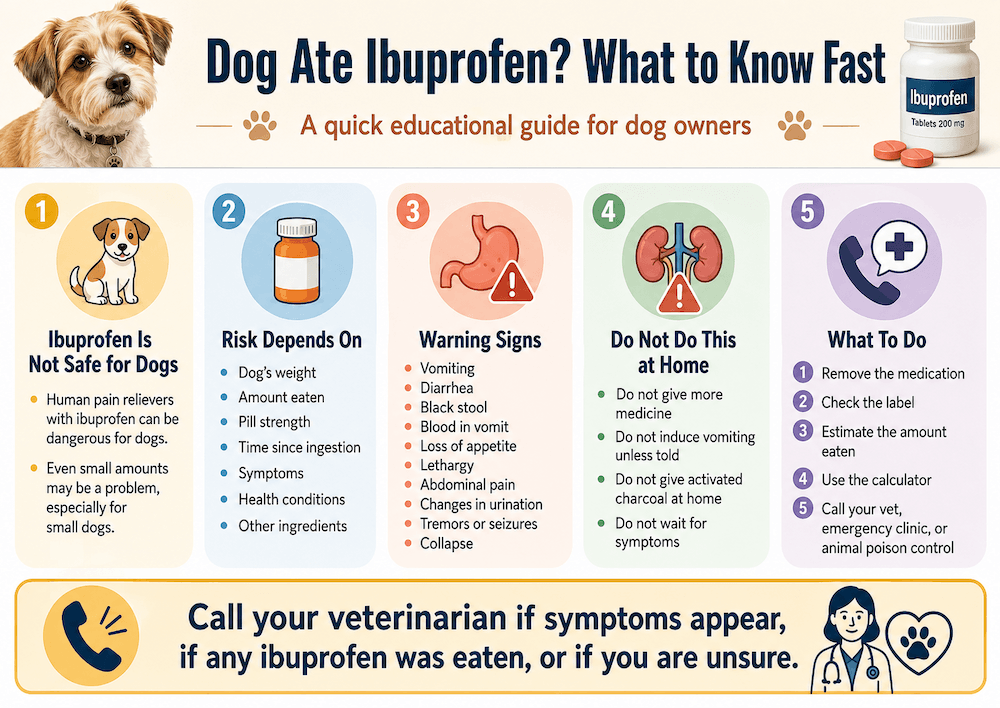
1. Remove the medication so your dog cannot eat more. Pick up loose pills, capsules, wrappers, or spilled liquid, and separate other pets if more than one animal may have been exposed.
2. Next, gather the details your vet will need: your dog’s weight, product name, active ingredients, pill strength, number missing, liquid concentration, time since ingestion, and any symptoms. If you have the package, keep it nearby or bring it to the clinic.
3. Then call your veterinarian, an emergency vet, ASPCA Animal Poison Control, or Pet Poison Helpline. If you can't reach your vet, you can chat live with a registered online veterinary professional via our online vet chat or video chat support (24 hours a day, 7 days a week). Or use Chewy's online vet services (6 a.m. - midnight ET).
4. Do not give more medication. Do not give aspirin, naproxen, acetaminophen, Pepto-Bismol, or a second NSAID. Do not induce vomiting or give activated charcoal unless a veterinarian or poison control professional tells you to do so.
Special Considerations for Certain Dogs
Puppies and toy breeds can reach a concerning mg/kg exposure with a smaller amount of ibuprofen. A partial tablet may still matter in a very small dog.
Senior dogs and dogs with kidney disease, liver disease, stomach ulcers, dehydration, or bleeding disorders need extra caution. Ibuprofen can affect the gastrointestinal tract and kidneys, and dogs with existing health problems may have less reserve.
Dogs taking prednisone, carprofen, meloxicam, deracoxib, aspirin, or other anti-inflammatory medications should also be treated as higher risk. Combining NSAIDs or mixing NSAIDs with steroids can increase the chance of stomach ulceration or other complications.
How to Calculate Ibuprofen Toxicity in Dogs Manually
- Convert your dog’s weight from pounds to kilograms. Dog weight in pounds ÷ 2.2 = dog weight in kilograms
- Divide the total ibuprofen eaten by your dog’s weight in kilograms. Total ibuprofen in mg ÷ dog weight in kg = estimated mg/kg exposure
Example Calculation
A 15 lb dog eats one 200 mg ibuprofen tablet.
15 ÷ 2.2 = 6.8 kg
200 ÷ 6.8 = 29.4 mg/kg
That result is concerning and should prompt veterinary guidance. Manual calculations can be wrong if the strength is unknown, the product is liquid, the number of missing tablets is uncertain, or more than one dog had access.
Frequently Asked Questions
The Bottom Line
Ibuprofen is not a safe at-home pain reliever for dogs. This Dog Ibuprofen Toxicity Calculator can help estimate your dog’s risk based on weight, pill strength, amount eaten, timing, and symptoms, but it should be used as a triage guide—not as a replacement for veterinary care. If your dog may have swallowed ibuprofen, do not wait for vomiting, diarrhea, dark stools, weakness, tremors, or appetite loss before taking action. Call your veterinarian or a pet poison-control service right away, especially if the amount is unknown, your dog is small, symptoms are present, or the product contains other active ingredients.
If you were looking for pain relief because your dog is limping, sore, or uncomfortable, read our guide on what you can give your dog for pain at home before reaching for any human medication. If your dog got into another risky item, you may also find our dog chocolate toxicity calculator, dog caffeine toxicity calculator, poisonous foods for dogs guide, and what to do if your dog ate grapes helpful.
With the calculator, risk charts, symptoms, and safety steps in this guide, you can gather the right details quickly and make a safer next decision. When in doubt, do not give home remedies, do not induce vomiting unless instructed, and get professional guidance as soon as possible.