Cushing’s Disease in Dogs: Symptoms, Types, Causes, Signs & Prevention

Canine Bible is reader-supported. We receive affiliate commissions via some of our links. Learn more.
Cushing’s disease is one of the most common hormonal disorders in dogs, particularly affecting middle-aged and senior pets. Its early signs—such as increased thirst, more frequent urination, increased appetite, and reduced energy—are often mistaken for normal aging, when in fact they signal an underlying endocrine condition. The good news is that with proper diagnosis and management, many dogs with Cushing’s disease can live comfortable, happy lives. Advances in veterinary medicine, along with consistent monitoring and medication, make it possible to control symptoms effectively. This guide covers everything you need to know about Cushing’s disease in dogs—from causes and symptoms to diagnosis, treatment options, and long-term management—so you can support your dog’s health and well-being every step of the way.
What Is Cushing’s Disease?
Cushing’s disease is a hormonal disorder in which a dog’s body produces too much cortisol over time. While cortisol is essential for normal body functions, excess levels can disrupt metabolism, weaken muscles, and affect overall health. In most cases, it’s caused by a pituitary gland tumor that overstimulates cortisol production, though adrenal tumors can also be responsible. Over time, this leads to common signs like increased thirst, appetite, and a pot-bellied appearance.
Types
Cushing’s disease can take several forms, each with different underlying causes:


| Type | Description |
|---|---|
| Pituitary-Dependent Cushing’s | The most common form (about 80–85% of cases), caused by a benign tumor in the pituitary gland that overstimulates cortisol production. |
| Adrenal-Dependent Cushing’s | Caused by a tumor in one of the adrenal glands, leading to excess cortisol production. May be benign or malignant. |
| Iatrogenic Cushing’s | Results from prolonged or excessive use of corticosteroid medications, such as prednisone. |
| Atypical Cushing’s | A less common form involving abnormal steroid hormones other than cortisol, often harder to diagnose. |
| Cyclic Cushing’s | A rare variation where cortisol levels fluctuate, causing symptoms to come and go, making diagnosis more challenging. |
Predisposed Dog Breeds For Cushing’s Disease
Cushing’s disease is often associated with middle-aged and older dogs. However, some dogs may be more prone to developing it due to underlying health factors, prolonged steroid use, or, in rare cases, earlier-onset hormonal imbalances.
| Size / Group | Breeds | Notes on Risk Factors |
|---|---|---|
| Small Breeds (High Risk) | Poodle (especially Miniature), Dachshund, Yorkshire Terrier, Shih Tzu, Maltese | Most commonly affected group, especially with pituitary-dependent Cushing’s disease. |
| Terriers | Boston Terrier, Jack Russell Terrier, Scottish Terrier, Fox Terrier | Genetic predisposition and higher incidence of endocrine disorders. |
| Companion Breeds | Bichon Frise, Lhasa Apso, Cavalier King Charles Spaniel | Often develop Cushing’s in middle to senior years; subtle early symptoms can be overlooked. |
| Medium Breeds | Beagle, Cocker Spaniel, Boxer | Moderate risk; symptoms may be mistaken for normal aging. |
| Large Breeds | Labrador Retriever, German Shepherd, Golden Retriever | Less commonly affected, but adrenal tumors may be more frequent when Cushing’s occurs. |
| Senior Dogs (All Breeds) | All breeds | Age is a major risk factor; most cases occur in dogs over 7–8 years old. |
| Medication-Related Risk | All breeds | Long-term use of corticosteroids (e.g., prednisone) can lead to iatrogenic Cushing’s disease. |
Causes
Symptoms
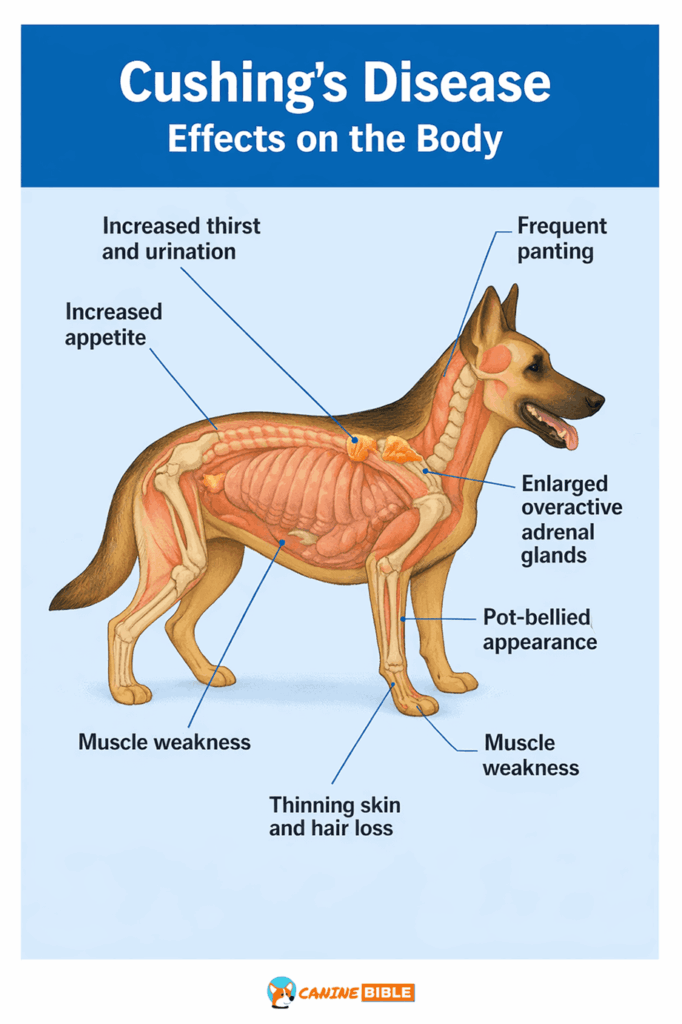
Stages of Cushing’s Disease
- Early stage: Increased thirst and urination, bigger appetite, mild panting, subtle low energy.
- Moderate stage: Noticeable hair thinning, pot-bellied appearance, muscle loss, reduced activity.
- Advanced stage: Recurrent infections, significant weakness, thin skin, and complications such as diabetes or high blood pressure.
Top Ways to Prevent Cushing’s Disease in Dogs
Because Cushing’s disease is a progressive hormonal disorder, early recognition and proper management are essential. With timely diagnosis and consistent treatment, symptoms can be controlled, complications minimized, and your dog’s comfort and quality of life maintained for years.
| Management Strategy | Why It Helps | How to Do It |
|---|---|---|
| Use Steroids Carefully | Long-term steroid use can cause iatrogenic Cushing’s disease. | Only use corticosteroids under veterinary guidance and avoid prolonged or unnecessary use. |
| Regular Veterinary Checkups | Early detection improves treatment success and prevents complications. | Schedule routine bloodwork, especially for senior dogs or at-risk breeds. |
| Monitor for Early Symptoms | Recognizing subtle signs allows earlier diagnosis and management. | Watch for increased thirst, urination, appetite, panting, and behavioral changes. |
| Maintain a Healthy Weight | Excess weight worsens hormonal imbalance effects and mobility issues. | Feed balanced meals, control portions, and limit high-calorie treats. |
| Support Immune and Skin Health | Cushing’s can weaken the immune system and cause skin problems. | Provide a high-quality diet, omega-3 fatty acids, and proper grooming. |
| Follow Treatment Plans Closely | Consistent medication keeps cortisol levels controlled. | Administer medications like trilostane as prescribed and attend follow-up testing. |
| Manage Stress and Routine | Stress can impact hormonal balance and overall health. | Maintain a consistent daily routine with moderate exercise and adequate rest. |
Actionable Resources
If you want to prevent or reduce the progression of Cushing’s disease in your dog, here are some things you can do under veterinary guidance.


How Cushing’s Disease Is Diagnosed in Dogs
Diagnosing Cushing’s disease requires a thorough veterinary evaluation to confirm excess cortisol and identify the underlying cause. Key steps include:
- Physical Examination: A vet evaluates signs such as increased thirst, pot-bellied appearance, hair loss, and muscle weakness.
- Hormone Testing:
- ACTH Stimulation Test – measures how the adrenal glands respond to stimulation.
- Low-Dose Dexamethasone Suppression Test (LDDST) – commonly used to confirm Cushing’s disease.
- Urine Cortisol-to-Creatinine Ratio – a screening test to assess cortisol levels.
- Routine Laboratory Tests: Bloodwork and urinalysis help detect abnormalities commonly associated with Cushing’s disease.
- Imaging: Ultrasound or advanced imaging (CT/MRI) may be used to evaluate the adrenal glands or pituitary gland.
Early diagnosis is important because Cushing’s disease is progressive—detecting it sooner allows for better symptom control and improved quality of life.
Treatment & Care
According to current veterinary research, the most effective treatment for Cushing’s disease in dogs focuses on controlling cortisol production. This is typically achieved with medications such as trilostane or mitotane, along with regular monitoring and supportive care to manage symptoms and maintain overall health.
Always consult your veterinarian before starting any new treatment or supplement for Cushing’s Disease. You can get personalized joint-care advice from an online registered vet anytime, anywhere through Dutch. You can also chat with an online vet to ask questions about managing your dog’s Cushing’s Disease symptoms, treatment options, and lifestyle adjustments tailored to their condition.
Conventional Medical Treatments
| Treatment | Notes / Examples |
|---|---|
| Trilostane (First-Line Medication) | Most commonly prescribed drug; reduces cortisol production. Requires lifelong use and regular monitoring. |
| Mitotane | Alternative medication that selectively destroys part of the adrenal gland; used in specific cases under close supervision. |
| Surgery (Adrenal Tumor Removal) | Recommended for adrenal-dependent Cushing’s when feasible; can be curative but carries surgical risks. |
| Adjusting Steroid Therapy | For iatrogenic Cushing’s, gradually reducing or stopping corticosteroids under veterinary guidance. |
| Supportive Care | Includes managing infections, skin issues, diabetes, and high blood pressure associated with the disease. |
| Regular Monitoring | Routine blood tests (e.g., ACTH stimulation test) to ensure proper cortisol control and adjust treatment. |
Nutritional Support & Supplements
| Supplement | Notes / Examples |
|---|---|
| Omega-3 Fatty Acids (Fish Oil) | Support skin health, reduce inflammation, and help manage secondary conditions like high cholesterol. |
| Antioxidants (Vitamin E, Vitamin C) | Help combat oxidative stress associated with chronic hormonal imbalance. |
| High-Quality Protein Diet | Supports muscle maintenance and prevents muscle wasting common in Cushing’s disease. |
| Low-Fat Diet | Helps manage elevated lipid levels (hyperlipidemia), which are common in affected dogs. |
| Fiber-Rich Diet | Supports digestive health and helps regulate blood sugar levels. |
| Electrolyte Balance (Potassium Support) | Important for dogs with hormonal imbalances that affect fluid and electrolyte regulation. |
| Vet vs. OTC Supplements | Veterinary guidance ensures safe supplementation, especially since Cushing’s often involves multiple health conditions. |
Alternative & Integrative Therapies
| Therapy | Notes / Examples |
|---|---|
| Acupuncture | May help regulate hormonal balance, improve energy levels, and support overall well-being. |
| Herbal Medicine (Vet-Guided) | Adaptogenic herbs may support adrenal function, but must be used under veterinary supervision. |
| Massage Therapy | Improves circulation, reduces muscle weakness, and promotes relaxation in affected dogs. |
| Moderate Exercise Programs | Low-impact activity helps maintain muscle mass and prevent obesity without overexertion. |
| Stress Reduction Techniques | Stable routines and calm environments support hormonal balance and reduce symptom flare-ups. |
| Skin & Coat Care | Regular grooming and medicated shampoos help manage thinning skin and recurrent infections. |
| Holistic Vet Support | Integrative veterinarians can combine conventional and alternative therapies safely. |
Surgical Options
| Surgical Option | Notes / Examples |
|---|---|
| Adrenalectomy (Adrenal Gland Removal) | Primary surgical treatment for adrenal-dependent Cushing’s; can be curative if the tumor is successfully removed. |
| Unilateral Adrenal Tumor Removal | Performed when only one adrenal gland is affected; requires careful monitoring of hormone levels after surgery. |
| Pituitary Tumor Surgery (Hypophysectomy) | Highly specialized procedure to remove pituitary tumors; available only in select veterinary centers. |
| Minimally Invasive Adrenal Surgery | Laparoscopic techniques may be used in some cases to reduce recovery time and surgical risk. |
| Post-Surgical Hormone Management | Dogs may require temporary or lifelong hormone replacement therapy after surgery. |
Emotional & Lifestyle Impact
Cushing’s disease affects more than just a dog’s hormones—it can significantly impact their daily life and emotional well-being. Dogs may become less active, tire more easily, or show changes in behavior due to discomfort, muscle weakness, and ongoing health issues. Visible changes like hair loss or a pot-bellied appearance can also reflect deeper internal imbalances.
For owners, managing Cushing’s disease can be challenging, bringing emotional stress along with the responsibility of long-term care and regular monitoring. Daily routines may need to adapt to include medication schedules, frequent bathroom breaks, and consistent vet visits. With patience, structure, and close veterinary support, pet parents can create a stable, supportive environment that helps their dogs stay comfortable, balanced, and engaged.
Typical Annual Cost of Treating Cushing’s Disease
| Category | Estimated Annual Cost Range | Notes |
|---|---|---|
| Diagnostic Testing (Initial) | $200 – $1,000+ | Includes bloodwork, ACTH stimulation or dexamethasone suppression tests, and imaging. |
| Medications (Trilostane / Mitotane) | $300 – $1,200 | Varies based on dog size, dosage, and medication type; typically lifelong. |
| Monitoring & Follow-Up Testing | $300 – $800 | Regular blood tests to adjust medication and monitor cortisol levels. |
| Management of Secondary Conditions | $200 – $1,000 | Includes treatment for infections, diabetes, skin issues, or high blood pressure. |
| Diet & Nutritional Support | $200 – $600 | Special diets and supplements to support metabolic and immune health. |
| Surgery (if applicable) | $2,000 – $8,000+ | Adrenalectomy or specialized procedures; usually a one-time cost. |
| Insurance & Wellness Plans | $360 – $960 | May help offset long-term medication and testing costs. |
| Typical Annual Range | Medical Management: $800 – $2,500 | With Surgery: $3,000 – $10,000+ | |
Cushing’s disease care can add up over time—from ongoing medications and regular testing to long-term monitoring. Pet insurance can help ease the financial burden and ensure your dog receives consistent care without compromise. If you want to compare plans and find out which providers offer the best coverage for chronic conditions, check out our full guide to the Best Pet Insurance for Dogs.
Frequently Asked Questions
The Bottom Line
Cushing’s disease is one of the most common hormonal conditions in dogs, especially in seniors, but it doesn’t have to define their lives. While it is typically not curable, early recognition, consistent veterinary care, and appropriate treatment can significantly improve symptom management and overall health. By following prescribed medications, keeping up with regular monitoring, supporting a healthy diet, and maintaining a stable routine, pet parents can help their dogs stay comfortable and balanced. Ultimately, the goal is not just to extend life, but to improve its quality—helping every dog with Cushing’s disease live a happy, well-managed, and fulfilling life.