
10 Common Causes & Triggers of Seizures in Dogs


Canine Bible is reader-supported. We receive affiliate commissions via some of our links. Learn more.
A seizure in a dog can be triggered by anything from an underlying neurological disorder to toxins, metabolic problems, illness, or sudden changes that affect brain function. In dogs with epilepsy, factors such as stress, excitement, disrupted sleep, or other physical changes may also appear to precede an episode, although a clear trigger is not always found. Some triggers are temporary and avoidable, while others point to medical conditions that require veterinary investigation. Age, breed, medications, recent toxin exposure, and what happened immediately before the seizure can all provide important clues. Owners may also wonder whether foods, heat, exercise, vaccines, or everyday household products can provoke seizures. Knowing the difference between a possible trigger and the underlying cause can help make sense of why seizures seem to occur without warning. Understanding the most common triggers—and when they signal an emergency—can help you respond more confidently if your dog has a seizure.
What is a Seizure in Dogs?
A seizure in dogs is a sudden burst of abnormal electrical activity in the brain that temporarily disrupts normal movement, behavior, awareness, or sensation. Some seizures cause obvious signs such as collapsing, stiffening, paddling, drooling, or loss of consciousness, while others may appear as staring, facial twitching, jaw movements, or brief unusual behavior.
A seizure can last from a few seconds to several minutes and is often followed by a recovery period in which the dog may seem confused, restless, tired, hungry, or temporarily disoriented. Seizures can occur because of epilepsy, toxins, metabolic problems, brain disease, or other underlying conditions, so a seizure is considered a sign of a problem rather than a diagnosis by itself.
What Can Trigger a Seizure in a Dog?
A seizure can occur when abnormal electrical activity in the brain crosses a dog’s seizure threshold. In some dogs, this happens because of an immediate medical problem or exposure, while in dogs already prone to seizures, an otherwise ordinary event may simply make an episode more likely.
The word “trigger” can therefore mean different things. A dog exposed to a toxin may have a reactive seizure despite having no history of epilepsy, while a dog with idiopathic epilepsy may seize after a stressful or disruptive event without that event being the underlying cause. Some seizures occur without any identifiable trigger at all.


10 Common Seizure Triggers and Causes in Dogs
Seizures in dogs can result from temporary triggers, toxic exposures, medication problems, metabolic disturbances, or underlying brain disease. The likelihood of a seizure depends on the dog’s individual susceptibility as well as the specific factor involved.
1. Stress, Anxiety, and Excitement
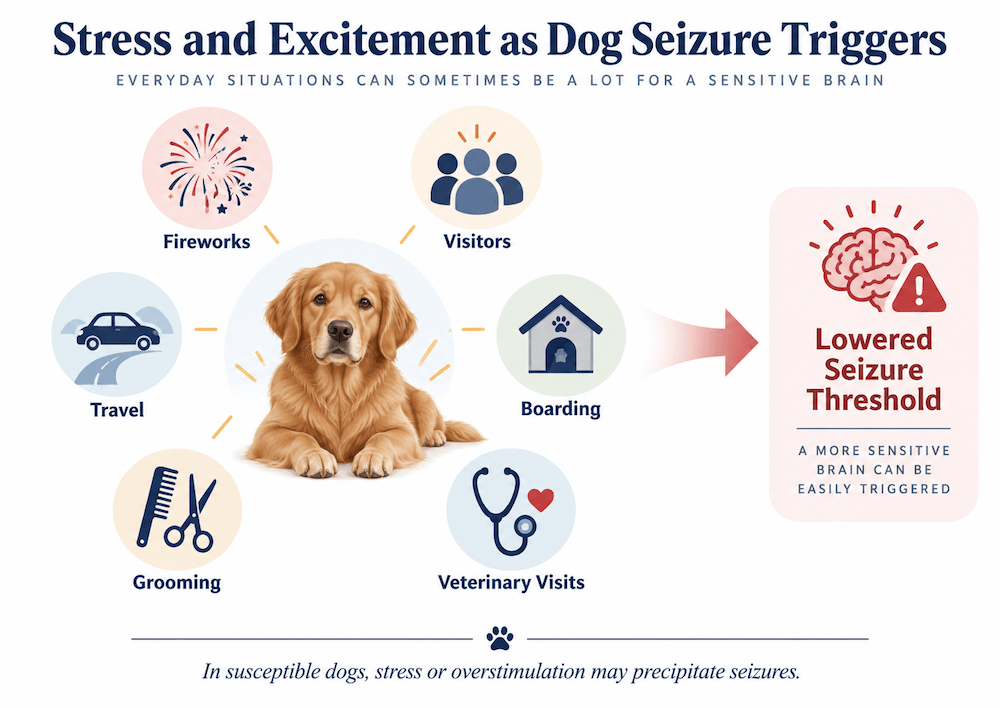
Stressful or highly exciting events may precipitate seizures in dogs that already have a lower seizure threshold. Boarding, travel, fireworks, visitors, grooming, or veterinary visits are possible examples. A single episode after an exciting event does not prove the event caused the seizure; repeated patterns are more meaningful.
2. Sleep Disruption and Changes in Routine
Poor sleep, travel, unfamiliar environments, or major changes in a dog’s normal schedule may make seizures more likely in some dogs with epilepsy. Routine disruptions can also affect meals, medication timing, activity, and stress levels. Keeping sleep, feeding, and medication schedules consistent may help owners identify and reduce possible triggers.

3. Heat and Overheating
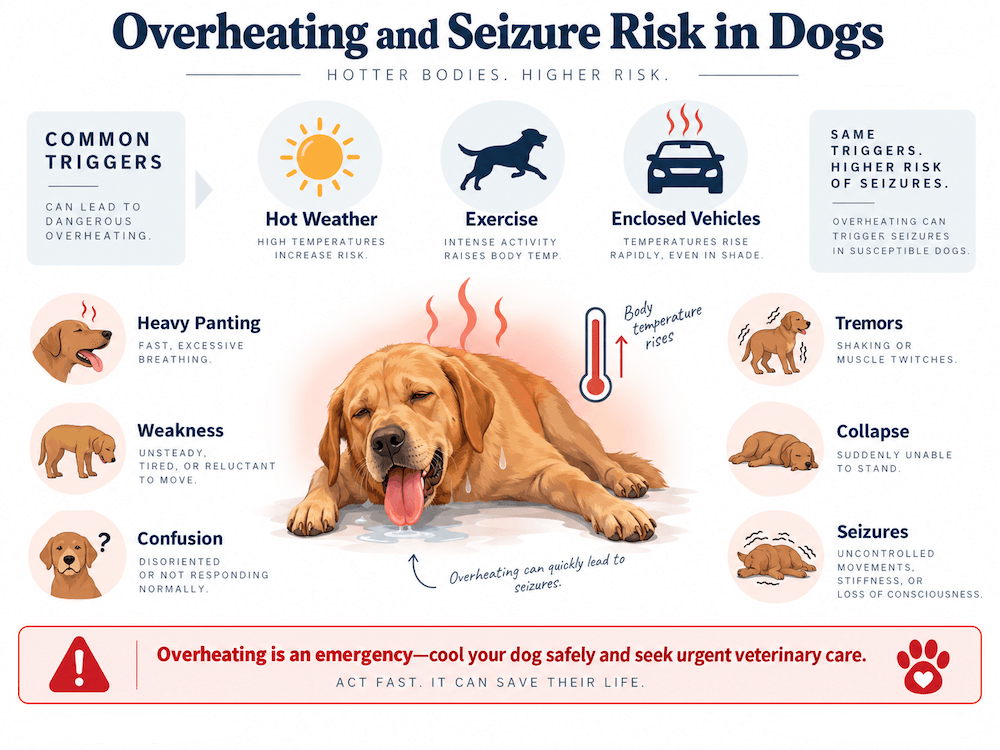
Severe overheating can disrupt normal brain function and may lead to tremors, collapse, or seizures. This is different from simply having epilepsy triggered by warm weather because heatstroke itself is a medical emergency. Dogs exercising in hot or humid conditions or trapped in poorly ventilated spaces are especially at risk.
4. Low Blood Sugar
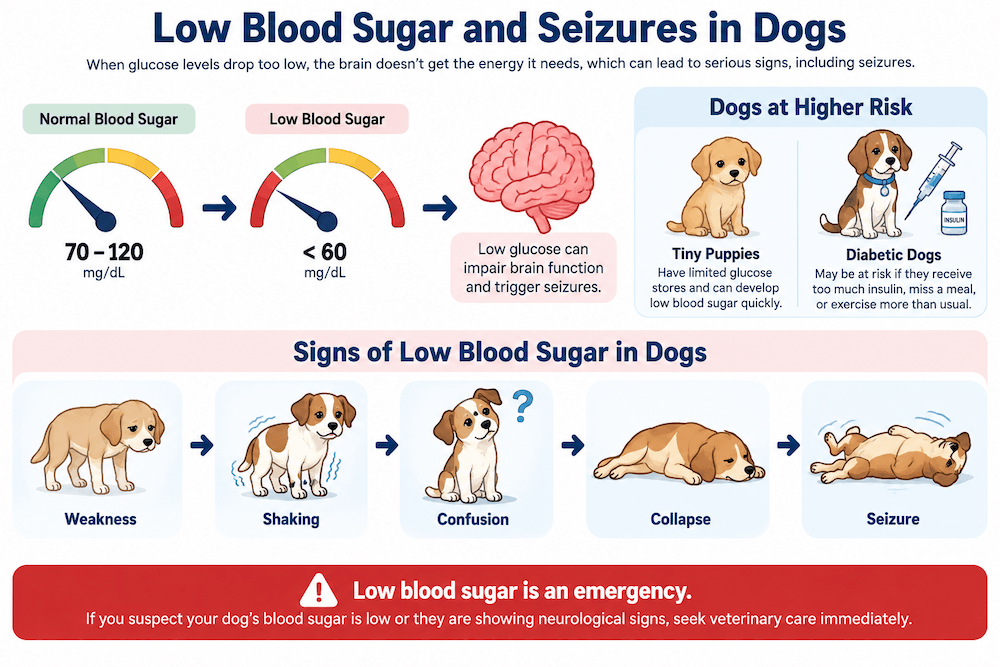
Very low blood sugar, or hypoglycemia, can deprive the brain of the glucose it needs to function normally. Affected dogs may become weak, shaky, confused, unsteady, or eventually have seizures. Small puppies, diabetic dogs receiving insulin, and dogs with certain illnesses may be particularly vulnerable.


5. Liver, Kidney, and Electrolyte Problems
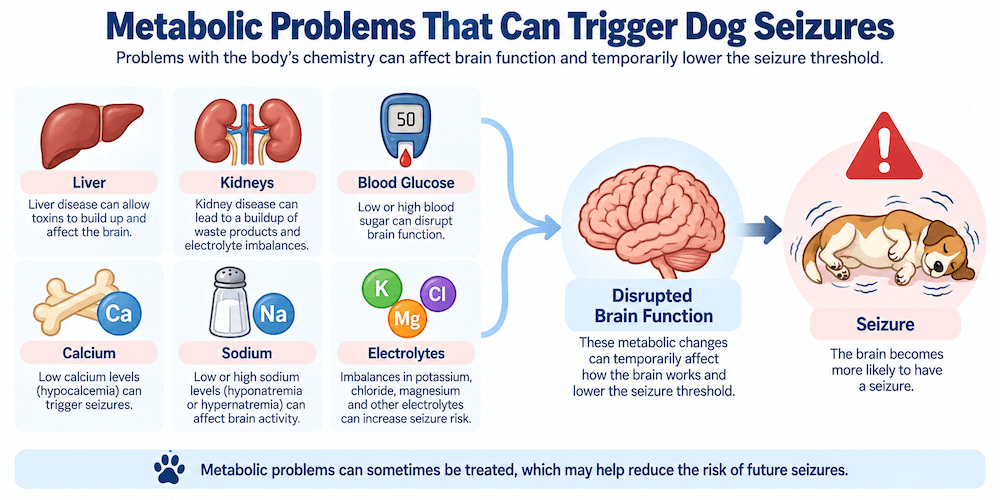
Serious liver or kidney dysfunction can allow waste products or chemical imbalances to interfere with normal brain activity. Abnormal sodium, calcium, magnesium, or other electrolyte levels can also provoke seizures. These are often considered reactive seizures because the problem begins outside the brain.
6. Toxins and Poisoning
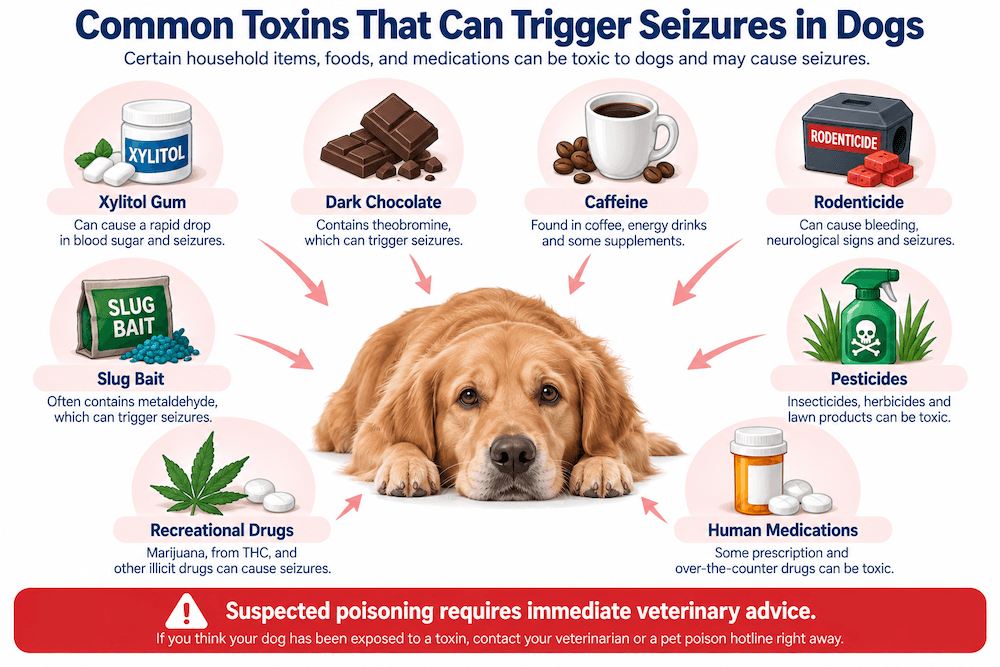
Several toxic substances can cause tremors, neurologic abnormalities, and seizures in dogs. Potential examples include xylitol, large amounts of chocolate or caffeine, certain rodenticides, slug bait, pesticides, recreational drugs, and some human medications. Suspected poisoning requires immediate veterinary guidance rather than waiting to see whether another seizure occurs.
7. Medications and Adverse Drug Reactions
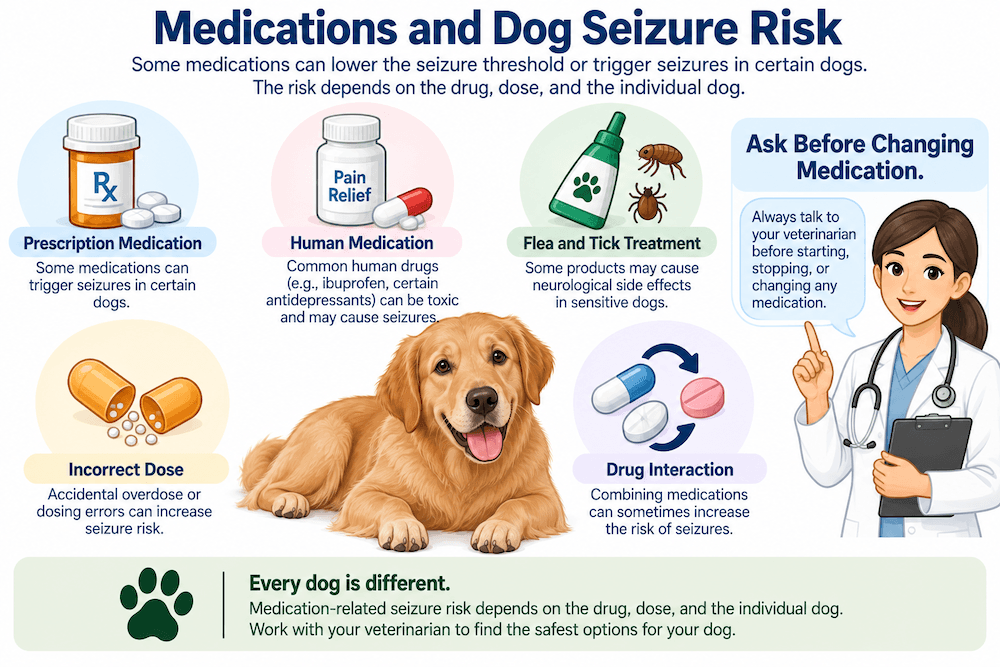
Certain medications can lower the seizure threshold or produce neurologic side effects, particularly at excessive doses or when drugs interact. Some parasite-control medications may also cause neurologic reactions in susceptible dogs, although most dogs use them without problems. Owners should discuss medication choices with their veterinarian rather than stopping prescribed treatments on their own.
8. Missed or Abruptly Stopped Seizure Medication
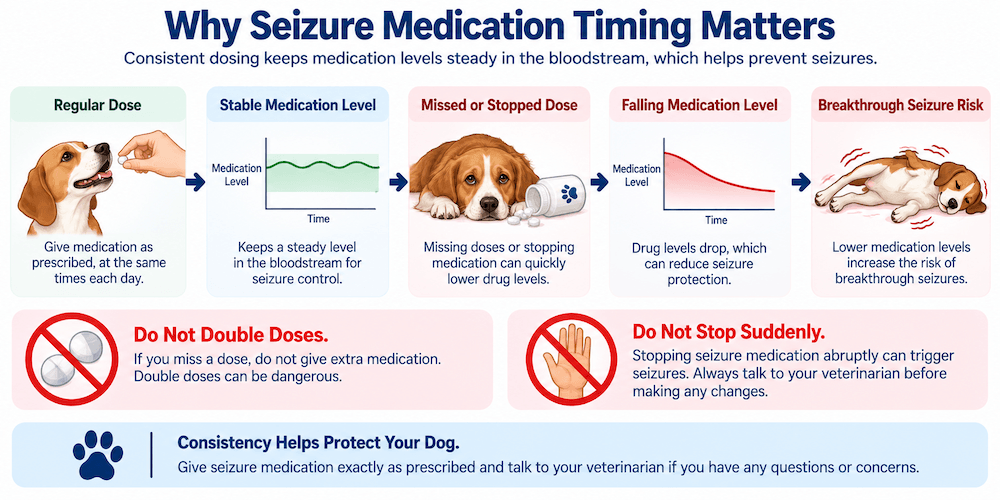
Dogs taking anticonvulsant medication need reasonably consistent drug levels to help control seizures. Missing doses, giving medication much later than usual, or abruptly stopping treatment can lead to breakthrough or withdrawal seizures. Never double a missed dose or discontinue seizure medication unless a veterinarian gives specific instructions.
9. Brain Tumors and Other Structural Brain Disease
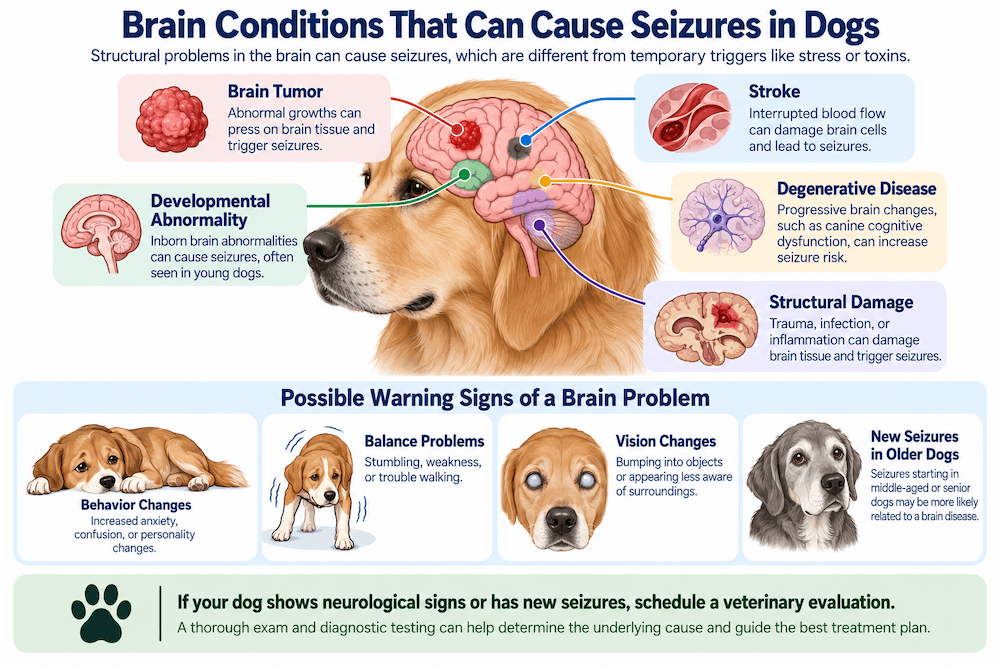
Tumors, strokes, developmental abnormalities, degenerative disease, and other structural problems within the brain can cause seizures. These conditions are underlying causes rather than everyday triggers, but they may first become noticeable when a dog suddenly has a seizure. New seizures in older dogs or seizures accompanied by persistent behavior, balance, vision, or coordination changes deserve prompt investigation.
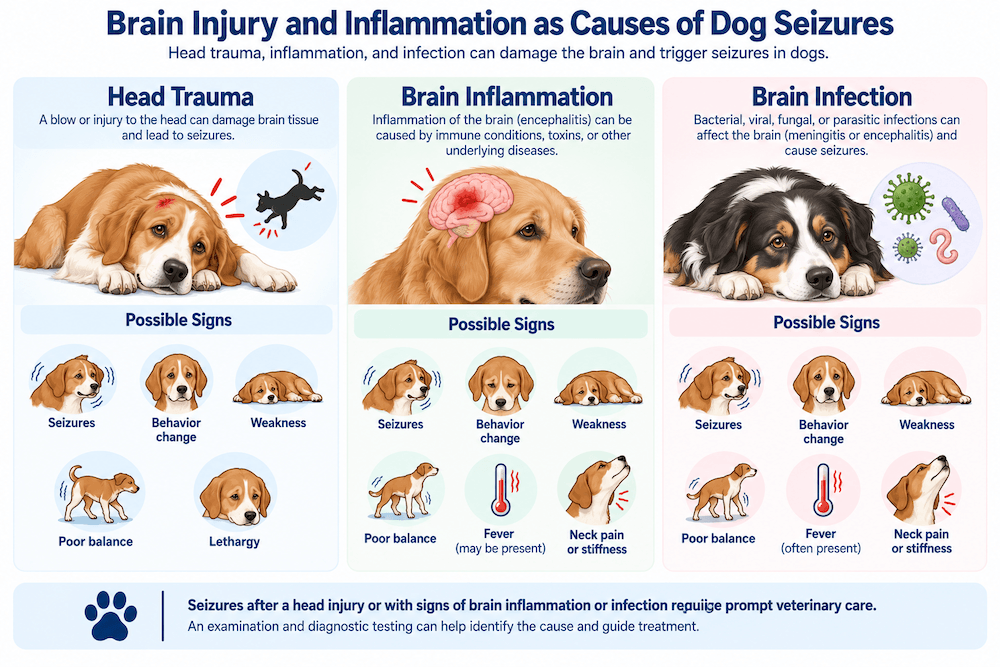
10. Head Injury, Brain Inflammation, or Infection
Head trauma can damage brain tissue and cause seizures immediately or sometime after the injury. Inflammation or infections involving the brain can also disrupt normal electrical activity and may cause seizures along with fever, neck pain, behavioral changes, weakness, or balance problems. Seizures following a significant head injury or accompanied by ongoing neurologic signs require prompt veterinary care.
Why Some Dogs Are More Sensitive to Seizure Triggers
The brain normally maintains a balance between electrical signals that activate neurons and signals that restrain them. A seizure occurs when abnormal electrical activity becomes excessive and synchronized enough to disrupt normal brain function, which is why veterinarians may refer to a dog’s seizure threshold.
A dog with a high threshold may tolerate ordinary stimulation without difficulty, while a dog with epilepsy, brain disease, metabolic abnormalities, or another predisposition may reach that threshold more easily. This helps explain why stress, poor sleep, excitement, or environmental stimulation may affect one dog but not another.
Several factors can also occur at the same time. A dog with epilepsy might travel on a hot day, become excited, sleep poorly, eat late, and receive medication later than usual, making it difficult to identify one specific cause because the trigger may be only the final contributing factor rather than the whole explanation.
How to Tell Whether Something Really Triggered Your Dog’s Seizure
Finding a pattern can help with long-term seizure management, but it is easy to confuse coincidence with causation. Instead of relying on memory alone, record each episode and what happened in the hours or days around it.
A video can be extremely useful if recorded safely, since fainting, tremors, movement disorders, sleep behaviors, pain episodes, and balance problems can resemble seizures, and the beginning of an episode may help a veterinarian tell them apart. Do not deliberately recreate a suspected trigger to test your theory; if grooming, flashing lights, intense activity, or another event repeatedly precedes seizures, record the pattern and discuss it with your veterinarian instead.
What to Do When Your Dog Has a Seizure
During a seizure, your main priorities are to keep your dog safe, time the episode, and avoid unnecessary handling. Clear nearby hazards, reduce stimulation, and let your dog recover quietly once the seizure stops. If seizures are prolonged, repeated, or followed by abnormal recovery, seek urgent veterinary care.
| Step | What to Do | What to Avoid |
|---|---|---|
| Stay calm | Focus on keeping your dog safe. | Do not restrain the dog. |
| Clear hazards | Move furniture and block stairs or water. | Keep hands away from the mouth. |
| Reduce stimulation | Keep the room quiet and dim if possible. | Avoid crowding or loud noises. |
| Time the seizure | Start a timer when the episode begins. | Do not rely on memory alone. |
| Record safely | Take a video if it can be done safely. | Do not place yourself near the jaws. |
| Allow recovery | Provide a quiet, secure place afterward. | Do not startle a confused dog. |
| Use prescribed medication | Follow your veterinarian’s rescue-medication plan. | Never improvise doses or use human drugs. |
| Seek emergency care | Act urgently for prolonged or repeated seizures. | Do not wait if recovery is abnormal. |
When to Call a Veterinarian About a Dog’s Seizure
A dog having its first seizure should be evaluated by a veterinarian, even if it recovers quickly and seems normal afterward. Dogs already diagnosed with epilepsy may have an established seizure plan for brief breakthrough episodes, but any change in frequency, duration, severity, or recovery should be discussed with the veterinary team.
A seizure lasting five minutes or longer is an emergency because prolonged seizure activity can raise body temperature and increase the risk of serious complications. Repeated seizures over a short period, seizures without full recovery between episodes, or seizures linked to suspected poisoning, heatstroke, or a recent head injury also require urgent veterinary care.
If your dog has prescribed rescue medication for cluster seizures, follow the instructions provided by your veterinarian while arranging care. When in doubt, especially after a first seizure or an unusual episode, it is safer to contact a veterinary professional promptly.
What Veterinarians Look for After a Dog Has a Seizure
After a seizure, veterinarians focus on confirming what happened and identifying why it occurred. They review your dog’s history, look for possible toxins or medication issues, assess age and neurologic signs, and may run blood, urine, or advanced imaging tests. The goal is to distinguish a one-time reactive seizure from epilepsy or an underlying brain disorder that may need further treatment.
How to Reduce Seizure Triggers in Dogs
You may not be able to prevent every seizure, but consistent routines and careful management can help reduce avoidable risks and make patterns easier to recognize.
| Management Step | What to Do | Why It Helps |
|---|---|---|
| Keep a routine | Keep meals, sleep, walks, and medications consistent. | Reduces sudden changes and missed doses. |
| Give medication on time | Use reminders and refill prescriptions before they run out. | Helps maintain stable anticonvulsant levels. |
| Keep a seizure diary | Record timing, duration, recovery, and recent changes. | Helps identify repeatable patterns. |
| Prevent toxin exposure | Secure medications, chemicals, foods, and pesticides. | Reduces preventable reactive seizures. |
| Avoid overheating | Limit strenuous activity in hot or humid weather. | Helps prevent dangerous heat-related neurologic problems. |
| Support good sleep | Provide a quiet, predictable place for regular rest. | May reduce a possible trigger in susceptible dogs. |
| Manage stressful events | Introduce travel, visitors, or routine changes gradually. | May reduce excessive stimulation in sensitive dogs. |
| Review medications | Tell your veterinarian about every drug and supplement. | Helps avoid interactions or unsuitable medications. |
What Veterinary Research Says About Seizure Triggers in Dogs
The International Veterinary Epilepsy Task Force distinguishes reactive seizures from epilepsy. Reactive seizures occur when an otherwise normal brain responds to a temporary toxic or metabolic disturbance, while structural epilepsy results from disease affecting the brain itself. This distinction explains why correcting hypoglycemia or treating a toxin exposure may eliminate reactive seizures without the dog having chronic epilepsy.[1]
A study published in the Journal of Veterinary Internal Medicine evaluated 50 dogs with idiopathic epilepsy and found that owners identified at least one possible seizure-precipitating factor in 74% of dogs when given a structured checklist. Frequently reported factors included stressful situations, altered sleep, routine or life changes, unfamiliar places, weather, and hormonal influences. The study was relatively small and relied on owner observations, so these associations should be treated as possible individual precipitants rather than proof that these factors cause seizures in all dogs.[2]
Veterinary literature also describes reflex epilepsy, in which a particular stimulus consistently provokes seizures. A case series reported dogs with stimulus-specific seizures associated with situations such as veterinary visits, grooming, or boarding, while another report documented rare eating-triggered seizures. These unusual cases reinforce that a repeatable pattern can be clinically meaningful, but reflex epilepsy is not the explanation for most canine seizures.[3]
Frequently Asked Questions
The Bottom Line
Seizures in dogs can be triggered or caused by several factors, including toxins, metabolic problems, overheating, medications, and conditions affecting the brain. Dogs with epilepsy may also be more sensitive to stress, disrupted sleep, routine changes, or missed anticonvulsant medication. Because triggers vary between dogs, one event occurring before a seizure does not necessarily mean it caused the episode. Keeping a seizure diary can help reveal repeatable patterns and give your veterinarian useful information. Consistent medication, predictable routines, toxin prevention, and careful monitoring can reduce avoidable risks. Most importantly, a first seizure, repeated episodes, abnormal recovery, suspected poisoning, or a seizure lasting five minutes or longer warrants veterinary attention.
If your dog experiences a seizure, learn what to do when a dog has a seizure, including immediate safety steps and emergency warning signs. For dogs with recurring episodes, explore our guide to the best dog foods for seizures and epilepsy or review these homemade food recipes for dogs with seizures and epilepsy for additional nutrition guidance.